Authors
Noa Ronkin
News Type
News
Date
Paragraphs

“For seven decades our thinking about Indo-Asia-Pacific security and international cooperation issues has been underpinned by the narratives of a U.S.-led international order centered around the rule of law, economic openness, and multilateralism. Now this post-WWII order is being challenged.”

With that summation, APARC Director Gi-Wook Shin opened the symposium The Past, Present, and Future International Order in East Asia. Sponsored and organized by the Japan Institute for International Affairs (JIIA) and APARC’s Japan Program and U.S.-Asia Security Initiative , the day-long event gathered 20 experts across multiple fields, including international relations, political and diplomatic history in Asia, American foreign policy and history, Japan-PRC relations and politics, security interests in the Indo-Pacific region, and U.S.-Asia regional engagement.


Japan Program Director, Takeo Hoshi (above, one of the Symposium leaders, launches the panel discussions

Japan Program Director, Takeo Hoshi (above, one of the Symposium leaders, launched the panel discussions by first expressing his gratitude to the participants and sponsors on behalf of the organizers and then by encouraging the audience to engage in the discussions following each panel.

At the Symposium, the participants explored the circumstances that shaped the establishment of the security architecture in East Asia; considered the forces that propelled its evolution; and debated possible futures for East Asia and the greater Indo-Pacific region.

A Wilsonian Dream

Ambassador Kenichiro Sasae , JIIA President, at podium

“Is the international order crumbling? Or, are the challenges it is undergoing a tentative deviation that can be fixed?” - Ambassador Kenichiro Sasae , JIIA President (pictured above).

The symposium’s first panel reviewed the evolution of diplomatic and security arrangements in East Asia, starting with the Versailles-Washington System, the international settlement inaugurated after World War I through the treaties signed in Paris in 1919-20 along with those signed in Washington in 1921-2. After World War II, the “San Francisco System,” the process of alliance formation and security cooperation that was initiated at the San Francisco Conference in September 1951, became the foundation of the U.S.-led regional order through the remainder of the twentieth century and continued to dominate international relations through the first two decades of the twenty-first.

Stanford historian David Kennedy explained that both systems are the products of Wilsonianism—a liberal internationalist ideology that has anchored the tradition of American diplomacy over the past century.  The spirit of “Wilsonianism” is reflected in President Woodrow Wilson’s proclamation that “the world must be made safe for democracy,” a statement that he delivered in remarks presented in 1917 as he appeared before a joint session of Congress to ask for a declaration of war against Germany. The global cataclysm of World War II, said Kennedy, afforded the United States the capacity to shape the political will that would make the Wilsonian dream of an international order possible. This pivotal point in American history is referred to as a “Grotian moment” (named after Dutch jurist Hugo Grotius), a time when “new rules and doctrines emerged in rapid succession and with greater acceptance than previously possible.”

China figured prominently in both the Versailles-Washington System and the San Francisco System. Shin Kawashima of the University of Tokyo spoke about the Nine-Power Treaty, part of the 1922 Washington Conference, that affirmed China’s sovereignty, independence, and territorial integrity. Hsiao-ting Lin of the Hoover Institution stated that the treaty marked an internationalization of the U.S. open door policy regarding China, but that many in China viewed it and the broader framework of the Versailles-Washington System as Western imperialism.

In the aftermath of World War II, and particularly following the establishment of the People’s Republic of China and the outbreak of the Korean War, the United States became increasingly involved in East Asia. The signing of the peace treaty with Japan at the San Francisco Conference marked the beginning of the U.S. network of bilateral alliances, agreements, partnerships, and commitments in the region. The San Francisco System (also known as “hub and spokes” architecture) allowed the United States to develop exclusive relationships with the Republic of Korea, Japan, Taiwan (the Republic of China), and other Asian nations in the face of Communist forces.  As Dr. Lin noted in his remarks, the U.S. regional security agreements and security cooperation arrangements also enabled the Republic of China (Taiwan) to gain independence and international recognition.

The Return of the Quad

In his keynote address, Shorenstein APARC Fellow Michael Armacost , who previously served as U.S. ambassador to Japan and the Philippines, spoke of the promise that the possible resurgence of the “Quad” might bring to increasing the stability of the Indo-Pacific region. The “Quad” is an informal grouping of maritime democracies that includes Australia, India, Japan, and the United States. The four countries collectively provided relief following the Indian Ocean tsunami in 2004 and met for a summit in 2007 only to dissolve a year later, due to Australia’s abrupt departure after the PRC expressed displeasure about the partnership.

But much has changed in the ensuing decade, Armacost observed, with the argument in favor of the Quad now more compelling than ever. Armacost said that in bringing together the four democracies with their naval capabilities and convergence around norms of freedom of navigation, maritime law, international security, and nuclear cooperation, there could be a path forward towards more comprehensive cooperation in the Indo-Pacific region at a time of increased geopolitical uncertainty and as a counterpoint to China’s aggressive expansion throughout this region. Armacost also wondered, however, if Japan was in fact ready to take a greater leadership role, and who could sustain leadership beyond Prime Minister Abe’s time in office.


Ken Jimbo, Keio University, speaks to audience

Ken Jimbo, Keio University

Alliances and Anchor Lines

The afternoon sessions shifted focus to current Japanese, American, and Chinese interests and security concerns. APARC’s Oksenberg-Rohlen Fellow David M. Lampton discussed the intensifying U.S.-China rivalry, noting that the deterioration of the security relationship between the two countries is metastasizing into the economic, educational, and diplomatic spheres. Alliance management is bound to become increasingly important to the United States, he concluded, should the tension with the PRC intensifies further.

Tetsuo Kotani of JIIA described some ambivialence in Japan regarding the recently revised U.S. policies towards China.  On the one hand, Japan welcomes America’s tougher approach to the People’s Republic of China; on the other hand, it is not pleased by the trade war between the two countries. Even while Japan recognizes that China is challenging the established international order, argued Kotani, it was still necessary for Japan to maintain engagement with its neighbor. He expressed his hope that the United States and Japan could reconcile their expectations of the PRC in East Asia and collaborate with other nations to strengthen regional stability.

James Schoff of the Carnegie Endowment for International Peace noted that United States had ample opportunity to address some of the more negative elements related to China’s rise, but that it chose instead to prioritize other issues and benefit from China’s economic growth. The United States ought to strengthen its alliances with Asian nations, said Schoff.  Comparing alliance management to an anchor and chain, the U.S. national policies, he claimed, should be crafted and deployed in a manner that best fits the issue – i.e., an anchor and chain of different lengths for different areas.  For instance, longer alliance anchor lines should be extended in the spheres of economy and diplomacy, while shorter lines are set in the areas of security and the intersection of economy, new technologies, and warfare.


Tom Christensen, Columbia University, speaks on panel

Tom Christensen, Columbia University

Possible Futures

The Symposium concluded with an examination of alternative East Asia and Indo-Pacific security systems. Ryo Sahashi of the University of Tokyo presented four models that could replace the current arrangement: an enhancement of the San Francisco System, with U.S. continued commitment to the region, but with Japanese and Australian increased security roles; a “group of hedging nations,” where the U.S.-based architecture was not dissolved but lesser powers operated with greater autonomy; an “emerging Japan-China rivalry,” where, following U.S. retrenchment, Japan was to defend its vital interests through defense; and “Sinicization and resistance,” where a U.S. retrenchment coupled with Japan’s backing down resulted in China’s leadership prevailing in its illiberal order-building.

The panelists agreed that China’s regional economic dominance for the foreseeable future was undeniable. However, they noted that the implications of its continued influence were up for debate. Ambassador Sasae conveyed his hope that the region might yet see positive outcomes, while other panelists expressed their concern that the present trend of turbulence and threats to multilateralism would likely continue.

U.S.A.S.I. Director Karl Eikenberry provided closing remarks, taking time not only to underscore the significance of the current situation in Indo-Pacific security, but to reflect as well on the value of events like the Symposium to increase understanding of the region's possible futures.

"Whether or not we’re at the Grotian moment [i.e., a point of transformatio in wrold relations]," Ambassador Eikenbery said, "we do know there’s been some very significant changes over the last several decades—especially regarding the distribution of power in the Indo-Pacific and throughout the world. We are seeing a steady erosion of values and norms that we took for granted…”

“It is not clear if the San Francisco System will endure. I think it’s incumbent upon us to bring people like [the Symposium panelists] together…and consider possible alternatives.”

A complete symposium report will be made available in the coming months.


Hero Image
U.S. Navy Patrols Philippines Sea
U.S. Navy/ Getty Images
All News button
1
News Type
News
Date
Paragraphs

We are thrilled to welcome Dr. HyoJung Jang back to the SPICE team! Jang holds a Ph.D. in Educational Theory and Policy as well as in Comparative and International Education from Penn State University, and an M.A. in East Asian Studies from Stanford University. She has returned to SPICE as an instructor for the Sejong Korean Scholars Program, an intensive online course on Korea for high school students across the United States.

Prior to pursuing her doctoral studies, Jang worked at SPICE developing extensive lesson plans for high school and college classrooms. She is co-author of several East Asia-focused curriculum units, including Inter-Korean Relations: Rivalry, Reconciliation, and Reunification, China in Transition: Economic Development, Migration, and Education, and Colonial Korea in Historical Perspective.

“It’s so wonderful to be back at SPICE, where my passion for education issues was sparked,” reflects Jang. “And it’s always inspiring to work with our young Sejong Scholars. Their sharp, inquisitive minds and sincere interest in Korea make me feel optimistic about the future of U.S.–Korean relations.”

Stay informed of SPICE news by joining our email list or following us on Facebook and Twitter.


Hero Image
Dr. HyoJung Jang
Dr. HyoJung Jang
All News button
1
News Type
News
Date
Paragraphs

We are proud to announce our next year's cohort of CDDRL Honors Program students! We selected a diverse group of undergraduate majors for the program who will be writing their senior theses on a subject touching upon DDRL with a global impact. Students will work to complete their thesis under the guidance and consultation of CDDRL faculty, but may have a primary thesis advisor from their own department. Upon fulfilling individual department course requirements and completing the honors program, the student will graduate in his/her major with a certificate of honors in Democracy, Development, and Rule of Law. 

Read their bios here.

Hero Image
honors20
All News button
1
News Type
Commentary
Date
Paragraphs

Does the current trade-talk stalemate between the U.S. and China portend a larger confrontation? Oksenberg-Rohlen Fellow David Lampton says yes, and shared with VOA Asia reasons for why the two countries find themselves so much at odds. Listen below (first 8 minutes):


Hero Image
Trucks line up to enter a shipping berth at the Port of Oakland
OAKLAND, CALIFORNIA - MAY 13: Trucks line up to enter a shipping berth at the Port of Oakland on May 13, 2019 in Oakland, California. China retaliated to U.S. President Donald Trump's 25 percent tariffs on $250 billion of Chinese goods entering the United States with a 25 percent tariff on $60 billion of U.S. goods entering China. The Dow Jones Industrial Average plunged over 700 points on the news in morning trading. | Trucks line up to enter a shipping berth at the Port of Oakland
All News button
1
Authors
Gary Mukai
News Type
News
Date
Paragraphs

At the Ronald Reagan Presidential Library in Simi Valley, California, on April 22, 2019, Secretary Norman Mineta was interviewed on stage and Rylan Sekiguchi shared SPICE’s soon-to-be-released set of free lesson plans, “What Does It Mean to Be an American?” Special guests included Louis Cannon, senior White House correspondent for The Washington Post during the Ronald Reagan administration and biographer of President Ronald Reagan; Joanne Drake, Chief of Staff and Official Spokesperson in the Office of Ronald Reagan; Japanese Americans who were incarcerated during World War II; and teachers and students. Partnering with the Reagan Library on this special event were Facing History and Ourselves, The Mineta Legacy Project, and the Japanese American National Museum.


“Could you tell us about the flag that you wear on your lapel just above your Medal of Freedom?” This was one of the questions that was asked to Secretary Norman Mineta during a recent interview at the Reagan Library. Mineta—after a pause—replied that he wears the U.S. flag pin because some people still treat him like a foreigner, even as an American-born citizen. During the interview, Mineta touched upon different aspects of his life, including being incarcerated by his own country as a 10-year-old boy in 1942, serving in the U.S. Army, and participating at the highest levels of U.S. government. Following the interview with Mineta, Rylan Sekiguchi gave an overview of several forthcoming lessons from SPICE that will use key themes from Mineta’s life to explore the central question, “What does it mean to be an American?”

Rylan Sekiguchi gives an overview of “What Does It Mean to Be an American?” Rylan Sekiguchi gives an overview of “What Does It Mean to Be an American?”

Megan Gately, Associate Director of Education at the Ronald Reagan Presidential Foundation and Institute, conducted the interview. Her opening question, regarding Mineta’s family, prompted Mineta to note, “I very carefully chose the family that I was born into”—a response that drew laughter from the audience. This was the most lighthearted moment of the interview. He then recounted a familiar American family narrative—that of his father, who immigrated to the United States seeking a better life. Mineta’s father emigrated from Japan in the early 20th century as a 14-year-old who boarded a ship in Yokohama, Japan, not knowing anything about the United States. He initially worked in farm labor camps in the Pacific Northwest and worked his way south to California.

Mineta continued by describing the shocking news of the Japanese attack on Pearl Harbor on December 7, 1941. During an emotional segment of the interview, Mineta shared that his father “couldn’t understand why the country of his birth was attacking the country of his heart… He came to love this country very, very much.” He described the resulting confusion and chaos in the Japanese American community, and how placards suddenly appeared on his neighborhood’s utility poles after Executive Order 9066 was issued on February 19, 1942. He recalled reading the placards that stated “All Japanese persons, both alien and non-alien, will be evacuated” but being puzzled by the term “non-alien.” His older brother had to explain to him that it meant “citizen.” Reflecting on that memory, Mineta emphatically stated, “That is why today I cherish the word ‘citizen,’ because the United States government—my own government—wasn’t willing to describe me as a citizen.”

Mineta and his family were initially incarcerated at the Santa Anita Race Track in Southern California and then in an internment camp in Heart Mountain, Wyoming. While in camp, his Boy Scout troop leader sent an invitation to troops outside of camp to invite them to join the Japanese American scouts in the camps. The initial replies were “no” because those on the outside thought that the camp was a POW camp with its barbed wire fences, guard towers, and machine guns. Eventually a Boy Scout troop from the town of Cody visited the internment camp. This is where Mineta met fellow Boy Scout Alan Simpson, who later became a U.S. Senator while Mineta was a U.S. Congressman. Simpson and Mineta have remained lifelong friends since then.

After World War II, Mineta served in the U.S. Army during the Korean War. He first entered elected office in 1971 when he won the mayoral race in San Jose, California. After serving a four-year term, he successfully ran for Congress. He won re-election to the U.S. House of Representatives ten times before returning to the private sector in 1995. Later, he joined the cabinets of two presidents: first, in 2000, as Secretary of Commerce during Bill Clinton’s final six months in office; then, in 2001, as Secretary of Transportation for George W. Bush.

President Reagan shaking hands with Norman Mineta after signing the Civil Liberties Act of 1988 August 10, 1988, President Reagan shaking hands with Norman Mineta after signing the Civil Liberties Act of 1988; courtesy of the Ronald Reagan Presidential Library.
Gately’s final question to Mineta focused on leadership, and Mineta directed a segment of his reply to the students in the audience. “There are two things that you own that no one else owns,” he remarked. “One is your name and the other is integrity. Do everything you can to protect your name and integrity. Because if you don’t have integrity, you don’t have anything that people can trust you about in terms of any future dealings… As you go through life, don’t take shortcuts.”

This reply led to a smooth transition to Sekiguchi, who shared an overview of the free online lessons that are being developed for high school and college students. The lessons, explained Sekiguchi, consist of six independent learning modules that each examines a key theme from Secretary Norman Mineta’s life and career: immigration, civil liberties and equity, civic engagement, justice and reconciliation, leadership, and U.S.–Japan relations. The lessons have been developed in consultation with Mineta and the Mineta Legacy Project team, including Dianne Fukami, Debra Nakatomi, and Amy Watanabe. Fukami and Nakatomi are the producers of the documentary film, Norman Mineta and His Legacy: An American Story, which will air on PBS on May 20, 2019. The event ended with a book signing of Andrea Warren’s biography, Enemy Child: The Story of Norman Mineta, a Boy Imprisoned in a Japanese American Internment Camp During World War II.


The six free lesson plans will be released in Fall 2019. For project updates, sign up at whatdoesitmeantobeanamerican.com and/or join the SPICE email list.


Related article:


Hero Image
Norman Mineta and Rylan Sekiguchi with Mineta Legacy Project staff at the Reagan Library
Norman Mineta and Rylan Sekiguchi with Mineta Legacy Project staff Amy Watanabe (far right) and Debra Nakatomi (second from left).
All News button
1
Authors
Gary Mukai
News Type
Blogs
Date
Paragraphs

Tomorrow marks the 150th anniversary of the completion of the First Transcontinental Railroad. The tracks of the Central Pacific and Union Pacific Railroads met at Promontory, Utah, on May 10, 1869. In a ceremony, Central Pacific Railroad President Leland Stanford drove the last spike, now usually referred to as the “Golden Spike,” at Promontory Summit. What has largely been left out of the narrative of the First Transcontinental Railroad is the estimated 15,000 to 20,000 Chinese laborers who worked on the Central Pacific Railroad. They were paid less than the white workers and as many as a thousand lost their lives, and they eventually made up 90 percent of the workforce that laid the 690 miles of track between Sacramento, California, and Promontory. In a recent Stanford News article, Olive H. Palmer Professor in Humanities Gordon Chang, one of the lead scholars of Stanford’s Chinese Railroad Workers in North America Project, noted that “Without the Chinese migrants, the Transcontinental Railroad would not have been possible. If it weren’t for their work, Leland Stanford could have been at best a footnote in history, and Stanford University may not even exist.”


SPICE staff with Provost Persis Drell Provost Persis Drell with SPICE Director Gary Mukai and SPICE Instructional Designer Jonas Edman
On April 11, 2019, an event organized by the Chinese Railroad Workers in North America Project celebrated the labor of the Chinese workers and their role in U.S. history. Speakers included Stanford Provost Persis Drell, who underscored the significance of the Project and the momentous nature of the event, and Project co-directors Olive H. Palmer Professor in Humanities Gordon Chang and Joseph S. Atha Professor in Humanities Shelley Fisher Fishkin, who gave an overview of the Project and its findings. The Project’s findings are highlighted in two books, The Chinese and the Iron Road: Building the Transcontinental Railroad (edited by Chang and Fishkin) and Ghosts of Gold Mountain: The Epic Story of the Chinese Who Built the Transcontinental Railroad (authored by Chang). These books give the Chinese workers a voice.

At the event, SPICE Curriculum Consultant Gregory Francis and I gave an overview of the curricular component of the Project, which helps to make the Project’s findings and materials accessible to teachers and students. The four free lesson plans that SPICE developed bring all of the Project’s “bells and whistles” to high school students and help them understand this often-overlooked part of U.S. history.

The Chinese Railroad Workers Project lessons touch upon many key issues in the high school U.S. history standards, including the building of the Transcontinental Railroad, immigration to the United States, challenges faced by immigrants like the Chinese Exclusion Act, and the growth of the American West. SPICE worked closely with Chang, Fishkin, and Dr. Roland Hsu, Director of Research at the Chinese Railroad Workers in North America Project, to plan and write the free lesson plans, which are available for download from the SPICE website. Each lesson incorporates the Project’s scholarship and primary sources.

Lesson 1 focuses on the use of primary sources to understand and interpret the past. Students review resources and artifacts on the Project website, discuss whether each is a primary or secondary source, and postulate what questions the resource could help them answer. Students then read and discuss excerpts from Maxine Hong Kingston’s classic book China Men.

Political cartoon from one of the free lesson plans on Chinese railroad workers and early Chinese immigration One of the political cartoons (Harper’s Weekly, April 1, 1882) that students examine in the lesson “Challenges to Chinese Immigration and Assimilation”

Lesson 2 focuses on racism and discrimination broadly and in the specific context of discrimination directed toward early Chinese immigrants in the United States. Students learn the history of Chinese Americans and attitudes toward them during various periods of immigration. They analyze U.S. political cartoons on Chinese immigrants from the 1870s and 1880s and read four short documents from different periods of time regarding issues of immigration, discrimination, and assimilation of Chinese Americans.

Lesson 3 uses photos to show students the physical and natural challenges to building the Transcontinental Railroad and asks them what they can infer from these photos about life building the railroad. Students then work in small groups to read oral histories of descendants of the Chinese railroad workers. They then write and perform a mock script for an interview between the Chinese railroad worker they read about and a group of reporters.

The final lesson explores the historical and cultural background of San Francisco’s Chinatown and its significance to the Chinese community in the United States over time. Students compare descriptions of Chinatown written by Chinese residents with those from non-Chinese visitors, view historical photos of Chinatown, and watch a lecture by Chang on the interdependence of Chinatown and the Chinese railroad workers. Finally, students encapsulate the legacy of the Chinese railroad workers by designing a memorial in their honor.

SPICE is currently publicizing the free lesson plans through our network of schools, and this summer we plan to offer teacher seminars on the East Coast and showcase the lessons at our summer institute for high school teachers at Stanford. In addition, SPICE will introduce the Project to students in the China Scholars Program, our national online course for U.S. high school students. Chang is a guest speaker for the course, and his book Fateful Ties: A History of America’s Preoccupation with China is a required text.

The SPICE staff hopes that these lessons will serve as supplements to the coverage of the First Transcontinental Railroad in standard U.S. history textbooks—some of which includes Chinese railroad workers—and that the Chinese contributions to the American West will someday become a significant chapter in the study of U.S. history. A recent San Francisco Chronicle article noted that when the nation celebrated the 100th anniversary of the railroad in 1969, John Volpe, Transportation Secretary under President Richard Nixon, gave the keynote address. He said, “Who else but Americans could drill 10 tunnels in mountains 30 feet deep in snow? Who else but Americans could drill through miles of solid granite? Who else but Americans could have laid 10 miles of track in 12 hours?” One wonders if—by the occasion of the bicentennial of the First Transcontinental Railroad’s completion (2069)—such a “tunnel-vision” interpretation of U.S. history will be derailed in favor of a more inclusive historical narrative, and the once-silenced voices of the Chinese railroad workers will continue to be heard.


To access the free lesson plans on the Chinese railroad workers, click here. SPICE also offers several lesson plans related to this topic, including Angel Island: The Chinese American Experience, Chinese American Voices: Teaching with Primary Sources, Introduction to Diasporas in the United States, and Immigration to the United States: Activities for Elementary School Classrooms.


Hero Image
Chinese Railroad Workers in North America Project team
Gordon Chang, Shelley Fisher Fishkin, Hilton Obenzinger, and Roland Hsu at the April 11, 2019 event "150th Anniversary of the Golden Spike: Chinese Workers and the Transcontinental Railroad." Credit: Sue Fawn Chung.
All News button
1
Authors
News Type
News
Date
Paragraphs

Michael McFaul, director of the Freeman Spogli Institute, recently talked about growing up in Montana, his experience living in Russia, and the values that he hopes to instill in his children, as part of the Office for Religious Life’s “What Matters to Me and Why” speaker series. The series is designed to spark conversation between Stanford faculty, administrators and the larger university community on topics including values, beliefs and motivations. Below are highlights from McFaul’s interview with Sughra Ahmed, Stanford’s associate dean for religious life.


SA: You grew up in the state of Montana. What was that like?
MM: I lived in three different cities — Glasgow, Butte, and Bozeman. When I was about 12, my father decided he was done teaching high school music, he wanted to go on the road. And he basically traveled as a musician for the next 30 years. I was the oldest of five children, so that was a very formative experience for me.

We moved from Butte to Bozeman between my sophomore and junior years in high school.  At the time, I was not enthusiastic about the idea of moving, but it completely changed my life. Because Bozeman was a college town, people were more interested in academics. I was not interested at all in academics at that stage in my life. But I joined the debate team, and the topic that year was “How to Improve U.S. Trade Policy in the World,” and that's when I got interested in the Soviet Union. We ran a case, as they're called in debate, to increase trade to the Soviet Union. That was 1979, 1980 — and it had a big impact on me.

Sign up for the FSI newsletter to receive stories like this straight to your inbox.

Are you musical yourself?
I was back then. I played trumpet and I played bass guitar in the jazz band. Every now and then I would join up with different groups on campus, and I played in a band when I was a pre-doctoral student here. We got fired from a couple of gigs here on campus. We were not good but we had a lot of passion.

Tell me about your first trip abroad, when you traveled to Leningrad.
It was 1983, when the president of the United States was calling [the Soviet Union] the “evil empire.” That trip changed my life. I was at Stanford and taking classes from very prominent professors, but I always was suspicious of what they were telling me — Stanford teaches you to challenge authority.

I had this notion that “maybe this cold war thing could be reduced if we understood each other.” By the way, I came back from that trip even more convinced of that hypothesis because I met people who seemed a lot like me. They were college kids and they liked to drink and they liked to listen to Led Zeppelin. They didn't seem so scary to me. I later learned over time that that was just a particular part of society — those that were not afraid to meet with Americans. But that theory has animated a lot of my thinking ever since. We are not going to agree with countries like Russia or China or North Korea on everything, obviously. But we can't have disagreements, let alone war, based on misperception or bad information. I got to test that theory that I developed as a young college kid as the U.S. ambassador to Russia.

What was your experience like as an ambassador living in Moscow?
We lived in downtown Moscow with our kids in this giant mansion called Spaso House. (Take a virtual tour here!)  We had these incredible experiences together, which I think you'd have whenever you live abroad. I always encourage my students to go abroad to help understand their own country better.

My kids got to hear jazz played by Herbie Hancock in their house, and go to the opera and to the Bolshoi Ballet. And the people that they got to meet — especially Americans visiting, but also Russians visiting — had a huge impact on the way they think about the world and I'm very grateful for that experience for them.

Which of your values and beliefs would you like your children to pay attention to?
Empathy. Empathy does not mean you agree, but you listen and you engage, and I've had to do that both internationally and domestically…I want them to always be pushing themselves to have those interactions. They've been very privileged to be able to do that, given the life that they've lived here and the guests that they get to encounter at my house, because we have people from all over the world coming over. I want them to understand how important personal relationships are.

Hero Image
Michael McFaul sitting in Memorial Church
Michael McFaul, director of the Freeman Spogli Institute, discusses "What Matters to Me and Why" with Sughra Ahmed, Stanford’s associate dean for religious life. | Alice Wenner
All News button
1
Authors
Noa Ronkin
News Type
News
Date
Paragraphs


By 1978, after the “epic impoverishment” borne of Mao’s non-market, ideologically-driven economy, China was almost like “a hot air balloon [that had been held] ten feet underwater” and suddenly let go, described Daniel Rosen, founding partner of the Rhodium Group, before an audience at a recent colloquium organized by Shorenstein APARC’s China Program.

Rosen—who leads the Rhodium Group’s work in China, India, and Asia—drew on his 26 years of professional experience analyzing China’s economy, commercial sector, and external interactions, to share his insights on the implications of China’s recent divergence from liberal market norms even as the U.S. and China are trying to reach an agreement that could end a protracted trade war.

With its explosive rise, increasing U.S.-China economic tensions, argued Rosen, were inevitable. By reverting to non-market principles under Xi Jinping, however, China’s divergence from advanced economic norms has triggered a hostile reaction from the United States.  He acknowledged that China has “the sovereign right to choose the system it thinks best for itself,” including reverting to non-market principles.  But, he noted, “as an old adage goes, paraphrased, China’s freedom to swing its fists stops where other noses begin.”

China, with its thirteen trillion-dollar economy is now the world’s second largest economy.  China’s economic footprint, too—as trader, foreign investor, and lender, among others—is enormous around the world.  Thus, Rosen pointed out, now when “China sneezes, the rest of the world can catch a cold or pneumonia.”  By disavowing the primacy of market principles, furthermore, China’s decisions will now have spillover consequences for not only the way the rest of the global economy functions but also for economic prospects of the United States.

Rosen highlighted, in particular, three aspects of China’s divergence from market norms:  its financial markets, competitive regimes; and IP protection rules.  China’s capital markets give preferential treatment to its domestic state firms and discriminates against not only foreign firms but also its private firms.  He also stressed China’s uneven competition policies—as most dramatically epitomized in its “Made in 2025” policy—that establish asymmetric market access for foreign firms in China versus Chinese firms abroad; China’s state and sub-state financial subsidies set up to advantage domestic firms; and China’s domestic control of intellectual property in large swathes of critical industries.  China’s “Made in 2025” policy thereby, for example, distorts the innovation ecosystem of the world and the United States.  As Rosen asserted, “We depend for our vitality on structural conditions that non-market policy choices by a systemically important national could disrupt.”

In Rosen’s assessment, President Xi Jinping had begun his tenure with a far-reaching set of economic reforms called the “60 Decisions” of the Third Plenum Resolution in 2013.  But these market-centered initiatives, many of which Xi’s administration did push initially, led to “mini” (and “many”) crises, he stated.  These reforms, therefore, have stalled.  “The shadow over U.S.-China economic engagement comes not because China refused to reform in the Xi Jinping years,” Rosen asserted, “but because lately it has stumbled in attempting to do so.”

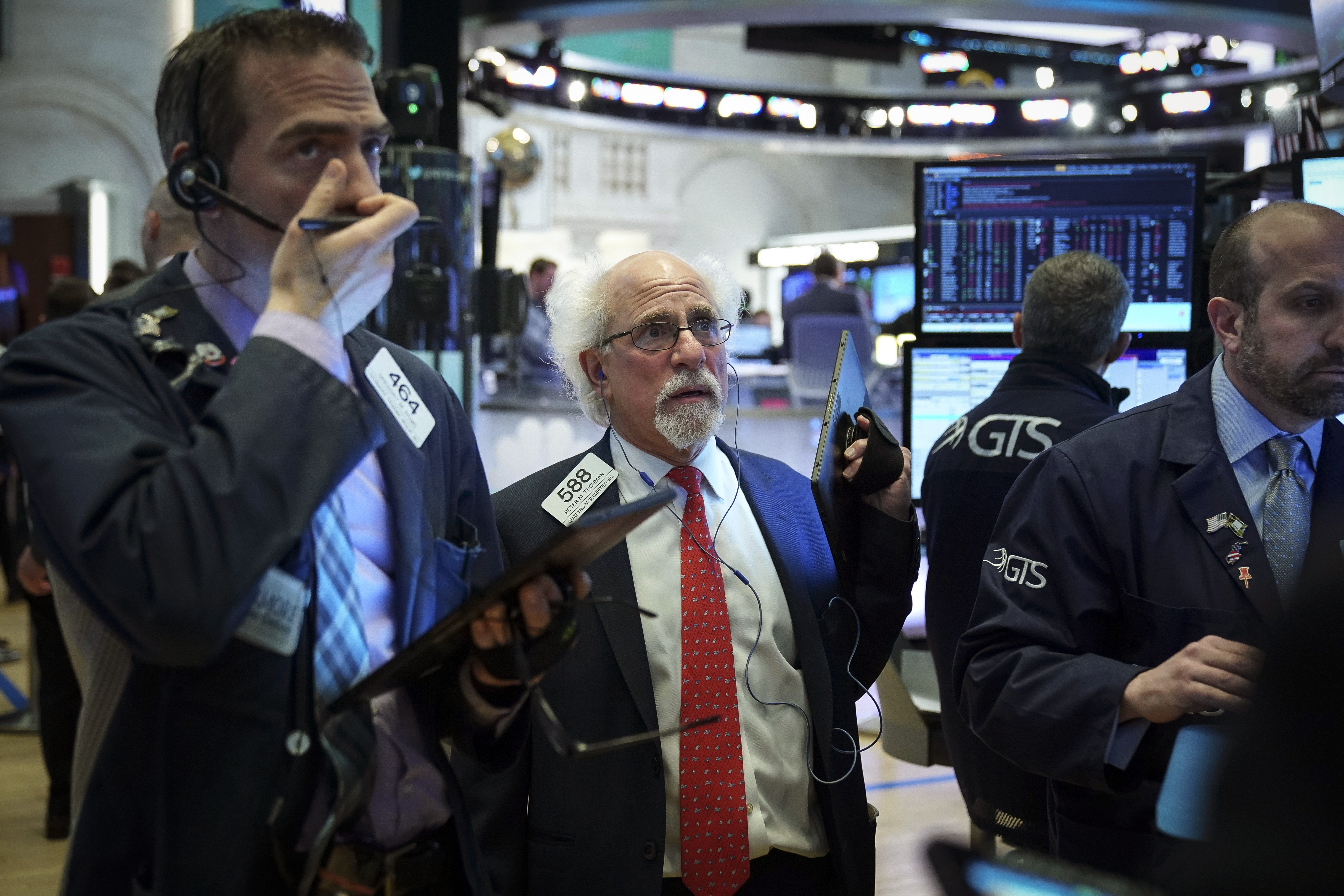
NEW YORK, NY - MAY 6: Traders and financial professionals work at the opening bell on the floor of the New York Stock Exchange (NYSE), May 6, 2019 in New York City. The Dow Jones Industrial Average dropped over 360 points at the open on Monday morning after U.S. President Donald Trump said that the U.S. will raise tariffs on goods imported from China. China also threatened to skip upcoming trade talks following tariff threats from President Trump.

According to Rosen, hardening U.S. approach to Chinese trade policy and the current discussion of possible “disengagement” with China are the result of U.S. recognition that China had changed course away from convergence with the liberal international economic order.  It, in fact, stems from the U.S.’s valid need to protect its economic welfare and the welfare of other market economies from the deleterious effects of China’s illiberal policies.  In the same way, he claimed, that the U.S. is not as deeply engaged with Italy as it is with Germany, and that we are not as deeply engaged with Germany as we are with Great Britain, it is not “heresy” to say that nations that do not share the same basic economic framework cannot be as engaged together—or as interoperable—as nations that do.  

But, Rosen predicted, China’s own turn away from market principles is bound to fail.  Liberal market reforms delivered double-digit growth for China since Deng Xiaoping’s Opening and Reform.  And “[u]nless everything we think we know about the relative efficiency and dynamism of free markets over politically controlled economies is wrong, the present Chinese policy turn will be, in the end, a dead-end,” Rosen remarked.  According to his prediction, therefore, we will either see a weakened China that poses less of an economic and national security threat to the U.S. or a China that eventually returns to market norms (i.e., “a reversion back to what will work.”).

In the meantime, therefore, he suggested that the American response must be “provisional,” “partial,” and “peaceful.”  American policy must be adaptable and readily reversible such that our ability to reengage to the maximum with China is carefully protected.  Secondly, it must be “partial” rather than absolute.  And, lastly, it must be “peaceful.”  When Beijing’s non-market policies fail, as it will, Rosen averred, and China re-orients itself towards economic convergence with advanced economy norms once more, we must ensure a “foundation of good will” between the U.S. and China to which China can return.

Rosen also cautioned against the U.S. abandoning its own source of national strength—i.e., its openness.  Arguing that economic protectionism has too often been confused with national security, Rosen argued that primary threats to U.S. national security now stem more from new causes like climate change, pandemics, migration pressures and access to weapons of mass destruction.  “Economic protection will do little to nothing to address those risks,” Rosen pointed out.

Rosen spoke at Shorenstein APARC as part of the China Program’s Colloquia Series “A New Cold War?: Sharp Power, Strategic Competition, and the Future of U.S.-China Relations.”  The series continues on May 3 with Ambassador Chas W. Freeman, Jr.’s seminar “On Hostile Coexistence with China.”

Hero Image
Traders and financial professionals work at the opening bell on the floor of the New York Stock Exchange (NYSE), May 6, 2019
NEW YORK, NY - MAY 6: Traders and financial professionals work at the opening bell on the floor of the New York Stock Exchange (NYSE), May 6, 2019 in New York City. The Dow Jones Industrial Average dropped over 360 points at the open on Monday morning after U.S. President Donald Trump said that the U.S. will raise tariffs on goods imported from China. China also threatened to skip upcoming trade talks following tariff threats from President Trump. | Getty Images / Drew Angerer
All News button
1
News Type
News
Date
Paragraphs

On Thursday, the third Asia-Pacific Geo-Economic Strategy Forum (APGEO) saw discussion on issues of international strategic cooperation in the Asia-Pacific with a particular focus on the U.S.-Japan relationship. Speakers included experts on defense and foreign affairs, including former U.S. National Security Advisor H.R. McMaster and former Japanese Ministers of Defense.

Organized by the Hoover Institution, Nikkei Inc. and the Freeman Spogli Institute of International Studies (FSI), the talks occurred within the context of the United State’s Free and Open Indo-Pacific Strategy (FOIP) and Japan’s Medium Term Defense Program, both recently updated to outline the U.S. and Japan’s respective regional commitments.

The forum’s speakers focused on the rise of China as a common theme underscoring the importance of the U.S.-Japan alliance. Particularly, the speakers shared a general consensus that China’s attempts to increase its economic and political influence and its initiatives to drive progress on technological frontiers such as 5G networks and artificial intelligence pose a threat to the current international order...

Read the full article in The Stanford Daily

Hero Image
Gen H.R. McMaster at podium, delivering speech
Gen. H.R. McMaster, Hoover Institution, addresses the 3rd Asia-Pacific Geo-Economic Strategy Forum | Thom Holme, APARC
All News button
1
0
patricia_robinson.jpg Ph.D.

Patricia (Tish) Robinson joined the Walter H. Shorenstein Asia-Pacific Research Center as a visiting scholar from Hitotsubashi University in Tokyo, Japan from May 2019 - April 2020.

Robinson’s research and teaching focus on managerial mediation and managerial coaching. She has published in Administrative Science Quarterly, Academy of Management Perspectives, and Human Resource Management Review, among others, and her research has received the Academy of International Business Farmer Award and the Academy of Management Richman Award. Other awards include a Fulbright Fellowship, a Fulbright Hayes Fellowship, a Fulbright Faculty Fellowship, a Carnegie Bosch grant, a Japan Foundation Faculty Fellowship, and a Shintaro Abe Fellowship, among others.

Robinson has served on the faculty at UC Berkeley, the NYU Stern School of Business and Harvard University, as well as at the Japan Institute of Labor Policy and Training.  She was appointed a Commissioner on the Fulbright Japan-US Educational Commission by Ambassador Caroline Kennedy, was an outside board director to Eisai Pharmaceuticals, elected an elected Governor to the American Chamber of Commerce Board of Governors, and served as a Founding Director of the Society of Organizational Learning Japan under the auspices of Peter Senge.

Robinson received her MBA and Ph.D. from the MIT Sloan School of Management at the Massachusetts Institute of Technology and her BA from Pomona College.

Visiting Scholar, May 2019-April 2020
Subscribe to United States