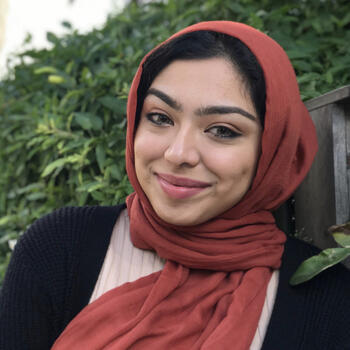
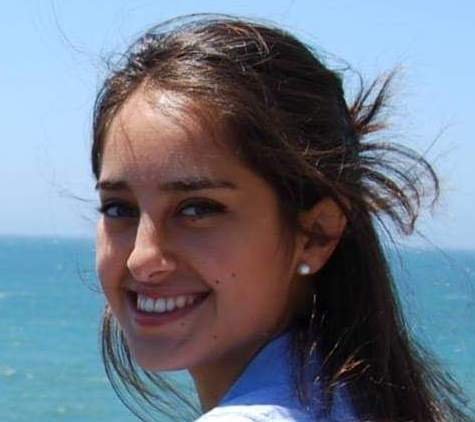
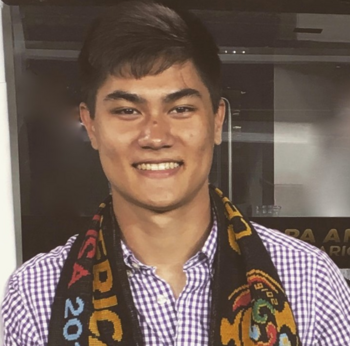
Authors
News Type
News
Date
Paragraphs

This year, the Sejong Korean Scholars Program (SKSP) concluded its sixth year with its largest cohort of 22 students from across the United States. The SKSP is an intensive online course offered by the Stanford Program on International and Cross-Cultural Education (SPICE) at Stanford University for exceptional U.S. high school students who want to engage in an in-depth study of Korea, exploring its history, religion, culture, and relationship with the United States. Students who successfully complete the course earn credit from the Stanford Continuing Studies Program and a Certificate of Completion from SPICE, Stanford University.

Each year from March to June, students in the SKSP online course carry out rigorous coursework that consists of weekly readings, online lectures, assignments, discussion posts, and “virtual classroom” video conferencing sessions, where students engage in live discussion with each other and a guest speaker who is an expert-scholar on the topic of the week. As their culminating final project, students write independent research papers which are printed in journal format at the conclusion of the course.

The SKSP online course offers a unique opportunity for high school students to study Korea and U.S.–Korean relations in a college-level-type course that draws on the wealth of expertise and scholarship on Korean Studies at Stanford University. Top scholars, experts, and former diplomats at Stanford University as well as other universities in the United States provide thematically organized online lectures. The themes for each week include traditional Korean culture, religion, colonial history, the Korean War, post-war recovery, North Korea, modern South Korean society and its educational system, and Korea’s transnationalism. In addition to the recorded online lectures, the guest speakers for the weekly virtual classroom sessions engage in discussions with students and provide answers to their questions.

The co-instructors for the course, as well as guest speakers, often note the quality and maturity of students’ thoughtful insights and questions. Co-instructor HyoJung Jang has noted that “the talented and engaged high school students who participate in the SKSP online course bring their intellectual curiosity, critical thinking skills, and enthusiasm for learning about Korea and its popular culture. On top of their full academic load at their respective high schools across the country, these students go above and beyond to commit to SKSP’s demanding coursework and participate fully in the course as Korea scholars-in-training.”

“Over the past four months, our students have formed a community where they actively engage in intellectual discussions with each other—exchanging their ideas, thoughts, reflections, experiences, and perspectives on various topics,” commented co-instructor Jonas Edman. “For instance, some students contributed their own interpretations and explanations for the stark difference between the Taiwanese colonial experience and memory of Japanese rule and that of Korea. When discussing the issue of ‘comfort women’ during Japanese colonial rule in Korea, one student shared a personal story about his great-great-grandmother’s similarly painful experience under foreign rule in Eastern Europe and powerfully advocated for the importance of justice. Other students shared about their assessments of the roles of the U.S. and South Korean leaders—in addition to the roles played by North Korea, China, and Russia—on the outbreak of the Korean War and its aftermath.”

Alongside their academic engagement with each other, students have also bonded over their shared interests in Korean food and popular culture, namely “K-pop, K-dramas, and K-movies.” Some students chose to write their final research papers on analyzing Korean popular culture. Other discussions on the modern Korean education system have even incorporated students’ personal observations of the education issues portrayed in a popular Korean drama. These interests are encouraged, as students are urged to creatively explore the topics most interesting to them for their final research paper.

One of the strengths of the SKSP online course is that it encourages high school students to consider different perspectives on various issues, think critically about those different perspectives, and develop their own informed opinions. Reflecting on her participation in the course, Chloee Robison, a high school student from Indiana, said, “SKSP was a unique opportunity to explore my interest in Korean history. Even though I am not of Korean heritage, I felt deeply connected to the course material, and I found the lectures to be quite informative and engaging. Coming from a region that is largely homogeneous, hearing the perspectives of diverse-minded students opened my eyes to issues and ideas that I would have otherwise been blind to. I am so grateful to everyone involved in the course, and I would recommend it to all students who wish to challenge themselves and expand their knowledge of Korean history and culture.” Chloee’s research project on Korea’s March First Movement earned first place in Indiana’s National History Day competition.

The popularity and demand for Stanford’s SKSP online course on Korea grows each year. Interested high school students are encouraged to apply early for the program. The application period is between late August and early October each year for enrollment in the online course the following year. The online application can be found on the SPICE website at sejongscholars.org.


To be notified when the next Sejong Korean Scholars Program application period opens, join our email list or follow us on Facebook and Twitter.

The Sejong Korean Scholars Program is one of several online courses for high school students offered by SPICE, Stanford University, including the China Scholars Program, the Reischauer Scholars Program (on Japan), and the Stanford e-Japan Program.


Related article:


Hero Image
Students in Stanford’s SKSP online course learn about Korea from many angles, including both traditional and contemporary Korean culture.
All News button
1
News Type
News
Date
Paragraphs

The 2019 Education Partnership for Internationalizing Curriculum (EPIC) Symposium brought together community college faculty and administrators from across California to discuss ways to prepare students for an increasingly globalized world.

“Today, more than ever, our students need to be equipped with the critical thinking, communication, socio-emotional, and language skills to work collaboratively with people in the United States and all over the world,” said Dave Dillon, a professor at Grossmont College, who is curating a textbook chapter on cultural competency for use in open educational resources.

Read the full article.


SPICE also offers professional development opportunities for middle school teachers and high school teachers. To stay informed of SPICE news, join our email list or follow us on Facebook and Twitter.


Related articles:


Hero Image
Community college instructors present at the 2019 EPIC Symposium
Community college instructors present their final projects at the 2019 EPIC Symposium at Stanford University | Stefanie Pietkiewicz
All News button
1
News Type
News
Date
Paragraphs

Applications open today for the Fall 2019 session of the Stanford University Scholars Program for Japanese High School Students (also known as “Stanford e-Japan”), which will run from October 1, 2019 to February 21, 2020. The deadline to apply is August 1, 2019.


Stanford e-Japan Program for high school students in Japan
Fall 2019 session (October 2019 to February 2020)
Application period: June 24 to August 1, 2019


All applications must be submitted at https://spicestanford.smapply.io/prog/stanford_e-japan/ via the SurveyMonkey Apply platform. Applicants and recommenders will need to create a SurveyMonkey Apply account to proceed. Students who are interested in applying to the online course are encouraged to begin their applications early.

Accepted applicants will engage in an intensive study of U.S. society and culture and U.S.–Japan relations. Ambassadors, top scholars, and experts from Stanford University and throughout the United States provide web-based lectures and engage students in live discussion sessions.

“[The Stanford e-Japan online course] was an exceptional opportunity to assimilate fresh insights on U.S.–Japan relations and produce my own ideas via active discussion,” reflects Anna Oura, a recent alum of the program. “Every week I would excitedly wait for Saturday 13:00, when I would meet my fellow scholars—virtually—and exchange opinions.”

Stanford e-Japan is offered by the Stanford Program on International and Cross-Cultural Education (SPICE), Stanford University. The Fall 2019 session of Stanford e-Japan is generously supported by the Yanai Tadashi Foundation, Tokyo, Japan.

For more information about Stanford e-Japan, please visit stanfordejapan.org.

To stay informed of news about Stanford e-Japan and SPICE’s other student programs, join our email list or follow us on Facebook and Twitter.


SPICE offers separate courses for U.S. high school students. For more information, please visit the Reischauer Scholars Program (on Japan), the Sejong Scholars Program (on Korea), and the China Scholars Program (on China).


Related articles:


Hero Image
High school student Amane Kishimoto, an honoree of the Stanford e-Japan online course, speaks at Stanford University
Stanford e-Japan honoree Amane Kishimoto speaks at Stanford University during Japan Day 2018. | Rylan Sekiguchi
All News button
1
Authors
Siegfried S. Hecker
News Type
News
Date
Paragraphs

As we witness the increasingly detrimental effects of global climate change, the role that nuclear power could play globally to mitigate its effects continues to be debated. The series of articles featured in the Bulletin in December 2016 aired a broad spectrum of opinions, ranging in assessment of the role of nuclear power from insignificant to mandatory. In this series, we present the perspective of a new crop of nuclear professionals who collectively represent two of the world leaders in nuclear power—the United States and Russia.

These young professionals work together to exchange views and ideas as part of the U.S.-Russia Young Professionals Nuclear Forum that we created in May 2016 to encourage dialogue on critical nuclear issues of concern to both countries. As most official avenues of US-Russia cooperation on nuclear issues were being shut down in pace with the deteriorating political relations between Washington and Moscow, our objective was to turn to the younger generation, because those in it will have to live with the consequences of a world in which their countries no longer cooperate to mitigate global nuclear dangers.

In the United States, our efforts are organized within the Center for International Security and Cooperation at Stanford University, although we reach out to universities and other organizations across the country. In Russia, we were fortunate to find the Moscow Engineering Physics Institute (MEPhI), Russia’s flagship research university in nuclear engineering, to be an enthusiastic partner. Its rector, Professor Mikhail Strikhanov, has an unwavering international outlook that stresses the need for cooperation, especially in higher education and research. The young professionals are students, postdoctoral fellows, and early career professionals.

Hecker has previously written in the Bulletin about the remarkable period of post-Cold War nuclear cooperation between Russian and American nuclear weapon scientists and how the termination of that cooperation by our governments threatens our collective security. We viewed engaging young professionals from the two countries as one of the few avenues of continued cooperation. It has the potential of being particularly effective because at the forum meetings, the young Russians and Americans interact in an educational and non-adversarial environment.

The first three forum meetings focused primarily on issues of nuclear non-proliferation and countering nuclear terrorism. They featured exercises in which the young professionals worked in small groups side by side to explore solutions to vexing nuclear problems. One was a simulation conducted at Stanford in May 2018 just a few weeks before the historic Trump-Kim Singapore Summit. The other was an exercise in Moscow in October 2018 to advise their governments on a hypothetical crisis related to the US withdrawal from the Iran nuclear deal.

At the Moscow forum, we also asked the young professionals to explore what the two countries could do to promote the benefits of nuclear energy around the globe, while cooperating to mitigate the associated risks.

Preparation for the forum included online lectures by senior mentors as well as lectures and discussion sessions in Moscow by both Russian and American specialists. In the nuclear power exercise, we assigned eight key questions to 24 young professionals. We divided them into eight teams, each composed of Russian and American participants. The central question was whether or not an expansion of global nuclear power is necessary to help mitigate the danger of global climate change. Individual groups examined issues of supply and demand around the globe and some of the big challenges posed by an expansion of nuclear power—those of economics, safety and security, potential proliferation of nuclear weapons, and the disposition of nuclear waste.

The young professionals conducted research prior to the meeting, deliberated and debated within their teams during the meeting, and presented their findings to the larger group and the panel of senior mentors at the end of the exercise. During the past six months they have captured the essence of their findings in the eight articles featured in this special presentation in the Bulletin.

Their findings are generally pro-nuclear, which is not surprising considering that most of them have strong educational and research backgrounds in either nuclear technologies or nuclear security. But we found that their views were primarily driven by their serious concerns about the dangers of global climate change and the urgent need to confront these dangers.

Their articles are of interest not so much in that they break new ground in these areas, particularly since many other  established experts have tried to tackle these issues for decades. They are of interest because they represent the views of some of the younger generation of professionals working together across cultural and disciplinary divides. We were struck by the following comment in one of the papers  that reflects on the perceived urgency of the task at hand: “We are the first generation that is experiencing the dramatic effects of global climate change and likely the last that can do something about it to avoid catastrophic consequences for the Earth and its people.”

We also note that the articles uniformly reveal that the young professionals across the board firmly believe that the benefits and risks of expanding nuclear power globally must be pursued and tackled in a concerted effort of major nuclear powers (especially the United States and Russia), other developed nations, the International Atomic Energy Agency, and all stakeholders. These younger voices stated: “The most important shift necessary to facilitate [nuclear power] expansion is an increase in international cooperation and multilateralization in the form of, for example, international reactor supply contracts, multinational enrichment conglomerates, nondiscriminatory fuel banks, and international waste repositories.”

We believe the readers will find the sentiments and opinions of the young Russian and American professionals interesting and encouraging. We certainly have found them eager and able to work together effectively—a lesson that the more senior professionals and the governments need to relearn.

Editor’s note: The Young Professionals Nuclear Forum cooperation is supported by the John D. and Catherine T. MacArthur Foundation and the Carnegie Corporation of New York.


Read the articles here:


Hero Image
rsd19 023 0010a
Rod Searcey
All News button
1
Authors
News Type
News
Date
Paragraphs

In early May, CISAC convened the fifth Young Professional Nuclear Forum (YPNF), a program sponsored by the Center for International Security and Cooperation at Stanford University and the Moscow Engineering and Physics Institute (MEPhI). The program brought together a lively group of young Russians and Americans working on nuclear issues over three days.

Since 2016, the forum has alternated between Moscow and Stanford.  

By 2016, US and Russian governments closed almost every door on opportunities that previously allowed experienced nuclear professionals on both sides to cooperate with each other.  Stanford Professor Siegfried Hecker saw that at least one door - that of cooperation on the university level - was still open. He started the YPNF to foster interaction between the younger generation of Russians and Americans who study, do research, or start a career in the nuclear power or nonproliferation fields.

This year’s agenda focused on two major areas: US-Russian arms control and the future of nuclear power.

The American group included a new cohort of six incoming young professionals from Los Alamos National Laboratory, UC Berkeley, Center for Arms Control and Non-Proliferation, and Vienna Center for Disarmament and Non‑Proliferation. They were joined by CISAC research staff members Gaby Levikow and Elliot Serbin and current and former fellows Chantell Murphy, Kristin Ven Bruusgaard, and Cameron Tracy. The Russian group from MEPhI brought a team of 12 young professionals most of whom are pursuing their graduate degrees in nuclear physics and engineering and software engineering, along with junior professionals in international relations and nuclear fields.  The team of experts included Professor Hecker, Dr. James Toevs, Dr. Ning Li, Ambassador Steven Pifer, Professor David Holloway, Dr. Larry Brandt, Dr. Chaim Braun, Dr. Pavel Podvig, and Dr. Mona Dreicer, —all of whom provided advice and feedback during the exercise.

Participants come from loosely defined “technical” and “policy” fields, and the forum agenda has traditionally included one nuclear-power related and one policy-focused subject. Forum activities vary between lectures, expert briefings, discussions, and table-top exercises, but the small-group work during the exercises is the core form of interaction.

By design, this agenda exposes each participant to new fields, new counterparts, some fun interactive time off - and encourages a lot of cultural learning. Forum after forum, we hear back that the group work and social time are the most exciting aspects of the forum experience. Participants noted they learned, among other things, “general ideas and thoughts of American participants and their attitudes to the present American policy, new words and abbreviations … [and] a great deal about new reactor designs and their implications for nuclear energy and security policy.”  Still more participants enjoyed “learning to collaborate in groups of Americans and Russians but also between policy and technical experts on topics of both camps,” and some “got new friends.”

Encouragingly, participants requested more interaction between the bi-annual meetings and a variety of topics in yet untapped – or suspended - areas of cooperation between Russia and the US.

New work continues to emerge from the forum. Eight short articles written by the young professionals to showcase the results of the projects from the Moscow meeting in November 2017 was published in the Bulletin of the Atomic Scientists in June 2019. The next meeting will be held in Moscow this November.


Hero Image
rsd19 023 0010a
Rod Searcey
All News button
1
Authors
Beth Duff-Brown
News Type
News
Date
Paragraphs


Mariam Noorulhuda has seen health disparities up close in the developing world, particularly in Afghanistan, where she interned at a hospital in Kabul last summer.

“There was a shortage of trained health-care professionals, especially women, poor facility conditions, and insecurity,” she said. “Our hospital was minutes away from multiple bombings.”

Noorulhuda is a rising senior and one of six Stanford undergraduates chosen for the inaugural class of Stanford Health Policy Undergraduate Research Fellows. From a variety of disciplines, they will spend this summer partnered with SHP faculty to work on research projects. The students were chosen for their desire to blend health policy with their own undergraduate studies.

Noorulhuda’s Story

Mariam Noorulhuda Mariam Noorulhuda
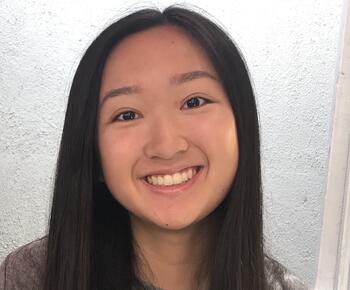
Noorulhuda’s family first fled Afghanistan during the Soviet invasion in 1979. They made it to a refugee camp in neighboring Pakistan, where an infant brother died for lack of health care. They returned to Kabul after the Soviets left in 1991, but the country fell back into civil war.

That is when she lost another brother, as health-care infrastructure was demolished after much of the capital was destroyed in bombings. When the Taliban targeted her father for his resistance efforts, they fled again and were granted asylum in the United States in 1997. Though raised in the Bay Area, many family members remain in Afghanistan.

“Much of my family has been affected by the brutal impact that war has on health — not entirely through bombs and bullets per say — but through indirect effects like displacement and virtually nonexistent health systems,” said Noorulhuda, a history major with a minor in human rights.

She will work with SHP’s Eran Bendavid, an infectious diseases physician and associate professor of medicine who focuses on the impact of health policies and outcomes in developing countries. He is the fellowship coordinator for this inaugural summer program.

Impact of Health Policy

"There is a growing recognition that health policy impacts just about every facet of human experience and well-being, and we see students picking up on that earlier and earlier,” said Bendavid. “The scholarship at SHP — from the effects of gun ownership or armed conflict to quality of care and guideline development — is an exceptional environment for gaining experience and a deep-dive into health policy research."

The fellowships were made possible with generous support from Stanford political scientist Scott Sagan, and his wife Sujitpan Bao Lamsam, vice chairman of Kasikornbank in Thailand. Sagan is a senior fellow at the Center for International Security and Cooperation who focuses on nuclear strategy, the ethics of war and the safety of hazardous technology.

“One of the great strengths of Stanford is the opportunity for undergraduates to get deeply involved in faculty research projects,” said Sagan, whose daughter Charlotte Sagan (BA, `15) was a research assistant in health policy while at Stanford. “We wanted to help create such opportunities for future students.”

Tiffany Liu Tiffany Liu

Tiffany Liu just finished her freshman year and has yet to declare her major, though she’s thinking symbolic systems, the study of human-computer interaction.

“Both fields incorporate so many diverging perspectives and methods in order to solve salient issues,” said Liu, who will work with Jason Wang, an associate professor of pediatrics who looks at the use of innovative technology to improve quality of care and health outcomes.

“I’m eager to engage in health policy research through a mix of technical and non-technical methods — we can process and analyze data in so many more interesting ways using computers, and yet we can’t ever lose the humanistic aspect of health initiatives,” Liu said.

Nikhil Shankar, also a rising senior, is an economics major. He jumped at the health policy fellowships because he believes applied economics can have “real-world impact.”

He will be working with SHP’s Grant Miller, a senior fellow at the Freeman Spogli Institute for International Studies and director of the Stanford King Center on Global Development. They will examine the impact of population policy on child health outcomes by gender in China.

Nikhil Shankar
“Effective health policy, informed by sound research, plays a vital role in ensuring that every child has the capabilities needed to achieve their potential,” Shankar said. “I hope to be a small part of the global community of researchers, policymakers and advocates working to ensure equitable and affordable health care for all.”


Health-care inequality driven by factors beyond the control of individuals is something that troubles Andrea Banuet, a human biology major and another a rising senior.

“Factors such as socioeconomic status, age, ethnic and racial backgrounds should not determine the type of care an individual can attain — but the really sad reality is that in many parts of our country, it does.”

She believes that policy informed by research has the power to combat institutional biases and promote change in health-care accessibility. She will be working Kathryn M. McDonald, executive director of CHP/PCOR, an expert on health-care quality and patient safety.

Conrad Milhaupt is another rising senior with a double major in economics and public policy.

“I have a passion for the intersection of economics, politics and policy, with a particular focus on health and environmental policy,” said Milhaupt, who will work with SHP’s Jay Bhattacharya, a professor of medicine and economics.

Milhaupt took Bhattacharya’s health economics class in his sophomore year and became intrigued by the discrepancies in costs for health services with only marginal differences in outcomes. He is particularly interested in health care in rural America and ways that changes to our public-private insurance mix may improve access to care and help manage costs.

“Ultimately, I am driven to study this topic by my belief that health care is a human right and that health is an integral aspect of every individual’s life,” he said.

Conrad Milhaupt

Calvin Tolbert, with funding from the Office of the Vice Provost for Teaching and Learning, will work with Eric Sun, an economist and assistant professor of anesthesiology who researches consolidation in physician markets and the economics of pain treatments.

Tolbert is a rising junior majoring in economics and classics, with a minor in mathematics.

“The thing that initially drew me to economics was the fact that it was both math-intensive and pertinent to public policy, which is a keen interest of mine,” he said.

He will be working on a project that looks at physician compensation across countries and the wide gap in costs and access to medical care and drugs.

“This is an area that first caught my eye, when I read accounts of medical tourism in the news, including both people from developing countries who come to America for serious procedures and Americans who visit other countries to receive treatment due to the expense of medical care in this country.”


Hero Image
gettyimages students
Getty Images
All News button
1
Authors
Beth Duff-Brown
News Type
News
Date
Paragraphs

The United States has more people with new HIV diagnoses each year than any high-income nation. There is this widespread misconception out there that we’ve got it under control; that the drug cocktails are so effective that HIV is no longer a leading threat.

“Unfortunately, HIV remains a major public health problem in the U.S.,” said Stanford Health Policy’s Douglas K. Owens. He is chair of the U.S. Preventive Services Task Force, which issued two influential recommendations Tuesday for the prevention and treatment of HIV.

“Each year, almost 40,000 people acquire HIV, he said. “It’s not acceptable and requires our urgent attention.”

Owens, the Henry J. Kaiser, Jr., professor at Stanford Medicine, said an estimated 1.1 million people are currently living with HIV in this country — and more than 700,000 people have died of AIDS since the first cases were reported in 1981. Of the 38,281 new diagnoses of HIV reported in 2017, 81% were among men and 19% among women.

“There are highly effective preventive interventions that can help us toward the goal of ending the HIV epidemic in the U.S.,” said Owens, who is also an investigator at VA Palo Alto Health Care System “However, we know not enough people receive these interventions.”

The task force recommends clinicians screen everyone aged 15 to 65 and all pregnant women for HIV and offer pre-exposure prophylaxis (PrEP) — a pill that helps prevent HIV — to people at high risk of contracting the potentially fatal infection.

It released its recommendations with a series of articles and editorials in the Journal of the American Medical Association (JAMA), calling for dramatic action to end the AIDS epidemic in the United States once and for all. 


The task force is an independent, volunteer panel of national experts in prevention and evidence-based medicine who work to improve the health of all Americans by making recommendations. They typically give letter grades to its recommendations, and this time issued its highest grade, an A.

The draft recommendations were made last year and then put out for review and public comment. The recommendations made Tuesday are final.

The benefit of this endorsement could be substantial, according to one of the accompanying editorials in JAMA, because under the Affordable Care Act, Grade A and B recommendations made by the USPSTF should be covered by private insurance without patient cost-sharing.

“How this recommendation will be implemented is of critical importance because cost is a major barrier for people both to start and to stay on PrEP,” wrote Diane V. Havlir, MD, and Susan P. Buchbinder, MD, in their editorial. At present, they wrote, the average monthly retail cost for PrEP without insurance is nearly $2,000.

The task force members concluded “with high certainty” that while there are some small harms associated with PreP, the magnitude of benefit with oral tenofovir disoproxil fumarate-based therapy to reduce the risk of HIV infection in people at high risk is substantial.

“Clinicians can make a real difference toward reducing the burden of HIV in the United States, Owens said in the task force statement. “HIV screening and HIV prevention work to reduce new HIV infections and ultimately save lives.”

Fewer than half of all adults have ever been tested for HIV in the U.S. and many of those requiring more frequent testing are not receiving it. The task force emphasized that clinicians should make testing routine and ensure patients are given an environment that is free of judgment during discussions of sexual health.

Screening is the only way to know if a person has been infected with HIV because, after initial flu-like symptoms, HIV does not cause any signs of symptoms for several years. So the task force recommends HIV screening for everyone between of 15 and 65 and for pregnant women.

In addition to screening, people need to prevent getting HIV by using condoms during sex, the task force said, for those who inject drugs, using clean needles and syringes.

People at high risk for HIV have an additional strategy for prevention in taking PrEP, the task force said in its statement. “For people at high risk of getting HIV, the benefits of PrEP far outweigh the harms, which can include kidney problems and nausea.”

Read the full task force statement and accompanying articles and editorials in JAMA.  


Hero Image
gettyimages doctalk
Getty Images-DocTalk
All News button
1
Authors
Naomi Funahashi
News Type
Blogs
Date
Paragraphs

Since joining SPICE in 2005, my annual calendar has revolved around not spring flowers, caterpillars dangling from trees, and falling leaves around the beautiful Stanford campus, but the schedule of the Reischauer Scholars Program (RSP), Stanford’s online course on Japan and U.S.–Japan relations for U.S. high school students. As the manager and instructor of the RSP, I have had the pleasure (and truly, the honor) of teaching this online course for 14 years. We accept applications beginning in August, outreach efforts ramp up in September and October, and new cohorts of talented U.S. high school students are selected every November. With January comes the updating of the syllabus with new readings, topics, and video lectures, and identifying and inviting guest speakers for the virtual classes. And the highlight of my year—every year—is on February 1, when the new cohort signs into our online learning platform ready to engage in this new community, connect over shared interests, learn from their differences, and to embark upon the RSP journey together.

It is now early June, and the 2019 Reischauer Scholars Program is, unbelievably, soon coming to an end. This year’s RSP journey has led us through explorations of tales of samurai, the modernization of Meiji Japan through the lens of filmmaker Ozu Yasujiro, comparative perspectives on colonial and wartime legacies through textbooks, and lessons on civil liberties as told by someone who was sent to a Japanese American internment camp with his family as a 9-year-old boy.

While this online course has always approached the study of Japan and U.S.–Japan relations with an intense academic rigor befitting Stanford University, I also wanted to offer students access to the personal stories of practitioners who play an active role in Japanese society and the U.S.–Japan relationship that we study. One of the wonderful aspects of teaching online is that for our weekly virtual classroom sessions—where all students meet synchronously using Zoom video conferencing software—we are able to welcome guest speakers to join us from anywhere in the world.

As we explored the U.S.–Japan security relationship this year and the controversies surrounding the presence of U.S. military bases in Okinawa, for example, students met with an Okinawan native who works on the U.S. Air Force Base in Kadena. Learning about how her experiences and perspectives inform her own efforts to enhance U.S.–Japan relations gave the students new insight into the impact of international policy upon individuals and the communities in which they live.

For our module on U.S.–Japan diplomacy we were joined by the Principal Officer of the U.S. Consulate in Sapporo, Rachel Brunette-Chen, who talked about how her interests in connecting the U.S. and Japan have informed her career in the U.S. State Department. RSP students often cite international relations and diplomacy as two high-interest fields for their future undergraduate studies and career aspirations, so they made the most of this opportunity to ask thoughtful questions about careers in Foreign Service. Given the diverse career tracks available in the State Department, students were inspired to learn that they could take their multidisciplinary interests and apply them in an international context for years to come.

As we grappled with the various challenges facing modern Japanese society during the last few weeks of class—including students mired in a test-centric system, the demographic realities of an aging population and declining birth rates, pervasive issues of gender inequality, and minority rights, among others—it was important to gain an understanding of how these issues are being addressed and experienced by real people. Our final guest speaker for the 2019 RSP, a Japanese American entrepreneur and educator living and working in Tokyo, shared his first-hand perspectives on the state of entrepreneurship and innovation in contemporary Japan.

Perhaps the most memorable of the online video conferencing sessions this year were the two joint virtual classes with the students of the Stanford e-Japan Program. Stanford e-Japan is an online course that engages Japanese high school students in the study of U.S. society and U.S.–Japan relations, and is comprised of students from across Japan. The rich, open discussions and friendly international camaraderie fostered during these joint sessions are always a delight to observe. I know that many of my RSP students—and many of the Stanford e-Japan students, as well—will treasure these experiences and relationships for years to come.

In our virtual class on diplomacy, one student asked, “How can we, as high school students, make a real impact on the U.S.–Japan relationship?” “By taking the initiative to be active participants in courses like the Reischauer Scholars Program,” replied Ms. Brunette-Chen, “you are already on your way. In sharing what you learn about Japan, you are also raising awareness about the importance of the U.S.–Japan relationship among your peers and school communities.” Indeed, these 2019 Reischauer Scholars are already on their way. As the spring flowers, dangling caterpillars, and fall leaves continue to come and go in the years ahead, I am eager to see the different ways in which their impact upon U.S.–Japan relations will continue to take shape. Who knows? Perhaps a few will return to the RSP years from now—this time not as students, but as guest speakers who coach and inspire the Reischauer Scholars of the future.


To be notified when the next Reischauer Scholars Program application period opens, join our email list or follow us on Facebook and Twitter.

The Reischauer Scholars Program is one of several online courses for high school students offered by SPICE, Stanford University, including the China Scholars Program, the Sejong Scholars Program (on Korea), and the Stanford e-Japan Program.


Related articles:


Hero Image
High school student honorees of SPICE's online course on Japan
Student honorees of the 2018 Reischauer Scholars Program with Consul General Tomochika Uyama and RSP Instructor Naomi Funahashi. | Rylan Sekiguchi
All News button
1
Authors
Amy Zegart
News Type
Commentary
Date
Paragraphs

Thirty years ago this week, I watched the news from Beijing and started shredding my bedding. It was the night before my college graduation, I had been studying Chinese politics, and news had broken that college students just like us had been gunned down in Tiananmen Square after weeks of peaceful and exhilarating democracy protests—carried on international TV. In the iconic square where Mao Zedong had proclaimed the People’s Republic decades before, bespectacled students from China’s best universities had camped out, putting up posters with slogans of freedom in Chinese and English. A “goddess of democracy” figure modeled after the Statue of Liberty embodied their hopes—and ours—for political liberation in China.

On my campus back then were just a handful of students majoring in East Asian studies. Learning of the brutal crackdown in Beijing, we somehow found one another, gathered our friends, and stayed up making hundreds of white armbands for classmates to wear at commencement the next day. Grappling with the cold realities of the “real world” we were about to enter, we didn’t know what else to do. So we tore sheets and cried for what might have been.

The June 4, 1989, massacre was a horrifying spectacle that the Chinese government has sought to erase from national memory ever since. But, 30 years later, contemplating what might have been is more important than ever. In hindsight, Tiananmen Square serves as a continuing reminder about just how much China has defied, and continues to defy, the odds and predictions of experts. The fact is that generations of American policy makers, political scientists, and economists have gotten China wrong more often than they’ve gotten China right. In domestic politics, economic development, and foreign policy, China has charted a surprising path that flies in the face of professional prognostications, general theories about anything, and the experience of other nations.

Read the rest at The Atlantic

Hero Image
zegart amy cropped
All News button
1
News Type
Commentary
Date
Paragraphs

Karl Eikenberry, director of the U.S.-Asia Security Initiative, spoke with "Bloomberg Markets: Asia" about the ongoing trade disputes between the U.S. and China. Video of his interview—conducted on the sidelines of the Morgan Stanley China Summit in Beijing—is posted below.


Hero Image
Eikenberry on Bloomberg News
All News button
1
Subscribe to United States