Authors
Julien de Troullioud de Lanversin
News Type
Commentary
Date
Paragraphs

This is not the first time that the world has faced the outbreak of a coronavirus which originated in China.

But the consequences have been very different this time around.

Read the rest at The Bulletin of Atomic Scientists

Hero Image
Great Wall of China
JLB1988/Pixabay
All News button
1
Subtitle

Seventeen years ago, an outbreak of SARS—a disease caused by the coronavirus SARS-CoV-1—emerged in China. Back then, a fruitful partnership emerged between the United States and China, that contributed to the successful control of the outbreak and nurtured the careers of young Chinese virologists and epidemiologists.

-

This event is held virtually via Zoom. Please register for the webinar via the below link.

Registration Link: https://bit.ly/2SS6DpY


This event is co-sponsored by the Shorenstein APARC Japan Program and China Program.

Japan's economic challenge to the United States in the 1980s aroused more concern in the United States than people now realize. Japan took some very effective steps to stop it. China's challenge plays out across the economic, military, technological, and global influence spheres. China has not yet taken steps to stop it and the tensions are increasingly serious and show no signs of diminishing. Japan has also found better ways to reduce tensions with China than has the United States. While the circumstances are different between the 1980s and today, Japan’s dealings with the United States in the 1980s might offer some lessons for China today. Dr. Ezra Vogel, Professor Emeritus at Harvard University, will discuss these topics and more during this webinar. The event will conclude with an audience Q&A moderated by Japan Program Director Kiyoteru Tsutsui and China Program Director Jean Oi.

SPEAKER

Image
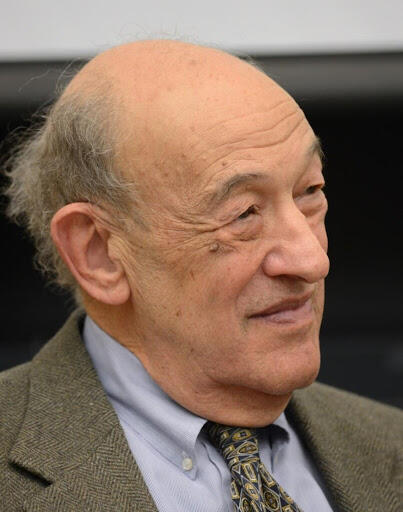
Portrait of Dr. Ezra Vogel, Professor Emeritus at Harvard University

Professor Ezra F. Vogel is Professor Emeritus at Harvard University. Vogel received his PhD at Harvard in 1958 in Sociology in the Department of Social Relations and was a professor at Harvard from 1967-2000. In 1973, he succeeded John Fairbank to become the second Director of Harvard's East Asian Research Center. At Harvard, he served as director of the US-Japan Program, director of the Fairbank Center, and as the founding director of the Asia Center. From fall 1993 to fall 1995, Vogel was the National Intelligence Officer for East Asia at the National Intelligence Council in Washington. His book Japan As Number One (1979), in Japanese translation, became a best seller in Japan, and his book Deng Xiaoping and the Transformation of China (2011), in Chinese translation, became a best seller in China. He lectures frequently in Asia, in both Chinese and Japanese. He has received numerous honors, including eleven honorary degrees.

Via Zoom Webinar.

Registration Link: https://bit.ly/2SS6DpY

Ezra Vogel, Professor Emeritus <br>Harvard University</br>
Seminars
-

Title: Women Left Behind: Gender Inequality Within Rajasthan's Health Insurance Program

Radhika Jain 
Asia Health Policy Postdoctoral Research Fellow, Shorenstein APARC
Working with Karen Eggleston, PhD, Director of the Asia Health Policy Program, Shorenstein Asia-Pacific Research Center and Fellow at the Center for Health Policy and the Center for Primary Care and Outcomes Research.

Abstract: Using data on millions of hospital visits, we document striking gender disparities under a government health insurance program that entitles 46 million poor households in Rajasthan, India to free hospital care. Young girls and elderly women comprise only 40% of all transactions in their age groups and these gaps are larger for private and tertiary care. The gender gap does not decrease over four years of implementation, despite substantial increases in total utilization. We find evidence consistent with the theory that the gap is driven by households’ willingness to allocate more resources to male than female health. Reducing the cost of care increases levels of utilization as well as male-female disparities. Female political representation reduces disparities, but not among the elderly.     


Virtual - Zoom 
 

Register in advance for this meeting:
https://stanford.zoom.us/meeting/register/tJcsce2ppz8vHdLayZR5732imMupq2qQVqLI  

After registering, you will receive a confirmation email containing information about joining the meeting.

Radhika Jain
Paragraphs

Although health care billing claims data have been widely used to study health care use, spending, and policy changes, their use in the study of infectious disease has been limited. Other data sources, including from the Centers for Disease Control and Prevention (CDC), have provided timelier reporting to outbreak experts. However, given the scope of SARS-CoV-2—the causative agent responsible for the novel coronavirus disease 2019 (COVID-19) pandemic—and the multidimensional impact of the crisis on the health care system, analyses relying on health care claims data have begun to appear. Claims-based COVID-19 studies have a role, but it is critical to understand the limitations of these data. We are concerned that many weaknesses are not recognized by those familiar with other forms of patient-level data. Below, we examine several major considerations and make suggestions about where claims data may be best leveraged to inform policy and decision making.

All Publications button
1
Publication Type
Journal Articles
Publication Date
Journal Publisher
Health Affairs
Authors
Sherri Rose
Number
2020
-

This is a virtual event. Please click here to register and generate a link to the talk. 
The link will be unique to you; please save it and do not share with others.


Note: This event is off-the-record and will not be recorded for future viewing.
By registering for this webinar, attendees agree to refrain from recording, citing, attributing, or otherwise sharing content from this event.

This event is Co-Sponsored by the Center for South Asia (CSA)

How are India and the United States responding to the growing political and military power of China in the Indian Ocean region? India has traditionally sought to maintain strategic preeminence in the region and sees its influence as being increasingly contested. The United States sees the region as an integral part of the wider “Indo-Pacific,” defined by intensifying strategic competition with China. Military planners at U.S. Indo-Pacific Command are refining their strategy in the region, including their approach to mitigating security risks and deepening the U.S. Major Defense Partnership with India, alongside other allies and partners. In this off-the-record webinar, the Command’s senior policy advisor and two leading experts on the Indian Ocean will share their assessments of the key strategic challenges facing India and the United States in the region.

Speakers:

Image
David Brewster
David Brewster is a Senior Research Fellow at the National Security College at the Australian National University, where he focuses on security in India and the Indian Ocean region, and Indo-Pacific maritime affairs. His books include India as an Asia Pacific Power, about India’s strategic role in the Asia Pacific, India’s Ocean: the Story of India’s Bid for Regional Leadership, which examines India’s strategic ambitions in the Indian Ocean, and the edited volume, India and China at Sea: Competition for Naval Dominance in the Indian Ocean. He is the author of several reports, including The Second Sea, which examines Australia’s role in the Indian Ocean proposes a new roadmap for Australia’s strategic engagement in that region. Brewster holds a PhD from the Australian National University.
 

Image
Shezi Khan
Shehzi Khan is the Senior Policy Advisor in the Strategic Planning and Policy Directorate at Indo-Pacific Command, supporting senior leadership on key regional policy initiatives.  Ms. Khan served on the Secretary of State’s Policy Planning Staff, as Executive Officer to the Principal Deputy Director of National Intelligence, and as senior South Asia analyst at the State Department.  Ms. Khan briefed the President of the United States in 2013.  She has been posted in Pakistan, China, and New Zealand and also lived and worked in India, Egypt, and France. Ms. Khan speaks five foreign languages and holds an MBA in International Finance and an MA in International Relations.  She is a recipient of the National Intelligence Superior Service Medal and was named State Department’s Analyst of the Year in 2014.
​

Image
Nilanthi Samaranayake
Nilanthi Samaranayake directs the Strategy and Policy Analysis Program at CNA. She has led several studies on Indian Ocean and South Asia security. Recently Samaranayake has worked on U.S.-India naval cooperation, water resource competition in the Brahmaputra River basin, and Sri Lankan foreign policy. She also has conducted research on the navies of Bangladesh and Pakistan, the Maldives Coast Guard, security threats in the Bay of Bengal, and relations between smaller South Asian countries and China, India and the United States. Prior to joining CNA, Samaranayake held positions at the National Bureau of Asian Research and the Pew Research Center. Samaranayake holds an M.Sc. in International Relations from the London School of Economics and Political Science and a B.A. in International Studies from American University.


Image
Arzan Tarapore
Arzan Tarapore (Moderator) is the South Asia research scholar at the Shorenstein Asia-Pacific Research Center at Stanford University, where he leads the newly-restarted South Asia research initiative. He is also a senior nonresident fellow at the National Bureau of Asian Research. Tarapore’s research focuses on Indian military strategy and contemporary Indo-Pacific security issues. This includes a forthcoming paper on “Building Strategic Leverage in the Indian Ocean Region.” He previously held research positions at the RAND Corporation, the Observer Research Foundation, and the East-West Center in Washington. Prior to his scholarly career, he served as an analyst in the Australian Defence Department. Tarapore holds a PhD in war studies from King’s College London.


Via Zoom Webinar
Register at:  https://bit.ly/34xYmgu

David Brewster <br><i>Senior Research Fellow at National Security College, Australian National University</i><br><br>
Shehzi Khan <br><i>Senior Policy Advisor in the Strategic Planning and Policy Directorate, Indo-Pacific Command</i><br><br>
Nilanthi Samaranayake <br><i>Director of Strategy and Policy Analysis Program, CNA</i><br><br>
Arzan Tarapore - Moderator <br><i>South Asia Research Scholar, Stanford University</i><br><br>
Seminars
-

This is a virtual event. Please click here to register and generate a link to the talk. 
The link will be unique to you; please save it and do not share with others.

Reports of Chinese espionage, IP theft and military-civil fusion strategy have all fueled concerns regarding U.S. universities’ open research ecosystem, especially in STEM.  Many of the concerns focus not only on research integrity but also on potential adverse consequences to U.S. military and economic security.  This panel intends to deepen discussion on open access to U.S. universities, security risks involved, as well as the potential adverse consequences of limiting international access in science and technology (S&T) research.  Questions that panel members will be asked to address include:  What is our best estimate regarding the scale and scope of adverse influence in U.S. universities attributable to S&T collaboration with PRC personnel?  Scientific collaboration and higher education have traditionally been immune to the ups-and-downs of U.S.-China politics.  How did we get to where we are, and why?  What are remedial measures that universities can consider, optimized to balance security and ethical concerns while ensuring pre-eminent scientific advancements and continued U.S. innovation? 


Speakers 

Photo of Arthur BienenstockArthur Bienenstock is co-chair, with Peter Michelson, of the American Academy of Arts and Sciences’ Committee on International Scientific Partnerships.  He has also been a member of the National Science Board, the governing body of the National Science Foundation, since 2012.  From November 1997 to January 2001, he was Associate Director for Science of the White House Office of Science and Technology Policy.  At Stanford, he is Special Assistant to the President for Federal Research Policy, Associate Director of the Wallenberg Research Link and a professor emeritus of Photon Science, having joined the faculty in 1967.  He was Vice Provost and Dean of Research and Graduate Policy during the period September 2003 to November 2006, Director of the Stanford Synchrotron Radiation Lightsource from 1978 to 1977 and Vice Provost for Faculty Affairs from 1972 to 1977. 
 

Image
Photo of Elsa B. Kania
Elsa B. Kania is an Adjunct Senior Fellow with the Technology and National Security Program at the Center for a New American Security. Her research focuses on Chinese military strategy, defense innovation, and emerging technologies. Ms. Kania also works in support of the U.S. Air Force’s China Aerospace Studies Institute through its Associates Program and is a Non-Resident Fellow in Indo-Pacific Security with the Institute for the Study of War. She has been invited to testify before the House Permanent Select Committee on Intelligence, the U.S.-China Economic and Security Review Commission, and the National Commission on Service. Kania was named an official “Mad Scientist” by the U.S. Army’s Training and Doctrine Command and was a 2018 Fulbright Specialist with the Australian Strategic Policy Institute. Her first book, Fighting to Innovate, should be forthcoming with the Naval Institute Press in 2021. Currently, she is a PhD candidate in Harvard University's Department of Government.
 

Image
Portrait of Susan Shirk

Susan Shirk is the chair of the 21st Century China Center and a research professor at the School of Global Policy & Strategy at UC San Diego. She is also director emeritus of the University of California’s Institute on Global Conflict and Cooperation (IGCC), serving from 1992 to 1997, and again from 2007 to 2012. 

From 1997 to 2000, Shirk served as deputy assistant secretary of state in the Bureau of East Asia and Pacific Affairs, with responsibility for China, Taiwan, Hong Kong, and Mongolia. Shirk founded in 1993 the Northeast Asia Cooperation Dialogue (NEACD), an unofficial “track-two” forum for discussions of security issues among defense and foreign ministry officials and academics from the United States, Japan, China, Russia, and the Koreas.

Shirk’s book China: Fragile Superpower helped frame the policy debate on China in the U.S. and other countries. Her other publications include The Political Logic of Economic Reform in China; How China Opened its Door; Competitive Comrades: Career Incentives and Student Strategies in China; and her edited book, Changing Media, Changing China. Her current book project is Overreach: How China’s Domestic Politics Derailed its Peaceful Rise. 


Portrait of Tim SternsTim Stearns holds the Frank Lee and Carol Hall Professorship in the Department of Biology at Stanford University and is Senior Associate Vice Provost of Research. He also holds appointments in the Department of Genetics, is a member of the Stanford Cancer Institute and Bio-X, is a Faculty Fellow in Chem-H, and is an affiliated faculty member of the Center for International Security and Cooperation (CISAC). He is a member of JASON, a national organization that advises the government on matters of science, technology and national security. He has also been an advisor to the National Academies of Science and the President's Council of Advisors on Science and Technology (PCAST). Dr. Stearns received a B.S. from Cornell University, a Ph.D. from MIT, and did his postdoctoral fellowship at the University of California, San Francisco. His research concerns the mechanism and regulation of cell division, the organization of signaling pathways within cells, and cell biology of fungal pathogens. Stearns was named an HHMI Professor in 2002 for his work in science education, and has taught international workshops in South Africa, Chile, Ghana, and Tanzania. He is the chair of the NCSD Study Section at the NIH and has served on the editorial boards of several journals.

Via Zoom. Register at: https://bit.ly/3iqMxNM

Arthur Bienenstock <br><i>Co-chair, American Academy of Arts and Sciences’ Committee on International Scientific Partnerships; Professor of Photon Science, Emeritus, Stanford University</i><br><br>
Elsa B. Kania <br><i>Adjunct Senior Fellow, Technology and National Security Program, Center for a New American Security</i><br><br>
Susan Shirk <br><i>Chair of the 21st Century China Center, UC San Diego; Research Professor, School of Global Policy & Strategy, UC San Diego</i><br><br>
Tim Stearns <br><i>Frank Lee and Carol Hall Professorship, Department of Biology, Stanford University; Senior Associate Vice Provost of Research</i><br><br>
Panel Discussions
1
Postdoctoral Research Fellow
becca_lauren_tisdale_114.jpg MD, MPA

Becca Tisdale, MD, MPA is an internist and health services researcher with interests in global health cardiology and health systems. She received a B.A. with distinction in Human Biology from Stanford in 2009, followed by a master of public administration (MPA) joint degree from Sciences Po, Paris and the London School of Economics. She then matriculated at Columbia University College of Physicians and Surgeons for medical school, where she was active in global health activities, researching multidisciplinary teams in HIV care in Ethiopia and serving on the board of the student international health organization. As a global health track resident at Stanford, Becca spent time working in Rwanda through the Johnson and Johnson program and participated in the inaugural Women Leaders in Global Health conferences at Stanford and in London. In 2019-2020, she comprised one third of Stanford’s first all-woman internal medicine chief resident cohort. Outside of work, she enjoys all things French as well as running, both in races and after her toddler son.

1
PhD Student, Alumni
amandasu_photo.jpg

Amanda Su is a Health Policy PhD candidate specializing in health economics. Her research interests include healthcare access, delivery, financing, and utilization.

Before Stanford, Amanda was a data scientist at Nuna Health, where she used econometric, statistical, and machine learning techniques to develop and improve an offline patient-PCP matching system. Prior, at Analysis Group, Amanda helped conduct economic analyses, market power studies, and survey experiments to study firm and consumer behavior. Amanda obtained her bachelor's degrees in Economics and Business Administration from the University of California, Berkeley.

Date Label
1
PhD Student, Health Policy Alumni
marika_cusick_head-2023.jpg

Marika is a Health Policy PhD student in the Decision Sciences track. She holds a Bachelor of Arts in Statistical Science from Cornell University and a Master of Science in Information Science for Health Tech from Cornell Tech. Prior to joining Stanford in 2020, she worked at Weill Cornell Medicine, supporting the institution’s secondary use of electronic health record data for research.

Marika’s interests lie in the areas of health policy modeling, data science, and clinical policy interventions as applied to improve chronic disease healthcare delivery.

Date Label
Subscribe to United States