-

This is a virtual event. Please click here to register and generate a link to the talk. 
The link will be unique to you; please save it and do not share with others.


U.S. relations with China evolved into outright rivalry during the Trump administration. In this talk, Thomas Wright will look at whether this rivalry will continue and evolve during a Biden administration. To answer this question, he will look at the roots of strategic competition between the two countries and various strands of thinking within the Biden team. The most likely outcome is that the competition will evolve into a clash of governance systems and the emergence of two interdependent blocs where ideological differences become a significant driver of geopolitics. Cooperation is possible but it will be significantly shaped by conditions of rivalry.


Image
Portrait of Thomas Wright
Thomas Wright is the director of the Center on the United States and Europe and a senior fellow in the Project on International Order and Strategy at the Brookings Institution. He is also a contributing writer for The Atlantic and a nonresident fellow at the Lowy Institute for International Policy. He is the author of “All Measures Short of War: The Contest For the 21st Century and the Future of American Power” which was published by Yale University Press in May 2017. His second book "Aftershocks: Pandemic Politics and the End of the Old International Order" will be published by St Martin's Press in 2021. Wright also works on U.S. foreign policy, great power competition, the European Union, Brexit, and economic interdependence.

Wright has a doctorate from Georgetown University, a Master of Philosophy from Cambridge University, and a bachelor's and master's from University College Dublin. He has also held a pre-doctoral fellowship at Harvard University's Belfer Center for Science and International Affairs and a post-doctoral fellowship at Princeton University. He was previously executive director of studies at the Chicago Council on Global Affairs and a lecturer at the University of Chicago's Harris School for Public Policy.


Image
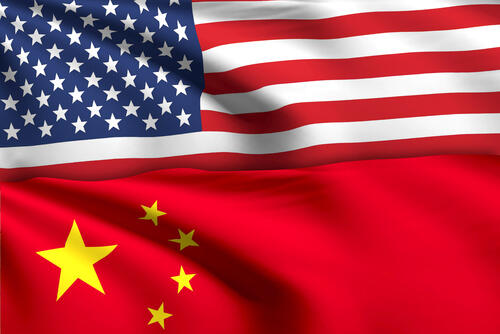
American and Chinese flags
This event is part of the 2021 Winter/Spring Colloquia series, Biden’s America, Xi’s China: What’s Now & What’s Next?, sponsored by APARC's China Program.


Via Zoom Webinar. Register at: https://bit.ly/3r1glp7

Thomas Wright Director, Center on the United States and Europe, Brookings Institution; Senior Fellow, Foreign Policy, Project on International Order and Strategy, Brookings Institution
Seminars
Paragraphs

This study quantifies the economic and environmental impacts associated with the change from a zonal to nodal design in the Texas electricity market. To begin, we present a framework to understand the mechanisms that lead to inefficient outcomes under a zonal market model. Then, we estimate a semiparametric partially linear conditional mean function to quantify changes in selected market metrics for the same set of underlying system conditions after versus before the implementation of the nodal market design. We estimate that daily variable costs of thermal generation given the same level of daily output fell by 3.9% with the implementation of the nodal market design. In contrast, we find that total heat input and CO2 emissions increased with the market design change. We show how changes in operation of coal and natural gas technologies contributed to these outcomes, and find that a large proportion of the daily variable cost savings was due to the synergies achieved through increased efficiency of operation of these two technologies.


All Publications button
1
Publication Type
Working Papers
Publication Date
Journal Publisher
Program on Energy and Sustainable Development
Authors
Ryan Triolo
Frank Wolak
Authors
News Type
Commentary
Date
Paragraphs

In a December 2020 New York Times interview, Ukrainian President Volodymyr Zelensky welcomed Joe Biden’s election as U.S. president. Zelensky observed that Biden “knows Ukraine better than the previous president” and “will really help strengthen relations, help settle the war in Donbas, and end the occupation of our territory.”[1]

While Zelensky’s comments may prove overly optimistic, there is little reason to doubt that the Biden presidency will be good for Ukraine. The incoming president knows the country, and he understands both the value of a stable and successful Ukraine for U.S. interests in Europe and the challenges posed to Ukraine and the West by Russia. That might—might, not will, but might—help break the logjam on the stalemated Donbas conflict, which Zelensky of course would welcome. Perhaps less welcome to the Ukrainian president may be Biden’s readiness to play hardball to press Kyiv to take needed but politically difficult reform and anti-corruption steps. Ukraine’s success as a liberal democracy depends not just on ending its conflict with Russia but also on combating corruption and advancing still necessary economic reforms.

U.S.-Ukraine Relations under Trump

In one sense, U.S. policy toward Ukraine during the Trump administration had its strengths. It continued political and military support for Kyiv, including the provision of lethal military assistance that the Obama administration had been unwilling to provide. It maintained and strengthened Ukraine-related sanctions on Russia. And it took further steps to bolster the U.S. and NATO military presence in central European states on Ukraine’s western border.

However, Donald Trump never seemed committed to his administration’s policy. His primary engagement on Ukraine was his bid to extort Kyiv into manufacturing derogatory information on his Democratic opponent, a bid that led to his impeachment.[2] Beyond that, Trump showed no interest in the country and consistently refused to criticize Vladimir Putin, who has inflicted more than six years of low-intensity war on Ukraine.

The Biden presidency will end this dichotomy in Washington’s approach to Kyiv. The president and his administration will align on policy. That new predictability will mean that Ukrainian officials no longer have to worry about late night presidential tweets or the subjugation of U.S. policy interests to the president’s personal political vendettas.

Two Challenges Confronting Ukraine

As Biden takes office, two principal challenges confront Ukraine. The conflict with Russia poses the first.[3] In March 2014, in the aftermath of the Maidan Revolution, Russian military forces seized Crimea. Weeks later, Russian security forces instigated a conflict in Donbas, masked poorly as a “separatist” uprising. The Kremlin provided leadership, funding, heavy weapons, ammunition, other supplies and, when necessary, regular units of the Russian army. Now in its seventh year, that conflict has claimed the lives of some 13,000 people.

While Moscow illegally annexed Crimea, it has not moved to annex Donbas. It appears instead to want to use a simmering conflict in that eastern Ukrainian region as a means to put pressure on, destabilize and disorient the government in Kyiv, with the goal of making it harder for the government to build a successful Ukrainian state and draw closer to Europe. (Moscow has interfered elsewhere in the post-Soviet space to try to maintain a Russian sphere of influence.)

Without the Kremlin’s cooperation, Kyiv on its own cannot resolve the conflict in Donbas, and Crimea poses an even harder question. However, meeting the second of the challenges facing Ukraine—implementation of reforms and anti-corruption measures needed to build a fair, robust and growing economy—lies largely within Kyiv’s purview. Unfortunately, after a good start by Zelensky and his first government, reforms have stagnated, oligarchs retain undue political and economic influence (including within Zelensky’s Servant of the People party), and the judicial branch remains wholly unreconstructed.[4] Among other things, this depresses much-needed investment in the country.

Progress Toward a Resolution in Donbas?

The Biden presidency might well play a more active role in the moribund negotiating process regarding Donbas. As co-chairs of the “Normandy process,” German Chancellor Angela Merkel and French President Emmanuel Macron have had little success of late in implementation of the 2015 Minsk agreement, which laid out a path to a settlement and restoration of full Ukrainian sovereignty over Donbas.[5] Unfortunately, it appears that the Kremlin calculates that the benefits of keeping Kyiv distracted currently outweigh the costs, including of Western sanctions.

Zelensky believes that a more active U.S. role could change that calculation and inject momentum into the process. At a minimum, the Biden presidency should appoint a special envoy to coordinate with the Germans and French, and, more broadly, with the European Union, Britain, Canada and others on Western support for Ukraine and sanctions against Russia. That position has gone unfilled since September 2019.

Whether Biden, who will face many demands on his time, will choose to engage personally is a different question. He knows Ukraine, having traveled there six times when he served as vice president. And, unlike Trump, who sought quick victories, Biden understands that solving a question like Donbas would require an investment of his time over a sustained period. It would make sense if it became clear that his engagement would shake up things in a way that would increase the prospects of a settlement and return of Donbas to Ukrainian sovereignty.

At first glance, the Kremlin might not welcome that kind of U.S. involvement, but there are good arguments for it. First of all, the United States is Ukraine’s strongest Western supporter, and Washington’s voice carries considerable weight in Kyiv. Second, Russia’s current conflict against Ukraine is not just about Donbas; it is also about Ukraine’s place in Europe, that is, where the country fits between Russia and institutions such as the European Union and NATO.[6] Addressing that question will require diplomatic finesse. Given the trans-Atlantic relationship, which will be revived under Biden, it is difficult to see such a geopolitical discussion taking place without American participation.

As for Crimea, Ukraine cannot at present muster the political, diplomatic, economic and military leverage to effect the peninsula’s return. Still, the U.S. government knows how to do non-recognition policy.[7] It did so for five decades with regard to the Baltic states’ incorporation into the Soviet Union. The Biden presidency will remain supportive of Kyiv’s claim to Crimea and not recognize its annexation by Russia—and the White House will express this view.

Domestic Reform

After an encouraging start on reform, Zelensky wavered in 2020. He has to do more, and Biden can be helpful, though in a manner the Ukrainian president may not appreciate. A big part of the problem is that Zelensky himself seems to have lost his way. Ruslan Ryaboshapka, his reformist first prosecutor general, observed that “Instead of fighting oligarchs, [Zelensky] chose to peacefully coexist with them.”[8] Biden could well prove the kind of friend that Ukraine needs now: supportive but direct with Zelensky on what must be done, and ready to push him to take politically hard measures that he might prefer to avoid.

Biden has already shown that he can do this. As vice president in the Obama administration, he had the lead on U.S. engagement with Ukraine. When necessary, he applied “tough love,” famously withholding a one-billion-dollar loan guarantee until then-President Petro Poroshenko fired a prosecutor general who was viewed widely, inside and outside of Ukraine, as corrupt.[9]

A dose of such tough love now seems necessary with Kyiv. One question concerns access to low interest credits under Ukraine’s stand-by agreement with the International Monetary Fund.[10] The IMF conditions disbursements of those credits on how Ukraine implements reform commitments that it made to secure the agreement. The Biden administration should, and almost certainly will, back the IMF in insisting that Ukraine needs to deliver on its commitments in order to secure additional disbursements.

Likewise, the Biden administration should make more bilateral U.S. assistance conditional on Ukraine tackling particular reforms. In doing so, it should consult and coordinate closely with the European Union, which has greater assistance resources available. Introducing a higher degree of conditionality to Western assistance programs could usefully ratchet up the pressure on the leadership in Kyiv to take reform steps that are in the country’s broader interest but opposed by key oligarchs or political groups who stand to lose from such reforms.

Priority should go to encouraging reform of the judicial branch, including the Constitutional Court, which has a core of judges who appear beholden to special interests. The high court reversed earlier laws requiring members of parliament and government officials to disclose their assets and could threaten other reforms.[11]

At home, the Biden administration can assist Ukraine by implementing a ban on anonymous shell companies by requiring disclosure of who actually forms companies in the United States as contained in the Corporate Transparency Act, part of the National Defense Authorization Act.[12] This will make it more difficult for corrupt Ukrainians to shelter ill-gotten gains in U.S. assets.

The Biden presidency is good news for Ukraine and those who wish to see it develop into a modern European state. It will mean more high-level but hard-nosed U.S. support. That could lead to greater progress on reform within the country. And, with some imaginative diplomacy and luck, it might even help break the logjam with Russia over resolving the fate of Donbas.


[1] Kramer, Andrew E. “With Trump Fading, Ukraine's President Looks to a Reset With the U.S.” The New York Times. The New York Times Company, December 19, 2020. https://www.nytimes.com/2020/12/19/world/europe/trump-zelensky-biden-ukr....

[2] Nichols, Tom. “Trump Is Being Impeached over an Extortion Scheme, Not a 'Policy Dispute'.” USA Today. Gannett Satellite Information Network, January 30, 2020. https://www.usatoday.com/story/opinion/2020/01/30/trump-impeachment-blac....

[3] Masters, Jonathan. “Ukraine: Conflict at the Crossroads of Europe and Russia.” Council on Foreign Relations. Council on Foreign Relations, February 5, 2020. https://www.cfr.org/backgrounder/ukraine-conflict-crossroads-europe-and-....

[4] Iliyas, Boktakoz. “Anti-Corruption Backtracking in Ukraine – Has Ze Reform Moment Passed?” Control Risks. Control Risks Group Holdings Ltd., December 17, 2020. https://www.controlrisks.com/our-thinking/insights/anti-corruption-backt....

[5] “Ukraine Walks a Tightrope to Peace in the East.” International Crisis Group, January 29, 2020. https://www.crisisgroup.org/europe-central-asia/eastern-europe/ukraine/ukraine-walks-tightrope-peace-east.; “Ukraine Ceasefire: New Minsk Agreement Key Points.” BBC News. BBC, February 12, 2015. https://www.bbc.com/news/world-europe-31436513.

[6] Tefft, John F. “ Reflections on Russia, Ukraine and the U.S. in the Post-Soviet World.” American Foreign Service Association, n.d. https://www.afsa.org/reflections-russia-ukraine-and-us-post-soviet-world.

[7] Pompeo, Michael R. “Crimea Is Ukraine.” U.S. Department of State. U.S. Department of State, February 26, 2020. https://www.state.gov/crimea-is-ukraine-3/.

[8] Kranolutska, Daryna, and Volodymyr Verbyany. “Ukraine's Leader Is Being Broken by the System He Vowed to Crush.” Bloomberg.com. Bloomberg, December 16, 2020. https://www.bloomberg.com/news/articles/2020-12-17/ukraine-s-leader-is-b....

[9] Subramanian, Courtney. “Explainer: Biden, Allies Pushed out Ukrainian Prosecutor Because He Didn't Pursue Corruption Cases.” USA Today. Gannett Satellite Information Network, October 3, 2019. https://www.usatoday.com/story/news/politics/2019/10/03/what-really-happ....

[10] “IMF Executive Board Approves 18-Month US$5 Billion Stand-By Arrangement for Ukraine.” International Monetary Fund. International Monetary Fund Communications Department, June 9, 2020. https://www.imf.org/en/News/Articles/2020/06/09/pr20239-ukraine-imf-exec....

[11] “Ukraine's Constitutional Court Attacks Anti-Corruption Laws.” The Economist. The Economist Newspaper, November 14, 2020. https://www.economist.com/europe/2020/11/14/ukraines-constitutional-cour....

[12] Pearl, Morris. “Commentary: Congress Just Passed the Most Important Anti-Corruption Reform in Decades, but Hardly Anyone Knows about It.” Fortune. Fortune Media IP, December 26, 2020. https://fortune.com/2020/12/26/ndaa-2021-shell-companies-corporate-trans....


Originally for Stanford International Policy Review

Hero Image
President Joseph Biden
Chip Somodevilla / Getty Images
All News button
1
Subtitle

In a December 2020 New York Times interview, Ukrainian President Volodymyr Zelensky welcomed Joe Biden’s election as U.S. president. Zelensky observed that Biden “knows Ukraine better than the previous president” and “will really help strengthen relations, help settle the war in Donbas, and end the occupation of our territory.”

Authors
Gary Mukai
News Type
Blogs
Date
Paragraphs

The following is Part 2 of a multiple-part series. For Part 1, please visit here.

Since the unprecedented events on January 6, 2021, I have had the chance to communicate with many young students. Like many Americans, they too are concerned about the divisions in U.S. society and what has been projected abroad about what it means to be an American. On December 8, 2020, SPICE posted an article that highlights eight reflections from students. This article features eight more students from diverse backgrounds.

As I mentioned last month, my hope is that the free educational website—“What Does It Mean to Be an American?”—will help students reflect upon their civil liberties during this challenging time. The lessons were authored by SPICE’s Rylan Sekiguchi for use at the high school and college levels, and the website was developed by the Mineta Legacy Project in partnership with SPICE.

One of the students, Junow Iwasaki, is an American who is enrolled in SPICE’s Stanford e-Japan course, which introduces U.S. society and culture and U.S.–Japan relations to high school students in Japan. The other seven students are living in the United States. The reflections below do not necessarily reflect those of the SPICE staff.

Ana Maria Griffin Morimoto, New York:
Being an American means eating turkey and sushi for Thanksgiving dinner.
It means decorating the Christmas tree, and finding presents.
It means wearing a kimono on New Year’s Day, and eating osechi-ryori [traditional Japanese New Year’s foods].
Being an American means I get the chance to fight and reach my dream of becoming a performer.
It means choice—free and independent to be exactly who I want to be.
It means beauty on many levels.
The beauty of loving whoever I want to love.
The beauty of knowing I can make it.
Being an American means being an immigrant.
I can choose to speak Spanish or English with my classmates or co-workers.
Being an American is being a former orphan from Colombia who gets to share what it is to be an American.

Mana Iketani, Hawaii:
December 7, 2020 marked the 75th anniversary of the Imperial Japanese Navy attack on Pearl Harbor in 1941, killing 2,403 people, and led to the United States’ formal entry into World War II. It is a terrifying topic to learn in school in Hawaii as a Japanese immigrant, causing me to inevitably think, “Would my classmates start discriminating against me or disdain me?” Against my prediction, I never faced any discrimination since I moved here at age nine, even after my classmates learned the history. People in my state are respectful to each individual, tolerant of the diversity of backgrounds, cultures, and ideas. Respecting others and yourself is what it means to be an American in one of the most diverse countries of the world.

Junow Iwasaki, Tokyo, Japan:
I was born in New York as a dual citizen but have lived in Japan ever since I was a baby. Though I am an American, I have hesitated to talk openly about my nationality because I want to “fit in” with others. However, having experienced funny looks from kids and adults who ignore me, I have come to realize that I cannot simply be perceived as Japanese either. I am still figuring out my identity, but I think being American is not just speaking English or acting outspoken and bold. Americans living abroad like me contribute to the fabric of what it means to be an American. Despite how I have been perceived, I wish that I could simply be who I am, an American who embraces two cultures.

Sienna Mack, Washington:
Being an American should have nothing to do with your race, your citizenship, or your religion. The only thing that defines an American should be the will to stand up for what is right no matter what. It should mean striving for the American dream of “life, liberty, and the pursuit of happiness” regardless of how big or small your efforts are. True patriotism means understanding that this country was founded on ideals yet to be achieved, and as Americans, humans, and citizens of the world, it is our right and duty to realize that dream. Throughout the history of our country, built on revolution, people have rebelled against injustice. And time and time again, as we do so, we reach a little bit closer to the American Dream.

Carrie Masters, Ohio:
Being an American means that I live in a land of freedom, opportunity, and diversity. I have the ability to shape my future. I determine where I live, my career, my religion, my political views, etc. A core Midwestern value is to work hard so that I am prepared to take advantage of opportunities that arise. These chances create responsibility, and it is imperative that we reciprocate by helping others. That help can be in the pursuit of big goals or something simple. Being an American means living with, learning from, and respecting different cultures. America benefits from our different cultural backgrounds and ideas, which become part of who we are. I am fortunate to live where I can make my own decisions and achieve my goals through hard work.

Erykah Lalah Secody, Arizona:
As Native Americans, Navajo, we are citizens of two sovereign nations, the U.S. and the Navajo Nation. We are the only language-minority group in the U.S. with this unique dual citizenship status. But being an American to me means being a citizen in two of the greatest nations in the world, a nation built on meritocracy, as we are taught in our Native homeland, “...if it’s to be, it’s up to me.” Being an American means we are a nation of diversity, a nation of, for, and by the people, a nation of immigrants in their journey to America in pursuit of life, liberty, and happiness.

Eli Stein, Hawaii:
I live in a country rich with opportunities, guided by the ideology that Americans, like the bald eagle, are born with wings granting flight in return for hard work. I have learned this is not the case. While the United States offers opportunity, it is plagued by inherent inequality. Some are born with clipped wings, while others fly with little effort: an inequality driven by systemic racial injustice. The United States is rooted in a repetitious cycle; the rich become richer while the poor suffer hardship. Growing up in Hawaii, a racially and economically diverse state, I witness the unequal opportunities minorities face, a problem often ignored. Homeless children live on Waikiki’s streets, a block from lavish penthouses. Despite the inequality, I still believe that with unity, we can create change.

Michelle Thurber, California:
My favorite part about being American is that when I think of the word “American,” no particular race or religion comes to mind. I feel connected to my ethnic background (half-Chinese), while still considering myself entirely American. However, I realize that my perspective may come partly from the fact that I live in the San Francisco Bay Area, where there is always someone around who looks like me. Hateful rhetoric in American politics frustrates me because I experience firsthand the richness that comes from diversity and open-mindedness. What brings me hope is being part of a generation of young people willing to take a stand in favor of diversity—on social media now, and on the political stage in the future.

Read More

Banner
Blogs

What Does It Mean to Be an American?: A Web-based Curriculum Toolkit

“What Does It Mean to Be an American?” is a free educational web-based curriculum toolkit for high school and college students that examines what it means to be an American developed by the Mineta Legacy Project and Stanford’s SPICE program.
What Does It Mean to Be an American?: A Web-based Curriculum Toolkit
mlp team with bush manual rotate 360
News

Presidents Bill Clinton and George W. Bush interviewed for the Mineta Legacy Project

Presidents Bill Clinton and George W. Bush interviewed for the Mineta Legacy Project
Hero Image
seven students headshot
Clockwise from top left: Ana Maria Griffin Morimoto, Mana Iketani, Junow Iwasaki, Carrie Masters, Erykah Lalah Secody, Eli Stein, Michelle Thurber; not pictured: Sienna Mack
All News button
1
Subtitle

Reflections of eight students on the website "What Does It Mean to Be an American?"

Authors
Oriana Skylar Mastro
News Type
Commentary
Date
Paragraphs

This op-ed by Aynne Kokas and Oriana Skylar Mastro was originally published in the Australian Financial Review.


The images of bare-chested, flag-waving MAGA loyalists overtaking the US Capitol flooded US social media and news channels in the days following the January 6 siege against the electoral college count. Memed and amplified, the same images circulated widely on Chinese social media and state-owned news sites without even the need for critical commentary.

The literal destruction of the US Capitol at the hands of President Donald Trump's followers required little imagination to characterize abroad as the downfall of American democracy.

There are many reasons for pessimism. According to one of the most authoritative indexes, Polity, the United States is no longer the world’s oldest continuous democracy, dropping in status to a system that is part democracy, part dictatorship.

Beyond the domestic concerns faced in the aftermath of the breach of one of America's most hallowed buildings, the Capitol siege was a win for China. US soft power, one of its comparative advantages in the great power competition, has taken a huge hit.

[Sign up for APARC's newsletters to get the latest updates from our scholars.]

Soft power is “the ability to get what you want through persuasion or attraction in the forms of culture, values, and policies”.⁠ The US has been the primary beneficiary of soft power, with its globally recognized brands, pop culture, fast-food chains, world-renowned universities, and political values.

It is relatively low cost and high impact compared with other forms of power. The United States' relative attractiveness is one of the reasons America prevailed in the Cold War.

The Chinese government is having a propaganda field day. More than ever, the US looks like a country in decline, discouraging to allies and potential partners. Chinese commentators have noted that America's days as the "city on the hill" have come to an end. This is karma, some say, payback for the US supporting opposition groups, as in Hong Kong. As one netizen commented on the popular microblog website Weibo: "So lucky to be born in China."

Beijing has tried to leverage its comparative advantages to build soft power through pathways other than political values.

China has also been trying to increase its soft power through traditional mechanisms such as building its media, education, and tourism sectors. It has enjoyed only moderate success in these areas because of its censorship, pollution, and lack of independent civil society.

But COVID-19 has led to the strengthening of other Chinese public diplomacy efforts, such as its landmark Belt and Road Initiative global trade and investment scheme.

Related initiatives such as the Digital Silk Road, a program to build out global digital infrastructure using Chinese technology, and the Health Silk Road, a plan to export Chinese health expertise through things such as COVID-19 laboratories and vaccine diplomacy, draw on China's comparative advantage in a top-down soft power approach.

Meanwhile, the Trump administration has undermined the historical sources of US soft power. It has shuttered visa lines, investigated international students on campus, and driven the rise of a culture of nationalism. The cancellation of the Fulbright US Student Program and the Peace Corps program in China are prime examples. And the COVID-19 decreased US media production, educational exchange and tourism, which shrank opportunities for promoting its democratic values on the global stage.

A bird’s-eye view of America's relative soft power may seem to offer cause for optimism. Even after four years of Trump's buffoonery and "America First", the US is still far ahead of China, ranking fifth in overall soft power, while China ranks 24th. And isn’t this what matters in competition?

Yes and no. The problem is two-fold. First, the US relies more on its political values as a soft power source than Beijing does. Ironically, this has especially been the case during the Trump administration. National Security Adviser Robert O’Brien has argued that democracies and authoritarian countries such as China “are offering a different approach to the world”. Secretary of State Mike Pompeo has argued to international audiences that democracy is “what we’ve got right”.

Second, Beijing has tried to leverage its comparative advantages to build soft power through pathways other than political values, especially where a top-down government approach is effective. China set up COVID-19 testing labs in Palestine in agreement with Israeli and Palestinian authorities. It extended its hand in Africa by building more than 70 percent of its 4G infrastructure.

Depending on need, useful solutions can be as compelling as political principles.The future of the US as a world leader is at stake. American military base access worldwide depends on perceived political alignment between the US and its allies. In the tech sector, the widespread adoption of US platforms relies on other countries finding that benefits to allowing in foreign platforms outweigh the potential political risks.

Successful multilateral treaty negotiations on issues such as global trade and climate change rely on the perception of a dependable US political system.

Strengthening democracy at home and moving away from "America First" policies will go a long way in reconstructing the trust and relationships central to soft power. But the United States will always be seen as a country in which the election of Donald Trump to the presidency, and now the storming of the Capitol, were possible.

President-elect Joe Biden will soon learn that soft power, once lost, may be difficult to revive.

Read More

President Biden walks past a row of Chinese and American flags.
News

APARC Experts on the Outlook for U.S.-Asia Policy Under the Biden Administration

Ahead of President-elect Biden’s inauguration and on the heels of the attack on the U.S. Capitol by a pro-Trump mob that has left America shaken, an APARC-wide expert panel provides a region-by-region analysis of what’s next for U.S. policy towards Asia and recommendations for the new administration.
APARC Experts on the Outlook for U.S.-Asia Policy Under the Biden Administration
U.S. Navy and Indian Navy ships steam in formation in the Indian Ocean.
News

How to Mitigate the Risks of Chinese Military Expansion in the Indian Ocean Region

China’s expanding military capacity in the Indian Ocean region poses risks for the United States and its partners, writes South Asia Research Scholar Arzan Tarapore in 'The Washington Quarterly,' offering a framework by which the Quad and others can build strategic leverage to curtail China’s capacity to coerce small states or posture for war.
How to Mitigate the Risks of Chinese Military Expansion in the Indian Ocean Region
President-elect Joe Biden and Chinese President Xi Jinping
News

Biden Administration Will Rely On U.S. Allies for Support as Tensions with China Continue to Rise

On the World Class Podcast, international security expert Oriana Skylar Mastro says conflict between China and Taiwan is plausible within the next 15 years, and the U.S. will likely be involved.
Biden Administration Will Rely On U.S. Allies for Support as Tensions with China Continue to Rise
Hero Image
National Guard at the US Capitol
National Guard at the US Capitol ahead of the inauguration on January 15, 2021 in Washington, DC. After last week's Capitol Riot the FBI has warned of additional threats against the US Capitol and in all 50 states. | Liz Lynch/ Getty Images
All News button
1
Subtitle

The US depends far more on its soft power than authoritarian China does. Once it is lost, it is hard to get back.

Authors
Herbert Lin
Amy Zegart
News Type
Commentary
Date
Paragraphs

On Jan. 6, the U.S. Capitol was assaulted and occupied for the first time since 1814. Five people were killed, including a Capitol Police officer. Two Republican Representatives have introduced a bill to establish a national bipartisan commission to investigate the attack. We agree that a commission is needed. Here, we sketch the mandate, major areas of inquiry, and legislative language that we believe are needed to guide this effort.

Read the rest at Lawfare Blog

Hero Image
A memorial to Capitol Police Officer Brian Sicknick, who was killed by pro-Trump rioters on Jan. 6
A memorial to Capitol Police Officer Brian Sicknick, who was killed by pro-Trump rioters on Jan. 6 | Flickr/Joe Flood, https://flic.kr/p/2krAujQ; CC BY-NC-ND 2.0, https://creativecommons.org/licenses/by-nc-nd/2.0/
All News button
1
Subtitle

On Jan. 6, the U.S. Capitol was assaulted and occupied for the first time since 1814. Five people were killed, including a Capitol Police officer. Two Republican Representatives have introduced a bill to establish a national bipartisan commission to investigate the attack. We agree that a commission is needed.

-

This is a virtual event. Please click here to register and generate a link to the talk. 
The link will be unique to you; please save it and do not share with others.

As US-China competition intensifies, experts debate the degree to which the current strategic environment resembles that of the Cold War. Those that argue against the analogy often highlight how China is deeply integrated into the US-led world order. They also point out that, while tense, US-China relations have not turned overtly adversarial. But there is another, less optimistic reason the comparison is unhelpful: deterring and defeating Chinese aggression is harder now than it was against the Soviet Union. In this talk, Dr. Mastro analyzes how technology, geography, relative resources and the alliance system complicate U.S. efforts to enhance the credibility of its deterrence posture and, in a crisis, form any sort of coalition.


Photo of Oriana MastroOriana Skylar Mastro is a Center Fellow at Stanford University’s Freeman Spogli Institute for International Studies (FSI). Within FSI, she works primarily in the Shorenstein Asia-Pacific Research Center (APARC) and the Center for International Security and Cooperation (CISAC) as well. She is also a fellow in Foreign and Defense Policy Studies at the American Enterprise Institute and an inaugural Wilson Center China Fellow.

Mastro is an international security expert with a focus on Chinese military and security policy issues, Asia-Pacific security issues, war termination, and coercive diplomacy. Her research addresses critical questions at the intersection of interstate conflict, great power relations, and the challenge of rising powers. She has published widely, including in Foreign Affairs, International Security, International Studies Review, Journal of Strategic Studies, The Washington Quarterly, The National Interest, Survival, and Asian Security, and is the author of The Costs of Conversation: Obstacles to Peace Talks in Wartime (Cornell University Press, 2019).

She also continues to serve in the United States Air Force Reserve, for which she works as a Strategic Planner at INDOPACOM. Prior to her appointment at Stanford in August 2020, Mastro was an assistant professor of security studies at the Edmund A. Walsh School of Foreign Service at Georgetown University. She holds a B.A. in East Asian Studies from Stanford University and an M.A. and Ph.D. in Politics from Princeton University.


Image
American and Chinese flags
This event is part of the 2021 Winter/Spring Colloquia series, Biden’s America, Xi’s China: What’s Now & What’s Next?, sponsored by APARC's China Program.


Via Zoom Webinar. Register at: bit.ly/2MYJAdw

Oriana Skylar Mastro Center Fellow at the Freeman Spogli Institute for International Studies
Seminars
-

The 2020 U.S. Election: Stress Test for American Democracy

Time

January 14th (8:30 a.m. to 10:00 a.m. Beijing Time) 

January 13th (4:30 p.m. to 6:00 p.m. Pacific Time)

Language

The language of the event will be English.

Attention

Recording (audiotaping or videotaping) during the event is not allowed.

Sponsored by the Stanford Center at Peking University and the iGCU at Peking University.

Despite a once-in-a-century pandemic, the highest number of voters in 120 years turned out for the U.S. presidential election in November. After all the mail-in ballots were counted, former Vice President Joseph Biden was declared the winner of the popular vote and the Electoral College vote by a wide margin. However, Donald Trump has yet to concede defeat and has mounted a series of court challenges to fight the results, including taking his claims to the Supreme Court.

To help us understand the U.S. election results – an election that some have described as “a referendum on Trump” -- and its aftermath that some have called the “stress test for American democracy,” we convene a roundtable discussion with leading specialists from Stanford University and Peking University. 

Speakers

Image
David BRADY

David BRADY holds the Bowen H. and Janice Arthur McCoy Professor of Political Science in the Stanford Graduate School of Business and held the Morris M. Doyle Centennial Chair in Public Policy (emeritus).  He is Deputy Director and Davies Family Senior Fellow at the Hoover Institution and has published eight books and over 100 papers in journals and books.  Among his more recent publications are Leadership and Growth (World Bank Publications, 2010) coedited with Michael Spence, Revolving Gridlock: Politics and Policy from Carter to Bush II (Westview Press, 2006), and Red and Blue Nation? Characteristics and Causes of America’s Polarized Politics with Pietro Nivola (Brookings Institution Press, 2007).  His study on the “electoral basis of gridlock” is forthcoming.  

Brady has also published essays in the American Interest, Commentary, Policy Review, and National Affairs as well as numerous articles in Real Clear Politics, Project Syndicate and the Wall Street Journal.  He has twice been a Fellow at the Center for Advanced Study in the Behavioral Sciences at Stanford University and has been a Visiting Professor at Harvard University, Sciences Po in Paris, and The Libera Università Internazionale Degli Studi Sociali "Guido Carli" (Luiss) in Rome.  He has also been a distinguished lecturer at the American Academy in Berlin and a distinguished professor at Yonsei University in Korea.  Brady was elected to the American Academy of Arts and Sciences in 1987. 


Image
Bruce E. CAIN

Bruce E. CAIN is an expert in U.S. politics, and particularly the politics of California and the American West. A pioneer in computer-assisted redistricting in the United States, he is a prominent scholar of U.S. elections, political regulation, and the relationships between American lobbyists and elected officials. 

Prior to joining Stanford, Professor Cain was Director of the Institute of Governmental Studies at University of California (U.C.), Berkeley from 1990-2007 and Executive Director of the U.C. Washington Center from 2005-2012.  He was elected to the American Academy of Arts and Sciences in 2000 and has won awards for his research (Richard F. Fenno Prize, 1988), teaching (Caltech 1988 and UC Berkeley 2003) and public service (Zale Award for Outstanding Achievement in Policy Research and Public Service, 2000).  He is currently working on state regulatory processes and stakeholder involvement in the areas of water, energy, and the environment.


Image
PAN Wei

PAN Wei obtained his Ph.D. from the Department of Political Science at the University of California, Berkeley. He is now a Professor in the School of International Studies at Peking University and frequently lectures on world political theory, Chinese politics, comparative politics, and the history of American social development, etc. At present, PAN serves as the Director of the Center for Chinese and Global Affairs of Peking University. His research interests include comparative political theory, comparative politics, political methodology, and Chinese society and government.


Image
WANG Yong

WANG Yong holds a Ph.D. in Law from Peking University. Wang serves as the Director of the Center for International Political Economy and as a Professor and Doctoral Supervisor at the School of International Relations, all at Peking University (PKU). He is an Academic Committee Member of the Center for International Strategic Research, a Professor at the CPC Party School of the Ministry of Foreign Affairs of China, the Leading Professor of a PKU training program for senior civil servants in Hong Kong SAR, and a Professor of a PKU training program for African diplomats held by the Ministry of Commerce of China. He is also a Consultant for the Asian Development Bank, a member of the International Institute for Strategic Studies (UK), and a member of the Global Agenda Committee of the Global Trade System of the World Economic Forum in Davos, Switzerland. His research areas include Sino-US relations, Sino-US economic relations, trade politics, regional cooperation, international economic relations, international political economics, etc. In 2008, he was selected into the "Program for New Century Excellent Talents" by the Ministry of Education of China.

Moderators

Image
Jean C. OI

Jean C. Oi is the William Haas Professor of Chinese Politics in the Department of Political Science and a senior fellow in the Freeman Spogli Institute for International Studies at Stanford University. She directs the China Program at the Walter H. Shorenstein Asia-Pacific Research Center and is the Lee Shau Kee Director of the Stanford Center at Peking University. Oi has published extensively on China’s reforms. Recent books include Fateful Decisions:  Choices that will Shape China’s Future, coedited with Thomas Fingar (Stanford University Press, 2020), Zouping Revisited: Adaptive Governance in a Chinese County, coedited with Steven Goldstein (Stanford University Press, 2018), and Challenges in the Process of China’s Urbanization, coedited with Karen Eggleston and Yiming Wang (2017). Current research is on fiscal reform and local government debt, continuing SOE reforms, and the Belt and Road Initiative.


Image
WANG Dong

Wang Dong is the Deputy Director of the Office for Humanities and Social Sciences and the Executive Director of the Institute for Global    Cooperation and Understanding, all at Peking University. He also serves as Member of the Steering Committee of the East Asia Security Forum, Chinese Overseas Educated Scholars Association, International Advisory Committee Member of the Shanghai Academy of Area Studies and Global Governance, Advisory Committee Member for the Carter Center-Global Times US-China Young Scholars Forum, and Secretary-General of the Pangoal Institution, a leading China-based public policy think tank.   

Wang Dong received his bachelor in law from Peking University and M.A. and Ph.D. in political science from the University of California, Los Angeles (UCLA).  Wang has written extensively on international relations and China’s foreign policy. He is the author and/or editor of such English-language publications as Re-globalization: When China Meets the World Again (Routledge, 2020, forthcoming); and Avoiding the Thucydides Trap: US-China Relations in Strategic Domains, coedited with Travis Tanner (Routledge, 2020, forthcoming). Wang was named a “Munich Young Leader” in 2016 (the only awardee from China); and was selected by the inaugural program of “Preeminent Young Scientists” of Beijing in 2018, one of the most prestigious awards ever given in China.

This is an exclusive Webinar for Stanford and PKU communities. Please use your Stanford or PKU email to register at https://stanford.zoom.us/webinar/register/WN_jpjlMTasSfeQo8IcUZE2xQ

PAN Wei Professor, School of International Studies; Director of the Center for Chinese and Global Affairs of Peking University
WANG Yong Director of the Center for International Political Economy; Professor and Doctoral Supervisor at the School of International Relations
Professor
Professor
Professor
David BRADY Professor of Political Economics, Graduate School of Business and Political Science, Emeritus, Stanford University
Bruce E. CAIN Charles Louis Ducommun Professor in Humanities and Sciences; Professor of Political Science, Stanford University
Professor
Professor
Professor
Professor
Jean C. OI Moderator Senior Fellow, Freeman Spogli Institute for International Studies; William Haas Professor of Chinese Politics, Stanford University
WANG Dong Moderator Deputy Director, Office for Humanities and Social Sciences; Executive Director, Institute for Global Cooperation and Understanding, Peking University
Panel Discussions
Authors
News Type
Commentary
Date
Paragraphs

Sanctions will remain part of the US toolkit for dealing with Russia under the incoming Biden administration. Certain principles should guide their use and could increase the chances that they will achieve US policy goals: sanctions should be embedded in an overall Russia policy, linked to a specific policy goal, understood by the Kremlin, clearly reversible if Russia ceases the offending action, and coordinated with US allies.

As Joe Biden prepares to become the 46th president of the United States, speculation has begun on what a Biden administration will mean for US policy toward Russia and sanctions on Russia. Sanctions will remain part of the US toolkit for responding to egregious Russian misbehavior. It would be useful if the new administration set down principles early on for their application.

As relations between Washington and Moscow—and, more broadly, between the West and Russia—deteriorated over the past decade, the United States and Europe applied an increasing number of sanctions in response to Russian actions. The United States has now sanctioned Russia for its aggression against Ukraine, cyber and disinformation activities aimed at affecting US domestic politics, and support for Syria and Venezuela, among other things. The United States has long applied sanctions on the Soviet Union and Russia due to human rights concerns.  The 1974 Jackson-Vanik amendment denied permanent normal trade relations status to the Soviet Union until Moscow allowed religious minorities to emigrate. The 2012 Magnitsky Act sanctioned Russian officials involved in serious human rights violations such as torture or extrajudicial killings (it was later amended to apply to other countries as well).

The sanctions result from both executive orders and legislation. Some target individuals with visa denials and asset freezes. Other sanctions hit specific companies. Still others aim at key elements of the Russian economy, particularly the financial, energy, and high-tech sectors.

The sanctions have had an impact on Russia’s economic growth, though the exact amount is difficult to measure and a subject of debate. Some sanctions may not be felt for some time. For example, sanctions that deny Russian companies access to American technology and financing for developing new and technically challenging oil fields do not constrain Russian oil production now. They will, however, limit Russia’s ability to develop new oil fields requiring high-tech extraction techniques as current wells are depleted.

The Kremlin regularly pooh-poohs sanctions, but Russian officials miss no opportunity to call for their lifting. Lifting sanctions was a key point during Vladimir Putin’s intervention in the virtual G-20 summit in November. True, in most cases, sanctions have not achieved their desired goal. Russia has not, for example, ended its conflict against Ukraine in Donbas. Sanctions, however, may well have deterred the Kremlin from other steps. Russian and Russian proxy forces have not tried to seize Mariupol, as many feared they might in 2015, and Putin dropped the claims to vast amounts of Ukrainian territory he made in  2014 (so-called “Novorossiya”).

When the Biden administration takes office, sanctions will undoubtedly remain an element of US policy toward Russia. To enhance its effectiveness, the administration should base its sanctions policy on certain principles.

First, the Biden administration should embed sanctions in a broader US policy toward Russia.  If the Trump administration had an overall Russia policy, it never articulated it. Absent a broader framework, sanctions seemed to take on a life of their own.

An overall policy should include strong measures to deter and push back against Russian misbehavior. These measures include enhancing the NATO military posture in the Baltic region, support—including lethal military assistance—for Ukraine, and sanctions. The overall policy should also include dialogue, both to apply guardrails, such as arms control, on what has become an increasingly adversarial relationship and to professionalize discussion of hard issues that might (or might not) chip away at some problems over time. The Reagan administration successfully used this combination in the 1980s.

Second, sanctions are not an end in themselves and should not be treated as such. They offer a means to achieve a policy goal and, thus, should be clearly linked to that goal, as in “this sanction will apply until Moscow does X” or “if Moscow does X, Washington will respond with this sanction.” The aim of sanctions should be to affect Kremlin calculations of the benefits and costs of its actions, hopefully tipping the balance against those actions that threaten key Western interests.

The Kremlin should also have clarity on what it must do to get the sanctions lifted. Thus, the sanctions should be tied to a single policy goal. Sanctions that seek to get Russia to correct two different kinds of misbehavior—for example, a ban on the export of dual-use technologies stemming from Russia’s aggression against Ukraine and the attempted poisoning of Sergey Skripal in Britain—likely will achieve neither objective.

Third, sanctions should seek to deter, if possible. It is easier to deter and dissuade an adversary from taking an unwanted action than  compel the adversary to reverse an action it has already taken. Specifying the sanction(s) that would result from a particular Russian action in advance could have a greater chance of affecting the Kremlin’s cost-benefit calculation.

Fourth, for sanctions to be effective in achieving their policy goal, Moscow has to believe that, if it takes the action desired by Washington, the sanction will be lifted. Unfortunately, US sanctions do not have the best history in this regard. The 1974 Jackson-Vanik amendment applied to the successor states, including Russia, following the Soviet Union’s 1991 collapse. Russia permitted open emigration, leading the Clinton administration in 1994 to determine that Russia had fully complied with Jackson-Vanik. Yet it was not until 2012 that Congress removed Russia from the amendment’s purview and granted the country permanent normal trade relations status—and then only in the Magnitsky Act, which applied new sanctions. If the Kremlin concludes that the sanction will remain in place regardless of what it does, it will have no      incentive to change its behavior.

Fifth, coordination with allies, particularly the European Union (EU), can dramatically enhance the impact of sanctions. Multilateral sanctions send a stronger political message. They also generate a greater economic impact. When the United States and European Union began consulting on sanctions against Russia after its seizure of Crimea, EU trade with Russia dwarfed US-Russia trade. Europe, thus, had more to withhold.

Currently, the fate of the Nordstream 2 gas pipeline could complicate sanctions coordination with Europe. The US government has good reasons to oppose Nordstream 2, which is hardly a commercial project. Renovating the Ukrainian pipelines would have been vastly cheaper, but Russia wants to circumvent Ukraine for geopolitical reasons. Nordstream 2, however, could pose a major problem between the Biden administration and Germany, the pipeline’s main European backer. Finding a solution to this issue will strengthen Washington’s ability to maintain a united sanctions front with Europe against Russia.

Sixth, the US government might consider pairing a carrot with sanctions to affect Kremlin thinking. For instance, to break the deadlock on a Donbas settlement, Washington could work with Berlin and Paris on a plan for a UN-mandated peacekeeping force and interim international administration. The peacekeeping force and interim administration would deploy to Donbas, providing a transition between the departure of Russian and Russian proxy forces and full restoration of Ukrainian sovereignty. When offering this as a face-saving way to help Russia leave Donbas, Washington and its partners could quietly add that failure to take up the offer would trigger additional sanctions.

Seventh, the Biden administration should consult with Congress as it shapes its sanctions policy. This coordination should prove easier than it has during the past four years, when both Democrats and Republicans on Capitol Hill did not trust the White House’s management of sanctions. That mistrust led to an overwhelming vote for the 2017 Countering America’s Adversaries through Sanctions Act, which gave Congress power to block the lifting of sanctions. The Biden administration will want to ensure that, if Moscow moves to correct offending misbehavior that justifies lifting sanctions, Congress does not block their lift. If the Kremlin adjusts its policy on a particular question and the linked sanction remains in force, that will undercut the power of all other and any future sanctions. Sanctions, in that case, would become just a means of punishment, not of attaining a policy objective.

Within these principles on sanctions, there is room for creative thinking. For example, would it make sense, when targeting individuals for visa sanctions and asset freezes, to sanction their families as well? It is one thing if a Russian businessman cannot travel to the United States or Europe; it would be quite another if his spouse could not make her annual shopping trip to London and his kids could not attend school in the United States or Britain.

Principles such as the above offer a structure for managing sanctions policy toward Russia. They also could increase the chances that sanctions succeed in achieving their desired policy outcomes.

. . .

Steven Pifer is a William Perry Research Fellow at Stanford’s Center for International Security and Cooperation. A retired Foreign Service officer, his 25+ years with the State Department included assignments as Deputy Assistant Secretary responsible for Russia and Ukraine, Ambassador to Ukraine, and Special Assistant to the President and Senior Director for Russia, Ukraine and Eurasia on the National Security Council.


Originally for Georgetown Journal of International Affairs

Hero Image
Joe Biden shaking hands with Vladimir Putin
Joe Biden shaking hands with Vladimir Putin. | White House/David Lienemann
All News button
1
Subtitle

Sanctions will remain part of the US toolkit for dealing with Russia under the incoming Biden administration.

-

Sponsored by Camera as Witness Program, Freeman Spogli Institute for International Studies, Martin Luther King, Jr. Research and Education Institute

REGISTER NOW

For this year's King Holiday, the Martin Luther King Jr. Research and Education Institute at Stanford University will host a free, four-day webinar and film festival, from the evening of Jan. 15 through Jan.18, 2021. On the eve of the presidential inauguration, the festival will feature over 15 documentaries as well as musical performances and panel discussions that speak to Dr. King's unanswered question: "Where do we go from here?"

The films made available through our festival will cover a range of topics, from the history of the civil rights and anti-apartheid movements to James Baldwin and Martin Luther King's global visions. Attendees will be able to view these films throughout the King Holiday weekend on their own schedules via links we will provide in the upcoming weeks.

The festival will introduce the World House Project, a new initiative of the King Institute in partnership with the Freeman Spogli Institute for International Studies at Stanford. This festival is also made possible by support from: XQ Institute, the Martin Luther King Jr. Freedom Center, California Newsreel, the Camera as Witness Program (Stanford Arts), and the Kunhardt Film Foundation.

Please register to stay updated as we release the schedule and roster of films. If you have any questions, please contact Truman Chen at trumanwc@stanford.edu.

Photo Credit: Bob Fitch Photography Archive © Stanford Libraries

Online

Film Screenings
Subscribe to United States