Authors
Rodney C. Ewing
News Type
Commentary
Date
Paragraphs

Abstract

In the absence of a federal geologic repository or consolidated, interim storage in the United States, commercial spent fuel will remain stranded at some 75 sites across the country. Currently, these include 18 “orphaned sites” where spent fuel has been left at decommissioned reactor sites. In this context, local communities living close to decommissioned nuclear power plants are increasingly concerned about this legacy of nuclear power production and are seeking alternative strategies to move the spent fuel away from those sites. In this paper, we present a framework and method for the socio-technical multi-criteria evaluation (STMCE) of spent fuel management strategies. The STMCE approach consists of (i) a multi-criteria evaluation that provides an ordinal ranking of alternatives based on a list of criterion measurements; and (ii) a social impact analysis that provides an outranking of options based on the assessment of their impact on concerned social actors. STMCE can handle quantitative, qualitative or both types of information. It can also integrate stochastic uncertainty on criteria measurements and fuzzy uncertainty on assessments of social impacts. We conducted an application of the STMCE method using data from the decommissioned San Onofre Nuclear Generating Station (SONGS) in California. This example intends to facilitate the preparation of stakeholder engagement activities on spent fuel management using the STMCE approach. The STMCE method provides an effective way to compare spent fuel management strategies and support the search for compromise solutions. We conclude by discussing the potential impact that such an approach could have on the management of commercial spent fuel in the United States.

Read the rest at Science of The Total Environment

Hero Image
Graphs of Map and research results
Socio-technical multi-criteria evaluation of long-term spent nuclear fuel management strategies: A framework and method
All News button
1
Subtitle

Currently, commercial spent fuel remains at 75 sites across the US, including 18 “orphaned sites,” where it has been left at decommissioned reactor sites. Local communities are increasingly concerned about this legacy of nuclear power production and are seeking alternative strategies.

-

Alyce S. Adams, PhD 
Professor of Medicine, Stanford's Center for Health Policy & Center for Primary Care and Outcomes Research
Professor of Epidemiology and Population Health in the Stanford School of Medicine 
Associate Director for Health Equity and Community Engagement in the Stanford Cancer Institute 

Title: Health Policy and the Fight for Equitable Healthcare Outcomes: Why Access Isn’t Enough

Abstract: Using evidence from evaluations of natural experiments, Alyce Adams will discuss the intended and unintended consequences of changes in prescription drug policy at the state and federal level of low income and minority individuals with multiple chronic conditions. We will explore the potential for policy effects to have an immediate and dramatic increase in access to clinically essential treatments. However, she will also discuss where such policies can widen, rather than reduce disparities in treatment. We concluded that increasing access (while critical) is not sufficient to address inequities in treatment use and outcomes among high risk populations. Importantly, new strategies are needed to inform the design of policy interventions that promote access, while simultaneously advancing health equity.

Register in advance for this meeting:
https://stanford.zoom.us/meeting/register/tJcsf-6pqDwtH93u_yfFbEkV_XIbJ2gai0FV  

After registering, you will receive a confirmation email containing information about joining the meeting.

0
Stanford Medicine Innovation Professor
alyce_profile_2022.jpg PhD, MPP

Alyce Adams is the inaugural Stanford Medicine Innovation Professor and Professor of Health Policy, Epidemiology and Population Health and of Pediatrics (by Courtesy). She also serves as Associate Chair for Community Outreach and Engagement for Stanford Health Policy, and as Associate Director for Partnership and Community Engagement in the Stanford Cancer Institute. Focusing on pharmaceutical treatments for cancer and diabetes, Dr. Adams' research evaluates health system and policy level interventions to improve access, balance the benefits and harms of treatment, improve patient-valued outcomes, and reduce disparities.

Professor, Epidemiology and Population Health
Professor, Health Policy
Professor, Pediatrics (by courtesy)
CV
Date Label
0
Stanford Medicine Innovation Professor
alyce_profile_2022.jpg PhD, MPP

Alyce Adams is the inaugural Stanford Medicine Innovation Professor and Professor of Health Policy, Epidemiology and Population Health and of Pediatrics (by Courtesy). She also serves as Associate Chair for Community Outreach and Engagement for Stanford Health Policy, and as Associate Director for Partnership and Community Engagement in the Stanford Cancer Institute. Focusing on pharmaceutical treatments for cancer and diabetes, Dr. Adams' research evaluates health system and policy level interventions to improve access, balance the benefits and harms of treatment, improve patient-valued outcomes, and reduce disparities.

Professor, Epidemiology and Population Health
Professor, Health Policy
Professor, Pediatrics (by courtesy)
CV
Date Label
Authors
News Type
News
Date
Paragraphs

There are strong indications that the Biden administration intends to continue strengthening U.S.-Taiwan ties. The Biden team invited Taiwan's representative Bi-khim Hsiao to the presidential inauguration, supporters of Taiwan now hold senior roles in the administration, and officials have pledged "rock-solid" U.S. commitment to Taiwan, warning that PRC military pressure against Taiwan threatens regional peace and stability. But Cross-strait deterrence is arguably weaker today than at any point since the Korean War, according to Chinese military and security expert Oriana Skylar Mastro, FSI Center Fellow at APARC.

On February 18, 2021, Mastro testified to the U.S.-China Economic and Security Review Commission at a hearing on Deterring PRC Aggression Toward Taiwan. Her testimony on the political and strategic dynamics underpinning deterrence across the Taiwan Strait is available to watch below.

[Subscribe to APARC's newsletters for the latest analysis from our experts.]

Beijing has turned to increasingly hostile and combative rhetoric and actions since the democratic election of Taiwan’s president, Tsai Ing-wen. PLA air and water operations around Taiwan, particularly in the Taiwan Strait, have increased significantly in the past year, and concern is growing that the Chinese Communist Party is imminently planning to use force to compel Taiwan to accept unification with mainland China.

Drawing on her expertise in both policy and military security, Mastro explains why deterrence in Taiwan must be based on military capabilities rather than signaling through policy.

Catalysts to Conflict

Foremost, Mastro argues that the basic circumstances of aggression towards Taiwan have changed. In years past, it was accepted that China would launch military operations against Taiwan in response to actions or policy positions taken there or in the United States. However, Mastro believes that China is now primed to force a campaign of reunification regardless of either Taiwan’s or the U.S.’s policies moving forward.

By Mastro’s assessment, China is now in a position where it could prevail in cross-strait military contingencies even if the U.S. intervenes in Taiwan’s defense. The reform overhaul and modernization of China’s military have vastly improved the quality it equipment and confidence in its capability. China now possesses offensive weaponry, including ballistic and cruise missiles, which if deployed, could destroy U.S. bases in the Western Pacific. Sophisticated cyber attacks on domestic infrastructure both in Taiwan and the United States are also a credible threat and viable form of retaliation.

As long as President Xi is confident that the PLA can successfully back a forced unification in Taiwan, Mastro argues that action of some kind against Taiwan is not a matter of if, but of when, and what severity.

Types of Escalation

Failure to reunify Taiwan is too high a political and military cost for the PRC to risk, but there is also growing agitation amongst the mainland Chinese population for a resolution on the half-baked status of the island and its governance. Mastro believes that this pressure will ensure that action will be taken on Taiwan in the next 3 to 5 years.

Since Taiwan cannot withstand a sustained, active assault from China on its own, the deciding factor in when and how China moves against Taiwan is largely dependent on the signals the U.S. sends. And since China is increasingly confident in its own military, the signals the U.S. sends must likewise be ground in military capability, not policy, says Mastro.  

As long as the U.S. does not make significant changes to improve its force posture in the region, China can afford to wait. Until Beijing is ready to take Taiwan by force, its leadership will carefully calibrate responses to U.S. or Taiwan actions so as not to escalate to war.
Oriana Skylar Mastro
FSI Center Fellow

If China believes there will be little or no intervention or support from the U.S., it is likely to follow a graduated plan of attack, using economic blockages and targeted military action to bring about capitulation. If, however, it appears the U.S. will intervene, China is much more likely to move quickly and escalate violence and force rapidly to maximize damage before a full U.S. defense response can be coordinated.

Policy Recommendations

To effectively counter China on Taiwan, Mastro recommends crafting policy that creates doubt over China’s ability to successfully absorb Taiwan through military means. To do this, the United States needs to focus forces and develop operational plans that credibly off-set China’s goals while not triggering a panicked response from Beijing that could escalate into rapid conflict.

Mastro also urges the allocation of more resources toward intelligence, surveillance, and reconnaissance (ISR), base development, and firepower in the Asia-Pacific region. Investing in these signals U.S. commitment to determent and the capacity to follow through if need be.

Finally, Mastro urges additional research into U.S. war termination behavior. Any involvement in Taiwan must be as limited and without the possibility for escalating levels of violence and long term unsustainable, unwinnable commitments. In preparing to potentially fight a war, she reminds policymakers that they need to know how to end one as well.

A recording of the full hearing is available courtesy of the U.S.-China Economic and Security Review Commission.

Read More

Aircraft assigned to the Theodore Roosevelt Carrier Strike Group fly over the South China Sea
Commentary

How China is Bending the Rules in the South China Sea

Beijing’s misapplication of international law in the disputed waters is more complex than it seems on the surface.
How China is Bending the Rules in the South China Sea
A warship sailing in the South China Sea and a photo of three soldiers standing guard in front of a Chinese traditional building
News

China’s South China Sea Strategy Prioritizes Deterrence Against the US, Says Stanford Expert

Analysis by FSI Center Fellow Oriana Skylar Mastro reveals that the Chinese military has taken a more active role in China’s South China Sea strategy, but not necessarily a more aggressive one.
China’s South China Sea Strategy Prioritizes Deterrence Against the US, Says Stanford Expert
Karen Eggleston speaking to an online panel.
News

Karen Eggleston Testifies on China’s Healthcare System to Congressional Review Commission

Asia health policy expert Karen Eggleston provides testimony for a U.S.-China Economic and Security Review Commission hearing on China's domestic healthcare infrastructure and the use of technology in its healthcare system amid COVID-19.
Karen Eggleston Testifies on China’s Healthcare System to Congressional Review Commission
Hero Image
Oriana Skylar Mastro testifies to the U.S.-China Economic and Security Review Commission on Taiwan deterrence.
All News button
1
Subtitle

China may now be able to prevail in cross-strait contingencies even if the United States intervenes in Taiwan’s defense, Chinese security expert Oriana Skylar Mastro tells the U.S.-China Economic and Security Review Commission. Changes must be made to U.S. military capabilities, not U.S. policy, she argues.

-

This is a virtual event. Please click here to register and generate a link to the talk. 
The link will be unique to you; please save it and do not share with others.


This event is co-sponsored by the Center on Democracy, Development, and the Rule of Law.

How does autocratic lobbying affect political outcomes and media coverage in democracies? This talk focuses on a dataset drawn from the public records of the US Foreign Agents Registration Act. It includes over 10,000 lobbying activities undertaken by the Chinese government between 2005 and 2019. The evidence suggests that Chinese government lobbying makes legislators at least twice as likely to sponsor legislation that is favorable to Chinese interests. Moreover, US media outlets that participated in Chinese-government sponsored trips subsequently covered China as less threatening. Coverage pivoted away from US-China military rivalry and the CCP’s persecution of religious minorities and toward US-China economic cooperation. These results suggest that autocratic lobbying poses an important challenge to democratic integrity.


Portrait of Erin Baggott CarterErin Baggott Carter is an Assistant Professor at the Department of Political Science and International Relations at the University of Southern California. There, she is also a Co-PI at the Lab on Non-Democratic Politics. She received a Ph.D. in Government from Harvard University, is currently a visiting scholar at the Stanford Center on Democracy, Development and the Rule of Law, and was previously a Fellow at the Stanford Center for International Security and Cooperation.

Dr. Carter's research focuses on Chinese politics and propaganda. She recently completed a book on autocratic propaganda based on an original dataset of eight million articles in Arabic, Chinese, English, French, Russian, and Spanish drawn from state-run newspapers in nearly 70 countries. She is currently working on a book on how domestic politics influence US-China relations. Her other work has appeared or is forthcoming in the British Journal of Political Science, Journal of Conflict Resolution, and International Interactions. Her work has been featured by the New York Times, the Brookings Institution, and the Washington Post Monkeycage Blog.


Image
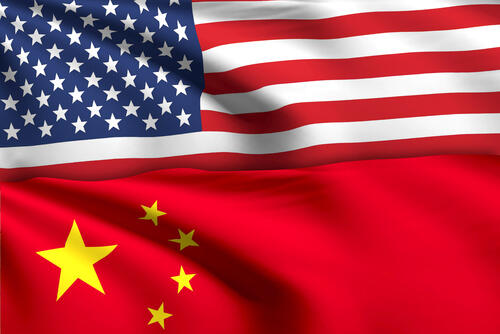
American and Chinese flags
This event is part of the 2021 Winter/Spring Colloquia series, Biden’s America, Xi’s China: What’s Now & What’s Next?, sponsored by APARC's China Program.


Via Zoom Webinar. Register at: https://bit.ly/3beG7Qz

Erin Baggott Carter Assistant Professor, Department of Political Science and International Relations, University of Southern California; Visiting Scholar, Center on Democracy, Development and the Rule of Law, Stanford University
Seminars
News Type
News
Date
Paragraphs

SPICE’s Manager of Curriculum and Instructional Design Rylan Sekiguchi was announced this week as the recipient of the 2021 Franklin R. Buchanan Prize for his authorship of What Does It Mean to Be an American? The prize is awarded annually by the Association for Asian Studies, which will formally honor Sekiguchi in a ceremony at 2pm PDT on March 24, 2021. This is the third time that Sekiguchi has won the award.

SPICE co-developed the website for What Does It Mean to Be an American? with the Mineta Legacy Project. What Does It Mean to Be an American? was inspired by the life of Secretary Norman Mineta, former U.S. Secretary of Commerce under President Bill Clinton and U.S. Secretary of Transportation under President George W. Bush. President Clinton, President Bush, and Secretary Mineta contributed video interviews for the website.


Established in 1995 by the AAS Committee on Educational Issues and Policy and the Committee on Teaching about Asia, the Franklin R. Buchanan Prize is awarded annually to recognize an outstanding pedagogical, instructional, or curriculum publication on Asia designed for K–12 and college undergraduate instructors and learners.

Read More

Banner
Blogs

What Does It Mean to Be an American?: A Web-based Curriculum Toolkit

“What Does It Mean to Be an American?” is a free educational web-based curriculum toolkit for high school and college students that examines what it means to be an American developed by the Mineta Legacy Project and Stanford’s SPICE program.
What Does It Mean to Be an American?: A Web-based Curriculum Toolkit
5thbuchanan banner
News

SPICE Wins Buchanan Prize for Fifth Time

SPICE Wins Buchanan Prize for Fifth Time
Hero Image
rylan sekiguchi
All News button
1
Subtitle

Rylan Sekiguchi was announced this week as the recipient of the 2021 Franklin R. Buchanan Prize for his authorship of What Does It Mean to Be an American?

-

The Stanford Center on China's Economy and Institutions (SCCEI) and the Stanford King Center on Global Development held a special event on the potential for China and U.S. collaboration on climate change. 

China and the U.S. are critical for global action on climate change. Together, the two countries created up to 40 percent of global greenhouse gas emissions in 2019, and both countries have significant global influence. This event highlights several important challenges for climate action at the start of the Biden Administration. How can China-U.S. cooperation on climate be revived in light of the current bilateral relationship, in particular for fostering innovations in both technologies and policies for mitigating climate change? 

The special event featured Steven Chu, William R. Kenan Jr. Professor of Physics and Professor of Molecular & Cellular Physiology in the Medical School at Stanford University, and was moderated by Gretchen C. Daily, Bing Professor of Environmental Science and co-founder and faculty director of the Natural Capital Project at Stanford University. 

Watch the recording:

Following the lecture, SCCEI and the King Center hosted a virtual reception for audience members to continue the conversation in small breakout rooms. The Zoom meeting link was distributed at the end of the lecture.


About the Speakers:

Image
Headshot of Dr. Steven Chu
Steven Chu is the William R. Kenan Jr. Professor of Physics and Professor of Molecular & Cellular Physiology in the Medical School at Stanford University. He is currently the Chair of the Board of the American Association for the Advancement of Science (AAAS) and its past President. He has published papers in atomic physics, polymer physics, biophysics, molecular biology, ultrasound imaging, nanoparticle synthesis, batteries and other clean energy technologies.

He served as U.S. Secretary of Energy from January 2009 through April 2013. Prior to that, he was director of the Lawrence Berkeley National Laboratory, professor of Physics and of Molecular and Cell Biology (2004 to 2009) at UC Berkeley, the Francis and Theodore Geballe professor of Physics and Applied Physics at Stanford University (1987 to 2009), a member of the technical staff and head of the Quantum Electronics Research Department at AT&T Bell Laboratories (1978 – 1987).

Dr. Chu is the co-recipient of the 1997 Nobel Prize in Physics for his contributions to laser cooling and atom trapping. He received numerous other awards and is a member of the National Academy of Sciences, the American Philosophical Society, the American Academy of Arts and Sciences and 8 foreign Academies. He received an A.B. degree in mathematics and a B.S. degree in physics from the University of Rochester, and a Ph.D. in physics from the University of California, Berkeley, and 32 honorary degrees.


Image
Headshot of Dr. Gretchen Daily.
Gretchen Daily is Bing Professor of Environmental Science and co-founder and faculty director of the Natural Capital Project at Stanford University.  Her work focuses on understanding the dynamics of change in the biosphere, their implications for human well-being, and the deep societal transformations needed to secure people and nature.  She engages extensively with governments, multilateral development banks, businesses, communities, and NGOs. Daily co-founded the Natural Capital Project, a global partnership that is integrating the values of nature into policy, finance and management globally.  Its tools and approaches are now used in 185 nations through the free and open-source Natural Capital Data & Software Platform.  Daily has published several hundred scientific and popular articles, and a dozen books, including Green Growth that Works: Natural Capital Policy and Finance Mechanisms from Around the World (2019).  Daily is a fellow of the U.S. National Academy of Sciences and has received numerous international honors for her work.


Event Sponsors:
Stanford King Center on Global Development
Stanford Center on China's Economy & Institutions


Authors
News Type
Blogs
Date
Paragraphs

Grandparents have an endearing position of high stature in Mexican culture. Grandchildren have countless stories about the cariño (endearment) they receive from Abuelito (Grandpa) and Abuelita (Grandma). My immigrant grandparents sacrificed a lot when they migrated to the United States. Their courageous journeys and perseverance to attain the American dream left an invaluable mark on me. My abuelito’s journey to the United States initially on the Bracero Program led me to conduct research on the program. The Bracero Program was a binational labor agreement between the United States and Mexico that was in effect from 1942 to 1964. It was established due to the labor shortage brought about by World War II. Thousands of Mexican men were recruited and joined the program to work primarily in agriculture in states like California.

It was my abuelito’s cariño, work ethic, and courage as an immigrant that I have never forgotten. My abuelito worked in the highlands of Jalisco, Mexico, where his skilled farm labor contributed to making the highlands of Jalisco productive for the cultivation of agave. Thousands of the region’s men—including my abuelito—joined the Bracero Program and left Mexico for the United States. Once in the United States, they worked in the agricultural industry and transformed it into the multibillion-dollar business that it is today.

In my research, I have had the chance to interview members of the family of Rafael Silva, who was also a bracero from Jalisco. One of his grandsons, Isa Silva, will be entering Stanford next fall as a recruit for the Stanford Men’s Basketball team. I recently had the chance to talk with Isa and reflect upon the legacy of his abuelito and mine. The work that they performed was brutal, often working with the short-handled hoe for long periods. Reflecting on his abuelito’s contribution to making the Salinas Valley into the “Salad Bowl of the World,” Isa noted, “My grandparents’ immigrant journey and hard work means everything to me. It’s one thing that motivates me and inspires me. I respect the generations before me and am forever grateful for their sacrifices. Because of my grandparents and parents, I work hard in the classroom and it has taught me to give back.”

After the Bracero Program formally ended in 1964, agricultural executives sponsored thousands of braceros like Rafael Silva to stay in California. Not only had the braceros’ lives been transformed from rural poverty in Mexico to making working-class earnings, but their hard work would also eventually transform the lives of their children and grandchildren like Isa. Considered the “Ellis Island” for many Mexican immigrants, the U.S.–Mexico border became an important migration corridor for thousands wanting to find work in the agricultural fields in places like the Salinas Valley. For many young braceros, their earnings provided them with the hope of one day marrying and starting a family. For Rafael Silva, that hope became a reality when he married Eva Silva Ruelas and they settled near the U.S.–Mexico border in San Luis, Sonora, Mexico. While Rafael worked in the agricultural fields in Arizona, Eva and her young children resided in San Luis. Eventually they were able to move together to the Salinas Valley where Rafael continued working in the agricultural fields and Eva worked at the Matsui Nursery, a company founded by Andy Matsui, an immigrant from Japan.

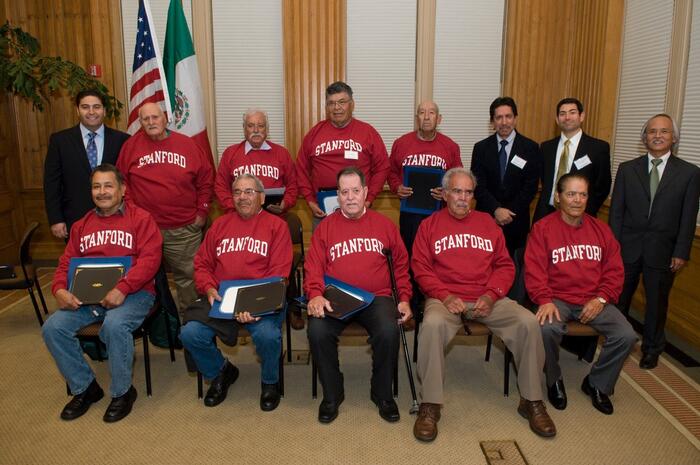
My research has uncovered numerous stories of braceros like Rafael Silva overcoming poverty. Among children and grandchildren of braceros are professors at U.C. Berkeley and Stanford, members of the U.S. Congress and California legislature, as well as successful entrepreneurs, attorneys, educators, physicians, and a former NASA astronaut. Despite these successes, braceros themselves have received little recognition. With this in mind, I decided to organize an event with SPICE to honor braceros, with hopes that it would also make an indelible impression on a Mexican American generation whose bracero fathers or grandfathers had made major contributions to the U.S. economy. They, too, were part of America’s “Greatest Generation.”

Image
photo of braceros in Stanford sweatshirts


On February 26, 2014, ten former braceros and their families were invited to an event at Encina Hall at Stanford. The invitees included Rafael Silva and Eva Silva Ruelas. Former FSI Director Mariano Florentino Cuellar, who is currently a California Supreme Court Justice, spoke along with Stanford Biology Professor Rodolfo Dirzo and me. SPICE Director Gary Mukai moderated the event and spoke about his youth as a farm laborer working with braceros. The evening was historic in that it was one of only a few times that former agricultural workers were recognized at a university. In the photo, I am standing next to my abuelito, José Guadalupe Rodriguez Fonseca, top left. Isa’s abuelito, Rafael Silva, is in the front center.

Image
extended Silva family


What else stood out that evening was the Silva grandchildren’s palpable love for their grandparents. One photo of the evening captures the Silva family legacy. Rafael (wearing a Stanford sweatshirt) and Eva Silva are in the middle with six of their children and numerous grandchildren surrounding them. Isa is standing in front of his grandfather. Three of their grandchildren are currently attending Stanford, with Isa soon to become the fourth. Reminiscing about the event, Isa noted, “I was a ten-year-old boy. It was cool to see the whole family get together and be there. We were there to support my abuelito and recognize all his hard work. It was great to see him honored for what he did so long ago. As we grow older, we appreciate him more and more.” Isa knows that his abuelito and abuelita’s journey is what transformed the Silva family and made his own American dream possible. Reflecting that pride in his family’s story, Isa closed our conversation by saying, “On and off the court, I will always represent being Mexican American.”

Read More

Hero Image
Isa Silva and his family
Isa Silva and his family; photo courtesy Karen Hickey/Stanford Athletics
All News button
1
Subtitle

Isa Silva, grandson of a bracero from Jalisco, will enter Stanford next fall as a recruit for the Stanford Men’s Basketball team.

-

To watch the recording of the event, click here.

The Biden administration has yet to announce its North Korea policy, and it remains unclear whether it will try to forge a new path in U.S. dealings with North Korea or retread the steps of previous administrations. In this webinar, four experts with extensive experience with North Korea will assess the current situation on the Korean Peninsula and provide recommendations to the new administration.

Gi-Wook Shin, director of the Shorenstein Asia-Pacific Research Center and Korea Program, will moderate the conversation with panelists Robert Carlin, a visiting scholar at the Center for International Security and Cooperation, Victor Cha, professor of government at Georgetown University and Korea Chair at the Center for Strategic and International Studies, Siegfried Hecker, senior fellow emeritus at FSI and professor emeritus in the Department of Management Science and Engineering, and Oriana Mastro, an FSI Center Fellow.

Via Zoom: Register at https://bit.ly/3tPcfml

Panel Discussions
Subscribe to United States