-

To watch the recording of the event, click here.

This event is made possible by generous support from the Korea Foundation and other friends of the Korea Program.

This event is part of Shorenstein APARC's spring webinar series "The United States in the Biden Era: Views from Asia."

Many Koreans were relieved by Biden's victory but were left wondering where his policy toward China and North Korea would be heading. Under Biden, Koreans expect better alliance management but are concerned that North Korean nuclear issues may not get much attention. They also watch his China policy closely, as the US-China conflict puts South Korea in a difficult position of having to choose one or the other. In light of the upcoming Biden-Moon summit, two leading experts of national security and trade in South Korea, Congressman Taeyong Cho and Professor Dukgeun Ahn of Seoul National University, will discuss these issues in a moderated conversation with APARC and Korea Program director Gi-Wook Shin.

Speakers:

Image
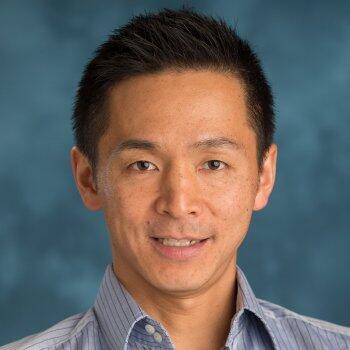
Taeyong Cho, Congressman and former National Security Adviser of South Korea.

Taeyong Cho is a Member of the National Assembly of the Republic of Korea. He serves in the Committee on Foreign Affairs and Unification as well as the Committee on Intelligence. He is a member of the conservative People Power Party, the largest opposition party. Before being elected to the National Assembly in 2020, he served in government for 37 years, mostly in the Foreign Ministry. He served as Deputy Director of the Presidential Office of National Security and as Vice Foreign Minister. He also served as Korean Ambassador to Australia and to Ireland. After retirement in 2017, Ambassador Cho taught at Yonsei University as visiting professor and spent a year in Tokyo as visiting fellow at Keio University. He wrote regular columns in major newspapers and spoke at forums in Korea and abroad. He received B.A. in political science from Seoul National University and studied at Oxford University, Foreign Service Program. 

Image
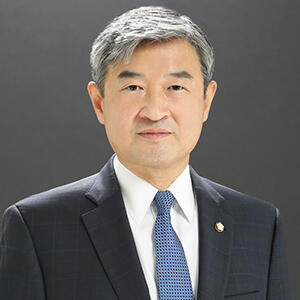
Dukgeun Ahn, Professor of International Trade Law and Policy at Seoul National University. Speaker of May 11, 2021.

Dukgeun Ahn is Dean of International Affairs and Professor of International Trade Law and Policy at Seoul National University. Professor Ahn has taught at various universities including Columbia University, Singapore National University, University of Barcelona in Spain, World Trade Institute in Switzerland as well as regularly at the World Trade Organization (WTO) for government officials. He served, among others, as Commissioner of the Korea Trade Commission, Member of National Economic Advisory Council and Chair for CPTPP Strategy Forum. Professor Ahn was President of the Korean Association of Trade and Industry Studies in 2020 and the Korean Society of Trade Remedies in 2019-2020. He holds a Ph.D. in economics and J.D. (Member of New York Bar) from the University of Michigan.

Via Zoom: Register at https://bit.ly/3xe3J1K

Authors
Kiyoteru Tsutsui
News Type
Commentary
Date
Paragraphs

This op-ed by Kiyoteru Tsutsui originally appeared in Nikkei Asia.


In one of the few unscripted moments in the meticulously planned U.S.-Japan summit meeting last Friday, President Joe Biden referred to Prime Minister Yoshihide Suga as "vice president" before quickly correcting himself.

In a different era, this could have turned into a diplomatic incident, with right-leaning Japanese pundits calling it evidence of the U.S.'s patronizing approach to Japan. Fortunately for Biden, the current geopolitical environment is not conducive to such provocation, and no major media picked up on the slip.

[Subscribe to APARC's newsletters to receive updates on our scholars.]

Much has been made of Suga being the first foreign leader to meet Biden in person. According to the U.S. State Department Office of the Historian, this is only the second time ever that a Japanese prime minister became the first foreign leader to meet a new president in the White House.

The other time was in 1989, when Prime Minister Noboru Takeshita visited President George H.W. Bush. Back then, Japan was a major threat to U.S. economic hegemony. Today, China is that threat, and not just in the economic domain. China is the first bona fide competitor to the U.S. since the Soviet Union, and its threat extends to every nook and cranny of the globe.

To counter China's ascension, the U.S. needs its allies, and Japan is the most important partner for that purpose. This is the context in which Suga visited the White House despite all the COVID-related restrictions.

Not surprisingly, the statements were carefully crafted to send strong signals to China. Building on the two-plus-two dialogue in March, the joint statement touched on the importance of peace and stability in the Asia-Pacific, from the East and South China seas to even Hong Kong, Xinjiang and Taiwan.

Japan certainly wanted a reference to the Senkaku Islands, which Beijing claims and calls the Diaoyu, and the applicability there of Article V of the U.S.-Japan Treaty of Mutual Cooperation and Security. The Biden administration had made that commitment earlier, calming concerns among Japanese leaders that the new administration may be softer on China than the Trump administration.

Biden has, in fact, been quite tough on China and has given almost a perfect answer to what Japanese foreign policymakers wanted. In return, the U.S. wanted Japan to be squarely on Washington's side. The wording of the joint statement — negotiated until the last minute — saw Japan agree to include a reference to Taiwan for the first time in 52 years, but with Japan's preferred wording, encouraging "the peaceful resolution of the cross-Strait issues."

Predictably, China reacted quickly and strongly, accusing the two countries of interfering in its domestic affairs and warning Japan about siding with the U.S. We have yet to see what retaliatory actions China might take, but the reference to Taiwan signals the beginning of a new trilateral relationship between China, Japan and the U.S.

The summit covered other important issues, all with China in the background. One key issue is economic security. In particular, supply chain decoupling will become a battle cry for the U.S. and its allies as they seek to reduce dependence on materials from China. Semiconductors are especially critical, as they power all the major growth areas in the new economy. Taiwan's dominance in the semiconductor industry is the main reason why Taiwan is so important to both sides.

To remain in the driver's seat in the new economy, the joint statement announced a new U.S.-Japan Competitiveness and Resilience (CoRe) Partnership. The most concrete proposal was an initial commitment of $4.5 billion from the two governments toward fifth generation (5G) and 6G networks, reflecting concerns about China's dominance in the key digital infrastructure of the future.

Human rights is another thorny issue, with the joint statement specifying concerns over Xinjiang and Hong Kong. With some companies joining the boycott campaign on cotton from Xinjiang, and China countering by criticizing racial division in the U.S., the clash between China and the U.S. will intensify in this area as well. Japan has stepped out of its comfort zone and criticized China on human rights, following the American approach more explicitly than before. In this regard, it is notable that Suga also referred to rising violence against Asians in the U.S.

One area in which China might be more of a partner than a competitor is climate change, with all three countries committing to zero emissions by mid-21st century. Almost concurrently with the Biden-Suga meeting, American and Chinese climate envoys — John Kerry and Xie Zhenhua — met in China and issued a joint statement affirming their commitment to work together on global climate challenges.

All these initiatives and commitments are potentially meaningful and consequential developments that can reshape the Indo-Pacific, although more concrete ideas are needed before we can evaluate their impact. The biggest take-away ought to be the confirmation that the U.S.-Japan alliance is gearing up for a new era of competition with China.

Japan more than reaffirmed its commitment to the alliance with the U.S., risking its economic relations with China. The U.S. will be sure to ask for more concrete actions from Japan on the basis of the joint statement, and Japan can no longer evade questions about what it would do in a confrontation with China. Japan has to navigate a tough terrain of standing with the U.S. in the competition with China while preventing the escalation of tensions between Beijing and Washington, and at the same time protecting its own national interests.

A new phase of the trilateral relationship has just begun, and like it or not, other Asian nations might face the same decision that Japan faced, and sooner rather than later.

Read More

Protesters hold signs and chant slogans during a Black Lives Matters Peaceful March on June 14, 2020 in Tokyo, Japan.
Commentary

What Japan and the U.S. Can Learn from Each Other

Japan Program Director Kiyoteru Tsutsui explores the cost of racial division versus the cost of homogeneity by comparing the experiences of Japan and the United States.
What Japan and the U.S. Can Learn from Each Other
President Biden walks past a row of Chinese and American flags.
News

APARC Experts on the Outlook for U.S.-Asia Policy Under the Biden Administration

Ahead of President-elect Biden’s inauguration and on the heels of the attack on the U.S. Capitol by a pro-Trump mob that has left America shaken, an APARC-wide expert panel provides a region-by-region analysis of what’s next for U.S. policy towards Asia and recommendations for the new administration.
APARC Experts on the Outlook for U.S.-Asia Policy Under the Biden Administration
President-elect Joe Biden and Chinese President Xi Jinping
News

Biden Administration Will Rely On U.S. Allies for Support as Tensions with China Continue to Rise

On the World Class Podcast, international security expert Oriana Skylar Mastro says conflict between China and Taiwan is plausible within the next 15 years, and the U.S. will likely be involved.
Biden Administration Will Rely On U.S. Allies for Support as Tensions with China Continue to Rise
Hero Image
President Biden and President Suga walk through the Rose Garden colonnade at the White House
Getty Images
All News button
1
Subtitle

The time is near when other Asian nations will have to pick a side in the great power competition between the United States and China, says Japan Program Director Kiyoteru Tsutsui.

-

This is the third event in a three-part series on North Korea Human Rights hosted by APARC's Korea Program in the spring quarter.

Two experts in North Korea human rights issues, Minjung Kim of Save North Korea and Keith Luse of National Committee for North Korea, will discuss the range of humanitarian assistance to North Korea as well as challenges non-government organizations face from South Korea, the U.S. and North Korean governments in providing assistance.

Speakers:

Image
Minjung Kim, Save North Korea. Speaker of May 20 event.
Minjung Kim is Associate Executive Director at Save North Korea (SNK), a non-government organization focusing on human rights in North Korea; and a Vice President at Future Korea Media, a bi-weekly journal focusing on national security and politics in South Korea. Since joining SNK as a founding member 22 years ago, she has been managing various projects from producing mid-wave radio programs, bringing North Korean defectors into South Korea, helping them adjust socially and culturally, to sending leaflet-balloons and hidden cameras into North Korea. Kim is also a visiting researcher at Georgetown University and a research fellow at the Yonsei Institute for Modern Korean Studies. She is a Ph.D. candidate at Yonsei Graduate School of International Studies.

Image
Keith Luse, National Committee on North Korea. Speaker of May 20 event on North Korea human rights.
Keith Luse is Executive Director of the National Committee on North Korea (NCNK), an organization dedicated to promoting principled engagement between the United States and North Korea. NCNK members include representatives of US non-governmental organizations providing humanitarian assistance to North Korea. Other members are former US Ambassadors, nuclear scientists, and members of the academic community. NCNK members specialize in matters related to nuclear nonproliferation, Korean War POW/MIA/human remains; human rights and families divided by the Korean War, among other topics. Luse has made five visits to North Korea. The first occurring in 2002 on behalf of Senator Richard Lugar, then-Chairman of the Senate Agriculture Committee focused on monitoring and accountability regarding the distribution of U.S. food assistance. Subsequent trips for Senator Lugar were during his tenure as Chairman and later Ranking Member of the Senate Foreign Relations Committee.

Yong Suk Lee, deputy director of the Korea Program, will moderate the discussion.


Via Zoom: Register at https://bit.ly/3eocnCk

-

Please note the event time has been changed to 10:30AM (PT) to 12:00PM (PT).


This is a virtual event. Please click here to register for the talk. 


This event is presented in partnership with Global:SF and the State of California Governor’s Office of Business and Economic Development.
 

U.S.-China economic relations have grown increasingly fraught and competitive.  Even amidst intensifying tensions, however, our two major economies remain intertwined.  While keeping alert to national security concerns, the economic strength of the United States will depend on brokering a productive competition with China, the world’s fastest growing economy.  Precipitous decoupling of trade, investment, and human talent flows between the two nations will inflict unnecessary harm to U.S. economic interests -- and those of California.  

Chinese trade and investments into California have grown exponentially over the last decade.  But they have come under increasing pressure following geopolitical and economic tensions between the two nations, particularly in the science and technology sectors.  This session will explore the role of Chinese economic activity in California in the context of the greater US-Chinese relationship. 


Portrait of Ambassador Craig AllenCraig Allen began his tenure in Washington, DC, as the sixth President of the United States-China Business Council, a private, nonpartisan, nonprofit organization representing over 200 American companies doing business with China. Ambassador Allen began his government career in 1985 at the Department of Commerce’s International Trade Administration (ITA) where, from 1986 to 1988, he worked as an international economist in ITA’s China Office. In 1988, Allen transferred to the American Institute in Taiwan, where he served as Director of the American Trade Center in Taipei. He returned to the Department of Commerce for a three-year posting at the US Embassy in Beijing as Commercial Attaché in 1992. In 1995, Allen was assigned to the US Embassy in Tokyo where he was promoted to Deputy Senior Commercial Officer in 1998. Allen became a member of the Senior Foreign Service in 1999. Starting from 2000, he served a two-year tour at the National Center for APEC in Seattle where he worked on the APEC Summits in Brunei, China, and Mexico. In 2002, Allen first served as the Senior Commercial Officer in Beijing where he was later promoted to the Minister Counselor rank of the Senior Foreign Service. After a four-year tour in South Africa, Ambassador Allen became Deputy Assistant Secretary for Asia at the US Department of Commerce’s International Trade Administration. He later became Deputy Assistant Secretary for China. Ambassador Allen was sworn in as the United States ambassador to Brunei Darussalam on December 19, 2014 where he served until he transitioned to take up his position as President of the US-China Business Council.
 

Image
Portrait of David Cheng
David Cheng is the chair and managing partner of Nixon Peabody’s China and Asia-Pacific practice. He is qualified in both the United States and Hong Kong. He focuses on cross-border transactions, litigations and investigations, advising on issues ranging from acquisitions, capital financing (initial public offering), intellectual property protection and disputes to fraud, FCPA and SEC investigations. He has a client portfolio from all over the world, including the United States, Middle East, Europe, Japan, Singapore, Taiwan, mainland China and Hong Kong.
 

james greenJames Green has worked for over two decades on U.S.-Asia relations. For five years, Green was the Minister Counselor for Trade Affairs at the U.S. Embassy in Beijing (2013-2018).  As the senior official in China from the Office of the United States Trade Representative (USTR), Green was deeply involved in all aspects of trade negotiations, trade enforcement, and in reducing market access barriers for American entities.  In prior government service, Green worked on the Secretary of State’s Policy Planning Staff and at the State Department’s China Desk on bilateral affairs. He also served as the China Director of the White House’s National Security Council.  In the private sector, Green was a senior vice president at the global strategy firm founded by former Secretary of State Madeleine Albright and was the founding government relations manager at the American Chamber of Commerce in Shanghai, Asia’s largest AmCham.  Currently, Green is a Senior Research Fellow at Georgetown University's Initiative for U.S.-China Dialogue on Global Issues and hosts a U.S.-China Dialogue Podcast.  He was most recently named as APARC's inaugural China Policy Fellow. 

 

Image
Portrait of Anja Manuel
Anja Manuel is Co-Founder and Principal, along with former Secretary of State Condoleezza Rice, former National Security Advisor Stephen Hadley and former Secretary of Defense Robert Gates, in Rice, Hadley, Gates & Manuel LLC, a strategic consulting firm that helps US companies navigate international markets. She currently serves on two corporate boards: Overseas Shipping Group, Inc., a NYSE listed energy transportation company, and Ripple Labs Inc., a leading blockchain payments company. Manuel also serves on several advisory boards, including Former Governor Brown’s California Export Council. From 2005-2007, she served as an official at the U.S. Department of State, responsible for South Asia Policy. She is a frequent commentator on foreign policy and technology policy, for TV and radio (NBC/MSNBC, Fox Business, BBC, Bloomberg, Charlie Rose, NPR, etc.) and writes for publications ranging from the New York Times, to the Financial Times, Fortune, The Atlantic, and Newsweek, among others. She is the author of the critically acclaimed This Brave New World: India, China and the United States, published by Simon and Schuster in 2016. A graduate of Harvard Law School and Stanford University, Manuel now also lectures and is a Research Affiliate at Stanford University. She is the Director of the Aspen Strategy Group and Aspen Security Forum -- the premier bipartisan forum on foreign policy in the U.S. -- and is a member of the Council on Foreign Relations.


This Session is part of a larger conference series titled “The New Economy Conference – California’s Place in the New Global Economy”.   The New Economy Conference will broadcast public programs from April 21-May 25 on a weekly basis, designed to inform and identify the impact of COVID-19 on the economic competitiveness and resilience of the State of California.  Topics addressed will include Challenges and Opportunities Post-COVID in California (4/21); the International Dimension (4/28), Investing in the New Economy and Keeping Businesses in California (5/5); Sustainability and Urbanism (5/12); Navigating Chinese Investment, Trade and Technology (5/19); and Where do We Go from Here? (6/09).


Via Zoom Webinar. Register at: https://www.globalsf.biz/session-5-nec 

Amb. Craig Allen <br><i>President of US-China Business Council</i><br><br>
David K. Cheng <br><i>Chair and Managing Partner of China & Asia Pacific Practice, Nixon Peabody LLP</i><br><br>
James Green <br><i>Senior Research Fellow, Initiative for U.S.-China Dialogue on Global Issues, Georgetown University</i><br><br>
Anja Manuel <br><i>Co-Founder and Principal, Rice, Hadley, Gates & Manuel LLC</i><br><br>
Seminars
News Type
News
Date
Paragraphs

Stanford e-Japan is an online course that teaches Japanese high school students about U.S. society and culture and U.S.–Japan relations. The course introduces students to both U.S. and Japanese perspectives on many historical and contemporary issues. It is offered biannually by the Stanford Program on International and Cross-Cultural Education (SPICE). Stanford e-Japan is currently supported by the Yanai Tadashi Foundation.

In Summer 2021, top students of the Spring 2020 and the Fall 2020 Stanford e-Japan courses will be honored through an event at Stanford University.

The three Spring 2020 honorees—Minami Matsushima (Senri & Osaka International Schools of Kwansei Gakuin), Yuna Naoi (Tokyo Metropolitan Hibiya High School), and Kenta Yoshii (Shukutoku Junior and Senior High School)—will be recognized for their coursework and exceptional research essays that focused respectively on “The Price We Pay for Men to be Men: Toxic Masculinity in the United States,” “Online Secondary School Education in Japan and the U.S. Amid the COVID-19 Crisis,” and “In Search of a Realistic Substitute for U.S. Extended Deterrence for Japan.”

Risako Nomura (Yokohama Senior High School of International Studies) received an Honorable Mention for her research paper on “How Untranslatability Between Japanese and English Fosters the U.S.–Japan Relationship.”

The three Fall 2020 honorees—Coco Kawaguchi (Keio Girls Senior High School), Sotaro Kunieda (Suwa Seiryo High School), and Yun-Tzu (Allison) Lin (Canadian Academy)—will be recognized for their coursework and exceptional research essays that focused respectively on “To Infinity and Beyond! National Survival in the Era of Venture Space Development,” “Fostering Social Enterprises in Japan: Lessons from the United States,” and “Nuclear Deterrence Theory: An Evaluation of Its Effectiveness in Preventing Future Deployment of Nuclear Weapons.”

Satoru Uchida (Tokyo Metropolitan High School) received an Honorable Mention for his coursework and research paper on “What the Japanese Government Should Do Immediately to Protect Children’s Human Rights.”

In the Spring 2020 session of Stanford e-Japan, students from the following schools completed the course: Aoba Japan International School (Tokyo); Clark Memorial International High School (Osaka); Hiroshima Jogakuin Senior High School (Hiroshima); Hiroshima Prefectural Junior/Senior High School (Hiroshima); Kaijo High School (Tokyo); Kamakura Gakuen High School (Kamakura); Katoh Gakuen Gyoshu Senior High School (Shizuoka); Keio Girls Senior High School (Tokyo); Kurume University Senior High School (Fukuoka); Meikei High School (Ibaraki); Municipal Urawa High School (Saitama); Musashino University Chiyoda High School (Tokyo); Nirayama High School (Shizuoka); Okayama Prefectural Okayama Asahi High School (Okayama); Seigakuin High School (Tokyo); Senior High School at Komaba, University of Tsukuba (Tokyo); Senior High School at Otsuka, University of Tsukuba (Tokyo); Senri & Osaka International Schools of Kwansei Gakuin (Osaka); Shibuya Makuhari Senior High School (Chiba); Shukutoku Junior and Senior High School (Tokyo); Tokyo Gakugei University International Secondary School (Tokyo); Tokyo Metropolitan Hibiya High School (Tokyo); Tokyo Metropolitan Ryogoku High School (Tokyo); Urawa Minami High School (Saitama); Waseda University Senior High School (Tokyo); Yokohama Senior High School of International Studies (Kanagawa); Yonezawa Kojokan High School (Yamagata); and Zero High School (Fukushima).

In the Fall 2020 session of Stanford e-Japan, students from the following schools completed the course: Canadian Academy (Hyogo), Doshisha International High School (Kyoto), Fukushima Prefectural High School (Fukushima), Hamamatsu Nishi High School (Shizuoka), Hiroo Gakuen High School (Tokyo), Hiroshima Prefectural Hiroshima Senior High School (Hiroshima), Fukuoka Prefectural Kaho High School (Fukuoka), Kaichi Junior/Senior High School (Wakayama), Kamakura Jogakuin (Kanagawa), Keio Girls Senior High School (Tokyo), Kyoto Prefectural Rakuhoku Senior High School (Kyoto), Miyagi Prefectural Sendai Nika High School (Miyagi), Musashino University Chiyoda High School (Tokyo), N-High School (Okinawa), Otaru Choryo High School (Hokkaido), Seikei High School (Tokyo), Seisho High School (Nara), Senior High School at Otsuka, University of Tsukuba (Tokyo), Shibuya Makuhari Senior High School (Tokyo), Suwa Seiryo High School (Nagano), Takada Senior High School (Mie), Tokyo Gakugei University International Secondary School (Tokyo), Tokyo Metropolitan Hitotsubashi High School (Tokyo), Tokyo Metropolitan Ryogoku High School (Tokyo), Tsurumaru Senior High School (Kagoshima), and Waseda University Senior High School (Tokyo).

For more information about the Stanford e-Japan Program, please visit stanfordejapan.org.

To stay informed of news about Stanford e-Japan and SPICE’s other programs, join our email list and follow us on Facebook, Twitter, and Instagram.


SPICE offers separate courses for U.S. high school students. For more information, please see the Reischauer Scholars Program (online course about Japan), Sejong Scholars Program (online course about Korea), and China Scholars Program (online course about China).

Read More

John Roos
Blogs

Ambassador John Roos and the Importance of Student-to-Student Exchange

Just over ten years after becoming the first U.S. ambassador to Japan to participate in the Hiroshima Peace Memorial Ceremony in 2010, Ambassador John Roos spoke about his experiences with 26 high school students in Stanford e-Japan from throughout Japan.
Ambassador John Roos and the Importance of Student-to-Student Exchange
female student standing in front of Akamon in Japan
Blogs

Stanford e-Japan: A Turning Point in My Life

The following reflection is a guest post written by Hikaru Suzuki, a 2015 alumna and honoree of the Stanford e-Japan Program, which is currently accepting applications for Spring 2021.
Stanford e-Japan: A Turning Point in My Life
Hero Image
Sakura (cherry blossoms) in Kobe City
Sakura (cherry blossoms); photo courtesy Tomoko Nakamura, Fukiai High School, Kobe City
All News button
1
Subtitle

Congratulations to the eight students who have been named our top honorees and Honorable Mention recipients for 2020.

Authors
News Type
News
Date
Paragraphs

Political attention is turning once again to the Korean Peninsula and the United States’ policy towards both the Democratic People's Republic of Korea. On April 15, 2021, the Human Rights Commission of the United States Congress convened a hearing on “Civil and Political Rights in the Republic of Korea: Implications for Human Rights on the Peninsula.” This follows on the announcement of the first face-to-face White House visit between President Biden and President Moon Jae-In where “North Korea is likely to be high on the agenda.”

In the first of three public events on North Korea Human Rights, APARC’s Korea Program hosted Tomás Ojea Quintana, United Nations Special Rapporteur on the situation of human rights in DPRK; Roberta Cohen, co-chair emeritus of the Committee for Human Rights in North Korea; and former South Korean Ambassador to the United Nations Joon Oh for a discussion of what role the United Nations plays in creating accountability for the ongoing human rights violations and crimes against humanity being enacted by the North Korean government against its people.

The full discussion is available to watch below.

[Subscribe to APARC’s newsletters for updates on our scholars’ research.]

Exploring Means of Enforcing Accountability

Speaking as an independently acting investigator, Special Rapporteur Tomás Ojea Quintana echoed the findings of his predecessors in warning that the activity within North Korea has escalated from human rights violations to international crimes against humanity, including extermination, enslavement, torture, sexual violence, and knowingly inflicting prolonged starvation.

What governing body has the ability to hold national leadership at the highest level accountable for such crimes? Quintana outlines several options. One is the International Criminal Court, the international tribunal seated in The Hauge. However, superpower nations such as the United States, China, and Russia are historically recalcitrant to the jurisdiction of this legal body and could feasibly veto a case against the DPRK sent to the ICC.

Another option is for the UN Security Council to create a hybrid tribunal through which international prosecution could litigate. This option is more ad hoc, but would circumvent some of the potential veto pitfalls to using the ICC.

The Secretary General of the United Nations could also use the pejoratives given under Article 99 of the United Nations Charter to force action and accountability forward. This would be a difficult and even unprecedented means of jurisdiction, but it is supported by an already existing, if rarely enacted, legal framework.

Moving Forward

Each of the avenues proposed by Special Rapporteur Quintana has varying levels of efficacy and shortcomings, particularly in the immediate context of the ongoing COVID-19 pandemic and the further hindrance it has created to gathering evidence and intelligence directly from North Korea. As Roberta Cohen notes,

“No possibility exists right now for International Criminal Court referral, or establishing an ad hoc tribunal, but progress is nonetheless being made in laying the groundwork for eventual criminal prosecution and other aspects of transitional justice.”

Former Ambassador Joon Oh echoes the importance of keeping the issue of human rights and international crimes in North Korea in the spotlight even if immediate legal options stall.

“The issue of accountability is extremely important. These alternative ways [of creating accountability] should be explored. Exploring these avenues adds pressure on North Korea. Even remote possibilities add pressure, which might help change their behavior.”

On April 26, 2021, Ambassador Robert King, former U.S. Special Envoy for North Korean human rights issues will continue the dialogue on accountability in North Korea with a discussion of his forthcoming book, Patterns of Impunity: Human Rights in North Korea and the Role of the U.S. Special Envoy, and the role the South Korean and U.S. governments play in promoting human rights in North Korea. Registration for the book launch is open through the day of the event.  

Read More

Brightly colored ribbons tied to fences around Imjingak Village in the DMZ on the North Korean Border.
News

Koret Conference Convenes Virtually to Discuss Human Rights Crisis in North Korea

Amid escalating inter-Korean tension and increasing economic and social strain on North Koreans in the era of COVID-19, the importance of keeping international attention on the DRPK’s human rights violations is more urgent than ever.
Koret Conference Convenes Virtually to Discuss Human Rights Crisis in North Korea
Small flags of North Korea and China for sale near the China-North Korea border
Commentary

China’s Dangerous Double Game in North Korea

Biden must force Beijing to cooperate fully with Washington or pivot to obvious obstruction writes FSI Center Fellow Oriana Skylar Mastro in her latest op-ed for Foreign Affairs.
China’s Dangerous Double Game in North Korea
(From left to right) Siegfried Hecker, Victor Cha, Oriana Mastro, Gi-Wook Shin, Robert Carlin
News

Experts Discuss Future U.S. Relations with North Korea Amid Escalations

Led by APARC, a panel of scholars hosted by the Freeman Spogli Institute weighs in on the implications of recent events on the Korean peninsula and the ongoing uncertainties in charting a future course with the DPRK.
Experts Discuss Future U.S. Relations with North Korea Amid Escalations
Hero Image
[Top left] Gi-Wook Shin; [top right] Roberta Cohen; [bottom left] Tomás Ojea Quintana; [bottom right] Joon Oh
All News button
1
Subtitle

Experts on human rights agree that the UN needs to work through multiple channels to support ongoing investigations and build evidence for future litigations in order to create accountability and pressure the DPRK to desist in committing human rights crimes.

Authors
Noa Ronkin
News Type
News
Date
Paragraphs

As the first deputy director of national intelligence for analysis from 2005 through 2008, Shorenstein APARC Fellow Thomas Fingar had to implement legislation intended to enact sweeping reforms of intelligence procedure, establish a new federal agency, and integrate and improve the performance of 16 intelligence agencies. Synthesizing this experience, Fingar’s new book, From Mandate to Blueprint: Lessons from Intelligence Reform, explains how he carried out that tremendous charge. Identifying and codifying the commonalities that shape and constrain prospects for success, the book provides a practical guide that every new government appointee could use.

In a conversation with FSI Director Michael McFaul, Fingar discussed some of the themes and lessons he shares in the book, from prioritizing and sequencing interconnected objectives through determining organizational structures and staff arrangements, to building support and managing opposition.

“One of the first jobs of any new appointee is to determine which prescribed and suggested tasks are necessary and which ones are possible,” said Fingar. “The flip side of that is making judgments about what isn’t immediately necessary, or maybe necessary but not urgent, and what really isn’t possible under the circumstances.”

All government appointments come with a mix of tasks, responsibilities, and opportunities, and oftentimes carry with them a mandate subsuming requirements and authorities, but virtually never do they come with a blueprint detailing the steps to achieve the required and desirable changes over a four-year time horizon.

When Fingar accepted the position of deputy director of national intelligence for analysis, he knew he had to implement the legislative and presidential mandate he was going to be judged by — namely, the Intelligence Reform and Terrorism Prevention Act of 2004, which President George W. Bush signed into law in December 2004 — and to meet the ongoing intelligence responsibilities amid reforming and reorienting the organization. But he also prioritized another necessary task, that of restoring confidence in the intelligence community.

After the events of September 11, 2001 and the failure to discover weapons of mass destruction in Iraq, the intelligence community faced severe criticism and harsh scrutiny. “The loss of confidence began at the top, with President Bush,” said Fingar, “and went down through Congress and senior officials, influencing the morale of the workforce.” He knew that it was impossible to meet the requirements of the mission if the people supported by it did not have confidence.

Blueprints need not — and often cannot — be fully fleshed out before one begins efforts to secure buy-in and implement key elements [...] But the vision must be clear, easy to explain, and truly reflective of what the new appointee plans to do.
Thomas Fingar

Next-step considerations must address whether the requisite conditions to achieve the prioritized objectives — including staff, information, authorities, and funding — exist or must be obtained. For example, if some tasks require skills that are not currently available, then it is essential to identify and recruit people with the necessary skills and experience. Or if building the capacity to achieve priority goals requires organization restructuring and personnel reassigning, then these tasks require steps to protect or deemphasize legacy activities.

To succeed in their roles, government appointees must also win cooperation and stave off criticism both from opponents and those who believe they could do better. That, in turn, requires one to strike a balance between transparency and flexibility. Knowing what to report and when to report it, having a vision that is clear and easy to explain, and responding to feedback while still conveying an image of resolution and handle on strategy are all invaluable for judgments about what steps to continue, modify, or jettison right away, Fingar writes in his book.

“We captured this with a motto that was also our modus operandi,” he said. "Think Big. Start Small. Fail Cheap. Fix Fast. Listen to feedback. Involve people in the decision-making process.”

Read More

Small flags of North Korea and China for sale near the China-North Korea border
Commentary

China’s Dangerous Double Game in North Korea

Biden must force Beijing to cooperate fully with Washington or pivot to obvious obstruction writes FSI Center Fellow Oriana Skylar Mastro in her latest op-ed for Foreign Affairs.
China’s Dangerous Double Game in North Korea
People holding up images in protest
News

Terms of Engagement: Ambassador Scot Marciel on U.S.-Southeast Asia Relations

The book Ambassador Marciel is writing at Stanford examines policy issues from the implications of the Myanmar crisis to the future of America’s relations with other Southeast Asian nations and the prospects for a U.S. strategic regional focus.
Terms of Engagement: Ambassador Scot Marciel on U.S.-Southeast Asia Relations
Demographics and Innovation in the Asia-Pacific
News

New Book Explores the Intersection of Demographic Shifts and Innovation, Offering Lessons from Asian Nations

Contributing authors to the new volume 'Demographics and Innovation in the Asia-Pacific' convened for a virtual book launch and discussion of the challenges facing aging societies in East Asia and the roles technology and innovation may play in rebalancing them.
New Book Explores the Intersection of Demographic Shifts and Innovation, Offering Lessons from Asian Nations
Hero Image
Cover of the book "From Mandate to Blueprint" and a portrait of Thomas Fingar
All News button
1
Subtitle

Drawing on his experience implementing one of the most comprehensive reforms to the national security establishment, APARC Fellow Thomas Fingar provides newly appointed government officials with a practical guide for translating mandates into attainable mission objectives.

-

This event is part of Shorenstein APARC's spring webinar series "The United States in the Biden Era: Views from Asia."

American politics, especially presidential elections, have always drawn significant attention from Japanese policy makers and the public, because of their enormous impact on Japanese politics. The recent developments in the U.S. – from the Trump presidency to the contested election and the unconventional transition of power that included a riot at the Capitol – have engendered an elevated level of curiosity and concern about the state of American politics in Japan. This webinar will examine how Japanese leaders and citizens have processed what unfolded in the U.S. and how it may have shaped their current views on US-Japan relations, featuring two leading experts on the topic, Keiko Iizuka (Yomiuri Shimbun) and Toshihiro Nakayama (Keio University). Moderated by Kiyoteru Tsutsui, Director of the Japan Program at APARC, the webinar will have a Q&A session, and the participants are welcome to submit their questions in advance using the registration form and at the event using the Q&A function of Zoom.

SPEAKERS

Image
Keiko Iizuka
Keiko Iizuka is Senior Political Writer/Editorial Writer at The Yomiuri Shimbun and lead commentator for the nightly news program “News in Depth (Shinso News)” on the BS4 channel. Her expertise is international relations specially focusing on Indo-Pacific, Japan-U.S. relations, and European affairs. Her U.S. experience includes working at the Brookings Institution as a visiting fellow (2008-2009) and a role of Washington Bureau Chief with Yomiuri (2013-2015). She has held several other positions at the paper including chief editor for international news department (2015-2017) and chief political correspondent at the Prime Minister’s office of Japan (2006-2007). She was posted twice in London as correspondent (2003-2006, 2017-2019).

Image
Toshihiro Nakayama
Toshihiro Nakayama, Ph.D, is a Professor of American Politics and Foreign Policy at the Faculty of Policy Management at Keio University. He is also a Senior Adjunct Fellow at the Japan Institute of International Affairs (JIIA). He was a Special Correspondent for the Washington Post at the Far Eastern Bureau (1993-94), Special Assistant at the Permanent Mission of Japan to the United Nations in New York (1996-98), Senior Research Fellow at The Japan Institute of International Affairs (2004-06), Associate Professor at Tsuda College (2006-10), and Professor at Aoyama Gakuin University (2010-14). He was also a CNAPS Visiting Fellow at the Brookings Institution (2005-06), Sir Howard Kippenberger Chair Visiting Professor at the Center for Strategic Studies, Victoria University in Wellington (2017) , Japan Scholar at the Woodrow Wilson Center (2018-2019), and an Advisor to the Ministry of Defense (2019-2020). He received his M.A.(1993) and Ph.D.(2001) from Aoyama Gakuin University. He has written two books and numerous articles on American politics, foreign policy and international relations. Recipient of Nakasone Yasuhiro Award (Incentive Award) in 2014.

MODERATOR 

Image
Kiyoteru Tsutsui
Kiyoteru Tsutsui is Henri H. and Tomoye Takahashi Professor and Senior Fellow in Japanese Studies at the Walter H. Shorenstein Asia-Pacific Research Center at Stanford University, where he is also Director of the Japan Program, a Senior Fellow of the Freeman Spogli Institute for International Studies, and a Professor of Sociology. He is the author of Rights Make Might: Global Human Rights and Minority Social Movements in Japan (Oxford University Press, 2018), co-editor of Corporate Responsibility in a Globalizing World (Oxford University Press, 2016) and co-editor of The Courteous Power: Japan and Southeast Asia in the Indo-Pacific Era (University of Michigan Press, forthcoming 2021). 

This event is being held virtually via Zoom. Please register for the webinar via the following link: https://bit.ly/3sfxcVs

Keiko Iizuka <br><i>Senior Political Writer/Editorial Writer at The Yomiuri Shimbun</i><br><br>
Toshihiro Nakayama <br><i>Professor of American Politics and Foreign Policy at the Faculty of Policy Management at Keio University</i><br><br>
Seminars
Authors
News Type
Commentary
Date
Paragraphs

BERLIN — Over the past week, Russia has reinforced its military presence on the Crimean peninsula, moved military units close to the Russia-Ukraine border and announced military “readiness checks.” Most likely, this is just a ploy to unnerve the government in Kyiv and test the West’s reaction. 

But it could be something worse. If the Kremlin is weighing the costs and benefits of a military assault on Ukraine, Europe and the United States should ensure that Moscow does not miscalculate because it underestimates the costs. 

Read the rest at Politico

Hero Image
Destroyed tank
Getty Images
All News button
1
Subtitle

Europe and the United States must ensure that Moscow does not underestimate the costs of a military assault.

Subscribe to United States