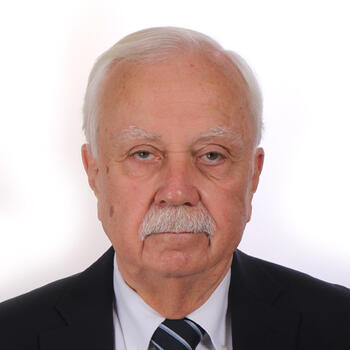
Authors
News Type
Commentary
Date
Paragraphs

During the last two months of 2021, Russia created a crisis by deploying large military forces near Ukraine and demanding security guarantees from the United States and NATO.  In mid-December, Moscow publicized draft U.S.-Russia and NATO-Russia agreements encapsulating its demands, many of which were clearly unacceptable.

Over the past four days, U.S. and Russian officials have held bilateral talks, the NATO-Russia Council met, and a meeting of the Organization for Security and Cooperation in Europe took place.  Russian officials now have an idea of what is and is not negotiable.

The question remains as it was in late December:  does the Kremlin seek a genuine give-and-take negotiation, or will the Kremlin use rejection of certain of its demands as a pretext for military action against Ukraine?  Unfortunately, it increasingly looks like the latter.

By the end of 2021, the Russian military had deployed some 100,000 troops on or near the Ukrainian border.  U.S. intelligence projected that the number could reach 175,000 soldiers early in 2022.

In December, Vladimir Putin called for security guarantees for Russia.  This seemed ironic.  The Kremlin controls the world’s largest nuclear arsenal and the most power conventional forces of any country in Europe, and Russian military forces are deployed—unwanted—on the territory of Ukraine, Georgia and Moldova.

In mid-December, Russian officials gave U.S. officials a draft U.S.-Russia treaty and a draft NATO-Russia agreement and promptly made them public.  The fact that the drafts contained provisions, such as NATO foreswearing further enlargement, that Russian officials had to know NATO would not accept, their immediate publication, the inflammatory rhetoric pouring out of Moscow, and the continuing troop build-up near Ukraine raised questions about whether the Kremlin truly sought a negotiation.

Presidents Biden and Putin held two video conferences in December.  The U.S. president outlined the costs that would ensue if Russia launched a new attack on Ukraine—new, more punitive sanctions, greater Western military assistance to Ukraine, and a bolstering of NATO’s military presence on its eastern flank near Russia (all in addition to the costs that Ukraine would impose in resisting the Russian assault)—but he also expressed a readiness for dialogue.  The two leaders agreed to discussions in January.

U.S. and Russian officials met for nearly eight hours in Geneva on January 10.  Deputy Secretary of State Sherman afterwards told the press that some Russian ideas, such as limits on missile placement in Europe and reciprocal constraints on military exercises, might provide a basis for discussion and negotiation.  However, the Americans were firm “in pushing back on security proposals that are simply non-starters for the United States.  We will not allow anyone to slam closed NATO’s “Open Door” policy [on enlargement].”   

Officials from NATO allies took similar positions when the NATO-Russia Council met in Brussels on January 12.  Following the four-hour session, NATO Secretary General Stoltenberg told the press that NATO allies “reaffirmed NATO’s Open Door policy and the right for each nation to choose its own security arrangements” and “made clear that they will not renounce their ability to protect and defend each other, including with presence of troops in the eastern part of the Alliance.”   However, NATO was prepared for a discussion of concrete proposals on military transparency, arms control and reciprocal limits on missiles.

Sherman separately said “Thirty sovereign nations spoke separately—NATO allies—and also spoke as one.”  They made clear “that all countries must be able to choose their own foreign policy orientation, that sovereignty and territorial integrity are sacrosanct and must be respected, and that all nations are and must be free to choose their own alliances.”

The Organization for Security Cooperation in Europe session in Vienna on January 13, in which Ukrainian officials took part, concluded with no movement reported on resolving the tensions between Russia and Ukraine.

The Kremlin spokesperson gave a downbeat assessment of the U.S.-Russia and NATO-Russia discussions.  He noted that, while there were “some positive nuances, positive elements,” the sides disagreed on what Russia considered the principal issues [Russia’s demands that NATO agree to no further enlargement and remove military forces deployed to countries that had joined the Alliance after 1997].  Other Russian officials likewise depicted the West has showing no movement on Moscow’s key demands.

While Russian officials suggested that there might yet be written responses to their proposals, U.S., European and Ukrainian officials consulted intensely in the run-up to this week’s meetings.  There is no reason to expect that any written response would differ from what Russian diplomats heard in Geneva, Brussels and Vienna.  Moscow now should have a good sense for what in their draft agreements would and would not provide a basis for negotiation.

The Kremlin has largely framed this as a crisis between NATO and Russia.  Putin is unhappy about how the post-Cold War situation in Europe has evolved, especially the enlargement of NATO.  He would like to wind back the clock, something NATO members will not agree to do.

For the Kremlin, however, this is first and foremost about Ukraine and Moscow’s desire for a sphere of influence in the post-Soviet space.  After meeting U.S. officials on January 10, Deputy Foreign Minister Ryabkov said “it’s absolutely mandatory to make sure that Ukraine, never, never ever becomes a member of NATO.”  (While there is little enthusiasm among NATO members now for putting Ukraine on a membership track, as the Russians almost certainly understand, NATO will not foreswear the future possibility.)

Moscow worries that it is losing Ukraine, which it is.  Over the past eight years, the Russian military seized Crimea, and Russia instigated and sustained a conflict in Donbas that has claimed more than 13,000 lives.  Such actions, not surprisingly, have driven Ukraine away from Russia and bolstered elite and public support there for joining NATO. 

The Kremlin’s policy toward Ukraine has produced a strategic failure.  Launching a new attack now would hardly improve Ukrainian attitudes toward Russia, but the Russian military is by all appearances preparing for a major operation.

It may be that Putin has not yet decided what to do.  However, he seems to be painting himself into a corner in which military action remains his only feasible choice.  While leaving the path for dialogue open, the West should redouble its effort to dissuade and deter him from taking that choice.  But it increasingly appears that the West will not succeed. 

Hero Image
Vladimir Putin Adam Berry / Stringer accessed through GettyImages
All News button
1
Subtitle

During the last two months of 2021, Russia created a crisis by deploying large military forces near Ukraine and demanding security guarantees from the United States and NATO.

650-736-7622
0
jb_headshot_copy.jpg MS

In addition to her role as Director of Strategic Partnerships for the Human Trafficking Data Lab, Jessie Brunner serves as Deputy Director of Strategy and Program Development at the Center for Human Rights and International Justice at Stanford University. In this capacity she manages the Center's main interdisciplinary collaborations and research activities, in addition to advising on overall Center strategy. Jessie currently researches issues relevant to data collection and ethical data use in the human trafficking field, with a focus on Brazil and Southeast Asia. Furthermore, in her role as co-Principal Investigator of the Re:Structure Lab, Jessie is investigating how supply chains and business models can be re-imagined to promote equitable labor standards, worker rights, and abolish forced labor. Brunner earned a MA in International Policy from Stanford University and a BA in Mass Communications and a Spanish minor from the University of California, Berkeley.

Director of Strategic Partnerships, Human Trafficking Data Lab
Deputy Director of Strategy and Program Development, Center for Human Rights and International Justice
-

About the Seminar: For centuries, the world’s dominant power has been the state that wielded the world’s dominant navy. More recently, globalization has been remade, as a sea-based trade—85% of all global trade moves by sea. As does nearly 2/3rds of the world trade in oil and gas, while 93% of all data in the world moves along undersea cables that line the ocean floor. The oceans are vital, too, to our changing climate. All of which highlights the drama of China’s return to the high seas, and its rapid maritime and naval build-up. The net result: a new arms race, centered in the Western Pacific but reaching out into the Arctic and the Indian Oceans, and pulling in Russia, India, Japan and Europe.  Bruce Jones, author of To Rule the Waves, will explore how our security, our prosperity, and our environment are being reshaped by the dynamics of sea power.

Register Now

About the Speaker: 

Image
Bruce Jones Headshot

Bruce Jones is a senior fellow and director of the project on international order and strategy at the Brookings Institution. The author or co-author of several books on international order, his most recent work is “To Rule the Waves: How Control of the World’s Oceans Shapes the Fate of the Superpowers”.


Online, via Zoom.

Bruce Jones The Brookings Institution
Seminars
-

About the Seminar: Better regulation or regulatory policy and governance has been on the agenda of Western governments for about 20 years. The OECD regularly publishes overviews and adopts recommendations.

In Germany, the adoption of the Normenkontrollrat Act in 2006 and the subsequent establishment of the National Regulatory Control Council (NKR) as the national oversight body marked the beginning of the Better Regulation Policy. The presentation explains the working methods of the NKR as well as the highlights of its work, especially with regard to efforts to reduce unnecessary bureaucracy, to improve the preparation of draft legislation, and to digitalize and modernize the administration in Germany.

Register Now

About the Speaker:

Image
Johannes
Dr. Johannes Ludewig, Chairman of NKR 2006-2021; Chairman of German Railways and afterwards Community of European Railways, Brussels 1997-2010; State Secretary Federal Ministry of Economics (1995-1997); Economic and Financial Advisor to the German Federal Chancellor, also responsible for the economic reconstruction of East Germany after Reunification 1990; PhD 1975 (University of Hamburg); MS 1972 (Stanford).


Online, via Zoom.

Dr. Johannes Ludewig
Seminars
Authors
News Type
Commentary
Date
Paragraphs

Russia’s massing of military power near Ukraine was certain to dominate the December 7 video conference between Presidents Biden and Putin. A Russian assault would turn into a bloody affair (for Russians and Ukrainians alike) and plunge relations between Russia and the West deeper into crisis. Is Putin prepared to take that step?  Perhaps even he has not yet decided.

By all appearances, Biden did what he had to do. He spelled out for Putin the costs that would ensue if Russia attacked. These include more painful Western economic sanctions, more military assistance for Ukraine, and a bolstering of NATO’s military presence in the Baltic states and Poland. Moreover, he strengthened his hand by consulting the day before with the leaders of Britain, Germany, France and Italy.  That meant he could talk to Putin on the basis of a consolidated Western position.

Biden also described a way out of the crisis: de-escalation and dialogue, or dialogues, to address the Russia-Ukraine conflict in Donbas and broader European security questions. Neither of those discussions will prove easy. For example, NATO will not, and should not, accede to the Kremlin’s demand that the alliance renounce its "open door" policy on enlargement. But diplomacy is all about finding ways to defuse such difficult problems.

Did Biden succeed? That remains to be seen. One thing to watch is whether Moscow’s recent over-the-top rhetoric moderates. Of course, the more important signal would come from the movement of Russian troops away from Ukraine and back to their regular garrisons.

Read more views on what the Biden-Putin video call means for the regional security situation on Atlantic Council.

Hero Image
Joe Biden and Vladimir Putin shaking hands Peter Klaunzer - Pool/Keystone via Getty Images
All News button
1
Subtitle

US President Joe Biden and his Russian counterpart Vladimir Putin spoke via video link for around two hours on December 7 in a hastily arranged virtual summit to address international concerns over a major Russian military build-up along the country’s border with Ukraine.

Authors
News Type
Commentary
Date
Paragraphs

All eyes are on Ukraine (including ours). Steven Pifer, a William J. Perry Research Fellow at CISAC and former ambassador to Ukraine, joins co-host Tom Collina to discuss Putin’s motivations for Ukraine and more. 


Ploughshares Fund · Will Russia Invade Ukraine?


Hero Image
Man smiling
All News button
1
Subtitle

All eyes are on Ukraine (including ours). Steven Pifer, a William J. Perry Research Fellow at CISAC and former ambassador to Ukraine, joins co-host Tom Collina to discuss Putin’s motivations for Ukraine and more.

Authors
News Type
News
Date
Paragraphs

Applications opened recently for the Spring 2022 session of the Stanford University Scholars Program for Japanese High School Students (also known as “Stanford e-Japan”), which will run from mid-February through the end of June 2022. The deadline to apply is December 31, 2021.

Stanford e-Japan Program for high school students in Japan
Spring 2022 session (February to June 2022)
Application period: November 15 to December 31, 2021

All applications must be submitted at https://spicestanford.smapply.io/prog/stanford_e-japan/ via the SurveyMonkey Apply platform. Applicants and recommenders will need to create a SurveyMonkey Apply account to proceed. Students who are interested in applying to the online course are encouraged to begin their applications early.

Accepted applicants will engage in an intensive study of U.S. society and culture and U.S.–Japan relations. Ambassadors, top scholars, and experts from Stanford University and throughout the United States provide web-based lectures and engage students in live discussion sessions.

“Participating in Stanford e-Japan has been one of the highlights of my high school experience,” reflected Fall 2020 honoree Allison Lin. “Through the course, I gained the opportunity to learn from intelligent and experienced scholars which I wouldn’t have had otherwise and found myself aspiring to be like them in the future.”

Stanford e-Japan is offered by the Stanford Program on International and Cross-Cultural Education (SPICE), Stanford University. The Spring 2022 session of Stanford e-Japan is generously supported by the Yanai Tadashi Foundation, Tokyo, Japan.

For more information about Stanford e-Japan, please visit stanfordejapan.org.

To stay informed of news about Stanford e-Japan and SPICE’s other student programs, join our email list or follow us on Facebook, Instagram, and Twitter.


SPICE offers separate courses for U.S. high school students. For more information, please visit the Reischauer Scholars Program (on Japan), the Sejong Scholars Program (on Korea), and the China Scholars Program (on China).

Read More

collage of honoree headshots
News

Winners Announced for the Spring 2021 Stanford e-Japan Award

Congratulations to our newest student honorees.
Winners Announced for the Spring 2021 Stanford e-Japan Award
Japan Day honorees Zoom image
News

Japan Day: Recognizing Top Students in Stanford e-Japan and the Reischauer Scholars Program

Congratulations to the 2020 Stanford e-Japan and 2021 RSP honorees.
Japan Day: Recognizing Top Students in Stanford e-Japan and the Reischauer Scholars Program
female student standing in front of Akamon in Japan
Blogs

Stanford e-Japan: A Turning Point in My Life

The following reflection is a guest post written by Hikaru Suzuki, a 2015 alumna and honoree of the Stanford e-Japan Program, which is currently accepting applications for Spring 2021.
Stanford e-Japan: A Turning Point in My Life
Hero Image
a male student standing in front of red building
Stanford e-Japan alumnus Hugo Ichioka, who is currently studying at Williams College as a Yanai Tadashi Foundation Scholar.
All News button
1
Subtitle

Interested students must apply by December 31, 2021.

Authors
Callista Wells
News Type
News
Date
Paragraphs

On October 6, 2021, the APARC China Program hosted the panel program, "Engaging China: Fifty Years of Sino-American Relations." In honor of her recently released book of the same title, Director of the Grassroots China Initiative Anne Thurston was joined by contributors Mary Bullock, President Emerita of Agnes Scott College; Thomas Fingar, Shorenstein APARC Fellow; and David M. Lampton, Professor Emeritus at Johns Hopkins School of Advanced International Studies (SAIS). Thomas Fingar also moderated the panel.

Recent years have seen the U.S.-China relationship rapidly deteriorate. Engaging China brings together leading China specialists—ranging from academics to NGO leaders to former government officials—to analyze the past, present, and future of U.S.-China relations.

During their panel, Bullock, Fingar, Lampton, and Thurston reflected upon the complex and multifaceted nature of American engagement with China since the waning days of Mao’s rule. What initially motivated U.S.’ rapprochement with China? Until recent years, what logic and processes have underpinned the U.S. foreign policy posture towards China? What were the gains and the missteps made during five decades of America’s engagement policy toward China? What is the significance of our rapidly deteriorating bilateral relations today? Watch now: 

For more information about Engaging China or to purchase a copy, please click here.

Read More

Xi and Biden
Q&As

Biden, Xi Will Want To Diminish Exaggerated Characterizations of Bilateral Friction, Stanford Scholar Says

In this Q&A, Stanford scholar Thomas Fingar discusses what to expect when President Biden meets with Chinese President Xi Jinping.
Biden, Xi Will Want To Diminish Exaggerated Characterizations of Bilateral Friction, Stanford Scholar Says
Taiwan
Commentary

America's Future in Taiwan

Intensifying threats of a military conflict over Taiwan have brought uncertainty to the stability of regional security for Southeast Asia, according to Center Fellow Oriana Skylar Mastro on radio show On Point.
America's Future in Taiwan
USS Key West during during joint Australian-United States military exercises Talisman Sabre 2019 in the Coral Sea.
Commentary

In Defense of AUKUS

This is not only about nuclear-powered submarines; it is about a strengthened US commitment to Australia.
In Defense of AUKUS
Hero Image
"Engaging China: Fifty Years of Sino-American Relations" book cover
All News button
1
Subtitle

Was the strategy of engagement with China worthwhile? Experts Mary Bullock, Thomas Fingar, David M. Lampton, and Anne Thurston discuss their recent release, "Engaging China: Fifty Years of Sino-American Relations."

Authors
News Type
Commentary
Date
Paragraphs

Look up! The ghosts of space weapons past have once again darkened our cosmic doorway. Recently Britain’s Financial Times reported that China flight-tested a new breed of space weapon when it launched a massive “Long March” rocket tipped with a nuclear-capable, hypersonic glider. The missile briefly entered orbit before descending on its target, which it missed by roughly two dozen miles. The report suggested that the test was evidence that China has “made astounding progress on hypersonic weapons and [is] far more advanced than US officials realised.”

Read the rest at The Washington Post

Hero Image
Chinese flag flying above orbital carrier rocket
7th China International Aviation and Aerospace Exhibition To Kick Off (November 2008)
Stringer/Getty Images
All News button
1
Subtitle

China flight-tested a new breed of space weapon when it launched a massive “Long March” rocket tipped with a nuclear-capable, hypersonic glider. But history tells us why the test isn’t a cause for panic.

Authors
Herbert Lin
News Type
Commentary
Date
Paragraphs

The oldest information system the government operates might also be the most crucial one. No, not the IRS master file system. It’s the technology that controls nuclear weapons. It dates to the 1950s. Yet imagine if the control systems were online in the age of ransomware. Our guest has thought about exactly that. A long time scholar and researcher in cybersecurity, he’s written a book called Cyber Threats and Nuclear Weapons. Stanford University Fellow Dr. Herb Lin joined Federal Drive with Tom Temin.

Read the rest at Federal News Network

Hero Image
Herb Lin Rod Searcey
All News button
1
Subtitle

The oldest information system the government operates might also be the most crucial one. No, not the IRS master file system. It’s the technology that controls nuclear weapons. It dates to the 1950s. Yet imagine if the control systems were online in the age of ransomware.

Subscribe to North America