In collaboration with the Center for Latin American Studies (CLAS) at Stanford University, SPICE hosted a professional development seminar for elementary school teachers that focused on strategies to incorporate Latin American and Latino children’s literature into the K–5 classroom.
On February 6, 2015, 32 teachers from across the Bay Area gathered at Stanford University to listen to guest lectures, participate in curriculum demonstrations, and collaboratively explore issues related to immigration and identity.
The workshop commenced with a presentation by children’s book author and illustrator Duncan Tonatiuh, whose most recent book, Pancho Rabbit and the Coyote: A Migrant’s Tale, was a 2014 recipient of the Americas Book Award. The Americas Book Award was founded in 1993 by the Consortium of Latin American Studies Programs (CLASP) to encourage and commend authors, illustrators, and publishers who produce quality children’s and young adult books that portray Latin America, the Caribbean, or Latinos in the United States.
Mr. Tonatiuh shared the inspiration for Pancho Rabbit and the Coyote, which tells the story of a young rabbit’s journey from Mexico to the United States in search of his father. According to Mr. Tonatiuh, the book can be read as an allegory of the experiences that undocumented immigrants endure in order to reach the United States. During his talk, Mr. Tonatiuh played a short video created by an elementary school teacher in which students shared their own immigration stories in response to the book. The moving video was a reminder of the importance immigration issues have in many students’ lives. Each teacher at the workshop received a copy of Mr. Tonatiuh’s book.
Tomás Jiménez, Associate Professor of Sociology and Director of Chicana/o-Latina/o Studies at Stanford University, followed Mr. Tonatiuh’s talk with a lecture on the recent history of immigration to the United States. Professor Jiménez’s educative overview of the economic, social, and political forces that have led to the current state of immigration in the United States perfectly complemented the personal stories shared earlier by Mr. Tonatiuh.
In the afternoon, Keira Philipp-Schnure, Supervisor of Community Education Programs, and Katrina Dillon, Project Assistant, at the Latin American and Iberian Institute at University of New Mexico, shared an educator’s guide for Pancho Rabbit and the Coyote. The educator’s guide offers a plethora of lessons and activities that teachers can use when teaching the book.
As a final activity, workshop participants assembled in small groups to discuss the content and pedagogical strategies that had been shared at the workshop. Jonas Edman, Curriculum Writer at SPICE, facilitated the activity in which teachers offered their own ideas for lesson plans and activities to go along with Mr. Tonatiuh’s book.
In her closing remarks, Elizabeth Saenz-Ackermann, Associate Director at CLAS, expressed heartfelt gratitude to the teachers for their participation in the workshop and for their commitment to incorporating Latin American and Latino themes and topics into their teaching.
Participant youth, Wallace and Wellington, overlooking the city from their community.
CONFERENCE OVERVIEW
The heavy presence of youth and young adults in the world of criminality is an issue that has been gaining increasingly more attention in the agendas of policymakers and politicians in developing and developed nations. With scarce options for a quality education, prospects for gainful employment and the possibility for future economic sustainability, on a daily basis, young individuals from poor communities throughout Latin American and U.S. cities are exposed to a violent environment with easily accessed - and often attractive - gateways into the world of criminality. From casual affiliation to gangs in schools and neighborhoods in Southern California, to full-time armed participation in international drug cartels in Juarez and drug factions in Rio de Janeiro favelas, youth are the biggest target – and victims – of violence.
In attempts to shed light to this very complex and fundamental issue that is claiming thousand of lives every year and deteriorating the social fabric across cities, the Program on Poverty and Governance (PovGov) at Stanford Center on Democracy, Development, and the Rule of Law (CDDRL) in conjunction with the Center for Latin American Studies, The Bill Lane Center for the America West, The Mexico Initiative at FSI, and The Center on International Security and Cooperation, will hold a two-day conference to discuss the dimensions of youth and criminal violence in Latin American and U.S. cities and share pathways to hope.
Ranging from grassroots initiatives to widespread government policies, the conference will develop on various established development actions and programs aimed at providing educational, work, and entrepreneurial opportunities for youth in territories impacted by poverty, criminality and violence in the U.S. and Latin America. We will gather activists and practitioners from grassroots civil society organizations, community leaders, educators, professionals from international development platforms, policy-makers, politicians, scholars - as well as some of the very individuals participating in these programs - to discuss the many challenges faced by the youth population in these different locations and to share innovative and inspirational initiatives to generate opportunities and foster change.
At PovGov, we believe in the importance of creating an environment where actors with different backgrounds across sectors, disciplines, realities and environments can come together to share their first-hand experiences, challenges and aspirations. We hope this wide-reaching and multiplayer conference can enrich the discussion around the formulation of policies and development strategies to benefit the youth in places of violence and better inform the work moving forward.
· Brenda Jarillo, Post-Doctoral Fellow, PovGov, Stanford University.
· Monica Valdez González, Director of Research and Studies, IMJUVE, Mexico.
Discussant: Francis Fukuyama, Director, Program on Governance, Stanford University.
10:40 – 11:40
Keynote Speaker
The Agenda for Youth Violence Prevention in Brazil: Where We Are Now and Where We Are Heading
Angela Guimarães, Brazil’s Sub-Secretary of Youth and President of the National Council on Youth (CONJUVE)
11:50 – 12:50: Lunch
1:00 – 2:30
Panel 2. Initiatives for At-risk Youth in Rio Favelas
· Eliana de Sousa e Silva, Director, Redes de Desenvolvimento da Maré, Rio de Janeiro, Brazil.
· Jailson de Sousa e Silva, Director, Observatório de Favelas, Rio de Janeiro, Brazil.
· Ivana Bentes, National Secretary of Citizenship and Cultural Diversity, Brazil.
Discussant: Larry Diamond, Director, CDDRL, Stanford University.
(10-minute break)
2:40 – 4:10
Panel 3. Reducing Youth Gang Activity and Violence in the U.S.
· Amy Crawford, Deputy Director, Center for Crime Prevention and Control, John Jay College of Criminal Justice in New York.
· Lateefah Simon, Director, California’s Future Initiative at Rosenberg Foundation, San Francisco, California.
· Christa Gannon, Founder and Director, Fresh Lifelines for Youth, San Mateo and Santa Clara, California.
Discussant:Bruce Cain, Director, Bill Lane Institute for the American West, Stanford University.
4:15 – 5:00: Closing Event of the Day
Stanford International Crime and Violence Lab announcement; cooperation agreement ceremony; photography exposition from Observatório de Favelas (“People’s Images” project).
· Beatriz Magaloni, Stanford University.
· Alberto Diaz-Cayeros, Stanford University.
(Adjourn)
Wednesday, April 29th 2015
9:00- 10:30
Panel 4. Evaluating Effective Interventions for Youth
· Jorja Leap, Adjunct Professor, Department of Social Welfare; Director, Health and Social Justice Partnership, UCLA.
At the NATO Summit in Wales in September 2014, NATO leaders were clear about the security challenges on the Alliance’s borders. In the East, Russia’s actions threaten our vision of a Europe that is whole, free and at peace. On the Alliance’s southeastern border, ISIL’s campaign of terror poses a threat to the stability of the Middle East and beyond. To the south, across the Mediterranean, Libya is becoming increasingly unstable. As the Alliance continues to confront theses current and emerging threats, one thing is clear as we prepare for the 2016 Summit in Warsaw: NATO will adapt, just as it has throughout its 65-year history.
Image
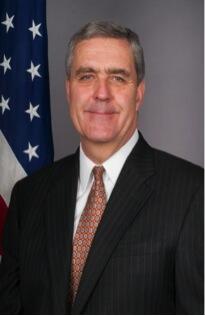
In August 2013, Douglas E. Lute was sworn-in as the Ambassador of the United States to the North Atlantic Treaty Organization (NATO). From 2007 to 2013, Lute served at the White House under Presidents Bush and Obama, first as the Assistant to the President and Deputy National Security Advisor for Iraq and Afghanistan, and more recently as the Deputy Assistant to the President focusing on Afghanistan, Pakistan and India. In 2010, AMB Lute retired from the U.S. Army as a Lieutenant General after 35 years on active duty. Prior to the White House, he served as the Director of Operations on the Joint Staff, overseeing U.S. military operations worldwide. He served multiple tours in NATO commands including duty in Germany during the Cold War and commanding U.S. forces in Kosovo. He holds degrees from the United States Military Academy and Harvard University.
A light lunch will be provided. Please plan to arrive by 11:30am to allow time to check in at the registration desk, pick up your lunch and be seated by 12:00 noon.
Co-sponsored by The Europe Center, the Freeman Spogli Institute for International Studies, the Center for International Security and Cooperation and the Center for Russian, East European and Eurasian Studies.
Douglas Lute
United States Ambassador to NATO
Speaker
Lauren Wedekind is a Stanford undergraduate studying Human Biology and Democracy, Development, and the Rule of Law. Her research focuses on social medicine and the potential for telemedicine to mitigate health care coverage gaps. Lauren believes that human rights advocacy requires a two-way street of listening and communication within and across national and cultural borders—which she explores with Stanford CDDRL, UNA-USA, and WFUNA on projects involving the right to health. Wedekind received funding from CDDRL's Program on Human Rights to travel and participate in the WFUNA Human Rights Youth Training Conference in Geneva, Switzerland.
By age seventeen, Nam had been forced into marrying a stranger, bearing his child, and risking her life to be a refugee on a remote island. In April 1975, the North Vietnamese Communist Party took over the Republic of South Vietnam, and violently threatened residents of Saigon, South Vietnam’s then-capital and Nam’s hometown. Like thousands of other residents, Nam’s family desperately uprooted from their relatively comfortable living situation, only to cram like sardines into an over-capacity boat headed toward international waters, hoping to be rescued by the United Nations. With their lives in very real danger, the to-be refugees who boarded that boat did so without any guarantee that they would safely cross the passage across the Pacific Ocean. In fact, these “boat people” were held hostage, robbed, raped, and beaten on three separate occasions by pirates in the Sea of China. After the attacks, they floated aimlessly on the ocean for days, and were finally rescued by a UNHCR vessel, which guided them to refugee camps in Indonesia. One year later, Nam and her boat’s survivors—those who were not killed by violence or disease—reached the United States. The survivors who finally reached peacekeeping nations accepting refugees had often endured poverty, abuse, and posttraumatic mental and physical health issues.
Wedekind with her cohort of training attendees in Geneva.
At first, upon hearing about the human rights violations that Nam and many other Southeast Asian refugees have endured, I channeled my disbelief only into outrage toward the perpetrators. Why did one group violently drive thousands of families out of their own homes? How could pirates attack the innocent “boat people”? How many human rights violations could have occurred in transit? These common reactions are completely justified; however, simply demanding the answers to these questions alone will protect neither human dignity of the refugees nor future victims of human rights violations. Members of society at all levels of governance must agree that there is a need for change, and that they will support its enactment. This is the core principle of human rights dialogue.
This summer, I was honored to be nominated by UNA-USA to attend the WFUNA High Commissioner of Human Rights Training in Geneva, in which 30 young human rights advocates representing 25 countries learned about international human rights instruments and the UN Human Rights Council. Through WFUNA’s training curriculum, and even more, through interactions with our peers, our cohort agreed on concepts of fundamental human rights—that people of all ages and backgrounds should be guaranteed: (1) Fundamental human rights and (2) The right to defend these rights. Point (2) necessitates governments exercising structural competence to guarantee the protection of human rights for all members of society. As part of Point (2), listening to many different viewpoints within society has been humbled me: As a human rights advocate, I am responsible for ensuring that I also understand the stories of the marginalized so that I can best voice collective advocacy points to others – advocacy is a two-way street.
When watching the UN Human Rights Council Emergency Session on Gaza with the Human Rights Training in July, I was first awestruck that I was able to watch a history-making decision before my eyes. As I held the wired translator earpiece to my ear for the last hour of the Session in which NGOs were stating their own perceptions of human rights violations on-the-ground, though, I realized that many stakeholders were actually leaving the assembly hall. I wondered: “How can multilateral, international organizations realistically ensure that they respect the human dignity of all members of society without each ambassador engaging with community members who directly experience conflicts on-the-ground?” I respect the major responsibilities of Ambassadors to the UN Human Rights council: (1) Developing realistic pictures of events he/she has often not directly perceived, (2) Communicating these pictures to members of his/her society, and (3) Voicing the collective opinions of his/her constituency on human rights issues in international engagements. These three actions are not simple, but when put into practice, they enable action over apathy.
Since returning to the U.S., I have asked: “How can I be most useful to my society?” After witnessing both multinational cooperation as well as largely unheard voices of NGOs in international human
Wedekind at one of the training sessions at the UN.
rights dialogue, my belief that human rights advocates are responsible for communicating with all members of their societies, especially the marginalized, has only grown stronger. Infuriated by Nam’s tales of human rights violations experienced by refugees, yet inspired by the potential for more productive international dialogue in venues such as the Human Rights Council, I have committed to teaching young people about human rights, specifically the right to health, on a grassroots level.
In partnership with the Program on Human Rights at Stanford's Center for Democracy, Development, and the Rule of Law, Afia Khan (Economics ’16) and I are developing a student-initiated course on health and human rights advocacy, which we will launch in 2015, for intermediate school through university-level students. We hope to provide young people with a knowledge base and advocacy toolkit for young people on health and human rights, and to let them know what I have learned from UN Human Rights Council and Nam: Every single person can advocate for human rights – we must start small by exercising compassion to understand others’ experiences, and then share with others what we have learned.
Lauren Wedekind (left) speaks at the World Federation of United Nations Associations' Youth Human Rights Training in Geneva, Switzerland. | World Federation of United Nations Associations
There is currently a worldwide debate regarding the transformation of democracy. The representative system (political parties, parliamentary bodies, and the executive government) has been weakened and in some cases displaced by non-electoral representative actors (mass media, judicial magistrates, public commissions, etc.) and by intense manifestations of civic empowerment that remain politically active well after elections. As a result, the legitimacy of government decisions is consistently called into question. This evolution of democracy at the beginning of the 21st century is particularly apparent in Latin America, but it is affecting the quality and stability of democracy in many countries around the globe.
One element of the transformation has been the repeated emergence of populist governments, characterized by the informal practice of power. These movements, which frequently include marginalized sectors of society and identify with charismatic leadership, exert substantial power in a number of countries. The expansion of regimes with populist features in the context of electoral democracies has led to several unresolved questions that will be discussed in the seminar.
Agenda
9:15 Coffee
9:30 Introduction, Isidoro Cheresky, Full Professor, University of Buenos Aires; CLAS Tinker Professor
9:40 “The Global Democratic Recession and Its Implications for Latin America”
Larry Diamond, CDDRL, Stanford
10:15 “Populism and the Politics of the Extraordinary”
Carlos de la Torre, Professor of Sociology, University Kentucky, Lexington
11:15 “Latin America and the Theological, Epistemological and Aesthetic Regimes of Politics,” Martin Plot, School of Critical Studies, California Institute of the Arts
12:15-12:30 Concluding Discussion
Discussants
Isidoro Cheresky
Alberto Diaz-Cayeros, Senior Fellow, Freeman Spogli Institute for International Studies
CDDRL
Stanford University
Encina Hall, C147
616 Jane Stanford Way
Stanford, CA 94305-6055
(650) 724-6448
(650) 723-1928
0
ldiamond@stanford.edu
Mosbacher Senior Fellow in Global Democracy at the Freeman Spogli Institute for International Studies
William L. Clayton Senior Fellow at the Hoover Institution
Professor, by courtesy, of Political Science and Sociology
diamond_encina_hall.png
MA, PhD
Larry Diamond is the William L. Clayton Senior Fellow at the Hoover Institution, the Mosbacher Senior Fellow in Global Democracy at the Freeman Spogli Institute for International Studies (FSI), and a Bass University Fellow in Undergraduate Education at Stanford University. He is also professor by courtesy of Political Science and Sociology at Stanford, where he lectures and teaches courses on democracy (including an online course on EdX). At the Hoover Institution, he co-leads the Project on Taiwan in the Indo-Pacific Region and participates in the Project on the U.S., China, and the World. At FSI, he is among the core faculty of the Center on Democracy, Development and the Rule of Law, which he directed for six and a half years. He leads FSI’s Israel Studies Program and is a member of the Program on Arab Reform and Development. He also co-leads the Global Digital Policy Incubator, based at FSI’s Cyber Policy Center. He served for 32 years as founding co-editor of the Journal of Democracy.
Diamond’s research focuses on global trends affecting freedom and democracy and on U.S. and international policies to defend and advance democracy. His book, Ill Winds: Saving Democracy from Russian Rage, Chinese Ambition, and American Complacency, analyzes the challenges confronting liberal democracy in the United States and around the world at this potential “hinge in history,” and offers an agenda for strengthening and defending democracy at home and abroad. A paperback edition with a new preface was released by Penguin in April 2020. His other books include: In Search of Democracy (2016), The Spirit of Democracy (2008), Developing Democracy: Toward Consolidation (1999), Promoting Democracy in the 1990s (1995), and Class, Ethnicity, and Democracy in Nigeria (1989). He has edited or coedited more than fifty books, including China’s Influence and American Interests(2019, with Orville Schell), Silicon Triangle: The United States, China, Taiwan the Global Semiconductor Security (2023, with James O. Ellis Jr. and Orville Schell), and The Troubling State of India’s Democracy(2024, with Sumit Ganguly and Dinsha Mistree).
During 2002–03, Diamond served as a consultant to the US Agency for International Development (USAID) and was a contributing author of its report, Foreign Aid in the National Interest. He has advised and lectured to universities and think tanks around the world, and to the World Bank, the United Nations, the State Department, and other organizations dealing with governance and development. During the first three months of 2004, Diamond served as a senior adviser on governance to the Coalition Provisional Authority in Baghdad. His 2005 book, Squandered Victory: The American Occupation and the Bungled Effort to Bring Democracy to Iraq, was one of the first books to critically analyze America's postwar engagement in Iraq.
Among Diamond’s other edited books are Democracy in Decline?; Democratization and Authoritarianism in the Arab World; Will China Democratize?; and Liberation Technology: Social Media and the Struggle for Democracy, all edited with Marc F. Plattner; and Politics and Culture in Contemporary Iran, with Abbas Milani. With Juan J. Linz and Seymour Martin Lipset, he edited the series, Democracy in Developing Countries, which helped to shape a new generation of comparative study of democratic development.
Encina Hall, C149
616 Jane Stanford Way
Stanford, CA 94305
(650) 725-0500
0
albertod@stanford.edu
Senior Fellow, Freeman Spogli Institute for International Studies
Professor, by courtesy, of Political Science
alberto_diaz-cayeros_2024.jpg
MA, PhD
Alberto Díaz-Cayeros is a Senior Fellow at Stanford University's Freeman Spogli Institute for International Studies (FSI), and co-director of the Democracy Action Lab (DAL), based at FSI's Center on Democracy, Development and Rule of Law (CDDRL). His research interests include federalism, poverty relief, indigenous governance, political economy of health, violence, and citizen security in Mexico and Latin America.
He is currently working on a project on cartography and the developmental legacies of colonial rule and governance in indigenous communities in Mexico.
The Program on American Democracy in Comparative Perspective hosts conferences on issues of critical importance to democracy and effective governance. These conferences bring together scholars, policymakers, and practitioners with expertise on the United States and advanced democracies. They combine empirical findings with policy recommendations.
The Program on American Democracy in Comparative Perspective hosts diverse events, including workshops and seminars, to engage the scholarly community in specific aspects of American governance. These events bring speakers and academics to Stanford, particularly to introduce reports and findings in the reform community.
The United States’ strategy for the storage and disposal of highly radioactive nuclear waste is at a stalemate: spent nuclear fuel accumulates at nuclear power plants, yet there is no long-term, national strategy for spent fuel management and disposal. A federal commission emphasized the urgency of finding a geologic repository, but work on the proposed site -- Yucca Mountain – has stopped and its fate is unclear. The political impasse has overwhelmed meaningful discussion of technical, risk management and other policy questions.
To inform efforts to reset the U.S. nuclear waste program, CISAC, with the support of FSI and the Precourt Institute for Energy, has convened a group of international experts to examine nuclear waste management strategies with fresh eyes.
Speakers include:
Sally Benson – Precourt Institute and Energy Resources Engineering, Stanford University
Peter Davies – Nuclear Energy and Fuel Cycle Programs, Sandia National Laboratories
Saida Laârouchi Engström – Strategy and Program, SKB, Sweden
Rod Ewing – CISAC and School of Earth Sciences, Stanford University
Bernd Grambow – Ecole des Mines de Nantes and SUBATECH Laboratory, France
Daniel Metlay – U.S. Nuclear Waste Technical Review Board
Mark Peters –Energy & Global Security Directorate, Argonne National Laboratory
Christophe Poinssot - French Atomic and Alternatives Energy Commission and the National Institute of Nuclear Science and Technology
The Center for Latin American Studies (CLAS) and the Stanford Program on International and Cross-Cultural Education (SPICE) are offering an exciting K–5 workshop focusing on strategies to incorporate Latin American and Latino children’s literature into the elementary school classroom.
Featured speakers include Duncan Tonatiuh, author of Pancho Rabbit and the Coyote (2013, Abrams Books for Young Readers) and Tomás Jiménez, Associate Professor of Sociology and Director of Stanford’s Chicana/o-Latina/o Studies.
Registration is $25 and includes breakfast, lunch, and a copy of the book Pancho Rabbit and the Coyote by Duncan Tonatiuh. Register for the workshop at http://tinyurl.com/ncks8sf by January 12, 2015.


 Participant youth, Wallace and Wellington, overlooking the city from their community.
 Wedekind with her cohort of training attendees in Geneva.
 Wedekind at one of the training sessions at the UN.


