-

Livestream: Registration is required and will close 24 hours before the event. Click here to register.

This event is available only to CISAC faculty, fellows, staff, and honors students.


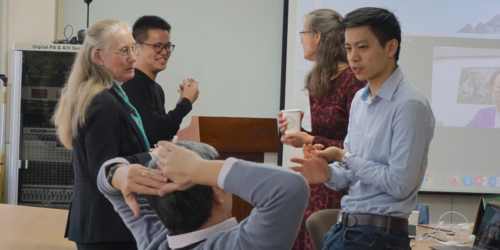
About this Event: Jeopardizing U.S. research enterprises, provoking regional nationalism, and building a technological panopticon to rate every citizen's behavior: these assumptions about China fuel US foreign policy shadow-boxing with misplaced concerns. Our panel challenges prevalent narratives on China, providing informed, nuanced investigations that cut across a range of research methods. Julien de Troullioud's argues that the rise of China in science and technology is not a threat to the US but instead an opportunity to jointly work to solve global issues. Data shows that the current policies to protect the US research enterprise in science is hurting American and international scientific research. Xinru Ma finds that nationalism in China and in Southeast Asia are not necessarily all anti-foreign, and is more of a liability rather than an asset for domestic regimes, according to evidences from formal modeling and social media data. Shazeda Ahmed's interviews with Chinese government officials, tech firm representatives, and legal scholars reveal that the Chinese social credit system is more limited in its data collection and fragmented in its on-the-ground implementation than the dystopic institution its foreign critics presume it to be. Our research presents new data and fresh perspectives for rethinking US-China dynamics.


About the Speakers:

Shazeda Ahmed is a Ph.D. student at the University of California, Berkeley who researches how tech firms and the Chinese government are collaboratively constructing the country's social credit system. She will be joining CISAC and the Stanford Institute for Human-Centered Artificial Intelligence in Fall 2019 as a pre-doctoral Fellow. Shazeda has worked as a researcher for the Citizen Lab, the Mercator Institute for China Studies, and the Ranking Digital Rights corporate transparency review by New America. In the 2018-19 academic year she was a Fulbright fellow at Peking University's law school.


Xinru Ma is currently a Ph.D. candidate at Political Science and International Relations (POIR) program at University of Southern California, and will join CISAC as a Postdoctoral Fellow for 2019-2020. Originally from China, Xinru is interested in combining formal modeling and computational social science with research on nationalist protests and maritime disputes, with a regional focus on East and Southeast Asia. Her research is informed by extensive field research in Vietnam, Philippines and China, during which she interviewed protestors, think tanks, diplomats, government officials, and foreign business owners that were impacted by nationalist protests. In addition to informing her of the complicated strategic interaction between mass mobilization, government repression and foreign policy-making, the field research further motivated her to focus on the methodological challenges for causal inference that stem from strategic conflict behavior. More broadly, Xinru is interested in public opinion and new methods of measuring it, foreign policy formation, alliance politics, East Asian security dynamics, and the historical relations of East Asia. 


Julien de Troullioud de Lanversin will be joining CISAC as a Stanton Postdoctoral Fellow. Julien is finishing his Ph.D. at Princeton University’s Program on Science and Global Security. He is interested in how to verify and reconstruct past fissile material production programs with scientific tools. To that end, he developed innovative methods that use isotopic analysis from nuclear reactors to gain information on their past operation (nuclear archeology) and designed an open source software that can compute the istopic composition of fissile materials from nuclear reactors. His current research looks at the various modalities of the production of plutonium and tritium in production reactors and how transparency on tritium could be used to improve estimates on plutonium stockpiles. Julien also studies security questions related to civil and military nuclear programs in Northeast Asia through the lens of fissile material, with a focus on China and North Korea. Julien visited the Institute of Nuclear and New Energy Technologies at Tsinghua University for one semester in 2018 to collaborate with Chinese experts on work related to nuclear engineering and arms control. Julien’s work on nuclear archaeology has been published in the Journal of Science and Global Security. He received his Diplôme d’Ingénieur (M.Sc. And B.Sc.Eng.) from Ecole Centrale de Marseille in 2014. The same year he also obtained a M.Sc. in Nuclear Science and Engineering from the University of Tsinghua where he was a recipient of the Chinese Government Scholarship. Julien speaks and uses Chinese in his research and is a native French speaker.

Virtual Seminar

Shazeda Ahmed, Xinru Ma, Julien de Troullioud de Lanversin
Seminars
Authors
News Type
Commentary
Date
Paragraphs

Speaking on Monday about Donald Trump’s impeachment trial, Ukraine’s foreign minister said “please don’t drag us into your [America’s] internal political processes.”  Unfortunately, Republicans appear intent on doing precisely that, as they repeat the false Russian claim that the Ukrainian government interfered in the 2016 US election.

Republicans see this as part of their effort to defend President Trump. In doing so, they put at risk America’s long-standing support for its Ukrainian partner.

The US government and large bipartisan majorities in Congress have backed Ukraine since the early 1990s, when it regained independence following the Soviet Union’s collapse. By the end of the decade, Congressionally-approved assistance for Ukraine had reached USD 300-400 million per year.

When Ukrainians took to the streets in the 2004 Orange Revolution and the 2013-2014 Revolution of Dignity, their striving for democracy won interest and support from both sides of the aisle on Capitol Hill.

Such Congressional support offered Kyiv grounds for comfort when Trump became president in 2017. Candidate Trump had suggested he might recognize the illegal 2014 annexation of Crimea by Russia. He also questioned the sanctions imposed on Moscow for its seizure of Crimea and subsequent aggression in eastern Ukraine.

Despite Trump’s apparent skepticism about Ukraine and his reluctance to criticize Vladimir Putin (or Russian actions), Congress continued to back Ukraine. It regularly voted by wide margins to approve funding for reform and military assistance for Kyiv while pressing the administration to bolster sanctions on Russia.

Things took a turn last September with the revelation of Trump’s effort to extort Ukraine’s president into investigating his possible 2020 political opponent by withholding an Oval Office visit and military assistance. The president’s alleged abuse of power led to his impeachment by the House of Representatives in December.

I visited Kyiv in late October during the period between the private depositions of US officials about Trump’s actions and the public House hearings. While in Kyiv, I spoke with a number of Ukrainians including senior officials. Developments in Washington make them nervous about the depth and resilience of US support, especially as Kyiv sees the United States as the only geopolitical counterweight to its aggressive Russian neighbor.

I tried to assure my Ukrainian interlocutors that, whatever President Trump did, they had an ace in the hole: the bipartisan support their country enjoyed from both Democrats and Republicans in Congress. This was support that, if necessary, would produce veto-proof votes to aid Ukraine. Today, I am not so sure.

It has long been clear that Trump buys Moscow’s disinformation line that Ukraine, not Russia, interfered in the 2016 US election. It is true that individual Ukrainian officials criticized candidate Trump, just as officials from many European countries did. But it was Russian intelligence agencies, with Putin’s approval, that hacked the Democratic National Committee’s e-mails and gave them to Wikileaks. It is Russia’s Internet Research Agency that used social media to sow division among Americans.

However, in November and December as they sought to defend Trump against impeachment, Republicans began to make the Russian argument that Ukraine had interfered. There were many examples of this from Republicans who will sit in judgment as the Senate conducts the impeachment trial. Senator John Kennedy (R-LA) commented, “I think both Russia and Ukraine meddled in the 2016 election.” Meanwhile, Senator Richard Burr (R-NC) argued, “There’s no difference in the way Russians put their finger early on, on the scale and how Ukrainian officials did it,” and Senator Ted Cruz (R-TX) stated bluntly, “Ukraine blatantly interfered in our election.”

We can expect more such charges in the coming days. Republicans have put themselves on a slippery slope as regards support for Ukraine.


Will Republicans who assert that the Ukrainian government interfered in the US election vote in the future to approve assistance for Ukraine? And, if they can separate their espousal of the Kremlin’s talking point from their votes on assistance, how do they defend to constituents and others less sympathetic to Ukraine a vote to assist the country that they say interfered in the 2016 US election?

This is dangerous ground that could undermine US support for a country whose success is in America’s national interest.

Steven Pifer, a William Perry research fellow at Stanford’s Center for International Security and Cooperation, is a former US ambassador to Ukraine.


Read the Rest at The Atlantic Council

Hero Image
gettyimages 951695684
All News button
1
News Type
News
Date
Paragraphs

Stanford e-Japan is an online course that teaches Japanese high school students about U.S. society and culture and U.S.–Japan relations. The course introduces students to both U.S. and Japanese perspectives on many historical and contemporary issues. It is offered biannually by the Stanford Program on International and Cross-Cultural Education (SPICE). Stanford e-Japan is currently supported by the Yanai Tadashi Foundation. The Spring 2019 cohort was the eighth group of students to complete Stanford e-Japan.


In Summer 2020, three of the top students of the Spring 2019 Stanford e-Japan online course will be honored at an event at Stanford University. The three Stanford e-Japan Day honorees—Rinko Kawamoto (UWC ISAK Japan, Nagano), Renee Ohnuki (Senior High School at Sakado, University of Tsukuba, Saitama), and Kota Watanabe (Waseda University Senior High School, Tokyo)—will be recognized for their coursework and exceptional research essays that focused respectively on “Hollywood and U.S. Society: A Study Through the Ages,” “U.S.–Japan Drone Technology Collaboration and Its Application to Photocatalytic Technology to Resolve Air and Water Pollution,” and “A More Sufficient Language Learning Environment for Foreign Students in Japan: A Comparison with the American ESL Education System.”

Isshin Yunoki (Kaisei Academy, Tokyo) received an Honorable Mention for his research paper on “The Characteristics and Social Influence of Traditional Music in Japan and America.”

In the Spring 2019 session of Stanford e-Japan, students from the following schools successfully completed the course: Canadian Academy (Hyogo); Clark Memorial International High School (Osaka); Fudooka High School (Saitama); Hiroo Gakuen High School (Tokyo); Hiroshima Jogakuin Senior High School (Hiroshima); Hiroshima University High School (Hiroshima); Hokkaido Sapporo Minami High School (Hokkaido); Ichikawa Gakuen Senior High School (Chiba); Inagakuen Comprehensive High School (Saitama); Kaisei Academy (Tokyo); Kaishi Kokusai High School (Niigata); Kaiyo Academy (Aichi); Katayama Gakuen Senior High School (Toyama); Katoh Gakuen Gyoshu Senior High School (Shizuoka); Keio Shonan Fujisawa High School (Kanagawa); Komaba Toho Senior High School (Tokyo); Kwansei Gakuin Senior High School (Hyogo); Kyuyou High School (Okinawa); Senior High School at Otsuka, University of Tsukuba (Tokyo); Senior High School at Sakado, University of Tsukuba (Saitama); Shiba Junior and Senior High School (Tokyo); Tokyo Metropolitan Mita High School (Tokyo); Tokyo Minamitama Secondary Education School (Tokyo); UWC ISAK Japan (Nagano); and Waseda University High School (Tokyo).

For more information about the Stanford e-Japan Program, please visit stanfordejapan.org.

To stay informed of news about Stanford e-Japan and SPICE’s other programs, join our email list and follow us on Facebook, Twitter, and Instagram.


SPICE offers separate courses for U.S. high school students. For more information, please see the Reischauer Scholars Program (online course about Japan), Sejong Scholars Program (online course about Korea), and China Scholars Program (online course about China).


Related articles:


Hero Image
Renee Ohnuki giving her final presentation for Stanford e-Japan
Renee Ohnuki giving her final presentation for Stanford e-Japan. Ohnuki is one of the three student honorees for Spring 2019.
All News button
1
Authors
Lisa Lee
News Type
News
Date
Paragraphs

Jointly with partners throughout Asia, the Asia Health Policy Program (AHPP) at Shorenstein APARC has developed comparative research on health care use, medical spending, and clinical outcomes for patients with diabetes in the region and other parts of the world as a lens for understanding the economics of chronic disease management. Karen Eggleston, AHPP director and APARC deputy director, recently traveled to South Korea, where she led three project-related events.

On November 29, a workshop on Net Value Diabetes Management was held at Seoul National University (SNU) School of Medicine. This was the third such workshop convened through the project, following two previous ones held in Beijing at the Stanford Center at Peking University. Another workshop, on diabetes modeling, hosted by the Mt. Hood Diabetes Challenge Network, was held at Chung Ang University on December 1. Finally, on December 5, Eggleston held an information session, titled Comparative Economics Research on Diabetes, during the 2019 International Diabetes Federation (IDF) at BEXCO in Busan. These events were also made available through video conferencing to enable remote participation by collaborators who were unable to travel to Korea.

[Learn more about AHPP’s Net Value in Diabetes Management research project]

Diabetes Net Value Workshop

The workshop brought together team members from multiple health systems — including South Korea, Japan, Taiwan, Hong Kong, Thailand, India, the Netherlands, and the United States — to discuss comparative research on the economics of diabetes control. Eggleston shared the results of a study outlined in a working paper on the net value of diabetes management in Japan, the Netherlands, Taiwan, and Hong Kong. This research is part of a broader series of studies aimed to help address the policy challenge of finding the best strategies to improve health through cost effective prevention and healthcare productivity in chronic disease management.

The key to this research was to measure changes in quality or health outcomes over time by predicting mortality risk using blood pressure, blood sugar, and other factors amenable to patient and provider control and improvement (controlling for age and duration of diabetes diagnosis). The research seeks to understand how we can control cost and eliminate waste without cutting out the things that are valuable and improving people’s quality of life. Further studies probe determinants of relative net value of a pay-for-performance program in Taiwan, adherence to medications and vertical integration in Japan, and net value based on a randomized controlled trial in India.

Image
Two women and three men talking with each other in a conference room

Karen Eggleston (left) with workshop participants.

Young Kyung Do of SNU reported that according to his evaluation project for diabetes care, the quality of care and treatment in South Korea has improved and is similar to Hong Kong and Singapore. The goal of the program is to provide more comprehensive care to diabetes patients.

Talitha Feestra of the Netherlands net value team presented her proposal for joint research to develop new prediction models for specific populations as a core component of health economics decision models in Diabetes. Feestra will take the lead to develop the plan and time frame for the continuation of this research in 2020.

Several additional comparative studies were proposed and discussed. Participants who attended the workshop and contributed to discussion included Junfeng Wang from the Netherlands net value team; Jianchao Quan and Carmen Ng from Hong Kong University; Daejung Kim from the Korea Institute for Health and Social Affairs (KIHASA); Taehoon Lee, Eun Sil Yoon, and Hongsoo Kim from SNU; Piya Hanvoravongchai from Chulalongkorn University; and Gregory Ang from National University of Singapore. Remote participants included Vismanathan Baskar from Madras Diabetes Research Foundation; Wasin Laohavinij from Chulalongkorn University (visiting Stanford University autumn quarter); and Rachel Lu from Chang Gung University.

Mt. Hood Diabetes Challenge Workshop on Diabetes Modeling

Philip Clarke from the Health Economics Research Center, University of Oxford, presented the history of insulin as a cure for diabetes and discussed in detail methods for economic modeling of diabetes, including quality of life and diabetes cost, drawing from his rich experience developing the UK Prospective Diabetes Study outcomes model. The second presenter was Andrew Palmer of University of Tasmania, Australia. His presentation included many additional economic modeling pointers, especially regarding drawing in the literature for building models.

Image
Collage of three photos showing people posing to the camera and seated in a lecture hall

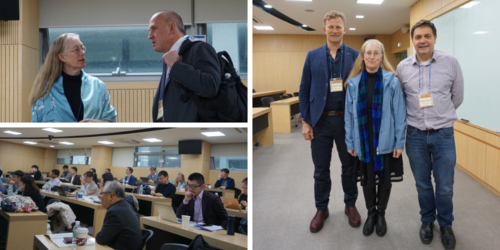
Karen Eggleston with participants at the Mt. Hood Diabetes Challenge Workshop; (right hand side) from left to right: Andrew Palmer, Karen Eggleston, Philip Clarke.

We are grateful to Professors Clarke and Palmer for graciously allowing the AHPP network researchers to join the workshop both in person and remotely, adding to their chronic disease modeling skills, and for inviting Karen Eggleston to present a keynote at the Mt Hood conference that took place before the modeling workshop.

Information Session: Comparative Economics Research on Diabetes

The third and final component of the diabetes research events was held on December 5 as part of the International Diabetes Federation congress in Busan, Korea, and presented the network to clinicians and public health researchers. Participants from China, India, and Australia attended. They shared updates on their individual projects and discussed methods and ideas for future collaboration.

Hero Image
A group of people posing to the camera
All News button
1
Authors
News Type
Commentary
Date
Paragraphs

In Aug. 2019, Bobby Chesney (from Strauss Center at the University of Texas at Austin) and Max Smeets (from ETH Zurich and also Stanford University’s Center for International Security and Cooperation (CISAC)) convened a workshop in Amsterdam focusing on military operations in the cyber domain, from a transatlantic perspective. The “Transatlantic Dialogue on Military Cyber Operations—Amsterdam” gathered experts from military, civilian, and academic institutions hailing from a range of countries, including the United States, United Kingdom, Germany, the Netherlands, Denmark, Estonia, and France.


Read the Rest at Lawfare Blog

Hero Image
screen shot 2019 12 18 at 8 32 53 am
All News button
1
Authors
Noa Ronkin
News Type
News
Date
Paragraphs

Using a dynamic microsimulation model, a research team, including APARC Deputy Director and Asia Health Policy Program Director Karen Eggleston, shows that there are differentially positive health gains of smoking reduction among subgroups of smokers in South Korea, Singapore, and the United States.

Tobacco use is responsible for the death of approximately eight million people worldwide, estimates the World Health Organization, and countries are increasingly making tobacco control a priority. Indeed the relationship between smoking and the burden of chronic diseases such as cancer, lung disease, and heart disease, and, in turn, premature mortality, is well documented. Yet little is known about the health effects of smoking interventions among subgroups of smokers.

Do interventions targeted at heavy smokers relative to light smokers lead to disproportionately larger improvements in life expectancy and prevalence of chronic diseases? And how do these effects vary across populations? In today’s rapidly aging world, it is crucial to understand the potential health gains resulting from interventions to reduce smoking, a leading preventable risk factor for healthy aging.

That’s why a research team, including APARC Deputy Director and Asia Health Policy Program Director Karen Eggleston as well as Stanford Health Policy faculty member Jay Bhattacharya, set out to examine the health effects of smoking reduction. To do so, the team simulated an elimination of smoking among subgroups of smokers in South Korea, Singapore, and the United States.

[To receive more stories like this directly to your inbox subscribe to our newsletters.]

The team’s findings, discussed in a new paper published by the journal Health Economics, show that smoking reduction can achieve significant improvements in lifetime health as measured by survival while also reducing the prevalence of major chronic diseases, though the effects are heterogeneous. Whereas interventions in both subgroups and in all three countries led to an increased life expectancy and decreased prevalence of chronic diseases, the life-extension benefits were greatest – 2.5 to 3.7 years – for those who would otherwise have been heavy smokers, compared with gains of 0.2 to 1.5 years among light smokers.

The team developed a dynamic microsimulation model to estimate the health gains of reducing smoking among heavy smokers and light smokers. Microsimulation models are powerful tools for assessing the value of health promotion: they model individual health trajectories while accounting for competing risks, thus providing valuable information about the impact of interventions and how they may interact with the changing demographics and socioeconomic profile of a population to determine future health. The team’s study applied microsimulation models tailored to the demographic and epidemiological context in the three countries, then compared the gains in survival and reduction in chronic disease prevalence from a given reduction in smoking and how these impacts vary depending on initial smoking intensity.

The team’s findings indicate that there are differentially positive health effects from smoking reduction. The life‐year gain among heavy smokers quitting well exceeds that of light smokers quitting in each country, but the magnitudes differ substantially: 11.2 times for South Korea, 6.8 times for Singapore, and 1.7 times for the United States. The lower life expectancy among Americans is related to the greater extent in which they suffer from risk factors, such as obesity, relative to the Asian counterparts in the study.

The findings illustrate how smoking interventions may have significant economic and social benefits, especially for life extension, that vary across countries. They are particularly important for aging societies that are concerned about the sustainability of their health insurance systems in the face of increasing burden of chronic disease.

Hero Image
A man smokes in the street in Seoul, South Korea. Chung Sung-Jun/ Getty Images
All News button
1
Authors
Gary Mukai
News Type
News
Date
Paragraphs

The Elgin Heinz Outstanding Teacher Award recognizes exceptional teachers who further mutual understanding between Americans and Japanese. EngageAsia administers the Elgin Heinz Outstanding Teacher Award, which is funded by the United States-Japan Foundation. The 2019 Award focused on the humanities and the 2020 Award will focus on Japanese language. It is named in honor of Elgin Heinz for his commitment to educating students about Asia as well as for the inspiration he has provided to the field of pre-collegiate education.


On December 5, 2019, SPICE’s Stanford e-Japan Instructor and Manager Waka Takahashi Brown was presented with the 2019 Elgin Heinz Outstanding Teacher Award for her teaching excellence with Stanford e-Japan, an online course that introduces U.S. society and culture and U.S.–Japan relations to high school students in Japan. Stanford e-Japan is currently supported by the Yanai Tadashi Foundation. Initial funding for Stanford e-Japan was provided by the U.S.-Japan Foundation.

“Waka walks in the footsteps of Elgin Heinz as a key leader in educating the next generation about the U.S.–Japan relationship,” stated David Janes, Chair of the Board, EngageAsia. Heinz was born in China in 1913 and taught in the San Francisco Unified School District for 40 years. Challenging Americans’ lack of knowledge about Asia was central to Elgin’s life’s work. Janes has overseen the Elgin Heinz Outstanding Teacher Award since its inception in 2001. Daniel Tani, Director of Foundation Grants at the U.S.-Japan Foundation, and Janes formally presented the award to Brown.

In addition to teaching Stanford e-Japan for the last five years, Brown previously served as instructor for SPICE’s Reischauer Scholars Program (RSP). The RSP is an online course that introduces Japanese society and culture and U.S.–Japan relations to high school students in the United States. Current RSP Instructor and Manager Naomi Funahashi is a 2017 Elgin Heinz Outstanding Teacher Award recipient.

Waka Brown, Professor Daniel Okimoto, and Miles Brown (husband of Waka) Waka Brown, Professor Daniel Okimoto, and Miles Brown (husband of Waka)
Congratulatory comments were made by the Honorable Tomochika Uyama, Consul General of Japan in San Francisco, who underscored the importance of Brown’s efforts and the significance of Stanford e-Japan and the RSP to enhancing U.S.–Japan relations from the grassroots level. Consul General Uyama and Stanford Professor Emeritus Daniel Okimoto, who was also present at the ceremony, serve as advisors to Stanford e-Japan and the RSP. Okimoto is Brown’s former professor and longtime mentor.

Prior to joining SPICE, Brown taught Japanese language at Silver Creek High School in San Jose and served as a Coordinator for International Relations (CIR) on the Japan Exchange and Teaching (JET) Program. Brown obtained both her undergraduate and graduate degrees from Stanford University.

In her acceptance speech, Waka noted: “As a Japanese American growing up in Kansas in the 1970s and 80s, and then as a Japanese American woman working in Japan, I’ve felt the need and immediacy for fostering cross-cultural understanding for my entire life. I feel extremely fortunate that I am able to work toward this goal through my professional work. My students and their knowledge and passion humble me. I am constantly in awe of them and their accomplishments. It is a true honor to receive the Elgin Heinz Award, and I am grateful for the opportunity to use these funds to foster connections between the future leaders in U.S.–Japan relations.”

Through Stanford e-Japan, Brown has engaged Japanese high school students from throughout Japan in an intensive study of U.S. society and culture. Since its first session in 2015, over 200 Japanese students have successfully completed the course. Some of her students have matriculated to universities in the United States.

In a very meaningful moment of the ceremony, Ryoga Umezawa, one of Brown’s former Stanford e-Japan students and now a university student at the Minerva Schools at KGI in San Francisco, expressed his gratitude to Brown, noting that the online format of Stanford e-Japan eased his transition to the online format of his university studies and also noted that the knowledge he gained from Stanford e-Japan has been invaluable to his transition to life in the United States.

The ceremony ended with a duet by Norman Masuda, an inaugural recipient of the Elgin Heinz Outstanding Teacher Award in 2002 (Japanese language category), and Irene Nakasone, instructor of kutu (Okinawan koto). Nakasone played the kutu and Masuda, the sanshin (Okinawan shamisen). They performed “Akanma Bushi” (red horse folk song), which was symbolic to the occasion as it is a congratulatory classical piece from the Yaeyama Islands, Okinawa Prefecture.

Irene Nakasone and Norman Masuda play a duet at the 2019 Elgin Heinz Outstanding Teacher Award ceremony. Irene Nakasone and Norman Masuda play a duet at the 2019 Elgin Heinz Outstanding Teacher Award ceremony.


For more information on the Stanford e-Japan Program, visit stanfordejapan.org. The Spring 2020 application period is open now until January 8, 2020. To be notified when the next Stanford e-Japan application period opens, join our email list or follow us on Facebook, Twitter, and Instagram.


Related articles:


Hero Image
2019 Elgin Heinz Outstanding Teacher Award ceremony
David Janes, Consul General Tomochika Uyama, Waka Takahashi Brown, and Daniel Tani
Yuriko Romer
All News button
1
Authors
Jonas Edman
News Type
Blogs
Date
Paragraphs

Stanford e-Tottori is a distance-learning course sponsored by the Tottori Prefectural Board of Education and the Stanford Program on International and Cross-Cultural Education (SPICE) at Stanford University. Tottori Governor Shinji Hirai and Superintendent Hitoshi Yamamoto of the Tottori Prefectural Board of Education were instrumental in its establishment. Offered for the first time in 2016, Stanford e-Tottori presents a creative and innovative approach to teaching Japanese high school students about U.S. society and culture. Stanford e-Tottori Instructor Jonas Edman recently wrote these reflections on his work with students in Tottori.


While visiting Tottori Prefecture during the summer, I came to realize that Tottori, which once seemed like a distant and isolated place in my mind, has become a central part of my life’s neighborhood. In early August, I attended the closing ceremony for the third-year course offering of Stanford e-Tottori. On the same day, I attended the opening ceremony for the fourth-year course offering of Stanford e-Tottori. During the ceremonies, student representatives from several high schools in Tottori—Seishokaichi High School, Tottori Nishi High School, and Yonago Higashi High School—offered very meaningful messages. While listening to them, I felt so fortunate to be living in a time when technology affords me the opportunity to work in real time with students on the other side of the Pacific.

We are now in the midst of the fourth-year course offering, and I am already noticing significant growth in the English abilities and critical thinking skills of my 30 students. We have discussed topics ranging from studying at universities in the United States to the popularity of Japanese manga (comics or graphic novels) in the United States. My colleagues Rylan Sekiguchi and Naomi Funahashi led a very engaging discussion on studying at universities in the United States, and my students shared thoughts on what they perceive to be similarities and differences in studying at universities in Japan. The discussion of manga led to feelings of pride among my students, having come to realize the prevalence of Japanese manga in the United States. Tottori is very famous for its manga artists.

Whenever I work with my students in online classes from Stanford on topics like manga, I feel like I have been transported back to Tottori as I see the 30 familiar faces of students whom I first met in Tottori. This inevitably prompts me to reflect upon several key observations that I have made during my several visits to Tottori. First, while traveling in Tottori, one can almost feel that Tottori is the least populated prefecture in Japan. Perhaps correlated with this fact is how I have always been struck by the attention the students receive from their teachers. This infectious dedication to educating the next generation of leaders has had a ripple effect across the Pacific to us at SPICE and my guest speakers for Stanford e-Tottori. For example, Silicon Valley entrepreneur Takeshi Homma, who hails from Tottori, puts his heart and soul into his talk on “Entrepreneurship and Silicon Valley” each year. Second, Tottori is known for its nature and agriculture, and the importance of preserving the environment seems foremost on people’s minds. This is a global mindset that I wish others in the United States and Japan would share. Our online class on the environment has always prompted spirited discussions. Third, since I spent 16 years of my youth in Tokyo, I cannot help but notice the slower pace of life in Tottori. Magically, the slower pace helps me to take notice of each valuable moment that I spend with my students not only in person but virtually as well. Topics like aging and population decline are ones that have drawn interest and critical attention not only in Tottori but across Japan.

In closing, I would like to especially thank Takuya Fukushima, Office Director of the English Education Advancement Office, and Tomoya Minohara, Teachers’ Consultant, Tottori Prefectural Board of Education, for their unwavering support of Stanford e-Tottori and for bringing Tottori into my life’s neighborhood.


To stay informed of SPICE-related news, join our email list and follow SPICE on Facebook, Twitter, and Instagram.


Related articles:


Hero Image
Opening ceremony for the fourth-year course offering of Stanford e-Tottori
Opening ceremony for 2019 Stanford e-Tottori, courtesy Takuya Fukushima, Officer Director of the English Education Advancement Office, Tottori Prefectural Board of Education
All News button
1
Authors
Gary Mukai
News Type
News
Date
Paragraphs

This fall, the Stanford Program on International and Cross-Cultural Education (SPICE) began its ninth offering of Stanford e-Japan, an online course that introduces U.S. society and culture and U.S.–Japan relations to high school students in Japan. Stanford e-Japan is made possible through the support of the Yanai Tadashi Foundation, Tokyo. The fall 2019 Stanford e-Japan online course has continued the tradition of enrolling students from various parts of Japan; engaging students with leading American and Japanese academics, entrepreneurs, and community leaders as guest speakers; and encouraging students to study in the United States.

The 28 students of the fall 2019 cohort were selected from among a competitive group of applicants from throughout Japan. The selected students represent the prefectures of Chiba, Ehime, Gunma, Hiroshima, Hyogo, Ibaraki, Kanagawa, Kyoto, Mie, Miyagi, Nara, Okayama, Saitama, and Tokyo. Stanford e-Japan Instructors Meiko Kotani and Waka Brown have noted that their students not only continue to learn important content and perspectives from the guest speakers but also important perspectives from their fellow students. Brown recalled, “…last year, I was particularly struck by the impact a student from Okinawa had on the other students in his cohort as he shared insights on the U.S. military presence in Okinawa from his personal experiences.”

The fall 2019 course recently featured guest speaker Suzanne Basalla, who has become a regular speaker for Stanford e-Japan. Basalla is Chief of Staff at the Toyota Research Institute in Silicon Valley and a former officer (Lieutenant Commander) of the U.S. Navy. Following her naval career, Basalla served as Director for Japan in the Office of the Secretary of Defense and as Senior Advisor to U.S. Ambassador to Japan John Roos, serving at the U.S. Embassy in Tokyo from 2010 to 2012. During her talk with the students, she touched upon her work with security-, economic-, political-, and cultural-related issues in the U.S.–Japan relationship and also offered keen insights into her current work as a leading entrepreneur in Silicon Valley.

Speakers like Basalla as well as Instructors Brown and Kotani have been encouraging Japanese students to consider studying in the United States. Many Stanford e-Japan alumni have enrolled in summer programs in the United States, spent a year studying abroad in the United States, and several have enrolled in four-year colleges in the United States. Among the latter are Jun Yamasaki (Fall 2017 Stanford e-Japan cohort) and Hanako “Hannah” Tauchi (Spring 2017 Stanford e-Japan cohort), who are recipients of Yanai Tadashi Foundation Scholarships. The following is noted on the scholarship’s website.

[The] Yanai Tadashi Foundation Scholarship aims to provide promising young people with leadership potential the opportunity to study at world-class universities in the United States. The scholarship enables recipients to mix with an internationally diverse student body to cultivate their entrepreneurial skills and enhance their global perspective, encouraging their development as future drivers of a better society.

Yamasaki, a freshman at Northwestern University, and Tauchi, a freshman at the University of California, San Diego, recently commented on how Stanford e-Japan helped them as high school students to prepare for undergraduate studies in the United States. Their comments follow.

Yamasaki: As an institution, Northwestern places a great emphasis on interdisciplinary studies and learning—a characteristic that is apparent in both its research and the academic interests and aspirations of its students. The structure of the Stanford e-Japan program itself encouraged me to examine the U.S.–Japan relationship through multiple perspectives, ranging from sports to entrepreneurship. In addition to furthering my understanding of the dynamics of the U.S.–Japan relationship, Stanford e-Japan helped me identify the intersection between my past interests and the potential future needs and topics pertaining to the U.S.–Japan relationship, and construct my future goals accordingly. This in turn has allowed me to better plan out how I can take full advantage of Northwestern’s unique characteristics and offerings, which I am extremely thankful for. 

Tauchi: The Stanford e-Japan Program was an amazing opportunity for me both to consider undergraduate studies in the U.S. as a realistic option and to improve my English skills overall. As a student who was schooled in Japanese for my entire life, the course—lectures, reading assignments, discussions, and essays—was at first quite challenging, but looking back the half a year I worked on the program, I would definitely say that the program is one of the most important experiences that I had during my high school life. Offered by one of the most renowned colleges in the world, I could feel and imagine how college life in the U.S. would be like. Of course, the contents of the course—things that students do not normally learn in Japanese high school—were all interesting and motivated me to learn more about the U.S.–Japan relationship and beyond. 

Kotani and Brown hope that Stanford e-Japan alumni like Yamasaki and Tauchi will continue to play roles in U.S.–Japan relations beyond their college years. Kotani recently shared that “the Stanford e-Japan guest speakers like Suzanne Basalla, with such fascinating careers, are such excellent role models for the students. My hope is that many alumni of Stanford e-Japan will consider working for businesses in places like Silicon Valley and other organizations in Japan and the United States that focus on the U.S.–Japan relationship.” Brown, who will be recognized with the Elgin Heinz Outstanding Teacher Award at a ceremony at Stanford University on December 5, 2019, has noted that, “I feel so honored to be recognized with the 2019 Elgin Heinz Outstanding Teacher Award for my work as the Instructor of Stanford e-Japan and am especially looking forward to seeing one of my former Stanford e-Japan students, Ryoga Umezawa, who is studying at the Minerva Schools at Keck Graduate Institute in San Francisco.”

Image
Meiko Kotani
Kotani recently assumed the role of Co-Instructor of Stanford e-Japan with Brown. She concurrently works as a Program Manager for NTT Physics & Informatics Laboratories and brings on-the-ground experiences in Silicon Valley to her students. Kotani is a graduate of the University of Oregon (international relations) and obtained a master’s degree from the Schiller International University in Paris (international relations and diplomacy). Kotani, who is multilingual (English, Japanese, and French), was born in Japan and lived in China, Oman, Pakistan, France, and Russia before coming to the United States.

To stay informed of SPICE-related news, join our email list and follow SPICE on Facebook, Twitter, and Instagram.


Related articles:


Hero Image
Stanford e-Japan alumni Jun Yamasaki and Hanako “Hannah” Tauchi
Stanford e-Japan alumni and Yanai Tadashi Scholarship recipients, Jun Yamasaki and Hanako Tauchi; photos courtesy of Jun Yamasaki and Hanako Tauchi
All News button
1

Stanford Health Policy
615 Crothers Way
Room 187
Stanford, CA 94305 

650-723-0578
0
elizabeth_abutu_headshot-2023.jpg

Elizabeth Abutu is the Student Services Officer for Stanford Health Policy. She currently supports the department’s MS and PhD education programs with admissions, course administration, postdoc administration, student services, and student programs. She received an MPH (with an emphasis in Health Services Administration) from Creighton University, a BSc in Health Promotion from University of Houston and is a Certified Health Education Specialist (NCHEC). Her academic interests include the social determinants of health, community-based health programs, and program planning.

Student Services Officer
Subscribe to North America