Authors
News Type
Commentary
Date
Paragraphs

President Trump’s newly named envoy for arms control, Marshall Billingslea, gave a lengthy interview last week on the administration’s approach to nuclear arms negotiations. He stressed bringing in China, struck a pessimistic note about the sole treaty constraining Russian and U.S. nuclear forces, and offered no ideas for getting Moscow to discuss non-strategic nuclear arms.

Unfortunately, the interview reinforces the view that the Trump administration is unlikely to achieve a nuclear deal…or even develop a serious proposal.

Read full article at Defense One

Hero Image
hussein mallaap Hussein Malla/AP
All News button
1
Subtitle

Officials in Moscow and Beijing will read Mr. Billingslea’s interview and see nothing to give them reason to negotiate.

Authors
Kasumi Yamashita
News Type
Blogs
Date
Paragraphs

The following is Part 2 of a two-article series on Stanford e-Oita. For Part 1, please go here


Stanford e-Oita is an online course for high school students in Oita Prefecture in the southwestern island of Kyushu, Japan, that is sponsored by the Oita Prefectural Government. Launched in fall 2019, it is offered by the Stanford Program on International and Cross-Cultural Education (SPICE) in collaboration with the Oita Prefectural Board of Education. SPICE is grateful to Oita Prefectural Governor Katsusada Hirose whose vision made this course possible.

Note: The content of this publication has not been approved by the United Nations and does not reflect the views of the United Nations or its officials or Member States. 


Stanford e-Oita was launched in October 2019, soon after the Climate Action Summit at the United Nations. Over six million people marched in protest all over the world. It was another wake-up call to global warming. Swedish activist, Greta Thunberg’s UN speech on the environmental crisis addressed the world, but resonated with the youth in particular, who made up many of the 5000 protesters at rallies throughout Japan. A high school student herself, “Greta-san’s” UN address also spoke to high school students throughout Japan including those in the smallest of towns in Oita Prefecture.

With a population of a little over a million, Oita Prefecture is located in the lush and mountainous island of Kyushu. It’s known for its onsen (hot springs) which bubble with organic minerals from the rich, volcanic deposits below. Steam rises from onsen towns like Beppu City as well as neighboring Yufuin in Yufu City at the foothill of Mt. Yufu. Stanford e-Oita students are from 15 high schools in Oita Prefecture. They are from the southern towns of Tsukumi and Usuki, known for their stone Buddhas. They are from Nakatsu and Usa, home to the head Hachiman Shrine, along the northern coast. They also come from the historic cities of Hita and Taketa further inland.

My reflections on the course follow, interspersed with comments made by students in their online discussions, in their final presentations, or in evaluations that were used for assessment, collected by Mr. Keisuke Toyoda and Mr. Hironori Sano of the Oita Prefectural Board of Education. Both teachers attended my class as well as the four days of final student presentations.

This year’s inaugural cohort focused on U.S.–Japan relations, the United Nations Sustainable Development Goals (UNSDGs), and entrepreneurship. The six-month course ended in April 2020, just as the world began to lock down due to the COVID-19 pandemic.

To first- and second-year high school students, the 17 UNSDGs can seem broad and a bit intimidating, but my 30 Stanford e-Oita students reframed unfamiliar concepts like “Sustainable Cities” and “Responsible Consumption and Production” to more familiar terms such as “tourism” and “recycling,” and even “up-cycling.” They soon realized that not only do these issues reflect so much of the immediate world around them, these agendas are also interconnected with one another. It grew increasingly clear that each student has an impact on our environment. They also have the responsibility to sustain it whether they’re from Stockholm or Oita.

Oita’s selection to host the Rugby World Cup in October 2019, and its invitation of athletes from New Zealand, presented an opportunity to learn about UNSDGs in an unexpected way. While the international teams were warmly welcomed by Oita’s residents, their arrival may have stirred controversy had the local tourist association not loosened its age-old refusal of bathers with tattoos. While body-art is part of Maori cultural heritage and a source of pride and identity, in Japan, it is often affiliated with the underworld. Stanford e-Oita students used these current events to shift lines of sight and inquiry to have discussions on equity, inclusivity, and human rights.

Students identified one or more UNSDGs that resonated with their concerns and personal experiences whether it was the flooding of their neighborhood due to climate change, the rising aging population of their hometown, or the arrival of foreign residents in their communities. For their final presentations, students pitched their ideas on how they would tackle particular social or environmental challenges. They had five minutes to present 10 PowerPoint slides, in English.

Sustainable Cities and Communities
“Sustainable Cities and Communities” must have been the most popular UNSDG among students. This was not surprising considering Oita’s recognition as a major travel destination for onsen. When exploring “Sustainable Cities,” students wondered how onsen culture and tourism could be re-imagined to appeal to, and be accessible to more diverse audiences including teens, young professionals, international visitors, and the LGBT (lesbian, gay, bisexual, and transgender) community.

Stanford e-Oita student Koyomi envisioned a multilingual travel app linking travel agencies, inns, transportation, and tourist destinations, allowing visitors to explore sites and accessibility in real time. Nao looked at ways to address issues common in many regional towns such as population stagnation, vacant housing, and school closings. She suggested launching an interactive website to revitalize interest in historical sites and make regional festivals appealing to youth. Moe thought that historical sites could even be refreshed using “retro” designs and images.

Affordable and Clean Energy
Yuri approached onsen from a different, environmental angle. In her final presentation, she showed us how the onsen steam can harness renewable geo-thermal energy. Unlike nuclear plants, geo-thermal power plants harness energy from turbines, powered by steam, produced by water, and heated by seismic activity.

Nao described the “Heat Island” phenomenon in Japan: cities in urban areas are warmer than nearby rural areas, having the potential to raise the temperature of urban areas by several degrees, enough to affect weather patterns. One way to counter this effect would be to develop innovative and environmental “green roof” buildings.

Airi commented, “Before, I thought that onsen were just a source of tourism but onsen can also be thought of as renewable energy. It’s amazing that onsen can have many uses. We need to preserve this wonderful culture in Oita!” Students recognized that their neighborhoods, whether they lived in the city or in remote towns, were rich in resources and stories. 

Quality Education
Next, Stanford e-Oita students approached the UNSDG, “Quality Education.” Rather than focusing on the social and educational services for students already enrolled in schools, students looked at the potential educational needs of working, foreign students and their families, as well as foreigners who want to permanently relocate to Oita to work. Ken hoped to see laws enacted to provide these permanent immigrants with voting rights so they can become more empowered and contribute to Japanese society.

Kohaku proposed a cultural school for foreigners that would allow them to attend night classes, online. This would offer those working during the day with a chance to build up their language skills while simultaneously learn about Japanese culture and history. Proposals like this touch on education, gender, and economic growth, showing the inter-connectedness of UNSDGs. 

Hozuki supported online classes for non-traditional students who need flexible learning options. She also welcomed this option for youth who resist attending school due to bullying, domestic abuse, or a family’s financial insecurity. Hozuki added, “It would create a ‘safe space’ for them.”

Gender Equality
“International Coming Out Day” on October 11th is another “safe space” for individuals wanting to reach out to their communities for support and self-empowerment. Manaka pointed to specific “gender free” and “barrier-free” spaces that provide daredemo toire (the “anyone toilet”). Acknowledgment of “safe spaces” like these reduces the harassment and violence that many LGBT communities face.

Zero Hunger/Clean Water and Sanitation
Ayami pointed to the importance of promoting local foods and labeling it for transparency and accountability. Amiko suggested the creation of “Oita Care Packages” that would simultaneously promote local food to other regions of Japan and minimize food waste.

Asako made sure to add that the production of food also involved aquaculture. Honoka and Yuri noted that the management of these marine resources should begin with measures countering pollution.

Amika, who gave a presentation on tackling food waste using an app, commented, “I realized that there was something that even young people can do.” When asked how she would finance the development of her app, she replied with confidence, “Oh, I’ll just crowdfund!” Technology and social media have made it easier for students to collaborate and share ideas. This is certainly the case for tech-savvy high school students.

Conclusion
Big social change can come from individuals in small and remote towns. Stanford e-Oita students have shown that their hometowns in Oita offer fascinating contexts to begin conversations on sustainability. Students have gained a deeper appreciation of local natural resources, cultural traditions, and historical sites. They also gained a sense that they, too, can contribute to social change right from their own backyards. Yuzu noted, “What I enjoyed most about the final presentations was that I was able to get to know ‘Oita’ from different perspectives.”

Now, better equipped with the confidence to discuss their ideas and speak up about their local and global concerns, e-Oita students may feel a step closer to even internationally recognized activists like fellow teen Greta Thunberg. If the UNSDGs represent our world’s commitment to building a better world for people by 2030, then Stanford e-Oita students would be the perfect Gen Zers to stand alongside Greta to do just that. 

Acknowledgements
SPICE provided me with an opportunity to invite artists, activists, researchers, and entrepreneurs (including several Stanford alumni) to share their personal and professional stories with students over Zoom. Their openness to address questions put Stanford e-Oita students at ease, allowing them to take a bold step out of their comfort zones and engage. I’d like to thank the following individuals for their collaborative spirit and generosity:

Gary Mukai
Director, Stanford Program on International and Cross-Cultural Education (SPICE)

Michelle Kumata
Artist and Former Exhibition Director, Wing Luke Museum of the Asian Pacific American Experience

Jan Johnson
Owner, Panama Hotel [National Historic Landmark] in Seattle's Nihonmachi (Japantown)

Glenda Pearson
President, Friends of Mukai Farm & Garden [National Register of Historic Places]

The Honorable Norman Mineta
Former U.S. Secretary of Commerce and Transportation

Xiao Wang
CEO, Co-Founder, Boundless Immigration

Sara Daniels
CEO, Co-Founder, Blue Canoe Learning

Jonathan Poli
Product Design Engineer, Seattle Children's Hospital


SPICE also offers online courses to U.S. high school students on Japan (Reischauer Scholars Program), China (China Scholars Program), and Korea (Sejong Korea Scholars Program), and online courses to Chinese high school students on the United States (Stanford e-China Program) and to Japanese high school students on the United States and U.S.–Japan relations (Stanford e-Japan Program). 

To stay informed of SPICE news, join our email list and follow us on Facebook, Twitter, and Instagram.


Related articles:


Hero Image
un sustainable development goals
United Nations Sustainable Development Goals; reprinted with approval of the United Nations.
All News button
1
Paragraphs

Progressive Democrats assert that the Green New Deal is the best way to reduce global greenhouse gas emissions.

But this claim ignores the fact that subsidizing “green” energy technologies, such as wind and solar, is less effective than taxing the greenhouse gas emissions produced by brown energy sources, such as oil, natural gas and coal.

All Publications button
1
Publication Type
Commentary
Publication Date
Journal Publisher
The Hill
Authors
Frank Wolak
Authors
Naomi Funahashi
News Type
Blogs
Date
Paragraphs

The following is Part 2 of a two-article series on facilitating cross-cultural online learning. For Part 1, please go here.


Last month, I shared my reflections on a March 20, 2020 virtual class (VC) session that SPICE facilitated for high school students in Japan and the United States to engage in a cross-cultural online exchange. This online discussion engaged my U.S.-based students of the 2020 Reischauer Scholars Program and Waka Brown’s Japan-based students of the Spring 2020 Stanford e-Japan Program in a Zoom session, during which they talked and learned with and from one another on a range of topics, including the impact of COVID-19 within their respective communities.

During the main portion of the session, the 45 students were divided into six small breakout rooms to engage in 40 minutes of discussion. Each group had a designated volunteer student moderator and a notetaker/reporter; the latter was asked to share the key points of discussion from his or her small group when we reconvened towards the end of the 90-minute VC. All discussions were conducted in English, with the exception of one group, which was designated as a bilingual space for students who felt comfortable conversing in both English and Japanese.

Since this was the 2020 students’ first opportunity to meet (another joint VC on comparative education took place on April 10), we felt it important to preface the session by setting a few ground rules for discussion. Communication styles and norms—particularly in group settings—tend to be quite different in Japan and the United States. We have found it helpful, for example, to address these differences up-front to alleviate potential cross-cultural misunderstandings.

For assessment purposes, we also asked students to send feedback on their experiences in the session. Some of their comments are included below as we turn to the student perspectives on what they experienced in this joint online discussion. More specific points from our observations and students’ feedback fall into five areas.

First, the session provided a platform for students to talk openly about the COVID-19 pandemic and also to learn about perspectives from another country. Risako of Stanford e-Japan reflected, “I could … learn about the way American students perceive political issues and coronavirus through an absorbing discussion and was surprised to discover that their perspectives were much more similar to Japanese students than I had expected.” Alika of the RSP noted, “It was really interesting to me to see how different countries are coping with the virus. I was pretty surprised to hear that many Japanese people still use public transport/eat out at restaurants and go on with their daily lives in the face of the global pandemic.” She continued, “I think some of the e-Japan students were also surprised to hear that California has a ‘6 feet apart’ rule and that many restaurants have closed as a precaution.” Yasuyuki from Japan added, “It’s not difficult to look up the news to find out about what’s going on in America, but living in Japan, you hardly ever get the chance to talk with people in America and hear from the horse’s mouth.”

Second, the session underscored the importance of empathy at times like this. Kristie from the RSP commented, “I always enjoy finding commonalities between me and others, and I think our shared experiences with the coronavirus really allowed us to connect and understand one another. I think the most important thing I will take away from this experience is that youth in Japan and America are really no different—despite our varied experiences and interests we were able to communicate about issues facing our countries and relate to one another on a deeper level.” Similarly, Yuna of Stanford e-Japan noted, “Since I have had only [a] few opportunities to interact with American high schoolers, it was a precious time for me. It was wonderful especially because we both were interested in each other. Talking ... with them made me realize how [thin] the border between our minds actually are. We were, after all, just friends.”

Third, the session prompted students to reexamine their own culture. For example, Hiromu of Stanford e-Japan noted, “I feel very pleased to have such a wonderful opportunity to teach them [the RSP students about Japanese language] and, simultaneously, however, recognized how I lack information about Japanese culture. I think this integrated meeting is vital in that it provides us opportunities for looking back on our culture and broaden[ing] our narrow-minded thoughts.” Jin of the RSP added, “What’s more, they [the Stanford e-Japan students] all spoke fluent English. This made me reflect on the world languages education in the U.S. I think the U.S. should incorporate more global studies (both language and culture) in the education system. America-centric curriculum will cause the younger generation to lose a global vision, and become unaware of Japan as a major political and economic ally in East Asia.”

Fourth, the session shed light upon how diverse both countries are. Jin of the RSP noted, “I’ve always thought that Japan has a rather homogeneous population, but talking to e-Japan students has given me a new perspective on Japanese society. I encountered a student from Myanmar who is living in Japan currently, a Japanese student who used to live in NYC for four years, and a student from Singapore who has been studying abroad in Europe for a couple years.” Rinako of Stanford e-Japan reflected, “Up until now, even when I had the chance to communicate with people outside of Japan, it was usually done in English. However, this time, all three of the Reischauer Scholar students [in her small group] spoke fluent Japanese which made me very happy as we were able to use both English and Japanese.”

Fifth, we came to realize how invaluable international and cross-cultural dialog—especially during times of crisis—can be for students. Having a session during such an unprecedented time seemed to add special significance to the experience. Brandon of the RSP noted, “Overall, it was an extremely memorable discussion, and I hope that we can continue this kind of online cross-cultural connection throughout the rest of the program.” Many Stanford e-Japan students like Fuka also reflected upon the opportunity to discuss critical topics like the coronavirus at this time. She noted, “It gave me a chance to think about familiar issues not just with people of my own country but with people from all kinds of backgrounds.”

Students are among those most acutely experiencing the direct impact of this global pandemic. As they look into the future with confusion and uncertainty about their educational prospects and options, our students seemed to find comfort in this opportunity to connect with their like-minded peers across the Pacific. As they reflected upon their differences, they deepened their understanding of one another and forged what I hope become lasting friendships.


For more information about the Reischauer Scholars Program or the Stanford e-Japan Program, please visit our programs’ webpages at reischauerscholars.org and stanfordejapan.org. SPICE also offers other online courses to U.S. high school students on China (China Scholars Program) and Korea (Sejong Korea Scholars Program), and an online course to Chinese high school students on the United States (Stanford e-China Program).

To stay informed of SPICE news, join our email list and follow us on Facebook, Twitter, and Instagram.


Related articles:


Hero Image
cherry blossoms at stanford
Sakura (cherry blossoms) at Stanford University
Yosuke Hatano, Visiting Scholar, Stanford University
All News button
1
-

Livestream: Please click here to join the livestream webinar via Zoom or log-in with webinar ID 944 5730 9104.


About this Event: Why do some governments give foreign militants missiles that can destroy aircraft while giving others only bullets and AK-47s? Why do some governments deploy special operations forces to carry out joint attacks with some insurgent groups, while only giving others basic training on weapons handling? Despite the fact that governments often provide costly - and controversial - forms of support to foreign militant groups, we know little about why some groups receive advanced weapons technology and boots on the ground while others do not. In this presentation, I unpack trends in third-party provision of support through an in-depth examination of the CIA's provision of anti-tank missiles and the Pentagon's deployment of Special Operations Forces to support specific militant groups in the recent Syrian conflict. Drawing from an original dataset of the over 150 Syrian militant brigades that received some form of US support and over 60 interviews with Syrian militants and US and Jordanian government officials, I find that, when militant groups have similar organizational characteristics as the armed forces of their government partners, they are more likely to receive and accept costly forms of support. 


About the Speaker: Melissa Carlson is a PhD candidate in the Department of Political Science at U.C. Berkeley, specializing in international relations, comparative politics, and methodology. She will join CISAC in 2019-2020 as a Middle East Initiative Pre-doctoral Fellow. Broadly, her research examines the dynamics of military partnerships between state governments and foreign militant groups. Melissa's dissertation develops an organizational theory of third-party provision of support: when foreign militant groups and state armed forces share similar organizational characteristics, they are more likely to form joint commands, carry out joint attacks, and provide each other with advanced weapons systems.  Melissa's other research interests focus on factors that influence informal cooperation between states, and on how refugee perceptions of host communities, host governments, and aid organizations influence refugee decision-making. Prior to beginning her PhD at U.C. Berkeley, Melissa worked as Public Information consultant for the International Organization for Migration, Iraq Mission in Jordan and Iraqi Kurdistan. Melissa has a M.A. in Political Science from U.C. Berkeley, and a B.A. in International Relations and Politics, Philosophy, and Economics from Claremont McKenna College.

Virtual Seminar

0
rsd19_072_0235a.jpg

Dr. Melissa Carlson is currently working with the Defense Security Cooperation Agency's Assessment, Monitoring, and Evaluation unit, where she promotes rigorous standards of measuring the effectiveness of the U.S.'s security cooperation and assistance programming. During her tenure at CISAC, she was a postdoctoral research and teaching fellow. She received her PhD in Political Science from the University of California, Berkeley, specializing in international relations, comparative politics, and methodology. Dr. Carlson's primary research examines the factors that influence the variation and intensity of partnerships between governments and foreign militant groups with a focus on the recent conflicts in Iraq and Syria. Her book-style dissertation project finds that, when foreign militant groups and state armed forces share similar organizational characteristics, they are more likely to deploy forces to conduct joint combat operations and provide each other with advanced weapons systems. In other research, Dr. Carlson examines the factors that influence informal and secret security cooperation between states and how misinformation and rumors influence refugees' relationships with host governments, service providers, and smugglers. Her research has been published in the American Political Science Review, the Review of International Organizations, and International Studies Quarterly, among other outlets. Outside of academia, Dr. Carlson has worked as a consultant for the International Organization for Migration's Iraq and Jordan Missions.

Affiliate
Melissa Carlson Predoctoral Fellow at CISAC
Seminars
News Type
News
Date
Paragraphs

A team of SHP faculty and researchers, together with Stanford Medicine graduate and medical students and in collaboration with colleagues at CIDE in Mexico, have launched a modeling framework to investigate the epidemiology of COVID-19 and to support pro-active resource planning and policy evaluations for diverse populations and geographies — including California, Mexico and India.

The Stanford-CIDE Coronavirus Simulation Model — or SC-COSMO — incorporates realistic demography and patterns of contacts sufficient for transmission of the virus that has infected more than 2 million people worldwide and claimed more than 125,600 lives, according to the widely used Johns Hopkins COVID-19 map which is updated several times a day.

The SC-COSMO model also incorporates non-pharmaceutical interventions, such as social distancing, timing and effects on reductions in contacts which may differ by demography.

Jeremy Goldhaber-Fiebert, an associate professor of medicine at Stanford Health Policy, is the principal investigator of the project, along with Fernando Alarid-Escudero, an assistant professor at the Center for Research and Teaching in Economics (CIDE) in Mexico and Jason Andrews, an assistant professor of medicine (infectious diseases) at Stanford Medicine. Other SHP faculty among the 20 investigators and staff members who are working on the project are Joshua Salomon and David Studdert, both professors of medicine.

The model also allows for the comparison of many future what-if scenarios and how they might impact outcomes over time and cumulatively.

The SC-COSMO team is a multi-disciplinary, multi-institutional team including expertise and experience in infectious disease, epidemiology, mathematical modeling and simulation, statistics, decision science, health policy, health law and health economics.

“As COVID-19 transmission occurs throughout the world’s diverse populations, it is critical to efficiently model and forecast its future spread between and within these populations and to appropriately reflect uncertainty in modeled outcomes,” Goldhaber-Fiebert said. “Doing so supports timely resource planning and decision making between potentially appropriate and effective interventions that balance the trade-offs they embody.”

The team is currently working on three projects:

  1. The researchers are providing California with county-level COVID-19 estimates for such things as the number of infections, detected cases and projections of future needs for hospital and ICU beds, personal protective equipment (PPE) and ventilators.
  2. The project is working on potential strategies to mitigate the COVID-19 pandemic in Mexico by focusing on three specific objectives: collecting, synthesizing and openly sharing the most relevant and useful data; accelerating the development of the SC-COSMO model and its adaptation to the Mexican situation; and identifying a set of mitigation strategies, comparing the health and economic consequences in the population in the medium and long term.
  3. They are developing forecast models of the COVID-19 epidemic in India with the Wadhwani Institute of Artificial Intelligence and its Indian government partners, providing a rapid response to urgent needs for planning and resource allocation.


jeremy

Jeremy Goldhaber-Fiebert

Associate Professor of Medicine
His research focuses on complex policy decisions surrounding the prevention and management of increasingly common, chronic diseases and the life course impact of exposure to their risk factors.

Read More

gettyimages n95mask
News

COVID19: Can Masks Help with Reopening the Economy?

COVID19: Can Masks Help with Reopening the Economy?
jeremy class
News

SHP faculty to Teach Students How To Build COVID-19 Mathematical Projection Models for Policymakers

SHP faculty to Teach Students How To Build COVID-19 Mathematical Projection Models for Policymakers
gettyimages trumpcorona
Commentary

Federalism Meets the COVID-19 Pandemic: Thinking Globally, Acting Locally

Federalism Meets the COVID-19 Pandemic: Thinking Globally, Acting Locally
Hero Image
gettyimages coronainvestigate
All News button
1
Subtitle

The Stanford-CIDE Coronavirus Simulation Model — or SC-COSMO — incorporates realistic demography and patterns to investigate resource planning and policy evaluations for diverse populations and geographies in California, Mexico and India.

-

This is a virtual event. Please click here to register and generate a link to the talk. 
The link will be unique to you; please save it and do not share with others.


China’s role in the COVID-19 outbreak has elicited a growing global backlash, including dueling Republican and Democratic campaign ads, alongside praise for China’s success in curbing the coronavirus and sending medical assistance overseas. How will the pandemic reshape China’s domestic and international standing, and what lies ahead for U.S.-China relations? Weiss will discuss the Chinese government’s pandemic response and what it reveals about the CCP’s domestic and international intentions.

Image
Jessica Chen Weiss
Jessica Chen Weiss is an associate professor of Government at Cornell University, China/Asia political science editor at the Washington Post Monkey Cage blog and a nonresident Senior Associate at the Center for Strategic and International Studies.  She is the author of Powerful Patriots: Nationalist Protest in China’s Foreign Relations (Oxford University Press, 2014).  Her research appears in International Organization, China Quarterly, International Studies Quarterly, Journal of Conflict Resolution, Security Studies, Journal of Contemporary China, and Review of International Political Economy, as well as in the New York Times, Foreign Affairs, and Washington Quarterly.  She was previously an assistant professor at Yale University and founded FACES, the Forum for American/Chinese Exchange at Stanford, while an undergraduate at Stanford University.  Born and raised in Seattle, Washington, she received her Ph.D. from the University of California, San Diego in 2008, where her dissertation won the 2009 American Political Science Association Award for best dissertation in international relations, law and politics.  Weiss is a term member of the Council on Foreign Relations.


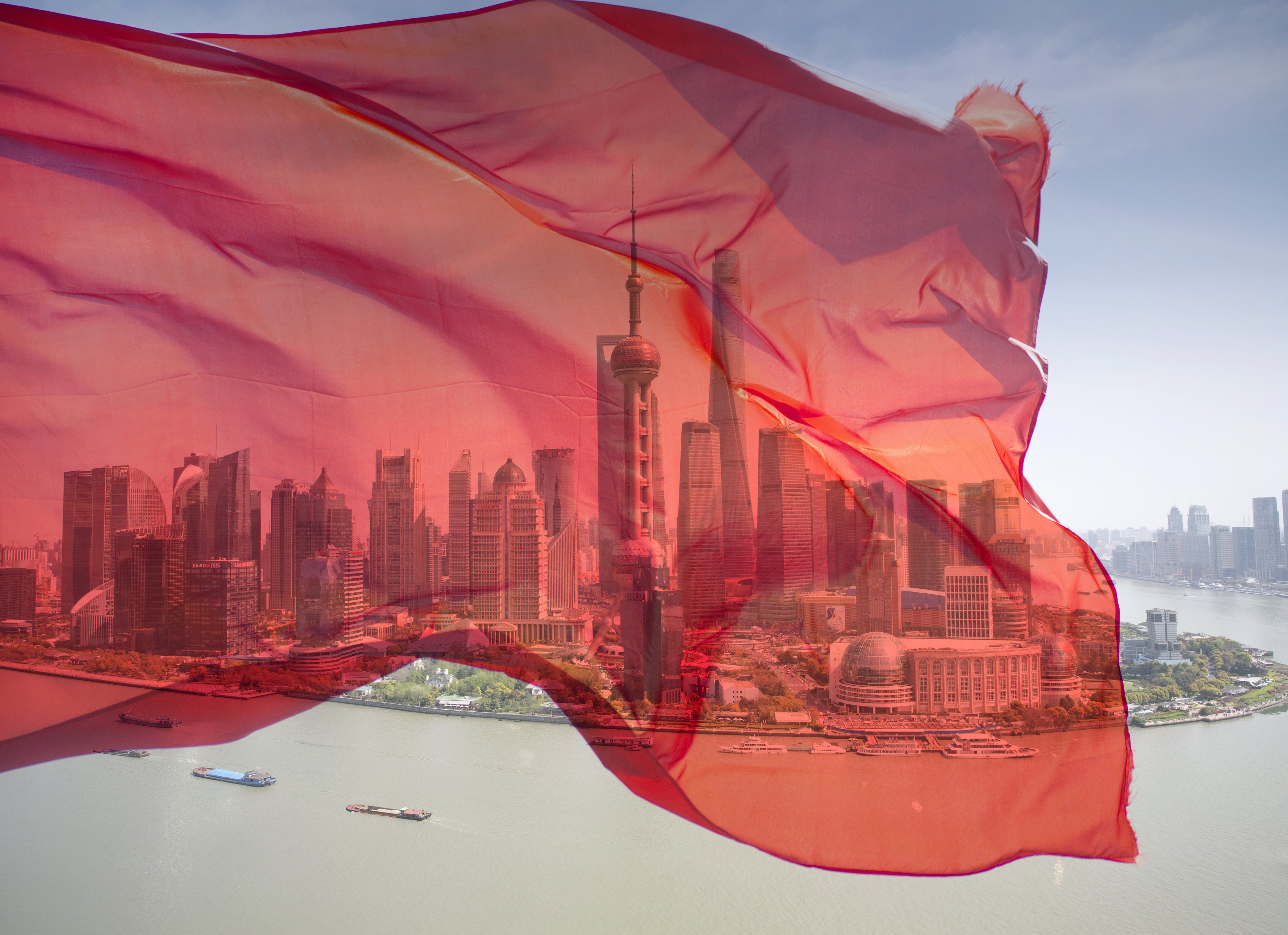
Image of red flag over the Shanghai BundThis event is part of the 2020 Winter/Spring Colloquia series, The PRC at 70: The Past, Present – and Future?, sponsored by APARC's China Program.


Via Zoom Webinar.
Register at: https://bit.ly/3erPfSn 

Jessica Chen Weiss Associate Professor of Government, Cornell University
Seminars
Authors
Colin H. Kahl
News Type
Commentary
Date
Paragraphs

The novel coronavirus (COVID-19) is a global public health disaster of almost biblical proportions. It is a once-in-a-century occurrence that threatens to destroy countless lives, ruin economies, and stress national and international institutions to their breaking point. And, even after the virus recedes, the geopolitical wreckage it leaves in its wake could be profound.

Many have understandably drawn comparisons to the influenza pandemic of 1918 and 1919. That pandemic, which began in the final months of World War I, may have infected 500 million people and killed 50 million people around the globe. As the grim toll of COVID-19 mounts, it remains to be seen if that comparison will prove apt in terms of the human cost.

But, if we want to understand the even darker direction in which the world may be headed, leaders and policymakers ought to pay more attention to the two decades after the influenza pandemic swept the globe. This period, often referred to as the interwar years, was characterized by rising nationalism and xenophobia, the grinding halt of globalization in favor of beggar-thy-neighbor policies, and the collapse of the world economy in the Great Depression. Revolution, civil war, and political instability rocked important nations. The world’s reigning liberal hegemon — Great Britain — struggled and other democracies buckled while rising authoritarian states sought to aggressively reshape the international order in accordance with their interests and values. Arms races, imperial competition, and territorial aggression ensued, culminating in World War II — the greatest calamity in modern times.

In the United States, the interwar years also saw the emergence of the “America First” movement. Hundreds of thousands rallied to the cause of the America First Committee, pressing U.S. leaders to seek the false security of isolationism as the world burned around them. President Franklin Delano Roosevelt pushed back, arguing that rising global interdependence meant no nation — not even one as powerful and geographically distant as the United States — could wall itself off from growing dangers overseas. His warning proved prescient. The war eventually came to America’s shores in the form of the attack on Pearl Harbor.

Even before COVID-19, shadows of the interwar years were beginning to re-emerge. The virus, however, has brought these dynamics into sharper relief. And the pandemic seems likely to greatly amplify them as economic and political upheaval follows, great-power rivalry deepens, institutions meant to encourage international cooperation fail, and American leadership falters. In this respect, as Richard Haas notes, the COVID-19 pandemic and the aftershocks it will produce seem poised to “accelerate history,” returning the world to a much more dangerous time.

However, history is not destiny. While COVID-19 worsens or sets in motion events that may increasingly resemble this harrowing past, we are not fated to repeat it. Humans have agency. Our leaders have real choices. The United States remains the world’s most powerful democracy. It has a proud legacy of transformational leaps in human progress, including advances that have eradicated infectious diseases. It is still capable of taking urgent steps to ensure the health, prosperity, and security of millions of Americans while also leading the world to navigate this crisis and build something better in its aftermath. America can fight for a better future. Doing so effectively, however, requires understanding the full scope of the challenges it is likely to face.

Read the rest at War on the Rocks

Hero Image
covid 19 radoslav zilinsky Radoslav Zilinsky - Getty Images
All News button
1
Subtitle

The novel coronavirus (COVID-19) is a global public health disaster of almost biblical proportions. It is a once-in-a-century occurrence that threatens to destroy countless lives, ruin economies, and stress national and international institutions to their breaking point. And, even after the virus recedes, the geopolitical wreckage it leaves in its wake could be profound.

Authors
Naomi Funahashi
News Type
Blogs
Date
Paragraphs

The following is Part 1 of a two-article series on facilitating cross-cultural online learning.


COVID-19 has now extended into most communities around the world, and we are only just beginning to understand the depth and breadth of its impact. Here at SPICE, our hearts and minds are especially focused on the effects that this global pandemic is having upon students. School closures and remote learning are becoming the norm as people are being asked—and in many cases, required—to maintain “social distancing” in order to prevent an even more rapid spread of the disease.

Every day there are more resources becoming available for teaching and learning online in the COVID-19 era. Many educators are struggling with how to adapt their teaching to the digital environment, while also striving to take full advantage of their new online context. We would like to share a few tips that we have learned from our own experiences with leveraging online teaching to forge international student connections, in hopes of encouraging others to develop similar cross-cultural online experiences for students on a global scale.

First, let me describe our own context for teaching online at SPICE. SPICE has been engaging high school students in the United States in online learning since 2004, when our first cohort of the Reischauer Scholars Program (RSP) began its intensive study of Japan and U.S.–Japan relations. When we launched a counterpart to the RSP in 2015—the Stanford e-Japan Program, an online course on U.S. society and culture and U.S.–Japan relations taught to high school students in Japan—we began to explore ways in which these two cohorts of students could come together and learn directly from and with one another. Just as the RSP students are spread across the United States, the Stanford e-Japan students are distributed across the islands of Japan. The diversity of perspectives, backgrounds, and experiences that these students bring to their cohorts is one of the richest and most valued aspects of SPICE’s online teaching initiatives.

We wanted to give our RSP and Stanford e-Japan students an opportunity to come together and discuss their shared experiences, concerns, and anxieties within the contexts of their new realities. How is the COVID-19 pandemic impacting daily life in their respective societies and communities? What are the local and national government responses to this crisis? How are their schools managing the closures, and how is it impacting their future education plans and prospects? These were among the many topics discussed by students across the Pacific at a recent virtual event.

On Friday, March 20 at 7:00pm PDT (which was 11:00am on Saturday, March 21 in Japan), 45 students from across Japan and the United States came together in a Zoom virtual classroom (VC) session to meet, chat, share, learn, and listen. Below are a few best practices that we implemented in this recent session, and that we hope will be helpful for others when considering pedagogical strategies for engaging students in international and cross-cultural online discussions.


1. Prepare students in advance

To make for a rich and productive session, it is crucial that students come to the session well prepared and ready to engage actively. Prior to the session, all students were sent an agenda and asked to prepare at least two questions for small-group discussion. We also asked for student volunteers from each course to serve as small-group discussion leaders; half from RSP, half from Stanford e-Japan. Simple guidelines for moderating the discussion were sent to the discussion leaders in advance, including the following:

  • Begin by identifying yourself as the small-group discussion leader.
  • Facilitate self-introductions.
  • Be mindful of encouraging all students to participate and voice their opinions and perspectives.
  • Remind everyone of the agenda and the time allotted for small-group discussion.


2. Set basic ground rules for discussion

For online discussions in general—and especially for discussions in a cross-cultural setting—it is important for students to know what to expect and understand what is expected of them. In our case, because communication styles and norms—particularly in group settings—tend to be quite different in Japan and the United States, we have found it helpful to address these differences up-front to alleviate potential cross-cultural misunderstandings. Following brief introductions by the RSP and Stanford e-Japan course instructors, we began the session by taking a few minutes to highlight key differences in cross-cultural communication styles. For example, students in the United States tend to be less comfortable and/or familiar with silence or pauses in conversation, while students in Japan are often used to allowing for more time and space to think before speaking up.


3. Divide students into small groups

While student discussions can certainly be facilitated in one large group, we highly recommend dividing students into smaller groups if your software allows. (In Zoom, use the “Breakout Rooms” feature to do this.) In our experience, small groups create an environment that fosters dialogue that is more student-centered, dynamic, and inclusive—and therefore more meaningful to students. We have found that group sizes of five to eight work well. With 45 students in attendance at our recent session, we decided to divide students into six small breakout rooms in Zoom, each with a mix of students from the United States and Japan. All groups held their discussions in English, with the exception of one bilingual group comprised of American students fluent in Japanese and Japanese students fluent in English. With about seven or eight students in each group, each student had ample opportunity to actively engage in discussion and share his or her perspectives and experiences with one another. Each group was preassigned a topic/theme for discussion: COVID-19 (two groups), U.S.–Japan politics and economy, Japanese pop culture, Japanese language, and education.


4. Assign roles

In addition to the discussion leader role, students were also asked to assign a notetaker/reporter in each small group. For groups with an RSP student leader, a Stanford e-Japan student was asked to report back to the main group at the end of the session, and vice versa for groups with a Stanford e-Japan leader.


5. Support student discussion

Once students’ discussions are underway, periodically check in on each group and provide support as needed. We use Zoom for our virtual class platform, which allows for the host to hop between the breakout rooms throughout the duration of the session. While we prefer to allow for the small-group discussions to remain student-centered and student-led, there are times when a teacher might jump into a small group and either notice that a particular student is dominating the discussion, or that there are extended silences. It would be appropriate here for a teacher to send a private message to the discussion leader with some guidance and support as needed.


6. Debrief as a class

Save time at the end of class to reconvene students as a large group and share out to each other. In our case, the notetaker/reporter for each small group presented a short summary of his or her group’s discussion and some time was allowed for comments from the whole group following each presentation. While there were five different topics assigned to the six groups, it was interesting to see that all of the groups ended up discussing the impact of the COVID-19 situation at some point during their time together. Dedicating time to this whole-group debrief enabled students to learn about different perspectives and varied comparative responses to COVID-19, and it created a valuable opportunity for students to forge a cohesive virtual community of their own.


Concerns about the COVID-19 pandemic, of course, hovered above all of us during the session and one of the big “take-aways” for the students was how interdependent and interconnected the world is. The anxieties of suddenly transitioning to online learning, being separated from friends and classmates, and not knowing how this pandemic might impact their prospects for higher education are shared by high school students everywhere. With many students transitioning to some form of remote learning, this could be an ideal time for young people to reach out across cultural and societal boundaries and deepen their international and cross-cultural awareness and understanding, and for schools to consider offering opportunities for these virtual connections to be made.


For more information about the Reischauer Scholars Program or the Stanford e-Japan Program, please visit our programs’ webpages at reischauerscholars.org and stanfordejapan.org. SPICE also offers other online courses to U.S. high school students on China (China Scholars Program) and Korea (Sejong Korea Scholars Program), and an online course to Chinese high school students on the United States (Stanford e-China Program).

To stay informed of SPICE news, join our email list and follow us on Facebook, Twitter, and Instagram.


Related articles:


Hero Image
Illustration of a virtual classroom session
Depiction of a virtual classroom session with students of the Reischauer Scholars Program and Stanford e-Japan. Illustration by Rich Lee Draws!!!
All News button
1
News Type
Commentary
Date
Paragraphs

Half of the medical students in the United States are women, as are two-thirds of the health-care workers taking care of patients in hospitals, clinics and residential communities.

And the majority of the nurses on the frontlines of the COVID-19 pandemic? Women.

Yet gender bias and workplace harassment continue to plague women who have dedicated their careers to taking care of others.

A classic example given by Michelle Mello in a Perspective published in this week’s New England Journal of Medicine goes like this: A female attending physician and a male resident respond to a call to the emergency department. The ED staff direct questions about medical decisions to the man, addressing the logistics to the woman.

“The resident looks awkwardly at the attending but says nothing,” Mello writes. “Gesturing at the attending, the patient says he hopes `the hot new nurse is going to be mine.’ Everyone ignores the comment.”

Sexual harassment and gender bias remain highly prevalent in medicine, ranging from the banal comments by the patient in the scenario above to aggressive misconduct that can damage female health professionals’ well-being, careers and quality of care.

Healthcare organizations have formal processes in place to respond to complaints of workplace discrimination, but these processes “are insufficient to transform cultures,” writes Mello, a professor of medicine with Stanford Health Policy and a professor of law with Stanford Law, and her co-author Reshma Jagsi, director of the Center for Bioethics and Social Sciences at the University of Michigan.

Health-care professionals of both genders must speak up.

“We believe health professionals have a moral duty to practice `upstanding’ — intervening as bystanders — in response to sexual harassment and general bias and that this obligation should be described in codes of medical professional ethics and supported within institutional training,” the authors write.

For example, the male resident in the above scenario should have stopped and said something like, “I’m the resident, she is the attending, so please ask her your medical questions and I’ll handle the logistics.” And any of the staff involved in the incident could have told the patient, “She is your physician. And you can’t speak to members of your care team like that. We can take better care of you without the distraction of offensive comments.”

Image
tipsheet

While many medical professional societies now mention sexual harassment in their ethical codes, these guidelines fall short in that they do not encourage professionals to respond to the behaviors and intervene when they become aware of discrimination or harassment. The only large specialty society whose guidelines contain “aspirational advice” to stop sexual harassment in its tracks is the American Association of Orthopaedic Surgeons.

The American Medical Association (AMA) Code of Ethics Opinion 9.1.3 requires only that physicians “promote and adhere to strict sexual harassment policies in medical workplaces.” Mello and Jagsi note a striking contrast to the AMA’s approach to physicians who appear to be impaired (for example, due to substance use or mental health problems): Opinion 9.3.2. requires that physicians “intervene in a timely manner” to ensure that impaired colleagues stop practicing and get help.

“Absent stronger exhortation from within the profession, the norm will continue to be that clinicians are lauded when they stand up to harassment or bias but do not feel obligated — and they are not trained and equipped — to do so,” the authors write.

They recommend formal training in bystander intervention and peer-to-peer coaching, using tip sheets describing various courses of action, like this one adapted from Mary Rowe, an adjunct professor of negotiation and management at MIT Sloan.


Hero Image
gettyimages stop Getty Images-Stop
All News button
1
Subscribe to North America