About the Topic: Despite massive research and public policy efforts aimed at diversification, gender segregation of science, technology, engineering and mathematics remains extreme in affluent democracies. More surprising is evidence that women’s representation in many “STEM” fields is weaker in advanced industrial societies than in poorer, reputably gender traditional ones. The most obvious explanation is that broad-based existential security frees more women to realize aspirations for (less lucrative) non-STEM pursuits. I will discuss another piece of the puzzle by focusing on the aspirations themselves and how these vary with societal affluence. Over-time data on eighth-grade boys and girls in 32 countries provide strong evidence that the gender gap in aspirations for mathematically-related jobs increases with societal affluence, controlling for traits of individual students (parental education, affinity for school, mathematics test scores). This affluence effect is not attributable to cross-national differences in the gender-labeling of science, Internet access, or women’s educational or economic integration. Results are consistent with arguments suggesting that gender beliefs more strongly influence career aspirations in affluent, “postmaterialist” societies.
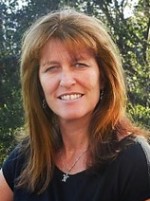
About the Speaker: Maria Charles is Professor and Chair of Sociology, Area Director for Sex and Gender Research, and an Affiliate Professor of Feminist Studies at U.S. Santa Barbara. She specializes in the international comparative study of social inequalities, particularly cross-national differences in women's economic, educational, and family roles. She has published extensively on gender segregation, most recently on the ideological and organizational factors that contribute to woman's underrepresentation in science, technology, engineering, and mathematics ("STEM") fields around the world. She has a Ph.D. in Sociology from Stanford University, and Bachelor’s degrees from UCSB in Environmental Studies and Political Science.
Philippines Conference Room
Encina Hall Central, 3rd floor
616 Serra St.
Stanford, CA 94305
Maria Charles
Professor and Chair of Sociology, Area Director for Sex and Gender Research, Affiliate Professor of Feminist Studies
U.C. Santa Barbara
Twenty five years have passed since the dissolution of the Soviet Union (the USSR), when the fifteen new independent states of Eurasia started the process of regime transition and state- and nation-building. All of the former Soviet republics have the same departure point – the collapse of the USSR in 1991. Twenty five years later, in 2016, there is an enormous variation in the outcomes of regime transition across post-Soviet Eurasia: from autocracies (e.g., Belarus) to democracies (Baltic states). Thus, this experience of post-Soviet Eurasian states requires development of new theoretical approaches that would allow for better understanding of rapid dynamics in this part of the world and of the phenomenon of external dimension of regime transition in general.
Speaker Bio:
Image
Anastassia V. Obydenkova is a regional fellow at Davis Center for Russian and Eurasian Studies Harvard University. From September 2016, she joins the Institute for Regional and International Affairs of the Princeton University. Dr. Obydenkova is also a senior researcher at Higher School of Economics (Moscow); previously she was a senior researcher (Ramon-y-Cajal) of the Ministry of Innovation and Science of Spain, a research fellow at the London School of Economics, and a Fox Fellow at Yale University.
Anastassia V. Obydenkova holds a Ph.D. in Political and Social Science from the European University Institute (2006, Florence, Italy), M.A. from Central European University (Budapest, Hungary), and a Summa Cum Laude Diploma in Political Science and International Relations from Moscow Lomonosov State University; Diploma Cum Laude in Foreign Languages from the Department of Foreign Languages of the Moscow State University. Her main research interests are autocracies, democratization and regime transition, federalism, decentralization, sub-national political regimes, international organizations, and area studies (former Soviet States of Eurasia).
Anastassia V. Obydenkova
Regional Fellow at Davis Center for Russian and Eurasian Studies, Harvard University
Stanford foreign policy experts discussed flashpoints around the world at an OpenXChange event this week.
Three of Stanford's most seasoned international affairs experts discussed foreign policy and diplomacy – and practiced a bit of it on stage, too – as they tackled the topics of refugees, Russia and other politically thorny issues at a campus forum March 1.
The event, "When the World Is Aflame," featured Condoleezza Rice, a Stanford political science professor and former U.S. secretary of state; Michael McFaul, director of Stanford's Freeman Spogli Institute for International Studies and former U.S. ambassador to Russia; and Jeremy Weinstein, a Stanford political science professor and former director for the National Security Council.
Janine Zacharia, a Stanford visiting lecturer in communication and former Jerusalem bureau chief and Middle East correspondent for the Washington Post, was the moderator.
The event was hosted by OpenXChange, a campus initiative to provide a forum for students and community members to focus on today's societal challenges.
"So you were resetting some of my policy?" Rice half-jokingly interjected, as McFaul discussed the objectives behind the U.S. trade talks with Russia a few years ago.
"It was not about making friends with the Russians – I want to make that clear," McFaul continued after the laughter in the audience died down. "And it wasn't that we needed to correct the wrongs from the previous period," he said, casting a quick glance over at Rice. "The Russians had an interest in giving the Iranians a nuclear weapon. Our answer was, no, and let's work with them to prevent that."
A series of trade sanctions with Russia were eventually accomplished, but as it turns out, McFaul noted, the political environment has since changed with Russia's aggression in Crimea, Ukraine and Syria.
Today's conflict in Syria was laid about four years ago, the panelists agreed, when the United States decided to aid the rebels and not overtly attack the current regime.
"There were reasons our president and others did not go down that path, but it was an invitation to others to play games in that environment," Weinstein said. "What their endgame is, we don't know."
Rice added that Russian President Vladimir Putin "does not mind countries that basically don't function." As such, "a stable, functioning Syria was never his definition of success."
Zacharia asked, "Are you saying we have yielded the endgame to the Russians in Syria? There is nothing we can do? And we're playing defense?"
"Yes," Rice answered.
"Wait, there is no endgame," McFaul said. "It's not that we yielded the endgame."
"Right," Rice replied.
Though the panelists' opinions differed at times, the trio of political science professors agreed on many points, including that international order is being tested, and that the refugee crisis is an overwhelming problem – one that the United States should help resolve.
"I'm a firm believer that America has a moral obligation to take [refugees]," Rice said. "But let's remember that we have to have a way to take them that is actually going to work within the system."
"We have a humanitarian architecture that simply isn't up to the task," Weinstein said. Securing congressional funding to reform the system will be a challenge.
What's more problematic, McFaul added, is that the current political rhetoric about how the United States should handle refugees is "based on fear."
"We're not having a rational debate about this in my opinion," McFaul said. "We have to fill the debate with empirical facts instead."
Public fears will continue as long as extreme Islamic State terrorist groups remain influential, "inspiring lone wolves like [those] in San Bernardino," Rice said, referring to the December 2015 terrorist attack there that killed 14 and injured 22 people.
"Somebody has got to defeat ISIS in its crib," Rice said. "They march in columns; they don't hide in caves like al-Qaeda. If CBS News can find them, then the American military can find them."
The tougher challenge, however, will be the task of influencing sectarian politics and creating a more stable state in the long term, Weinstein said.
Stanford – with its cache of expertise – should strive to shape the national dialogue with concrete facts and analyses, McFaul said. Inspiring students and giving them the foundational tools to become the new generation of policy leaders is also part of that, he said. Adding a course on Russian politics would also be an improvement, he said.
Weinstein is a senior fellow at the Freeman Spogli Institute. Rice, a former Stanford provost, is the Denning Professor in Global Business and the Economy at Stanford Graduate School of Business and the Thomas and Barbara Stephenson Senior Fellow at the Hoover Institution.
The panelists urged students to gain a deep knowledge of the areas and issues they care about.
"Know your facts," Rice emphasized.
"When you're making policy decisions at the table, the people who understand these places and understand the political dynamics – those are the people whose voices are second to none around the table," Weinstein said.
"And we need to get you prepared for that in a more robust way," McFaul said, inviting students to pass any ideas about this to him.
In terms of career choices, "there's nothing greater" than public service, he said. "Sometimes I would get goose pimples when I could stand in front of Russians with the American flag behind me, representing the United States of America."
This event is sponsored by the Freeman Spogli Institute for International Studies (FSI), the Shorenstein Asia-Pacific Research Center (APARC), the Center for Russian, East European, and Eurasian Studies (CREEES), and the Stanford Music Department.
Movie Screening: 7:30pm-8:35pm
FREE TO ROCK is a feature length documentary film telling the story of how western rock music contributed to ending the Cold War. Prohibited by the Soviet and Eastern Bloc authorities as propaganda, the “soft power” of western rock music infected the youth behind the Iron Curtain, spreading like a virus. This forbidden music was distributed and sold as “bone records” (etched on x-ray paper for 20 or fewer plays) and cassettes by Black market entrepreneurs and fledgling pop-culture capitalists. In the eyes of the Soviet Ministry of Culture, western rock music combined the twin evils of spreading the English language - undermining a Russification initiative in the 15 Republics of the USSR extending from Kazakhstan to the Baltics - and encouraging illicit free enterprise.
The film, narrated by Kiefer Sutherland, features interviews with former President, Jimmy Carter, Mikhail Gorbachev (former Premier of the Soviet Union), Billy Joel, the Beach Boys, rock and roll pioneers from the Soviet Union, and is directed and produced by Jim Brown, four time Emmy Award winning director.
Panel discussion, 8:35-9:30pm
Power of Music and Political Change
Moderator
Michael McFaul, Former Ambassador to Russia and Director of the Freeman Spogli Institute for International Studies
Panelists
Mark Applebaum, Associate Professor of Music, Stanford University
Ursula von der Leyen studied economics at the University of Göttingen, the University of Münster and the London School of Economics and Political Science. From 1980 to 1987 she attended Hanover Medical School (MHH). After obtaining her license to practise medicine, she worked at the Clinic for Obstetrics and Gynaecology. She obtained her Dissertation in Medicine in 1991 and was awarded the degree of Dr. med.. In 1992, Ursula von der Leyen and her family moved to the United States. She returned to Germany in 1996. From 1998 to 2002 she worked as a research assistant at the Department of Epidemiology, Social Medicine and Health System Research at Hanover Medical School and completed her Master’s degree in Public Health in 2001.
Ursula von der Leyen started her political activities in 1990 when she became a member of the Christian Democratic Union (CDU). From 2001 to 2003 she held various political offices at municipal level in the Hanover region. In 2003 she became a member of the Lower Saxony state parliament and was appointed State Minister of Social Affairs, Women, Family Affairs and Health. In 2005 Ursula von der Leyen started her career in federal politics as Federal Minister of Family Affairs, Senior Citizens, Women and Youth. In 2009 she became a Member of Parliament (Deutscher Bundestag) and was appointed as Federal Minister of Labour and Social Affairs. After her election as member of the CDU Executive Committee she was elected as party vice chairwoman in 2010. In 2013 she was appointed as Minister of Defense of the Republic of Germany.
Ursula von der Leyen was born in Brussels in 1958. She lives near Hanover. She is married with Professor Heiko von der Leyen and the couple has seven children.
Fisher Conference Center in the Arrillaga Alumni Center
A shadowy terror group smuggles a crude nuclear bomb into the United States, then detonates it right in the heart of Washington D.C., setting off a 15 kiloton explosion.
Eighty thousand Americans are killed instantly, including the president, vice president and most of the members of Congress, and more than a hundred thousand more are seriously wounded.
News outlets are soon broadcasting a message they’ve all received from a group claiming responsibility.
It says there are five more bombs hidden in five different cities across the America, and one bomb will be set off each week for the next five weeks unless all American troops based overseas are ordered to immediately return to the U.S. homeland.
The nation is thrown into chaos, as millions scramble to flee the cities, clogging roads and choking telecommunications systems.
The stock market crashes, before trading is halted altogether.
Martial law is declared, amid widespread looting and violence.
That was just one of the nightmare scenarios for a potential nuclear disaster that former U.S. Secretary of Defense William J. Perry vividly described as he delivered the Center for International Security and Cooperation’s annual Drell Lecture on Wednesday.
“My bottom line is that the likelihood of a nuclear catastrophe today is greater than it was during the Cold War,” Perry said.
Most people were “blissfully unaware” of the danger that simmering conflicts in geopolitical flash points around the globe – including Russia, China, North Korea, Iran and Pakistan – could easily turn nuclear, Perry told the Stanford audience.
A new nuclear arms race with Russia
Perry said he had tried to foster closer cooperation between the U.S. and Russia when he headed the Pentagon during the mid ‘90s and helped oversee the joint dismantling of four thousand nuclear weapons.
“When I left the Pentagon, I believed we were well on the way to ending forever that Cold War enmity, but that was not to be,” he said.
William J. Perry shares a video depicting the threat of nuclear terrorism with a Stanford audience.
Since then, relations between the West and Russia have soured badly, prompting Russia to modernize its nuclear arsenal and assume a more aggressive nuclear posture.
“They’re well advanced in rebuilding their Cold War nuclear arsenal, and it is Putin’s stated first priority,” Perry said.
“And they have dropped their former policy of no first use of nuclear weapons, and replaced it with a policy that says nuclear weapons will be their weapon of choice if they are threatened.”
While Perry said he believed Russian president Vladimir Putin did not want to engage in a military conflict with NATO forces, he said he was concerned about the possibility of Russia making a strategic miscalculation and stumbling into a conflict where they might resort to the use of tactical nuclear weapons.
“If they did that there’s no way of predicting or controlling the escalation that would follow thereafter,” Perry said.
Chinese economic problems increasing tensions
In Asia, a slowing Chinese economy could exacerbate domestic political tensions over issues such as wealth inequality and pollution, and encourage Chinese leaders to divert attention from problems at home by focusing on enemies abroad.
“China has had more than 10 percent growth now for almost three decades, but I think there’s trouble ahead,” Perry said.
“The time-proven safety valve for any government that’s in trouble is ultra-nationalism, which in the case of China translates into anti-Americanism and anti-Japanese.”
China has seen a major growth in military expenditures over the last decade, and it has used that investment to build a blue water navy and develop effective anti-ship missiles designed to drive the U.S. Navy hundreds of miles back from the Chinese coastline.
One potential flash point for a conflict between China and the U.S. are the artificial islands that China has been building in the disputed waters of the South China Sea.
“In a sense, China is regarding the South China Sea as a domestic lake, and we regard it and most other countries regard it as international waters, so their actions have been challenged by the U.S. Navy and will continue to be challenged,” Perry said.
North Korea’s growing nuclear threat
Meanwhile, China’s neighbor North Korea has continued to defy the international community and conducted another nuclear test in January.
“North Korea is today building a nuclear arsenal, and I would say clearly it’s of the highest priority in their government, and they have adopted outrageous rhetoric about how they might use those nuclear weapons,” Perry said.
William J. Perry delivers the Drell Lecture in an address entitled "A National Security Walk Around the World."
North Korea followed up its latest nuclear test with a satellite launch earlier this month – an important step towards developing an intercontinental ballistic missile that could threaten the United States mainland.
“These missiles today have only conventional warheads that are of no significant concern, but they are developing nuclear warheads,” Perry said.
“They already have developed a nuclear bomb, and the latest test, as well as tests to come, will be designed to perfect a bomb small enough and compact enough and durable enough to fit into a warhead. If they succeed in doing that, then the bluster will become a real threat.”
Perry said he hoped China and the United States could combine forces and adopt a “carrot and stick” diplomatic approach to force North Korea to abandon its nuclear weapons program – with the United States offering aid and international recognition, and China threatening to cut off supplies of food and aid.
He said he expected to see “more acting out” from the North Korean regime in the coming months, in the form of further nuclear and rocket tests.
Like it or not, the Iran deal is the only deal we’ll get
The landmark deal reached last year, where Iran agree to curtail its nuclear program in exchange for the lifting of economic sanctions, was a better resolution than Perry had expected to the negotiations, but it has met with significant resistance from groups he described as “strange bedfellows.”
“The opposition in Israel and the United States opposed the deal because they fear it will allow Iran to get a bomb,” Perry said.
“Whereas the opposition in Iran opposed the deal because they fear it will prevent Iran from getting a bomb. Both cannot be right.”
Many Republican presidential hopefuls have publicly stated on the campaign trail that they would withdraw from the deal if they got elected to the White House, but Perry said that would be a strategic mistake.
“The opposition in the United States has a simple formula – we should withdraw from the deal, we should reinstate sanctions, and we should renegotiate a better deal,” Perry said.
“Let me be as blunt as I can, this is a pure fantasy. There is not the remotest possibility that the sanction could be reapplied if the United States withdraws from this deal, because the day we withdraw from the deal, our allies are gone, the sanctions are gone, there will be no renegotiations without sanctions, so this deal, like it or not, is the only deal we will ever get.”
Another “Mumbai” attack could spark regional nuclear war
Nuclear rivals India and Pakistan have more than a hundred nuclear weapons on each side, as well as the missiles to deliver them, and a conventional military conflict between them could quickly escalate into a regional nuclear war, Perry said.
Another large-scale terror attack, like the coordinated assault in Mumbai that killed more than 163 people in 2008, could lead India to retaliate militarily against Pakistan (which India blames for encouraging the terror groups operating in Pakistani territory).
Perry said he was concerned that Pakistan would then use tactical nuclear weapons against invading Indian troops, and that India might then respond with a nuclear attack of its own on Pakistan.
“So this is the nightmare scenario of how a regional nuclear war could start,” Perry said.
“A nightmare that would involve literally tens of millions of deaths, along with the possibility of stimulating a nuclear winter that would cause widespread tragedies all over the planet.”
A ray of hope
Despite all the potential for nuclear disaster in the current geopolitical environment, Perry said he was still hopeful that nuclear catastrophe could be avoided.
"While much of my talk today has a doomsday ring to it, that truly is not who I am,” Perry said.
“I’m basically an optimist. When I see a cloud, I look for a ray to shine through that cloud.”
One important step toward reducing the nuclear threat would be improving relations between the U.S. and Russia, he said.
“My ray of sunshine, my hope, is I believe we can still reverse the slide in U.S. Russia relations, he said.
“We must begin that by restoring civil dialog. We must restore cooperation between the United States and Russia in areas where we have mutual interest…If we succeed in doing that, then we can work to stop and reverse the drift to a greater and greater dependence on nuclear weapons.”
Perry ended his speech by urging the audience to keep striving to rid the world of the threat of nuclear weapons.
“We must pursue our ideals in order to keep alive our hope – hope for a safer world for our children and for our grandchildren,” he said.
Hero Image
William J. Perry answers questions from the audience during the annual Drell Lecture at Stanford, as CISAC co-director David Relman (right) looks on. | Rod Searcey
The Global Development and Poverty Initiative (GDP) seminar series returns with a reprise of its most popular seminar last year. Join us for a stimulating discussion on the opportunities, obstacles, and unforeseen events encountered while conducting field research in the developing world.
The panelists will share stories of challenges and successes from their own experiences and will offer insights on conducting effective research in the field.
Encina Commons, Room 102,
615 Crothers Way,
Stanford, CA 94305-6019
(650) 723-0984
(650) 723-1919
0
ebd@stanford.edu
Professor, Medicine
Professor, Health Policy
Senior Fellow, by courtesy, Freeman Spogli Institute for International Studies
Senior Fellow, Woods Institute for the Environment
eran_bendavid
MD, MS
My academic focus is on global health, health policy, infectious diseases, environmental changes, and population health. Our research primarily addresses how health policies and environmental changes affect health outcomes worldwide, with a special emphasis on population living in impoverished conditions.
Our recent publications in journals like Nature, Lancet, and JAMA Pediatrics include studies on the impact of tropical cyclones on population health and the dynamics of SARS-CoV-2 infectivity in children. These works are part of my broader effort to understand the health consequences of environmental and policy changes.
Collaborating with trainees and leading academics in global health, our group's research interests also involve analyzing the relationship between health aid policies and their effects on child health and family planning in sub-Saharan Africa. My research typically aims to inform policy decisions and deepen the understanding of complex health dynamics.
Current projects focus on the health and social effects of pollution and natural hazards, as well as the extended implications of war on health, particularly among children and women.
Specific projects we have ongoing include:
What do global warming and demographic shifts imply for the population exposure to extreme heat and extreme cold events?
What are the implications of tropical cyclones (hurricanes) on delivery of basic health services such as vaccinations in low-income contexts?
What effect do malaria control programs have on child mortality?
What is the evidence that foreign aid for health is good diplomacy?
How can we compare health inequalities across countries? Is health in the U.S. uniquely unequal?
Dept. of Political Science
Encina Hall, Room 436
Stanford University,
Stanford, CA
(650) 724-5949
0
magaloni@stanford.edu
Senior Fellow at the Freeman Spogli Institute for International Studies
Graham H. Stuart Professor of International Relations
Professor of Political Science
beatriz_magaloni_2024.jpg
MA, PhD
Beatriz Magaloni Magaloni is the Graham Stuart Professor of International Relations at the Department of Political Science. Magaloni is also a Senior Fellow at the Freeman Spogli Institute, where she holds affiliations with the Center on Democracy, Development and the Rule of Law (CDDRL) and the Center for International Security and Cooperation (CISAC). She is also a Stanford’s King Center for Global Development faculty affiliate. Magaloni has taught at Stanford University for over two decades.
She leads the Poverty, Violence, and Governance Lab (Povgov). Founded by Magaloni in 2010, Povgov is one of Stanford University’s leading impact-driven knowledge production laboratories in the social sciences. Under her leadership, Povgov has innovated and advanced a host of cutting-edge research agendas to reduce violence and poverty and promote peace, security, and human rights.
Magaloni’s work has contributed to the study of authoritarian politics, poverty alleviation, indigenous governance, and, more recently, violence, crime, security institutions, and human rights. Her first book, Voting for Autocracy: Hegemonic Party Survival and its Demise in Mexico (Cambridge University Press, 2006) is widely recognized as a seminal study in the field of comparative politics. It received the 2007 Leon Epstein Award for the Best Book published in the previous two years in the area of political parties and organizations, as well as the Best Book Award from the American Political Science Association’s Comparative Democratization Section. Her second book The Politics of Poverty Relief: Strategies of Vote Buying and Social Policies in Mexico (with Alberto Diaz-Cayeros and Federico Estevez) (Cambridge University Press, 2016) explores how politics shapes poverty alleviation.
Magaloni’s work was published in leading journals, including the American Political Science Review,American Journal of Political Science, Criminology & Public Policy, World Development, Comparative Political Studies, Annual Review of Political Science, Cambridge Journal of Evidence-Based Policing, Latin American Research Review, and others.
Magaloni received wide international acclaim for identifying innovative solutions for salient societal problems through impact-driven research. In 2023, she was named winner of the world-renowned Stockholm Prize in Criminology, considered an equivalent of the Nobel Prize in the field of criminology. The award recognized her extensive research on crime, policing, and human rights in Mexico and Brazil. Magaloni’s research production in this area was also recognized by the American Political Science Association, which named her recipient of the 2021 Heinz I. Eulau Award for the best article published in the American Political Science Review, the leading journal in the discipline.
She received her Ph.D. in political science from Duke University and holds a law degree from the Instituto Tecnológico Autónomo de México.
Senior Fellow at the Freeman Spogli Institute for International Studies
Senior Fellow at the Stanford Institute for Economic Policy Research
Director of the Rural Education Action Program, Stanford Center on China's Economy and Institutions
Faculty Affiliate at the Stanford Center on China's Economy and Institutions
scott_rozelle_new_headshot.jpeg
PhD
Scott Rozelle is the Helen F. Farnsworth Senior Fellow at the Freeman Spogli Institute for International Studies and Stanford Institute for Economic Policy Research at Stanford University. He received his BS from the University of California, Berkeley, and his MS and PhD from Cornell University. Previously, Rozelle was a professor at the University of California, Davis and an assistant professor in Stanford’s Food Research Institute and department of economics. He currently is a member of several organizations, including the American Economics Association, the International Association for Agricultural Economists, and the Association for Asian Studies. Rozelle also serves on the editorial boards of Economic Developmentand Cultural Change, Agricultural Economics, the Australian Journal of Agricultural and Resource Economics, and the China Economic Review.
His research focuses almost exclusively on China and is concerned with: agricultural policy, including the supply, demand, and trade in agricultural projects; the emergence and evolution of markets and other economic institutions in the transition process and their implications for equity and efficiency; and the economics of poverty and inequality, with an emphasis on rural education, health and nutrition.
Rozelle's papers have been published in top academic journals, including Science, Nature, American Economic Review, and the Journal of Economic Literature. His book,Invisible China: How the Urban-Rural Divide Threatens China’s Rise, was published in 2020 by The University of Chicago Press. He is fluent in Chinese and has established a research program in which he has close working ties with several Chinese collaborators and policymakers. For the past 20 years, Rozelle has been the chair of the International Advisory Board of the Center for Chinese Agricultural Policy; a co-director of the University of California's Agricultural Issues Center; and a member of Stanford's Walter H. Shorenstein Asia-Pacific Research Center and the Center on Food Security and the Environment.
In recognition of his outstanding achievements, Rozelle has received numerous honors and awards, including the Friendship Award in 2008, the highest award given to a non-Chinese by the Premier; and the National Science and Technology Collaboration Award in 2009 for scientific achievement in collaborative research.
Stanford Center on China’s Economy and Institutions
Ambassador Ušackas will dwell on security challenges faced by Europe. He will share his views on why and how interdependent economic partners: the EU and Russia got into a geopolitical confrontation and what is the way forward? What are the consequences of the war in Ukraine, effects of Syria crisis and what is the future role of NATO in Europe.
Ambassador Ušackas has been serving as the European Union Ambassador to the Russian Federation as of 1 September 2013. Previously, he was the European Union Special Representative and Head of the European Union Delegation in Afghanistan from April 2010. After obtaining his Law Degree from Vilnius University and completing his post-graduate education in Political Sciences in Denmark and Norway in 1991, he joined the Lithuanian Ministry of Foreign Affairs. In his distinguished career in the Foreign Service, he served as Counselor to the Lithuanian Mission to both the EU and NATO from 1992 to 1996; Political Director of the Lithuanian Ministry of Foreign Affairs from 1996 to 1999; Deputy Minister of Foreign Affairs of Lithuania and Chief Negotiator for Lithuania’s Accession to the European Union from 1999 to 2001; Lithuanian Ambassador to the United States of America and United Mexican States from 2001 to 2006; Ambassador of Lithuania to the Court of St. James from 2006 – 2008; and was Lithuanian Foreign Minister from 2008 to 2010. During the course of his career, he has received numerous awards such as Order for Merits to Lithuania, Cross of Commander, State awards of Estonia, France, Georgia, Greece, Norway, Poland, Spain and Ukraine; award for merits to the city of Utena and Member of honour of Lithuanian Students’ Union. He was awarded the Honorary citizenship of his home town Skuodas in 2010 and Ukmerge in 2013. In 2014, Vygaudas Ušackas was bestowed a Honorary Doctor's Degree in Political Science of Vytautas Magnus University of Kaunas. He is also fluent in English and Russian and has a working knowledge of French. Mr Ušackas is married and has two children.
Vygaudas Ušackas
European Union Ambassador to Russia
On January 21, 2016, an inquiry report ordered by the British government was released detailing the death of former Russian spy Alexander Litvinenko. Chairman of the inquiry, retired judge Sir Robert Owen, concluded that there is a strong probability that the Russian security service FSB directed the killing of Litvinenko and the operation was probably approved by President Vladimir Putin.
Michael McFaul, FSI director and former US Ambassador to Russia, discussed his initial reactions to the report findings on PBS NewsHour.
View full interview and transcript at PBS NewsHour.


 William J. Perry shares a video depicting the threat of nuclear terrorism with a Stanford audience.
 William J. Perry delivers the Drell Lecture in an address entitled "A National Security Walk Around the World."


