-
 
Abstract: 
Why were Western expectations about how Russia would develop after the Soviet collapse so misplaced? How has Putin's Russia, with a GDP less than that of Italy, managed to reassert itself so effectively on the world stage? And how should the West respond to Russia going forward? Angela Stent will discuss her new book, focusing on how Russia's relations with Europe have evolved and how Europe-- caught between Putin's Russia and Trump's America--is reassessing its options.
 
Speaker's Biography:

Angela Stent is Professor of Government and Foreign Service at Georgetown University and directs its Center for Eurasian, Russian and East European Studies. She has also served in the State Department’s Office of Policy Planning and as National Intelligence Officer for Russia and Eurasia at the National Intelligence Council. She is the author of Russia and Germany Reborn: Unification, the Soviet Collapse and the New Europe; The Limits of Partnership: U.S-Russian Relations in the Twenty-First Century and Putin’s World: Russia Against the West and with the Rest.


Angela Stent Professor of Government and Foreign Service Georgetown University
Seminars
-

Click here to RSVP


Abstract:  As Russian President Vladimir Putin pursues a more assertive policy toward the West, one of his primary grievances is that NATO enlarged despite 1990 assurances to the contrary.  At the end of the Cold War, did Washington in fact promise Moscow that it would refrain from expanding NATO eastward?  Russia says yes; the US says no; what does the evidence say?  Professor Sarotte, a historian, has conducted archival research and interviews on this topic in the US, Russia, Germany, Britain, and France. In this lecture, she will draw on both her previous publications and on newer declassifications to re-examine this controversy and its legacy for NATO expansion – even as President Donald Trump raises the possibility of a NATO contraction through US withdrawal.


Speaker's Biography:  Mary Elise Sarotte is the Marie-Josée and Henry R. Kravis Distinguished Professor of Historical Studies at the Johns Hopkins School of Advanced International Studies in Washington DC.  Her five books include The Collapse: The Accidental Opening of the Berlin Wall and 1989: The Struggle to Create Post-Cold War Europe, both of which were named Financial Times Books of the Year, along with receiving other awards and commendations.  Sarotte earned her AB in History and Science at Harvard University and her PhD in History at Yale University.  After graduate school, she served as a White House Fellow and subsequently joined the faculty of the University of Cambridge.  Sarotte received tenure at Cambridge in 2004 and returned to the United States to teach at University of Southern California as the Dean's Professor of History before moving to Hopkins.  Sarotte is a former Humboldt Scholar, a former member of the Institute for Advanced Study in Princeton, a research associate of Harvard's Center for European Studies, and a member of the Council on Foreign Relations.  She is currently writing a book on NATO expansion; it is based (among other sources) on formerly secret Defense Department, State Department, and White House documents which she has declassified though Freedom of Information appeals.

Mary Sarotte Johns Hopkins School of Advanced International Studies
Seminars
-

Abstract: Multilateral conferences are the bread-and-butter of international politics. In such settings, countries may pursue their interests individually, but most of the time they prefer to act through coalitions. Such coalitions are overlapping, creating a network structure. States build and utilize networks to get agenda items pushed through or to block unfavorable ones. While sometimes they are formed on the basis of formal institutions (such as the NAM or the EU), frequently their membership is based on either ad hoc cooperation, or existing informal bodies (such as the NSG, New Agenda Coalition, or Zangger Committee). The attention to such networks is, however, still in its infancy. This paper looks at how state networks within one of the most important recurring diplomatic conferences – the quinquennial NPT Review Conference – develop and transform over time. By doing so, the paper maps the existing networks, and explains their transformation as an instrument of global governance.


Speaker Bio: Michal Onderco is a Junior Faculty Fellow at CISAC (2018-2019), and his research focuses on politics of multilateral nuclear diplomacy. His current project tries to understand how states build coalitions in multilateral diplomacy, and why are some coalitions more successful than others.

Michal is currently on leave from Erasmus University Rotterdam, where he is Assistant Professor of International Relations. Previously, he was a Max Weber Fellow at the European University Institute, Fulbright Visiting Researcher at Columbia University in New York, and a short-term Stanton Fellow at Fundação Getúlio Vargas in São Paulo. He received his LLM in Law and Politics of International Security and PhD in Political Science from Vrije Universiteit Amsterdam. His earlier work was published in International Studies Quarterly, European Journal of Political Research, Cooperation & Conflict, The Nonproliferation Review, and European Political Science Review.

Michal Onderco MacArthur Junior Faculty Fellow CISAC, Stanford University
Authors
News Type
Commentary
Date
Paragraphs

This piece originally appeared at Brookings.


The Trump administration has finished off the 1987 Intermediate-range Nuclear Forces (INF) Treaty, a treaty mortally wounded by Russia’s deployment of a banned intermediate-range missile. That leaves the 2010 New Strategic Arms Reduction Treaty (New START) as the sole agreement limiting U.S. and Russian nuclear forces.

New START has less than two years to run. At the February 15-16 Munich Security Conference, a senior Russian official reiterated Moscow’s readiness to extend the treaty. The administration, however, continues its odd reluctance to take up that offer. House Democrats should use their power of the purse on the issue.

WHY EXTENSION MAKES SENSE

Signed in 2010, New START limits the United States and Russia each to no more than 700 strategic ballistic missiles and bombers, and no more than 1,550 deployed strategic warheads. Those limits took full effect in February 2018. Both sides have complied, although technical questions have arisen. Russian officials question the way in which the U.S. military converted some launchers so that they would not count.

By its terms, New START runs until February 5, 2021. It can be extended for up to five years by simple agreement between the U.S. and Russian presidents.

When asked about extension in 2017, administration officials said they would wait to complete the nuclear posture review and to see if the Russians met the New START limits. Both of those boxes were checked more than a year ago. Administration officials now say they are studying extension but see no need to rush.

New START extension is in the U.S. interest.

First, extension would constrain Russian strategic nuclear forces until 2026. It makes little sense to let the treaty lapse in 2021, when Russia has hot production lines churning out new missiles, submarines, and bombers.

Second, New START extension would not impact U.S. strategic modernization plans. They are sized to fit within New START’s limits. Moreover, the United States will not start producing significant numbers of replacement missiles, submarines, and bombers until the second half of the 2020s.

Third, extension would continue the flow of information that the sides share with each other about their strategic forces. That comes from data exchanges, notifications, on-site inspections and other verification measures, all of which end if New START lapses. Making up for that loss of information would require a costly investment in new national technical means such as reconnaissance satellites.

WHY WE SHOULD WORRY

Extension should be a no-brainer. However, in a White House that operates on its own facts and at times with an indecipherable logic, extension is not a given.

President Trump does not seem to understand much about nuclear arms control. During his first telephone conversation with President Putin, Trump reportedly dismissed New START as a bad deal done by his predecessor. He has taken delight in undoing the accomplishments of President Obama (witness the Iran nuclear accord).

National Security Advisor Bolton shows disdain for arms control and has criticized New START. One of its faults, according to Mr. Bolton: It provides for equal limits on the United States and Russia. He felt the treaty should allow the U.S. military to have more. (U.S. diplomats would have had an interesting time trying to negotiate that.) Asked about New START extension, Mr. Bolton notes two alternatives: renegotiation and a new treaty modeled on the 2002 Strategic Offensive Reductions Treaty (SORT).

Renegotiation would allow U.S. officials to try to improve New START, perhaps with more intrusive verification measures, or even broadening the agreement to cover non-strategic nuclear weapons. Moscow, however, would seek changes as well, such as constraints on missile defenses—anathema to Washington.

Renegotiation would prove difficult, take considerable time, and have at best uncertain prospects for success. A wiser course would extend New START and then seek a renegotiation or a new follow-on treaty.

As for SORT, negotiated by Mr. Bolton, it limited deployed warheads only. Mr. Putin accepted that in 2002, but Russian officials have long since made clear that limits should apply to warheads and delivery vehicles, as they do in New START.

SORT, moreover, was “sort of” arms control. Lacking agreed definitions, counting rules or monitoring measures, it was unverifiable. In doing their own counts on the honor system, the U.S. and Russian militaries may not have even counted the same things.

Neither Secretary of State Pompeo nor Acting Secretary of Defense Patrick Shanahan has shown interest in championing New START. The uniformed military leadership argued the treaty’s value in the past, but Chairman of the Joint Chiefs Joseph Dunford recently has hedged.

While ratification of a treaty requires consent from two-thirds of the Senate, the president alone can decide to leave a treaty. The Trump administration did not consult with either Congress or allies on withdrawal before Trump announced his intention to pull out of the treaty last October.

HOUSE DEMOCRATS TO THE RESCUE?

While the Trump administration shows little interest in arms control, it does want funding to modernize U.S. strategic forces. Democrats should recognize that and force the White House’s hand.

The U.S. strategic triad is aging. Ballistic missile submarines are the leg of the triad most in need of urgent replacement. They should be funded. Replacing intercontinental ballistic missiles (ICBMs) or building the B-21 bomber, however, are less urgent needs. As they work on the appropriations for the 2020 defense budget, House Democrats should make clear to the White House and the Pentagon that money for ICBM modernization or the B-21 would need to be paired with extension of New START. That will get attention.

Retaining a strategic triad makes sense (though the need for 400 deployed ICBMs is debatable). Retaining New START makes sense as well. House Democrats should simply insist on a trade.

Hero Image
steven pifer 0
All News button
1
-

Abstract: This talk will discuss the evolution of Russian hybrid war and how the Russians executed it to perfection to seize Crimea. At the same time, it is important to understand some of the peculiarities of Ukraine to understand why the Russians are unlikely to have the same success elsewhere. The talk will describe internal balancing options that bordering nations can take to deter Russian aggression. Finally, the talk will also discuss the fits and formulation of U.S. policymaking with regards to Ukraine.


Speaker Bio: COL Liam Collins is the Director of the Modern War Institute and the Director of the Department Instruction at the United States Military Academy (USMA) at West Point. From 2016-2018, he also served Gen (ret.) Abizaid’s executive officer for his Secretary of Defense appointment as the Senior Defense Advisor to Ukraine, planning and executing meetings with senior Ukrainian and international officials to help reform Ukraine's defense establishment, and meetings with DoS, DoD, NSC, and HASC officials to inform and shape U.S. policy.

Previously, he served as the director of the Combating Terrorism Center (CTC) at West Point where he authored “The Abbottabad Documents: Bin Ladin’s Security Measures” and co-authored Letters from Abbottabad: Bin Ladin Sidelined?  both of which studied documents captured during the Abbottabad raid and released to the CTC. His work has been cited by the Assistant to the President for Homeland Security and Counterterrorism, the White House Press Secretary, The New York Times, the Associated Press, CNN, ABC News, Fox News, NPR, The Wall Street Journal and USA Today.

COL Collins is a career Special Forces officer, who has served in a variety of special operations assignments. He has conducted multiple operational deployments including Operational Nobile Anvil (Kosovo ’99), Operation Joint Forge (Bosnia ’00, ’02), Operation Enduring Freedom (Afghanistan ’01,’02,’11), Operation Iraqi Freedom (’03,’04) as well as operational deployments to South America and the Horn of Africa.

He holds a Bachelor of Science degree in Mechanical Engineering (Aerospace) from the United States Military Academy (1992), and a Master in Public Affairs and a PhD from Princeton University’s Woodrow Wilson School of Public and International Affairs.  He is also a graduate of the Army Command and General Staff College, the Special Forces Qualification Course, the Infantry Officer Advanced Course, and the Engineer Officer Basic Course.

COL Collins’ military awards and decorations include: Bronze Star Medal (with “V” device for valor and two oak leaf clusters), Defense Meritorious Service Medal (with oak leaf cluster), Meritorious Service Medal (with two oak leaf clusters), Joint Service Commendation Medal, Army Commendation Medal (with “V” device for valor and three oak leaf clusters), Army Achievement Medal (with four oak leaf clusters), Combat Infantryman’s Badge, Special Forces Tab, Ranger Tab, Sapper Tab, Military Free Fall Badge with Bronze Star (for combat jump), Master Parachutist Badge, and Air Assault Badge. He won the Army’s Best Ranger Competition in 2007 and was selected as the Army’s Coach of the Year in 2011.


Liam Collins Director of the Modern War Institute and the Director of the Department Instruction at the United States Military Academy (USMA) West Point
Seminars
-

Image
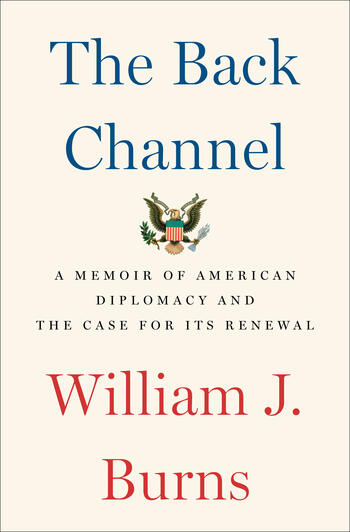
the back channel
Over the course of more than three decades as a diplomat, William J. Burns served five Presidents and ten Secretaries of State. He played a central role in the most consequential diplomatic episodes of his time—from the bloodless end of the Cold War to the collapse of post–Cold War relations with Putin’s Russia, from post–9/11 tumult in the Middle East to the secret nuclear talks with Iran. Burns is widely regarded as one of the most distinguished and admired American statesmen of the last half century. Upon his retirement in 2014, Secretary John Kerry said Burns belonged on “a very short list of American diplomatic legends,” alongside George Kennan. Now, Burns draws on his decades of experience to make an impassioned argument for the enduring value of diplomacy in an increasingly volatile world in THE BACK CHANNEL (A Random House Hardcover; On Sale 3/12/2019). 

In this memoir, Burns recounts with novelistic detail and incisive analysis some of the seminal moments of his career. Employing a trove of newly declassified cables and memos, he gives readers a rare inside look at American diplomacy in action. His dispatches on war-torn Chechnya and Putin’s opulent dacha outside of Moscow and his prescient warnings of the “Perfect Storm” that would be unleashed by the Iraq War will reshape our understanding of history and inform the policy debates of the future. Burns sketches the contours of effective American leadership in a world that resembles neither the zero-sum Cold War contest of his early years as a young diplomat nor the “unipolar moment” of American primacy that followed. Ultimately, THE BACK CHANNEL is an eloquent, deeply informed, and timely story of a life spent in service of American interests abroad. It is also an urgent reminder, in a time of great turmoil, of the enduring importance of diplomacy.


“The Back Channel is a masterfully written memoir from one of America’s most accomplished and respected diplomats. Ambassador Burns not only offers a vivid account of how American diplomacy works, he also puts forward a compelling vision for its future that will surely inspire new generations to follow his incredible example.”

–Madeleine K. Albright, former U.S. Secretary of State

“Bill Burns is a treasure of American diplomacy who I had the honor of watching in action and working closely with during my years at the State Department.  He is a model of the American idea and spirit when we need it most. In The Back Channel, Burns provides another great act of public service by giving us a smart, plain-spoken account of America’s changing role in the world and the power and purpose of American diplomacy at its best.”

–Hillary Clinton, former U.S. Secretary of State

“From one of America’s consummate diplomats, an incisive and sorely needed case for the revitalization of our diplomacy—what Burns wisely describes as our ‘tool of first resort.’”

–Henry Kissinger, former U.S. Secretary of State


Image
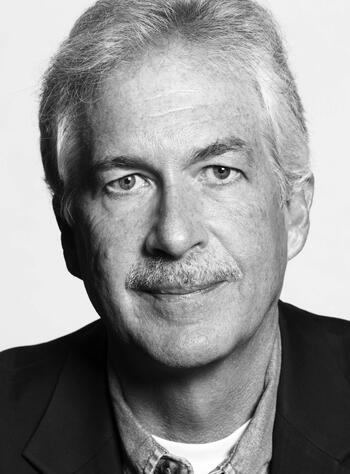
william j  burns c brigitte lacombe croppefd

Retired from the U.S. Foreign Service in 2014, after a thirty-three-year diplomatic career, Ambassador Burns holds the highest rank in the Foreign Service, career ambassador, and is only the second serving career diplomat in history to become deputy secretary of state. Prior to his tenure as deputy secretary, Ambassador Burns served from 2008 to 2011 as under secretary for political affairs. He was ambassador to Russia from 2005 to 2008, assistant secretary of state for Near Eastern affairs from 2001 to 2005, and ambassador to Jordan from 1998 to 2001. Ambassador Burns earned a bachelor’s in history from La Salle University and master’s and doctoral degrees in international relations from Oxford University, where he studied as a Marshall Scholar.

Encina Hall

Bechtel Conference Center, 1st floor

William J. Burns <i>President, Carnegie Endowment for International Peace</i>
Seminars
Authors
News Type
Commentary
Date
Paragraphs

This piece originally appeared at Brookings.


In December, Secretary of State Pompeo said Russia had 60 days to come back into compliance with the Intermediate-range Nuclear Forces (INF) Treaty. Otherwise, the United States would suspend its treaty obligations.

The clock runs out on February 2. Unfortunately, U.S. and Russian officials, already anticipating the treaty’s demise, have turned to finger-pointing…and Washington is losing the blame game.

CHARGES OF TREATY VIOLATIONS

In 2014, the United States charged Russia with violating the INF Treaty by testing a ground-launched cruise missile to intermediate range (500-5,500 kilometers). In 2017, Washington said Russia had begun to deploy the offending missile, later identified by the Russian designator 9M729.

U.S. officials for several years provided little public information to substantiate their charge. However, one could still believe that Russia had violated the treaty—or at least that the U.S. government believed that Russia had violated the treaty. When the Obama administration declared Russia in violation in 2014, it handed its Republican critics a large chunk of red meat, and they only too happily mocked President Obama as naïve in his desire to reduce nuclear arms. Had there been any ambiguity in the U.S. evidence, the Obama administration surely would not have exposed itself to that.

Moscow nonetheless has denied violating the treaty and charges Washington with three violations. Two charges don’t bear scrutiny, and Russian officials themselves seem to recite them merely for form’s sake, but the charge regarding the Mk-41 launcher for missile interceptors at the Aegis Ashore facility in Romania has some basis. Mk-41 launchers on U.S. warships can hold a variety of missiles, including cruise missiles.

The U.S. military does not have cruise missiles secreted in Romania, but the Russian concern is understandable. Were the positions reversed, Washington might well raise the point.

U.S. and Russian officials met in Geneva on January 15 to discuss the INF Treaty and compliance issues. The Russians reportedly offered some kind of exhibition of the 9M729 missile, but U.S. officials said it did not satisfy their concerns. It does not appear the American side tried to improve the terms of the Russian offer but instead sought total surrender by the Russian side, which was not going to happen.

Afterwards, American officials told the press that the Russian ideas did not break new ground. Russian officials called the U.S. approach “uncompromising.”

WHO KILLED THE TREATY?

The blame game is now on. Perhaps due to the partial government shutdown in Washington, Moscow is winning.

Russian officials have actively made their case since President Trump in October said the United States would leave the treaty. On January 23, the Russians held a briefing outside of Moscow for journalists and foreign military attachés to rehash their charges of U.S. treaty violations and explain their claim that the 9M729 was treaty-compliant. The briefing compared the dimensions of the 9M729 to the 9M728, a somewhat shorter missile with a range of less than 500 kilometers (thus treaty-compliant), and claimed the former had the same engine and fuel capacity but a larger warhead and thus a shorter range. The briefing revealed some previously undisclosed details about the 9M729, which may or may not be true.

Russian military officers then exhibited the 9M729 and 9M728 missiles. Well, no. They exhibited canisters labeled 9M729 and 9M728. Whether the canisters actually contained missiles is anyone’s guess.

The problem for Washington, however, is that the Russian narrative includes far more detail and specifics than the U.S. presentation. American officials handicapped themselves for years by refusing to reveal the basis for their charge about the 9M729, citing the need to protect sources and methods. Losing the public relations battle could have diplomatic consequences as Washington seeks to rally allies to its case.

It was only in December that Director of National Intelligence Dan Coats explained that the Russian military had tested the 9M729 from a fixed launcher to a range greater than 500 kilometers (that would be okay, if the missile were a sea-launched cruise missile). The Russians then tested the 9M729 from a mobile ground launcher to a range of less than 500 kilometers, apparently hoping the U.S. intelligence community would not make the connection between the two.

Coats’s briefing helped, but Washington continues to play catch up in the blame game. Since it is the United States that has said it will cease observing the treaty’s terms, it needs to do better to fix responsibility for the treaty’s end on Moscow.

SAVE THE TREATY?

In this regard, rejecting the Russian January 15 offer of an exhibition was a mistake. U.S. officials instead should have pocketed the proposal and defined terms for a meaningful exhibition and technical briefing. That would have meant looking not at canisters but at the missile and inside the missile to see things such as the engine and fuel tank. Procedures would have been needed to ensure a real 9M729 was exhibited. This would have taken negotiation, but smart technical experts might have worked out something.

In order to get the Russians to go that far, Washington would have had to be prepared to address Russian concerns about the Mk-41 launcher—perhaps an exhibition and technical briefing? The U.S. side was not ready for that.

That’s unfortunate. Taking up the Russian offer and then pressing to make the exhibit meaningful, combined with a readiness to exhibit the Mk-41, would have positioned Washington to show that it was making every effort to find a solution and that Russia, not the United States, bears responsibility for the end of the INF Treaty. And who knows? It would have created a small chance of finding a way to resolve the sides’ compliance concerns and save the treaty.

Hero Image
steven pifer 0
All News button
1
-

Abstract: Materials used in key components of nuclear power reactors, such as the fuel cladding and the pressure vessel, provide shields for the release of highly radioactive isotopes generated in the nuclear fuel to the environment, thus their reliability is an important issue in the safety evaluation.  The accident that occurred at the Fukushima Daiichi in 2011 demonstrated that materials that are considered reliable during normal operating conditions will fail in an extreme accident condition. Subsequently, there has been an international effort on developing materials for Accident Tolerant Fuels (ATF). In addition, the development of new generation of nuclear reactors also calls for new materials that may withstand higher temperatures, higher radiation doses and with better performance under severe corrosive conditions.  This talk will outline the challenges and status for such developments using recent data from the authors’ own research group as examples.  Also, since China is building the most nuclear reactors now and “a nuclear accident anywhere of the world will be an accident of everywhere of the world”, the importance and challenges of collaborating with the Chinese in this area will be discussed. 

Bio: Dr. Lumin Wang is a professor of nuclear engineering, and materials science & engineering at the University of Michigan-Ann Arbor (UM). He came to the US from China in 1982, and received his MS and PhD degrees in Material Science from the University of Wisconsin-Madison in 1984 and 1988, respectively. He worked as a post-doctoral fellow at Argonne National Laboratory and a research scientist at the University of New Mexico before joining the faculty of UM in 1997.  His research has focused on the study of radiation effects of materials using ion beams and transmission electron microscopy. He served as the director of Electron Microbeam Analysis Laboratory, a campus-wide material characterization center at UM between 2005 and 2010. Dr. Wang has published more than 400 papers in research journals and delivered more than 100 invited talks internationally. He has been a member of the International Committee of the American Nuclear Society and an adjunct chair professor of Xiamen University of China since 2011. He has taken more than 100 UM students to China to observe the construction of nuclear reactors during the last 8 summers.


Professor
Lumin Wang Professor, College of Engineering University of Michigan
Authors
News Type
Commentary
Date
Paragraphs

Today, January 14, marks the 25th anniversary of the Trilateral Statement.  Signed in Moscow by President Bill Clinton, Russian President Boris Yeltsin and Ukrainian President Leonid Kravchuk, the statement set out the terms under which Ukraine agreed to eliminate the large arsenal of former Soviet strategic nuclear weapons that remained on its territory following the collapse of the Soviet Union.

Among other things, the Trilateral Statement specified the security assurances that the United States, Russia and Britain would provide to Ukraine eleven months later in the Budapest Memorandum on Security Assurances.  Unfortunately, Russia grossly violated those assurances in 2014 when it used military force against Ukraine.

Soon after regaining independence, Ukraine’s leadership indicated its intention to be a non-nuclear weapons state.  Indeed, the July 16, 1990 declaration of state sovereignty adopted by the Rada (parliament) adopted that goal.  Kyiv had questions, however, about the terms of the elimination of the strategic weapons.

First, eliminating the intercontinental ballistic missiles (ICBMs), bombers, ICBM silos and nuclear infrastructure would cost money.  Ukraine’s economic future in the early 1990s was uncertain (the economy ended up declining for most of the decade).  Who would pay for the expensive elimination process?

Second, the strategic nuclear warheads had economic value as they contained highly enriched uranium.  That could be blended down into low enriched uranium to fabricate fuel rods to power nuclear reactors.  If Ukraine shipped warheads to Russia for dismantlement, how would it be compensated for the value of the highly enriched uranium they contained?

Third, nuclear weapons were seen to confer security benefits.  What security guarantees or assurances would Kyiv receive as it gave up the nuclear arms on its territory?

These questions were reasonable, and Kyiv deserved good answers.  In 1992 and the first half of 1993, Ukrainian and Russian officials met in bilateral channels to discuss them, along with other issues such as a schedule for moving warheads to Russia.  In parallel, U.S. officials discussed similar issues with their Ukrainian and Russian counterparts.

However, in September 1993, a Ukrainian-Russian agreement dealing with the nuclear issues fell apart.  Washington decided to become more directly involved out of fear that a resolution might otherwise not prove possible, giving birth to the “trilateral process.”  Discussions over the course of the autumn led U.S. negotiators in mid-December to believe that the pieces of a solution were ready.

In a negotiation in Washington in early January 1994, U.S. Ambassador-at-large Strobe Talbott, Ukrainian Deputy Prime Minister Valeriy Shmarov and Deputy Foreign Minister Borys Tarasyuk, and Russian Deputy Foreign Minister Georgiy Mamedov and their teams finalized answers to Kyiv’s three questions, and wrote them into what became the Trilateral Statement and an accompanying annex.

The United States agreed to provide Nunn-Lugar Cooperative Threat Reduction funds to finance the elimination of the strategic delivery systems and infrastructure in Ukraine.  Specifically, $175 million would be made available as a start.

The three sides agreed that Russia would compensate Ukraine for the value of the highly enriched uranium in the nuclear warheads transferred to Russia for elimination by providing Ukraine fuel rods containing an equivalent amount of low enriched uranium for its nuclear reactors.  In the first ten months, Ukraine would transfer at least 200 warheads, and Russia would provide fuel rods containing 100 tons of low enriched uranium.

The sides laid out in the Trilateral Statement the specific language of the security assurances that Ukraine would receive once it had acceded to the Non-Proliferation Treaty as a non-nuclear weapons state.  Although Kyiv had sought security guarantees, Washington was not prepared to extend what would have been a military commitment similar to what NATO allies have; the assurances were the best that was on offer.

Two issues—the date for transfer of the last nuclear warheads out of Ukraine and compensation for the highly enriched uranium that had been in tactical nuclear warheads removed from Ukraine to Russia by May 1992—nearly derailed the Trilateral Statement.  The sides, however, agreed to address those in private letters.

Presidents Clinton, Yeltsin and Kravchuk met briefly in Moscow on January 14, 1994 and signed the Trilateral Statement.  That set in motion the transfer of nuclear warheads to Russia, accompanied by parallel shipments of fuel rods to Ukraine.  The deactivation and dismantlement of missiles, bombers and missile silos in Ukraine began in earnest with Cooperative Threat Reduction funding.

In December 1994, Ukraine acceded to the Non-Proliferation Treaty and received security assurances from the United States, Russia and Britain in the Budapest Memorandum.  France and China subsequently provided Kyiv similar assurances.

Ukraine fully met its commitments under the Trilateral Statement.  The last nuclear warheads were transferred out of Ukraine in May 1996.

The other signatories met their commitments—with one glaring exception.  In 2014, Russia used military force to illegally seize Crimea, in violation of its Budapest Memorandum commitments “to respect the independence and sovereignty and the existing borders of Ukraine,” and “to refrain from the threat or use of force” against Ukraine.  Russian security and military forces then instigated a conflict in the Donbas region in eastern Ukraine, a conflict that has claimed more than 10,000 lives and continues to simmer.

At the time, the Trilateral Statement was seen as a major achievement in Washington, as it eliminated hundreds of ICBMs and bombers and nearly 2,000 strategic nuclear warheads that had been designed and built to strike the United States.  Not surprisingly, in light of Russia’s aggression, many in Ukraine now question the value of the Trilateral Statement and Budapest Memorandum.  They argue that, had Ukraine held on to at least some nuclear weapons, Russia would never have dared move on Crimea and Donbas.

That argument is understandable and perhaps correct (although alternative histories are not always easy to envisage).  However, had Ukraine tried to keep nuclear weapons, it would have faced political and economic costs, including:

·      Kyiv would have had limited relations, at best, with the United States and European countries (witness the virtual pariah status that a nuclear North Korea suffers).  In particular, there would have been no strategic relationship with the United States.

·      NATO would not have concluded a distinctive partnership relationship with Ukraine, and the European Union would not have signed a partnership and cooperation agreement, to say nothing of an association agreement.

·      Kyiv would have received little in the way of reform, technical or financial assistance from the United States and European Union.

·      Western executive directors would have blocked low interest credits to Ukraine from the IMF, World Bank and European Bank of Reconstruction and Development.

To be sure, one can debate the value of these benefits.  But those who now assert that Ukraine should have kept nuclear arms should recognize that keeping them would have come at a steep price.  Moreover, in any confrontation or crisis with Russia, Ukraine would have found itself alone.

Hero Image
steven pifer
All News button
1
This event is open to Stanford undergraduate students only. 
 
The Center on Democracy, Development, and the Rule of Law (CDDRL) is currently accepting applications from eligible juniors due February 15, 2019 who are interested in writing their senior thesis on a subject touching upon democracy, economic development, and rule of law (DDRL) from any university department. CDDRL faculty and current honors students will be present to discuss the program and answer any questions.
 
For more information on the Fisher Family CDDRL Honors Program, please click here.
 
Image
honors info session 2019 1


Ground Floor Conference Rm E008 Encina Hall616 Serra MallStanford, CA 94305-6055


CDDRL
Encina Hall, C152
616 Jane Stanford Way
Stanford, CA 94305-6055

(650) 725-2705 (650) 724-2996
0
Senior Fellow at the Freeman Spogli Institute for International Studies
Professor, by courtesy, of Political Science
Stedman_Steve.jpg PhD

Stephen Stedman is a Senior Fellow at the Freeman Spogli Institute for International Studies (FSI) and the Center on Democracy, Development and the Rule of Law (CDDRL), an affiliated faculty member at CISAC, and professor of political science (by courtesy) at Stanford University. He is director of CDDRL's Fisher Family Honors Program in Democracy, Development and Rule of Law, and will be faculty director of the Program on International Relations in the School of Humanities and Sciences effective Fall 2025.

In 2011-12 Professor Stedman served as the Director for the Global Commission on Elections, Democracy, and Security, a body of eminent persons tasked with developing recommendations on promoting and protecting the integrity of elections and international electoral assistance. The Commission is a joint project of the Kofi Annan Foundation and International IDEA, an intergovernmental organization that works on international democracy and electoral assistance.

In 2003-04 Professor Stedman was Research Director of the United Nations High-level Panel on Threats, Challenges and Change and was a principal drafter of the Panel’s report, A More Secure World: Our Shared Responsibility.

In 2005 he served as Assistant Secretary-General and Special Advisor to the Secretary- General of the United Nations, with responsibility for working with governments to adopt the Panel’s recommendations for strengthening collective security and for implementing changes within the United Nations Secretariat, including the creation of a Peacebuilding Support Office, a Counter Terrorism Task Force, and a Policy Committee to act as a cabinet to the Secretary-General.

His most recent book, with Bruce Jones and Carlos Pascual, is Power and Responsibility: Creating International Order in an Era of Transnational Threats (Washington DC: Brookings Institution, 2009).

Director, Fisher Family Honors Program in Democracy, Development and Rule of Law
Director, Program in International Relations
Affiliated faculty at the Center for International Security and Cooperation
Date Label

Encina Hall, C150
616 Jane Stanford Way
Stanford, CA 94305

0
Center Fellow, Freeman Spogli Institute for International Studies
didi_kuo_2023.jpg

Didi Kuo is a Center Fellow at the Freeman Spogli Institute for International Studies (FSI) at Stanford University. She is a scholar of comparative politics with a focus on democratization, corruption and clientelism, political parties and institutions, and political reform. She is the author of The Great Retreat: How Political Parties Should Behave and Why They Don’t (Oxford University Press) and Clientelism, Capitalism, and Democracy: the rise of programmatic politics in the United States and Britain (Cambridge University Press, 2018).

She has been at Stanford since 2013 as the manager of the Program on American Democracy in Comparative Perspective and is co-director of the Fisher Family Honors Program at CDDRL. She was an Eric and Wendy Schmidt Fellow at New America and is a non-resident fellow with the Carnegie Endowment for International Peace. She received a PhD in political science from Harvard University, an MSc in Economic and Social History from Oxford University, where she studied as a Marshall Scholar, and a BA from Emory University.

Date Label
Subscribe to Russia and Eurasia