-

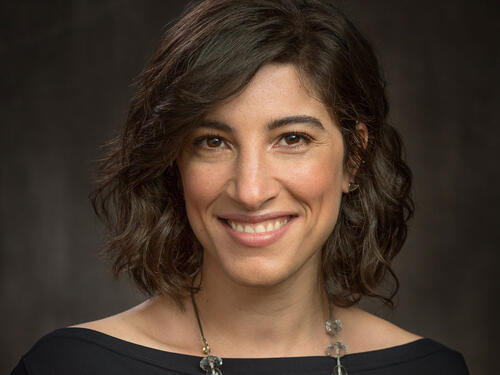
renee diresta Renne DiResta
Abstract: Disinformation campaigns and black propaganda are not new, but they are evolving. Media coverage of disinformation and propaganda has focused primarily on the social-first memetic operations of the Internet Research Agency and its targeting of the United States 2016 presidential election. This talk examines a broader collection of influence operations, all affiliated with one state adversary – Russia – but leveraging distinctly different tactics. It investigates a 'playbook' that is far more expansive (and evolving) than previously understood, and assesses disinformation campaigns along several axes. We explore narrative vs memetic pathways, long-term vs discrete actions, and a collection of goals ranging from persuasion to distraction. This talk also discusses how online influence operations are deployed in conjunction hack-and-leak campaigns, and community infiltration. 

Renee DiResta Bio >


E207, Encina Hall 

0
renee-diresta.jpg

Renée DiResta is the former Research Manager at the Stanford Internet Observatory. She investigates the spread of malign narratives across social networks, and assists policymakers in understanding and responding to the problem. She has advised Congress, the State Department, and other academic, civic, and business organizations, and has studied disinformation and computational propaganda in the context of pseudoscience conspiracies, terrorism, and state-sponsored information warfare.

You can see a full list of Renée's writing and speeches on her website: www.reneediresta.com or follow her @noupside.


Former Research Manager, Stanford Internet Observatory
Renee DiResta Research Manager Stanford Internet Observatory
Seminars
Paragraphs

Once hailed as a great force for human empowerment and liberation, social media and related digital tools have rapidly come to be regarded as a major threat to democratic stability and human freedom. Based on a deeply problematic business model, social-media platforms are showing the potential to exacerbate hazards that range from authoritarian privacy violations to partisan echo chambers to the spread of malign disinformation. Authoritarian forces are also profiting from a series of other advances in digital technology, notably including the revolution in artificial intelligence (AI). These developments have the potential to fuel a “postmodern totalitarianism” vividly illustrated by China’s rapidly expanding projects of digital surveillance and social control. They also pose a series of challenges for contemporary democracies.

Read here.

All Publications button
1
Publication Type
Journal Articles
Publication Date
Authors
Larry Diamond
Authors
News Type
Q&As
Date
Paragraphs

The science of cyber risk looks at a broad spectrum of risks across a variety of digital platforms. Often though, the work done within the field is limited by a failure to explore the knowledge of other fields, such as behavioral science, economics, law, management science, and political science. In a new Science Magazine article, “Cyber Risk Research Impeded by Disciplinary Barriers,” cyber risk experts and researchers at Stanford University make a compelling case for the importance of a cross-disciplinary approach. Gregory Falco, security researcher at the Program on Geopolitics, Technology, and Governance, and lead author of the paper, talked recently with the Cyber Policy Center about the need for a holistic approach, both within the study of cyber risk, and at a company level when an attack occurs.

CPC: Your recent perspective paper in Science Magazine highlights the issue of terminology when it comes to how organizations and institutions define a cyber attack. Why is it so important to have consistent naming when we are talking about cyber risk?

Falco: With any scientific discipline or field, there is a language for engaging with other experts. If there’s no consistent language or at least dialect for communication around cyber risk, it’s difficult to engage with scholars from different disciplines. For example: The phrase “cyber event” is contested and the threshold for what an organization considers to be a cyber event varies substantially. Some organizations consider someone pinging their network as a cyber event, others only consider something a cyber event once an intrusion has been publicly disclosed. So there’s a disparity when comparing metrics of cyber events from organization to organization because of the different thresholds of what’s considered an event.

CPC: We’ve all been sent one of those emails letting us know our data may have been compromised and your paper points out it’s nearly impossible to put foolproof protections into place; attacks are inevitable. Given that, how should companies weigh the various ways they can protect themselves?

Falco: The first exercise each organization should go through when they decide to be serious about cyber risk is to prioritize their assets. What is business critical? What is safety critical? Then, like all other risks, a cost-benefit analysis must be done for each asset based on its priority. If the asset is safety-critical, then resources should be allocated to help protect that asset or at least ensure its resilience. Trade-offs are inevitable, no company has unlimited resources. But starting with an understanding of where the priorities are, is critical.

CPC: In companies, cyber security often falls entirely to the Chief Information Security Officer (CISO). Your paper argues that’s shortsighted. What is gained when a company takes a more holistic approach?

Falco: Distributing responsibility across the organization catalyzes a security culture. A security culture is one where there is a constant vigilance or at least broad awareness of cybersecurity concerns throughout the organization. Fostering a security culture is often suggested as a mechanism to help reduce cyber risk in organizations. The problem with not distributing responsibility is that when something happens, it’s too easy to resort to finger-pointing at the CISO, and that’s counterproductive. Efforts after an attack should be on responding and being resilient, not finding the scapegoat.

CPC: Cyber risk largely focuses on prevention, but your paper argues that it’s what happens after an attack in that needs greater attention. Why is that?

Falco: Every organization will be attacked. However organizations can differentiate themselves from a cyber risk standpoint by appropriately managing the situation after an attack. Some of the most significant damages to organizations can be reputational if communication after an attack is unclear or botched. Poor communication after an attack can result in major regulatory fines or valuation adjustments as seen in cases like Yahoo and that can have major business implications. Communications aren’t the only important element of post-attack response. A thorough post-mortem of the organization’s response to the attack can be an important learning experience and a way to plan for future attacks.

CPC: Protecting against cyber attacks and the losses that go with them can obviously be costly for companies. You make a case for collaboration among different fields, say among data scientists and economists. How can that be encouraged?

Falco: We argue that cross-disciplinary collaboration rarely happens organically. Therefore, we call on funding agencies like the NSF or DARPA to specify a preference for cross disciplinary research when funding cyber risk projects. Typically, this isn’t currently a feature of calls for proposals, but for cyber risk programs it should be. We encourage researchers to explore cyber risk questions at the margins of their discipline. Those questions may lend themselves to potential overlap with other disciplines and foster a starting point for cross-disciplinary collaboration.

For more on these topics, see a full list of recent publications from the Cyber Policy Center and the Program on Geopolitics, Technology, and Governance.

Hero Image
Gregory Falco Rod Searcey
All News button
1
News Type
Commentary
Date
Paragraphs

"Ideologically, today’s autocrats are a more motley and pragmatic crew. They generally claim to be market friendly, but mainly they are crony capitalists, who, like Putin in Russia, Orban in Hungary, and Erdogan in Turkey, are first concerned with enriching themselves, their families, and their parties and support networks. Increasingly, they raise a common flag of cultural conservatism, denouncing the moral license and weakness of the “the liberal West” while advancing a virulent antiliberal agenda based on nationalism and religion," writes Larry Diamond. Read here

Hero Image
gettyimages 1180678440
All News button
1
Authors
News Type
News
Date
Paragraphs

Of all of the countries in the world attempting a transition to democracy, Francis Fukuyama thinks that Ukraine is the most promising.

“The election of [Volodymyr] Zelensky and the new parliament is just a miracle,” Fukuyama told Freeman Spogli Institute for International Studies (FSI) Director Michael McFaul on the World Class podcast. “Can you imagine, a country getting rid of two-thirds of its parliament and starting over with new people, many of whom are under 35 years old?” 


Ukraine is at a crossroads of sorts, said Fukuyama, who is the Olivier Nomellini Senior Fellow at FSI, and the director of both the Center on Democracy, Development and the Rule of Law and the Ford Dorsey Master’s in International Policy program. On one hand, the country could use this opportunity to transition into a successful reformist government, or its efforts could fail and the government could collapse. 

It doesn’t help that Ukraine’s relationships with foreign allies are not as strong as they once were, he told McFaul.

[Get stories like this delivered to your inbox by signing up for FSI email alerts]

“The United States had been their strongest ally, but now there’s a president in the White House who doesn’t particularly like them,” he explained. “I think Germany and France are also both weakening in their support for Ukraine’s independence, so [Ukraine is] in a really tough spot.”

Before Ukraine’s Orange Revolution in 2004, Fukuyama said he actually thought the country would be among the least likely to liberalize in the way that it has. One important factor in Ukraine’s success has been the exercise of broad individual and political freedoms —  for example, Ukraine’s press has stayed active throughout the years and the country boasts many investigative journalists, he said.

“In a way, it’s a very free and open society with lots of creativity,” Fukuyama noted. “You can criticize the government. I actually think [Vladimir] Putin’s invasion of Ukraine has stimulated Ukrainian nationalism — I think it made citizens realize that they actually do have something to lose.”

[Ready to dive deeper? Read “Small Battle in a Big War: The Post-Maidan Transformation of the National Bank of Ukraine”]

Fukuyama has been interested in Ukraine for a while now — he’s visited the country six times over the past five years. During his most recent trip in November 2019, he taught a crash-course in policymaking to 50 of Ukraine’s members of parliament. With an average age of 41, it’s the country’s youngest parliament ever elected, and many of the newest members have no previous political experience.

He described his time with the young Ukraianian members as inspiring, adding that they want to see a genuine democracy, and to eliminate corruption in their country.

“It does seem to me that we who live in democracies owe it to the people of Ukraine to support them,” Fukuyama said. “Because if they fail, it’s going to have repercussions way beyond Ukraine.” 

Related: Listen to Fukuyama explain “identity politics,” where it comes from and how it will shape the future of our society, on a previous episode of World Class.

Hero Image
Francis Fukuyama
Francis Fukuyama speaks onstage during “Our Tribal Nature: Tribalism, Politics, And Evolution” symposia in September 2019 in New York City. Photo: Astrid Stawiarz - Getty Images.
All News button
1
News Type
Commentary
Date
Paragraphs

The Democrats are facing a dilemma: If they defend democratic norms by acting to remove President Trump from office, they risk getting dragged into a polarizing style of politics that works to his political advantage. Read here.

Hero Image
trump 2546104 1920
All News button
1
News Type
Commentary
Date
Paragraphs

Our Francis Fukuyama and UELP alumni, Sergii Leshchenko (Draper Hills Summer Fellow 2017) and Oleksandra Ustinova (Ukrainian emerging leaders 2018-9), are feat inMichelle Goldberg's NYT opinion piece "The Beacon Has Gone Out: What Trump & Giuliani Have Wrought." Read here.

Hero Image
my photo
All News button
1
-

Image
Ashish Goel
Abstract:

While the Internet has revolutionized many aspects of our lives, there are still no online alternatives for making democratic decisions at large scale as a society. In this talk, we will describe algorithmic and market-inspired approaches towards large scale decision making that our research group is exploring. We will start with a model of opinion dynamics that can potentially lead to polarization, and relate that to commonly used recommendation algorithms. We will then describe the algorithms behind Stanford's participatory budgeting platform, and the lessons that we learnt from deploying this platform in over 70 civic elections. We will use this to motivate the need for a modern theory of social choice that goes beyond voting on candidates. We will then describe ongoing practical work on an automated moderator bot for civic deliberation (in collaboration with Jim Fishkin's group), and ongoing theoretical work on deliberative approaches to decision making. We will conclude with a summary of open directions, focusing in particular on fair advertising. 

Ashish Goel Bio

Lunch Seminar Series Flyer
  • E207, Encina Hall
  • 616 Jane Stanford Way, Stanford, CA 94305
 
0
ashish_goel.jpg
Ashish Goel is a Professor of Management Science and Engineering and (by courtesy) Computer Science at Stanford University, and a member of Stanford's Institute for Computational and Mathematical Engineering. He received his PhD in Computer Science from Stanford in 1999, and was an Assistant Professor of Computer Science at the University of Southern California from 1999 to 2002. His research interests lie in the design, analysis, and applications of algorithms; current application areas of interest include social networks, participatory democracy, Internet commerce, and large scale data processing. Professor Goel is a recipient of an Alfred P. Sloan faculty fellowship (2004-06), a Terman faculty fellowship from Stanford, an NSF Career Award (2002-07), and a Rajeev Motwani mentorship award (2010). He was a co-author on the paper that won the best paper award at WWW 2009, and an Edelman Laureate in 2014. Professor Goel was a research fellow and technical advisor at Twitter, Inc. from July 2009 to Aug 2014.
Ashish Goel Professor of Management Science and Engineering
Seminars
-

This event is now full and we are unable to take any further reservations. However, if you would like to be added to the waitlist, please email us at sj1874@stanford.edu.

Image
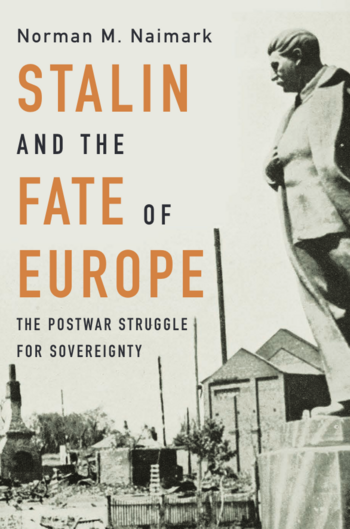
Norman M. Naimark book cover


The Cold War division of Europe was not inevitable―the acclaimed author of Stalin’s Genocides shows how postwar Europeans fought to determine their own destinies.

Was the division of Europe after World War II inevitable? In this powerful reassessment of the postwar order in Europe, Norman Naimark suggests that Joseph Stalin was far more open to a settlement on the continent than we have thought. Through revealing case studies from Poland and Yugoslavia to Denmark and Albania, Naimark recasts the early Cold War by focusing on Europeans’ fight to determine their future.

As nations devastated by war began rebuilding, Soviet intentions loomed large. Stalin’s armies controlled most of the eastern half of the continent, and in France and Italy, communist parties were serious political forces. Yet Naimark reveals a surprisingly flexible Stalin, who initially had no intention of dividing Europe. During a window of opportunity from 1945 to 1948, leaders across the political spectrum, including Juho Kusti Paasikivi of Finland, Wladyslaw Gomulka of Poland, and Karl Renner of Austria, pushed back against outside pressures. For some, this meant struggling against Soviet dominance. For others, it meant enlisting the Americans to support their aims.

The first frost of Cold War could be felt in the tense patrolling of zones of occupation in Germany, but not until 1948, with the coup in Czechoslovakia and the Berlin Blockade, did the familiar polarization set in. The split did not become irreversible until the formal division of Germany and establishment of NATO in 1949. In illuminating how European leaders deftly managed national interests in the face of dominating powers, Stalin and the Fate of Europe reveals the real potential of an alternative trajectory for the continent.


Norman Naimark


Norman M. Naimark received his A.B., M.A. and Ph.D (1972) from Stanford University. He spent fifteen years as Professor at Boston University and Research Fellow at the Russian Research Center at Harvard before returning to Stanford in 1988. He is presently Robert and Florence McDonnell Professor of East European Studies in the History Department at Stanford University, and is Senior Fellow at the Hoover Institution and the Freeman-Spogli Institute. Earlier he served as Chair of the Department of History, Burke Family Director of the Bing Overseas Studies Program, and Fisher Director of Stanford Global Studies.

A selection of his books include The Russians in Germany: A History of the Soviet Zone of Germany (Harvard 1995); Fires of Hatred; Ethnic Cleansing in 20th Century Europe (Harvard 2001); Stalin’s Genocides (Princeton 2010), Genocide: A World History (Oxford 2017), and, most recently Stalin and the Fate of Europe: The Struggle for Sovereignty (Harvard 2019).

Naimark has been awarded the Officer’s Cross First Class of the German Federal Republic. He twice received the Dean’s Award for Outstanding Teaching at Stanford. He also received the Award for Distinguished Contributions to Slavic, East European, and Eurasian Studies from ASEEES in 2011-12.


Discussants:

David Holloway is the Raymond A. Spruance Professor in International History, Professor of Political Science, and Senior Fellow at FSI, Emeritus. He received his BA, MA, and PhD from the University of Cambridge. He has been co-director of CISAC (1991-1997) and director of FSI (1998-2003). He is the author of Stalin and the Bomb: the Soviet Union and Atomic Energy, 1939-1956 (Yale U. P., 1994) among other works.

Robert Rakove is Lecturer in International Relations. He received his PhD from the University of Virginia and is the author of Kennedy, Johnson, and the Nonaligned World.  Rakove studies U.S. foreign policy, particularly in the Cold War era.

Amir Weiner is Associate Professor of Soviet History and the director of the Center for Russian, East European and Eurasian Studies.


Co-sponsored by the Center for Russian, East European and Eurasian Studies, and the Center for International Security and Cooperation.

CISAC
Stanford University
Encina Hall, C235
Stanford, CA 94305-6165

(650) 723-6927 (650) 725-0597
0
Senior Fellow, by courtesy, at the Freeman Spogli Institute for International Studies
Robert & Florence McDonnell Professor of East European Studies
Professor of History
Professor, by courtesy, of German Studies
Senior Fellow at the Hoover Institution
Naimark,_Norman.jpg MS, PhD

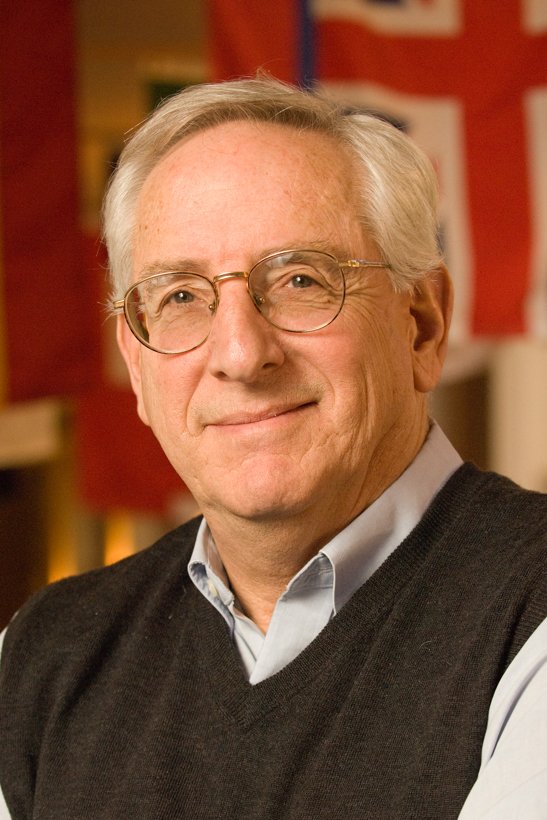
Norman M. Naimark is the Robert and Florence McDonnell Professor of East European Studies, a Professor of History and (by courtesy) of German Studies, and Senior Fellow of the Hoover Institution and (by courtesy) of the Freeman-Spogli Institute for International Studies. Norman formerly served as the Sakurako and William Fisher Family Director of the Stanford Global Studies Division, the Burke Family Director of the Bing Overseas Studies Program, the Convener of the European Forum (predecessor to The Europe Center), Chair of the History Department, and the Director of Stanford’s Center for Russian, East European, and Eurasian Studies.

Norman earned his Ph.D. in History from Stanford University in 1972 and before returning to join the faculty in 1988, he was a professor of history at Boston University and a fellow of the Russian Research Center at Harvard. He also held the visiting Catherine Wasserman Davis Chair of Slavic Studies at Wellesley College. He has been awarded the Officer's Cross of the Order of Merit of the Federal Republic of Germany (1996), the Richard W. Lyman Award for outstanding faculty volunteer service (1995), and the Dean's Teaching Award from Stanford University for 1991-92 and 2002-3.

Norman is interested in modern Eastern European and Russian history and his research focuses on Soviet policies and actions in Europe after World War II and on genocide and ethnic cleansing in the twentieth century. His published monographs on these topics include The History of the "Proletariat": The Emergence of Marxism in the Kingdom of Poland, 1870–1887 (1979, Columbia University Press), Terrorists and Social Democrats: The Russian Revolutionary Movement under Alexander III (1983, Harvard University Press), The Russians in Germany: The History of The Soviet Zone of Occupation, 1945–1949 (1995, Harvard University Press), The Establishment of Communist Regimes in Eastern Europe (1998, Westview Press), Fires of Hatred: Ethnic Cleansing In 20th Century Europe (2001, Harvard University Press), Stalin's Genocides (2010, Princeton University Press), and Genocide: A World History (2016, Oxford University Press). Naimark’s latest book, Stalin and the Fate of Europe: The Postwar Struggle for Sovereignty (Harvard 2019), explores seven case studies that illuminate Soviet policy in Europe and European attempts to build new, independent countries after World War II.


Affiliated faculty at The Europe Center
Affiliated faculty at the Center on Democracy, Development and the Rule of Law

CISAC
Stanford University
Encina Hall, E214
Stanford, CA 94305-6165

(650) 723-1737 (650) 723-0089
0
Senior Fellow Emeritus at the Freeman Spogli Institute of International Studies
Raymond A. Spruance Professor of International History
0820stanford-davidholloway-238-edit.jpg PhD

David Holloway is the Raymond A. Spruance Professor of International History, a professor of political science, and an FSI senior fellow. He was co-director of CISAC from 1991 to 1997, and director of FSI from 1998 to 2003. His research focuses on the international history of nuclear weapons, on science and technology in the Soviet Union, and on the relationship between international history and international relations theory. His book Stalin and the Bomb: The Soviet Union and Atomic Energy, 1939-1956 (Yale University Press, 1994) was chosen by the New York Times Book Review as one of the 11 best books of 1994, and it won the Vucinich and Shulman prizes of the American Association for the Advancement of Slavic Studies. It has been translated into seven languages, most recently into Chinese. The Chinese translation is due to be published later in 2018. Holloway also wrote The Soviet Union and the Arms Race (1983) and co-authored The Reagan Strategic Defense Initiative: Technical, Political and Arms Control Assessment (1984). He has contributed to the Bulletin of the Atomic Scientists, Foreign Affairs, and other scholarly journals.

Since joining the Stanford faculty in 1986 -- first as a professor of political science and later (in 1996) as a professor of history as well -- Holloway has served as chair and co-chair of the International Relations Program (1989-1991), and as associate dean in the School of Humanities and Sciences (1997-1998). Before coming to Stanford, he taught at the University of Lancaster (1967-1970) and the University of Edinburgh (1970-1986). Born in Dublin, Ireland, he received his undergraduate degree in modern languages and literature, and his PhD in social and political sciences, both from Cambridge University.

Faculty member at the Center for International Security and Cooperation
Affiliated faculty at the Center on Democracy, Development, and the Rule of Law
Affiliated faculty at The Europe Center
CV
Date Label
Discussant
Robert Rakove Discussant

Building 200, Room 336
Stanford, CA 94305-2024

(650) 723-3527 (650) 725-0597
0
Associate Professor of History
amir_weiner.jpg PhD

Amir Weiner's research concerns Soviet history with an emphasis on the interaction between totalitarian politics, ideology, nationality, and society. He is the author of Making Sense of War, Landscaping the Human Garden and numerous articles and edited volumes on the impact of World War II on the Soviet polity, the social history of WWII and Soviet frontier politics. His forthcoming book, The KGB: Ruthless Sword, Imperfect Shield, will be published by Yale University Press in 2021. He is currently working on a collective autobiography of KGB officers titled Coffee with the KGB: Conversations with Soviet Security Officers. Professor Weiner has taught courses on modern Russian history; the Second World War; Totalitarianism; War and Society in Modern Europe; Modern Ukrainian History; and History and Memory.


Affiliated faculty at The Europe Center
CV
Discussant
Panel Discussions
Authors
News Type
Commentary
Date
Paragraphs

For more than two weeks now, a stream of current and former U.S. officials, this week including Amb. Bill Taylor, have described to Congressional committees the White House’s sordid effort to outsource American foreign policy to the president’s lawyer, Rudy Giuliani, who sought to advance the personal political interests of Donald Trump. Faced with compelling testimonies to the effect that the president subverted U.S. national interests to his own, the White House has begun to trash those officials.

Even for this White House, that is a despicable new low.

The testimonies make clear that President Trump insisted on a quid pro quo, as his Acting Chief of Staff Mick Mulvaney confirmed in an October 17 press conference (he later tried to walk it back, but watch the video of the press conference). The president wanted Ukrainian President Volodymyr Zelensky to investigate a long-debunked charge about former Vice President Joe Biden, his possible opponent in the 2020 U.S. presidential election. President Trump also wanted the Ukrainians to check whether the Democratic National Committee’s e-mail servers might have ended up in, of all places, Ukraine (no one has offered evidence to suggest that they have).

Hero Image
1 zlfekfbd3jlyp4lobtuefw
All News button
1
Subscribe to Russia and Eurasia