
-

*For fall quarter 2021, CISAC will be hosting hybrid events. Many events will offer limited-capacity in-person attendance for Stanford faculty, staff, fellows, visiting scholars, and students in accordance with Stanford’s health and safety guidelines, and be open to the public online via Zoom. All CISAC events are scheduled using the Pacific Time Zone.


REGISTRATION


Seminar Recording

About the Event: As relations between the West and Russia plunge to a post-Cold War nadir, how strong a competitor will the Kremlin prove? Will constraints on Putin's autocracy hinder his ability to have Russia play a great power role, or has Russia alrealdy successfully resurrected itself and is now able to exercise significant influence on the global stage? On November 10, Timothy Frye (author of Weak Strongman: The Limits of Power in Putin's Russia) and Kathryn Stoner (author of Russia Resurrected: Its Power and Purpose in a New Global Order) will discuss the nature and depth of the Russian challenge to the West.


About the Speakers: 

Timothy Frye is the Marshall D. Shulman Professor of Post-Soviet Foreign Policy at Columbia University. Professor Frye received a B.A. in Russian language and literature from Middlebury College, an M.A. from Columbia's School of International and Public Affairs, and a Ph.D. in Political Science from Columbia. His research and teaching interests are in comparative politics and political economy with a focus on the former Soviet Union and Eastern Europe. His most recent book is Weak Strongman: The Limits of Power in Putin’s Russia (Princeton University Press, 2021). He co-directs the International Center for the Study of Institutions and Development at the Higher School of Economics in Moscow and edits Post-Soviet Affairs.

Kathryn Stoner is the Deputy Director at the Freeman Spogli Institute for International Studies (FSI) at Stanford University and a Senior Fellow at the Center on Democracy, Development, and the Rule of Law, and at the Center on International Security and Cooperation at FSI. She teaches in the Department of Political Science at Stanford, and in the Program on International Relations, as well as in the Ford Dorsey Master's in International Policy Program. Prior to coming to Stanford in 2004, she was on the faculty at Princeton University for nine years, jointly appointed to the Department of Politics and the Princeton School for International and Public Affairs (formerly the Woodrow Wilson School). At Princeton she received the Ralph O. Glendinning Preceptorship awarded to outstanding junior faculty. She also served as a Visiting Associate Professor of Political Science at Columbia University, and an Assistant Professor of Political Science at McGill University. She has held fellowships at Harvard University as well as the Woodrow Wilson Center in Washington, DC. In addition to many articles and book chapters on contemporary Russia, she is the author or co-editor of six books: "Transitions to Democracy: A Comparative Perspective," written and edited with Michael A. McFaul (Johns Hopkins 2013); "Autocracy and Democracy in the Post-Communist World," co-edited with Valerie Bunce and Michael A. McFaul (Cambridge, 2010); "Resisting the State: Reform and Retrenchment in Post-Soviet Russia" (Cambridge, 2006); "After the Collapse of Communism: Comparative Lessons of Transitions" (Cambridge, 2004), coedited with Michael McFaul; and "Local Heroes: The Political Economy of Russian Regional" Governance (Princeton, 1997). Her most recent book is Russia Resurrected: Its Power and Purpose in a New Global Order" (Oxford University Press, 2021). She received a BA (1988) and MA (1989) in Political Science from the University of Toronto, and a PhD in Government from Harvard University (1995). In 2016 she was awarded an honorary doctorate from Iliad State University, Tbilisi, Republic of Georgia.

Virtual Only. This event will not be held in person.

Timothy Frye

FSI
Stanford University
Encina Hall C140
Stanford, CA 94305-6055

(650) 736-1820 (650) 724-2996
0
Satre Family Senior Fellow, Freeman Spogli Institute for International Studies
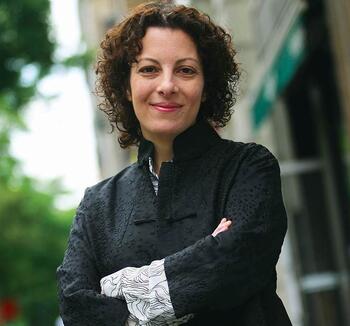
kathryn_stoner_1_2022_v2.jpg MA, PhD

Kathryn Stoner is the Mosbacher Director of the Center on Democracy, Development, and the Rule of Law (CDDRL), and a Senior Fellow at CDDRL and the Center on International Security and Cooperation at FSI. From 2017 to 2021, she served as FSI's Deputy Director. She is Professor of Political Science (by courtesy) at Stanford and she teaches in the Department of Political Science, and in the Program on International Relations, as well as in the Ford Dorsey Master's in International Policy Program. She is also a Senior Fellow (by courtesy) at the Hoover Institution.

Prior to coming to Stanford in 2004, she was on the faculty at Princeton University for nine years, jointly appointed to the Department of Politics and the Princeton School for International and Public Affairs (formerly the Woodrow Wilson School). At Princeton she received the Ralph O. Glendinning Preceptorship awarded to outstanding junior faculty. She also served as a Visiting Associate Professor of Political Science at Columbia University, and an Assistant Professor of Political Science at McGill University. She has held fellowships at Harvard University as well as the Woodrow Wilson Center in Washington, DC. 

In addition to many articles and book chapters on contemporary Russia, she is the author or co-editor of six books: "Transitions to Democracy: A Comparative Perspective," written and edited with Michael A. McFaul (Johns Hopkins 2013);  "Autocracy and Democracy in the Post-Communist World," co-edited with Valerie Bunce and Michael A. McFaul (Cambridge, 2010);  "Resisting the State: Reform and Retrenchment in Post-Soviet Russia" (Cambridge, 2006); "After the Collapse of Communism: Comparative Lessons of Transitions" (Cambridge, 2004), coedited with Michael McFaul; and "Local Heroes: The Political Economy of Russian Regional" Governance (Princeton, 1997); and "Russia Resurrected: Its Power and Purpose in a New Global Order" (Oxford University Press, 2021).

She received a BA (1988) and MA (1989) in Political Science from the University of Toronto, and a PhD in Government from Harvard University (1995). In 2016 she was awarded an honorary doctorate from Iliad State University, Tbilisi, Republic of Georgia.

Download full-resolution headshot; photo credit: Rod Searcey.

Mosbacher Director, Center on Democracy, Development and the Rule of Law
Professor of Political Science (by courtesy), Stanford University
Senior Fellow (by courtesy), Hoover Institution
CV
Date Label
Seminars
Paragraphs

Russia’s democratic collapse must rank as one of the most consequential setbacks among the third and fourth waves of democratization. A comprehensive explanation for Russia’s transition from autocracy and back again counts on both structure and agency, but leans toward agency. Structurally, Russia was forced to navigate democratic and market reforms while managing the dissolution of the Soviet empire. Yet the agency of individual actors may have played a more decisive role: It was Mikhail Gorbachev, not weakening state institutions or a failing command economy, who triggered regime change in the Soviet Union. Following Gorbachev, Boris Yeltsin made decisions that undermined democratic consolidation and to some extent paved the way for future autocratic restoration. The most notable of these was Yeltsin’s naming of Vladimir Putin as his successor. While Russians may be shaped by historical legacies, immutable cultural norms, or static institutions, they are not trapped forever by them. If some Russians in the past made decisions that produced autocracy, others in the future might make choices that engender democracy.

All Publications button
1
Publication Type
Journal Articles
Publication Date
Journal Publisher
Journal of Democracy
Authors
Michael A. McFaul
Number
Number 4
-

Image
jawboning as a first amendment problem

PART OF THE FALL SEMINAR SERIES

Join us on October 19th for our weekly seminar from 12 PM - 1 PM PT featuring Genevieve Lakier, Professor of Law at University of Chicago's Law School and CPC Co-Director, Nate Persily. This series is organized by the Program on Democracy and the Internet, and the Cyber Initiative at the William and Flora Hewlett Foundation.

For years now, scholars have expressed alarm at the tendency of government officials to pressure—or “jawbone”—social media companies into taking down what the officials consider to be harmful or offensive speech, even when no law requires it. Scholars have worried, for good reason, that the practice of jawboning allows government officials to evade the stringent constraints on their power to regulate speech imposed by the First Amendment. But relatively little attention has been paid to the constitutional question of whether, or rather when, government jawboning itself violates the First Amendment. In fact, answering this question turns out to be quite difficult because of deep inconsistencies in the cases that deal with jawboning, both in the social media context and beyond. In this talk, I will explore what those inconsistencies are, why the case law is so unclear about where the line between permissible government pressure and unconstitutional governmental coercion falls, and what kind of jawboning rule might be necessary to protect free speech values in a public sphere in which both private companies and government officials possess considerable power to determine who can and cannot speak.


REGISTER


Speaker Profile:

Genevieve Lakier teaches and writes about freedom of speech and American constitutional law. Her work examines the changing meaning of freedom of speech in the United States, the role that legislatures play in safeguarding free speech values, and the fight over freedom of speech on the social media platforms.
 
Genevieve has an AB from Princeton University, a JD from New York University School of Law, and an MA and PhD in anthropology from the University of Chicago. Between 2006 and 2008, she was an Academy Scholar at the Weatherhead Center for International and Area Studies at Harvard University. After law school, she clerked for Judge Leonard B. Sand of the Southern District of New York and Judge Martha C. Daughtrey of the Sixth Circuit Court of Appeals. Before joining the faculty, Genevieve taught at the Law School as a Bigelow Fellow and Lecturer in Law. She will serve as the Senior Visiting Research Scholar at the Knight Institute at Columbia University for the 2021-2022 school year, where she will be supervising a project exploring the relationship between the First Amendment and the regulation of lies, disinformation and misinformation.


Genevieve Lakier,
Seminars
Authors
Nathaniel Persily
News Type
Commentary
Date
Paragraphs

The disclosures made by whistleblower Frances Haugen about Facebook — first to the Wall Street Journal and then to “60 Minutes” — ought to be the stuff of shareholders’ nightmares: When she left Facebook, she took with her documents showing, for example, that Facebook knew Instagram was making girls’ body-image issues worse, that internal investigators knew a Mexican drug cartel was using the platform to recruit hit men and that the company misled its own oversight board about having a separate content appeals process for a large number of influential users. (Haugen is scheduled to appear before a Congressional panel on Tuesday.)

Facebook, however, may be too big for the revelations to hurt its market position — a sign that it may be long past time for the government to step in and regulate the social media company. But in order for policymakers to effectively regulate Facebook — as well as Google, Twitter, TikTok and other Internet companies — they need to understand what is actually happening on the platforms.


Nate Persily

Nathaniel Persily

Co-director, Cyber Policy Center
FULL BIO
Hero Image
Frances Haugen 60 minutes interview
Former Facebook product manager Frances Haugen appears on “60 Minutes.” Haugen has been revealed as the source behind tens of thousands of pages of leaked internal company research. (Robert Fortunato for CBSNews/“60 Minutes") (Photo by Robert Fortunato/CBSNews/60MINUTES)
All News button
1
Subtitle

The social media company shouldn’t be able to hide information about whether and how it harms users (from the Washington Post)

-

Image
Soojong Kim event flyer for October 12th showing his face and name of event

PART OF THE FALL SEMINAR SERIES

Join us at the weekly Cyber Policy Center (CPC) seminar on Tue, October 12th from 12 PM - 1 PM PST featuring Soojong Kim, postdoctoral fellow at the Program on Democracy and the Internet. This session will be moderated by Co-Director of the CPC, Nate Persily. This is part of the fall seminar series organized by the Program on Democracy and the Internet, and the William and Flora Hewlett Foundation’s Cyber Initiative.

There has been growing concern about online misinformation and falsehood. It has been suspected that the proliferation of misleading narratives is especially severe on Facebook, the world’s largest social media site, but there has been a lack of large-scale systematic investigations on these issues. This talk will introduce a series of ongoing research projects investigating online groups promoting misleading narratives on Facebook, including anti-vaccine groups, climate change denialists, countermovements against racial justice movements, and conspiracy theorists. The presentation will discuss the prevalence, characteristics, ecosystem of misleading narratives on Facebook, and implications for potential interventions.


REGISTER


Speaker Profile:

Soojong Kim is a postdoctoral fellow, jointly affiliated with the Program on Democracy and the Internet (PDI) and the Digital Civil Society Lab (DCSL) at Stanford University. He received his Ph.D. at the Annenberg School for Communication, University of Pennsylvania. His research centers around digital media, social networks, and information propagation. As a former computer scientist, he is also interested in developing and applying computational methods, including online experiments, large-scale data analysis, and computational modeling.


Seminars
Authors
News Type
Commentary
Date
Paragraphs

Thirty years after the end of the Cold War, nuclear weapons pose a far greater threat to the safety and security of Americans than is reflected in our public discourse. While the United States must maintain a strong nuclear deterrent as an important tool of U.S. foreign and defense policy, an oversized global arsenal of nuclear weapons makes Americans equally unsafe. It is time to reinvigorate arms control discussions to seek reasonable reductions that will make us all more secure.

Too many nuclear weapons increase the risk of theft by terrorists or other nefarious actors, encourage more countries to develop nuclear arms, and raise the risk of nuclear war. Reasonable arms control measures, taken in conjunction with adversaries like Russia, make Americans safer by diminishing the large Russian nuclear arsenal, reinforcing norms against the development and use of nuclear arms, securing or eliminating nuclear material from theft or misuse by terrorists, and saving money that can be used to strengthen the United States military’s conventional deterrence against costly and destructive wars. 

In order to achieve those goals, Washington and Moscow have cut their strategic nuclear weapons since the height of the Cold War. Through the 2010 New Strategic Arms Reduction Treaty, or New START, which the U.S. and Russia recently extended, both countries each reduced their nuclear arsenals to no more than 1,550 deployed strategic warheads arming no more than 700 deployed strategic ballistic missiles and bombers.

Yet, despite these historic cuts, the United States and Russia each still have far more nuclear weapons than either side could conceivably use in a conflict, and at least ten times more weapons than any other country in the world. This actually makes Americans less safe, rather than the other way around.

In 2013, the Joint Chiefs of Staff concluded that the United States could safely reduce the number of deployed strategic warheads by one-third. The Biden administration should use that study—along with the current Nuclear Posture Review– to set the United States on the path to reasonable reductions. 

The Biden administration should aim for new negotiations between the United States and Russian to limit each country’s armed forces to 1,000 deployed strategic warheads. The agreement can be executed incrementally, and the sides might informally agree once negotiations began to deploy no more than 1,400 strategic warheads, as an early confidence-building measure. This first step is an easy and safe one to take, as there have been times over the past decade when both countries already deployed fewer than 1,400 strategic warheads.

As part of a bold new vision for arms control and strategic stability, U.S. negotiators should seek an agreement that encompasses all U.S. and Russian nuclear warheads, including reserve (non-deployed) strategic warheads, and non-strategic nuclear weapons. Negotiators should work to limit all nuclear warheads to no more than 2,500 each, with an embedded sub-limit of 1,000 deployed strategic warheads within the overall aggregate limit. Even with the dramatic arsenal reductions outlined here, the United States would maintain the ability to deter and, if necessary, defend against any global adversary.

Such a nuclear arms reduction agreement would have significant additional advantages for the United States:

First, it could position Washington and Moscow to press China to freeze or limit its build-up of nuclear arms as long as the United States and Russia are reducing their nuclear arsenals. 

Second, such an agreement could give the Pentagon additional resources to support wider force modernization requirements for nuclear and conventional forces alike, including new ballistic missile submarines and the B-21 bomber. If we have the forces to deter conventional conflict, we dramatically reduce the prospect of nuclear war.

Third, such an agreement would bolster America’s non-proliferation credentials and leadership. A new U.S.-Russia nuclear arms reductions treaty may not lead North Korea to abandon its nuclear program overnight, but it would increase the ability of U.S. diplomats to urge third countries to pressure and sanction outliers such as North Korea.

Right-sizing U.S. and global nuclear arsenals strengthens deterrence, reduces proliferation risks, and lowers the threat of nuclear war to the United States and our allies. The Biden administration has an opportunity to reduce that risk. It should seize it.

Rep. Ami Bera, D-Calif., is chairman of the House Foreign Affairs Subcommittee on Asia, the Pacific, Central Asia, and Nonproliferation. Steven Pifer is a William J. Perry Research Fellow at Stanford's Center for International Security and Cooperation.

Originally for Defense One

Hero Image
Submarine
Guided missile submarine USS Ohio (SSGN 726).
Dave Fliesen/U.S. Navy via Getty Images
All News button
1
Subtitle

Biden has an opportunity to bolster deterrence, reduce proliferation risks, and lower the risk of nuclear war.

-

*For fall quarter 2021, CISAC will be hosting hybrid events. Many events will offer limited-capacity in-person attendance for Stanford faculty, staff, fellows, visiting scholars, and students in accordance with Stanford’s health and safety guidelines, and be open to the public online via Zoom. All CISAC events are scheduled using the Pacific Time Zone.

REGISTRATION


About the Event: With the counter-recovery and countervailing nuclear-targeting strategies, the United States embraced a massive expansion of the roles for nuclear weapons. Simultaneously, however, an accuracy revolution has quietly imbued conventional weapons with vastly improved target-killing capability. This raises the question: how many targets in the nuclear-war plan could just as effectively be dealt with using conventional weapons? In the last decade, the Russian security establishment has expressed concern about emerging U.S. conventional capabilities while the U.S. military has downplayed their strategic import. In this talk I will report on the early stages of a new project to investigate exactly how and if conventional forces might execute a strategic strike akin to the U.S. nuclear war plan and, conversely, whether an adversary could threaten the United States with unacceptable damage without ever escalating to nuclear use. I will discuss several target categories, the expected performance of conventional weapons, system considerations, and the consequences that “conventional strategic strike” may have for the future of deterrence.


About the Speaker: R. Scott Kemp is the MIT Class of '43 Associate Professor of Nuclear Science and Engineering, and director of the MIT Laboratory for Nuclear Security and Policy. His research combines physics, politics, and history to help create more resilient societies. His work has focused primarily on problems arising from weapons of mass destruction. His current research includes securing vulnerabilities in U.S. critical infrastructure and the redefining of strategic defense. In 2010, Scott served as Science Advisor in the U.S. State Department's Office of the Special Advisor for Nonproliferation and Arms Control where he was responsible for developing the technical framework for what became the Iran Nuclear Deal. Scott received his undergraduate degree in physics from the University of California, Santa Barbara, and his Ph.D. in Public and International Affairs from Princeton University. He is a Fellow of American Physical Society and recipient of the Sloan Research Fellowship in Physics.


Only those with an active Stanford ID with access to William J Perry Conference Room in Encina Hall may attend in person. This event will not be livestreamed.
Scott Kemp MIT
Seminars
-

For fall quarter 2021, CISAC will be hosting hybrid events. Many events will offer limited-capacity in-person attendance for Stanford faculty, staff, fellows, visiting scholars, and students in accordance with Stanford’s health and safety guidelines, and be open to the public online via Zoom. All CISAC events are scheduled using the Pacific Time Zone. 

REGISTRATION


About the Event: In January 2017 and again during his presidential campaign, then-Vice President Biden said that “I believe that the sole purpose of the U.S. nuclear arsenal should be deterring—and, if necessary, retaliating against—a nuclear attack.” The Biden Administration is now undertaking its Nuclear Posture Review (NPR), in which it is possible that the United States would, for the first time, formally adopt such a “sole purpose” or perhaps even “no first use” policy for its nuclear weapons. Yet some former government officials, as well as press accounts, have publicly reported that the possibility of a biological weapons attack that might cause casualties comparable to a nuclear attack blocked the adoption of a no-first-use or a sole-purpose policy in previous administrations’ NPRs. Should it do so again? I will present a technical and policy analysis of this question, with the aspiration of helping to bring systematic attention to this issue in the ongoing Nuclear Posture Review.


About the Speaker: Christopher Chyba is a professor of astrophysical sciences and international affairs at Princeton University, and past director of the Program on Science and Global Security. As an associate professor of geological sciences at Stanford University before coming to Princeton, he co-directed the Center for International Security and Cooperation and held the Sagan Chair at the SETI Institute. He has been a Marshall Scholar and a MacArthur Fellow.

During President Clinton’s first term, Chyba served on the staffs of the National Security Council and Office of Science and Technology Policy at the White House, entering as a White House Fellow. He served for a decade as a member of the National Academy of Sciences' Committee on International Security and Arms Control, and on President Obama’s Council of Advisors on Science and Technology (PCAST) from April 2009 through January 2017, on which he co-chaired the working groups on antibiotic resistance and on biodefense. In late 2020 to early 2021, Chyba served on the national security and foreign policy team for the Biden-Harris transition. His current policy-relevant research focuses on possible pathways to nuclear weapons use (for the past two years, he has co-chaired a project of the American Academy of Arts and Sciences on this topic), nonproliferation and strategic arms control issues, and biodefense -- including as a member of the OPCAST pandemic response group. 

Chyba's scientific research ranges across planetary science and exobiology, as well as work in classical electrodynamics. His published work has included dynamical modeling of the Neptune-Triton system, the role of impacts on the origin of life on Earth, the Tunguska atmospheric explosion and planetary defense, radar, seismic, and magnetometer sounding of Europa's ice shell, bioenergetic models for possible ecosystems on Europa, electromagnetic heating of planetary satellites, and planetary protection. 

Only those with an active Stanford ID with access to William J Perry Conference Room in Encina Hall may attend in person. This event will not be livestreamed.

Christopher Chyba Professor Princeton University
Seminars
Paragraphs

I was supposed to be a lawyer. That’s what my parents had told me; I was good at arguing, I liked school, and I was really interested in politics. But something went terribly wrong (or right, depending on your perspective) and my professional life took another path into political science and specifically the study of the Soviet Union and then Russia. Try as I might, by my sophomore year at the University of Toronto, I couldn’t get my mind off of the changes happening in the Soviet Union at the time (in the mid-1980s). In March 1985, Mikhail Gorbachev had become General Secretary of the Communist Party of the Soviet Union and was a Soviet leader of a very different sort. He popped out of limousines to shake hands with people lining the streets of the European cities he visited, he spoke of reconstructing the Soviet system in a program he called perestroika, and he threw the doors open to Soviet society, politics, and history in the ensuing years under “glasnost” or openness. Suddenly, the Soviets seemed human, maybe even friendly, and to me as a Canadian, their weather, sports, and outdoors were familiar. No longer would we need to drill for a nuclear attack by hiding under our desks in school (true story), as Gorbachev proceeded to sign arms control and then reduction agreements with presidents Ronald Reagan and George H.W. Bush.

All Publications button
1
Publication Type
Journal Articles
Publication Date
Subtitle
Part of an essay series on Learning the Scholar’s Craft: Reflections of Historians and International Relations Scholars
Journal Publisher
H-Diplo
Authors
Kathryn Stoner
Number
Essay 372
-

Image
out of the rabbit hole event flyer with photo of becca lewis

PART OF THE FALL SEMINAR SERIES

Join us on October 5th at the Cyber Policy Center seminar from 12 PM - 1 PM PST featuring Becca Lewis, PhD Candidate in Communication at Stanford University. The session will be moderated by Kelly Born, Director of the Cyber Initiative at the William and Flora Hewlett Foundation. 

Conventional wisdom suggests that conspiracy theories and far-right propaganda thrive mainly at the end of algorithmic rabbit holes, in the deep, dark corners of the internet. This presentation will show that the opposite is true by explaining how in fact, harmful ideas gain traction through the charisma and popularity of internet celebrities in mainstream social media contexts. Through her extensive research on far-right YouTubers, Becca Lewis argues that instead of merely focusing our responses on the threat of algorithmic rabbit holes, we must also understand the power of amplification through thriving alternative media systems on- and offline.


REGISTER


Speaker Profile:

Becca Lewis is a Stanford Graduate Fellow and PhD candidate in Communication at Stanford University, as well as a research affiliate at Data & Society Research Institute and the University of North Carolina’s Center for Information, Technology, and Public Life. Her research has been published in the journals Society Media + Society, Television and New Media, and American Behavioral Scientist, and her public writing has appeared in outlets including The Guardian, New York Magazine, and Columbia Journalism Review. She holds an MSc in Social Science from the Oxford Internet Institute.


Becca Lewis Stanford Graduate Fellow and PhD candidate in Communication at Stanford University
Seminars
Subscribe to Russia and Eurasia