News Type
Commentary
Date
Paragraphs

Uncertainty about U.S. intentions in Northeast Asia has increased fear that events could spin out of control in the region due to American disengagement. That engagement cannot be taken for granted, Shorenstein Fellow Thomas Fingar writes on the Stanford University Press blog, and it remains to be seen just how well regional political leaders adjust to the Trump administration’s evolving foreign policy.

The blog post highlights themes from his book Uneasy Partnerships: China’s Engagement with Japan, the Koreas, and Russia in the Era of Reform (Stanford, April 2017).

Hero Image
tillerson beijing
U.S. Secretary of State Rex Tillerson meets with Chinese Foreign Minister Wang Yi during a bilateral meeting in Beijing, China, on March 18, 2017.
Flickr/U.S. Department of State
All News button
1
Paragraphs

Uneasy Partnerships presents the analysis and insights of practitioners and scholars who have shaped and examined China's interactions with key Northeast Asian partners. Using the same empirical approach employed in the companion volume, The New Great Game (Stanford University Press, 2016), this new text analyzes the perceptions, priorities, and policies of China and its partners to explain why dyadic relationships evolved as they have during China's "rise."

Synthesizing insights from an array of research, Uneasy Partnerships traces how the relationships that formed between China and its partner states—Japan, the Koreas, and Russia—resulted from the interplay of competing and compatible objectives, as well as from the influence of third-country ties. These findings are used to identify patterns and trends and to develop a framework that can be used to illuminate and explain Beijing's engagement with the rest of the world.

This book is part of the Studies of the Walter H. Shorenstein Asia-Pacific Research Center series at Stanford University Press.

All Publications button
1
Publication Type
Books
Publication Date
Journal Publisher
Stanford University Press
Authors
Thomas Fingar
Authors
News Type
News
Date
Paragraphs

Larry Diamond and Kharis Templeman talk about their latest book on Taiwan: "Taiwan's Democracy Challenged: The Chen Shui-bian Years."

At the end of Chen Shui-bian’s two terms as the president of Taiwan, his tenure was widely viewed as a disappointment, if not an outright failure. Today, the Chen years (2000-2008) are remembered mostly for relentless partisan fighting over cross-Strait relations and national identity questions, prolonged political gridlock, and damaging corruption scandals—as an era that challenged, rather than helped consolidate, Taiwan’s young democracy and squandered most of the promise with which it began. Yet as Taiwan’s Democracy Challenged: The Chen Shui-bian Years documents, this conventional narrative obscures a more complex and more positive story.

Hero Image
gettyimages 3115617 Photo by Paula Bronstein/Getty Images
All News button
1
-

Image
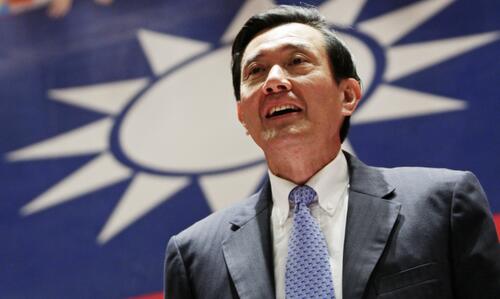
Ma Ying-jeou KMT

The eight-year presidency of Ma Ying-jeou (2008-2016) in Taiwan left a complex legacy of political achievements, confrontations, and disappointments that defies easy characterization. It began with President Ma and the Kuomintang’s (KMT) commanding electoral victories in the 2008 elections, and ended with the KMT’s overwhelming loss to the resurgent Democratic Progressive Party (DPP) and its leader Tsai Ing-wen in 2016.

It featured rapid conclusions to a broad set of agreements on cross-Strait cooperation with the People’s Republic of China (PRC). But worries about closer ties with the PRC also triggered a popular backlash against growing mainland Chinese influence in Taiwan’s economy and culminated in a student-led occupation of the Legislative Yuan.

It coincided with contradictory trends in public opinion, including both the consolidation of a separate Taiwanese identity and support for the status quo in cross-Strait relations, as well as the increasing salience of divisions over social and environmental issues such as same-sex marriage and green energy at the same time as rising concerns about economic inequality.

It also marked a return to unified government after the acrimonious partisan fights of the Chen Shui-bian years, but long-standing intra-KMT divisions and the decentralized organization of the legislature continued to frustrate the administration, especially in President Ma’s second term.        

Finally, the Ma era produced no consensus about how to move beyond Taiwan’s developmental state legacies. Plans for domestic economic liberalization and greater integration into the global economy were only partially carried out, and the Ma administration ignored or struggled to address rising inequality, stagnant wages, increasing economic dependence on the PRC market, and a skewed tax system favoring investors and corporations over salaried workers.


Conference Agenda

The 11th Annual Conference on Taiwan Democracy will bring together scholars from Taiwan, the US, and Europe to consider these political achievements, confrontations, and disappointments in depth, and to assess the strengths and weaknesses of Taiwan’s democracy at the end of the Ma Ying-jeou’s presidency. Conference participants will discuss trends in public opinion, party politics and elections, cross-Strait relations, governance and media, and the performance of political institutions. The conference papers will be revised and included in an edited volume covering democratic practice during the Ma Ying-jeou era in Taiwan.

The conference is free and open to the public. Those interested in attending are requested to RSVP at the link above. This event is organized by the Taiwan Democracy Project in the Center on Democracy, Development, and the Rule of Law.


Thursday, March 9

9:15-10:45. Panel I. Public Opinion and Elections

  • Min-hua Huang, "Why Young Voters Abandoned the KMT"
  • Ching-hsin Yu, "Trends in National Identity, Partisanship, and Attitudes toward Cross-Strait Relations"
  • Yun-han Chu, discussant

11:00-12:45. Panel II. Party Politics

  • Austin Wang, "Tsai Ing-wen and the DPP: The Path Out of the Political Wilderness"
  • Nathan Batto, "The KMT as a Presidentialized Party: Party Leaders and Shifts in China Discourse"
  • Kharis Templeman, "The Disruption that Wasn't: How 2016 Changed the Taiwanese Party System"
  • Ching-hsin Yu, discussant

12:45-1:45. Lunch

1:45-3:30. Panel III. Economics, Security, and Cross-Strait Relations

  • Szu-yin Ho, "Ma Ying-jeou's Cross-Strait Policy: Ambitions, Constraints, Results" 
  • Lang Kao, "Cross-Strait Agreements and Taiwan's Executive-Legislative Relationship, 2008-2016"
  • Dean Chen, "In the Shadow of Great Power Rivalry: The KMT Administration's Relations with America, China, and Japan, 2008-2016"
  • Larry Diamond, discussant


Friday, March 10

9:15-10:45. Panel IV. Governance, Media, and Civil Society

  • Eric Yu, "The Changing Media Environment and Public Opinion"
  • Yun-han Chu and Yu-tzung Chang, "The Challenge of Governability in Taiwan"
  • Kharis Templeman, discussant

11:00-12:30. Panel V. Political Institutions

  • Shih-hao Huang, w/ Shing-yuan Sheng, "Decentralized Legislative Organization and Its Consequences for Policy-making in the Ma Ying-jeou Era"
  • Christian Goebel, "Special Prosecutors, Courts, and Other Accountability Institutions under Ma YIng-jeou"
  • TJ Pempel, discussant

12:30-1:30. Lunch


Oksenberg Room, 3rd Floor, Encina Hall Central

CDDRL
Stanford University
Encina Hall, C147
616 Jane Stanford Way
Stanford, CA 94305-6055

(650) 724-6448 (650) 723-1928
0
Mosbacher Senior Fellow in Global Democracy at the Freeman Spogli Institute for International Studies
William L. Clayton Senior Fellow at the Hoover Institution
Professor, by courtesy, of Political Science and Sociology
diamond_encina_hall.png MA, PhD

Larry Diamond is the William L. Clayton Senior Fellow at the Hoover Institution, the Mosbacher Senior Fellow in Global Democracy at the Freeman Spogli Institute for International Studies (FSI), and a Bass University Fellow in Undergraduate Education at Stanford University. He is also professor by courtesy of Political Science and Sociology at Stanford, where he lectures and teaches courses on democracy (including an online course on EdX). At the Hoover Institution, he co-leads the Project on Taiwan in the Indo-Pacific Region and participates in the Project on the U.S., China, and the World. At FSI, he is among the core faculty of the Center on Democracy, Development and the Rule of Law, which he directed for six and a half years. He leads FSI’s Israel Studies Program and is a member of the Program on Arab Reform and Development. He also co-leads the Global Digital Policy Incubator, based at FSI’s Cyber Policy Center. He served for 32 years as founding co-editor of the Journal of Democracy.

Diamond’s research focuses on global trends affecting freedom and democracy and on U.S. and international policies to defend and advance democracy. His book, Ill Winds: Saving Democracy from Russian Rage, Chinese Ambition, and American Complacency, analyzes the challenges confronting liberal democracy in the United States and around the world at this potential “hinge in history,” and offers an agenda for strengthening and defending democracy at home and abroad.  A paperback edition with a new preface was released by Penguin in April 2020. His other books include: In Search of Democracy (2016), The Spirit of Democracy (2008), Developing Democracy: Toward Consolidation (1999), Promoting Democracy in the 1990s (1995), and Class, Ethnicity, and Democracy in Nigeria (1989). He has edited or coedited more than fifty books, including China’s Influence and American Interests (2019, with Orville Schell), Silicon Triangle: The United States, China, Taiwan the Global Semiconductor Security (2023, with James O. Ellis Jr. and Orville Schell), and The Troubling State of India’s Democracy (2024, with Sumit Ganguly and Dinsha Mistree).

During 2002–03, Diamond served as a consultant to the US Agency for International Development (USAID) and was a contributing author of its report, Foreign Aid in the National Interest. He has advised and lectured to universities and think tanks around the world, and to the World Bank, the United Nations, the State Department, and other organizations dealing with governance and development. During the first three months of 2004, Diamond served as a senior adviser on governance to the Coalition Provisional Authority in Baghdad. His 2005 book, Squandered Victory: The American Occupation and the Bungled Effort to Bring Democracy to Iraq, was one of the first books to critically analyze America's postwar engagement in Iraq.

Among Diamond’s other edited books are Democracy in Decline?; Democratization and Authoritarianism in the Arab WorldWill China Democratize?; and Liberation Technology: Social Media and the Struggle for Democracy, all edited with Marc F. Plattner; and Politics and Culture in Contemporary Iran, with Abbas Milani. With Juan J. Linz and Seymour Martin Lipset, he edited the series, Democracy in Developing Countries, which helped to shape a new generation of comparative study of democratic development.

Download full-resolution headshot; photo credit: Rod Searcey.

Former Director of the Center on Democracy, Development and the Rule of Law
Faculty Chair, Jan Koum Israel Studies Program
Date Label
Conferences
Authors
News Type
News
Date
Paragraphs

Stanford scholars are encouraging the new administration to consider steps to alleviate the uncertainty and anxiety felt by countries in East Asia about U.S. intentions toward the region.

President Donald Trump’s anti-China rhetoric during his campaign and his recent withdrawal of the U.S. from the Trans-Pacific Partnership have contributed to the unease in the region, which is drifting in ways that are unfavorable for American interests, they said.

Stanford’s Walter H. Shorenstein Asia-Pacific Research Center (APARC) recently published a 27-page report with recommendations on topics of trade and defense that would improve relations between the U.S. and Asian countries. The report, co-authored by eight Stanford scholars, is aimed to help shape U.S. policies in the region.

“The advent of any new administration provides an opportunity to reassess policy approaches,” wrote Gi-Wook Shin, director of the Shorenstein center. “A new mandate exists, and it is our hope that that mandate will be used wisely by the new administration.”

Trade and defense

The biggest trade concern for experts in the region is President Trump’s decision to withdraw the U.S. from the Trans-Pacific Partnership (TPP) and his intention to focus on bilateral agreements instead of multinational pacts.

The agreement, which bound 12 countries in the region by a set of international trade and investment rules, had problems, Stanford scholars said. For example, some have criticized the treaty for not requiring full compliance with international labor standards for all the participating countries. Also, the rules of origin, which were supposed to give preferential treatment to countries in the TPP, were deemed to be weak by many, allowing goods produced outside the TPP to receive benefits.

But it would not be wise or efficient for the U.S. to start negotiations from scratch in the region because the U.S. withdrawal from the agreement, which was touted as a model for the 21st century, already has hurt its credibility with other Asian countries, said Takeo Hoshi, director of the Japan Program at the Shorenstein Center. In addition, Asian countries view the idea of bilateral agreements as an attempt to force trade deals on them that disproportionately benefit the U.S., he said.

“The TPP was not perfect and many problems remain, but they are not removed by abandoning the TPP,” Hoshi wrote in the report. “Completely abandoning the TPP could hurt not only the U.S. economy but also erode U.S. leadership in Asia.”

Hoshi said the U.S. should rely on aspects of TPP that are consistent with the current U.S. trade policy when creating new bilateral agreements, while maintaining and improving existing free trade agreements with other Asian countries.

Another immediate concern for scholars is the maintenance of security and stability in the region.

“The region is unsettled because of uncertainty about us,” said Thomas Fingar, a Shorenstein APARC fellow. “The U.S. has long served as the guarantor of prosperity and security in the region but Asians are no longer convinced that we have the will or ability to do so. This has real consequences … It’s not simply because they are already beginning to act as if we intend to play a less active or positive role.”

If China’s national power and economy continue to expand, it will become increasingly difficult to maintain stability in the region if the U.S. does not continue to play a constructive role. Possible dangers include escalation of tensions between China and the U.S. or its allies following accidents or tactical encounters near areas over which China claims sovereignty.

In the report, scholars recommend a comprehensive review of security in the region to make sure military plans are in place that prioritize management of a possible collapse of North Korea or a sudden military strike coming from the country. Other priorities should include peaceful resolution of China-Taiwan differences and ensuring military access in the South China Sea and East China Sea, wrote Karl Eikenberry, director of the U.S.-Asia Security Initiative at the Shorenstein Center.

“The United States also should engage in a more long-range, exploratory strategic dialogue, first with allies and partners, and then with Beijing, to identify potential areas of mutual interest that can help prevent the unintended escalation of conflicts and reduce already dangerous levels of misperception and mistrust on both sides,” Eikenberry wrote.

China is key

Maintaining a peaceful, productive relationship with China should be of the utmost importance for the U.S., according to the Stanford scholars.

“Managing America’s multifaceted relationship with China is arguably the most consequential foreign policy challenge facing the new administration,” Fingar said.

Although President Trump’s anti-China rhetoric during his campaign made Asian countries anxious about the future, China has been criticized by many American leaders before. Ten previous U.S. presidents were critical of China during their campaigns, but once they assumed office, their tone changed and they adopted a more pragmatic view of U.S. interests in the area, Fingar wrote.

However, while in the past China’s political moves have been predictable for the most part, now that its economy is slowing, the country is increasingly relying on social control and nationalism to reinforce regime legitimacy. This makes China less predictable, according to Fingar.

But the scholars say that there are several opportunities to approach the relationship with China in a way that is beneficial for the U.S. and the rest of the region.

One such opportunity would be for the U.S. to declare its willingness to join China’s newly created Asian Infrastructure Investment Bank, which was formed in early 2016 to support construction projects in the Asia-Pacific region. This would be an “any outcome we win” opportunity that would showcase the U.S. desire to cooperate with China and help establish the region’s confidence in the U.S., Fingar said.

The new administration should also consider pushing for a quick completion of a Bilateral Investment Treaty with China – something that two previous U.S. administrations were not able to achieve. Creating this agreement would help protect things that are important to the U.S. businesses and reassure the willingness of the U.S. to deepen its relationship with China, according to Fingar.

“In my view, how we’re going to establish or reestablish relations with China is key,” Shin said. “Will there be more tension? That’s really important. This affects not only the U.S., but also our allies in the region.”

Alex Shashkevich is a writer for the Stanford News Service.

Hero Image
gettyimages southchinasea
Navy officers wait dockside as a Chinese Navy warship, escorting the arrival of the USS Curtis Wilbur, arrives at Qingdao port.
Getty Images - AFP/Frederic J. Brown
All News button
1
News Type
News
Date
Paragraphs

Scholars at Stanford's Shorenstein Asia-Pacific Research Center in the Freeman Spogli Institute for International Studies assess the strategic situation in East Asia to be unsettled, unstable, and drifting in ways unfavorable for American interests. These developments are worrisome to countries in the region, most of which want the United States to reduce uncertainty about American intentions by taking early and effective steps to clarify and solidify U.S. engagement. In the absence of such steps, they will seek to reduce uncertainty and protect their own interests in ways that reduce U.S. influence and ability to shape regional institutions. The recommendations summarized below, and elaborated in a 23-page report entitled “President Trump’s Asia Inbox,” suggest specific steps to achieve American economic and security interests.


» Key Recommendations

» Full Report with Preface from Director Gi-Wook Shin and Introduction by Amb. Michael H. Armacost

» About the Contributors

» Information for Press

» Press Coverage


Key Recommendations. 


Trade and Economic Relations

The dynamic economies of East Asian countries are increasingly integrated and interdependent. The United States is an important market and source of investment and technology, but this is no longer sufficient to ensure that future arrangements and rules will protect American interests. The region is moving toward more formal, rule-based arrangements and the United States must be an active shaper of those institutions.

Most in the region want the United States to play a leading role in the establishment and enforcement of free and fair international economic transactions, and want the rules and mechanisms governing trade to be multilateral ones. If we do not play such a role, China, and possibly others, will seek arrangements that disadvantage American firms.

  • The replacement for the Trans-Pacific Partnership (TPP) should build on what was achieved in those negotiations, especially those that would assure market access for U.S. firms and protect intellectual property rights, enforce labor standards, and ensure environmental protection. A single multilateral agreement would be best, but much could be achieved through interlocking and consistent bilateral agreements.
  • The administration should adopt policy measures to increase employability and create jobs for the Americans who have been disadvantaged by globalization.

Defense and Security

China’s military buildup and North Korea’s growing arsenal of missiles and nuclear weapons have fueled concerns about U.S. will and ability to honor its security commitments in the region. No one wants a regional arms race or tit-for-tat moves that increase the danger of accidental conflict or escalation, but many believe concrete steps are needed to check perceptions that the United States is becoming less willing to maintain the peace and stability that undergirds regional prosperity.

  • While reaffirming the need for a forward presence in the region, reconfigure it along the lines of an “active denial” strategy. “Active denial” means maintaining a forward presence in East Asia that is designed to deny an opponent the benefits of military aggression, especially the prospect of a quick victory. The first component of such a strategy is a resilient force posture, which can be achieved by exploiting the size and depth of the region to distribute units in more locations. The second component is an emphasis on planning to conduct military operations against an adversary’s offensive strike or maneuver forces, not targets deep inside an adversary’s homeland territory and not by carrying out preemptive strikes.
  • Strengthen U.S. military capabilities by developing and fielding stealthier air and maritime platforms, increase submarine and anti-submarine assets, and provide forward deployed forces with better active defenses, such as rail guns and lasers. At the same time, the United States should assist those neighbors of the PRC who feel threatened by Chinese assertiveness to develop asymmetric coercive capabilities that can put at risk forward-deployed PLA forces. The United States can use elements of such assistance programs as points of negotiating leverage in our attempts to limit militarization on both sides.
  • Continue to promote U.S.-China military relations, emphasizing accident avoidance and crisis management, sustained dialogues on national strategies and doctrines, and cooperative endeavors, such as training exercises and combined operations, where and when feasible and mutually beneficial.

China

People in the region worry about China’s actions and intentions but they worry more about the prospect of confrontation and conflict between the United States and the People’s Republic. They look to the United States as a counterbalance to China but fear that Washington will overreact or underreact to actions by Beijing, or take provocative actions that jeopardize their own interests. The U.S. should:

  • Respond to Chinese actions inimical to American interests in ways that protect our interests, achieve U.S. goals shared by others in the region, and avoid both the reality and the appearance of being “anti-China.”
  • Reaffirm American commitments to allies and partners including China and Taiwan.
  • Tighten enforcement of import restrictions on products produced by firms that have stolen intellectual property from U.S. companies.

Korean Peninsula

North Korea is threatening an ICBM test in 2017, possibly in the next few weeks or months. There is a political vacuum in South Korea, and Seoul is being pressured and punished by Beijing to reverse its decision to accept the deployment of a U.S. THAAD missile defense in South Korea. Under these circumstances, these are our priority recommendations for the administration

  • It should work to dissuade North Korea from an ICBM test. Publicly, the new administration should reaffirm that the U.S. would use military means against an ICBM that appeared to threaten the U.S. or one of our allies. Regular spring ROK-U.S. joint military exercises should be held, but calibrated and conducted to avoid giving Pyongyang extra pretext for a test. The Trump administration should appoint a senior envoy empowered to go to Pyongyang to convey openness to renewed diplomacy, while at the same time being clear about the consequences of an ICBM test. China will share this goal, and the new Trump administration should establish a dialogue with China on North Korea based on this shared interest rather than linked to other issues in the U.S.-China relationship, such as bilateral trade. The Trump administration should not negotiate the THAAD issue with Beijing but rather stick to the principle that this is a Seoul-Washington issue.
  • The U.S.-ROK relationship will need early and special attention in 2017. Secretary of Defense Mattis’ early visit to the ROK was a wise move. With names already announced for Beijing and Tokyo, a new American ambassador for Seoul should be nominated soon. Despite the political leadership vacuum in Seoul, the Trump administration should strive for the closest possible diplomatic, political, and military coordination on North Korea with our South Korean allies. Trade and burden-sharing issues should not be front-burner issues during South Korea’s political transition. U.S. neutrality in the South Korean election, along with demonstrated respect for South Korea’s democracy, will be carefully monitored, and is essential, as is strengthening U.S. contacts and outreach across the political spectrum in South Korea.

Japan

The Abe administration is the most stable government Japan has had for many years. The prime minister wants to work with Washington, is prepared to deepen defense cooperation with the United States and others in the region, and is eager to lock in the commitments and arrangements negotiated in the TPP. There is a real opportunity to secure access for U.S. firms greater than achieved by any previous administration.

  • Build upon arrangements negotiated in TPP to secure a U.S.-Japan free-trade agreement (FTA) that increases access for U.S. firms and locks in economic reforms initiated by the Abe government.
  • Propose annual head of state level trilateral cooperation summits with Japan and South Korea and seek greater trilateral cooperation, particularly in the area of security cooperation. Caution Tokyo against steps backward on historical reconciliation.

Southeast Asia and the South China Sea

Southeast Asia is most vulnerable to and concerned about China’s actions and intentions. Countries in the region want the United States to counterbalance and constrain China but worry equally that the United States is unreliable and unequal to the challenge of protecting their interests while preserving American interests vis-à-vis China. Unless given a better option, they will lean toward China for economic and security reasons.

  • The United States should anchor U.S. policy on the South China Sea (SCS) to an explicit commitment that no single country—not the US, not China, nor anyone else—should seek or enjoy a monopoly of ownership and control over that body of water. To underscore that commitment, the United States should execute freedom of navigation operations (FONOPs) in waters between and around the Spratly islands. These and other operations in the SCS should be conducted in conformity with the authoritative ruling on the status of its waters and land features issued in 2016 by the arbitral court convened for that purpose under the UN Convention on the Law of the Sea.
  • The United States should also try, in concert with its allies and partners, to bring the SCS under international protection and management by a combination of claimant and user states, including the United States and China, based on international law. The Southeast Asia Maritime Security Initiative should be enlarged and upgraded to serve this purpose. If China declines to join, a chair at the table should remain empty should Beijing change its mind.

The U.S. should remain engaged with the process of regional and trans-Pacific institution building, including but not limited to the Association of Southeast Asian Nations (ASEAN) annual meetings, the East Asian Summit, and the Asia Pacific Economic Cooperation (APEC) forum, which will be hosted by Vietnam in 2017.


Full Report with Preface from Gi-Wook Shin and Introduction by Amb. Michael H. Armacost.


The policy recommendations published above are a summary included in the beginning of a 23-page report entitled “President Trump’s Asia Inbox.” You may view the full report here.


About the Contributors

Michael H. Armacost is a Shorenstein APARC Fellow and former U.S. ambassador to Japan and the Philippines.

Karl Eikenberry is the Oksenberg-Rohlen Fellow at Shorenstein APARC; director of the U.S.-Asia Security Initiative; former U.S. ambassador to Afghanistan, and Lieutenant General (Ret.), U.S. Army.

Donald K. Emmerson is a senior fellow emeritus at FSI; director of the Southeast Asia Program at Shorenstein APARC; and affiliated with FSI’s Abbasi Program in Islamic Studies.

Thomas Fingar is a Shorenstein APARC Fellow and has served as former first deputy director of national intelligence for analysis and chairman of the National Intelligence Council, among other positions.

Takeo Hoshi is the Henri H. and Tomoye Takahashi Senior Fellow in Japanese Studies and director of the Japan Program.

Gi-Wook Shin is the director of the Walter H. Shorenstein Asia-Pacific Research Center; senior fellow at the Freeman Spogli Institute for International Studies; director of the Korea Program; and the Tong Yang, Korea Foundation, and Korea Stanford Alumni Chair of Korean Studies, all at Stanford.

Daniel C. Sneider is the associate director for research at Shorenstein APARC, co-director of the Divided Memories and Reconciliation project and a former foreign correspondent.

Kathleen Stephens is the William J. Perry Fellow in the Korea Program at Shorenstein APARC and former U.S. ambassador to the Republic of Korea.


Information for Press.


The contributors are open to comment, interview and provide background information on the contents of the report, “President Trump’s Asia Inbox.” To inquire about availability, please contact Lisa Griswold, Shorenstein APARC Communications and Outreach Coordinator, at lisagris@stanford.edu or (650) 736-0656.


Related Press Coverage


Stanford report offers policy insights for the Trump administration, Caixin Media (in Chinese), Feb. 13, 2017

"Trump, do not bring up KORUS FTA and US forces cost-sharing until S. Korea's next presidential election," Yonhap News and various other outlets (in Korean), Feb. 13, 2017

China looks to US to resolve N. Korea nuclear issue, The Straits Times (in English), Feb. 15, 2017

Stanford experts offer policy proposals, insights on US-Asia relations, Stanford News Service (in English), Feb. 15, 2017

Unsettled, unstable and drifting: Today's US-East Asia relationship, Medium (in English), Feb. 16, 2017

Why Japan will also be "convenient" for the Trump administration, Tokyo Business Today (in Japanese), Feb. 18, 2017

Study: Managing China relationship most consequential to US, China Daily USA (in English), Feb. 21, 2017

How the Trump administration should address China, Tokyo Business Today (in Japanese), Feb. 23, 2017

Fears of Trump giving China free reign in Asia misplaced, Asia Times (in English), Feb. 24, 2017



Hero Image
white house night gettyimages
The White House at dusk.
Mandel Ngan/AFP/Getty Images
All News button
1
-

Abstract

Dr. Tien will reflect on security and economic trends in the Asia-Pacific region, and speak about Taiwan's foreign policy strategy in light of these trends. 

Bio

Dr. Hung-mao Tien received his Ph.D. in Political Science from the University of Wisconsin-Madison. Since September 2016, he has been the the chairman of the Straits Exchange Foundation, the semi-official body in Taiwan responsible for direct exchanges and dialogue with the People's Republic of China. He is also the president and board chairman of the Institute for National Policy Research in Taipei, as well as an advisor to the Carnegie Endowment for International Peace, and board member of several foundations and business corporations in Taiwan. He previously served as Minister of Foreign Affairs, ROC (Taiwan), Representative (ambassador) to the United Kingdom, and presidential advisor to former President Lee Teng-hui.  He has also served in an advisory capacity to Harvard University’s Asia Center, The Asia Society in New York, and the Brookings Institution in Washington, D.C.  Dr. Tien has taught in universities in both the US and Taiwan as professor of political science.  His numerous publications in English (author, editor and co-editor) include: Government and Politics in Kuomintang China 1927-37 (Stanford University Press); The Great Transition: Social and Political Change in the Republic of China (Stanford: Hoover Institution Press); and Democratization in Taiwan, Implications for China (St. Anthony’s Series, Oxford University), Consolidating the Third Wave Democracies, Themes and Perspectives (Baltimore and London: The Johns Hopkins University Press), China Under Jiang Zemin (Rienner), and The Security Environment in the Asia-Pacific (M.E. Sharpe).

Philippines Conference Room

3rd Floor, Encina Hall

Hung-mao Tien President Institute for National Policy Research
Lectures
-

Co-sponsored by the Taiwan Democracy Project at the Center on Democracy, Development, and the Rule of Law, and the China Program at the Shorenstein Asia-Pacific Research Center (APARC)


Abstract

As President Trump assumes office, it is timely to consider the state of US-People's Republic of China (PRC)-Taiwan relations and how they might evolve in the coming years. Uncertainty regarding US-PRC-Taiwan relations is running high—it is far greater than eight years ago when Barack Obama assumed office. Trump’s phone call with Taiwan’s President Tsai Ing-wen shortly after winning the election and his subsequent suggestion that Taiwan could be used as a bargaining chip to extract trade concessions from China have alarmed Beijing and created anxiety in Taipei. In Washington, Trump’s actions and statements have fueled policy debates about whether to abandon the “one China” policy which has been a mainstay of US policy for 37 years.  How the Trump administration will adjust relations with Beijing and Taipei is unknown. In the months ahead, a new dynamic may be created in the US-PRC-Taiwan triangular relationship in which the source of instability is neither China nor Taiwan, but rather is the United States. 


Biography

Bonnie S. Glaser is a senior adviser for Asia and the director of the China Power Project at CSIS, where she works on issues related to Chinese foreign and security policy. She is concomitantly a non-resident fellow with the Lowy Institute in Sydney, a senior associate with CSIS Pacific Forum and a consultant for the U.S. government on East Asia. From 2008 – mid-2015 Ms. Glaser was a Senior Adviser with the Freeman Chair in China Studies, and from 2003 to 2008, she was a senior associate in the CSIS International Security Program. Prior to joining CSIS, she served as a consultant for various U.S. government offices, including the Departments of Defense and State.

Ms. Glaser has written extensively on various aspects of Chinese foreign policy, including Sino-U.S. relations, U.S.-China military ties, cross-Strait relations, China’s relations with Japan and Korea, and Chinese perspectives on missile defense and multilateral security in Asia. Her writings have been published in the Washington Quarterly, China Quarterly, Asian Survey, International Security, Problems of Communism, Contemporary Southeast Asia, American Foreign Policy Interests, Far Eastern Economic Review, Korean Journal of Defense Analysis, New York Times, and International Herald Tribune, as well as various edited volumes on Asian security. Ms. Glaser is a regular contributor to the Pacific Forum quarterly Web journal Comparative Connections. She is currently a board member of the U.S. Committee of the Council for Security Cooperation in the Asia Pacific, and a member of both the Council on Foreign Relations and the Institute of International Strategic Studies. She served as a member of the Defense Department’s Defense Policy Board China Panel in 1997. Ms. Glaser received her B.A. in political science from Boston University and her M.A. with concentrations in international economics and Chinese studies from the Johns Hopkins School of Advanced International Studies.


Philippines Conference Room

Encina Hall, 3rd Floor

Bonnie Glaser Director of the China Power Project and Senior Advisor for Asia Center for Strategic and International Studies
Lectures
News Type
News
Date
Paragraphs

The U.S.-Asia Security Initiative at Stanford’s Shorenstein Asia-Pacific Research Center, in collaboration with the Japan Center for International Exchange, has published a report highlighting the findings from its Inaugural U.S.-Japan Security Workshop, a Track 1.5 dialogue in Tokyo that convened government and military officials from the United States and Japan, as well as scholars and regional experts, in May 2016.

The report, titled “Japan’s Evolving Defense Policy and U.S.-Japan Security Cooperation: Expectations versus Reality,” examines recent changes in Japan’s defense policy and the implications of these revisions on the U.S.-Japan alliance and regional security.

Sections of the report include:

  • American and Japanese Perspectives on the Security Trends in Asia
  • The Impact of the New Security Policy on U.S.-Japan Security Cooperation Efforts
  • Defense Cooperation and Weapons Development & Acquisition
  • Conclusions—Facing the Policy and Operational Challenges Head-On

Rising tensions in Asia underscore a need for expanded security cooperation. The report is offered as a tool to American and Japanese policy researchers and practitioners who seek to study and address the evolving security environment and what the future holds for the alliance.

The report may viewed by clicking here.

Hero Image
us japan selfdefenseforce flickr us pacific fleet
The Japan Maritime Self-Defense Force destroyer JS Takanami (front) sails alongside the guided-missile destroyer USS McCampbell during a March 2014 tactical training event between the two ships.
Flickr/U.S. Pacific Fleet - Chris Cavagnaro
All News button
1
Subscribe to Taiwan