


From Colony to Superpower: U.S. Foreign Relations Since 1776
-
About the speaker
George C. Herring is Alumni Professor of History, Emeritus at the University of Kentucky. A leading authority on U.S. foreign relations, he is the former editor of Diplomatic History and a past president of the Society for Historians of American Foreign Relations. He is the author of America's Longest War: The United States and Vietnam, 1950-1975, among other books.
Dr. Herring’s From Colony to Superpower: U.S. Foreign Relations Since 1776 is the twelfth and latest book in the Oxford History of the United States, and the first book in the series to focus on a single subject, U.S. foreign policy.
Dr. Herring earned a PhD in history from the University of Virginia, and has been a Visiting Fulbright Scholar at the University of Otago in New Zealand.
About the moderator
David M. Kennedy is the Donald J. McLachlan Professor of History at Stanford University, a senior fellow at the Woods Institute for the Environment, and co-director of The Bill Lane Center for the Study of the North American West. Professor Kennedy is the winner of the 2000 Pulitzer Prize for his book, Freedom from Fear: The American People in Depression and War. Reflecting his interdisciplinary training in American Studies, which combined the fields of history, literature, and economics, Kennedy's scholarship is notable for its integration of economic and cultural analysis with social and political history. His 1970 book, Birth Control in America: The Career of Margaret Sanger, embraced the medical, legal, political, and religious dimensions of the subject and helped to pioneer the emerging field of women's history. One of his later books, Over Here: The First World War and American Society (1980), used the history of American involvement in World War I to analyze the American political system, economy, and culture in the early twentieth century. He is a graduate of Stanford University (BA, history) and Yale University (MA, PhD, American Studies).
About From Colony to Superpower: U.S. Foreign Relations Since 1776:
Image

From the American Revolution to the fifty-year struggle with communism and conflicts in Afghanistan and Iraq, From Colony to Superpower: U.S. Foreign Relations since 1776 tells the dramatic story of America’s emergence as a superpower—its birth in revolution, its troubled present, its uncertain future.
» Buy it from Oxford University Press: "From Colony to Superpower: U.S. Foreign Relations Since 1776" (Oxford University Press, 2008)
The Oxford History of the United States is the most respected multi-volume history of our nation in print. The series includes three Pulitzer Prize winners, a New York Times bestseller, and winner of prestigious Bancroft and Parkman prizes. From Colony to Superpower is the only thematic volume commissioned for the series. Here, George C. Herring uses foreign relations as the lens through which to tell the story of America’s dramatic rise from thirteen disparate colonies huddled along the Atlantic coast to the world’s greatest superpower.
Quotes in praise of From Colony to Superpower: U.S. Foreign Relations Since 1776:
“George Herring’s well-paced, readable, and up-to-date history of U.S. foreign relations will be the authoritative account for this generation.”
- Emily S. Rosenberg, University of California, Irvine
“In this splendidly detailed account, George Herring expertly guides us through the rich and fascinating story of America’s foreign relations. This is history on a grand scale, clearly and elegantly rendered. Anyone who wants to understand how the Untied States has come to occupy its current place on the world stage should read this magisterial book."
- Fredrik Logevall, co-author of A People and a Nation
Bechtel Conference Center
George C. Herring
Alumni Professor of History, Emeritus, University of Kentucky
Keynote Speaker
David M. Kennedy
Donald J. McLachlan Professor of History, Emeritus; Senior Fellow, Woods Institute for the Environment; and Co-Director, The Bill Lane Center for the Study of the North American West
Moderator
Lectures
Korea and the Next American Presidency
-
In addition to Iraq, Afghanistan, Pakistan, the financial crisis, and the housing crisis (as if that were not enough!), the next American president will have his hands full with matters on the Korean peninsula. What will be the future of Six Party talks? What is the status of the leadership in Pyongyang? How do changes in leadership in Washington (and potentially in Pyongyang) affect outcomes? What are the prospects for US-ROK relations? And what of the KORUS FTA? Victor Cha, former director of Asian affairs at the White House, will lead a discussion on these issues.
Professor Cha is director of Asian Studies and holds the D.S. Song Chair in the Department of Government and School of Foreign Service at Georgetown University. He left the White House in May 2007 after serving since 2004 as Director for Asian Affairs at the National Security Council. At the White House, he was responsible primarily for Japan, the Korean peninsula, Australia/New Zealand and Pacific Island nation affairs. Dr. Cha was also the Deputy Head of Delegation for the United States at the Six Party Talks in Beijing, and received two Outstanding Service commendations during his tenure at the NSC.
He is the award-winning author of Alignment Despite Antagonism: The United States-Korea-Japan Security Triangle (Stanford University Press) (winner of the 2000 Ohira Book Prize) and co-author of Nuclear North Korea: A Debate on Engagement Strategies (Columbia University Press, 2004). He has written articles on international relations and East Asia in journals including Foreign Affairs, International Security, Political Science Quarterly, Survival, International Studies Quarterly, and Asian Survey. Professor Cha is a former John M. Olin National Security Fellow at Harvard University, two-time Fulbright Scholar, and Hoover National Fellow, CISAC Fellow, and William J. Perry Fellow at Stanford University.
Image
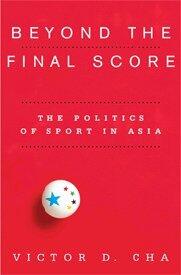
His new book Beyond the Final Score: The Politics of Sport in Asia (Columbia University Press, 2008) looks at the politics of sports and the Beijing Olympics. Cha holds a BA and Ph.D. from Columbia University, MA from University of Oxford.
This event is sponsored by the Pantech Group in Korea.
Philippines Conference Room
Victor D. Cha
Director of Asian Studies
Speaker
Georgetown University
Seminars
Book Review: The Gunslinger
News Type
Commentary
Date
Paragraphs
FSI senior fellow Stephen Stedman reviews John Bolton's book, Surrender Is not an Option, in the July/August issue of the Boston Review. "The memoir reads like an international relations primer done in the style of a modern morality tale," he writes. "Imagine Kenneth Waltz's classic Man, the State, and War as written by Ayn Rand."
One of the more remarkable underreported stories of 2008 was a speech in which the State department’s legal adviser John Bellinger admitted that there “are also realities about the International Criminal Court that the United States must accept.” He also stated that the Bush administration would work with the Court to maximize its chances of success in Darfur. Bellinger did not say that the United States might actually join the Court, but acknowledged that it enjoyed widespread international support and legitimacy, and that the United States could fruitfully cooperate with it on areas of mutual benefit.
Neither mea culpa nor volte-face, the speech nonetheless indicates the distance the administration has traveled in seven years. While Bellinger’s oratory went largely unnoticed by foreign policy wonks and the attentive public alike, it did not escape the scrutiny of John Bolton, who dismissed it as Clinton-era “pabulum” and reflective of “the yearning the Rice State Department has for acceptance” by academics and foreign intellectuals. He added ominously, “the fight resumes after Jan. 20.”
Bolton has been a powerful influence on Republican foreign policy for the last twenty years. Before his appointment as ambassador to the United Nations in 2005—which was achieved without Senate confirmation—Bolton dominated arms-control policy in the first Bush term. He killed the Anti-Ballistic Missile (ABM) Treaty, negotiations with North Korea, and the Biological Weapons Convention verification protocol. During the Clinton years, he campaigned tirelessly from his Heritage Foundation perch for missile defense and against global governance, which he seems to equate with global government. In 1998, when then-Secretary-General of the United Nations Kofi Annan released a report critical of both the United Nations secretariat and member states for the failure to prevent genocide in Srebrenica, Bolton chastized Annan for having the temerity to criticize governments for what they did or did not do in the former Yugoslavia. He added menacingly: “I think if he continues down this road, ultimately it means war, at least with the Republican Party.”
Bolton came of age politically during Barry Goldwater’s presidential campaign. The future policy heavyweight was a high schooler in Baltimore at the time. He honed his conservatism at Yale College and Yale Law School, ducked Vietnam through a National Guard posting (“looking back, I am not terribly proud of this calculation”), and got his first taste of Washington as an intern to Spiro Agnew. During the Bush Sr. presidency, Bolton was Assistant Secretary for International Organization Affairs in James Baker’s State Department, and was one of the first people who Baker called when he needed a posse of chad-disputing lawyers in Florida in November 2000. Bolton’s name keeps showing up in various articles about the fight inside the Republican Party for the soul of John McCain’s foreign policy.
All of this makes it imperative to read his memoirs, which clarify the stakes in the forthcoming election. Although it is hard to imagine Bolton in a McCain administration—his memoirs offend so many within his party, across the aisle, and overseas, that Bolton could not win Senate confirmation for capitol dog-catcher—Bolton will be plotting, pressing, and pushing to force McCain’s foreign policy back to the unilateralism of George Bush’s first term, when the war on terror meant never having to say you’re sorry. And there are important national security posts that do not require Senate approval.
The memoir reads like an international relations primer done in the style of a modern morality tale—imagine Kenneth Waltz's classic Man, the State, and War as written by Ayn Rand.
To Bolton, the United Nations is a “target rich environment,” and I had a front row seat to watch his gunslinging. In 2005 I served as Special Adviser to UN Secretary-General Kofi Annan. I was responsible for developing member-state support for his efforts to overhaul the United Nations. In that capacity, I was in Brussels in March 2005 when President Bush nominated Bolton as Ambassador to the United Nations. One high-ranking EU official recoiled in horror, and, to share his agita, repeated two of Bolton’s more famous lines: that “UN headquarters could lose ten floors and no one would know the difference,” and that “there was no United Nations.” How in the world, the official asked, could such a man be Ambassador to the United Nations?
Amidst nodding heads and shared pained looks, I offered that if I could pick the ten floors, I would agree with Bolton. Moreover, I said, any sentient being who spends time in Turtle Bay—the Manhattan site of the United Nations—will at some point in frustration say to themselves that there is no United Nations. Bolton’s sin was to say it publicly. Finally, I suggested that John Bolton was irrelevant: “If the President of the United States and the Secretary of State want a strong, effective United Nations, then Bolton will have to deliver. If they don’t, you could have John Kerry as the U.S. ambassador, and nothing will happen.”
Oh well; win some, lose some. Which is what Condoleeza Rice is rumored to have told a friend who asked how John Bolton could have possibly been nominated for the position under her watch.
Or more accurately, I was half right, half wrong. Reading this book, one can almost feel sorry for how unsuited Bolton was for his new job. For four years he had been the point man for breaking American commitments abroad, insulting allies and enemies alike, ditching the ABM Treaty, and unsigning the Rome Statute, which established the International Criminal Court (“my happiest moment at State”). In the heady days of the first Bush administration, when it believed the United States was so powerful it could get anything that it wanted without friends, partners, or institutions, Bolton was the “say no” guy, a job he performed with great brio. How could he know that in 2005 his big boss, the President, and his nominal boss, the Secretary of State, would actually decide that international cooperation was necessary, and that maybe we should start worrying about America’s free fall in world opinion? A pit bull in the first term, Bolton would be a yap dog in the second, grating on the Secretary of State, the President, and most American allies.
Almost sorry, for whatever else you say about John Bolton, he is not of the “we can disagree without being disagreeable” school of American politics. This is one of the nastiest, pettiest memoirs in the annals of American diplomatic history. Among the many targets of insults and catty remarks are former and present U.K. ambassadors to the United Nations Emyr Jones Parry, Adam Thomson (“I could never look at or listen to Thomson without immediately thinking of Harry [Potter] and all his little friends”), and John Sawers; recent U.K. foreign ministers; just about every UN civil servant mentioned; indeed, just about every U.S. civil servant mentioned, along with countless journalists and politicians.
The memoir reads like an international relations primer done in the style of a modern morality tale—imagine Kenneth Waltz’s classic Man, the State, and War as written by Ayn Rand. Bolton, usually singlehandedly, takes on what he calls the High Minded, the Normers (those who create international norms of behavior or try to “[whip] the United States into line with leftist views of the way the world should look”), the EAPeasers (career State Department officials who advocate negotiations with North Korea), the Risen Bureaucracy, the Crusaders of Compromise, the Arms Control True Believers, and the EUroids.
The book has the formulaic allegories typical of the genre—the young, innocent female (Kristen Silverberg, Assistant Secretary for International Organization Affairs) driven to tears after being berated by the cold-hearted career bureaucrat (Nicholas Burns); the noble knight (Bolton himself) fighting against the political higher ups who care only about “positioning themselves” (Rice) or their legacy (Colin Powell). And of course Bolton’s plaintive cries that the 2005-06 changes in administration policy occurred against the will of the President. One sees the peasants now: ‘If only the King knew what was happening, this would never go on.’
Now add a heaping dose of xenophobia. Foreigners, appeasing foreigners, foreigners claiming to know us better than we know ourselves: all loom large in Bolton’s memoirs. He insults the former Swedish foreign minister and President of the General Assembly Jan Eliasson as not only having “an ethereal Hammarskjöldian vision problem, but also a Gunnar Myrdal problem, yet another foreigner who ‘understood’ us better than we did ourselves.” (This is the Myrdal who shared the 1974 Nobel Prize in Economics with Friedrich Hayek, and whose classic book on race, An American Dilemma: The Negro Problem and Modern Democracy, was cited in Brown v. Board of Education.) At one point in his belittlement of a Bush political appointee, a special assistant to Condoleeza Rice, no less, Bolton adds that she was “a naturalized citizen originally from Pakistan,” in case we wondered why she could not possibly understand America’s real foreign policy interests. In Bolton’s worldview Zbigniew Brzezinski is probably a naturalized American citizen originally from Poland; Henry Kissinger, a naturalized American citizen originally from Germany.
In the Bolton universe, you want Iran and North Korea to be referred to the Security Council, so that when it fails to unite behind a resolute strategy, the United States is then free to take the tough action it needs to take. And in the case of North Korea, Bolton is clear about what that would be: “unilateralist, interventionist, and preemptive.” Is it any wonder that when it came to Iran and North Korea, our allies and adversaries were loathe to refer them anywhere near Bolton?
Richard Hofstadter’s 1964 article “The Paranoid Style in American Politics” was prompted by the supporters of the Goldwater campaign. Bolton strides right off the pages of Hofstadter’s essay:
He is always manning the barricades of civilization . . . he does not see social conflict as something to be mediated and compromised, in the manner of the working politician. Since what is at stake is always a conflict between absolute good and absolute evil, what is necessary is not compromise but the will to fight things out to a finish. Since the enemy is thought of as being totally evil and totally unappeasable, he must be totally eliminated—if not from the world, at least from the theatre of operations to which the paranoid directs his attention. This demand for total triumph leads to the formulation of hopelessly unrealistic goals, and since these goals are not even remotely attainable, failure constantly heightens the paranoid’s sense of frustration. Even partial success leaves him with the same feeling of powerlessness with which he began, and this in turn only strengthens his awareness of the vast and terrifying quality of the enemy he opposes.
According to Bolton, we do not need diplomats who negotiate, seek common ground, and strive for cooperative solutions. We need litigators who will go to the wall defending American interests, who will understand that when others say no, they mean no, and that therefore compromise is illusion. But in a world where the United States needs international cooperation for its own peace and prosperity, what comes next? Bolton’s answers are laughable—we stick with our “closest friends in the United Nations”—Israel, Palau and the Marshall Islands. Or we forge a new alliance with Japan, South Korea, Australia, Canada, and New Zealand to overcome the parasitic and paralytic EU. The road to global primacy runs through . . . Wellington?
There are, of course, some glaring contradictions in the memoirs. Bolton is known as a sovereignty hawk and he spells out the content of that doctrine as “greater independence and fewer unnecessary restraints.” The job of civil servants, politically appointed or career, is “to implement the president’s policies.” So it comes as a double shock when we find Bolton handing a draft Security Council resolution to the Israeli ambassador, in case the ambassador wants to ask his Prime Minister to appeal directly to Bush or Rice to change President Bush’s policy on Lebanon.
Another example concerns Bolton’s recurring beratement of UN officials for forgetting that they work for the member states. He then describes how one Under-Secretary-General, American appointee Christopher Burnham, surreptitiously showed him budget documents that put the United States at an advantage in budget negotiations. It is hard to see how you can have it both ways. Either UN officials serve all member states equally or the organization is up for grabs to the most powerful state.
But it is the big betrayal that is at the heart of the book. Facing a quagmire in Iraq, a faltering coalition in Afghanistan, a nuclear armed North Korea, the possibility of a nuclear Iran, and a war against terror that was creating more, not fewer, terrorists, Condoleeza Rice convinced President Bush that maybe they should stop digging a bigger hole for American foreign policy. And that meant actually trying diplomacy in North Korea, Iran, and the Middle East.
The losers were John Bolton and his acolytes; the winners were the professionals like Nicholas Burns and Christopher Hill. Faced with defeat and repudiation of the failed policies he advocated, Bolton’s response is familiar and tiresome: the professionals had secretly hijacked the president’s policy; the Secretary of State cares more about appeasing foreigners than protecting American interests.
The moment of reckoning for Bolton and for the President that nominated him is not described in the book, but it took place two months after Bolton left the administration. When the United States and North Korea reached a deal in February 2007 that holds the promise of denuclearizing the country, Bolton tried to scuttle it. Asked by reporters whether he was loyal to the President, Bolton answered, “I’m loyal to the original policy.”
What did Bolton achieve at the United Nations? Very little, which was fine by him and fine by the cast of nonaligned Ambassadors who oppose a more effective international organization. I asked one of them in December 2006 if he was happy that Bolton was leaving. He said, “No, we’ve learned how to deal with Mr. Bolton.” When I sought clarification, he said, “Look, Bolton comes in and asks for the sun, the moon, and the stars, and we say ‘no.’ He then says, ‘I told you so’ and leaves. Everybody is happy.”
Which returns us to the question of why anyone would want to wade through these 500 self-serving pages. The best answer: to remind yourself of the stakes of this upcoming election and why the United States needs more old-fashioned diplomacy and less paranoia and arrogance. A McCain presidency might not eschew diplomacy, but in the political free-for-all that is the Republican party, Bolton and his minions are always there, ready to denigrate any agreement or compromise, to sabotage and subvert real diplomacy.
Asked by reporters whether he was loyal to the President, Bolton answered, "I'm loyal to the original policy."
To understand the stakes, consider the little known and even less appreciated record of American negotiations with North Korea since 1994. Between what was called the “Agreed Framework” that brought North Korea back into the Nonproliferation Treaty (NPT) in 1994 and the end of 2000, the United States and North Korea reached twenty agreements on a wide array of issues. Certain of these agreements foundered in implementation, but an objective assessment shows that some of the noncompliance stemmed from constraints placed by American domestic politics.
The Bolton strategy killed the Agreed Framework, hoping through threats, sanctions, and use of force to end the North Korean regime. Unfortunately for Bolton—fortunately for the rest of us—our ally South Korea and our necessary partner China did not want to deal with the consequences: either a war or a collapsed, deadly state on their borders. In the end, they did not have to because North Korea left the NPT, developed a nuclear bomb, and tested it, bankrupting the Bolton policy and producing the sharp change of strategy that has born fruit in recent North Korean steps to end its nuclear program.
Writing about the successes of American negotiators in bringing North Korea and the United States back together in February 2007, former State Department negotiator Robert Carlin and Stanford Professor Emeritus John Lewis have described why Bolton and his crowd loathe diplomacy is loathed by Bolton and his crowd, and why it is so necessary:
Diplomats strive to put down words all of them can swallow and hopefully their superiors in [the] capital can stomach. Written agreements are difficult to reach. The pain often comes not so much in dealing with the other side but in dealing with your own. Unless you are dictating terms to a defeated enemy, you are going to have to compromise on something, probably several somethings, that will make many people unhappy. That was done for the February 13th agreement, and there is no shame to it.
John Bolton did much damage to American interests in the first Bush administration, but he was implementing the president’s policy. President Bush deserves the blame for putting Bolton in a position to continue hardming American interests even when the overall direction of policy changed.
Given that many countries treated the United States as radioactive in 2005; given that trust and confidence in the United States were at all time lows; given that our record was one of a violator of international law and human rights; President Bush, had he truly wanted to start to move the United States out of the hole he had been so assiduously digging, would have had to send to the United Nations an ambassador with extraordinary listening skills, who could work across various international chasms, rebuild respect for American diplomacy, and, yes, advocate agreements that would make a lot of people unhappy. Someone, in fact, a lot like our present Ambassador, Zalmay Khalilzad, a naturalized citizen originally from Afghanistan. Instead he sent . . . Yosemite Sam.
So back to January 20. A new American president will take office with grinding wars in Iraq and Afghanistan, a nuclear-armed North Korea, an Iran headed that way, and crises in Sudan, Israel and Palestine, Lebanon, and Pakistan. Our foreign policy is anathema; our reputation in tatters. Throw in big issues like global warming, non-proliferation, catastrophic terrorism, and a potential pandemic of a deadly new influenza. It is hard to see how any of these crises or issues can be solved without sustained international cooperation and strong international institutions. Take global warming: protecting Americans from its ravages will depend on exercising sovereignty to strike deals with other countries whose domestic behavior threatens us and whose security our domestic behavior threatens. A narrow view of sovereignty as the ability to do as we damned well please will be—quite literally—the death of us all.
Image

by John Bolton. Threshold Editions, $27.00 (hardcover)
All News button
1
Sam Shrank
P.O. Box 11570
Stanford CA, 94309
0
shrank@stanford.edu
Sam Shrank is an M.S. candidate in Civil and Environmental Engineering and B.A. candidate in Economics at Stanford University. His research interests include distributed generation in the developing world, transportation policy, and the politics of energy within the United States. He recently completed his senior honors thesis analyzing the potential for solar water heating in New Zealand’s tourism industry.
The European Union - entering the big league?
-
The European Union has been described as "an economic giant but a political pygmy". Will its new Reform Treaty, currently being ratified by the member states, enable it to play a more powerful role in world affairs?
Dick Leonard wrote the best-selling book, The Economist Guide to the European Union (9 editions, translated into nine languages), widely recognised as the most authoritative guide to the EU. A former British Member of Parliament, he has been covering the European Union as a Brussels-based journalist for over 25 years.
A former Assistant Editor of The Economist, he has also worked for the BBC and The Observer and has contributed to leading newspapers in the United States, Canada, Australia, India, Japan and New Zealand, as well as the Brussels-based publications, European Voice and The Bulletin. He was for many years a contributing editor of the Washington-based magazine, Europe.
Apart from his work as a journalist, he has been a Professor at Brussels University (ULB), a senior consultant to the Centre for European Policy Studies (CEPS), the well-known think tank, and European Advisor to the British publishing industry.
A long-term campaigner for British membership of the European Union, he was one of the minority of Labour MPs who voted in favour of British entry in 1971, despite the opposition of his party. During his time as an MP, he served as Parliamentary Private Secretary to Anthony Crosland, who was later Foreign Secretary.
Dick Leonard is the author or part-author of some 20 books, including Eminent Europeans, How to Win the Euro Referendum, Elections in Britain (five editions) and The Pro-European Reader, which he co-edited with his son, Mark Leonard. The ninth edition of his book, The Economist Guide to the European Union, published in 2005, has been widely and enthusiastically reviewed. Since then he has published the highly praised A Century of Premiers: Salisbury to Blair, to be followed by 19th British Century Premiers: Pitt to Rosebery, which will appear in May 2008.
A highly experienced broadcaster and public speaker, he has made five successful lecture tours in the United States and Canada, as well as lecturing regularly in London, Brussels and other European cities.
Richard and Rhoda Goldman Conference Room
Dick Leonard
Journalist and author
Speaker
Seminars
January 2008 Dispatch - South Korea's New President: An Opportunity for Closer Ties with the United States
News Type
News
Date
Paragraphs
We are pleased to bring you the first dispatch of the new year in our series of Shorenstein APARC Dispatches. This month's piece comes from David Straub, this year's Pantech Fellow. Straub served thirty years in the U.S. Department of State, specializing in Northeast Asian affairs, including as the Department's director of Korean and of Japanese affairs. Since leaving the State Department last year, he has taught U.S.-Korean relations at Johns Hopkins School of Advanced International Studies and Seoul National University's Graduate School of International Studies. At Shorenstein APARC, he is writing a book on U.S.-South Korean relations.
In December 2007, for the first time ever, South Koreans, anxious about the economy, elected a businessman as their president. Pro-growth conservative Lee Myung-bak won a resounding victory, with 49 percent of the vote, over left-center candidate Chung Dong-young, who won only 26 percent. Lee's margin would have been even greater had it not been for the late entry into the race by another conservative, Lee Hoi-chang, who finished third with 15 percent.
Korean voters had become tired of ten years of rule by the left-center, and they saw incumbent President Roh Moo-hyun as confrontational and ineffective. By contrast, Lee, a former Hyundai Engineering and Construction CEO, has a reputation for being a pragmatic, can-do leader. As mayor of Seoul (2002-2006), he beautified the city and reformed its mass transit system.
Lee is scheduled to be inaugurated on February 25 for a single five-year term, but he faces two early challenges. First, just before the election, the left-center camp passed a bill establishing a special prosecutor to investigate allegations that Lee had been involved in business fraud and other corruption. The special prosecutor is supposed to announce his findings before the inauguration. A regular prosecutor earlier found the charges to be unfounded, and most observers think that the special prosecutor will not turn up significant new information.
Second, President-elect Lee must counter centrifugal forces in the conservative party ahead of parliamentary elections on April 5. Lee Hoi-chang's defection has already split the conservative camp, and now President-elect Lee and former conservative party leader Park Geun-hye (daughter of the late President Park Chung Hee) are feuding over how much say each should have in choosing candidates for the parliamentary election.
If President-elect Lee is cleared by the special prosecutor and if he successfully manages relations with Park, Lee's party will likely win a very large majority in the parliamentary election, offering him the opportunity to be a strong and effective executive.
As president, Lee will face two long-term challenges. First, as Lee has promised Korean voters, he must strengthen the economy. While the Korean economy has been growing at a rate of about 5 percent in recent years, the average Korean has felt hard-pressed by large increases in housing and education costs. Lee plans to focus on deregulation and attracting foreign investment. He has, however, already been forced to scale back his promise of 7 percent annual growth to 6 percent at least for his first year in office.
Second, although North Korea was not a major issue in the election campaign, due to the apparent progress in Six-Party talks to end North Korea's nuclear weapons program, many experts are skeptical that North Korea will fully abandon its nuclear ambitions. Lee supports engagement of North Korea and continued humanitarian aid, but he has said he will not provide major economic aid to North Korea until it ends its nuclear weapons program. This marks a significant departure from the policy of his predecessors Roh Moo-hyun and Kim Dae-jung. A renewal of tensions with North Korea could threaten South Korean economic growth and Lee's popularity.
Lee strongly supports South Korea's alliance with the United States. He may seek talks with the United States to adjust or delay implementation of agreements reached in recent years to reduce the United States' role in South Korea's defense. Lee also supports early ratification of the U.S.-Korea Free Trade Agreement (FTA), the largest U.S. free trade agreement since NAFTA. (The U.S. Congress has not yet approved the U.S.-Korea FTA.)
Many experts believe that the near coincidence of Lee's election and the inauguration of a new U.S. administration in January 2009 offers a major opportunity to strengthen U.S.-South Korean relations. Shorenstein APARC and the New York-based Korea Society recently announced the formation of a study group of senior former U.S. officials and experts to issue a report and recommendations on how the next U.S. administration can work with President Lee. The study group will travel to Seoul in early February for meetings with President-elect Lee and his economic, foreign policy, and security advisors.
Perhaps the most remarkable aspect of the election of Lee was that Koreans did not think it remarkable. They simply took it for granted that the election would be free, fair, and peaceful. Yet it has only been twenty years since South Koreans literally forced a military-backed government to allow them to vote democratically for their chief executive. In those two decades, there have been five presidential elections, with Lee's victory making the second full-fledged transfer of power between political camps. Moreover, this election was conducted at very low cost, using public funds; companies were not "squeezed" for campaign contributions as in the past. South Korea has demonstrated itself to be, along with Australia and New Zealand, the most democratic country in East Asia and a model of political development for the entire international community.
All News button
1
Labeling Products of Food Biotechnology: Panacea or Hidden Trade Barrier?
In the debates surrounding genetically modified organisms in the food supply, the issue of labeling has become ever more salient. The EU is developing regulations to require labeling and traceability for all foods containing or derived from GMOs. Other countries, including Australia, Brazil, Japan, New Zealand, Russia, South Korea and Thailand are also in the process of developing voluntary labeling guidelines. In January of 2000, 130 countries adopted the Cartagena Protocol on Bio-safety which calls for bulk shipments of GMO commodities, such as corn or soybeans that are intended to be used as food, feed or for processing, to be accompanied by documentation stating that such shipments "may contain" living modified organisms and are "not intended for intentional introduction into the environment." Will these labeling systems prevent trade disruptions and enhance the international trading system established by the WTO? Or will they act as non-tariff barriers that obfuscate consumer decisions and lead to greater expense, confusion and ultimately to new trade wars?
Any GMO labeling debate must take into consideration the political, economic, legal, operational and administrative aspects of such labeling. The political considerations include the maintenance of confidence in the food system and how policy makers balance the demands of domestic constituencies against their various international obligations, such as under WTO Technical Barriers to Trade Agreement. The economic questions focus on a cost/benefit analysis of segregation and identity-preservation and whether labels provide information or capture a premium for producers. The legal issues include the possible challenge of discrimination in trade and the extent of liability under domestic law for misleading or incorrect labels. Operational adn administrative questions center on whether to make labels mandatory, whether to take a product or process approach, how feasible and costly are particular approaches and whether it is necessary it is necessary to require full traceability.
The workshop will be hosted by the European Forum of the Institute for International Studies at Stanford University. The goal of the workshop is to make a significant contribution to the ongoing policy debate. Participants will include academic, government and private sector specialists and bring expertise in economics, law and political science.
Seminars
Return to Southeast Asia, Lame Duck President Finding a Quiet Pond
News Type
News
Date
Paragraphs
The 14th Informal APEC Economic Leaders' Meeting concluded on Nov. 19, 2006, and the participants had their photo taken in colorful Vietnamese traditional costumes called ao dai. Still in the shadow of the congressional election failure, President George W. Bush, realizing that a stable Asia is very important for the U.S. geostrategy, took advantage of the occasion to enhance the prestige of the United States. Just as American experts said, the Bush administration has probably become a lame duck now, but even a healthy duck needs to find a quiet pond.
"APEC's uniquely trans-Pacific character is an important political reason for U.S. to strengthen the group," Donald Emmerson, director of the Southeast Asia Forum of Shorenstein APARC at Stanford University, explained. "While APEC has lagged, East Asian regionalism has boomed. That has been good for East Asia. But U.S. and East Asian interests alike could be hurt if the Pacific Ocean ends up being split between rival Chinese and American spheres of influence."
However, the U.S. effort to save the Doha Round of trade talks with the Asia-Pacific Free Trade Agreement has yielded little. The Doha Round aimed to remove trade barriers in the world but was suspended due to some countries' agriculture protection policies. Washington had wanted to model the Doha Round upon the Asia-Pacific Free Trade Agreement. But U.S. officials never expected that there would be so many differences among the Asia-Pacific leaders, and that the economic development of Pacific Rim countries differ in thousands of ways. Despite the fact that the Hanoi Statement reiterated that supporting the Doha Round was APEC's priority, no material progress has been made.
"The U.S. is urging a last ditch effort to restart the talks through APEC," Professor Charles Morrison, president of the East-West Center located in Hawaii, says. "Whether or not APEC can do more than make a rhetorical statement of support is unsure. I feel that the APEC economies should agree to prepare new offers within a short period of time -- three weeks, for example -- to challenge the Europeans, Brazilians, Indians and others."
United States Steps Out to "Please" ASEAN
Seventeen years after its establishment, APEC now plays a decisive role in the international political arena. It has 40 percent of the world's population, 48 percent of the world trade volume and 56 percent of the world GDP. Since 1989, the economy in this region has grown by 26 percent, compared to only 8 percent economic growth rate in the rest of the world. With the double advantage of economic strength and rapid growth, China, being one of APEC's main economies and its "engine," has fully taken the limelight. On the other hand, the United States has been weighed down with countering terrorism in the Middle East.
"China has done very well in enhancing its relations with Southeast Asia in recent years," Sheldon Simon, professor of the Program in Southeast Asian Studies at Arizona State University, points out. "China has not only established a free trade forum for China and ASEAN countries, but also helped and influenced the area with its economy and culture. But I think that the United States has realized the importance of this area and come back to fasten its friendly relationship with the region."
The United States coming back to Southeast Asia and repairing its relations with the ASEAN countries is partly activated by China's increasing influence in the area.
"The naissance and growth of some democratic countries in Southeast Asia has received sympathetic response of democratic values from Washington," said Simon. "With the traditional friendly relations between the area and the United States, these countries value their friendship with the United States sometimes more than the trust in their neighboring countries. Geopolitics is also very important factor. The Asia-Pacific area is a very important to the world economy and the U.S. power structure. Therefore, the United States will not easily give it up."
Another motive for the United States to foster closer relations in the area is the common interest of countering terrorism. There are still some terrorist groups in Indonesia, the Philippines and southern Thailand.
"President Bush has a perfect attendance record at APEC meetings (Clinton missed two of them), which says that he does take APEC seriously and believes Asia is important to U.S. interests," Ralph Cossa, president of the Pacific Forum Center for Strategic and International Studies, said in an interview with the Washington Observer Weekly.
Besides attending the APEC summit meetings annually, Washington has recently activated several plans to "please" the ASEAN countries, including setting up a ministerial dialogue system with them and a platform for maintaining contact at the deputy finance minister level, even increased exchanges at the deputy defense secretary level.
The extent of U.S. efforts to foster cordial relations with Southeast Asian countries can also be seen in the increasingly friendly U.S.-Vietnamese economic and trade relations. The Bush administration is not only supporting Vietnam to enter the WTO, but has even proposed giving Vietnam Permanent Normal Trade Relations (PNTR) status.
"The reason that Bush failed to bring the gift of PNTR status to the APEC Hanoi summit is that the Congress dominated by the Republicans was lacking efficiency and could not pass the proposal in time," Simon explained. "But I think that it will be passed as soon as possible in the next month or by the Democrats who begin to dominate the Congress from next January."
Simon and Cossa both admit that Burma is an unharmonious element in U.S. relations with ASEAN. The Burmese dictatorial military government is really the most typical negative example of democracy for the United States. But ASEAN countries are reluctant to see Burma "punished" by the United States for ideological reasons. So Burma has become a sensitive issue in U.S.-ASEAN relations.
"This is a good way for him to interact with ASEAN since Myanmar is not there and this issue does not have to be addressed," said Cossa.
Simon, an expert of Southeast Asia affairs, points out ASEAN countries should be happy about the advantage they have with China and the United States vying for their attention. Being able to juggle the two big powers, Southeast Asia has gained many practical interests and financial aid for its economy, trade, security, culture and education.
"In a short period, there will not be any serious interest conflicts in the triangle balance of China, the United States and ASEAN," Simon told the Washington Observer Weekly. "ASEAN countries' only worry, if there is any, is an accidental spark in the U.S.-China military interaction in Southeast Asia such as the confrontation across the Taiwan Straits."
Turning the Asia-Pacific into a "Gigantic Enterprise?"
"The United States wants to demonstrate its continuing interest in the Asia-Pacific region. It is urging for a study of an Asia Pacific free trade area and support for an APEC business card, and both shifts of approach, illustrate its interest in and support for the APEC process," said Morrison.
An important subject for the APEC Hanoi summit is the "active discussion" of establishing an APEC free trade region. Former U.S. President Bill Clinton proposed for the first time in 1993 the setting up of such an economic zone. Before Bush's visit, Deputy U.S. Trade Representative Karan Bhatia suggested that establishing an APEC free trade zone would be a subject worth serious discussion. But his proposal did not receive a warm response from the host. The Vietnamese Deputy Foreign Minister Le Cong Phung stressed that establishing a free trade zone is a long-term objective and will not affect progress of negotiations with the WTO or other bilateral trade agreements.
"Regarding the study of the Asia Pacific free trade area, a number of economies were skeptical because it would be such a large undertaking," said Morrison. A similar plan was once axed in an APEC ministerial statement and the leaders attending this summit do not seem to have much interest in it.
Simon explained Bush's thinking on the subject: "Washington reiterated its intention to establish an Asia-Pacific free trade zone in order to save the precarious WTO Doha Round. Breaking the tariff barriers in the Asia-Pacific region will help continue to press relevant countries to concede in granting agricultural tax subsidies and hopefully open the door to the Doha Round."
The five-year Doha Round was suspended in July this year because six major WTO members -- the United States, the European Union, Japan, Australia, Brazil and India -- failed to reach agreement on market access for agricultural and non-agricultural products. Given the situation, the organizer said that the informal APEC economic leaders' meeting would provide a "good opportunity" to help restore the Doha Round talks. However, the Hanoi summit joint declaration just vaguely indicated that APEC will pursue further integration on issues such as energy in 2007. It would be extremely optimistic to expect that APEC will be able to remove all the tariff barriers in the region before 2010. Although the area produces 50 percent of the world's economic value, the styles and stages of economic development, the cultural backgrounds and political systems of the countries in the region vary a great deal, making it very difficult for these Asian countries to eliminate all these discrepancies and become fully integrated.
"Out of different worries, many Southeast Asian countries are actually not interested in the proposal though they do not speak out. Or we may say that it's not time yet now to change the Asia-Pacific region into a gigantic enterprise," Simon told Washington Observer Weekly.
Quite apart from who concedes what in return for what concession over the APEC free trade mechanism, the question arises: What geographical scope should a regional trade arrangement have? Who should be a party to the agreement and who should not?
There would appear to be three different ideas on the table: (a) the APEC-wide free trade area that the United States proposed at the recent summit in Hanoi; (b) the East Asia Summit-wide framework that Japan reportedly favors, which would include ASEAN + 6 (China, Japan, South Korea, India, New Zealand, Australia) but not the United States; and (c) the ASEAN Plus Three (China, Japan, South Korea) context that China seems to prefer, in which the exact positions of Tokyo and Beijing are not entirely clear.
"Without discussing the merits or demerits of each of these arrangements, suffice it to note that since ASEAN is common to all of them, the net effect of these alternative ideas is to strengthen the negotiating position of ASEAN," said Emmerson. "Then again, ASEAN will not necessarily be unified as to its preference for the three proposals. It will be interesting to look for the positions to be taken by individual ASEAN countries and for their collective effort to arrive at a single negotiating position, e.g., in the run-up to the ASEAN summit and the second the East Asia Summit in the Philippines next month."
Cossa has hope for 2007. "The U.S. in particular would like to see APEC moving faster, and will look ahead to next year, with Australia in the chair, for some real progress."
American Public Doesn't Share Washington's Interest in Southeast Asia
The prospect of economic and strategic cooperation brought about by APEC made for a lively week in Southeast Asia. But it stirred little response in the United States. According to the interviewed experts of Southeast affairs, the American public is still haunted by the situation in Iraq and the mid-term election. Even the U.S. media framed the event as Bush's first visit to a foreign country since the Republicans were defeated in the mid-term election.
"Because of the Congressional election, President Bush will want to show leadership rather than simply respond to the new Congress. Both Doha and the nuclear proliferation issue are examples," said Morrison.
Cossa holds a different view: "I don't think the elections will have any major impact on what Bush does or how he does it during this trip. Iraq is his legacy. What he does in Asia can make things better or worse at the margins but will likely be overshadowed by Iraq."
Simon echoed the sentiment. "On one hand, the Republican Party's defeat in the election cannot directly influence Bush's trip to Asia. On the other hand, Bush's economic achievements in the Southeast region will not add to his political record. In Asia, only the North Korea issue may sway the public opinion in the United States."
Yan Li, Washington Observer weekly - Issue No. 201, November 22, 2006
Reprinted by Permission February 12, 2007.
All News button
1
A Coup for Democracy in Thailand? Thaksin's Ouster and What It Means
-
Can there be such a thing as a democratic coup? Critics of the September 2006 seizure of power in Thailand say "no." To them the overthrow of an elected government has set back democracy. Others, including many inside Thailand, support the ouster of Prime Minister Thaksin Shinawatra as having ended a corrupt and authoritarian regime. Thai democracy, in their view, has been corrected not capsized. Who is right, and what does it mean for democracy in Thailand and beyond? Prof. Ockey will set the stage by reviewing and assessing five different explanations for the September event. He will stress the diversity of motives and interests among the coup's supporters. Prof. Winichakul will then offer a particular interpretation. He will portray the coup as a move by the Thai monarchy and an army general close to the palace that bodes ill for the future of democracy. SEAF Director Don Emmerson will moderate the discussion.
About the panelists:
Jim Ockey is the author of Making Democracy: Leadership, Class, Gender and Political Participation in Thailand (2004) and many articles on Thai politics. Before 2006 he taught at Canterbury University in New Zealand. His Ph.D is from Cornell University.
Thongchai Winichakul's publications include the prize-winning book, Siam Mapped: A History of the Geo-body of a Nation (1994). In 2003 he was elected a Fellow of the American Academy of Arts and Science. His Ph.D is from the University of Sydney
Philippines Conference Room
Jim Ockey
Associate Professor of Political Science
Speaker
Northern Illinois University
Thongchai Winichakul
Professor of History
Speaker
University of Wisconsin - Madison
Donald K. Emmerson
0
emmerson@stanford.edu
Senior Fellow Emeritus at the Freeman Spogli Institute for International Studies
Affiliated Faculty, CDDRL
Affiliated Scholar, Abbasi Program in Islamic Studies
At Stanford, in addition to his work for the Southeast Asia Program and his affiliations with CDDRL and the Abbasi Program in Islamic Studies, Donald Emmerson has taught courses on Southeast Asia in East Asian Studies, International Policy Studies, and Political Science. He is active as an analyst of current policy issues involving Asia. In 2010 the National Bureau of Asian Research and the Woodrow Wilson International Center for Scholars awarded him a two-year Research Associateship given to “top scholars from across the United States” who “have successfully bridged the gap between the academy and policy.”
Emmerson’s research interests include Southeast Asia-China-US relations, the South China Sea, and the future of ASEAN. His publications, authored or edited, span more than a dozen books and monographs and some 200 articles, chapters, and shorter pieces. Recent writings include The Deer and the Dragon: Southeast Asia and China in the 21st Century (ed., 2020); “‘No Sole Control’ in the South China Sea,” in Asia Policy (2019); ASEAN @ 50, Southeast Asia @ Risk: What Should Be Done? (ed., 2018); “Singapore and Goliath?,” in Journal of Democracy (2018); “Mapping ASEAN’s Futures,” in Contemporary Southeast Asia (2017); and “ASEAN Between China and America: Is It Time to Try Horsing the Cow?,” in Trans-Regional and –National Studies of Southeast Asia (2017).
Earlier work includes “Sunnylands or Rancho Mirage? ASEAN and the South China Sea,” in YaleGlobal (2016); “The Spectrum of Comparisons: A Discussion,” in Pacific Affairs (2014); “Facts, Minds, and Formats: Scholarship and Political Change in Indonesia” in Indonesian Studies: The State of the Field (2013); “Is Indonesia Rising? It Depends” in Indonesia Rising (2012); “Southeast Asia: Minding the Gap between Democracy and Governance,” in Journal of Democracy (April 2012); “The Problem and Promise of Focality in World Affairs,” in Strategic Review (August 2011); An American Place at an Asian Table? Regionalism and Its Reasons (2011); Asian Regionalism and US Policy: The Case for Creative Adaptation (2010); “The Useful Diversity of ‘Islamism’” and “Islamism: Pros, Cons, and Contexts” in Islamism: Conflicting Perspectives on Political Islam (2009); “Crisis and Consensus: America and ASEAN in a New Global Context” in Refreshing U.S.-Thai Relations (2009); and Hard Choices: Security, Democracy, and Regionalism in Southeast Asia (edited, 2008).
Prior to moving to Stanford in 1999, Emmerson was a professor of political science at the University of Wisconsin-Madison, where he won a campus-wide teaching award. That same year he helped monitor voting in Indonesia and East Timor for the National Democratic Institute and the Carter Center. In the course of his career, he has taken part in numerous policy-related working groups focused on topics related to Southeast Asia; has testified before House and Senate committees on Asian affairs; and been a regular at gatherings such as the Asia Pacific Roundtable (Kuala Lumpur), the Bali Democracy Forum (Nusa Dua), and the Shangri-La Dialogue (Singapore). Places where he has held various visiting fellowships, including the Institute for Advanced Study and the Woodrow Wilson International Center for Scholars.
Emmerson has a Ph.D. in political science from Yale and a BA in international affairs from Princeton. He is fluent in Indonesian, was fluent in French, and has lectured and written in both languages. He has lesser competence in Dutch, Javanese, and Russian. A former slam poet in English, he enjoys the spoken word and reads occasionally under a nom de plume with the Not Yet Dead Poets Society in Redwood City, CA. He and his wife Carolyn met in high school in Lebanon. They have two children. He was born in Tokyo, the son of U.S. Foreign Service Officer John K. Emmerson, who wrote the Japanese Thread among other books.
China and the World
Learn morePolicy Perspectives on the South China Sea
Learn moreHide publication sections
Off
Seminars