TRANSCRIPT:
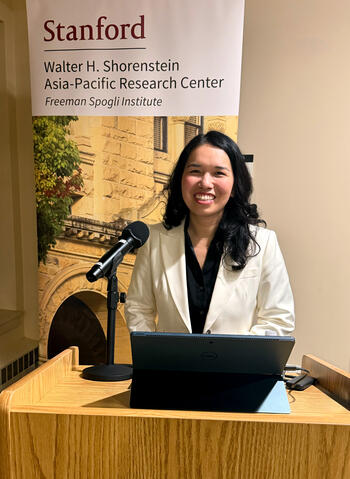
Kahl: You're listening to World Class from the Freeman Spogli Institute for International Studies at Stanford University. I'm your host, Colin Kahl. I'm excited to pick up the mantle from Mike McFaul, both as FSI director and as the host of this podcast.
It's hard to believe we're only six weeks into 2026. And yet there's already been a year's worth of foreign policy developments.
In early January, U.S. military forces swooped into Caracas to capture Venezuela's president, Nicolas Maduro, and bring him back to the United States. Then President Trump started making military and tariff threats in an effort to acquire Greenland, causing a major transatlantic crisis and prompting Canada's prime minister to declare that there had been a “rupture: in the international order.
Meanwhile, mass protests have rocked Iran, shaking the pillars of the regime and prompting the deployment of U.S. military assets to the Middle East and renewed threats from President Trump to strike the regime. Just a few days ago, Trump officials traveled to the Middle East to meet with Iranian officials in an attempt to negotiate a new nuclear deal just a day after meeting with representatives from Russia and Ukraine to try to settle that devastating conflict.
In other words, 2026 is off to a breathtaking start with widespread geopolitical consequences.
I can't think of any better guests to help us understand these developments and where things might be headed in the remaining 46 weeks of 2026 than my good friends H.R. McMaster and Jake Sullivan.
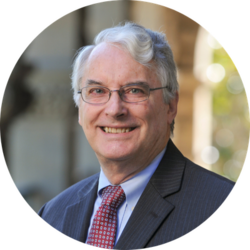
H.R. is a retired U.S. Army Lieutenant General who served as the President's National Security Advisor in the first Trump administration. He joined us here at FSI as the Bernard and Susan Leotaud Visiting Fellow in 2018, and he is the Fouad and Michelle Ajami Senior Fellow at the Hoover Institution. You can catch him on his podcast, Today's Battleground, on all major platforms.
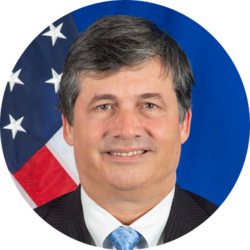
Jake Sullivan was national security advisor for all four years of the Biden administration. He's now the Kissinger Professor of Practice of Statecraft and World Order at the Harvard Kennedy School and a senior fellow at the Carsey School of Public Policy at the University of New Hampshire. And he also hosts a podcast alongside John Finer called The Long Game.
You'll notice that both Jake and and H.R. have their own podcasts. So if you like what you hear today, please go check them out. And if you don't, you can blame me and you should still go check them out.
H.R., Jake, it's great to have you on the pod.
McMaster: Hey, Colin, great to be here with you and Jake.
Sullivan: Really good to be with you guys.
Kahl: Both of you served as national security advisors. That job is often dominated by crises of the day. But the national security advisor also plays an important role in shaping U.S. grand strategy, including by producing a congressionally mandated document called the National Security Strategy of the United States.
So I wanted to start our discussion by zooming out from current events to look at the big picture captured in these documents. And H.R.I. was hoping to start with you.
You know, when you were national security advisor during the first Trump administration, you and your deputy, Nadia Schadlow, produced a really excellent 2017 National Security Strategy. And I think what was most notable about that 2017 document was that it was really a hard pivot away from the post-9/11 framing of national security.
It recognized that threats that we were focused on after 9/11, like terrorism and rogue states, still mattered, but that actually the biggest challenges to the United States was resurgent great power competition, with China and Russia really challenging America's interest across the board.
It's interesting, at least to me, to note that the Trump administration's in the second term has released a national security strategy back in December of 2025. And it actually has a much different tone on great power politics. It doesn't really describe Russia as a threat. It prioritizes strategic stability. It doesn't even talk about China until page 19 of like a 30-page document and largely frames the China challenge in economic terms, as opposed to a kind of an omnidirectional challenge to the United States.
You're a close observer of these things. Do you think there's been a meaningful shift in how President Trump, in his second term, is thinking about this issue?
McMaster: I think there's a meaningful shift in really the composition of the administration overall and maybe the president's mentality to a certain extent as well.
As you know, the new national security strategy prioritizes more hemispheric defense and the Western Hemisphere—North America in particular in terms of missile defense. This is why President Trump was so fixed on on Greenland as important to to defense and Arctic security Well, you know, want to say hey Canada is pretty important to that too So maybe we should stop kicking them in the ass.
But the other aspect to this is the emphasis on industrial base. A lot of the president's economic agenda is all through it.
But I’d love to hear what both of you guys think about this: I think that Venezuela was a lot about Russia and Chinese and as well as Iranian influence in the hemisphere. Arctic security, well, who's that about? That's about competition with China and Russia. Whose missiles are we worried about coming across the Arctic cap? Well, hey, Russian and Chinese. So I think that in practice, the competition is continuing.
I think this national security strategy fell into the trap that previous ones had fallen into as well, which is describing the world as we might like it to be. It was more aspirational, that maybe we don't have as big of a problem with these two revanchist powers on the Eurasian landmass.
And this is maybe in part to get the big trade deal that the president wants with China. Which, by the way, I don't think he's going to get. So I think that's kind of the big difference is to shift back to more of a document that describes the world as some people in the administration might want it to be.
Kahl: Picking up on that: Jake, you oversaw the writing of the 2022 National Security Strategy. And there are obviously a lot of differences between the first Trump administration and the Biden administration. But actually, I think there's a lot of strategic continuity on the great power competition issue between the document that H.R. oversaw and the document that you oversaw. And I think H.R. is on to something when he notes that there is an element of great power competition in what the president appears to be doing in Venezuela or with Greenland.
But it really frames the challenges that we face from China or Russia largely in hemispheric terms and homeland defense, as opposed to a kind of omnidirectional challenge that we have to deal with in the Indo-Pacific, in Europe, in the global south.
Can you talk a little bit about how much you think there's divergence here? Do you think it reflects a shift in grand strategy towards maybe a spheres of influence model or some other model? What do you think?
Sullivan: You know, H.R. makes a very good point that implicit in the rationale for both the “Donroe Doctrine,” this hemispheric doctrine, and in the attempt to take Greenland, implicit in that is great power competition with Russia and China. And I do think the Trump administration has kind of tried to retrofit his obsession with actually getting dominion over Greenland through the lens of the threat of Russia and China.
But fundamentally, when you step back from the most recent national security strategy and ask who is the biggest enemy, what is the biggest threat facing the United States, this document seems to say it's immigrants. It's migrants. And it says it not just with respect to the U.S. and a combination, the kind of intersection of migration and drugs. It also says it with respect to our closest allies in Europe.
It says the biggest threat to Europe is not Russia invading Ukraine or looming over the rest of Europe and our NATO allies, it's migrants. It's people coming to engage in what the document calls, quote “civilizational erasure.”
I think this is a huge shift. It's the first time I've seen in the national security strategy in the modern era a thumb on the scale, maybe a whole fist on the scale, with respect to political preferences in allied countries. It specifically calls out “patriotic parties,” i.e. right-wing parties in Europe, needing to be ascendant and come to the fore. And this essentially writes down on paper what J.D. Vance spoke in his speech at Munich last year. So I think that's a huge shift.
And then I think the second really big shift is the strategy that H.R. oversaw and the strategy that we carried forward in the Biden administration really saw the competition with China as a multi-spectrum competition across all domains, military, technological, economic, diplomatic, you name it.
The Trump administration really does seem to telescope the China challenge chiefly down to, as you pointed out, an economic lens. And that we can have a good relationship with them on everything else if we can work things out on the economics.
This leaves huge questions about things like, what is U.S. policy towards Taiwan? What will US policy be towards allies in the region on paper? The Indo-Pacific section looks pretty similar to what our strategy looked like. In practice, President Trump seems to really be saying to Japan and other countries, look, I'm not going to have your back to the same extent vis-a-vis China as previous administrations have.
So I think there's a huge amount of divergence here. I think it's a totally different way of looking at the world. And that chiefly comes back to this question of what they perceive to be the biggest threat to American security. And I think a lot of it has to do with this fusion of migration as both a domestic and foreign policy issue.
McMaster: If I could just comment on that?
Kahl: Go ahead!
McMaster: I just wanted to point out the kind of the geopolitical dimension of the migration problem as well. As Jake is alluding to it, this is a big issue in Europe. And I believe that Putin deliberately weaponized migrants. And of course, we have great evidence of this in specific countries, such as in Finland. And what he did in perpetuating, for example, the serial episodes of mass homicide in the Syrian civil war to create a huge migration crisis in Europe.
And then governments like in Germany—Angela Merkel's government—I don't think they dealt with it very well. And so what that allowed is Putin to accelerate his campaign of political subversion in Europe by supporting both far left and especially far right parties and create these kind of centripetal forces in Europe that diminish European will to stand up to Russian aggression.
And of course, we saw a similar dynamic here in the Western Hemisphere, with the Venezuelans to a certain extent weaponizing migration and illegal immigration in particular.
And the cartels really benefiting from that tremendously as they went in heavy on the business of human trafficking.
So, there is a huge, legitimate national security aspect of migration. But it also traces back to some of these larger geopolitical competitions.
Kahl: I think you've both hit on some really important things. I don't think there's any debate that enormous amounts of irregular migration can be potentially politically destabilizing in any country that's the recipient. And in fact, the rise of populism in the United States and in Europe can be directly traced back to a lot of anxieties about migration flows.
I do think, though, that what's striking to me is that previous national security strategies largely framed democracies as kind of our team and were critical of autocracies. The most recent document doesn't criticize autocracies at all, but does criticize fellow democracies, especially in Europe, largely by externalizing our own cultural and political conversations over wokeness and over what defines Western civilization. And I do think that is a notable shift.
But I want to get back to the China piece, and Jake, maybe start with you.
The national security documents the UNHR oversaw defined China as the most consequential strategic competitor. It's the only country in the world that can challenge the United States across the board—militarily, diplomatically, technologically, economically. Russia can blow up the world, but they can't dominate the world. China can dominate the world.
But as you said, Trump seems to be particularly focused basically through a political economy lens of the China challenge. Last year we saw a high stakes game of chicken between the United States and China over trade. Trump threatened 100 percent tariffs, but then he walked the average back to I think around 47 percent after Beijing choked off the supply of rare earths essential for our defense industrial base.
We've also seen reversals on technology export controls, including ones that started under the Trump administration and escalated under the Biden administration, most recently with Trump greenlighting exports of advanced NVIDIA H200 AI chips.
It looks like Trump and Xi Jinping are going to meet for a summit in April in Beijing. They'll probably meet again at the end of the year at the G20 here in the United States. My sense is that Trump is really angling for a “Big Beautiful Trade Bill” with China and that he may be willing to go even softer on tech and maybe even Taiwan in order to get it.
But I would love to hear where you think things are headed on the U.S.-China front.
Sullivan: Yeah, you're right. I think he would like the big beautiful trade bill with China. I think he's going to get a small, less beautiful trade bill with China. I think there will be some accommodation reached with respect to tariff levels and purchase commitments, all aimed at his objective of reducing the trade deficit. But I don't believe that it is going to address a lot of the underlying structural issues that China presents to the United States and the rest of the world.
Their industrial overcapacity that is flooding the world with products on a non-commercial basis and undermining the ability of workers and businesses in the West to compete. I don't think that anything he does is going to get at that problem.
I think what you're basically going to see is some incremental and relatively tactical gains. And by the way, on the Chinese side, I think they don't want to put all their chips on President Trump because they recognize he's in his second term. He only has so long to go. He is unpredictable. They can only bet on him so much even within his term. And so I would expect something more modest, more tactical, more incremental this year.
The big question for me—and I alluded to this in my previous answer—I think the Chinese are interested in getting President Trump to say something different about Taiwan than previous presidents have said. Something about peaceful reunification or opposing independence, some formula that moves the needle in their direction in terms of American policy.
And I think President Trump might be tempted to do that, honestly. And I think there would be reverberating impacts from that in terms of the confidence of our partners in Taiwan and the confidence of our allies in the region. So I think that's something for all of us to watch very closely in this meeting.
I should also note that I'm hearing from contacts in China that they actually expect the possibility of up to four meetings this year. There's the the Trump trip to Beijing. A Xi trip to the States that would be disconnected from the G20. Then China is hosting the APEC summit and the United States is hosting the G20.
So there is actually the possibility that we could have four separate leader meetings in 2026 alone. So, a lot of opportunity for everything I just said to be proven totally wrong.
Kahl: Ha! H.R., thoughts?
McMaster: Well, that's exactly what the president wants is really the phase two trade deal he didn't get in Trump I.
If you can picture Xi Jinping as the Peanuts character Lucy and President Trump as Charlie Brown, I think that's what's going to happen again. She's going to, you know, “Xi” is going to move the football.
So, I think what you're going to see ultimately is President Trump backing in to the kind of competitive approach that he adopted in Trump I. And it was an element of continuity between the Trump and Biden administrations.
I think what's different from Trump I to today is that a lot of the people who were actually pretty productive interlocutors for us, like Liu He in Trump I . . . they're gone. And Xi Jinping has really, with these purges you've seen inside of China, has all his people who were very hard-line, and by the way, who I think because of Wang Huning and some of the people around Xi Jinping, really, really believe that the West is in decline, that we are weak, that we're decadent, that we're divided. So I think Xi Jinping's going be feeling it when President Trump goes there in April.
He's going to feel like this is President Trump going to supplicate to the emperor. And the visuals will be designed to do that, which I don't think President Trump's going to like on the back end.
So, anyway, I think a lot could happen with these meetings and in between these meetings. But I think ultimately the president will be disabused of this idea that China will significantly curtail its unfair trade and economic practices and essentially the form of economic warfare it's waging against us.
Sullivan: Colin, if I can just reinforce this really important point I think H.R. just made. The Chinese leadership has this phrase, “the East is rising, the West is declining.” And by the East, they mean China, and by the West, they mean the United States. And they really believe that the U.S. is in secular decline and that a lot of that has to do with our political dysfunction and their view that democracy simply can't succeed in the 21st century.
And it's interesting that last year, In this episode you described of Trump slapping on the tariffs and China responding with the rare earth export controls, the lesson that Xi Jinping took from that is that China holds the high cards. That America has vulnerabilities. That China has a lot of leverage. So, you have both at a tactical and a broad structural and strategic level a real confidence emanating from Beijing right now.
And then you combine that with the fact that they they are uncertain about exactly where Trump is going to go and about this other point H.R. made, which is that Trump could easily shift from more conciliatory to a more competitive position between one meeting and another, between one year and another.
So I think all of that does add up to China feeling it doesn't have to give a lot. It also doesn't want to give too much that kind of puts it on the hook for an unpredictable president. And I think that's the dynamic that's going to really shape the engagements that we see over the course of this year.
Where I'm not sure I agree with H.R. is I'm not sure that Trump wants to move into a really competitive posture here. It seems to me that he's gonna accept something that isn't Phase Two. That short of that, I think he may end up declaring victory on that and saying, I've made peace with Xi and China and the U.S. are good and I'm reducing the trade deficit and so forth.
So I'm not as convinced that he's going to move to the same kind of competitive strategy that he pursued when H.R. was in the seat.
Kahl: I mean, think one other continuity in the approaches embodied in the two national security strategies you two oversaw was the recognition that in today's day and age, foreign policy is increasingly a team sport and that we need our allies alongside us. It doesn't mean they don't need to be spending more on their own defense. It doesn't mean that there aren't complaints about them not doing enough.
But every single problem we face, we typically do it alongside our closest treaty allies in Europe and Japan. And not the least of which, trying to think through the China challenge, negotiating with China from a position of collective strength. I know that's something both of you have talked about.
It speaks to, what is the health of our alliances right now? We've already talked about Greenland. We've talked about the civilizational erasure issue, maybe starting with you, Jake, and then H.R.
How bad are things right now in U.S. alliances? Is there a meaningful difference between our alliances in Europe and our alliances in Asia on that scorecard? What do think?
Sullivan: It feels pretty bad in the transatlantic alliance, at least at the level of mood and vibe. Whether just at the level of structure, the reality of our shared interests and the reality of our interdependence, it's been shaken so badly that it's irreparable. I'm less convinced of that. I think a lot of damage has been done, but there still just is the reality that we are deeply tied to our European allies.
Asia is an interesting case because as I mentioned, both in words, the description of the strategy towards our Asian allies is similar to Biden and to Trump I. And by and large, what you see from the administration in terms of how it tries to sustain those alliances with Japan, Korea, and Australia in particular, but the Philippines as well, there's more continuity there.
But there was one episode that really stood out to me as concerning. And that was when the Prime Minister of Japan, the Iron Lady, Takaichi, made a comment when she was testifying before the Japanese Parliament about how Taiwan's an existential threat. And I think the technical term is China freaked out about it, imposed a bunch of coercive responses. And rather than President Trump saying—as I think President Biden would have done, or maybe even President Trump in the first term—calling up Japan and saying, we've got your back, President Trump called Xi Jinping and said, hey, what do you make of all this? Xi said to him, hey, you better call the Japanese and tell them to cool it. And Trump did that.
And I think in Japan right now, they read that as some lack of confidence that, in fact, the U.S. will have their back and some concern in quarters in Japan that they're going to have to make their own accommodation with China over time.
I think that is a dynamic for us to watch. That's by no means a foregone conclusion. I think we could end up seeing a quite robust allied strategy under this administration in Asia. But it was a bit of a warning sign for me and something that we should continue to pay close attention to.
Does he sort of see the whole approach to allies as being China first, allies second, or does he see it the other way around? And I think only time will tell over the course of 2026.
Kahl: H.R., do you think that it's mostly about vibes, or do think there's something deeper and more structural going on here in terms of tensions and fragility within our alliances?
McMaster: Well,I agree with Jake that the structural factors are still in favor of strong alliance. Who's gonna lead Europe without the United States? France? I don't think so. Who's gonna sign up for another European country leading Europe? Nobody will at this moment.
But what you're seeing I think are sub-regional, tighter groups within the alliance emerging. For example between the Nordic and the Baltic states and Poland.
And a lot of that coalescing, as well as increased defense spending—up to five percent and three and half percent on a hard military capabilities—is based on some doubts about U.S. reliability and an associated erosion of trust. I don't think that's good. That's not good.
And the reason it's not good and the reason why not backing up Takaichi-san is not good is that it is the perception of weakness that is provocative to our adversaries. And so I think President Trump was right to demand more defense spending, but in the kind gratuitous insult category or in not backing up Takaichi, or maybe what is going through now, the 20 billion dollar arms sale to Taiwan—that's a really important thing to track and the delivery of those capabilities to Taiwan.
And that’s why Ukraine's important. Ukraine is important because really what Putin wants, what he thinks he can get, is he can get the United States to support terms for a ceasefire that are unacceptable to the Ukrainians and the Europeans and to use that gap to break apart the alliance. This is what Putin's dreaming about. So I don't think we should do anything to encourage him or to encourage Xi Jinping vis-a-vis Taiwan.
I'm an optimist, right? I mean, we could wind up with Europe spending a heck of lot more in defense, taking more responsibility for their defense like Japan is now, like South Korea is now, and then rebuilding that bridge of trust.
So it could be the best of both worlds. I hope, I hope. Maybe even beginning here in North America with a better relationship with the Canadians. I hope that the president will be convinced of this, that he will see that it is the perception of weakness in our alliance here at home with the vitriolic partisan discourse we see and so forth that provokes our adversaries and could transform them into enemies and lead to war.
Sullivan: H.R., before we make peace with Canada, we have to beat them for the Olympic hockey gold.
McMaster: Hey, the women, the women's hockey team did a great job, didn't they?
Sullivan: That’s true! That’s true. They shut them out.
McMaster: I mean, not that I want to rub anything in with my Canadian friends right now. I mean, I don't want to. I'm sorry I even mentioned it! Sorry I mentioned it.
Sullivan: Sure.
Kahl: You know, H.R., you did use that word trust. And, you know, I think for our listeners, at some level, America's extended security commitments to our allies are always . . . it's always been kind of irrational, right? Because it basically it commits the United States to be willing to commit national suicide to defend other countries. And there's a kind of fundamental irrationality at the heart of that. And what solves that problem is trust. in the United States.
And this is actually where I think like the vibe and the mood matters, not just because it erodes trust in the moment, but I do worry a little bit that we're getting into this place where our allies will think that they can't trust the United States for any longer than four to eight year increments based on, who's in power and what their position is.
And that's a really different mindset than the kind of confidence that there was a bipartisan commitment underlying our alliances.
McMaster: Jake, I love to hear what you think about this too. Two things, really. There is this movement toward retrenchment. It actually cuts across both political parties. The frustration among many Americans that President Trump tapped into was the fact that we were covering Europe's defense bills and Europe really accounting for about 19% of the world's GDP and 50% of the world's social spending. So American taxpayers are like, hey, why are we underwriting defense and covering their defense bills and thereby indirectly underwriting their social programs?
And then the other aspect of this are the deep frustrations associated with the unanticipated length and difficulty in the wars in Afghanistan, I would say in particular in Iraq, and the belief that we really can't achieve good outcomes abroad anyway. And therefore, we should just focus on our stuff here at home. We got a lot of stuff to work on ourselves.
And so that sentiment, I don't think is going away. And what is necessary is for American leadership to explain to the American people how problems that develop abroad can only be dealt with at an exorbitant cost once they reach our shores. And how much cheaper it is to prevent a war than have to fight one
I think making those kinds of arguments for investments in active foreign policy, diplomatic efforts, but also sustained commitments to capable U.S. forces abroad operating as part of these alliances, which have prevented great power conflict for 80 years. Why would we want to get rid of that?
But I think we can't take that argument for granted anymore. We have to make that argument as clearly as we can to the engaged American public.
Kahl: You know, H.R., you mentioned American public exhaustion with the forever wars in Iraq and Afghanistan. As we speak, Trump is marshaling what he describes as an armada, also known as a single aircraft carrier with a second aircraft carrier on the way and some air defense and strike assets moving into the Middle East to put coercive pressure on Iran to cut a deal.
My own view is there's probably a deal on the table, a narrow nuclear deal, one even that Trump could frame as better than the deal that the Obama administration got.
Do you think there will be a deal? Do you think that there will be a deal on the nuclear file? Something that covers Iran's ballistic missiles, its proxy activities? Bibi Netanyahu was just in Washington this week to try to convince Trump not to buckle and accept a bad deal.
Do you think there's going be a deal with Iran? If so, what type of deal?
McMaster: I don't think there's going to be a deal with Iran. And the reason is that the Trump administration will not accept anything short, in my view, of no enrichment, probably giving up the 60% of enrichment for that they already have. They still have it. It'll have to carry over to missiles for sure. And it will carry over to support for proxies for the terrorist organizations they've been supporting.
And I think the recognition is that the real downside of the 2015 deal was the degree to which that it allowed the IRGC to fill its coffers and to double and in some cases triple its stipends to the terrorist organizations and militias across the region, really build up that ring of fire around Israel so they could light it on October 7th.
I think a lot of people in retrospect look back to the 2015 deal and say, we got Ayatollah Khamenei up off the mat. And I think that that kind of an argument is going to prevail among Trump's advisors.
And as you know, what Trump really tries to do is always try to get a deal first, right? This is what happened before Operation Midnight Hammer. He gave him 60 days, didn't get it, struck. He sent Grinnell to Venezuela. Hey, maybe we can get a deal, but didn't get a deal, and then took action to arrest Maduro. So I think that's the way it's going to play out.
These guys just murdered. I mean, they murdered 30,000 people in 48 hours.
What I would love to see is a hell of a lot more diplomatic effort to isolate those bastards and to kick out every Iranian embassy in the world and show that we cannot tolerate that degree of mass murder and the horrors inflicted on their own people.
So yeah, I think there's gonna be a series of strikes that are probably aimed to diminish the regime's capacity to repress its own people, but also to go after the efforts to reconstitute the missile and the nuclear programs. But then also to maybe preemptively take out what the Iranian regime would use as a response, IRGC Navy, as well as drone locations and factories and that sort of thing. I think the chance of that happening are probably like 80% of a strike that goes in that direction.
Kahl: Jake, you have obviously your own personal experience with diplomacy with the Iranians. What's your view?
Sullivan: I'm more like 60%. I think there's a higher percentage chance that Trump looks at a deal that is going to feel quite a bit like the 2015 deal in many respects and say, hey, that's better than military action that doesn't necessarily have a very clear purpose to it.
What's interesting to me is why are we here even talking about the nuclear program right now in this way? It's because of a chain of events that was set off by President Trump actually going on social media and saying, if Iran kills its own people, I will hit them. And then saying to the protesters who went out in the streets incredibly bravely across every province of Iran and said, help is on the way.
And I talked to a Washington Post journalist yesterday who covers Iran, who made the point that, no, they didn't go in the streets because of Trump, but they definitely saw what he said and thought that America was going to have their back. And then the regime, as H.R. just pointed out, absolutely brutally, on an industrial scale, massacred its own citizens and put it down.
So now we're in this weird situation where the whole impetus behind military action was about supporting the protestors. And it's now kind of shifted to being coercive towards trying to get a nuclear deal, which just goes to show you all of this is a bit kind of mushy.
If we did take military action, you have to ask to what end? We did it last year. President Trump said the nuclear program was, quote, “totally obliterated.” Now we're talking about the nuclear program again six months later. So we could hit them again. Yes, we could degrade them. It's unlikely we're going to cause regime change through the air. So I'm a bit confused about what this military action is going to accomplish other than just continue to create a circumstance where every few months we have to go back with military force again and again.
Whereas if you got a deal, you put the program in a box you get verification and you're not constantly in this position where you have to be lining up to take out enriched material or centrifuges or missiles or what have you.
So I would hope that President Trump would look seriously at the diplomatic option. I think he might. Although if H.R. is 80-20, there'll be strikes, I still think it's more likely than not there'll be strikes, but I'm closer to 60-40.
Kahl: I do think you've hit on a key question, though, which is that I just don't think they've resolved internally—they certainly haven't shared with any of us—what the objective of the strikes would be. Would it be to degrade the missile and nuclear program? Would it be to hit the IRGC? Would it be to destabilize the regime?
Sullivan: Or just punish them, ultimately punish them for the massacres. Just you did that and we're going to hit you for it. Which emotionally, I understand. I mean, who doesn't wanna hit these guys for something like that? But strategically, I think that's more questionable.
Kahl: So we don't know if regime change is the goal in Iran. We do know that we've had not a regime change, but a government and leadership change in Venezuela because of U.S. military action. Jake, maybe starting with you, any thoughts about what the end game is in Venezuela for the Trump administration?
Sullivan: I'm very interested in what H.R. has to say about this. This is unusual. I'm not sure there is a modern historical analog to replacing a leader, then getting the leader who is the number two to step in and essentially agree to let the United States more or less call the shots from offshore under the threat of further military action if she doesn't do what we ask of her. And it seems like this is not ultimately a long-term sustainable strategy.
But it has worked for a few weeks at least. And I think the reason it's worked is because we pretty much only asked them for one big thing, which is let American oil companies go in there and exploit Venezuela's oil resources. And by the way, that works for the regime in Caracas quite well, because they'll get their cut. And getting their cut will allow them to continue to entrench themselves in power.
The question for me is, at some point, is the Trump administration going to say, hey, actually, we need some kind of democratic transition here. I sort of thought they would head in that direction. Although the way they're kind of pushing putting down Machado, the main opposition leader, suggests that they may just be happy with the status quo. But it's an unusual situation. It is occupation by joystick, occupation by remote control, and so far they have gotten the regime to acquiesce. But I think that's largely because what they're asking of the regime suits the regime just fine and is quite limited. I just don't know if that is a tenable situation to play out over the longer term.
Kahl: I mean, there is this old phrase, “gunboat diplomacy." This is a little bit of gunboat governance. H.R., where is gunboat governance going in Venezuela?
McMaster: Well, it's not really it's it's not gunboat diplomacy as much as it is, think, coercive diplomacy or what the famous and fantastic, late Stanford professor Alexander George called “forceful persuasion.”
And so I think what we're testing are the limits. You know, he has a great book also called The Limits of Coercive Diplomacy, And Jake, we're asking him to do a heck of lot more than just, you know, let the oil companies back in. It's release political prisoners. It's kick the Cubans and the Russians and the Chinese out. Right?
And to put into place. This is Rubio's four points, a plan for a political transition. Now, will the Chavistas fire themselves? Probably not. So what it really has to be, as you're alluded to as well, is the U.S. and other countries in partnership with the Venezuelan opposition
Which, by the way, I was with members of the opposition last week. They're very optimistic about this. I mean, they really feel like it could work. I think what they're envisioning is kind of a Polish-type transition. Because after the cover of the Soviet Union was pulled back and the collapse of the Warsaw Pact, then you had the Solidarity Movement, which had been bolstered and gained strength in partnership with the Catholic Church, who sat down at a round table with the communists. And the communists came up, you know, and they came to a decision on how to transition to a new form of government.
In Venezuela, you have the benefit of the constitution still being there, you know, to be resurrected. And you have a history of democratic governance.
So, you know, I think you're right to be skeptical, Jake, on this, but I think that there's a chance here if we stick to it, if we keep the pressure on, but I think it might take more than we've got on the table now to convince the Chavistas to essentially fire themselves.
Sullivan: First of all H.R., those are good points. I wasn't even really trying to express skepticism. It's just we haven't really tried something like this before. So it's interesting to see how it will play out. And I do think it's somewhat tenuous.
Good point on the political prisoners. And I think there's been positive news on that. Although we have seen that movie before with Venezuela where they do releases and then they round people back up.
McMaster: They've already had that prominent re-arrest, right?
Sullivan: Exactly. They're already doing that. So I'm a bit more skeptical of how much of that is theater and how much that is real.
That's why I kind of zeroed in. I assume this democratic transition has ultimately got to be a part of it. This is where pulling that off, the solidarity analogy is an interesting one, which I want to take a closer look at. Pulling that off, really challenging. And I have been struck by the degree to which they have kind of treated Maria Carina Machado as a nuisance as opposed to an ally in all this. But that may be public posturing and quietly they're doing things that we don't fully understand.
That to me is ultimately the test of how this will all play out. Does it move in that direction or do we lock in a longer term scenario where you essentially have a dictatorship sitting in Caracas essentially doing resource extraction deals with the United States?
I think there's a good possibility that that's where we are a year or two from now, but let's see. I think it's definitely worth watching closely because it is a novel model for the exercise of American power.
McMaster: And hey, we ought to say it's a righteous endeavor based on the nature of Maduro's regime and the Chavistas. I mean hell, they drove 8 million Venezuelans out of the country and destroyed that country.
Sullivan: Absolutely.
McMaster: So let's hope.
Sullivan: But all of those guys other than the top dog, they're all still there, wetting their beaks and doing their thing.
Kahl: Well, and this is really the dilemma that we'll have to see unfold in 2026, which is: things seem relatively stable by remote control now because essentially the same folks can continue to corruptly acquire rents off of economic activity. And as Jake, as you said, know, oil deals go through, they'll get their cut.
When you're talking about a democratic transition, suddenly some of these guys are going to face the prospect of going to jail. And a lot of these guys have guns. And that's, I think, the dilemma that the administration is going to have to deal with if they do approach this.
Well, listen, there's a bunch of other things we could have talked about. 2026 is going to be a big year, I think, for Ukraine. It's going to be a big year as it relates to the disruptive implications of artificial intelligence on the economy. There are a lot of other things. So I hope to have the two of you back on to talk about those, not to mention whatever else crazy happens in the world between now and the end of the year.
But I wanted to end my first podcast hosting World Class with a bit of an homage to Ezra Klein. Ezra Klein runs a great podcast. He always asks his guests for three book recommendations at the end, which is awesome because I'm an academic. There are books all around me, but I don't have any time to read a single book these days, let alone three. So I'm going to ask you a different question, which is what is one article you would recommend our listeners read to understand the world?
McMaster: Jake, go first, you go first.
Sullivan: All right. I just recently read a piece in The New Yorker called “What is Claude?” which is about how Anthropic is really actually trying to understand the nature of this artificial intelligence capability we are developing and trying to look inside the black box with all of these emergent properties. How do we characterize it? What is happening in there? What do we understand? What don't we understand?
I think it's a pretty accessible way to get at some of the really elemental questions about artificial intelligence and what exactly we are dealing with here. So, I would highly recommend that to everyone and a thousand other articles besides, but that's one.
Kahl: Alright, H.R., how about you?
McMaster: I'd like to recommend an essay by my colleague here at Hoover, Stephen Kotkin, in the December issue of Foreign Affairs called “Weakness of the Strongmen.” And if I could do my Kotkin impersonation, it's basically about strongmen being dependent on five things, five things to stay in power.
And then he talks about the five elements of authoritarian control, but also he explores how exercising those tools of authoritarian control create weaknesses that can be exploited. Great essay.
Kahl: Awesome. Well, I encourage everybody to go check those two articles out. H.R., Jake, thanks so much for joining the podcast. And make sure to check out Jake and H.R.'s podcast too.
Sullivan: Thank you.
McMaster: Thanks guys.
Kahl: You've been listening to World Class from the Freeman Spogli Institute for International Studies at Stanford University. If you like what you're hearing, please leave us a review and be sure to subscribe on Apple, Spotify, or wherever you get your podcasts to stay up to date on what's happening in the world and why.