-
Impact of the 2011 Judicial Interpretation of the Chinese Marriage Law


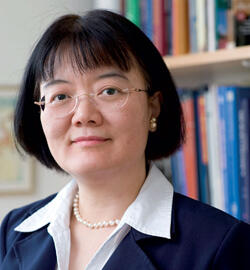
In this talk, Professor Emma Zang presents research on how a 2011 change to China’s Marriage Law affected property rights within households and impacted family well-being and behavior. Using national survey data and 1.5 million divorce court records, the studies compare households impacted by the law with those that were not. While much research focuses on broad gender inequality, this work looks closely at how property ownership within families affects women.

Professor Zang’s research explores the intersection of health, aging, family demography, and inequality in the U.S. and China. She investigates how family structures and policies—such as marriage laws, flexible work, and early-life experiences—influence inequality, gender dynamics, and later-life health. Her work has appeared in Nature Human Behaviour, American Journal of Sociology, Demography, JAMA Internal Medicine, and others, and has been supported by the National Institutes of Health. She is a Butler-Williams and IMPACT Faculty Scholar with the National Institute on Aging and a Next Generation Leader of the Committee of 100. Her honors include awards from the ASA, ISA, IPUMS, and the European Commission.

Reuben Hills Conference Room
Encina Hall, Second Floor, East Wing, E207
616 Jane Stanford Way, Stanford, CA 94305

Emma Zang, Assistant Professor of Sociology, Biostatistics and Global Affairs at Yale University
Lectures
Date Label
-

SCCEI Seminar Series (Spring 2025)


Friday, May 2, 2025 | 1:45 pm -3:05 pm Pacific Time
Goldman Room E409, Encina Hall, 616 Jane Stanford Way


Flick, Click, and Sick: Mental Health Risks of Short-Video Platforms


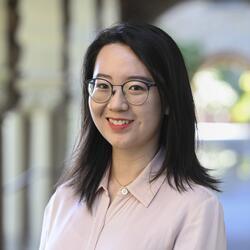
This study examines the causal impact of short-video platforms like Douyin on mental health in China since 2016. Using city-level data on platform adoption and 4G expansion, combined with individual panel data from the China Family Panel Studies, we identify causal effects by focusing on pre-2016 mobile internet users in high-4 G-penetration cities. Our findings reveal significant mental health deterioration among affected individuals, with stronger depressive symptoms emerging over time. Effects are most pronounced among vulnerable populations: rural residents, youth, the elderly, and those without college degrees, with rural left-behind youths and the elderly showing the most severe outcomes. We identify four key impact channels: (1) heightened social comparison and inequality perception, with affected users reporting lower perceived income and greater awareness of societal inequality; (2) altered time use, including reduced work hours, sleep, and exercise; (3) declining non-cognitive abilities and physical health, evidenced by lower self-reported health status and increased doctor visits; and (4) weakened interpersonal relationships, demonstrated by decreased time and attention affected adults devote to parents and/or children. These findings highlight the unintended consequences of digital innovation on mental health, particularly for vulnerable demographics, and offer important insights for policymakers balancing technological advancement with public health considerations.

Please register for the event to receive email updates and add it to your calendar. Light refreshments will be provided.


About the Speaker 
 

Ting Chen portrait

Ting Chen is an associate professor in the Department of Accountancy, Economics and Finance (AEF) at Hong Kong Baptist University. She obtained her Ph.D. in Social Science from the Hong Kong University of Science and Technology in 2015. Her research specializes in political economy, economic history, and long-term development economics, with a focus on assessing the effectiveness and economic impact of China’s historical and current policies. Her works have been published in Economic Journal and Quarterly Journal of Economics. She serves as the associate director of the Centre for Business Analytics and the Digital Economy (CBADE)  in the School of Business. She is the associate editor of Pacific Economic Review and Regional Science and Urban Economics.


Questions? Contact Xinmin Zhao at xinminzhao@stanford.edu


Goldman Room E409, Encina Hall

Ting Chen, Associate Professor, Hong Kong Baptist University
Seminars
Date Label
-
DaliYangChinaProgramEvent2025

Join Stanford's Shorenstein APARC China Program as we welcome Prof Dali Yang from the University of Chicago to discuss the findings from his new book "Wuhan: How the COVID-19 Outbreak in China Spiraled Out of Control” (Oxford University Press, 2024).

The COVID-19 pandemic, which began in Wuhan in late 2019, is a generation defining event. In his book, Yang Dali examines China’s emergency response, focusing on how the government handled epidemic information and decisions that shaped the outbreak. Despite an early start, Yang reveals bureaucratic obstacles, political pressures, and cognitive limitations hindered information sharing and understanding of the virus’s contagiousness, leading to the outbreak’s spiral.


Image
Dali Yang

Dali Yang is the William Claude Reavis Professor in the Department of Political Science at the University of Chicago. In addition to “In Wuhan: How the COVID-19 Outbreak in China Spiraled Out of Control,” Prof. Yang is the author of many books and scholarly articles on the politics and political economy of China. Among his books are "Remaking the Chinese Leviathan: Market Transition and the Politics of Governance in China" (Stanford University Press, 2004); "Beyond Beijing: Liberalization and the Regions in China" (Routledge, 1997); and "Calamity and Reform in China: State, Rural Society, and Institutional Change since the Great Leap Famine" (Stanford University Press, 1996).


Philippines Room, Encina Hall (3rd floor), Room C330
616 Jane Stanford Way, Stanford, CA 94305

Dali Yang, William Claude Reavis Professor of Political Science at University of Chicago
Lectures
Date Label
-

SCCEI Seminar Series (Spring 2025)


Friday, May 16, 2025 | 12:00 pm -1:20 pm Pacific Time
Goldman Room E409, Encina Hall, 616 Jane Stanford Way


Renegotiating Patriarchy: Property, Lineage, and Gender Inequality in Contemporary China


Gender wealth gaps persist across societies, often attributed to individual factors such as education, work experience, and lifetime earnings. However, structural inequalities rooted in traditional patriarchal kinship systems—characterized by patrilocal marriages and patrilineal inheritance—systematically exclude women from inheriting family wealth. To examine how women and their families navigate these institutional barriers in wealth and inheritance, I conduct original surveys and field research in China, where rapid economic and demographic transformations coexist with enduring patriarchal norms. Specifically, I demonstrate that in the Chinese context, where surname inheritance is closely tied to wealth inheritance, declining fertility rates, coupled with economic and cultural shifts, have spurred growing public support for assigning maternal surnames to children. I further show that this renegotiation of patrilineal practices surrounding surnames and lineage enables Chinese women to maintain a closer bond and secure greater support from their natal families. These findings shed light on the mechanisms through which social change unfolds within patriarchal systems and reveal key conditions for women’s empowerment in the private domain.

Please register for the event to receive email updates and add it to your calendar. Lunch will be provided.


About the Speaker 
 

Fangqi Wen headshot.

Fangqi Wen is an Assistant Professor in the Department of Sociology at the Ohio State University. Before joining OSU, she was an Assistant Professor in the Department of Political and Social Change at the Australian National University and a Postdoctoral Prize Research Fellow in Sociology at ​Nuffield College at the University of Oxford. She received her PhD in Sociology from New York University.

Fangqi’s research centers on the relationships among social institutions, demography, and gender inequality. Specifically, she examines the sources of inequality and how women and their families renegotiate patriarchal social norms. Additionally, she studies social stratification and mobility in historical settings and investigates the misperceptions of inequality and social mobility in the contemporary world. Her work has appeared in academic journals such as Demography, Social Science Research, Population and Development Review, and the Proceedings of the National Academy of Sciences and has been featured in media outlets such as the Wall Street Journal and South China Morning Post.


Questions? Contact Xinmin Zhao at xinminzhao@stanford.edu


Goldman Room E409, Encina Hall

Fangqi Wen, Assistant Professor of Sociology, Ohio State University
Seminars
Date Label
-

This talk will be in Chinese (Mandarin).

In this talk, Professor Ge Zhaoguang (葛兆光) will take on fundamental questions on the evolution of “China” as a historical entity (“何谓中国”). His talk will problematize the concept of “China”, discuss issues related to Chinese identity and the “inner” and “outer” historical changes over time. These issues are examined in the context of China’s distinct transformation from a traditional dynasty into a modern state. Professor Ge will provide his reflections of understanding China from a comparative perspective.

This event is free and open to the public. Please RSVP here.


About the Speaker
 

Ge Zhaoguang headshot.

Professor Ge Zhaoguang is a University Distinguished Professor of Fudan University in Shanghai, China. An eminent historian and public intellectual, he has published influential works in the areas of social thoughts, intellectual history, global history, and histography of China and Asia Studies. Many of His works are translated into English, including What Is China?: Territory, Ethnicity, Culture, and History (Harvard University Press, 2018); An Intellectual History of China (two volumes) (Brill, 2014, 2018). He is the recipient of many honors, including first “Princeton Global Scholar (2009), “Asia and Pacific Award” (2014) in Japan, “Paju Book Award” (2014) in South Korea, and HongKong Book Award (2015).


This talk is co-sponsored by Center for East Asian Studies (CEAS), the Department of East Asian Language and Civilization (EALC) and Stanford Center on China’s Economy and Institutions (SCCEI).


Gunn Building (SIEPR), Koret-Taube Conference Center
366 Galvez Street, Stanford, CA 94305

Ge Zhaoguang, Fudan University
Seminars
Date Label
All Publications button
1
Publication Type
Journal Articles
Publication Date
Subtitle

This paper examines whether education can play a role in mitigating gender inequality in the process of sectoral reallocation of labour. We exploit the exogenous variations in educational attainment induced by the implementation of the 1986 Compulsory Education Law (CEL) in China. Using data from the 2018 wave of the China Family Panel Studies (CFPS) and a cohort difference-in-differences (DID) approach, we find that the CEL narrowed the gender gap in education for rural residents, but it did not reduce gender inequality in labour market outcomes, such as wage labour participation and wage rate. Our analysis reveals that this persistent inequality in labour market outcomes can be attributed to gender differences in migration and occupational choices. Specifically, rural males exposed to the CEL were more likely to migrate outside local provinces and work in low-skilled manufacturing sectors, while rural females tended to stay within local counties and work in low-skilled service sectors. Furthermore, we provide evidence that their differential migration responses are driven by household labour divisions and social gender norms, rather than disparities in cognitive skills.

Journal Publisher
The Journal of Development Studies
Authors
Scott Rozelle
Authors
News Type
News
Date
Paragraphs

After almost two years of hard work and study, the 2025 cohort of the Ford Dorsey Master's in International Policy program (MIP) is preparing for the final stretch of their learning journey at the Freeman Spogli Institute for International Studies (FSI). 

Each year, second-year MIP students participate in the Policy Change Studio, which takes their learning out of the realm of theory and into hands-on, on-the-ground application. Recognizing that the world outside the classroom is much more complex, bureaucratic, and constrained than textbook case studies, the Studio is a two-quarter course designed to provide students with direct experience researching, developing, and implementing policy goals.   

Our students are setting out for Belgium, Mongolia, Ghana, Australia, and India to work directly with research groups, NGOs, and policy institutions on pressing challenges affecting local communities and global alliances alike. Keep reading to learn more about each project.


Securing Trust: A Framework for Effective Cyber Threat Information Sharing in NATO

Over the past few months, through problem identification and early solutions development, our research has identified three key challenges in NATO’s cyber threat information sharing landscape. First, despite the presence of existing protocols such as NCIRC and MISP, significant communication
[Left to right]: Emerson Johnston, Tiffany Saade, Chan Leem
Emerson Johnston, Tiffany Saade, Chan Leem, Markos Magana (not pictured)

gaps persist between stakeholders. This is exacerbated by the lack of clear, standardized specifications from NATO, leading to inconsistent implementation and operational friction. Second, at its core, this is an intelligence-sharing challenge: member states operate under different national frameworks, threat perceptions, and priorities, which influence what information they are willing (or unwilling) to share. Third, the fragmentation of sharing systems is not merely a technical hurdle but often a deliberate choice made for operational and security reasons, reflecting concerns over sovereignty, data protection, and strategic advantage.

While technological advancements can enhance interoperability, they alone will not drive adoption. Our research highlights that the underlying issue is one of trust and incentives—NATO must establish mechanisms that encourage collaboration beyond just technological solutions. Without a strong foundation of mutual trust, transparency, and shared benefits, even the most advanced systems will face resistance. Creating sustainable incentives for participation—whether through policy alignment, risk reduction assurances, or value-added intelligence sharing—will be essential in fostering a more effective and unified cyber defense posture within NATO.


Cultivating Community-Led Policies: GerHub and Mongolia’s Billion Trees Initiative

Our team is collaborating with GerHub in Mongolia to establish an influential policy think tank aimed at fostering community-informed and data-driven policymaking. Leveraging GerHub’s unique and extensive connections within the ger communities of Mongolia, we aim to empower policies that authentically reflect local needs and insights.
[Left to right]: Julia Ilhardt, Serena Rivera-Korver, Johanna von der Leyen, and Michael Alisky
Julia Ilhardt, Serena Rivera-Korver, Johanna von der Leyen, and Michael Alisky

A key component of our project involves conducting in-depth research and stakeholder interviews focused on Mongolia's "Billion Trees Initiative," where we will be seeking actionable insights to scale up the initiative effectively and sustainably.


Countering Coordinated Political Disinformation Campaigns in Ghana

Our team is working with the Africa Center for Strategic Studies to examine disinformation issues in Ghana. We are focusing on how coordinated influence operations are being used to create and spread political disinformation. We aim to understand how PR companies and
[Left to right]: Euysun Hwang, Sakeena Razick, Leticia Lie, and Julie Tamura
Euysun Hwang, Sakeena Razick, Leticia Lie, Julie Tamura, and Anjali Kumar (not pictured)

influencers work with politicians to coordinate these influence operations and shape public opinion. Our policy recommendations will address how governments and civil societies can work together to tackle this issue.


The recent ratification of the Technology Safeguard Agreement (TSA) by the United States and Australia lays the foundation for smoother exchange of commercial space technologies and permits U.S. commercial space launch companies to conduct reentry in Australia. With the sponsorship of the
[Left to right]: Samara Nassor, Gustavs Zilgalvis, and Helen Phillips
Samara Nassor, Gustavs Zilgalvis, Helen Phillips, and Joe Wishart (not pictured)

Australian Space Agency and U.S. Defense Innovation Unit, the goal of this project is to leverage Australia's strategic geographic position and investment in reentry infrastructure to mitigate the hurdles that U.S. commercial startups experience accessing military ranges for reentry. Our project aims to create a robust foundation for the development of orbital return capabilities in Australia, fostering greater commercial and national security collaboration between the U.S. and Australia.


Overcoming Computational Resource Gaps for Open Source AI in India

Our team is working with Digital Futures Lab (DFL), a non-profit research network in India that examines the intersection of technology and society in the Global South. Our project focuses on identifying the key components of open source AI in India and how limited access
[Left to right]: Sandeep Abraham, Sabina Nong, Kevin Klyman, and Emily Capstick
Sandeep Abraham, Sabina Nong, Kevin Klyman, and Emily Capstick

to computational resources acts as a barrier to adoption. India has a thriving tech sector, and openly available AI models have the potential to democratize access to this trailblazing technology. At the same time, AI is expensive to build and deploy, and access to the specialized computational resources needed to do so is limited even for top Indian companies. Our team aims to develop solutions in partnership with Digital Futures Lab that can help bolster the AI ecosystem across India.


Combating Human Trafficking in the Informal Mining Industry in Ghana

Our team is working with the Ghana Center for Democratic Development to identify ways to disrupt human trafficking into forced labor in Ghana’s informal mining sector. So far, our research and conversations with stakeholders has highlighted the complex systems — ranging from poverty to illicit networks —
[Left to right]: Alex Bue, Rachel Desch, and Marco Baeza
Alex Bue, Rachel Desch, Marco Baeza, and Hye Jin Kim (not pictured)

that contribute to this issue. During our fieldwork, we will explore community- and government-driven programs aimed at preventing and combating trafficking. Our final report will analyze existing policies, pinpoint gaps, and propose community-led interventions to address them.


The Ford Dorsey Master's in International Policy

Want to learn more? MIP holds admission events throughout the year, including graduate fairs and webinars, where you can meet our staff and ask questions about the program.

Read More

The class of 2027 of MIP students standing on the steps in front of Encina Hall at Stanford University.
News

Meet the Ford Dorsey Master's in International Policy Class of 2026

Hailing from every corner of the globe, the new class of the Ford Dorsey Master's in International Policy is ready to make an impact on nuclear policy, digital trust and safety, rural investment, and more.
Meet the Ford Dorsey Master's in International Policy Class of 2026
A close-up/macro photograph of Middle East from a desktop globe.
News

New Continuing Studies Course with CDDRL Scholars on Geopolitics in the 21st-Century Middle East

Open for enrollment now through Stanford Continuing Studies, "Geopolitics in the 21st-Century Middle East: Insights from Stanford Scholars and Other Experts" will run online for ten weeks on Wednesdays, from April 2 through June 4.
New Continuing Studies Course with CDDRL Scholars on Geopolitics in the 21st-Century Middle East
a group photo taken at a table with four people sitting down.
Blogs

SPICE Provides Excellent Learning Opportunities for Japanese University Students

SPICE/Stanford collaborates with the Graduate School of Education at the University of Tokyo.
SPICE Provides Excellent Learning Opportunities for Japanese University Students
Hero Image
A collage of six student groups from the 2025 Policy Change Studio at the Ford Dorsey Master's in International Policy at the Freeman Spogli Institute for International Studies.
All News button
1
Subtitle

Students in the Ford Dorsey Master's in International Policy program are practicing their policymaking skills through projects on cybersecurity within NATO, countering political disinformation in Ghana, commercial space technology in Australia, and more.

Date Label
All Publications button
1
Publication Type
Journal Articles
Publication Date
Subtitle

Background: Micronutrient powder (MNP or Yingyangbao, a dietary supplement that contains multiple vitamins and minerals) programs can reduce the risk of anemia among children. One such program in China distributed free MNP to children aged 6–24 months in poor rural areas. However, there are indications that the generation of primary caregiver (i.e., parent or grandparent) may influence MNP feeding behavior. The purpose of this study was to investigate the prevalence and influencing factors of effective MNP feeding behavior among parents and grandparents in a rural developing setting.

Methods: We conducted a cross-sectional study of 884 caregivers and children in formerly impoverished rural areas of Sichuan Province using multi-stage random sampling. Data were collected on caregivers’ MNP feeding behavior, their core perceptions and health beliefs about MNP, children’s responses to MNP, MNP delivery patterns, and demographic characteristics. Influencing factors of parents’ and grandparents’ MNP feeding behavior were analyzed using two-level logistic regression.

Results: Total effective MNP feeding behavior rate among caregivers was 40.95%. Grandparents demonstrated higher MNP adoption than parents (χ2 = 4.445, P = 0.035). After controlling for sociodemographic characteristics, grandparents were more likely than parents to achieve effective MNP adoption (OR = 1.360, P = 0.035); child’s preference for MNPs (ORparental subgroup = 1.736, ORgrandparental subgroup = 1.496; P < 0.050) and caregiver’s self-efficacy (ORparental subgroup = 1.157, ORgrandparental subgroup = 1.393; P < 0.050) were influencing factors of feeding behavior for caregivers of both generations. Parents were also influenced by perceived barriers to feeding MNPs (OR = 0.904, P = 0.040), while grandparents were more strongly influenced by child’s discomfort to MNPs (OR = 0.240, P = 0.023) and caregiver’s knowledge about MNPs (OR = 1.557, P = 0.014).

Conclusion: Future efforts to improve the feeding behavior of caregivers in MNP programs both in China and abroad should improve children’s preference for MNP by changing its composition and taste, and increase caregivers’ feeding self-efficacy through health education. Moreover, parents should be taught to cope with time and ability barriers that may limit MNP adoption, while grandparents should be emphasized the importance and potential side effects of MNP.

Journal Publisher
BMC Public Health
Authors
Scott Rozelle
All Publications button
1
Publication Type
Journal Articles
Publication Date
Subtitle

The effects of psychological factors on complementary feeding behavior have been widely described, yet the mechanisms underlying the complex relationships among personality traits, self-efficacy, and complementary feeding behavior remain unclear. This cross-sectional study was conducted using a multi-stage cluster sampling process to select caregiver-child dyads in Western rural China. Personality traits, self-efficacy, and complementary feeding behavior were evaluated respectively. Both multiple logistic regression and Bayesian network structure (BNs) were used to explore these associations. A total of 787 caregiver-child dyads were enrolled. Results from multiple logistic regression indicated that caregivers with medium (OR = 2.05, p < 0.001) or high (OR = 1.58, p = 0.04) levels of extraversion, as well as those with high self-efficacy recording complementary feeding (OR = 2.08, p < 0.001), significantly increased the likelihood of meeting the criteria for the Infant and Child Feeding Index (ICFI) qualification. Further, BNs were employed to elucidate the pathways of influence, revealing a direct association between the caregiver's level of extraversion, level of self-efficacy and the ICFI. Additionally, the analysis indicated that a caregiver's openness indirectly influenced the ICFI through its influence on self-efficacy regarding complementary feeding. This is one of few studies exploring associations between personality traits, self-efficacy, and complementary feeding behavior. The study highlights the importance of understanding individual differences in caregiving and suggests that interventions should focus on enhancing caregivers' self-efficacy, rather than solely targeting personality traits.

Journal Publisher
Maternal and Child Nutrition
Authors
Scott Rozelle
Subscribe to China