PKU Health Care
-
Conferences


Creating a high-quality universal health care system is an immense challenge anywhere, let alone in a country as large and diverse as China. But equal access to care will become ever more important as China converges on higher incomes, slower economic growth, population aging, and dependence on a skilled workforce to approach OECD living standards. With its health reforms over the past two decades, its growing technological prowess, and its application of innovative business models, China has made significant progress towards supporting higher-quality and more convenient health care for its 1.4 billion people. However, it is yet to deal with a host of challenges.
In a new article, Healing One-Fifth of Humanity, published in fall quarter 2019 of the Milken Institute Review, APARC Deputy Director and Asia Health Policy Program Director Karen Eggleston offers a progress report on China’s efforts to provide decent health care to all of its citizens, detailing how the reforms are working and what is left to do.
[To get more stories like this delivered directly to your inbox sign up to receive our newsletters.]
One complex challenge China faces is addressing the gap in living standards between its rising middle class and its poorest citizens. Eggleston’s research shows stark gaps between urban and rural China in multiple measures, including life expectancy (almost 10 years differences as of 2013), infant mortality, and under-age-5 mortality. Health outcomes differ along other dimensions, too — between urban regions with higher and lower per capita income and among individuals with more or fewer years of schooling.
There are also striking inequalities in the burden of chronic disease and in health care and risk protection. For example, diabetes is associated with greater excess mortality in rural China, although prevalence is higher in urban areas. Moreover, although China has attained universal health coverage and put in place policies to enhance access while decreasing households’ out-of-pocket spending burden, the coverage of rural insurance is less generous than coverage for urbanites. Therefore, the prospect of catastrophic medical spending on delayed care remains substantially higher for rural than urban residents.
Additional challenges abound in multiple other areas, from addressing patient-provider tensions and trust, to changing provider incentives to promote value rather than volume, to deciding which new medical therapies qualify as basic. In broad terms, argues Eggleston, “China must build an infrastructure that increases the efficiency of health care delivery as it expands quality and usage.”
An important issue is the extent to which leveling public policy will ameliorate disparities, even as an array of social and economic forces push to widen disparities in health, health care use and burden of medical spending over a lifetime. The good news, says Eggleston, is that the process of catching up on one critical component of social justice, that is, universal health care, has begun, and there is evidence suggesting “that health investments can narrow the gaps in outcomes by compensating for health disadvantages.” There is also good reason to believe that policies that go beyond direct medical intervention – notably, investments in the quantity and quality of schooling – can have even greater influence on health and survival than access to medical care.
“The challenge now,” concludes Eggleston, “is to persist in an endeavor that requires flexibility, sensitivity to competing interests — and lots and lots of money.”

By May 1966, just seventeen years after its founding, the People’s Republic of China had become one of the most powerfully centralized states in modern history. But that summer everything changed. Mao Zedong called for students to attack intellectuals and officials who allegedly lacked commitment to revolutionary principles. Rebels responded by toppling local governments across the country, ushering in nearly two years of conflict that in places came close to civil war and resulted in nearly 1.6 million dead.
How and why did the party state collapse so rapidly? Standard accounts depict a revolution instigated from the top down and escalated from the bottom up. In this pathbreaking reconsideration of the origins and trajectory of the Cultural Revolution, Andrew Walder offers a startling new conclusion: party cadres seized power from their superiors, setting off a chain reaction of violence, intensified by a mishandled army intervention. This inside-out dynamic explains how virulent factions formed, why the conflict escalated, and why the repression that ended the disorder was so much worse than the violence it was meant to contain.
Based on over 2,000 local annals chronicling some 34,000 revolutionary episodes across China, Agents of Disorder offers an original interpretation of familiar but complex events and suggests a broader lesson for our times: forces of order that we count on to stanch violence can instead generate devastating bloodshed.
The Stanford News Service spoke with Walder about the book. Read >> China’s Cultural Revolution was a power grab from within the government, not from without, Stanford sociologist finds
This event is at full capacity and we are no longer accepting registrations.
China, U.S. Universities and the U.S. Science and Technology Workforce
The US is presently searching for the wisest policies relevant to the relationships between US universities and China. China is the only country that can supplant the United States as the economic, scientific, technological, military and ideological world leader. Consciousness of that, coupled with reports of serious misappropriations of US intellectual property, have led federal leaders to propose and, in some cases, to implement serious limits on collaborations between US and Chinese scientists and engineers in “strategic” research fields as well as to introduce serious impediments to the education of Chinese nationals by US higher education institutions. These actions are aimed at protecting US intellectual property and scientific ideas. In this talk, the proposals are briefly summarized. Analyses of scientific R&D, international scientific collaboration and the US scientific workforce are then presented. These analyses indicate that the limitations and impediments could very well weaken US capabilities and standing in some of the fields the nation is most anxious to protect unless those limitations and impediments are very carefully crafted. Some policy recommendations are provided.
Arthur Bienenstock is co-chair, with Peter Michelson, of the American Academy of Arts and Sciences’ Committee on International Scientific Partnerships. He has also been a member of the National Science Board, the governing body of the National Science Foundation, since 2012. From November, 1997 to January, 2001, he was Associate Director for Science of the White House Office of Science and Technology Policy. At Stanford, he is Special Assistant to the President for Federal Research Policy, Associate Director of the Wallenberg Research Link and a professor emeritus of Photon Science, having joined the faculty in 1967. He was Vice Provost and Dean of Research and Graduate Policy during the period September 2003 to November 2006, Director of the Stanford Synchrotron Radiation Lightsource from 1978 to 1977 and Vice Provost for Faculty Affairs from 1972 to 1977. Image

Philippines Conference Room
616 Jane Stanford Way
Encina Hall, Central, 3rd Floor
Stanford, CA 94305
As the People’s Republic of China marks the 70th anniversary of its founding while Hong Kong prodemocracy protests intensify, Andrew Walder, the Denise O'Leary and Kent Thiry Professor and senior fellow at the Freeman Spogli Institute for International Studies, reflects on some of the changes in Chinese society and domestic policy, discusses his new book that offers a new interpretation of the Cultural Revolution, and shares details about his current research project.
Q: China is celebrating the 70th anniversary of the Chinese Communist Party’s rule, and of course the strategic shifts in Chinese foreign policy throughout the years are much more visible than the shifts in domestic policy. What have been some of the changes in that regard under Xi Jinping’s leadership?
Since Xi Jinping took office as president of the People’s Republic of China in 2013 he has changed the tone of the leadership, refocusing it on its survival. Now this is a regime that has seen nearly 30 years of 9 or 10 percent economic growth, has raised 400 million people out of poverty, and has generated significant upward mobility for very large swaths of the population, especially urban populations that have enjoyed a level of prosperity never experienced before. Yet Xi Jinping and the top Communist Party leadership seem to be driven by a strong concern for their survival.
So Xi has done three things. First, he has recentralized decision-making power and made himself a very powerful executive. Second, he has been cracking down ideologically on all talk about political reform – cracking down on universities, the media, human rights lawyers. That's actually led to significant alienation among educated populations. Third, he has launched a draconian anti-corruption campaign, arresting and imprisoning many people, including very high-ranking individuals.
Corruption in China isn’t as obvious as in a country like Russia and we, as foreigners, don't see it. But it’s likely that there are justified worries about the impact of corruption and the generation of wealth among the families of high-level officials, which seriously undermine the coherence and discipline of the Communist Party.
One interpretation of Xi’s actions is that he sees a lot of decay and observes the risks posed by the Chinese society’s openness to the outside world. He realizes that among the second generation – in his own family, in the families of other Party leaders, and among the best and brightest of China’s young, educated people – the Party really has no standing in terms of ideology. And he knows that most of the economic activity in China is generated in the private sector by people who are neither Party members nor under the subordination of the Party.
Xi’s actions could therefore be explained as a combination of conservatism and nationalism. But it could also be the case that Xi is perceptive and honest, observing cracks in the system that aren't yet visible to outsiders.
[Get stories like this delivered to your inbox by signing up for APARC newsletters]
Q: What is your assessment of China’s economic policy choices? How can China sustain robust economic growth over the coming years?
I believe Xi’s ultimate worry is about China’s economic growth. He recognizes that China is a variant of the East Asian “miracle economies” – South Korea, Taiwan, Japan – that all experienced much lower rates of economic growth after their huge takeoff periods. China has reached a certain level of GDP per capita, but to continue to raise that and truly be competitive with the other advanced economies they need to do things differently, including becoming more efficient in the use of capital and addressing their heavy debt burden.
I see China’s leadership as stuck in a dilemma similar to that of the Soviet Union in the 1970s. That is, they've had a model that worked well – China is now the world's second largest economy, a superpower – but there’s no agreement on how to continue from here. One school of thought resists change, while a more progressive school recognizes that this model isn’t going to work forever and that it’s necessary to be more efficient and creative – downsize the state-owned enterprise sector, give private enterprises a more level playing field, etc. The argument against such progressive economic liberalization, however, is that it will cause the Party to lose control over the leading sectors of the economy. So far, Xi appears to represent this view.
Q: Last year, Xi enshrined his ideology, “Xi Jinping Thought on Socialism with Chinese Characteristics for a New Era,” in China’s constitution. Can this system promote the supremacy of the Communist Party to today’s Chinese, who are fundamentally different from the workers who were the soul of the Communist Revolution?
No. It's very hard to get the toothpaste back in the tube, if you will. I spend a lot of time in China, teaching and giving talks in Beijing and elsewhere, and I can say that Chinese students are far more savvy and critical than we might think, asking tough questions about issues such as state ownership of assets, the banking system, the rule of law. Obviously they react negatively when they hear foreigners criticizing their country and preaching to them about China’s lack of democracy or human rights abuses. I think Americans might similarly react to criticisms about our homelessness crisis or the Southern border crisis, though we know these are real problems.
Many young Chinese are much more critical of the leadership than portrayed by Western news media. This is a dynamic situation, and Xi seems to be trying to ward off something that he sees as real danger. Whether he's right or whether he's simply holding back progress in China I couldn’t say. However, as I do always tell people in China, Xi is certainly creating the conditions for strong support of the next leader who might want to take China to a more liberal direction.
Q: China is celebrating 70 years of Chinese Communist Party rule amid uncertainty that is testing its authority like never before. In particular, the relentless prodemocracy demonstrations in Hong Kong appear to have caught the Xi administration off guard. What are China’s options in dealing with the unrest in Hong Kong?
It’s hard to assess the situation in Hong Kong. I understand why it’s happening – over the last five or six years, most of the people I know in Hong Kong (students, academics, professionals) have been very worried about the erosion of rights and independence. But I'm surprised at how widespread the dissatisfaction is, how militant the protesters are, how there's no real connection between them and the elite Legislative Council prodemocracy camp, and how the unrest is not dissipating. The disagreement between China and the United States about what's happening and China’s accusations that the US is behind it all are very worrisome.
The Chinese leadership practically ruled out most of the effective response options. They clearly don't want to be seen as giving in and are worried about contagion to other cities in mainland China. But China’s political system isn’t good at responding to popular mobilized dissent and the leadership doesn’t truly understand free societies. They don't understand the concerns of people in Taiwan or Hong Kong, who have a way of life and freedoms that will be taken away by integration with the mainland under its current political system. Beijing cannot get away with applying in Hong Kong the type of intimidation and bullying it applies to its own society. I don't think the current leadership is imaginative or flexible enough to think creatively about how to get out of this situation.
Q: As the Chinse Community Party trumpets China’s stunning economic and military success, it aims to keep its history of catastrophic, often cruel policies and tragic events from its people. You have long studied the Cultural Revolution, a period rife in persecution, violence, and death, and have a new book about that, coming out next week. Tell us about it.
The book, Agents of Disorder: Inside China’s Cultural Revolution (Harvard University Press), charts the violence in China from 1966 to 1969. By May 1966, just seventeen years after its founding, the People’s Republic of China had become one of the most powerfully centralized states in modern history. But that summer everything changed. Mao Zedong called for students to attack intellectuals and officials who allegedly lacked commitment to revolutionary principles, and rebels responded by toppling local governments across the country. The book, which is the outcome of a long research project, Political Movements in an Authoritarian Hierarchy, aims to answer the question: Why did the Chinese party state collapse so quickly after the onset of the Cultural Revolution?
My answer to this question is based on analysis of a data set collated from over 2,000 local annals chronicling some 34,000 revolutionary episodes across China from 1966 to 1971. That research unveils two major findings.
The first is a new interpretation of what happened during that period. Standard accounts depict a revolution instigated from the top down and escalated from the bottom up through power seizures by rebel groups. But if you read the local histories and look at the scope of rebel activity and protest in the last half of 1966 through the beginning of 1967, it turns out there really wasn’t that much going on outside of a few major cities. Yet within that short period counties all over China had their governments overthrown. What happened was that low-ranking government officials overthrew their superiors, setting off a chain reaction of violence. Then army units sent to quell the disorders gave arms to those rebels that they supported, ushering in nearly two years of conflict that in various places came close to civil war.
The second finding is what I believe to be a fairly accurate estimate of the casualties during this entire period: how many people died, when, and how. My estimate is that 1.6 million people died, mostly when they tried to rebuild the government. Only a small percentage was killed by student Red Guards, which is what everyone thinks of in relation to the Cultural Revolution. In fact, every organization eventually had a campaign looking for class enemies and, ultimately, the repression that ended the disorder was worse than the violence it was meant to contain.
The other thing I do in the book is compare this period in China’s history to other infamous periods of state violence – Bosnia in the 1990s, the Soviet Great Terror of the late 1930s, the Indonesian massacres of suspected leftists in 1965, El Salvador's civil war, the Pol Pot regime in Cambodia, and Rwanda in 1994. I show that, in terms of total numbers of casualties, the Cultural Revolution comes second on the list, topped by Cambodia, which has almost the same number of killings. However, if you consider the rate of killing as a percentage of the population, then the Cultural Revolution ranks at the bottom of all the comparison cases and the worst case by far is Cambodia. If the intensity of the violence in China had been the same as in Cambodia then 150 million people would have been killed.
Beyond the story of the violence and bloodshed in the Cultural Revolution, there’s a big story here about how many people were persecuted yet survived. The Cultural Revolution put many, many people through hell, but many survived and regained positions of authority and power, leading the country in the 1980s, which is why they wrote about what happened in their localities.
Q: Could you share some details about your current research project?
My current project, Political Violence and State Repression, analyzes unusually detailed internal investigation reports compiled by the government of a Chinese province that experienced some of the most severe level of violence and highest death tolls during the Cultural Revolution. There were 90,000 casualties in that province that had a population of about 24 million – a death rate much higher than the average we talked about before. The question is why this happened in that particular province.
The available investigation reports contain close to 5,000 political events and associated casualties, for all 86 cities and counties in the province. For the last three years I've been working with research assistants to code this massive body of information into a data set, which is now almost ready for analysis. The quality, level of detail, and comprehensive coverage of the materials makes it possible to analyze state collapse and political violence with an unusual degree of precision and depth.

After studying early childhood development in China for several years, Alexis Medina, assistant director of Stanford's Rural Education Action Program (REAP), and her colleagues were asked a question that opened up a whole new line of inquiry.

Interpreting U.S.-China Trade War: Background, Negotiations and Consequences
Since March 2018, the US–China trade conflict has escalated from a tariff war to a technology war, and a strategic competition between the two giants. The direction of the trade war and China–US relations will reshape the world order of the future. In this talk, Professor Wang Yong will explore questions like: What major goals does the US have in the trade war against China? How should one evaluate the influence of domestic structural changes in the two countries on the trade conflict? Will a possible deal stop the spiraling of strategic competition between the two major powers? By answering these questions, Professor Wang will analyze the political and economic forces driving this current US–China trade war and the factors affecting the negotiations. Major arguments include that trade frictions have deep roots in the restructuring of domestic politics taking place in the two countries; while extreme thoughts define US–China relationship from the perspectives of ideology and strategic rivalry, economic interdependence and shared stakes set the ground for negotiation and possible compromise between the two countries. Rebuilding political trust will be the key to dealing with strategic rivalry and avoiding a new cold war between China and the US.

Professor Wang Yong is director of the Center for International Political Economy and professor at the School of International Studies, both at Peking University. He is also professor at the Party School of the Ministry of Foreign Affairs of China and president-appointed professor for the Hong Kong Special Administrative Region Senior Civil Servants Training Program on Chinese Affairs at Peking University and a member of the Ministry of Commerce Economic Diplomacy Expert Working Group. Professor Wang was formerly a consultant of the Asia Development Bank, Visiting Chevalier Chair Professor at the Institute of Asian Research at the University of British Columbia and a member of the World Economic Forum Global Agenda Council on Global Trade and Foreign Direct Investment.
Professor Wang received his B.A. and M.A. in law and international politics and Ph.D. in law from Peking University. He joined the faculty of the School of International Studies at Peking University in 1990. He studied at the Hopkins-Nanjing Center (an educational collaboration between the School of Advanced International Studies of Johns Hopkins University and Nanjing University) and was also a visiting scholar at the University of California San Diego and a joint visiting fellow at the Pacific Council on International Policy and the University of Southern California.
His major authored books include International Political Economy in China: The Global Conversation (co-edited with Greg Chin and Margaret Pearson, Routledge, 2015), Political Economy of International Trade (China Market Press, 2008) and Political Economy of China-U.S. Trade Relations (China Market Press, 2007), which was awarded the first prize for Excellent Social Sciences Works by the Beijing Municipal Government and the Beijing Confederation of Social Scientists in 2008.
Philippines Conference Room
616 Jane Stanford Way
Encina Hall, Central, 3rd Floor
Stanford, CA 94305
Sponsored by Shorenstein Asia-Pacific Research Center and Center on Democracy, Development and the Rule of Law
WE HAVE REACHED VENUE CAPACITY AND ARE NO LONGER ACCEPTING RSVPS
NOTE: THIS EVENT IS CLOSED TO THE MEDIA
Registration required for admission. No walk-ins.
No audio, video recording or photography will be permitted.
News regarding increasing numbers of camps and detention facilities in Xinjiang Uyghur Autonomous Region in northwest China have grabbed the headlines since mid-2017. China’s deployment of high-tech surveillance and police tactics have spread throughout the region, and approximately ten million Muslim minorities in the region are under tight, top-down control. Over one million Uyghurs and other Turkic Muslims have allegedly disappeared into these internment camps, which the Chinese government and media characterize as vocational training centers. Although Beijing has recently claimed that most of the detainees have been released, evidence for this is still difficult to verify. Information dissemination regarding the region to the outside world has been closely guarded.
To gain a better understanding of what is happening in Xinjiang, a panel of experts from various scholarly disciplines will analyze the current crisis and, as importantly, do what academics do best -- provide historical context and critical social scientific analysis that broaden and deepen our understanding of the events unfolding in that region.
Speakers
Gardner Bovingdon is Associate Professor of Central Eurasian Studies at the Hamilton Lugar School of Global and International Studies at Indiana University. Bovingdon researches politics in contemporary Xinjiang as well as Xinjiang’s modern history. He is also an expert in historiography in China, as well as nationalism and ethnic conflict. He is the author of The Uyghurs: Strangers in Their Own Land (Columbia University Press, 2010); “Politics in Modern Xinjiang,” in Introduction to the Politics of China, ed. William Joseph (Oxford University Press, 2010); and “CCP Policies and Popular Responses in Xinjiang, 1949 to the present,” in Governing China’s Multiethnic Frontiers, ed. Morris Rossabi (University of Washington Press, 2004), among others.Image

Image
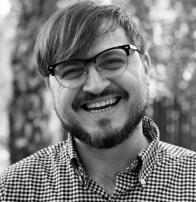
Darren Byler received his Ph.D. from the Department of Anthropology at the University of Washington in 2018. His research focuses on Uyghur dispossession, culture work and "terror capitalism" in the city of Ürümchi, the capital of Xinjiang. He has published research articles in the Asia-Pacific Journal, Contemporary Islam, Central Asian Survey, the Journal of Chinese Contemporary Art and contributed essays to volumes on ethnography of Islam in China, transnational Chinese cinema and travel and representation. He has provided expert testimony on Uyghur human rights issues before the Canadian House of Commons and writes a regular column on these issues for SupChina. In addition, he has published Uyghur-English literary translations (with Mutellip Enwer) in Guernica and Paper Republic. He also writes and curates the digital humanities art and politics repository The Art of Life in Chinese Central Asia, which is hosted at livingotherwise.com.
James Millward is Professor of Inter-societal History at the Walsh School of Foreign Service, Georgetown University, teaching Chinese, Central Asian and world history. He is also an affiliated professor in the Máster Oficial en Estudios de Asia Oriental at the University of Granada, Spain. His specialties include Qing empire; the silk road; Eurasian lutes and music in history; and historical and contemporary Xinjiang. He follows and comments on current issues regarding the Uyghurs and PRC ethnicity policy. Millward has served on the boards of the Association for Asian Studies (China and Inner Asia Council) and the Central Eurasian Studies Society, and was president of the Central Eurasian Studies Society in 2010. He edits the ''Silk Roads'' series for University of Chicago Press. His publications include The Silk Road: A Very Short Introduction (2013), Eurasian Crossroads: A History of Xinjiang (2007), New Qing Imperial History: The Making of Inner Asian Empire at Qing Chengde (2004), and Beyond the Pass: Economy, Ethnicity and Empire in Qing Central Asia (1998). His articles and op-eds on contemporary China appear in The New York Times, The Los Angeles Review of Books, The New York Review of Books and other media. Image

Thomas Mullaney is Professor of Chinese History at Stanford University, and Curator of the international exhibition, "Radical Machines: Chinese in the Information Age." He is the author of The Chinese Typewriter: A History (MIT Press 2017), Coming to Terms with the Nation: Ethnic Classification in Modern China (UC Press, 2010), and principal editor of Critical Han Studies: The History, Representation and Identity of China’s Majority (UC Press, 2011). His writings have appeared in the Journal of Asian Studies, Technology & Culture, Aeon, Foreign Affairs, and Foreign Policy, and his work has been featured in the LA Times, The Atlantic, the BBC, and in invited lectures at Google, Microsoft, Adobe, and more. He holds a Ph.D. from Columbia University.Image

Image

Lauren Hansen Restrepo is Assistant Professor in Growth and Structure of Cities at Bryn Mawr College. She focuses on Chinese development planning and urbanization in Xinjiang, changes within urban Uyghur society, and state-society relations in Xinjiang’s cities. She also works on issues more broadly related to urban and economic development in conflict areas; urbanization in minority-majority regions; housing and slum upgrading; Chinese city planning; cross-border economic and development planning in Western China and Central Asia; development planning and practice in authoritarian states; gender and development. Her book manuscript, Chinese Construction at the New Frontier: The Government of Uyghur Identity in Urban Xinjiang, combines ethnographic research with historical and policy analysis to assess the relationship between urban development, social control, and identity politics among upwardly mobile Uyghurs in Urumqi, the capital of Xinjiang.
Philippines Conference Room
616 Jane Stanford Way
Encina Hall, Central, 3rd Floor
Stanford, CA 94305