-

Controlling the Narrative: The Coordination & Disciplining Role of the People's Daily in China with Professor Joseph Piotroski, Stanford University

This seminar provides an overview of corporate news reporting in China, with a focus on understanding the political and market-based incentives behind Chinese newspapers' biased coverage of China's listed companies. And, given these prevailing incentives, we will explore how politicians in China use the Party's flagship newspaper, the People’s Daily, to coordinate the reporting of corporate news in China.


Image
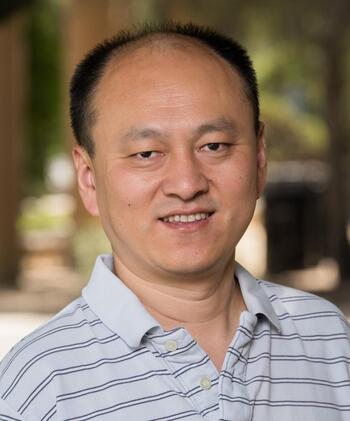
Headshot of Dr. Joseph Piotroski
About the Speaker

Joseph Piotroski is the Robert K. Jaedicke Professor of Accounting at Stanford University’s Graduate School of Business, and a Senior Fellow at the Asian Bureau of Finance and Economic Research (ABFER). Professor Piotroski earned his PhD from the University of Michigan in 1999, an MBA from Indiana University in 1994, a BS in Accounting from the University of Illinois in 1989, and worked as a tax consultant for Coopers and Lybrand in Chicago. His research focuses on corporate transparency, governance, and regulation in a global context. His current research examines the impact of legal, political, and regulatory forces on capital market behavior and corporate decision-making, most notably in China and other emerging economies. His research has been published in scholarly journals in the areas of accounting, finance, and economics, and his research on value investing has been frequently cited in the popular press and is widely used in practice. 


Seminar Series Moderators:

Image
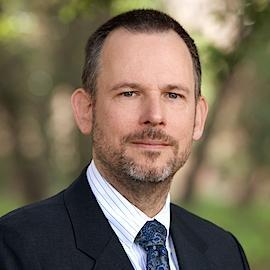
Headshot of Dr. Scott Rozelle

Scott Rozelle is the Helen F. Farnsworth Senior Fellow and Co-Director of Stanford Center on China's Economy and Institutions in the Freeman Spogli Institute for International Studies and Stanford Institute for Economic Policy Research at Stanford University. For the past 30 years, he has worked on the economics of poverty reduction. Currently, his work on poverty has its full focus on human capital, including issues of rural health, nutrition and education. For the past 20 year, Rozelle has been the chair of the International Advisory Board of the Center for Chinese Agricultural Policy, Chinese Academy of Sciences (CAS). In recent years Rozelle spends most of his time co-directing the Rural Education Action Project (REAP). In recognition of his outstanding achievements, Rozelle has received numerous honors and awards, including the Friendship Award in 2008, the highest award given to a non-Chinese by the Premier; and the National Science and Technology Collaboration Award in 2009 for scientific achievement in collaborative research.

Image
hongbin li headshot
Hongbin Li is the James Liang Senior Fellow and Co-Director of the Stanford Center on China's Economy and Institutions in Freeman Spogli Institute for International Studies and the Stanford Institute for Economic Policy Research. Hongbin obtained his Ph.D. in economics from Stanford University in 2001 and joined the economics department of the Chinese University of Hong Kong (CUHK), where he became full professor in 2007. He was also one of the two founding directors of the Institute of Economics and Finance at the CUHK. He taught at Tsinghua University in Beijing 2007-2016 and was C.V. Starr Chair Professor of Economics in the School of Economics and Management. He also founded and served as the Executive Associate Director of the China Social and Economic Data Center at Tsinghua University. He founded the Chinese College Student Survey (CCSS) in 2009 and the China Employer-Employee Survey (CEES) in 2014.

Hongbin’s research has been focused on the transition and development of the Chinese economy, and the evidence-based research results have been both widely covered by media outlets and well read by policy makers around the world . He is currently the co-editor of the Journal of Comparative Economics.


Register Here

Joseph Piotroski
Seminars
-

Stanford Libraries and the Stanford Center on China’s Economy and Institutions hosted the 2021 Dr. Sam-Chung Hsieh Memorial Lecture featuring Professor Barry Naughton speaking on The Summer of 2021: Consolidation of the New Chinese Economic Model.

Read the event recap and watch the recording on demand. 

During the summer of 2021, a “regulatory storm” shook markets in China.  While the crackdown had its most immediate effects on private education, internet business, and finance, the government has also rolled out new policies to shape manufacturing and infrastructure, and even household fertility and income distribution.  In this talk, Naughton interprets these actions as an extension of the ongoing Chinese government effort to exercise “grand steerage” of the economy.  The new policies of summer 2021 in fact represent the consolidation of a new model, in which the Chinese government decisively steers a predominantly market economy.

Watch the Recording


About the Speaker

Image
Photo of Barry Naughton giving a lecture.
Barry Naughton is the So Kwan Lok Chair of Chinese International Affairs at the School of Global Policy and Strategy at UC San Diego. He is one of the world’s most highly respected economists working on China. He is an authority on the Chinese economy with an emphasis on issues relating to industry, trade, finance and China's transition to a market economy.

Naughton’s recent research focuses on regional economic growth in China and its relationship to foreign trade and investment. He has addressed economic reform in Chinese cities, trade and trade disputes between China and the United States and economic interactions among China, Taiwan and Hong Kong.

Naughton has written the authoritative textbook “The Chinese Economy: Transitions and Growth,” which has now been translated into Chinese. His groundbreaking book “Growing Out of the Plan: Chinese Economic Reform, 1978-1993” received the Ohira Memorial Prize, and he most recently translated, edited and annotated a collection of articles by the well-known Chinese economist Wu Jinglian. Naughton writes a quarterly analysis of the Chinese economy for China Leadership Monitor. 

Read more about Professor Naughton.


The family of Dr. Sam-Chung Hsieh donated his personal archive to the Stanford Libraries' Special Collections and endowed the Dr. Sam-Chung Hsieh Memorial Lecture series to honor his legacy and to inspire future generations. Dr. Sam-Chung Hsieh (1919-2004) was former Governor of the Central Bank in Taiwan. During his tenure, he was responsible for the world's largest foreign exchange reserves, and was widely recognized for achieving stability and economic growth. In his long and distinguished career as economist and development specialist, he held key positions in multilateral institutions including the Asian Development Bank, where as founding Director, he was instrumental in advancing the green revolution and in the transformation of rural Asia.

Read more about Dr. Hsieh.


Event Sponsors:
Stanford Libraries
Stanford Center on China's Economy & Institutions

Zoom Webinar

Barry Naughton
Lectures
-

*For fall quarter 2021, CISAC will be hosting hybrid events. Many events will offer limited-capacity in-person attendance for Stanford faculty, staff, fellows, visiting scholars, and students in accordance with Stanford’s health and safety guidelines, and be open to the public online via Zoom. All CISAC events are scheduled using the Pacific Time Zone.


REGISTRATION


Seminar Recording

About the Event: According to the Theory of the Nuclear Revolution (TNR), nuclear weapons have stabilized relations between great powers, making deterrence easier than compellence. This view is currently under attack. Recent work has documented Washington’s competitive approach to arms control agreements and the fragility of the nuclear stalemate. However, these critiques have not explained how policymakers could hope to extract coercive benefits from nuclear weapons. This paper revisits this question using a game-theoretic model. It shows that if the compellent state is able to bolster the credibility of its threat through standard techniques, i.e. burning bridges, probabilistic threats, or the rationality of irrationality, then compellence may succeed. However, greater military capabilities bolster coercion by increasing the risk of disaster, with first-strike capabilities being especially destabilizing. TNR was correct to warn about the risks of nuclear competition.

View paper


About the Speaker: 

Alexandre Debs is Associate Professor of Political Science at Yale University. 

His research focuses on the causes of war, nuclear proliferation, and democratization, and it has appeared in top journals such as the American Political Science Review, the American Journal of Political Science, the Journal of PoliticsInternational Organization, and International Security. He wrote with Nuno Monteiro the book Nuclear Politics: The Strategic Causes of Proliferation (2017, Cambridge University Press).

Alexandre received a Ph.d. in Economics from M.I.T., an M.Phil. in Economic and Social History from the University of Oxford as a Rhodes scholar, and a B.Sc. in Economics and Mathematics from Universite de Montreal.

Virtual Only. This event will not be held in person.

​Alexandre Debs Associate Professor Yale University
Seminars
-

* Please note all CISAC events are scheduled using the Pacific Time Zone.

This event is hosted by the Hoover Institution and co-sponsored by CISAC.

Registration required to attend in person.

Event and Registration Link: https://www.hoover.org/events/spies-lies-and-algorithms

About the Event: Spying has never been more ubiquitous―or less understood. The world is drowning in spy movies, TV shows, and novels, but universities offer more courses on rock and roll than on the CIA and there are more congressional experts on powdered milk than espionage. This crisis in intelligence education is distorting public opinion, fueling conspiracy theories, and hurting intelligence policy. In Spies, Lies, and Algorithms, Amy Zegart separates fact from fiction as she offers an engaging and enlightening account of the past, present, and future of American espionage as it faces a revolution driven by digital technology.

Drawing on decades of research and hundreds of interviews with intelligence officials, Zegart provides a history of U.S. espionage, from George Washington’s Revolutionary War spies to today’s spy satellites; examines how fictional spies are influencing real officials; gives an overview of intelligence basics and life inside America’s intelligence agencies; explains the deadly cognitive biases that can mislead analysts; and explores the vexed issues of traitors, covert action, and congressional oversight. Most of all, Zegart describes how technology is empowering new enemies and opportunities, and creating powerful new players, such as private citizens who are successfully tracking nuclear threats using little more than Google Earth. And she shows why cyberspace is, in many ways, the ultimate cloak-and-dagger battleground, where nefarious actors employ deception, subterfuge, and advanced technology for theft, espionage, and information warfare.

Order Now


About the Speaker: 

Amy Zegart is the Morris Arnold and Nona Jean Cox Senior Fellow at the Hoover Institution and Professor of Political Science (by courtesy) at Stanford University. She is also a Senior Fellow at Stanford’s Freeman Spogli Institute for International Studies, Chair of Stanford’s Artificial Intelligence and International Security Steering Committee, and a contributing writer at The Atlantic. She specializes in U.S. intelligence, emerging technologies and national security, grand strategy, and global political risk management.

In person at Hauck Auditorium Hoover Institution and Livestreamed at https://www.hoover.org/events/spies-lies-and-algorithms

Hoover Institution
Stanford University
Stanford, CA 94305-6010

0
Senior Fellow, by courtesy, at the Freeman Spogli Institute for International Studies
Professor of Political Economy in the Graduate School of Business
Professor of Political Science
Thomas and Barbara Stephenson Senior Fellow on Public Policy at the Hoover Institution
2214-small_C_RICEMI60239-004078r5X7..jpg PhD

Condoleezza Rice is the Tad and Dianne Taube Director of the Hoover Institution and a Senior Fellow on Public Policy. She is the Denning Professor in Global Business and the Economy at the Stanford Graduate School of Business. In addition, she is a founding partner of Rice, Hadley, Gates & Manuel LLC, an international strategic consulting firm.

From January 2005 to January 2009, Rice served as the 66th Secretary of State of the United States, the second woman and first black woman to hold the post. Rice also served as President George W. Bush’s Assistant to the President for National Security Affairs (National Security Advisor) from January 2001 to January 2005, the first woman to hold the position.

Rice served as Stanford University’s provost from 1993 to 1999, during which time she was the institution’s chief budget and academic officer. As Professor of Political Science, she has been on the Stanford faculty since 1981 and has won two of the university’s highest teaching honors.

From February 1989 through March 1991, Rice served on President George H.W. Bush’s National Security Council staff. She served as Director, then Senior Director, of Soviet and East European Affairs, as well as Special Assistant to the President for National Security. In 1986, while an International Affairs Fellow of the Council on Foreign Relations, Rice also served as Special Assistant to the Director of the Joint Chiefs of Staff.

She has authored and co-authored numerous books, most recently To Build a Better World: Choices to End the Cold War and Create a Global Commonwealth (2019), co-authored with Philip Zelikow. Among her other volumes are three bestsellers, Democracy: Stories from the Long Road to Freedom (2017); No Higher Honor: A Memoir of My Years in Washington (2011); and Extraordinary, Ordinary People: A Memoir of Family (2010). She also wrote Political Risk: How Businesses and Organizations Can Anticipate Global Insecurity (2018) with Amy B. Zegart; Germany Unified and Europe Transformed: A Study in Statecraft (1995) with Philip Zelikow; edited The Gorbachev Era (1986) with Alexander Dallin; and penned The Soviet Union and the Czechoslovak Army; 1948-1983: Uncertain Allegiance (1984).

In 1991, Rice co-founded the Center for a New Generation (CNG), an innovative, after-school academic enrichment program for students in East Palo Alto and East Menlo Park, California. In 1996, CNG merged with the Boys & Girls Club of the Peninsula, an affiliate club of the Boys & Girls Clubs of America (BCGA). CNG has since expanded to local BGCA chapters in Birmingham, Atlanta, and Dallas. Rice remains an active proponent of an extended learning day through after-school programs.

Since 2009, Rice has served as a founding partner at Rice, Hadley, Gates, & Manuel LLC, an international strategic consulting firm based in Silicon Valley and Washington, D.C. The firm works with senior executives of major companies to implement strategic plans and expand in emerging markets. Other partners include former National Security Advisor Stephen J. Hadley, former Secretary of Defense Robert M. Gates, and former diplomat, author, and advisor on emerging markets, Anja Manuel.

In 2022, Rice became a part-owner of the Denver Broncos as a part of the Walton-Penner Family Ownership Group. In 2013, Rice was appointed to the College Football Playoff Selection Committee, formerly the Bowl Championship Series. She served on the committee until 2017.

Rice currently serves on the boards of C3.ai, an AI software company; and Makena Capital Management, a private endowment firm. In addition, she is Vice Chair of the Board of Governors of the Boys & Girls Clubs of America and a trustee of the Aspen Institute. Previously, Rice served on various boards, including Dropbox; the George W. Bush Institute; the Commonwealth Club; KiOR, Inc.; the Chevron Corporation; the Charles Schwab Corporation; the Transamerica Corporation; the Hewlett-Packard Company; the University of Notre Dame; the Foundation of Excellence in Education; the John F. Kennedy Center for the Performing Arts; and the San Francisco Symphony.

Born in Birmingham, Alabama, Rice earned her bachelor’s degree in political science, cum laude and Phi Beta Kappa, from the University of Denver; her master’s in the same subject from the University of Notre Dame; and her Ph.D., likewise in political science, from the Graduate School of International Studies at the University of Denver.

Rice is a Fellow of the American Academy of Arts and Sciences and has been awarded over fifteen honorary doctorates.

Seminars
-

SEMINAR RECORDING


All CISAC events are scheduled using the Pacific Time Zone. This event is part of the year-long initiative on “Ethics & Political Violence” jointly organized by the Center for International Security and Cooperation (CISAC) and The McCoy Family Center for Ethics in Society. This event is hosted by CISAC and is co-sponsored by Society for International Affairs at Stanford, McCoy Family Center for Ethics in Society, Center for South Asia.


About the Event: The dramatic scenes the world witnessed during the fall of Kabul in 2021 following the withdrawal of US and allied forces from Afghanistan nearly coincided with the twentieth anniversary of the 9/11 attacks by Al Qaeda and the subsequent US and allied invasion of Afghanistan. The United States committed trillions of dollars, dispatched soldiers, diplomats and spies across the globe, and made dramatic alterations to domestic and international law to combat terrorism. The material, humanitarian and normative consequences of two decades of war have been significant, both globally and in Afghanistan specifically. In this panel, Dr. Felter, Dr. Mir and Professor Zegart will assess U.S. responses during the global war on terror, identify unexpected outcomes and lessons learned, and ultimately weigh the costs and benefits of this two-decade struggle against terrorism.


About the Speakers: 

Joe Felter is a William J. Perry Fellow at the Center for International Security and Cooperation and research fellow at the Hoover Institution.  From 2017 to 2019, Felter served as US deputy assistant secretary of defense for South Asia, Southeast Asia, and Oceania. There he was the principal advisor for all policy matters pertaining to development and implementation of defense strategies and plans in the region and responsible for managing bilateral security relationships and guiding Department of Defense (DoD) engagement with multilateral institutions.  


Asfandyar Mir is a senior expert in the Asia Center at USIP. Previously, heheld various fellowships at the Center for International Security and Cooperation at Stanford University. His research interests include the international relations of South Asia, U.S. counterterrorism policy and political violence — with a regional focus on Afghanistan and Pakistan. Asfandyar Mir’s research has appeared in peer-reviewed journals, such as International Security, International Studies Quarterly and Security Studies. He received his doctorate in political science from the University of Chicago and a master’s and bachelor’s from Stanford University.


Amy Zegart is the Morris Arnold and Nona Jean Cox Senior Fellow at the Hoover Institution and Professor of Political Science (by courtesy) at Stanford University. She is also a Senior Fellow at Stanford’s Freeman Spogli Institute for International Studies, Chair of Stanford’s Artificial Intelligence and International Security Steering Committee, and a contributing writer at The Atlantic. She specializes in U.S. intelligence, emerging technologies and national security, grand strategy, and global political risk management.

Virtual to Public. Only those with an active Stanford ID with access to William J Perry Conference Room in Encina Hall may attend in person. 

0
rsd19_072_0386a.jpg

Asfandyar Mir is an affiliate with the Center for International Security and Cooperation, Stanford University. Previously he has held predoctoral and postdoctoral fellowships at the center. His research interests are in the international relations of South Asia, US counterterrorism policy, and political violence, with a regional focus on Afghanistan and Pakistan. His research has appeared in peer-reviewed journals of International Relations, such as International Security, International Studies Quarterly and Security Studies, and his commentary has appeared in Foreign Affairs, Foreign Policy, H-Diplo, Lawfare, Modern War Institute, Political Violence at a Glance, Politico, and the Washington Post.

Asfandyar received his PhD in political science from the University of Chicago and a masters and bachelors from Stanford University.

Affiliate

CISAC
Stanford University
Encina Hall, E216
Stanford, CA 94305-6165

(650) 725-9754 (650) 723-0089
0
Senior Fellow at the Freeman Spogli Institute for International Studies
Morris Arnold and Nona Jean Cox Senior Fellow at the Hoover Institution
Senior Fellow at the Stanford Institute for Human-Centered AI
Professor, by courtesy, of Political Science
amyzegart-9.jpg PhD

Dr. Amy Zegart is the Morris Arnold and Nona Jean Cox Senior Fellow at the Hoover Institution. The author of five books, she specializes in U.S. intelligence, emerging technologies, and national security. At Hoover, she leads the Technology Policy Accelerator and the Oster National Security Affairs Fellows Program. She also is an associate director and senior fellow at the Stanford Institute for Human-Centered AI; a senior fellow at the Freeman Spogli Institute; and professor of political science by courtesy, teaching 100 students each year about how emerging technologies are transforming espionage.

Her award-winning research includes the leading academic study of intelligence failures before 9/11: Spying Blind: The CIA, the FBI, and the Origins of 9/11 (Princeton, 2007) and the bestseller Spies, Lies, and Algorithms: The History and Future of American Intelligence (Princeton, 2022), which was nominated by Princeton University Press for the Pulitzer Prize. She also coauthored Political Risk: How Businesses and Organizations Can Anticipate Global Insecurity, with Condoleezza Rice (Twelve, 2018). Her op-eds and essays have appeared in Foreign Affairs, Politico, the New York Times, the Washington Post, and the Wall Street Journal.

Zegart has advised senior officials about intelligence and foreign policy for more than two decades. She served on the National Security Council staff and as a presidential campaign foreign policy advisor and has testified before numerous congressional committees. Before her academic career, she spent several years as a McKinsey & Company consultant.

Zegart received an AB in East Asian studies from Harvard and an MA and a PhD in political science from Stanford. She serves on the boards of the Council on Foreign Relations, Kratos Defense & Security Solutions, and the American Funds/Capital Group.

Date Label
Seminars
Authors
Oriana Skylar Mastro
News Type
Commentary
Date
Paragraphs

In her recent Foreign Affairs essay, The Taiwan Temptation: Why Beijing Might Resort to Force, Center Fellow Oriana Skylar Mastro argues that Chinese leaders now consider a military campaign to take Taiwan a real possibility and cautions that the United States cannot by itself alter Beijing’s calculus on Taiwan. The essay sparked a heated debate. In the September/October issue of Foreign Affairs, several scholars — Rachel Esplin Odell and Eric Heginbotham, Bonny Lin and David Sacks, and Kharis Templeman — provide counterarguments to Mastro's analysis and she responds to their criticism. Read her complete rebuttal below.


Sign up for APARC newsletters to receive our experts' analysis and commentary. 


Rachel Esplin Odell and Eric Heginbotham, Bonny Lin and David Sacks, and Kharis Templeman all argue that China is unlikely to attempt armed unification with Taiwan. Although I appreciate their perspectives, they do not present any new evidence that would make me reconsider my assessment that the risk of Chinese aggression across the Taiwan Strait is real and growing. To the contrary, they repeat many of the increasingly dangerous misperceptions that I sought to dispel in my original article—namely, that China does not have the military capabilities to pull off an amphibious invasion, that the economic costs of an invasion would be sufficient to deter Chinese President Xi Jinping, and that China can afford to wait indefinitely to achieve its most important national goal of unification. My critics assume that insofar as there are risks, they can be dealt with through relatively limited adjustments in U.S. policy and military posture — a position with which I still strongly disagree. 

Let’s take these arguments in order. My critics say that I have exaggerated China’s military capabilities and understated the difficulties of an invasion. But their assessments rely on outdated or largely irrelevant comparisons. Odell and Heginbotham, for instance, note that the United States needed more naval tonnage to capture Okinawa from Japan in 1945 than China has today. But this example is inapposite. Japan’s military was more than six million strong in 1945 and had been fighting for over a decade; Taiwan’s military consists of 88,000 personnel and two million reservists, of whom only 300,000 are required to complete even a five-week refresher training course. Tonnage, moreover, is not a useful metric. Modern navies have moved to lighter, more flexible fleets. Odell and Heginbotham point out that civilian ships were of only limited use in the Falklands War, but the United Kingdom used just 62 of them in that campaign. The People’s Armed Forces Maritime Militia has many thousands of ships and is closer to a naval force than a civilian one. If China were to mobilize all its naval vessels, including its new large amphibious transport ships and civilian ships, it could hypothetically carry hundreds of thousands of troops across the 80-mile-wide Taiwan Strait in a short period of time. Even if the United States had enough warning to optimally position its submarines, it does not have enough munitions to target such a large force. 

For their part, Lin and Sacks argue that to believe China can take Taiwan by force is to fall for a Chinese misinformation campaign. They warn that “analysts should not accept at face value China’s claim that it could easily win a fight against Taiwan.” But no one, not even the cockiest of People’s Liberation Army analysts, argues that a full-scale attack on Taiwan would be easy, only that the PLA could prevail at an acceptable cost. Moreover, my assessment of Chinese military capabilities is not based on Chinese discourse or the results of war games alone. Reams of unbiased and rigorous analysis—from the U.S. Department of Defense’s annual report to Congress on China’s military modernization to Congressional Research Service reports on Chinese naval modernization to hundreds of studies by think tanks and defense-affiliated organizations, such as the RAND Corporation—suggest that the PLA has made unparalleled advances in the past two decades and could take on the United States in certain scenarios. Indeed, Heginbotham himself argued in 2017 that “the balance of power between the United States and China may be approaching a series of tipping points, first in contingencies close to the Chinese coast (e.g., Taiwan).” 

I do not mean to suggest that a Chinese invasion would be a cakewalk. Taiwan could get some shots in, but it does not have the ability to defend itself. Luckily, the United States would, I believe, come to Taiwan’s aid and could still prevail in many scenarios. Taiwan is far from a lost cause. But ten years ago, the United States would have prevailed in any scenario. Because there are now some scenarios in which U.S. strategists think the United States could lose, it is not unfathomable to think that Chinese strategists have come to a similar conclusion. 

My critics also argue that economic considerations will deter Beijing. Should China attempt to use force to assert control over Taiwan, the international response would be severe enough to imperil Xi’s ambitious development goals. But as I argued in my original article, Chinese analysts have good reason to think the international response would be weak enough to tolerate. China could even reap economic benefits from controlling Taiwan, whose manufacturers accounted for more than 60 percent of global revenue from semiconductors last year. The United States is heavily reliant on Taiwanese semiconductors. Should China take Taiwan, it could conceivably deprive the United States of this technology and gain an economic and military advantage. 

But economic costs or benefits, while part of Beijing’s calculus, are unlikely to be the determining factor. Xi’s top priority is protecting China’s sovereignty and territorial integrity—as Beijing defines it. China’s Belt and Road Initiative, its militarization of the South China Sea, and its sanctions against countries that offend it, such as Australia or South Korea, all demonstrate that Chinese leaders are willing to subordinate economic considerations to considerations of power and prestige. In a speech marking the 100th anniversary of the Chinese Communist Party in July, Xi warned against foreign attempts to bully or oppress China, declaring that “anyone who dares try to do that will have their heads bashed bloody against the great wall of steel forged by over 1.4 billion Chinese people.” Those words should be taken seriously. 

Finally, my critics argue that China has no need to attempt to forcibly unify with Taiwan. Lin and Sacks think peaceful unification is working; Templeman believes China can wait indefinitely to resolve the issue. I disagree because I think unification is a top priority for the Chinese Communist Party and Taiwan will not give up its autonomy without a fight. 

A Chinese invasion is by no means imminent or inevitable, but Beijing is now seriously considering initiating a conflict to gain political control over Taiwan, whereas in the past the only scenario in which it would have used force was to prevent Taipei from declaring independence. I agree with Templeman that China is unlikely to invade in the next four years (although I think this is largely because China could benefit from more time to prepare, not because it fears U.S. President Joe Biden’s resolve), but his argument that China can wait indefinitely is logically and empirically flawed. As I argued in my original article, Xi has made numerous statements that suggest he wants to achieve unification during his reign. It would be unwise to dismiss these as mere rhetoric, since he has repeatedly voiced his intention to assert control over other territorial claims before doing exactly that — in the South China Sea, by building military infrastructure and conducting naval drills, and in Hong Kong, by imposing a harsh national security law last year.

Beijing still needs to put boots on the ground to gain full political control of Taiwan.
Oriana Skylar Mastro

Templeman argues that if China believes the United States is in decline, then it has every reason to wait on Taiwan. But in the eyes of Chinese strategists, American decline actually hastens the need for action. Power transition theory, which holds that war becomes more likely as the gap between a rising power and an established great power diminishes, is also studied in Beijing. And although U.S. strategists fret that a rising China, dissatisfied with the U.S.-led international order, will become aggressive and start a conflagration, Chinese strategists fear a different pathway to war. They worry that the United States, unable to accept its inevitable decline, will make a dangerous last-ditch effort to hold on to its unrivaled great-power status. By this logic, a declining United States is more dangerous than a stable, ascendant one. 

Lin and Sacks make a different argument for why Beijing does not need to attempt armed unification. They believe that Chinese leaders remain committed to their long-standing approach of limited coercion coupled with economic incentives showcasing the benefits of unification because that strategy is working. As evidence of Beijing’s progress, Lin and Sacks point to polling that shows the majority of people in Taiwan support the status quo, not independence. But it is an enormous leap from not supporting independence to desiring or conceding to unification. As Lin and Sacks themselves acknowledge, China has employed this strategy of limited coercion and economic inducements for decades, but Taiwan is no closer to being a part of mainland China. In a September 2020 poll conducted by National Chengchi University, only six percent of Taiwanese citizens preferred eventual or immediate unification. So although Lin and Sacks are correct that Beijing will likely continue with its carrot-and-stick approach, it will still need to put boots on the ground to gain full political control of Taiwan. 

My critics also raise concerns about some of the policy implications of my argument. Odell and Heginbotham warn against focusing too much on the credibility of the U.S. military threat when it comes to deterrence, rightly highlighting the equal importance of reassurance. They warn that changes in U.S. policy toward Taiwan could convince Beijing that the United States now supports Taiwanese independence — a misperception that could lead to war. But my argument is for a change in posture, not in policy: the United States should develop the force posture and operational plans to deny China its objective in Taiwan and then credibly reveal these new capabilities. It should not make dangerous policy changes that would risk provoking a Chinese military response. Indeed, I have argued elsewhere that even if a war breaks out over Taiwan and the United States wins, Washington should not demand Taiwan’s independence as one of the terms of peace. 

Templeman raises a separate concern: that highlighting the potential costs of defending Taiwan could bolster the case of those advocating that Washington abandon Taipei. If this were a serious worry, I would be the first to shift my work to more private channels. But those calling for the United States to reconsider its commitment to defend Taiwan are still in the minority, and the Biden administration has been clear that it would come to Taiwan’s aid in the event of an invasion.

Moreover, the reaction of the U.S. Department of Defense to the threat posed by China’s growing military power has been not to back down but to ramp up efforts to counter it. From new doctrines that enhance joint capabilities between the U.S. Air Force and the U.S. Navy to base-resilience initiatives to efforts to improve U.S. early warning systems in the region, the Pentagon is firing on all cylinders to ensure it can deter and, if necessary, defeat China in a wide range of conflict scenarios. U.S. Cyber Command, the U.S. Space Force, and the Department of Defense’s Joint Artificial Intelligence Center were all established partly to counter Chinese advantages in those organizations’ respective domains. If Lin and Sacks are correct that China exaggerates its capabilities to try to convince the United States to give up, Beijing has achieved the opposite.   

In the end, all my critics highlight an important truth: the situation across the Taiwan Strait has been relatively stable for 70 years because of the United States. Washington has managed to convince Beijing that armed unification would fail and that China would pay a hefty price for trying. But China is not the same country it was 70 years ago. Its rapid military modernization, spectacular economic ascent, and growing global influence have changed Beijing’s calculus on many issues. It has taken a more assertive approach to international institutions; built one of the world’s largest, most capable militaries; and extended its economic influence deep and far throughout the world. It would be wishful thinking to assume that China has not also changed its thinking on Taiwan.

Indeed, although my critics argue that China is unlikely to invade, they still recommend that Taiwan improve its defenses and that the United States enhance its military posture in the region — not exactly a vote of confidence in Beijing’s restraint. I had hoped to convince skeptics that China is now seriously considering armed unification, but at least our debate has yielded a consensus that more must be done in Taipei and Washington to enhance deterrence across the Taiwan Strait.

Read More

An Island that lies inside Taiwan's territory is seen with the Chinese city of Xiamen in the background.
Commentary

The Taiwan Temptation

Why Beijing Might Resort to Force
The Taiwan Temptation
A case holding lunar rock and debris collected from the Moon by China's space program that is part of a display at the National Museum of China is seen on March 2, 2021 in Beijing,
Commentary

Chinese Space Ambition

On the American Foreign Policy Council Space Strategy podcast, Center Fellow Oriana Skylar Mastro discusses how China views space and why the United States must not surrender global leadership in pursuing aspirational and inspirational space goals.
Chinese Space Ambition
Indian Prime Minister Narendra Modi rides in a tank at Longewala in Jaisalmer, Rajasthan, 14 November 2020.
Commentary

India, China, and the Quad’s Defining Test

The Ladakh crisis between China and India seems to have settled into a stalemate, but its trajectory could again turn suddenly. If it flares into a limited conventional war, one of its incidental victims could be the Quad.
India, China, and the Quad’s Defining Test
Hero Image
Figures of Kuomintang soldiers are seen in the foreground, with the Chinese city of Xiamen in the background, on February 04, 2021 in Lieyu, an outlying island of Kinmen that is the closest point between Taiwan and China.
An Rong Xu/ Getty Images)
All News button
1
Subtitle

Debating Beijing’s Threat to Taiwan

Date Label
Authors
Hongbin Li
News Type
News
Date
Paragraphs

This article was first published in Vox China. Read the full article online.

In 2021, over 10.78 million Chinese high school students took the college entrance exam (Gaokao): a historical high. While the Gaokao is the most important talent selection channel in China, many questions about the Gaokao system remain unanswered. Does the exam measure ability? What type of ability? Does the exam score make a difference for a young person’s future career? Are higher-score individuals more likely to work in government, become entrepreneurs, or earn higher wages?

It is impossible to provide comprehensive answers to all of these questions in a single study, but here, we provide partial answers to some of these questions. Our results come from a recent study, motivated by a theoretical literature on talent allocation (e.g., Baumol 1990; Murphy, Shleifer and Vishny 1991; Acemoglu 1995). This literature has long noted that talent is general and can be used in both the entrepreneurial and non-entrepreneurial sectors, and that its allocation depends on the reward structure of a society. While this important theory of talent allocation has been developed for three decades, few empirical studies have directly tested it due to data challenges.

In Bai, Jia, Li and Wang (2021), we study whether talented Chinese are more or less likely to become entrepreneurs. Empirically, we link the universe of college admission records in 1999–2003 with the universe of Chinese firms and their owners, and then use a random sample of 20% of the linked data to examine who have become entrepreneurs and how successful their firms are. In total, this yields a sample of 1.8 million college graduates who created approximately 170,000 firms by 2015. We supplement this linked data with a large survey of Chinese college graduates that we conducted during 2010–2015 to study waged jobs. We use students’ Gaokao score as a proxy for talent and validate our measure with data.

Research design: within-college comparison

We focus on within-college analyses -- comparing individuals in their mid-30s with others in their cohort who graduated from the same college -- for conceptual and empirical reasons. Conceptually, the within-college comparison helps to control for the confounding factors of college reputation and network. Empirically, we find that most of the variation in firm creation comes from within colleges. For instance, although college fixed effects can explain up to 19% of the variation in wages of paid jobs (in our survey data), the effects can account for only 1.2% of the variation in firm creation. In addition, we find that the college fixed effects can explain only 46% of the variation in exam scores, leaving the majority of the variation to occur within colleges. The wide variation in scores within a college is driven by considerable uncertainty and political economy factors (particularly provincial quotas) in the college admission process. In addition, because Gaokao scores are comparable only for students from the same province and year, as well as the same academic track (social science vs. natural science), we isolate province-year-track fixed effects in our analyses.

We control for a set of individuals’ personal characteristics, which include gender, Hukou (rural vs. urban), high school quality, birth county’s GDP per capita, and age fixed effects. Although we do not have a specific measure of socioeconomic status (such as parental income), it is reasonable to assume that those from better high schools and wealthier counties have higher socioeconomic status. Within colleges, higher socioeconomic status is positively associated with exam scores.

Hero Image
Crowd takes photos on their smartphones of a group of graduates in front of a Chinese university. VoxChina
All News button
1
Subtitle

Hongbin Li's research finds that "In China, the college entrance exam score is predictive for both firm success and wage-job success in the future, yet higher-score individuals are less likely to create firms."

News Type
News
Date
Hero Image
Solar panels in a field in China. GettyImages
All News button
1
Subtitle

SCCEI Affiliate Gretchen Daily is featured in The Washington Post discussing Natural Capital Project and her many research initiatives working to prioritize environmental conservation globally.

Authors
Noa Ronkin
News Type
News
Date
Paragraphs

Around the world, societies are aging at a rapid pace. The demographic transition and the challenges surrounding elderly care are defining issues of our time. Aging populations strain public finances and existing models of social support, affect economic growth, and change disease patterns and prevalence. Many countries, therefore, contemplate policy changes to their retirement, pensions, and health care systems. China, which faces a fast-growing trend of aging cohorts, is no exception.

To alleviate the pressure of elderly care on public finances, the Chinese government has been considering raising retirement ages and corresponding changes in social health insurance and pension policy. A new study now helps evaluate such retirement reforms and provides evidence to inform policy in China and elsewhere by probing the effects of retirement on health care utilization.


Sign up for APARC newsletters to receive our latest research updates.


The study’s co-authors, including Karen Eggleston, director of the Asia Health Policy Program at APARC, leverage administrative data from medical claims for over 80,000 insured adults in a megacity in eastern China to explore the effect of retirement on outpatient and inpatient care utilization. In this case, urban employee insurance beneficiaries receive a reduced patient cost-sharing rate upon retirement. By focusing on a relatively well-insured population with comprehensive administrative data on insurance plan design and overall resource use at retirement, the study provides new evidence about mechanisms such as the reduced out-of-pocket price of health care, the opportunity cost of time, and the interaction of these demand-side factors with supply-side incentives. Eggleston and her colleagues report on their findings in the journal Health Economics.

Our study reveals that increased utilization at retirement primarily comes in the form of outpatient services.

In this relatively well-insured population, annual health care utilization significantly increases primarily because of more intensive use of outpatient care at retirement. This increase in outpatient care stems from a decline in the patient cost-sharing rate, the reduced time constraints upon retirement, and the interaction of these factors with supply-side incentives such as prescribing antibiotics. There is no evidence of change in inpatient care at retirement.

The economics of medical expenditure growth and its interaction with population aging is of considerable policy importance for countries in all income groups. “Our findings may provide useful evidence as one consideration for policymakers in other cities in China and elsewhere looking to increase insurance benefits and control medical spending for burgeoning elderly populations.

Read More

Closeup on hands holding a glucometer
News

A New Validated Tool Helps Predict Lifetime Health Outcomes for Prediabetes and Type 2 Diabetes in Chinese Populations

A research team including APARC's Karen Eggleston developed a new simulation model that supports the economic evaluation of policy guidelines and clinical treatment pathways to tackle diabetes and prediabetes among Chinese and East Asian populations, for whom existing models may not be applicable.
A New Validated Tool Helps Predict Lifetime Health Outcomes for Prediabetes and Type 2 Diabetes in Chinese Populations
A parent holds a child waiting to be given an infusion at an area hospital in China.
News

In China, Better Financial Coverage Increases Health Care Access and Utilization

Research evidence from China’s Tongxiang county by Karen Eggleston and colleagues indicates that enhanced financial coverage for catastrophic medical expenditures increased health care access and expenditures among resident insurance beneficiaries while decreasing out-of-pocket spending as a portion of total spending.
In China, Better Financial Coverage Increases Health Care Access and Utilization
Two women standing in a street in Rajasthan, India
News

Why Insurance Alone May Not Improve Women's Access To Healthcare

A new study of the Rajasthan government's Bhamashah health insurance program for poor households has found that just providing health insurance cover doesn't reduce gender inequality in access to even subsidized health care.
Why Insurance Alone May Not Improve Women's Access To Healthcare
Hero Image
n elderly Chinese man pushes an elderly woman in a wheelchair through a local shopping mall in Beijing, China Kevin Frayer/ Getty Image
All News button
1
Subtitle

The study’s co-authors, including Karen Eggleston, find that health care expenditures among Chinese covered by relatively generous health insurance significantly increase at retirement, primarily due to an increase in the number of outpatient visits.

Subscribe to China