Authors
Oriana Skylar Mastro
News Type
Commentary
Date
Paragraphs

This commentary was originally published by The Wall Street Journal.


A Russian invasion of Ukraine would be the most consequential use of military force in Europe since World War II and could put Moscow in a position to threaten U.S. allies in Europe. Many in the American foreign-policy establishment argue that the appropriate U.S. response to any such invasion is a major American troop deployment to the Continent. This would be a grave mistake.

The U.S. can no longer afford to spread its military across the world. The reason is simple: an increasingly aggressive China, the most powerful state to rise in the international system since the U.S. itself. By some measures, China’s economy is now the world’s largest. And it has built a military to match its economic heft. Twenty-five years ago, the Chinese military was backward and obsolete. But extraordinary increases in Beijing’s defense budget over more than two decades, and top political leaders’ razor-sharp focus, have transformed the People’s Liberation Army into one of the strongest militaries the world has ever seen.


Sign up for APARC newsletters to receive our experts' commentary and analysis.


China’s new military is capable not only of territorial defense but of projecting power. Besides boasting the largest navy in the world by ship count, China enjoys some capabilities, like certain types of hypersonic weapons, that even the U.S. hasn’t developed.

Most urgently, China poses an increasingly imminent threat to Taiwan. Xi Jinping has made clear that his platform of “national rejuvenation” can’t be successful until Taiwan unifies with the mainland—whether it wants to or not. The PLA is growing more confident in its ability to conquer Taiwan even if the U.S. intervenes. Given China’s military and economic strength, China’s leaders reasonably doubt that the U.S. or anyone else would mount a meaningful response to an invasion of Taiwan. To give a sense of his resolve, Mr. Xi warned that any “foreign forces” standing in China’s way would have “their heads . . . bashed bloody against a Great Wall of steel forged by over 1.4 billion Chinese people.”

If Taiwan falls into Chinese hands, the U.S. will find it harder to defend critical allies like Japan and the Philippines, while China will be able to project its naval, air and other forces close to the U.S. and its territories

The U.S. must defend Taiwan to retain its credibility as the leader of a coalition for a free and open Indo-Pacific. From a military perspective, Taiwan is a vital link in the first island chain of the Western Pacific. If Taiwan falls into Chinese hands, the U.S. will find it harder to defend critical allies like Japan and the Philippines, while China will be able to project its naval, air and other forces close to the U.S. and its territories. Taiwan is also an economic dynamo, the ninth-largest U.S. trading partner of goods with a near-monopoly on the most advanced semiconductor technology—to which the U.S. would most certainly lose access after a war.

The Biden administration this month ordered more than 6,000 additional U.S. troops deployed to Eastern Europe, with many more potentially on the way. These deployments would involve major additional uncounted commitments of air, space, naval and logistics forces needed to enable and protect them. These are precisely the kinds of forces needed to defend Taiwan. The critical assets—munitions, top-end aviation, submarines, and intelligence, surveillance and reconnaissance capabilities—that are needed to fight Russia or China are in short supply. For example, stealthy heavy bombers are the crown jewel of U.S. military power, but there are only 20 in the entire Air Force.

The U.S. has no hope of competing with China and ensuring Taiwan’s defense if it is distracted elsewhere. It is a delusion that the U.S. can, as Pentagon press secretary John Kirby said recently, “walk and chew gum at the same time” with respect to Russia and China. Sending more resources to Europe is the definition of getting distracted. Rather than increasing forces in Europe, the U.S. should be moving toward reductions.

To be blunt: Taiwan is more important than Ukraine. America’s European allies are in a better position to take on Russia than America’s Asian allies are to deal with China.

There is a viable alternative for Europe’s defense: The Europeans themselves can step up and do more for themselves, especially with regard to conventional arms. This is well within Europe’s capacity, as the combined economic power of the NATO states dwarfs that of Russia. NATO allies spend far more on their militaries than Russia. To aid its European allies, the U.S. can provide various forms of support, including lethal weapons, while continuing to remain committed to NATO’s defense, albeit in a more constrained fashion, by providing high-end and fungible military capabilities. The U.S. can also continue to extend its nuclear deterrent to NATO.

The U.S. should remain committed to NATO’s defense but husband its critical resources for the primary fight in Asia, and Taiwan in particular. Denying China the ability to dominate Asia is more important than anything that happens in Europe. To be blunt: Taiwan is more important than Ukraine. America’s European allies are in a better position to take on Russia than America’s Asian allies are to deal with China. The Chinese can’t be allowed to think that America’s distraction in Ukraine provides them with a window of opportunity to invade Taiwan. The U.S. needs to act accordingly, crisis or not.

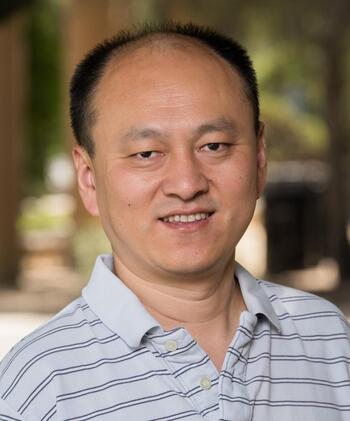
Ms. Mastro is a center fellow at the Shorenstein Asia-Pacific Research Center, part of Stanford’s Freeman Spogli Institute for International Studies, and a nonresident senior fellow at the American Enterprise Institute. Mr. Colby is a principal at the Marathon Initiative and author of “The Strategy of Denial: American Defense in an Age of Great Power Conflict.”

Headshot of Oriana Skylar Mastro

Oriana Skylar Mastro

Center Fellow at the Freeman Spogli Institute for International Studies
Full Biography

Read More

President Xi and Kim Jong Un meet on a TV screen
Commentary

North Korea Is Becoming an Asset for China

Pyongyang’s Missiles Could Fracture America’s Alliances
North Korea Is Becoming an Asset for China
Chinese military propaganda depicting the Second Taiwan Strait Crisis of 1958.
News

Reassessing China’s Capabilities and Goals for Strategic Competition

On the World Class podcast, Oriana Skylar Mastro argues that in order to set effective policy toward China, the United States needs to better understand how and why China is projecting power.
Reassessing China’s Capabilities and Goals for Strategic Competition
Taiwan Wall
Commentary

Would the United States Come to Taiwan's Defense?

On CNN's GPS with Fareed Zakaria, APARC Center Fellow Oriana Skylar Mastro shares insights about China's aspirations to take Taiwan by force and the United States' role, should a forceful reunification come to pass.
Would the United States Come to Taiwan's Defense?
Hero Image
Army Reserve members during practice
U.S. Army Reserve members during a Cold Weather Operations Course near Fort McCoy, Wisconsin, Jan. 13, 2022.
U.S. Army Reserve photo by Sgt. 1st Class Clinton Wood
All News button
1
Subtitle

Getting bogged down in Europe will impede the U.S.’s ability to compete with China in the Pacific.

Date Label
-

For winter quarter 2022, CISAC will be hosting hybrid events. Many events will offer limited-capacity in-person attendance for Stanford faculty, staff, fellows, visiting scholars, and students in accordance with Stanford’s health and safety guidelines, and be open to the public online via Zoom. All CISAC events are scheduled using the Pacific Time Zone. 

SEMINAR RECORDING


About the Event: With the devastating loss of life, economic disruption, and political instability it has wrought, COVID-19 has revealed that national governments and the international community are woefully unprepared to respond to pandemics—underscoring the world’s vulnerability to future catastrophic biological threats that could meet or exceed the severe consequences of the current pandemic. To effectively guard against future biological risks, leaders should take a longer-term view and recognize that, while naturally occurring pandemics remain a threat, the next global catastrophe could result from a laboratory accident or the deliberate misuse of bioscience and biotechnology.   This talk will provide a high-level overview of the broader biothreat landscape and outline actions that national leaders and the international community should take with a view to preventing catastrophic biological events—specifically by constraining capabilities and shaping the intent of powerful actors who may wish to exploit the tools of modern bioscience to cause harm. This talk will outline two priority NTI initiatives to strengthen international capabilities to prevent catastrophic biological events. We are working to develop and launch the International Biosecurity and Biosafety Initiative for Science (IBBIS), a new international organization that will focus on preventing the deliberate abuse or accidental misuse of bioscience and biotechnology by strengthening international biosecurity norms and developing innovative, practical tools to reduce risks throughout the research and development life cycle. NTI is also working to develop the concept of a new Joint Assessment Mechanism to strengthen UN-system capabilities to investigate high-consequence biological events of unknown origin. The ability to rapidly discern the source of emerging pandemics is critical to mitigating their effects in real time and protecting against future risks.
 

About the Speaker: Dr. Jaime M. Yassif is Senior Director and Lead Scientist for Global Biological Policy and Programs at NTI, where her work focuses on strengthening governance of dual-use bioscience and reducing global catastrophic biological risks. Yassif previously served as a Program Officer at Open Philanthropy, where she led the Biosecurity and Pandemic Preparedness initiative. In this role, she managed approximately $40 million in biosecurity grants, which rebuilt the field and supported work in several key areas, including developing new biosecurity programming at leading think tanks, establishing the Global Health Security Index, and initiating new biosecurity work in China and India. Prior to this, Yassif served as a science and technology policy advisor at the U.S. Department of Defense and worked on the Global Health Security Agenda at the U.S. Department of Health and Human Services.

Virtual to Public. Only those with an active Stanford ID with access to William J Perry Conference Room in Encina Hall may attend in person. 

Jaime Yassif NTI
Seminars
News Type
News
Date
Hero Image
Robot arms in a factory GettyImages
All News button
1
Subtitle

On the Sound of Economics Podcast Giuseppe Porcaro is joined by Alicia García-Herrero and Scott Rozelle to talk about the impact of industrialization and automation are having on rural and low-income workers in China.

Authors
Gi-Wook Shin
Haley Gordon
News Type
Commentary
Date
Paragraphs

In South Korea, many have recently expressed anger at the depiction of a woman in hanbok as representing one of China’s 56 ethnic minorities during the opening ceremony for the 2022 Beijing Winter Olympics. Korean politicians and activists also criticized the act, stating that China intended to introduce Korean culture as part of its own.[1] This controversy is the latest amid mounting cultural conflict between the two nations, over the origins not only of hanbok but also of kimchi, and even historical claims to the ancient kingdom of Goguryeo.

These tensions have already brought tangible results. In March 2021, South Korean historical drama Joseon Exorcist was canceled after two episodes due to a widespread boycott among Koreans for its use of Chinese-style props, which was said to distort Korean history. The following month, protests over the proposed construction of a “Chinatown” in Gangwon province resulted in the project’s cancellation. Now, as our latest study shows, anti-Chinese sentiment in Korea has the potential to further extend to the political and national security arenas.

The results [of our January 2022 survey of over 1,000 South Koreans] suggest that anti-Chinese sentiment increasingly has the potential to spill over into the Republic of Korea’s policy and politics.

[Subscribe to APARC newsletters to receive our scholars' analysis.]

Korean views of China have become so negative that as of 2021, according to a survey by SisaIN, they have sunk lower than views of Japan, likely for the first time since Korea and China normalized relations in 1992. Ahead of the Beijing Olympics (January 2022), we conducted a survey[2] of over 1,000 South Koreans and, similarly, found that their feelings towards China averaged just 26.5 on a scale of 0 (very negative) to 100 (very positive), compared to 30.7 for Japan and 69.1 for the United States. Moreover, 42% of our respondents supported Korea engaging in a diplomatic boycott of the Olympic Games, in line with many Koreans’ complaints that Seoul is too soft on Beijing. These results suggest that anti-Chinese sentiment increasingly has the potential to spill over into the Republic of Korea’s policy and politics.

Korea Is Not Alone

Koreans are not alone in their feelings towards China. Indeed, this trend comes amid a rising tide of anti-Chinese sentiment worldwide. A 2021 survey conducted by Pew Research Center found that unfavorable views of China had reached near historic highs in 17 advanced economies, including Japan (88%), Australia (78%), and the United States (76%), as well as Korea (77%). Our survey also found that 84% of Koreans viewed China unfavorably, demonstrating an increasing prevalence of anti-Chinese sentiments in Korea.

As in many societies, Koreans are very critical of China’s political system and its handling of COVID-19: according to Pew (2021), 92% of Koreans thought that the Chinese government does not respect the personal freedoms of its people, and 71% disapproved of China’s COVID-19 response.[3] In line with the Pew study’s findings, our survey found that 84% of Koreans believe that the Chinese government does not respect its peoples’ personal freedoms, and of respondents who reported negative feelings towards China, 66% cited the pandemic outbreak as a contributing factor.

Still, Korea Differs

Yet, Koreans also express negativity towards China over unique issues that are not shared with other peer countries. Foremost among these is Korea’s air pollution: namely, fine dust and yellow dust, which many believe comes from China. Also cause for negativity are China’s coercive actions towards Korea, such as economic retaliation for the deployment of the THAAD missile defense system.[4]

Anti-Chinese sentiment is a critique of Chinese cultural imperialism and illiberalism: few Koreans view China’s institutions as exemplary or say that their country should learn from China.

In particular, Korea is distinctive from its peers for two notable reasons. The first is Koreans’ reaction to China’s perceived cultural imperialism. Over half (55%) of our respondents who had an unfavorable view of China selected cultural conflicts between the two countries (China’s claims to kimchi and hanbok, for example) as well as China’s perceived lack of respect for Korea (62%) as contributing to their negative feelings. Historical issues also loom large for Koreans: 52% of respondents with negative sentiments say they disapprove of China due to disputes between the two countries over history (such as the Northeast Project, which claims that the ancient kingdom of Goguryeo is part of China).

The second factor that makes anti-Chinese sentiment in Korea unique is its demographic underpinnings: namely, the outspokenness of younger generations. Out of 14 countries polled by Pew in 2020, Korea was the only country in which youth (ages 18-29) had a more unfavorable view of China than those ages 50 and older:[5] 80% of youth viewed China unfavorably, compared to 68% of the oldest cohort. The 2021 SisaIN study confirmed that younger Koreans did indeed have the most negative feelings towards China, with those in their 20s holding views nearly two times more negative than those in their 50s and 60s. It is no surprise that, according to our survey, younger Koreans ages 18 through 39 were more likely to support a diplomatic boycott of the Olympics than older cohorts (45% compared to 40%). We interpret these findings as suggesting that younger Koreans who grew up with liberal, democratic values may be more critical of authoritarian, communist China than the older activists of “Generation 586,”[6] who instead grew up amid anti-American sentiments that fostered greater sympathy towards China.

 In this regard, anti-Chinese sentiment in Korea differs from the country’s past anti-American sentiment and enduring anti-Japanese sentiment. The former, especially prominent in the 1980s, represented backlash against U.S. policy and U.S. support of the Korean authoritarian dictatorship. It was not a critique of American people, culture, or institutions, which were still largely respected. Anti-Japanese sentiment is tied to the historical memory of colonial rule and strongly influenced by Korean nationalism. Despite public movements in recent years to boycott Japan and Japanese products, Koreans still import and enjoy Japanese culture, food, and fashion. In contrast, anti-Chinese sentiment is a critique of Chinese cultural imperialism and illiberalism: few Koreans view China’s institutions as exemplary or say that their country should learn from China.

Spillover to Politics and Policy

Negative views towards China have the potential to affect Korean politics. Our survey found that a large majority of respondents, 78%, indicated that among other issues both domestic and international (including housing prices, North Korea, and unemployment), ROK-China relations will be an important consideration when deciding which presidential candidate to vote for. For almost a quarter (22.4%) of respondents, this was a “very important” consideration. It is no surprise, then, that presidential candidates joined the public in expressing anger at the Olympics’ hanbok incident. Given that younger Koreans are expected to be the deciding factor in this election, it is particularly significant that 82% of respondents in their 20s said that ROK-China relations would be an important issue when voting. This atmosphere recalls that of 2002, when anti-American sentiments[7] swept the Korean presidential election between Roh Moo Hyun and Lee Hoi Chang, tipping the vote in favor of Roh. This time, however, the anti-Chinese sentiment may play out in favor of the conservatives, who tend to be tougher on China and emphasize the U.S.-ROK alliance.

This will pose a major foreign policy challenge for the new administration in Seoul, which will have to manage the bilateral relation with China in the midst of rising public sentiment against the country.

It is worth noting that in the midst of the ongoing U.S.-China rivalry, Koreans increasingly favor the United States over China. A 2019 survey by the Asan Institute for Policy Studies shows waning support for China and increasing support for the United States: in 2014, nearly 25% of Koreans supported strengthening ties with China over the United States, compared to almost 60% who favored the United States. By 2019, support for China had dropped to 18.9%, and for the United States had increased to 75%.[8] In the past, Korea has regarded China as an economic opportunity, while leaning closer to the United States for security reasons; a paradigm called “an-mi-gyung-jung” (“United States for security, China for the economy”). Now, most Koreans believe that this balancing act has run its course: we found that only 43% of Koreans agree with this paradigm to some degree, with younger Koreans showing the lowest proportion of agreement (38%).

Once regarded as a place of economic opportunities for Korea, China is increasingly losing favor as Koreans, led by young people, begin to rethink what China means to their nation – a trend akin to Koreans’ questioning of their relationship with the United States in the 1980s. This will pose a major foreign policy challenge for the new administration in Seoul, which will have to manage the bilateral relation with China in the midst of rising public sentiment against the country.

At the same time, the increase in positive attitude among Koreans towards the United States could offer an excellent opportunity for the U.S.-ROK alliance, which faced stress under the Trump and Moon administrations. The Biden administration should move quickly to fill the U.S. ambassador position in Seoul, meet with the next Korean president as soon as s/he is sworn in, and work closely with the future ROK administration to strengthen ties. Washington should not waste time, especially as a more strongly pro-alliance cohort of young Koreans grows into a political force that will shape their country’s future.


Gi-Wook Shin is the Director of the Shorenstein Asia-Pacific Research Center and the Korea Program. Haley M. Gordon is a Research Associate at the Korea Program at the Shorenstein Asia-Pacific Research Center. Hannah June Kim is an Assistant Professor in the Department of Political Science at the University of Nebraska, Omaha, and a former Shorenstein Postdoctoral Fellow in Contemporary Asia at APARC.


[1] In the past few days, Koreans have mounted more criticism of China in the Olympics, over disqualifications of two Korean short-track speed skaters that enabled Chinese athletes to medal.

[2] Between January 17 and 30, 2022, we conducted a survey of 1,017 respondents in South Korea using the survey service Lucid.

[3] These are compared to a 17-country median of 88% and 43%, respectively.

[4] Korean opinions of China plummeted following THAAD deployment, from an average of 60 out of 100 in 2016 to 37.3 in 2018 (East Asia Institute; Hankook Research).

[5] Other countries polled, in order from largest to smallest oldest-youngest difference, were the United States, Canada, the United Kingdom, Belgium, France, Australia, Germany, the Netherlands, Italy, Spain, Sweden, Denmark, and Japan.

[6] Koreans who are in their 50s, attended university in the 1980s, and were born in the 1960s.

[7] In particular, these increased following a June 2002 accident in which two Korean schoolgirls were struck and killed by U.S. troops driving back to their military base.

[8] Findings from Pew (2021) show that in Korea, contrary to most other countries, younger individuals are less likely than older cohorts to say that they prefer China to the United States for economic ties.

Read More

Yoon Seok-Youl
Commentary

What Does Korea’s 2022 Presidential Election Mean for Its Democracy?

The ongoing South Korean presidential race holds significant sociopolitical implications for the future of democracy as democratic backsliding has now become an undeniable reality in South Korea.
What Does Korea’s 2022 Presidential Election Mean for Its Democracy?
President Xi and Kim Jong Un meet on a TV screen
Commentary

North Korea Is Becoming an Asset for China

Pyongyang’s Missiles Could Fracture America’s Alliances
North Korea Is Becoming an Asset for China
Protesters participate in a rally oppose a planned visit by Chinese Foreign Minister Wang Yi near the Chinese Embassy on November 25, 2020 in Seoul, South Korea.
Commentary

The Rise of Anti-Chinese Sentiments in South Korea: Political and Security Implications

APARC and Korea Program Director Gi-Wook Shin shares insights on rising anti-China sentiments in South Korea and their implications for the upcoming South Korean presidential election.
The Rise of Anti-Chinese Sentiments in South Korea: Political and Security Implications
Hero Image
Young people protesting in South Korea
South Korean students participate in a rally to support Hong Kong pro-democracy protests near the Chinese embassy on May 27, 2020 in Seoul.
Chung Sung-Jun / Getty Images
All News button
1
Subtitle

A new study illuminates the potential effects of anti-Chinese sentiment in Korea.

-

 All CISAC events are scheduled using the Pacific Time Zone. 

SEMINAR RECORDING


About the Event: The Russian military continues to mass forces near Ukraine, while the Kremlin says that the United States and NATO have addressed its secondary concerns but have ignored its key demands, such as that the Alliance foreswear further enlargement. Britain has played a critical role in NATO deliberations on how to respond to Moscow proposals and actions, and the British military is sending additional forces to bolster the Alliance's eastern flank. Sir Roderic Lyne, a former British ambassador to Russia and former foreign policy advisor to the prime minister, will describe how the crisis is viewed in London, the motivations driving Russian actions, and how the West should respond.


About the Speaker: Roderic Lyne served in the UK's Diplomatic Service for 34 years, including three postings to Moscow between 1972 and 2004, and was the last Head of the Soviet Department in the Foreign Office. In the mid-1990s he was the adviser to the Prime Minister on foreign affairs, security and Northern Ireland. Since retiring as Ambassador to the Russian Federation in 2004 he has visited Russia about fifty times as a business consultant and lecturer, and has written extensively on the subject. His most recent article was "Putin's Gamble: Must It End Up As Lose/Lose", published by Chatham House in late January. From 2009 to 2016 Roderic Lyne served on the UK's Inquiry into the Iraq conflict of 2003.

Virtual only.

Sir Roderic Lyne
Seminars
News Type
News
Date
Hero Image
Kids sit at desks in a classroom in rural China. Rural Education Action Program
All News button
1
Subtitle

The Little Red Podcast interviewed FSI senior fellow and SCCEI co-director Scott Rozelle on their podcast to discuss whether common prosperity in China can trickle down to the countryside or not and how China's rural population came to be where they are today.

-

Wednesday, March 9, 2022 | 4:00-5:15 pm Pacific Time

Integrating Nature into Policy & Finance for Transformation in China

In response to escalating ecosystem degradation, China has avowed to transform its development model and build an “ecological civilization” that “harmonizes humanity and nature”. I will discuss science-based policy innovation designed to achieve three key goals in support of this vision.  The first is to secure the vital benefits of nature to people – such as climate stability, water security, and food security – targeting key regions and sectors.  The second is to drive investments in protecting and revitalizing both natural capital and also human livelihoods and well-being.  The third is to evaluate and track progress, moving beyond gross domestic product (GDP) to include a new system of accounts and high-level metric called gross ecosystem product (GEP).  


About the Speaker


Dr. Ouyang Zhiyun is Professor and director, Research Center for Eco-Environmental Sciences, Chinese Academy of Sciences.  His research interests include ecosystem assessment, ecosystem services, ecosystem restoration and biodiversity conservation. In recent years, he has made his main efforts in mainstreaming ecosystem services in policy making for ecosystem conservation, restoration and land management in China, including national ecosystem survey and assessment of China, national framework of ecological redline planning, national key ecological functional area identification, national park network planning, giant panda protection, and national ecological transfer payment. Dr. Ouyang has played a key role in conservation policy innovation in China since 2000.


Seminar Series Moderators

Image
Headshot of Dr. Scott Rozelle

Scott Rozelle is the Helen F. Farnsworth Senior Fellow and the co-director of Stanford Center on China's Economy and Institutions in the Freeman Spogli Institute for International Studies and Stanford Institute for Economic Policy Research at Stanford University.  For the past 30 years, he has worked on the economics of poverty reduction. Currently, his work on poverty has its full focus on human capital, including issues of rural health, nutrition and education. For the past 20 year, Rozelle has been the chair of the International Advisory Board of the Center for Chinese Agricultural Policy, Chinese Academy of Sciences (CAS). Most recently, Rozelle's research focuses on the economics of poverty and inequality, with an emphasis on rural education, health and nutrition in China. In recognition of this work, Dr. Rozelle has received numerous honors and awards. Among them, he became a Yangtse Scholar (Changjiang Xuezhe) in Renmin University of China in 2008. In 2008 he also was awarded the Friendship Award by Premiere Wen Jiabao, the highest honor that can be bestowed on a foreigner. 

Image
hongbin li headshot

Hongbin Li is the Co-director of Stanford Center on China's Economy and Institutions, and a Senior Fellow of Stanford Institute for Economic Policy Research (SIEPR) and the Freeman Spogli Institute for International Studies (FSI). Hongbin obtained his Ph.D. in economics from Stanford University in 2001 and joined the economics department of the Chinese University of Hong Kong (CUHK), where he became full professor in 2007. He was also one of the two founding directors of the Institute of Economics and Finance at the CUHK. He taught at Tsinghua University in Beijing 2007-2016 and was C.V. Starr Chair Professor of Economics in the School of Economics and Management. He founded the Chinese College Student Survey (CCSS) in 2009 and the China Employer-Employee Survey (CEES) in 2014.

Hongbin’s research has been focused on the transition and development of the Chinese economy, and the evidence-based research results have been both widely covered by media outlets and well read by policy makers around the world. He is currently the co-editor of the Journal of Comparative Economics.


Register Here

Register once to receive the Zoom meeting link that will be used for all lectures in this series.

Academic Seminar | Zoom Meeting
Registration Required

Ouyang Zhiyun
Seminars
-

This is a virtual event. Please click here to register and generate a link to the talk. 
The link will be unique to you; please save it and do not share with others.


Once considered incapable of innovation, China’s contribution to technological advancement has become impossible to ignore as it continues its historic rise. Now home to such tech giants as Alibaba, Tencent, and Huawei, China is competing in the global market. But what does this technological success mean in the context of China's internal and international politics, particularly its tense relationship with the United States? Will efforts to decouple help or hinder progress in tech? Can China’s educational system produce the next generation of innovators and propel them to the forefront of technology? What effects, if any, is the recent tightening on tech giants having on the sector at large? In this program, experts Denis Simon, Senior Adviser to the President for China Affairs at Duke, and Dan Wang, technology analyst for Gavekal Dragonomics, will be discussing the status and consequences of decoupling for the US and China and their technological sectors.  


Image
Portrait of Denis Simon
Denis Fred Simon is Senior Adviser to the President for China Affairs at Duke and Professor of China Business and Technology at Duke's Fuqua School of Business.  He also serves as Executive Director of the Center for Innovation Policy at Duke.  Fluent in Mandarin Chinese, Simon has more than four decades of experience studying business, competition, innovation and technology strategy in China. In 2006, he was awarded the China National Friendship Award by Premier Wen Jiabao in Beijing.  Prior to returning to Duke, Dr. Simon served as Executive Vice Chancellor at Duke Kunshan University in China (2015-2020).  Simon’s career included spells as senior adviser on China and global affairs in the Office of the President at Arizona State University; vice-provost for international affairs at the University of Oregon; and professor of international affairs at Penn State University’s School of International Affairs. He also has had extensive leadership experience in management consulting having served as General Manager of Andersen Consulting in Beijing (now Accenture) and the Founding President of Monitor Group China.

Simon is the author of several books including Corporate Strategies Towards the Pacific Rim; Techno-Security in an Age of Globalization; and China’s Emerging Technological Edge: Assessing the Role of High-End Talent.


Image
Portrait of Dan Wang
Dan Wang is the Shanghai-based technology analyst for Gavekal Dragonomics, the China economics research firm. He tracks the prospects for China's industrial policy, US regulatory measures and the activities of multinationals in China. He has given keynotes for a variety of organizations and his work is widely cited in the press. Dan previously worked in Silicon Valley and studied philosophy at the University of Rochester. Dan's essays have been published in Foreign Affairs, The Atlantic, New York Magazine, and he is a contributor to Bloomberg Opinion

.


Image
New Frontiers event series promo image

This event is part of the 2022 Winter webinar series, New Frontiers: Technology, Politics, and Society in the Asia-Pacific, sponsored by the Shorenstein Asia-Pacific Research Center.


Image
Chinese 100 yuan bills

This event is part of the 2022 Winter webinar series, The Future of China's Economy, sponsored by the APARC China Program.


Via Zoom Webinar. Register at: https://bit.ly/3IA7MdJ

Denis F. Simon Senior Adviser to the President for China Affairs, Duke University; Professor of China Business and Technology, Duke Fuqua School of Business
Dan Wang Technology Analyst, Gavekal Dragonomics
Seminars
Authors
Noa Ronkin
News Type
News
Date
Paragraphs

As the COVID-19 pandemic remains a crucial global public health threat, pandemic control measures such as lockdowns and mobility restrictions continue to disrupt the provision of health services, leading to reduced healthcare use. Indeed, evidence shows the pandemic has emerged as a particular challenge for people with chronic conditions such as diabetes and hypertension. Yet there is limited data comparing the pandemic’s impact on access to care and the severity of chronic disease symptoms at the population level across Asia.

Now a new collaborative study, published by the Asia Pacific Journal of Public Health, addresses this limitation. The study co-authors, including APARC’s Asia Health Policy Program Director and FSI Senior Fellow Karen Eggleston, offer the first report comparing the impacts of the COVID-19 pandemic and its associated mobility restrictions on people with chronic conditions at different stages of socio-demographic and economic transitions in five Asian regions — India, China, Hong Kong, Korea, and Vietnam.

The findings show that the pandemic has disproportionately disrupted healthcare access and worsened diabetes symptoms among marginalized and rural populations in Asia. Moreover, the pandemic’s broad social and economic impact has adversely affected population health well beyond those directly suffering from COVID-19, with the resulting delayed and foregone care leading to uncertain longer-term effects.


 [Sign up for APARC newsletters to receive the latest research by our scholars]


Unintended Adverse Consequences

Routine screening, risk factor control, and continuity of care for non-communicable diseases are a global challenge. The COVID-19 pandemic has exacerbated the challenge even further. Existing reports show the pandemic has particularly adverse impacts on essential prevention and treatment services for people with chronic conditions. These reductions in health services arose from pandemic-associated factors such as mobility restrictions, lack of public transport, and lack of health workforce.

Eggleston and a group of colleagues set out to provide evidence on how the pandemic has impacted chronic disease care in diverse settings across Asia during COVID-19-related lockdowns. Using standardized questionnaires, the researchers surveyed 5672 participants aged 55.9 to 69.3 years with chronic conditions in India, China, Hong Kong, Korea, and Vietnam. The researchers collected data on participants’ demographic and socio-economic status, comorbidities, access to healthcare, employment status, difficulty in accessing medicines due to financial and nonfinancial (COVID-19 related) reasons, treatment satisfaction, and severity of their chronic condition symptoms.

If no immediate actions are taken to mitigate pandemic impacts, the Asia-Pacific region will struggle to achieve the 2030 Sustainable Development Goal target 3.4 to reduce premature mortality from non-communicable diseases […] and to promote mental health and wellbeing.
Karen Eggleston et al.

The results show that the pandemic’s broad social and economic impact has adversely affected population health well beyond those directly suffering from COVID-19. Study participants with chronic conditions faced significant challenges in managing their symptoms during the pandemic. They experienced a loss of income and difficulties in accessing healthcare or medications, with the resulting delayed and foregone care leading to uncertain longer-term effects. For a nontrivial portion of participants, these factors are associated with the worsening of diabetes symptoms. The threat is twofold among people living in rural populations with limited access, availability, and affordability of healthcare services.

A Global Health Priority

The unintended adverse consequences of the COVID-19 pandemic on chronic disease care may also further aggravate inequality in health outcomes. “If the trend continues and no immediate actions are taken to mitigate pandemic impacts,” Eggleston and her colleagues caution, then “the Asia-Pacific region will struggle to achieve the 2030 Sustainable Development Goal (SDG) target 3.4 to reduce premature mortality from non-communicable diseases by a third relative to 2015 levels and to promote mental health and wellbeing.”

Addressing the pandemic’s unintended negative social and economic impacts on chronic disease care is a global health priority, determine the researchers. They propose several measures to help provide timely care for people with chronic conditions in resource-constrained settings. These include implementing innovations in healthcare delivery models to improve the adoption of healthy lifestyle changes and self-management of chronic disease and mild COVID-19 symptoms, increasing investment in interventions to provide social and economic support to disadvantaged populations, and strengthening primary healthcare infrastructure and support of healthcare providers.

The study was supported in part by funding from Shorenstein APARC’s faculty research award, Stanford King Center for Global Development, and a seed grant from the Stanford Center for Asian Health Research and Education.

Read More

 A woman at a desk in a village medical clinic in China.
News

Strengthening the Frontline: How Primary Health Care Improves Net Value in Chronic Disease Management

Empirical evidence by Karen Eggleston and colleagues suggests that better primary health care management of chronic disease in rural China can reduce spending while contributing to better health.
Strengthening the Frontline: How Primary Health Care Improves Net Value in Chronic Disease Management
Closeup on hands holding a glucometer
News

A New Validated Tool Helps Predict Lifetime Health Outcomes for Prediabetes and Type 2 Diabetes in Chinese Populations

A research team including APARC's Karen Eggleston developed a new simulation model that supports the economic evaluation of policy guidelines and clinical treatment pathways to tackle diabetes and prediabetes among Chinese and East Asian populations, for whom existing models may not be applicable.
A New Validated Tool Helps Predict Lifetime Health Outcomes for Prediabetes and Type 2 Diabetes in Chinese Populations
money
News

Bargaining Behind Closed Doors: Why China’s Local Government Debt Is Not a Local Problem

New research in 'The China Journal' by APARC’s Jean Oi and colleagues suggests that the roots of China’s massive local government debt problem lie in secretive financing institutions offered as quid pro quo to localities to sustain their incentive for local state-led growth after 1994
Bargaining Behind Closed Doors: Why China’s Local Government Debt Is Not a Local Problem
Hero Image
A makeshift barricade is seen in front of a residential area to restrict movement and control COVID-19 spread in Hanoi, Vietnam.
A makeshift barricade is seen in front of a residential area to restrict movement and control COVID-19 spread, September 2021, Hanoi, Vietnam.
Linh Pham / Getty Images
All News button
1
Subtitle

In the first report of its kind comparing the impacts of the pandemic on people with chronic conditions in five Asian regions, researchers including APARC’s Karen Eggleston document how the pandemic’s broad social and economic consequences negatively affected population health well beyond those directly suffering from COVID-19.

Subscribe to China