-

SCCEI Fall Seminar Series 


Tuesday, October 18, 2022      11:00 am -12:15 pm Pacific Time

Goldman Room E401, Encina Hall, 616 Jane Stanford Way | Zoom Meeting 


Sovereign-Biopolitics and Tobacco’s Annihilation of China's Male State

This talk takes up a historical and theoretical puzzle: how has it come to be that nation states, which are run by men, are reputedly biopolitical in design yet facilitate their male citizens' exposure to the greatest cause of preventable death today. The analytical answer offered centers around a phenomenon long ago dubbed the pharmakon, something that simultaneously heals and poisons. The story told here is a smoky one, wafting across territorial boundaries, epochs, big business plays, and an uncanny cast of characters. 


About the Speaker

Image
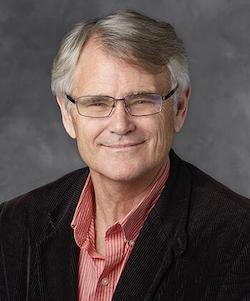
Matthew Kohrman photo from Zoom.

 Matthew Kohrman is an Associate Professor of Anthropology and a SCCEI Faculty Affiliate. His research and writing bring anthropological methods to bear on the ways health, culture, and politics are interrelated. Focusing on the People's Republic of China, he engages various intellectual terrains such as governmentality, gender theory, political economy, critical science studies, narrativity, and embodiment. His first monograph, Bodies of Difference: Experiences of Disability and Institutional Advocacy in the Making of Modern China, raises questions about how embodied aspects of human existence, such as our gender, such as our ability to propel ourselves through space as walkers, cyclists and workers, become founts for the building of new state apparatuses of social provision, in particular, disability-advocacy organizations. Over the last decade, Prof. Kohrman has been involved in research aimed at analyzing and intervening in the biopolitics of cigarette smoking among Chinese citizens. This work, as seen in his recently edited volume--Poisonous Pandas: Chinese Cigarette Manufacturing in Critical Historical Perspectives--expands upon heuristic themes of his earlier disability research and engages in novel ways techniques of public health, political philosophy, and spatial history. More recently, he has begun projects linking ongoing interests at the intersection of phenomenology and political economy with questions regarding environmental attunement and the arts.


Seminar Series Moderators

Image
Headshot of Dr. Scott Rozelle

Scott Rozelle is the Helen F. Farnsworth Senior Fellow and the co-director of Stanford Center on China's Economy and Institutions in the Freeman Spogli Institute for International Studies and Stanford Institute for Economic Policy Research at Stanford University.  For the past 30 years, he has worked on the economics of poverty reduction. Currently, his work on poverty has its full focus on human capital, including issues of rural health, nutrition and education. For the past 20 year, Rozelle has been the chair of the International Advisory Board of the Center for Chinese Agricultural Policy, Chinese Academy of Sciences (CAS). Most recently, Rozelle's research focuses on the economics of poverty and inequality, with an emphasis on rural education, health and nutrition in China. In recognition of this work, Dr. Rozelle has received numerous honors and awards. Among them, he became a Yangtse Scholar (Changjiang Xuezhe) in Renmin University of China in 2008. In 2008 he also was awarded the Friendship Award by Premiere Wen Jiabao, the highest honor that can be bestowed on a foreigner. 


Image
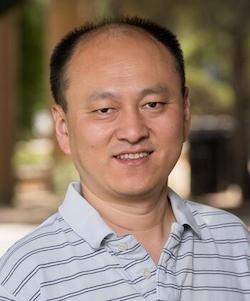
hongbin li headshot

Hongbin Li is the Co-director of Stanford Center on China's Economy and Institutions, and a Senior Fellow of Stanford Institute for Economic Policy Research (SIEPR) and the Freeman Spogli Institute for International Studies (FSI). Hongbin obtained his Ph.D. in economics from Stanford University in 2001 and joined the economics department of the Chinese University of Hong Kong (CUHK), where he became full professor in 2007. He was also one of the two founding directors of the Institute of Economics and Finance at the CUHK. He taught at Tsinghua University in Beijing 2007-2016 and was C.V. Starr Chair Professor of Economics in the School of Economics and Management. He founded the Chinese College Student Survey (CCSS) in 2009 and the China Employer-Employee Survey (CEES) in 2014.

Hongbin’s research has been focused on the transition and development of the Chinese economy, and the evidence-based research results have been both widely covered by media outlets and well read by policy makers around the world. He is currently the co-editor of the Journal of Comparative Economics.


A NOTE ON LOCATION

This seminar is a hybrid event. Please join us in person in the Goldman Conference Room located within Encina Hall on the 4th floor of the East wing, or join remotely via Zoom.

Questions? Contact Heather Rahimi at hrahimi@stanford.edu


Scott Rozelle
Hongbin Li

Hybrid Event: Goldman Room E409, Encina Hall | Zoom Meeting

Stanford University
Department of Anthropology
Building 50, Central Quad
Stanford, California 94305-2034

(650) 723-3421 (650) 725-0605
0
Associate Professor of Anthropology
Senior Fellow, by courtesy, at the Freeman Spogli Institute for International Studies
Faculty Affiliate at the Walter H. Shorenstein Asia-Pacific Research Center
Faculty Affiliate at the Stanford Center on China's Economy and Institutions
matthewkohrman-vert.jpeg

Matthew Kohrman joined Stanford’s faculty in 1999. His research and writing bring multiple methods to bear on the ways health, culture, and politics are interrelated. Focusing on the People's Republic of China, he engages various intellectual terrains such as governmentality, gender theory, political economy, critical science studies, and embodiment. His first monograph, Bodies of Difference: Experiences of Disability and Institutional Advocacy in the Making of Modern China, examines links between the emergence of a state-sponsored disability-advocacy organization and the lives of Chinese men who have trouble walking. In recent years, Kohrman has been conducting research projects aimed at analyzing and intervening in the biopolitics of cigarette smoking and production. These projects expand upon analytical themes of Kohrman’s disability research and engage in novel ways techniques of public health.

Date Label
Seminars
0
Senior Research Scholar, Stanford Center on China's Economy and Institutions
chenggang_xu.jpeg PhD

Chenggang Xu is a Senior Research Scholar at the Stanford Center on China's Economic and Institutions, and a Visiting Fellow at the Hoover Institution at Stanford University, and a Visiting Professor, Department of Finance, Imperial College London.

Chenggang received his PhD in Economics from Harvard University in 1991. He previously taught at the University of Hong Kong as Chung Hon-Dak Professor of Economics, at Tsinghua University as Special-term Professor of Economics, at Seoul National University as World-Class University Professor of Economics, and at LSE as Reader of Economics. He was the President of the Asian Law and Economics Association.  He was a first recipient of China Economics Prize (2016) and a recipient of the Sun Yefang Economics Prize (2013). 

Chenggang's research is in political economics, institutional economics, law and economics, development economics, transition economics and the Chinese political economy. His research and opinions have been covered widely in the Greater China area and in the world. He is currently a board member of the Ronald Coase Institute (RCI) and a research fellow of the CEPR.

Speaking Engagements

CV
Date Label
0
Senior Research Scholar, Stanford Center on China's Economy and Institutions
guoguang_wu_0410a.jpg PhD

Guoguang Wu is a Senior Research Scholar at the Stanford Center on China’s Economy and Institutions, Stanford University. His research specializes in Chinese politics and comparative political economy, including, in China studies, elite politics, national political institutions and policy making mechanisms, transition from communism, the politics of development, and China’s search for its position in the world, and, in comparative political economy, transition of capitalism with globalization, the birth of capitalism in comparative perspectives, the worldwide rise of the economic state, and the emergence of human security on global agenda.

He is the author of four books, including China’s Party Congress: Power, Legitimacy, and Institutional Manipulation (Cambridge University Press, 2015) and Globalization against Democracy: A Political Economy of Capitalism After its Global Triumph (Cambridge University Press, 2017), editor or coeditor of six English-language volumes, and author or editor of more than a dozen of Chinese-language books. His academic articles have appeared in journals such as Asian Survey, China Information, China Perspectives, China Quarterly, Comparative Political Studies, Journal of Contemporary China, Pacific Review, Social Research, and Third World Quarterly. He also frequently contributes to The China Leadership Monitor. Some of his works have been translated and published in the languages of French, Japanese, and Korean.

Guoguang received a Ph.D. and a MA in politics from Princeton University (1995; 1993), a MA in journalism/political commentary from the Graduate School of the Chinese Academy of Social Sciences (1984), and a BA in journalism from Peking University (1981). During the late 1970s, he was among the sent-down youth in Mao's China, and a textile factory worker following the death of Mao. In the late 1980s, he worked in Beijing as an editorialist and a political commentator in Renmin ribao (The People's Daily) and, concurrently, a policy adviser on political reform and a speechwriter to the Zhao Ziyang leadership. His later appointments include: a Nieman Fellow at Harvard University (1989-1990), a Luce Fellow at the East Asian Institute of Columbia University (1990-91), and an An Wang Post-doctoral Fellow at the John King Fairbank Center of Harvard University (1995-96). Before joining Stanford in 2022, he taught at the University of Victoria in Canada and the Chinese University of Hong Kong. Currently he is also a Senior Fellow at the Center for China Analysis of the Asia Society Policy Institute.

-
Portraits of Sinderpal Singh and Arzan Tarapore with text about a webinar on the implications of the US-China competition for South Asia.

How is India posturing to manage strategic competition in the Indian Ocean? Thus far US-China security competition has been most acute in the western Pacific, but Chinese capability growth and strategic policies suggest that it also seeks a leading role in the northern Indian Ocean, in the not-too-distant future. India has traditionally considered itself the natural dominant power in the Indian Ocean region, but it has never faced the scale and types of competition that China will present. Does India have the wherewithal to maintain its leadership in the region? How will India work with the United States, bilaterally and through groupings such as the Quad, as they seek to maintain the status quo in the face of Chinese challenges? Is the Indian Ocean bound for militarized competition, or can India, the US, and China find a pathway to strategic coexistence?

Panelist

Image
Headshot photograph of Dr. Sinderpal Singh
Dr. Sinderpal Singh is Senior Fellow and Assistant Director, Institute of Defence and Strategic Studies, and concurrently Coordinator of the South Asia Programme at the S. Rajaratnam School of International Studies, Nanyang Technological University, Singapore. In the fall of 2022, he has been appointed as the McCain Fulbright Scholar in Residence at the United States Naval Academy. His research interests include the international relations of South Asia with a special focus on Indian foreign policy, the geopolitics of the Indian Ocean Region, and India-Southeast Asia relations. He is currently writing a book on India’s role in the Indian Ocean since 1992 and is the author of India in South Asia: Domestic Identity Politics and Foreign Policy from Nehru to the BJP (Routledge 2013). He received his Ph.D. from the University of Wales, Aberystwyth, his MA from the Australian National University, and his BA from the National University of Singapore.

Moderator

Image
Square headshot photograph of Arzan Tarapore
Dr. Arzan Tarapore is the South Asia research scholar at the Shorenstein Asia-Pacific Research Center at Stanford University, where he leads the newly-restarted South Asia Initiative. His research focuses on military strategy, Indian defense policy, and contemporary Indo-Pacific security issues. Prior to his scholarly career, he served as an analyst in the Australian Defence Department. Arzan holds a Ph.D. in war studies from King’s College London.

This webinar is co-sponsored by the Center for South Asia

Arzan Tarapore
Arzan Tarapore

Virtual via Zoom Webinar

Sinderpal Singh Institute of Defense and Strategic Studies, and South Asia Programme Senior Fellow, Assistant Director S. Rajaratnam School of International Studies, Nanyang Technological University
Authors
Michael Breger
News Type
Q&As
Date
Paragraphs

Each summer, Stanford students assist APARC faculty on a variety of projects as research assistants (RAs). In the case of Jerome He ‘24, working with Center Fellow Oriana Skylar Mastro provided an occasion to learn about the nuanced details of China’s foreign policy, as well as cultivate an interest in related topics such as deterrence, cybersecurity, and soft power competition.

He, a Political Science major who intends to pursue a legal career, describes the opportunity to work closely with Stanford faculty as priceless. His collaboration with Dr. Mastro on her research enhanced his own research abilities, especially when interrogating numerous source texts and streamlining arguments into concise memos.

In the following Q&A, He discusses his research assistant experience this summer. The interview was slightly edited for length and clarity.


Sign up for APARC newsletters to receive research and commentary updates from our scholars


Tell us a bit about yourself and your academic interests and extracurriculars.  

I am an international student from China, embarking on my third year at Stanford. I love studying political theories and I am a huge soccer fan and a fervent reader of German philosophy. I pay close attention to China’s domestic governance and international politics. 

Why did you choose to work with Dr. Mastro? 

In the past winter quarter, I talked to Vivian Zhu 23’ about her work with Dr. Mastro. From Vivian, I caught a glimpse of her work experience — challenging, engaging, and knowledge-intensive. I loved the fact that much of the work is task-oriented and is categorized by various topics. On top of that, I had immense respect for Dr. Mastro when I took PoliSci 114S last winter. Working with Dr. Mastro seemed a perfect opportunity to enrich my research experience.  

Can you describe the research you are working on? 

Dr. Mastro is writing a book on China’s foreign policy. The general idea is to explain how and why China competed differently from the United States in the international arena. RAs who understand Chinese are mainly responsible for going through Chinese sources and extracting valuable information related to a set of different topics. Sometimes we compile memos on a specific topic (such as China’s aircraft carrier development) and carry out literature reviews. 

How would you describe this research to someone unfamiliar with international security and geopolitics? 

I think the starting point is to realize that countries do not “intuitively” make decisions on how to compete and how to establish security. Foreign policies are shaped by both voluntary decisions driven by sophisticated calculations and arbitrary factors that are beyond anyone’s control. Over the course of time, we witness an array of different competing strategies that define the current international landscape. Chinese citizens could find the idea of military alliances and delivering large troops to foreign lands absurd while American people might feel weird to see China using infrastructure and militias for its military struggle in the South China Sea. Part of our research is to explain the differences, summarize the patterns, and hopefully, shed light on the future development of great power competition in all domains. 

What did you learn over the course of your research assistantship and how do you think it will help you in your career? 

Working on Dr. Mastro’s team enhances my ability to collect sources, extract information from an enormous number of texts, and streamline my arguments in a concise memo. I was also able to capture an understanding of how top scholars manage to complete complicated academic projects. Working on China’s foreign policy and military strategies opens up a world of fascinating topics like deterrence, cybersecurity, and soft power competition that paints a clearer picture of future courses I will take and future plans I can make.  

What's next for you? 

I will continue to work with Dr. Mastro in the coming fall and plan to contribute more to her team. I am interested in a legal career, so I aim to shift to some more law-related work after my experience in political science.  

Any advice for Stanford students considering a summer RA position? 

An opportunity to work with Stanford professors is priceless. With respect to finding the most suitable RA position, it always helps to talk to students who previously worked on the team or professors who are familiar with their colleagues. These conversations can give you a vivid understanding beyond the job description and lead to better CVs.   

Learn more about APARC’s summer research assistant internships and other training opportunities for Stanford undergraduate and graduate students >

Read More

Chinese soldier in Beijing
News

Assessing China’s Conventional and Unconventional Challenges to U.S. National Security

Providing a focused analysis of the challenges China poses to U.S. interests, Center Fellow Oriana Skylar Mastro offers readers a means to identify and understand the various strategic threats presented by the superpower on the rise.
Assessing China’s Conventional and Unconventional Challenges to U.S. National Security
Tongtong Zhang
Q&As

Predoctoral Fellow Spotlight: Tongtong Zhang Examines Channels for Public Deliberation in China

Political Scientist and APARC Predoctoral Fellow Tongtong Zhang explores how the Chinese Communist Party maintains control through various forms of political communication.
Predoctoral Fellow Spotlight: Tongtong Zhang Examines Channels for Public Deliberation in China
Yvonne Lee, Summer Intern at Carnegie-Tsinghua Center
News

Student Explores Opportunities in China through Internship Supported by APARC

Student Explores Opportunities in China through Internship Supported by APARC
Hero Image
Jerome He
All News button
1
Subtitle

Political Science major Jerome He ‘24, spent the summer assisting APARC Center Fellow Oriana Skylar Mastro. He leveraged the opportunity to expand his knowledge of Chinese security issues and refine his research acumen. We spoke with He about his experience as a research assistant and his time working for Dr. Mastro.

-

2022 Shorenstein Journalism Award Recipient Emily Feng, NPR's Beijing Correspondent, to Headline Award Panel Discussion

Journalists expelled, local staff harassed, reporting trips heavily surveilled, and a country locked down by Covid controls: all this means correspondents have far less access to information in China, at the very moment understanding China has become so crucial to our economy and geopolitics. Fewer correspondents are left in China — and fewer want to go. Reporting on China will have to change — leveraging remote reporting, digital journalism, and multimedia — but such changes may also distort how we view China.

Join APARC as we honor journalist Emily Feng, NPR’s Beijing Correspondent and winner of the 2022 Shorenstein Journalism Award. In her award keynote address, Feng will address the challenges reporting from and on China and how international media can respond to them.

The keynote will be followed by a conversation with Feng and two experts: Louisa Lim, an award-winning journalist, Senior Lecturer at the University of Melbourne teaching audio journalism and podcasting, and a member of the selection committee for the Shorenstein Journalism Award, and Jennifer Pan, professor of communication and a senior fellow at the Freeman Spogli Institute at Stanford University.

The event will conclude with an audience Q&A session moderated by Stanford sociologist and China expert Xueguang Zhou.

Follow us on Twitter and use the hashtag #SJA22 to join the conversation.

Questions about this event? Contact Sallie Lin.


Speakers

Image
Emily Feng
Emily Feng is NPR's Beijing correspondent. Feng joined NPR in 2019. She roves around China, through its big cities and small villages, reporting on social trends as well as economic and political news coming out of Beijing. Feng contributes to NPR's news magazines, newscasts, podcasts, and digital platforms.

Previously, Feng served as a foreign correspondent for the Financial Times. Based in Beijing, she covered a broad range of topics, including human rights and technology. She also began extensively reporting on the region of Xinjiang during this period, becoming the first foreign reporter to uncover that China was separating Uyghur children from their parents and sending them to state-run orphanages, and discovering that China was introducing forced labor in Xinjiang's detention camps.

Feng's reporting has also let her nerd out over semiconductors and drones, travel to environmental wastelands, and write about girl bands and art. She's filed stories from the bottom of a coal mine; the top of a mosque in Qinghai; and from inside a cave Chairman Mao once lived in. Prior to her recognition by the 2022 Shorenstein Journalism Award, her human rights coverage was shortlisted by the British Journalism Awards in 2018 and won two Human Rights Press awards. Her radio coverage of    the coronavirus epidemic in China was recognized by the National Headliners Award. She spearheaded coverage that has won two Gracie Awards. She was also named a Livingston Award finalist in 2021.

Feng graduated cum laude from Duke University with a dual B.A. degree from Duke's Sanford School in Asian and Middle Eastern studies and in public policy.

Image
Louisa Lim
Louisa Lim is an award-winning journalist who reported from China for a decade for NPR and the BBC. Her first book, The People's Republic of Amnesia: Tiananmen Revisited, was shortlisted for the Orwell Prize for Political Writing and the Helen Bernstein Prize for Excellence in Journalism. She co-hosts The Little Red Podcast, an award-winning podcast on China. She works as a senior lecturer at the University of Melbourne, teaching audio journalism and podcasting, and has a PhD in journalism studies. Her latest book, Indelible City: Dispossession and Defiance in Hong Kong, was released in April 2022 from Penguin Random House. 

Image
Jennifer Pan
Jennifer Pan is a professor of communication and a senior fellow at the Freeman Spogli Institute at Stanford University. Her research focuses on political communication and authoritarian politics. Pan uses experimental and computational methods with large-scale datasets on political activity in China and other authoritarian regimes to answer questions about how autocrats perpetuate their rule, how political censorship, propaganda, and information manipulation work in the digital age, and how preferences and behaviors are shaped as a result.

Her book, Welfare for Autocrats: How Social Assistance in China Cares for its Rulers (Oxford, 2020) shows how China's pursuit of political order transformed the country’s main social assistance program, Dibao, for repressive purposes. Her work has appeared in peer-reviewed publications such as the American Political Science Review, American Journal of Political Science, Comparative Political Studies, Journal of Politics, and Science. 

She graduated from Princeton University, summa cum laude, and received her Ph.D. from Harvard University’s Department of Government.

Moderator


Image
Photo of Xueguang Zhou

Xueguang Zhou is the Kwoh-Ting Li Professor in Economic Development, a professor of sociology, and a Freeman Spogli Institute for International Studies senior fellow. His main area of research is on institutional changes in contemporary Chinese society, focusing on Chinese organizations and management, social inequality, and state-society relationships. 

One of Zhou's current research projects is a study of the rise of the bureaucratic state in China. He works with students and colleagues to conduct participatory observations of government behaviors in the areas of environmental regulation enforcement, in policy implementation, in bureaucratic bargaining, and in incentive designs. He also studies patterns of career mobility and personnel flow among different government offices to understand intra-organizational relationships in the Chinese bureaucracy. Drawing on more than a decade of fieldwork, Zhou’s new book, The Logic of Governance in China (Cambridge University Press, 2022) develops a unified theoretical framework to explain how China's centralized political system maintains governance and how this process produces recognizable policy cycles that are obstacles to bureaucratic rationalization, professionalism, and rule of law. 

Before joining Stanford in 2006, Zhou taught at Cornell University, Duke University, and Hong Kong University of Science and Technology. He is a guest professor at Peking University, Tsinghua University, and the People's University of China. Zhou received his Ph.D. in sociology from Stanford University in 1991.

Xueguang Zhou

Virtual event via Zoom. 

Emily Feng
Louisa Lim
Jennifer Pan
Panel Discussions
1
Asia Health Policy Postdoctoral Fellow, 2022-23
Jianan_Yang.jpg Ph.D.

Jianan Yang joined the Walter H. Shorenstein Asia-Pacific Research Center (Shorenstein APARC) as the 2022-2023 Developing Asia Health Policy Postdoctoral Fellow. She recently obtained her Ph.D. in Economics at the University of California San Diego. She holds B.A. in Economics and Mathematics from the Renmin University of China. Her research lies in the intersection of development and health economics and revolves around what drives the sub-optimal healthcare-seeking behaviors in developing countries and how they can be improved by leveraging price or non-price mechanisms.

Yang views health as a fundamental part of human development. People in developing countries usually face additional barriers to accessing healthcare resources because of underqualified providers on the one side, lower income levels, insufficient insurance coverages, and a lack of information on the other side. Because markets in healthcare settings are usually characterized by imperfect competition and government regulations, Yang thinks it is important to evaluate the policies’ impacts on various aspects of the healthcare system. Through understanding the underlying constraints, we can think about how the policy can be designed more efficiently.

Yang’s dissertation studied how patients’ chronic condition drug utilization responds to price reductions in China. By documenting a larger increase in utilization and a meaningful reduction in underuse among the uninsured, the study suggests that the price elasticities would be higher in developing countries and there will be larger welfare benefits from such price reductions resulting from squeezing out the price markups of the pharmaceutical companies due to market power. The finding suggests that cost is a barrier to both drug take-up and adherence, especially among the lower-income population who meanwhile are more likely to not have insurance coverage.

At APARC, Yang further accessed the underlying factors affecting people’s healthcare-seeking behaviors including the role of cost, information, and behavioral bias. She also extended her research agenda to the other sectors of the healthcare system. 

Date Label
0
Visiting Scholar at APARC, 2022-23
Hongmei_Yu.jpg Ph.D.

Hongmei Yu joined the Walter H. Shorenstein Asia-Pacific Research Center (Shorenstein APARC) as visiting scholar for the 2022-2023 academic year. She currently serves as Associate Professor at the Shanghai University of Political Science and Law, Department of Shanghai Documentary Academy. While at APARC, she conducted research on the logic of governance and community building in mediated urban life, focusing on China as well as comparing to experiences of the West.

Date Label
1
Visiting Scholar at APARC, 2022-23, 2023-24
China Policy Fellow, 2022-23, 2023-24
Laura Stone.jpeg

Laura M. Stone joined the Walter H. Shorenstein Asia-Pacific Research Center (Shorenstein APARC) as Visiting Scholar and China Policy Fellow for the 2022-2023 and 2023-2024 academic years. She currently serves the U.S. Department of State, recently as Deputy Coordinator for the Secretary's Office for COVID Response and Health Security. While at APARC, she conducted research with the China Program and Professor Jean Oi regarding contemporary China affairs and U.S.-China policy.

Date Label
0
Visiting Scholar at FSI and APARC, 2022-23
Payne Distinguished Fellow, 2022 Fall Quarter
Qingguo_Jia.jpg Ph.D.

Professor Jia Qingguo joined the Freeman Spogli Institute for International Studies (FSI) and the Walter H. Shorenstein Asia-Pacific Research Center (Shorenstein APARC) as Visiting Scholar and Payne Distinguished Fellow for the 2022 fall quarter. He currently serves as Professor at the School of International Studies at Peking University. While at APARC, he conducted research on the state and future development of U.S.-China policy.

Date Label
Subscribe to China