


The New U.S. Role in Global Fossil Fuel Markets
Related Multimedia
The New U.S. Role in Global Fossil Fuel Markets
Related Multimedia
The New U.S. Role in Global Fossil Fuel Markets
Related Multimedia
The New U.S. Role in Global Fossil Fuel Markets
Related Multimedia
Asia’s Role in the Global Economy and Challenges in 2013
-
Forecasting is a difficult profession. International economist David Hale and writer Lyric Hughes Hale do not claim they can foretell the future. But as veteran observers of the Asian economies, they can envision scenarios that are contrary to current conventional wisdom, and trends that deserve more attention than they are given in the media. What if China and Japan actually engage in armed conflict? Could East Asia experience its own version of the Arab Spring? What would be the consequences of another major earthquake in Japan? When the United States was the dominant power in the Pacific, security interests and economic interests were aligned in the region. Now that China has become the largest trading partner for many ASEAN countries, a new Great Divergence is emerging, with potentially destabilizing consequences. While our national attention has been dominated by the Middle East for a decade now, in the coming era of energy self-sufficiency in the United States, we must shift our focus to the Far East.
Image

Global Economist & Chairman
David Hale Global Economics, Inc.
and
Image

Independent International Affairs Professional &
Board Director, The Japan America Society of Chicago
Philippines Conference Room
Seminars
(Un)Covering North Korea
-
North Korea, arguably the most isolated country in the world, poses unique challenges for journalists. Access to the country is severely limited and even when a journalist is able to gain entry, the secretive and repressive nature of the state significantly limits what can be learned. Still, despite these difficult conditions, the realities of North Korean life are increasingly finding their way into various media, from newspaper reporting and on-line media to thinly fictionalized accounts.
This panel will take a multi-faceted look at the coverage of North Korea through the journalist (represented by 2012 Shorenstein Journalism Award winner Barbara Demick), the editor, the development/relief worker, and the novelist.
Panelists include:
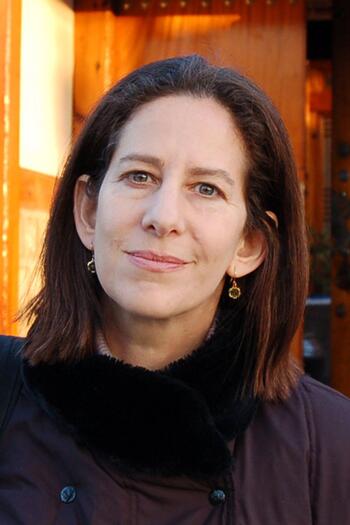
Barbara Demick, has been Beijing bureau chief for the Los Angeles Times since 2008. She has focused on human trafficking, corruption, and minorities, as well as North Korea. Demick is the author of two books -- Nothing to Envy: Ordinary Lives in North Korea and Logavina Street: Life and Death in a Sarajevo Neighborhood. Her work has won awards from the Asia Society, the Overseas Press Club, the American Academy of Diplomacy, among others. Her North Korea book, which has been translated into more than 20 languages, recently won the International Book Award on Human Rights. She is a graduate of Yale and taught a seminar on coverage of repressive regimes at Princeton University. She lives in Beijing with her son Nicholas.Image
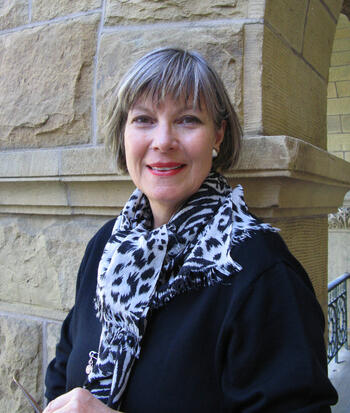
Susan Chira, was named assistant managing editor for news for the New York Times in September 2011. Previously, she had served as foreign editor (since January 2004), and as editorial director of book development (since September 2002). Before that, Chira was the editor of the "Week in Review" section at the Times (since October 1999), after having served as deputy foreign editor of the newspaper (since February 1997). Earlier, she served in a variety of reporting positions including national education correspondent, Tokyo correspondent (from October 1984 until February 1989), metropolitan reporter in the Albany and Stamford bureaus, and reporter for the "Business Day" section.Image

Image
Image
Bechtel Conference Center
Conferences
Former prosecutor of the International Criminal Court kicks off human rights seminar series
News Type
News
Date
Paragraphs
The Program on Human Rights at Stanford's Center on Democracy, Development and the Rule of Law inaugurated the 2012-2013 Sanela Diana Jenkins Speaker Series by hosting a Dec. 7 seminar with the former prosecutor of the International Criminal Court (ICC), the Honorable Luis Moreno-Ocampo. The lecture series will bring to light current challenges and possibilities for the ICC over the next decade, which include: how to determine reparations for victims; U.S. and ICC relations; and nation-state cooperation. During the 2012-2013 academic year, the series will examine the ICC by hosting debates with local, national and international experts, academics and activists.
On July 1, 2002, the ICC was established by more than 100 nations to ensure that those who have committed violations of genocide, war crimes, and crimes against humanity are brought to justice. National governments that have signed the treaty establishing the ICC have promised to progressively structure their national criminal systems so these egregious human rights violators will be brought before their own people and courts under fair trial processes.
In the last decade the ICC has brought 16 cases to the court from seven different conflicts in Africa.
“The ICC is now firmly established as international destination for genocidaires,” said Helen Stacy, director of the Program on Human Rights. “In the coming decade, we shall know better whether the ICC deters would-be genocidaires before they commit their awful crimes. The next decade will also show if the world's biggest exceptionalists — such as the U.S. and China —are willing to accept ICC jurisdiction. The time is ripe for this series to assess the impact of the international criminal justice on human rights after devastating conflict, both its triumphs and its shortcomings,” continued Stacy.
Moreno-Ocampo came to the ICC with a distinguished record as a prosecutor in the trials of Argentine military officials of the 1976-1983 military dictatorship. Over his ten year term in the ICC, Moreno-Ocampo was responsible for establishing the Office of the Prosecutor as an institution, opening ICC investigations and prosecuting those who were ultimately brought to trial.
The ICC and Moreno-Ocampo symbolize historic achievements in international law. The 121 signatories to the treaty recognizing the ICC demonstrated that international criminal justice is an important issue on the global political agenda. In addition, the ICC’s actions in its first decade have not only had a positive impact on the lives of tens of thousands of direct victims, but also for millions of people in affected communities and societies who have re-built their lives after years of civil war, genocide, murder, rape and the destruction of property.
“We are looking forward to a lively conversation about important issues of global politics and justice at Stanford and on the web,” said Richard Steinberg, visiting professor of international relations at Stanford and editor-in-chief of the Online Forum. Steinberg, who is also a professor of Law at UCLA, added, “The series will feature debate on key questions about the ICC, including the extent to which peace and international justice are compatible and how the ICC can retain its legitimacy as a justice institution while navigating the perils of international politics.”
The Sanela Diana Jenkins ICC Speakers Series will take place over three academic quarters: a fall quarter workshop with Luis Moreno-Ocampo; a winter quarter speaker series open to the entire Stanford community and the public (and also a one-unit credit course for Stanford students); and a spring quarter conference. The results of these conferences will be compiled in a working papers series on the ICC and international criminal justice. Beginning January 8, 2013, speaker series presentations will also be presented to and debated by a global audience on the Human Rights & International Criminal Law Online Forum at www.stanfordhumanrights.com.
For more information on the series, please visit: http://humanrights.stanford.edu/events/one_decade_of_the_international_….
Hero Image

All News button
1
India's Energy [In]Security and Growing Competition from China
-
There is considerable optimism that India will continue to grow economically, address the crippling poverty that the majority of the population still faces and become a great nation. Dr. Gupta will first analyze India's energy security by examining the different energy sectors and evaluate to what extent it can meet its energy needs. Dr. Gupta will then analyze the economic, geographical and technology advantage that China holds over India and what India must do to address these challenges.
Dr. Rajan Gupta is a theoretical physicist at Los Alamos National Laboratory and a Laboratory fellow. He currently serves as Program Manager of the High Energy Physics Program an LANL and previously served as Group Leader of Elementary Particles and Field Theory. He obtained his Masters in Physics from Delhi University, India, and earned his Ph.D. in Theoretical Physics from The California Institute of Technology in 1982. The main thrust of his research is to understand the fundamental theories of elementary particle interactions. Dr. Gupta has also worked extensively on a project related to the mapping of global energy systems. He has published over 125 research papers and is a fellow of the American Physical Society. During 2007 he served as the chair of the LANL energy council, helped create a strategic plan for LANL's investment in energy R&D and advocated for energy security to be made a part of the core LANL mission.
CISAC Conference Room
Rajan Gupta
Speaker
Los Alamos National Laboratory
Seminars
Stanford Center at Peking University - Information Session
-
The Stanford Center at Peking University (SCPKU) is the university's headquarters for faculty and students engaged in research, teaching, training and outreach activities in China. Located on the Peking University campus, the center just opened in March 2012 and is the focal point for building academic and educational networks throughout East Asia.
The SCPKU information session will provide an overview of the center and details about the new faculty fellowship program and other programs being developed. The event is hosted by Ann Arvin, Vice Provost and Dean of Research, and Jean Oi, SCPKU Director. Lunch will be served.
Philippines Conference Room
Ann Arvin
Vice Provost and Dean of Research
Speaker
Jean Oi
SCPKU Director
Speaker
FSI
Conferences