Authors
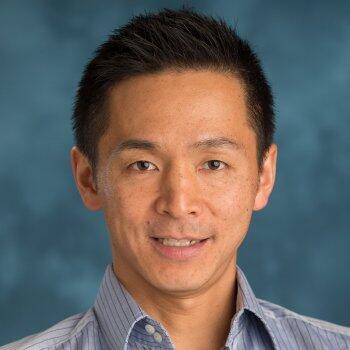
Kiyoteru Tsutsui
News Type
Commentary
Date
Paragraphs

This op-ed originally appeared in Nikkei Asia 


If his recent diplomatic contacts are any indication, Prime Minister Yoshihide Suga is off to an auspicious start in managing Japan's two most important relationships: the U.S. and China.

Last month, Suga got a pleasant surprise when he spoke to Joe Biden, with the President-elect explicitly stating that the Senkaku Islands, which China claims as the Diaoyu, fall under the protection of Article 5 of the U.S.-Japan Security Treaty. A few weeks later, Suga received China's foreign minister Wang Yi, who was there largely to consolidate the warm economic relationships between the two countries -- except for a prickly comment about the Senkakus at the end. Clearly, the U.S. and China both see Japan as a critically important player in their competition for Asia-Pacific hegemony.

[Sign up for APARC's newsletters to get the latest commentary from our scholars.]

This is a far cry from the precarious position Japan found itself in at the beginning of Shinzo Abe's first and second terms. In 2007, the young Prime Minister Abe elevated a spontaneous joint response by the U.S., Japan, Australia, and India to the 2004 Indian Ocean tsunami into a quadrilateral working-level group involving regular meetings and maritime exercises. Dubbed the Quad, Abe sought to make the group a counter to China's increasingly expansionist threats in the Indo-Pacific region.

When Abe's first term was cut short, he was succeeded by the more China-friendly Yasuo Fukuda, who prioritized relations with China and stepped back from the Quad. Combined with a leadership change in Australia that saw the pro-China Kevin Rudd become Prime Minister, the Quad fizzled out.

After Abe returned to the prime ministership in 2012, lingering suspicion over his hawkish nationalism and anti-China sentiment was exacerbated by his 2013 visit to the controversial Yasukuni Shrine. That provoked rebuke not only from Japan's East Asian neighbors but from then U.S. Vice President Biden.

With U.S. policymakers still hoping that China's surging middle-class wealth would transform the country into a peace-loving democracy, the Quad seemed like a misguided attempt by Japan's China-hawks best left forgotten. Some in Tokyo were even starting to worry about a "grand bargain" between the U.S. and China that would relegate Japan to a small supporting role in the Asia-Pacific.

How times have changed. Few in Washington believe China will ever metamorphose into a moderate democracy, while in 2017, Abe harnessed Donald Trump's anti-China agenda to revive the Quad, as all four countries realized the need for a viable strategy to contain China. The new Quad has quickly gathered momentum, with India allowing Australia to join the Malabar naval exercises in November for the first time in 13 years so that all Quad members could participate.

As the Quad's main architect, Abe played a central role in bringing the group to this point, pairing it with the Free and Open Indo-Pacific vision, another influential framework for the region for which he can claim authorship. By Abe's side throughout these developments, and now in charge of Japan's foreign policy, how will Suga handle the Quad, and what are its pros and cons?

The highest aspiration for the Quad is that it becomes an Asian version of NATO that can contain China. The combined military capabilities of the four countries are formidable, with the U.S. obviously leading the way and India possibly needing some catching up. The geostrategic impact of a formal alliance to pressure China would be tremendous.

Such an alliance would be even more effective if it included other countries in the region. Some, such as South Korea, New Zealand, the Philippines, Indonesia, and Vietnam, have begun to participate in multilateral forums headlined by the Quad, possibly foreshadowing the development of a Quad Plus grouping that could exert significant pressure on China to moderate its expansionist approaches.

While Suga will likely tread carefully in expanding the Quad's activities to avoid damaging important economic relations with China, he has a clear understanding that China will only respond to power, and the game-changing power of the Quad alliance would surely appeal to him.

For all its potential, the Quad is not there yet. Fundamentally, it remains a coalition of like-minded countries discussing their concerns about China. At their most recent meeting in Tokyo in October, the four countries could not even muster a joint statement -- instead releasing separate readouts in each country's capital. Becoming an alliance with reciprocal obligations is clearly much further down the line.

Unless greater institutionalization becomes reality, China's divide and conquer approach will remain a threat, as it will try to target one or another country to break the Quad. China has already successfully done so before, pushing Australia to break from the Quad in 2008.

Today, the Quad's greatest utility for Suga is the threat it poses to China. The potential for this loose coalition to coalesce into a formidable alliance would increase if China continues to engage in provocative actions and further alienate the four countries. This threat could be effective in deterring China's aggressive behavior in the Indo-Pacific.

At this point, Suga will likely use the Quad as a card, gradually deepening its engagements but also preparing to develop it into a stronger alliance if China keeps poking at the Senkakus. The fact that Suga has that leverage today speaks to Japan's improved position relative to the early days of the first Abe administration.

Kiyoteru Tsutsui 120820 crop 4X4

Kiyoteru Tsutsui

Kiyoteru Tsutsui is the Henri H. and Tomoye Takahashi Professor and Senior Fellow in Japanese Studies at Shorenstein APARC, the director of APARC's Japan Program, a senior fellow at FSI, and professor of sociology, all at Stanford.
Full Biography

Read More

A man walks past a digital screen showing images of President-elect Joe Biden in a news program.
Commentary

Japan's Role Could Redefine Asia-Pacific Relations Under Biden and Suga

President-elect Biden's early conversations with Japan's prime minister Yoshihide Suga seem to signal a renewed commitment to coordination on issues of security, environmentalism, human rights, and China's influence.
Japan's Role Could Redefine Asia-Pacific Relations Under Biden and Suga
Battleships patrolling in the open ocean.
Commentary

Beijing’s Line on the South China Sea: “Nothing to See Here”

China’s official denials of growing military capability in the region look a lot like gaslighting.
Beijing’s Line on the South China Sea: “Nothing to See Here”
President-elect Joseph Biden addresses a campaign crowd
Commentary

Biden in Asia: America Together?

Southeast Asia Program Director Donald K. Emmerson considers how the incoming Biden administration's "internationalization" agenda may affect U.S.-Asia relations and partnerships with the global community.
Biden in Asia: America Together?
Hero Image
Photos of China's Xi Jinping walking and Japan's Yoshihide Suga speaking at a podium
All News button
1
Subtitle

The strengths and weaknesses of the Quad

-

Webinar recording: https://youtu.be/8oDHKdyhZO0


In recognition of Human Rights Day on December 10, SPICE is honored to feature Dr. Kiyoteru Tsutsui, Professor of Sociology at Stanford University. Tsutsui’s research and scholarship on the globalization of human rights and its impact on local policy and politics—particularly with regards to minority groups in Japan—has helped to shape student awareness and understanding of the multitude of issues surrounding the protection of human rights.

In this webinar, Tsutsui will address the following:

  • How did “human rights” emerge as a universal norm and become institutionalized into various international treaties, organs, and instruments?
  • What impact have all the international institutions had on actual local human rights practices?
  • How do the case studies of the three most salient minority groups in Japan—the Ainu, Koreans, and Burakumin—help us to understand the transformative effect of global human rights ideas and institutions on minority activists?

Tsutsui’s in-depth historical comparative analysis in his book, Rights Make Might: Global Human Rights and Minority Social Movements in Japan, offers rare windows into local, micro-level impact of global human rights and contributes to our understanding of international norms and institutions, social movements, human rights, ethnoracial politics, and Japanese society.

This webinar is a joint collaboration between the Japan Program at the Shorenstein Asia-Pacific Research Center, Center for East Asian Studies, and SPICE at Stanford University.


Featured Speaker:

Kiyoteru Tsutsui, PhD 

Image
Portrait of Kiyoteru Tsutsui
Kiyoteru Tsutsui is the Henri H. and Tomoye Takahashi Professor and Senior Fellow in Japanese Studies at Shorenstein APARC, the Director of the Japan Program at APARC, a Senior Fellow of the Freeman Spogli Institute for International Studies, and Professor of Sociology at Stanford University. Prior to his appointment at Stanford in July 2020, Tsutsui was Professor of Sociology, Director of the Center for Japanese Studies, and Director of the Donia Human Rights Center at the University of Michigan, Ann Arbor. Tsutsui’s research interests lie in political/comparative sociology, social movements, globalization, human rights, and Japanese society. More specifically, he has conducted (1) cross-national quantitative analyses on how human rights ideas and instruments have expanded globally and impacted local politics and (2) qualitative case studies of the impact of global human rights on Japanese politics. 

His research on the globalization of human rights and its impact on local politics has appeared in numerous academic publications and social science journals. His recent book publications include Rights Make Might: Global Human Rights and Minority Social Movements in Japan (Oxford University Press 2018), and the co-edited volume Corporate Social Responsibility in a Globalizing World (with Alwyn Lim, Cambridge University Press 2015). He has been a recipient of the National Endowment for the Humanities Fellowship, National Science Foundation grants, and the SSRC/CGP Abe Fellowship, among numerous other grants and awards. Tsutsui received his bachelor’s and master’s degrees from Kyoto University and earned an additional master’s degree and PhD from Stanford’s sociology department in 2002.


Via Zoom Webinar. Registration Link: https://bit.ly/3mMf8Aj.

Kiyoteru Tsutsui, PhD Stanford University
Workshops
Authors
Kiyoteru Tsutsui
News Type
Commentary
Date
Paragraphs

This op-ed by Kiyoteru Tsutsui and Charles Crabtree
was originally published in The Hill.


President-elect Joe Biden had a pleasant surprise for Japanese Prime Minister Yoshihide Suga during their first phone conversation after the U.S. presidential election. In what was expected to be a cordial congratulatory call without policy discussion, Biden explicitly stated America’s commitment to protect the Senkaku Islands, citing Article 5 of the U.S.-Japan Security Treaty.

At the time, Americans were preoccupied with the political aftermath of the still-contested election, but Japanese observers paid close attention to the first contact between the two new leaders, especially since the first encounter between their predecessors shaped U.S.-Japan relations for the past several years.

[Sign up for APARC's newsletters and stay informed on our latest research.]

Four years ago, Prime Minister Shinzō Abe became the first foreign leader to meet with President Trump, soon after his election victory in November 2016. This fact was never lost on Trump; throughout his presidential administration, the relationship between the two men was strong, which benefited the alliance as the two countries worked to create a united front against China’s increasing international aggression.

In 2016, policymakers on the Japanese side were concerned about the U.S. conceding much of its interest in the Pacific to China, as part of “a grand bargain” that would diminish U.S. commitment to Japan and other allies in the region. Trump’s successful campaign made this scenario less likely, but the Japanese understood that their country relies more on American support in constraining China’s expansive regional ambitions than vice versa. 

Fast-forward to 2020, and we see a new political reality in the bilateral relationship — the U.S. needs Japan as much as Japan needs the U.S. in facing the challenges of China’s rise to a global superpower. The fact that Biden mentioned his commitment to Senkakus — largely unsolicited, although the Japanese side allegedly dropped some hints — suggests an American desire to shore up support from Japan.

Suga can play the diplomatic game from a position of strength and mediate between the U.S. and China. This is a role that Japan can thrive in, as its shrewd management of relationships with both the U.S. and China in the past few years indicates.
Kiyoteru Tsutsui and Charles Crabtree

With China now viewed as a shared rival — if not outright enemy — how will the two leaders shape regional dynamics in coming years? On security, tensions around the Senkakus almost certainly will rise, and a credible threat of U.S. military action is likely the most effective deterrent of China’s provocations that could escalate the conflict over territorial claims there. Biden surely will work hard to rebuild the trust of other allies in the region, with the hope of containing China through multilateral alliances. South Korea is a particularly important partner in this effort, and Suga would be wise to rehabilitate Japan-ROK relations that have been marred by complicated historical issues. The U.S. can help mediate the process.

Similarly, on economy and trade, multilateral frameworks such as the Comprehensive and Progressive Agreement for Trans-Pacific Partnership (CPTPP) and the Regional Comprehensive Economic Partnership (RCEP) will become more important, and Japan will continue to encourage the U.S. to participate in these agreements. However, this might not be realistic given the domestic political environment in the U.S. The best-case scenario in the short term is probably the U.S. valuing the World Trade Organization (WTO) again. In this vein, the U.S. regaining the trust and respect of Europe is important, because China continues to lure European countries with its attractive economic and trade packages. 

On environmentalism, both Suga and Biden have declared that their countries will work toward zero emissions by 2050. On this issue, China’s cooperation is critical. While China also has committed to working toward zero -emissions by 2060, it likely will use this issue to gain other concessions from the U.S. Biden may face a difficult political decision at some point on whether to a) compromise on environmentalism and incur the wrath of the left wing of the Democratic party or b) sacrifice U.S. national interest in other areas for an agreement on environmentalism and risk losing support from independents and moderate Republicans. Japan would worry about the latter scenario.

Prime Minister Yoshihide Suga
Prime Minister Yoshihide Suga | The Hill

Finally, Biden is expected to be more involved than Trump regarding China’s human rights issues. He’s likely to call out situations in Xinjiang and Hong Kong, among others. Japan will join the chorus, and mix in the North Korean abduction issue, which largely has been silenced internationally as a consequence of Trump’s bromance with Kim Jong Un. China will counter these criticisms by pointing to racism in the U.S. as evidence of American hypocrisy. This might embarrass the U.S. but can be a net positive, if China’s naming and shaming leads to more efforts by the U.S. government to address racism. This dynamic is reminiscent of the Cold War era, when the Soviet Union countered America’s criticisms of civil and political rights violations by pointing to racism in the U.S., facilitating advancements during the civil rights movement.

Overall, on hard issues such as security and trade, a drastic change is unlikely; rehabilitating relations with allies, and revaluing multilateral frameworks, will be the most likely changes under a Biden administration. On more values-oriented issues such as environmentalism and human rights, domestic politics in the U.S. plays a significant role in shaping Biden foreign policy. Assuming that Democrats don’t win both of the Senate seats in Georgia’s runoff elections, Biden will face a Republican Senate that can block appointments for key cabinet positions and some of his foreign policy priorities.

For Japan, Biden’s remark about the Senkaku Islands was an excellent start. With such a commitment secured, Suga can play the diplomatic game from a position of strength and mediate between the U.S. and China. This is a role that Japan can thrive in, as its shrewd management of relationships with both the U.S. and China in the past few years indicates. Japan’s success in playing this role could define international relations in the Asia-Pacific for the next decade or two.

Read More

Suga Yoshihide at a press conference at the Liberal Democratic Party (LDP) headquarters.
Commentary

Five Ways in Which Japan's New Prime Minister Suga is Different From Abe

Yoshihide Suga has promised to continue many of Shinzo Abe's policies and goals, but APARC's Japan Program Director Kiyoteru Tsutsui explains how Suga's background, experience, and political vision differ from the previous administration.
Five Ways in Which Japan's New Prime Minister Suga is Different From Abe
A young boy prays after releasing a floating lantern onto the Motoyasu River in front of the Atomic Bomb Dome in Hiroshima, Japan.
Commentary

Why the US-Japan Partnership Prospered Despite Hiroshima and Nagasaki

There has been little diplomatic conflict between the United States and Japan over the atomic bombings of Hiroshima and Nagasaki during WWII, but that stability could change in the future, writes Japan Program Director Kiyoteru Tsutsui in an op-ed for The Hill.
Why the US-Japan Partnership Prospered Despite Hiroshima and Nagasaki
Prime Minister Shinzō Abe of Japan and President Donald Trump of the United States walk alongside the White House in Washington D.C.
Commentary

Don't Take Our Allies for Granted, Even Japan

As political tensions in the Asia-Pacific increase, Kiyoteru Tsutsui, senior fellow and Japan Program director, cautions the United States from taking long-standing economic and military allies like Japan for granted.
Don't Take Our Allies for Granted, Even Japan
Hero Image
A man walks past a digital screen showing images of President-elect Joe Biden in a news program.
A man walks past a digital screen showing images of President-elect Joe Biden in a news program. | Yuichi Yamazaki, Getty Images
All News button
1
Subtitle

President-elect Biden's early conversations with Japan's prime minister Yoshihide Suga seem to signal a renewed commitment to coordination on issues of security, environmentalism, human rights, and China's influence.

Authors
Gary Mukai
News Type
Blogs
Date
Paragraphs

Just over ten years after becoming the first U.S. ambassador to Japan to participate in the Hiroshima Peace Memorial Ceremony in 2010, Ambassador John Roos spoke about his experiences with 26 high school students in Stanford e-Japan from throughout Japan. In his October 16, 2020 online talk, Ambassador John Roos noted that his tenure in Japan—2009 to 2013—was defined by three major issues: (1) the 2011 Great East Japan Earthquake or 3/11; (2) Operation Tomodachi (“friend” in Japanese) during which the U.S. Armed Forces helped in disaster relief following the 3/11 crisis; and (3) the Hiroshima Peace Memorial Ceremony on August 6, 2010.

Regarding the first and second issues, Ambassador Roos recalled, “I was proud that the United States was there to help the people in Japan who obviously faced one of the biggest crises in your history… Vice President Biden came to Japan and the two of us traveled up to the Tohoku region because he wanted to see firsthand how he could help and how the United States could help, and I saw him interacting with not only the leaders but the people of the Tohoku region.” In addition to Operation Tomodachi, the youth-focused Tomodachi Initiative—a public-private partnership between the U.S.-Japan Council and the U.S. Embassy in Tokyo, with support from the Government of Japan—was born out of support for Japan’s recovery from the 2011 Great East Japan Earthquake. Regarding the third issue, Ambassador Roos shared, “I was the first United States ambassador to go to the Hiroshima commemoration ceremony. And I did that because I felt it was important to show respect for all of the victims of World War II and particularly obviously the victims of Hiroshima and Nagasaki. I did it because I felt that it was helping to promote President Obama’s agenda of the elimination of all nuclear weapons.”

During his talk, Ambassador Roos coupled his sharing of specific personal recollections with general insights on being the U.S. ambassador to Japan. For example, he explained that the role of the U.S. ambassador to Japan is twofold. First, the U.S. ambassador’s responsibility is to protect and look after the health and safety of the Americans that live in Japan—about 150,000 of them—including another 50,000 U.S. military personnel and their dependents. Second, nurturing and looking after the relationship between Japan and the United States, of course, is critical. He not only touched upon economic, political, and security relations but also emphasized the importance of student-to-student exchange. Concerning the latter, he is concerned that students from the United States are not spending enough time in Japan, and students in Japan are not spending enough time in the United States.

His insights profoundly connected to a student from Kyoto who commented, “When I am older, I hope to become a diplomat and maybe even an ambassador, so I’m really excited to get to talk to you today.” She continued, “What do you think makes a successful ambassador?” Ambassador Roos replied, “I hope you become the ambassador to the United States… Obviously, an ambassador needs to deal with all of the different policy issues and many difficult issues, but I think the most important thing is—and you may not expect this—but it is to listen… and to learn and to hear all sides of the equation… to show empathy.”

The current fall 2020 session of Stanford e-Japan is the 12th offering of the course since 2015. Stanford e-Japan is made possible by Mr. Tadashi Yanai, Chairman, President, and CEO of Fast Retailing Co., Ltd. Mr. Yanai and Ambassador Roos share a mutual concern for the need for students in Japan and the United States to spend more time in each other’s countries.

As a closing question, Stanford e-Japan Instructor Meiko Kotani asked Ambassador Roos what he expects from Japanese high school students and what role he thinks they should play to foster the U.S.–Japan relationship. Roos responded, “Well, first of all, let me tell you how impressed I am by this group of students. The reason I am doing this session at 9:00pm on a Friday night is because I think you are the future of the relationship. So I encourage you to find ways to connect with the younger generation of [the United States] because in the end, we need you. We need the best and brightest minds, not only in the United States but in Japan and the rest of the world to confront some pretty big challenges we have in the world right now… When I listen to you, it gives me a tremendous amount of hope, and so I’m just honored to have had the opportunity to talk with you.”

After Ambassador Roos signed off, the students shared some points that especially resonated with them. Among these were the deep respect that Ambassador Roos has for Japan and his visit to all 47 prefectures; the importance he placed upon the need for high school students in Japan to communicate with high school students in the United States; the importance he placed upon the leadership of the United States to be humble despite its power; and the importance of empathy. And since 2020 marks the 75th anniversary of the end of World War II, the following words that Roos stated seemed to especially resonate with the students: “President Obama said that we may not eliminate nuclear weapons in his lifetime or my lifetime. I hope in your lifetime.”

KotaniMeiko WEB

Meiko Kotani

Instructor, Stanford e-Japan
Full Bio
Hero Image
John Roos
John Roos (right), former U.S. ambassador to Japan (2009–13), speaks with Michael Armacost, also a former U.S. ambassador to Japan (1989–93), at Stanford University; photo courtesy Meiko Kotani
All News button
1
Subtitle

Just over ten years after becoming the first U.S. ambassador to Japan to participate in the Hiroshima Peace Memorial Ceremony in 2010, Ambassador John Roos spoke about his experiences with 26 high school students in Stanford e-Japan from throughout Japan.

Authors
News Type
Blogs
Date
Paragraphs

The Stanford e-Japan Program provided me with the opportunity to take insightful lectures by front runners in various fields (for example, ambassadors, lawyers, and university professors), and to participate in absolutely riveting virtual classrooms, during which we could confer and raise questions about issues pertaining to the lectures.

Not only was it an intellectually enriching program providing extensive knowledge about the United States, I believe it was one of the turning points in my life.
Hikaru Suzuki

It was my gateway to cross-cultural understanding and international studies, and it was the key to finding my passion, as I realized that law and business were my specific areas of interests. The program pushed me to seek further education in those fields and learn more intensively.

In high school, I conducted comparative research between India and Pakistan, analyzing honor killing court cases dating back to the late 19th century, judicial systems, etc. I realized how law can reinforce social norms by signaling approval and dissent through legal decisions, and how a revision of judicial systems can have massive social impact. I decided to major in Japanese law to gain knowledge and insight into these legal regimes domestically, and to pursue my dream of addressing social injustice.

Studying law at the University of Tokyo was both rewarding and invigorating. I had chances to engage in frank discussions with professors about civil procedures and criminal law, scrutinize documents, participate in seminars, and write a research paper about criminal prosecutions for defamation in Japan. Whilst taking classes, I also had internship opportunities to see how law was put into practice at a number of domestic and international law firms, and these experiences greatly assisted in developing my practical and theoretical expertise in law.

At the same time, having an interest in business, I launched a project with university peers to tackle food insecurity in Asia with the ultimate aim of reducing social injustice through social entrepreneurship. The idea was to produce an environmentally sustainable source of animal feed and provide a new source of income for the local population. We presented this plan and placed in the top six in the Asian Regional Hult Prize competition—one of the world’s largest international social entrepreneurship competitions for students—and took our project further.

Stanford e-Japan was much more than a virtual classroom, as it introduced me to so many caring and enthusiastic educators who encouraged me to go beyond my limits, and it equipped me with the skills that are essential for learning, such as problem-solving, research, and communication skills. With these skills and personal ties, I intend to keep challenging myself and carrying on my lifelong journey of learning.

Read More

Male student with a backpack
Blogs

Stanford e-Japan: A Gate for Learning about the United States and a Mirror for Reflection on Japan

The following reflection is a guest post written by Shintaro Aoi, an alumnus of the Stanford e-Japan Program.
Stanford e-Japan: A Gate for Learning about the United States and a Mirror for Reflection on Japan
ejapanphoto
Blogs

The Future to Be Inherited

The following reflection is a guest post written by Haruki Kitagawa, a 2015 alum and honoree of the Stanford e-Japan Program.
The Future to Be Inherited
Japanese scholar and Ambassador Armacost chatting in a conference room
News

Four Stanford e-Japan Alumni Awarded Yanai Tadashi Foundation Scholarships

In 2015, SPICE launched the inaugural online course, Stanford e-Japan, for high school students in Japan.
Four Stanford e-Japan Alumni Awarded Yanai Tadashi Foundation Scholarships
Hero Image
female student standing in front of Akamon in Japan
Hikaru Suzuki at Akamon, University of Tokyo; photo courtesy Hikaru Suzuki
All News button
1
Subtitle

The following reflection is a guest post written by Hikaru Suzuki, a 2015 alumna and honoree of the Stanford e-Japan Program, which is currently accepting applications for Spring 2021.

-

This event is held virtually via Zoom. Please register for the webinar via the below link.

Registration Link: https://bit.ly/2SS6DpY


This event is co-sponsored by the Shorenstein APARC Japan Program and China Program.

Japan's economic challenge to the United States in the 1980s aroused more concern in the United States than people now realize. Japan took some very effective steps to stop it. China's challenge plays out across the economic, military, technological, and global influence spheres. China has not yet taken steps to stop it and the tensions are increasingly serious and show no signs of diminishing. Japan has also found better ways to reduce tensions with China than has the United States. While the circumstances are different between the 1980s and today, Japan’s dealings with the United States in the 1980s might offer some lessons for China today. Dr. Ezra Vogel, Professor Emeritus at Harvard University, will discuss these topics and more during this webinar. The event will conclude with an audience Q&A moderated by Japan Program Director Kiyoteru Tsutsui and China Program Director Jean Oi.

SPEAKER

Image
Portrait of Dr. Ezra Vogel, Professor Emeritus at Harvard University

Professor Ezra F. Vogel is Professor Emeritus at Harvard University. Vogel received his PhD at Harvard in 1958 in Sociology in the Department of Social Relations and was a professor at Harvard from 1967-2000. In 1973, he succeeded John Fairbank to become the second Director of Harvard's East Asian Research Center. At Harvard, he served as director of the US-Japan Program, director of the Fairbank Center, and as the founding director of the Asia Center. From fall 1993 to fall 1995, Vogel was the National Intelligence Officer for East Asia at the National Intelligence Council in Washington. His book Japan As Number One (1979), in Japanese translation, became a best seller in Japan, and his book Deng Xiaoping and the Transformation of China (2011), in Chinese translation, became a best seller in China. He lectures frequently in Asia, in both Chinese and Japanese. He has received numerous honors, including eleven honorary degrees.

Via Zoom Webinar.

Registration Link: https://bit.ly/2SS6DpY

Ezra Vogel, Professor Emeritus <br>Harvard University</br>
Seminars

Room N341, Neukom Building
Stanford Law School

(650) 724-8754
0
Senior Fellow, by courtesy, at the Freeman Spogli Institute for International Studies
William F. Baxter-Visa International Professor of Law
Faculty Affiliate at the Walter H. Shorenstein Asia-Pacific Research Center
Faculty Affiliate at the Stanford Center on China's Economy and Institutions
2022_headshot.jpg

Curtis J. Milhaupt’s research and teaching interests include comparative corporate governance, the legal systems of East Asia (particularly Japan), and state capitalism. In addition to numerous scholarly articles, he has co-authored or edited seven books, including Regulating the Visible Hand? The Institutional Implications of Chinese State Capitalism (Oxford, 2016), Law and Capitalism: What Corporate Crises Reveal about Legal Systems and Economic Development Around the World (Chicago, 2008) and Transforming Corporate Governance in East Asia (Routledge, 2008). His research has been profiled in The Economist, the Financial Times, and the Wall Street Journal and has been widely translated. He is a Research Associate of the European Corporate Governance Institute and a member of the American Law Institute.

Prior to his Stanford appointment in 2018, Prof. Milhaupt held chaired professorships in comparative corporate law and Japanese law at Columbia Law School, where he served on the faculty for nearly two decades. He has held numerous visiting appointments at US and foreign universities and is the recipient of two teaching awards. He has been affiliated with think tanks such as the Bank of Japan’s Institute for Monetary and Economic Studies and has been a member of several international project teams focused on major policy issues in Asia, including one charged with designing an “institutional blueprint” for a unified Korean peninsula.

Prior to entering academia, Professor Milhaupt practiced corporate law in New York and Tokyo with a major law firm. He holds a J.D. from Columbia Law School and a B.A. from the University of Notre Dame.  He also conducted graduate studies in law and international relations at the University of Tokyo.

Date Label
Authors
News Type
Blogs
Date
Paragraphs

Stanford e-Japan made my days in high school much richer. I attended the fall session of the course last year, and I am currently in the third and final year of high school.

For me, Stanford e-Japan was a “gate” to learn and understand the United States. I am truly glad that I had been able to listen to lectures offered by leading scholars in the United States. One of the most valuable parts of the course was that each topic contained views from the U.S. side. For example, in the class about World War II, we learned how the atomic bombing was taught in schools in the United States, and I was surprised to know that it illustrates more aspects of the bombing than Japan does.

Also, Stanford e-Japan helped me as it served as a “mirror” to look at Japan in a new way.
Shintaro Aoi

Through learning about the U.S.–Japan relationship from the perspective of the United States, I gained many new thoughts about Japan as well. In particular, when I read about the role of the Japan–U.S. Security Alliance, I realized that many countries in Asia and their historical legacies continue to impact U.S.–Japan relations, making the alliance a very complicated topic. In addition, I learned the benefits and responsibilities of the alliance for the United States, in addition to those for Japan. During that module, I understood that it is crucial to see things from the side of both countries. 

Discussions with students from many different backgrounds was another great feature of Stanford e-Japan. I was often inspired by the views of my classmates that are based on their unique experiences. For instance, in a discussion about gender issues and equality, some students shared their own stories about finding inequality in their schools, and others brought research and data that countries around the world are introducing to solve the problem. In virtual classes, I was often stimulated by the questions posed by other brilliant students.

Through the classes, Stanford e-Japan gave me the “bridge” to connect the United States and Japan. Now, I think we will have to keep and strengthen the relationship. In the future, I would like to be a person who works globally. Stanford e-Japan underscored the importance of keeping a peaceful relationship, and the importance of understanding each other.

Finally, I would like to thank Stanford e-Japan Instructor Meiko Kotani, the lecturers, and the Yanai Tadashi Foundation who supported this amazing program.

Read More

ejapanphoto
Blogs

The Future to Be Inherited

The following reflection is a guest post written by Haruki Kitagawa, a 2015 alum and honoree of the Stanford e-Japan Program.
The Future to Be Inherited
Japanese scholar and Ambassador Armacost chatting in a conference room
News

Four Stanford e-Japan Alumni Awarded Yanai Tadashi Foundation Scholarships

In 2015, SPICE launched the inaugural online course, Stanford e-Japan, for high school students in Japan.
Four Stanford e-Japan Alumni Awarded Yanai Tadashi Foundation Scholarships
Hero Image
Male student with a backpack
Shintaro Aoi at Keio Senior High School; photo courtesy Shintaro Aoi
All News button
1
Subtitle

The following reflection is a guest post written by Shintaro Aoi, an alumnus of the Stanford e-Japan Program.

-

This event is being held virtually via Zoom. Please register for the webinar via the below link.

Registration Link: https://bit.ly/3n4NMpJ


This event is part of the Shorenstein Asia-Pacific Research Center's Shifting Geopolitics and U.S.-Asia Relations webinar series.
 
For Japan’s new Prime Minister Yoshihide Suga, foreign policy might pose a most significant challenge as he faces a shifting geopolitical landscape with a more assertive China, an emboldened North Korea, an ever more ambivalent South Korea, and a seemingly less committed US in the region. In this international environment, what foreign policy options does Japan have and what can we expect from the Suga administration? To answer these questions, panelists Shinichi Kitaoka, President of the Japan International Cooperation Agency, and Susan Thornton, former US assistant secretary for East Asian and Pacific Affairs, will discuss key diplomatic challenges for Japan including its management of the US-China-Japan trilateral relations, its handling of important neighboring countries such as North and South Korea and Russia, its larger strategies in the Indo-Pacific region, and its engagement with global institutions. This event will be moderated by Japan Program Director Kiyoteru Tsutsui.
 

SPEAKERS

Image
Headshot of Shinichi Kitaoka
Dr. Shinichi Kitaoka is President of the Japan International Cooperation Agency. Before assuming the present post, he was President of the International University of Japan. Dr. Kitaoka’s career includes Professor of National Graduate Institute for Policy Studies (GRIPS) (2012-), Professor ofGraduateSchools for Law and Politics, the University of Tokyo(1997-2004, 2006-2012), Ambassador Extraordinary and Plenipotentiary, Deputy Permanent Representativeof Japan to the United Nations (2004-2006), Professor of College of Law and Politics, Rikkyo University (1985-1997). Dr. Kitaoka’s specialty is modern Japanese politics and diplomacy. He obtained his B.A. (1971) and his Ph.D. (1976) both from the University of Tokyo. He is Emeritus Professor of the University of Tokyo. He has numerous books and articles in Japanese and English including A Political History of Modern Japan: Foreign Relations and Domestic Politics (Tokyo: Yuhikaku,2011), Political Dynamics of the United Nations: Where Does Japan Stand? (Tokyo: Chuokoron-Shinsha, 2007) and Japan as a Global Player (Tokyo: NTT Publishing, 2010). He received many honors and awards including the Medal with Purple Ribbon for his academic achievements in 2011.


Image
Headshot of Susan Thornton
Susan A. Thornton is a retired senior U.S. diplomat with almost 30 years of experience with the U.S. State Department in Eurasia and East Asia. She is currently a Senior Fellow and Research Scholar at the Yale University Law School Paul Tsai China Center, Director of the Forum on Asia-Pacific Security at the National Committee on American Foreign Policy, and a Non-Resident Fellow at the Brookings Institution. Until July 2018, Thornton was Acting Assistant Secretary for East Asian and Pacific Affairs at the Department of State and led East Asia policy making amid crises with North Korea, escalating trade tensions with China, and a fast-changing international environment. In previous State Department roles, she worked on U.S. policy toward China, Korea and the former Soviet Union and served in leadership positions at U.S. embassies in Central Asia, Russia, the Caucasus and China. Thornton received her MA in International Relations from Johns Hopkins SAIS and her BA from Bowdoin College in Economics and Russian. She serves on several non-profit boards and speaks Mandarin and Russian.

Via Zoom Webinar.

Registration Link: https://bit.ly/3n4NMpJ

Dr. Shinichi Kitaoka, President Japan International Cooperation Agency
Susan A. Thornton Former US Assistant Secretary for East Asian and Pacific Affairs
Panel Discussions
Subscribe to Japan