Japan's Economic Security and the Semiconductor Industry: The Validity of the Revitalization Strategy
Join the Japan Program of the Shorenstein Asia-Pacific Research Center (APARC) at Stanford University for a full-day, in-person conference on the sources of creation and innovation in the globally renowned content industries of Japan.
Building on the success of last year’s conference, we hear from the creative minds around live-action and animated films of Japan that have garnered international accolades in recent years, and the traditional cultural industries that continue to reinvent themselves after decades and even centuries since their foundation. The growing attention to Japanese culture and the increasing number of tourists visiting Japan enhanced the appeal of these cultural products, leading to global successes of Japanese films, music, food, clothes, and more. What are the reasons for the immense appeal of Japanese content creations, and what drives Japanese creators and innovators to produce and distribute them?
The morning sessions highlight Japanese film and animation, featuring creators and producers who share insights into creative processes, production decisions, and global distribution. The afternoon sessions turn to traditional culture and heritage-based industries, bringing together leaders from long-standing companies to explore how inherited values, craftsmanship, and organizational philosophies are carried forward with constant reinterpretation to adapt to the contemporary and international contexts.
Held at Stanford—where scholarship meets innovation—the conference reflects APARC Japan Program’s mission to foster U.S.-Japan dialogue and connect academic insight with real-world cultural and creative transformation. Whether you are a film enthusiast, a cultural practitioner, or a future creator, join us for engaging discussions about the drivers of Japanese creativity and its continuing evolution.
Note: This event will be photographed and videotaped, and by entering this venue, you consent to Stanford University and approved media using your image and likeness. Any photography and videography may not be available for future viewing at a later date.
Journalists interested in covering the conference should contact Shorenstein APARC’s Communications Manager, Michael Breger, at mbreger@stanford.edu by February 17 at 5 p.m. PT to register and receive accreditation. At the venue, they will be required to present a press credential from an established news organization. Freelance reporters should email a letter from the news organization for which they work to Michael Breger by the February 17 deadline.
Click here for instructions on purchasing visitor parking. The closest visitor parking to Encina Hall can be found at the following:
For general inquiries, contact aparc-communications@stanford.edu.
8:15-9 a.m.
Check-in
9-9:10 a.m.
Welcome remarks
Kiyoteru Tsutsui
Director, Shorenstein APARC Japan Program, Stanford University
9:10-9:50 a.m.
Presentation by Yosuke Kodaka
President, Aniplex of America Inc.
9:50-10:30 a.m.
Presentation by Chieko Murata
Corporate Executive, Myriagon Studio
10:30-10:50 a.m.
Coffee break
10:50 a.m.-11:30 a.m.
Fireside Chat with Go Shiina
Composer, Arranger, and Lyricist
Moderator: Yasushi Maruyama, Visiting Scholar, Shorenstein APARC, Stanford University
11:30 a.m.-12:30 p.m.
Panel discussion with Yosuke Kodaka, Chieko Murata, and Go Shiina
Moderator: Ichiya Nakamura, President, iUniversity
12:30-2 p.m.
Lunch break
2-2:10 p.m.
Afternoon Opening Remarks by Banjo Yamauchi
Founder & CEO, Yamauchi-No.10 Family Office
2:10-2:50 p.m.
Presentation by Mitsuharu Kurokawa
President, TORAYA Confectionery Co.Ltd.
2:50-3:30 p.m.
Presentation by Takahiro Yagi
Kaikadō 6th Generation Craftsperson
3:30-3:50 p.m.
Coffee break
3:50-4:30 p.m.
Presentation by Masataka Hosoo
President, HOSOO Co., Ltd.
4:30-5:20 p.m.
Panel discussion with Mitsuharu Kurokawa, Takahiro Yagi, and Masataka Hosoo
Moderator: Banjo Yamauchi, Founder & CEO, Yamauchi-No.10 Family Office
5:20-5:30 p.m.
Closing remarks
Kiyoteru Tsutsui
Director, Shorenstein APARC Japan Program, Stanford University
Yosuke Kodaka began his career at Aniplex Inc. in 2005, working in international licensing and distribution of anime.Over the years, he has helped bring Japanese animation to audiences across the globe.
From 2010 to 2014, he played a key role in launching Aniplex of America and building its foundation in the U.S. market.In 2017, he moved to Shanghai to establish the company’s China office, expanding its presence in Asia. Since 2021, he has been based in Los Angeles again, leading Aniplex of America.
With nearly 20 years of experience in the anime industry, he enjoys sharing insights on the global anime business, international collaboration, and the future of content creation—especially with students interested in media, storytelling, and cross-cultural innovation.
Chieko Murata graduated from Doshisha University with a major in Journalism, then studied film production at California State University. Upon returning to Japan after working at the Sundance Institute supporting emerging filmmakers, she joined NHK, where she worked on productions such as Zero Year: Afghanistan (winner of the Golden Globe Award for Best Foreign Language Film) and Our Rainbow-colored World (Camera d'Or at the Cannes Film Festival). She entered the Japanese live-action film industry with Boy Meets Pusan (2007, directed by Masaharu Take) and later worked at CJ Entertainment and 20th Century Fox before joining Sony Pictures, where she produced titles such as 50 First Kisses (2018, directed by Yuichi Fukuda). She received the Fujimoto Special Award for Kingdom (2019, directed by Shinsuke Sato).
Since 2019, Ms. Murata has produced live-action works at Aniplex. In 2024, with the establishment of MYRIAGON STUDIO, she transferred to the new company and was appointed Executive Officer of the Production Division. She developed and produced the feature film Kokuhō (National Treasure, 2025, directed by Lee Sang-il).
Go Shiina (born Masaru Shiina) is an acclaimed Japanese composer, arranger, and lyricist recognized for his dynamic and genre-spanning music in anime, video games, and live performance. Originally from Yashio City in Saitama Prefecture, Shiina established his own music company, GOKEN Co., Ltd., in 2020, headquartered in Tokyo
Shiina’s anime scoring career includes notable works such as Kyousougiga, Juni Taisen: Zodiac War, and Tokyo Fish Attack. He is widely known internationally for co-composing the global hit Demon Slayer: Kimetsu no Yaiba alongside Yuki Kajiura, further cementing his reputation for emotionally resonant and highly cinematic soundtracks.
His portfolio also spans titles like God Eater, Magical Sisters Yoyo & Nene, Operation Han-Gyaku-Sei Million Arthur, and The Vexations of a Shut-In Vampire Princess
In the gaming sphere, Shiina has contributed to major franchises including Tekken, Ace Combat, CODE VEIN, Arknights, Uma Musume Pretty Derby, and numerous Tales series titles, notably Tales of Legendia, Tales of Zestiria, and Tales of the Rays. His arranging work has also appeared on televised music programs, including NHK’s Kōhaku Uta Gassen.
With a career defined by stylistic range, memorable melodies, and sophisticated orchestration, Go Shiina continues to be one of Japan’s most distinctive contemporary composers across visual media.
Ichiya Nakamura is a leading figure in Japan’s digital innovation, cultural policy, and creative industries ecosystem. He currently serves as a Project Researcher at Kyoto University and holds advisory roles with institutions including RIKEN and the Japan eSports Union. Beyond academia and research, he is widely recognized for chairing key Japanese government committees on intellectual property and pop culture, and for serving as president of influential consortiums such as the CiP Association, the Digital Signage Consortium, and CIRIEC.
Professor Nakamura’s career bridges academia, policy, technology, and culture. He was a Professor at Keio University from 2006 to 2020, Executive Director of the Stanford Japan Center between 2002 and 2006, and a Visiting Professor at the MIT Media Lab from 1998 to 2002. Before entering academia, he spent more than a decade as a policy maker at the Ministry of Posts and Telecommunications, shaping Japan’s early telecommunications and digital policies. Earlier in his career, he also worked in the creative sector as the director of the alternative rock band Shonen Knife.
He is the author of numerous books and articles exploring digital society, culture, and strategy, including New Edition, Super Free Society (2021), Super Free Society (2019), Contents and National Strategy (2013), and Ichiya Nakamura’s New Generation IT Business Evolution (2011), among others.
Yasushi Maruyama is a Visiting Scholar at Stanford University’s Asia-Pacific Research Center (APARC) and a Partner at Egon Zehnder, a leading global leadership advisory firm. With over two decades advising global corporations on CEO succession, executive development, and governance — including previous roles at McKinsey in Japan and Germany — Yasushi combines deep insights from academia and practice. As former head of Egon Zehnder Japan and a member of its Global Executive Committee, he has coached over 100 senior executives through transformative leadership journeys. His research focuses on corporate governance and cross-cultural leadership, particularly within Japan’s evolving economic landscape. A lifelong enthusiast of games, manga, and anime, Yasushi is passionate about bridging Japan’s vibrant creative culture with Silicon Valley innovation. He is honored to serve as Co-organizer and Moderator of this conference.
Mitsuharu Kurokawa is President of Toraya Confectionery Co., Ltd. After graduating from Babson College in the U.S. in 2008, he joined Toraya. Following a period working at the Paris branch, he underwent training at another company from 2011 to 2012, serving overseas as an employee of a trading firm. Upon returning to Toraya, he was appointed Vice President in 2018. He spearheaded projects such as the renovation of the Akasaka store and the opening of Maison KEI, developed in collaboration with Michelin three-star chef Kei Kobayashi, before assuming his current position in June 2020.
Founded in the early 16th century in Kyoto, Toraya is a premier maker of wagashi (traditional Japanese confections). The company became a purveyor to the Imperial Court during the reign of Emperor Goyozei (1586–1611). Toraya established a foothold in Tokyo in 1869, following the transfer of the national capital after the Meiji Restoration. At present, Toraya operates three factories and approximately 80 stores throughout Japan, in addition to its boutique in Paris.
Takahiro Yagi is a Japanese artisan and the sixth-generation head (Representative Director and President) of Kaikado, the historic Kyoto metalworking company best known for handcrafted tea canisters called chazutsu (tea caddies).
Kaikadō was established in 1875 shortly after Japan opened its doors to the rest of the world. In the Edo era, canisters made from tin were commonly used as storage for tea, as were jars made from china or earthenware. Kaikadō's founder, Seisuke, first designed a tin Chazutsu (tea caddy) and made it into a commercially available item. His aim was to provide a well-designed, functional tea caddy capable of storing the type of tea leaves commonly sold by dealers. In a time before the invention of the refrigerator, air tightness was key to maintaining the flavour and quality of freshly picked leaves for a period of one year and Kaikado’s tea caddies were a blessing in disguise to tea dealers. With a manufacturing process that involves anywhere between 130 to 140 steps, these hand-made tea caddies have virtually remained true to the original designs of Kaikadō's founding generation with the die and mold used in the early years of the company still in use today. The current successor, Takahiro, has developed a two-tiered tea caddy, initiated the first ever collaborations with tea brands and has started marketing his caddies abroad.
Masataka Hosoo is the 12th generation leader of his family’s namesake textile mill, which serves clients such as Louis Vuitton, Dior, Chanel and The Ritz Carlton. In 2023, he struck a deal with LVMH Métiers d'Art to help preserve the Japanese mill’s ancient know-how, keeping it relevant for luxury brands with shifting priorities and facing growing complexity in global supply chains.
Founded in Kyoto in 1688, Hosoo’s history can be traced back to the city’s silk industry of the sixth century. Today it is still known for its intricate kimono fabrics, centuries-old Nishijin-ori weaving techniques, and excellence in silk fabric production. Under Masataka’s leadership, the business has invested in innovative looms and software-powered processes to support its focus on handicrafts and designs — a delicate balance that has helped Hosoo thrive in an increasingly challenging marketplace.
Masataka pursued a career in music and worked in jewellery manufacturing before joining Hosoo in 2008. In 2012, he founded the “Go On” project to unite Kyoto-based successors of traditional craft businesses and promote them on the global stage. He was named in Nikkei Business’ list of Japan’s 100 Most Influential People of 2014 and Forbes Japan 100 list in 2021, the same year he published his book, “Challenging the World with Japanese Aesthetics.”
Banjo Yamauchi is the fifth generation of the Yamauchi family, founders of Nintendo. In 2020, he established and currently leads the Yamauchi No.10 Family Office (YFO), followed by the creation of the Yamauchi Foundation in 2021. He also serves on the Board of Directors of Yamauchi KK, a family company founded in 1933 as the Nintendo Cooperative. Beyond his family enterprises, Banjo plays diverse roles across industries: he is a Director of the Artificial Life Institute, an international research organization for artificial life; a Director of Hikoju-Makie, a collective of artisans preserving and advancing the Japanese lacquerware tradition; and an External Director of K2 Pictures, a film production company.
YFO is recognized as a pioneer among active family offices in Japan. In the field of investment, YFO pursues engagement investments in Japanese listed companies—both independently and through its investment arm, Taiyo Pacific Partners, a Seattle-based activist fund with more than 20 years of experience in Japanese equity investments. In 2021, YFO acquired 100% ownership of Taiyo. Recent highlights include leading the management buyout of Roland DG, a major industrial printer manufacturer, to take the company private (September 2024), and driving the merger of Toyo Construction with the Taisei Corporation group as its largest shareholder (August 2025).
The Yamauchi Foundation, headquartered in Kyoto, seeks to transform Nintendo’s birthplace into a global hub for distinctive and talented creators. The foundation also collaborates with the Boston Commune, centered at Harvard University, to shape a global agenda for 2030 and beyond - grounded in Japanese and Eastern philosophy.
Kiyoteru Tsutsui is the Henri H. and Tomoye Takahashi Professor, Professor of Sociology, Senior Fellow at the Freeman Spogli Institute for International Studies, and Director of the Walter H. Shorenstein Asia-Pacific Research Center, where he is also Director of the Japan Program and Co-Director of the Southeast Asia Program. Tsutsui’s research interests lie in political/comparative sociology, social movements, globalization, human rights, and Japanese society. His most recent publication, Human Rights and the State: The Power of Ideas and the Realities of International Politics (Iwanami Shinsho, 2022), was awarded the 2022 Ishibashi Tanzan Award and the 44th Suntory Prize for Arts and Sciences.
Bechtel Conference Center
Encina Hall, 1st Floor
616 Jane Stanford Way
Stanford, CA 94305
Parking
Click here for instructions on purchasing visitor parking. The closest visitor parking to Encina Hall can be found at the following:
The content, consistency, and predictability of U.S. policy shaped the global order for eight decades, but these lodestars of geopolitics and geoeconomics can no longer be taken for granted. What comes next will be determined by the ambitions and actions of major powers and other international actors.
Some have predicted that China can and will reshape the global order. But does it want to? If so, what will it seek to preserve, reform, or replace? Choices made by China and other regional states will hinge on their perceptions of future U.S. behavior — whether they deem it more prudent to retain key attributes of the U.S.-built order, with America playing a different role, than to move toward an untested and likely contested alternative — and how they prioritize their own interests.
This year’s Oksenberg Conference will examine how China and other Indo-Pacific actors read the geopolitical landscape, set priorities, and devise strategies to shape the regional order amid uncertainty about U.S. policy and the future of global governance.
Moderator
Thomas Fingar
Shorenstein APARC Fellow, Freeman Spogli Institute for International Studies, Stanford University
Panelists
Da Wei
Professor and Director, Center for International Security and Strategy, Tsinghua University
Mark Lambert
Retired U.S. Department of State Official, Formerly China Coordinator and Deputy Assistant Secretary
Susan Shirk
Research Professor, School of Global Policy and Strategy, University of California San Diego
Moderator
Laura Stone
Retired U.S. Ambassador and Career Foreign Service Officer; Inaugural China Policy Fellow at APARC, Stanford University
Panelists
Victor Cha
Distinguished University Professor, D.S. Song-KF Chair, and Professor of Government, Georgetown University
Katherine Monahan
Visiting Scholar and Japan Program Fellow 2025-2026, APARC, Stanford University
Kathryn Stoner
Satre Family Senior Fellow, Freeman Spogli Institute for International Studies, Stanford University
Emily Tallo
Postdoctoral Fellow, Center for International Security and Cooperation, Stanford University
Victor Cha is Distinguished University Professor at Georgetown University and President of the Geopolitics and Foreign Policy Department at the Center for Strategic and International Studies in Washington, D.C. He previously served on the Defense Policy Board for the Biden administration and on the National Security Council for the George W. Bush administration. He is the award-winning author of nine books including The Black Box: Demystifying the Study of Korean Unification and North Korea (Columbia, 2025). His newest book is China’s Weaponization of Trade: Resistance Through Collective Resilience(Columbia, January 2026) with E. Kim and A. Lim. Dr. Cha received his PhD, MIA, and BA from Columbia University and a BA with honors from Oxford University.
Da Wei is the director of the Center for International Security and Strategy (CISS) at Tsinghua, and professor of department of International Relations, school of Social Science, Tsinghua University. Dr. Da ’s research expertise covers China-US relations and US security & foreign policy. Da Wei has worked in China’s academic and policy community for more than 2 decades. Prior to current positions, Dr. Da Wei was the assistant president of University of International Relations (2017-2020), director of the Institute of American Studies, China Institutes of Contemporary International Relations (2013-2017). He has written hundreds of policy papers to Chinese government, and published dozens of academic papers on journals in China, the US and other countries.
Thomas Fingar is a Shorenstein APARC Fellow in the Freeman Spogli Institute for International Studies at Stanford University. He was the inaugural Oksenberg-Rohlen Distinguished Fellow from 2010 through 2015 and the Payne Distinguished Lecturer at Stanford in 2009.
From 2005 through 2008, he served as the first deputy director of national intelligence for analysis and, concurrently, as chairman of the National Intelligence Council. Fingar served previously as assistant secretary of the State Department’s Bureau of Intelligence and Research (2000-01 and 2004-05), principal deputy assistant secretary (2001-03), deputy assistant secretary for analysis (1994-2000), director of the Office of Analysis for East Asia and the Pacific (1989-94), and chief of the China Division (1986-89). Between 1975 and 1986, he held several positions at Stanford University, including senior research associate in the Center for International Security and Arms Control.
Fingar is a graduate of Cornell University (A.B. in Government and History, 1968) and Stanford University (M.A., 1969, and Ph.D., 1977, both in political science). His numerous publications include the most recent book, From Mandate to Blueprint: Lessons from Intelligence Reform (Stanford University Press, 2021).
Mark Lambert is a retired State Department official. He served as China Coordinator and Deputy Assistant Secretary in the Bureau of East Asia and Pacific Affairs. He oversaw the Office of China Coordination and the Office of Taiwan Coordination. Mark has extensive experience in China, cross-Strait, and Asia Pacific affairs. He served as Deputy Assistant Secretary with responsibility for Japan, Korea, Mongolia, Australia, New Zealand, and the Pacific Islands. Earlier he established the International Organizations Bureau’s office aimed at protecting UN integrity from authoritarianism and served as Special Envoy for North Korean Affairs. Previously, he was named the State Department’s human rights officer of the year for devising a strategy to release Chinese political prisoners and promote religious freedom.
Katherine Monahan is a visiting scholar and Japan Program Fellow for the 2025-26 academic year. Ms. Monahan has completed 16 assignments on four continents during her 30 years as a Foreign Service Officer with the U.S. Department of State. She recently returned from Tokyo, where she was Deputy Chief of Mission at the U.S. Embassy in Japan, following roles as Charge d’affaires for Papua New Guinea, Solomon Islands, and Vanuatu, and Deputy Chief of Mission to New Zealand, Samoa, Cook Islands, and Niue. She was Director for East Asia at the National Security Council from 2022 to 2023. Previously, she worked for the U.S. Department of the Treasury in Tokyo as Economic, Trade and Labor Counselor in Mexico City, Privatization Lead in Warsaw after the fall of the Berlin Wall, Advisor to the World Bank, and Deputy Executive Director of the Secretary of State’s Global Health Initiative, among other roles. As lead of UNICEF’s International Financial Institutions office, Ms. Monahan negotiated over $1 billion in funding for children. A member of the Bar in California and Washington, D.C., Ms. Monahan began her career as an attorney in Los Angeles.
Susan Shirk is a research professor at the UC San Diego School of Global Policy and Strategy and director emeritus of its 21st Century China Center. She is one of the most influential experts working on U.S.-China relations and Chinese politics. She is also director emeritus of the UC Institute on Global Conflict and Cooperation (IGCC). Susan Shirk first visited China in 1971 and has been teaching, researching and engaging China diplomatically ever since. From 1997-2000, Shirk served as Deputy Assistant Secretary of State in the Bureau of East Asia and Pacific Affairs, with responsibility for China, Taiwan, Hong Kong and Mongolia. Her current book is "Overreach: How China Derailed Its Peaceful Rise". Other books include "China: Fragile Superpower," which helped frame the policy debate on China in the U.S. and other countries. Her other publications include "The Political Logic of Economic Reform in China"; "How China Opened its Door"; "Competitive Comrades: Career Incentives and Student Strategies in China"; and her edited book, "Changing Media, Changing China."
Laura Stone is a retired Ambassador and career foreign service officer. She was APARC's inaugural China Policy Fellow and a Lecturer at the Center for East Asian Studies. She previously served as the Deputy Coordinator of the Secretary of State's Office of COVID Response and Health Security, responsible for assisting in coordinating the global diplomatic response to the COVID pandemic; the Deputy Assistant Secretary for South Asia overseeing U.S. policy towards and relations with India, Nepal, Sri Lanka, Bangladesh, Maldives, and Bhutan; Special Advisor to the Undersecretary of State for Economic Growth; and the designated Deputy Assistant Secretary for China, Taiwan, Hong Kong, and Mongolia. She has worked as the Director of the Office of Chinese and Mongolian Affairs; Director of the Economic Policy Office in the Bureau of East Asia and Pacific Affairs; and Economic Counselor in Hanoi, Vietnam. She served three tours in Beijing as well as tours in Bangkok, Tokyo, the Public Affairs Bureau, the Office of the Secretary of Defense, and the Bureau of Intelligence and Research.
Kathryn Stoner is the Mosbacher Director of the Center on Democracy, Development, and the Rule of Law (CDDRL), and a Senior Fellow at CDDRL and the Center on International Security and Cooperation at FSI. From 2017 to 2021, she served as FSI's Deputy Director. She is Professor of Political Science (by courtesy) at Stanford and she teaches in the Department of Political Science, and in the Program on International Relations, as well as in the Ford Dorsey Master's in International Policy Program. She is also a Senior Fellow (by courtesy) at the Hoover Institution. Prior to coming to Stanford in 2004, she was on the faculty at Princeton University for nine years, jointly appointed to the Department of Politics and the Princeton School for International and Public Affairs (formerly the Woodrow Wilson School). At Princeton she received the Ralph O. Glendinning Preceptorship awarded to outstanding junior faculty. She also served as a Visiting Associate Professor of Political Science at Columbia University, and an Assistant Professor of Political Science at McGill University. She has held fellowships at Harvard University as well as the Woodrow Wilson Center in Washington, DC.
Emily Tallo is the India-U.S. Security Fellow at the Center for International Security and Cooperation. Before coming to CISAC, Emily was a PhD candidate in political science at the University of Chicago specializing in international relations. Prior to starting her Ph.D., she was a research assistant in the Stimson Center’s South Asia program. Emily's research agenda stems from a deep interest in how political elites influence foreign policy through their interactions with other elites. Although leaders make the final decisions in international politics, they must contend with the interests of foreign policy elites such as advisers, politicians, and bureaucrats. Her book project explores how political leaders shape foreign policymaking institutions, rules, and norms to achieve their policy objectives despite real or anticipated resistance from the foreign policy bureaucracies. Emily's other projects relate to how political elites structure foreign policy debates in democratic countries, especially in India.
EVENT UPDATE: Due to overwhelming interest, registration for this event is now on a first-come, first-served basis with no waitlist to ensure fairness and accommodate as many guests as possible. Seating is not guaranteed, so please arrive early. An overflow space will be available. Expect a confirmation email from our event team by January 22.
The Freeman Spogli Institute for International Studies and the Shorenstein Asia-Pacific Research Center (APARC) are pleased to host Ambassador, Mayor, Congressman, and White House Chief of Staff Rahm Emanuel for a fireside chat with Ambassador Michael McFaul, with welcome remarks by Kiyoteru Tsutsui, the director of APARC, and a Q&A session to follow.
Ambassador Emanuel, most recently the Ambassador of the United States to Japan, is famous for straight talk, relentless drive, and game-changing results. He will share his unvarnished thoughts on America’s relationships with Japan and other key allies, and, more broadly, what it means to lead and the leadership we need at home and abroad at this moment in history. Ambassador Emanuel is a brilliant strategist and an engaging speaker who will hold us accountable. Get ready for a fast-paced and wide-ranging discussion, including important insights from one of our generation’s brightest minds and greatest leaders.
Rahm Emanuel has devoted his life to public service, with a remarkable number of impactful leadership positions across government. Appointed the 31st United States Ambassador to Japan by President Joe Biden, he most recently served in Tokyo from 2021 – 2025 during a period of expanding Chinese aggression and massive investment in our Asia Pacific Alliances. As Mayor of the City of Chicago from 2011-2019, he invested in education, providing universal public pre-kindergarten and full-day kindergarten for every Chicago child, and free community college. Chicago led the U.S. in corporate relocations and foreign direct investment for seven consecutive years during his administration, and he prioritized investment in infrastructure, public transportation, open space, and cultural attractions.
From 2008-2010, Ambassador Emanuel was President Barack Obama’s Chief of Staff and top advisor, helping secure the passage of the Dodd-Frank Wall Street Reform Act and the landmark Affordable Care Act. Emanuel was elected four times as a Member of the U.S. House of Representatives from Illinois’s 5th Congressional District (2002-2008). As Chairman of the House Democratic Caucus, Emanuel helped pass legislation to raise the minimum wage and authored the Great Lakes Restoration Act. From 1993 to 1998, Ambassador Emanuel rose to serve as Senior Advisor to the President for Policy and Politics in the Clinton Administration, spearheading efforts to pass the President’s signature achievements, including the Federal Assault Weapons Ban, the Brady Handgun Violence Prevention Act, and the historic Balanced Budget Act, which created the Children’s Health Insurance Program expanding health care coverage to 10 million children.
Michael McFaul is a senior fellow at the Freeman Spogli Institute for International Studies (FSI) and former director of FSI, the Ken Olivier and Angela Nomellini Professor of International Studies in the Department of Political Science, and the Peter and Helen Bing Senior Fellow at the Hoover Institution, all at Stanford University. He joined the Stanford faculty in 1995. Dr. McFaul is also an international affairs analyst for NBC News. He served for five years in the Obama administration, first as special assistant to the president and senior director for Russian and Eurasian Affairs at the National Security Council at the White House (2009-2012), and then as U.S. Ambassador to the Russian Federation (2012-2014).
He has authored several books, most recently Autocrats versus Democrats: China, Russia, America, and the New Global Disorder. Earlier books include the New York Times bestseller From Cold War to Hot Peace: An American Ambassador in Putin’s Russia, Advancing Democracy Abroad: Why We Should, How We Can; Transitions To Democracy: A Comparative Perspective (eds. with Kathryn Stoner); Power and Purpose: American Policy toward Russia after the Cold War (with James Goldgeier); and Russia’s Unfinished Revolution: Political Change from Gorbachev to Putin.
He teaches courses on great power relations, democratization, comparative foreign policy decision-making, and revolutions.
BAG POLICY: Large bags (including backpacks) are not allowed inside the auditorium. Please plan accordingly. Clear bags no larger than 12"x12"x6" and small purses no larger than 4.5"x6.5" may be allowed and are subject to inspection before entering the auditorium.
All media representatives interested in covering the event or accessing the event site should contact aparc-communications@stanford.edu by 5 p.m. PT on Friday, January 23, and include with their request a copy of a valid press credential from an established news organization. Freelance reporters should email a copy of a signed letter from the news organization for which they are working.
Bechtel Conference Center
Encina Hall, First floor, Central, S150
616 Jane Stanford Way, Stanford, CA 94305
My time in the Stanford e-Entrepreneurship Japan program was transformative. I came in with a jumble of passions and questions about the world and left with lifelong friends across the world, invaluable mentoring, and a clear vision.
Every session was a journey in and of itself. It combined strong individual and team preparation, presentations to and from amazing guest speakers, and reflective discussions at the end. This constantly pushed me and my peers to grow into better critical thinkers, speakers, listeners, and team players; high expectations yielded high results. I was amazed by the diversity of the guest speakers and the topics we dove into: design thinking, AI & philosophy, sustainability, and more. Each gave me new world perspectives and challenged me to think in ways I hadn’t before. I began pondering upon questions such as “How does this choice impact the world around me?” “Does philanthropy benefit the rich more than the underprivileged?” “How can we navigate a world of AI?” This in turn has helped me view entrepreneurship as something inherently social, a means of designing thoughtful solutions to real problems and ultimately making a positive difference in the world.
One of my most memorable moments was the final group presentation, where we advocated for a charitable organization that would receive a donation if picked by the judges. My group chose The Ocean Cleanup and devoted ourselves to understanding the socio-environmental consequences of plastic pollution, as well as presenting it in a way that would resonate with our audience. I vividly remember calling my group members past 2am one night out of pure excitement and motivation, giving feedback on each other’s slides and encouraging one another. We ended up winning! But even more than that, I am truly grateful for the relationships that SeEJ has gifted me.
In fact, as one of the few students living in the United States, I was so honored to share a screen with people from Okinawa to Hokkaido. So much so that I decided to create a Canvas announcement titled “SeEJ Hangout in Tokyo!!!!” Mission accomplished: I got to spend a few hours with my peers in person (in Shibuya!) after three months of Zoom boxes, which was an incredible and unforgettable experience.
SeEJ allowed me to embark on a journey of self-discovery as well. Through the individual research paper and 2-minute video on a social issue of choice—core pillars of SeEJ—I discovered my passion for nuclear disarmament. Growing up listening to my hibakusha (atomic bomb survivor) grandfather’s childhood stories, I never fully realized the power of his voice and my own. (Photo below courtesy of Erin Tsutsui.) Through SeEJ, I was able to name this passion and imagine a concrete path forward. Now, I commit myself to dismantling the mindset and weaponry that allows war to exist, as I am building a youth-led initiative that mobilizes and educates youth to spread hibakusha stories by utilizing digital media and grassroots engagements.
None of this could have been possible without the generosity and dedication of our instructor, Dr. Makiko Hirata, and the incredible lineup of guest speakers who graciously shared their time, stories, and wisdom with us. They instilled in us empathy, bravery, tenacity, and a deep responsibility to care for our people and planet; I now see myself and my peers as visionaries, each with our own unique background and goals.
I thank Stanford e-Entrepreneurship Japan for teaching me that at the core of social entrepreneurship is community and humanity. One of our guest speakers, Ms. Megan Carroll, taught us a South African word that embodies this spirit: ubuntu—“I am because we are.”
Stanford e-Entrepreneurship Japan is one of several online courses offered by SPICE.
To stay updated on SPICE news, join our email list and follow us on Facebook, X, and Instagram.
High school student Erin Tsutsui, an alumna of Stanford e-Entrepreneurship Japan, reflects on forging friendships across Japan, embracing new world perspectives through thoughtful discussion, and transforming family heritage into a youth-led peace initiative via empathy and social innovation.
Japan’s first female prime minister, Sanae Takaichi, began her tenure with strong approval ratings. Yet rising tensions with China over her recent comments about Taiwan and doubts over her government's newly unveiled stimulus package now loom large. Kiyoteru Tsutsui, the director of APARC and our Japan Program, assesses Takaichi's first month in office and what to watch for next. Get his full analysis in our APARC Briefing:
APARC Briefing is a new format we are experimenting with to provide concise, evidence-based analysis of fast-moving developments in Asian affairs. To stay up to date on future installments in this new video series, subscribe to APARC's YouTube channel.
Stanford sociologist Kiyoteru Tsutsui, director of the Shorenstein Asia-Pacific Research Center and the Japan Program, evaluates Japanese Prime Minister Sanae Takaichi's first month in office.
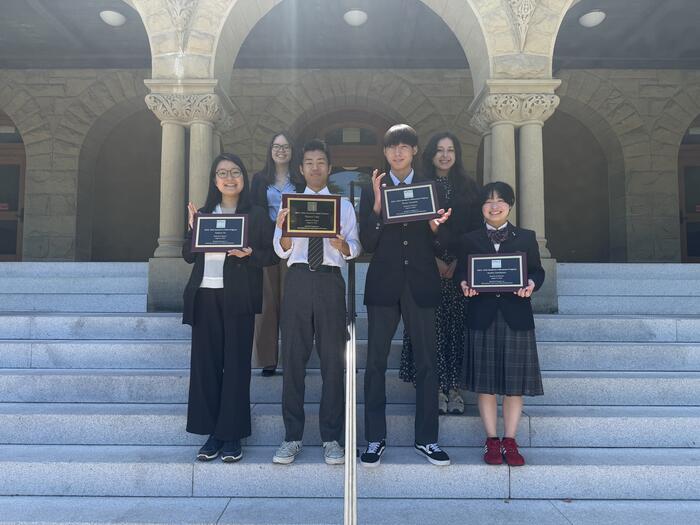
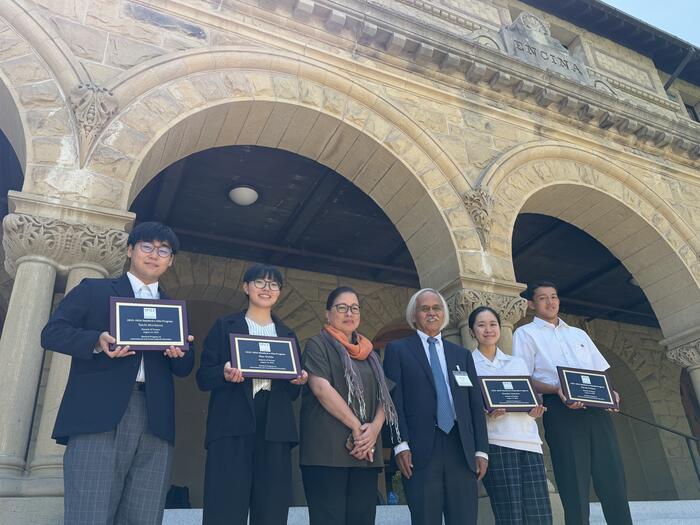
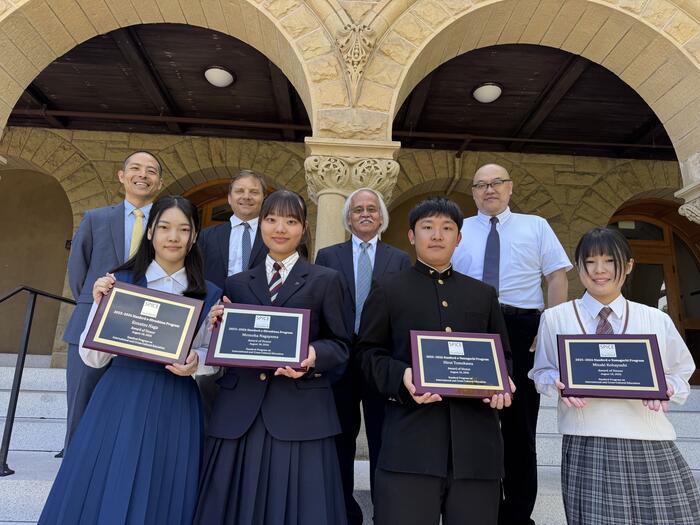
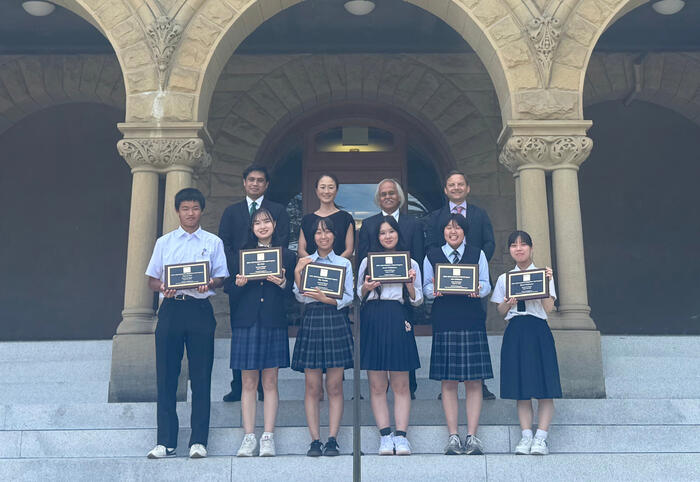
Applications are now open for the Spring 2026 session of the Stanford University Scholars Program for Japanese High School Students (also known as “Stanford e-Japan”). The course will run from February 9 through June 30, 2026, with an application deadline of December 31, 2025.
Stanford e-Japan
Spring 2026 session (February 9 to June 30, 2026)
Application period: November 15 to December 31, 2025
All applications must be submitted at https://spicestanford.smapply.io/prog/stanford_e-japan/ via the SurveyMonkey Apply platform. Applicants and recommenders will need to create a SurveyMonkey Apply account to proceed. Students who are interested in applying to the online course are encouraged to begin their applications early.
Accepted applicants will engage in an intensive study of U.S. society and culture and U.S.–Japan relations. Government officials, leading scholars, and experts from Stanford University and across the United States will provide web-based lectures and engage students in live discussion sessions.
Stanford e-Japan is offered by the Stanford Program on International and Cross-Cultural Education (SPICE), Stanford University. Stanford e-Japan is generously supported by the Yanai Tadashi Foundation, Tokyo, Japan.
For more information about Stanford e-Japan, please visit stanfordejapan.org.
Stanford e-Japan is one of several online courses for high school students offered by SPICE, including the Reischauer Scholars Program, the China Scholars Program, the Sejong Korea Scholars Program, Stanford e-China, Stanford e-Entrepreneurship Japan, Stanford e-Entrepreneurship U.S., as well as numerous local student programs in Japan.
To stay informed of news about Stanford e-Japan and SPICE’s other student programs, join our email list or follow us on Facebook, Instagram, and X.
Interested students must apply by December 31, 2025.
At Eikei University of Hiroshima (EUH), with its academic mission to contribute to society through engaging with timely and relevant societal issues, explore practical and innovative solutions to these issues, and foster a cadre of young potential change-makers, we are exposed to a wide range of knowledge- and skill-based courses that harness the competencies needed for the realities waiting outside the school. The Social Entrepreneurship – Human-Centered Design for Sustainability and Impact course, developed by SPICE and instructed by Dr. Mariko Yang-Yoshihara, is an excellent intensive program that amplifies and reinforces the school’s focus and goals while providing students with a different perspective on comprehending the socioeconomic world and its stakeholders through understanding oneself.
This course directed us to explore how a human-centered approach can address sustainability challenges within communities. We gained highly valuable skills and insights into social innovation through intensive lectures, interactive discussions, and hands-on workshops. The hybrid learning format allowed us to engage with our three special guest speakers, who are globally active contributors to the field of social entrepreneurship. At the same time, the later sessions immersed us in fieldwork with our assigned local Design Thinking Partners (DTPs)—professionals and entrepreneurs dedicated to creating positive impact in the Hiroshima/Setouchi region. This combination of global and local perspectives, along with the support of our student assistants (SAs), made the entire learning journey vibrant, engaging, and memorable.
One of the takeaways I still carry are prompt questions that were asked of us even before the course started: What drives you? What is your belief and purpose? What is your ‘why’? For me, this self-examination laid the foundation for understanding the human-centered approach. I realized that entrepreneurship is never about the hope of making profits, but about identifying what society truly needs and responding to it with a purpose—the whys that give direction to the work we do, the force that pushes us forward, shaping the impact we aim to create. Additionally, through our DTPs, I also learned that human-centered design revolves around uncovering ‘unmet needs’ rather than simply identifying or restating explicit goals. This realization not only enriched the outcomes and the overall experience of our fieldwork but, more importantly, recalibrated the angle at which I see and engage with the world around me with empathy.
What made this 10-session intensive course special is the way it catered to the needs of all students. The SPICE course invited a diverse group of students and student assistants from across Japan (Hiroshima, Kumamoto, Osaka, Shizuoka, and Tokushima) and the world (India, Liberia, Mexico, Philippines, Senegal, Slovakia, and Vietnam). The course was carried out in English, but some teams interviewed the DTPs in their native language, Japanese. Every student was asked to create a safe and inclusive space to learn in the best way possible, and this encouraged each team to choose the language that ensured richer discussion outputs. This aided better communication for all; however, it posed a challenge to me since I was assigned to a team with varied language backgrounds and, by default, I had to serve a role of a mediator. With a short background in learning the native language, I was intimidated and worried about not being able to contribute meaningfully.
Nonetheless, with the encouragement of Mariko-sensei and the support of my teammates, this challenge turned into one of my proudest breakthroughs since coming to Eikei. I gradually grew more confident using Japanese, overcame a long-standing insecurity, stepped out of my comfort zone, and rekindled the power of teamwork, persistence, and appreciation. Looking back, I came to realize that this was an unmet need of mine—at the heart of what human-centered design thinking strives to uncover. With the trust I received from Mariko-sensei, what initially felt like a source of anxiety transformed into one of the most rewarding aspects of this intensive course.
While I’ve gained many insights, the most meaningful takeaway from this intensive course is the new lens through which I now see both the world and myself. It reminded me of my core, enlightened me to the potential of this core, and motivated me to act on it. At present, I apply these lessons by helping domestic students through student assistant roles in EUH and supporting my co-international students by addressing their unrealized needs through various initiatives as the vice-president of the New in Japan Club 2025. SPICE’s Social Entrepreneurship Course gave me more than what the formal learning and the lessons within the syllabus could offer, leaving me with the resolve to keep turning empathy into action—starting with the community I belong to.
Editor’s Note: SPICE is grateful to Eikei University of Hiroshima for their partnership in making this course possible. We also thank the course’s guest speakers, student assistants, and Design Thinking Partners—two of whom are alumni of the Stanford–Hiroshima Collaborative Program on Entrepreneurship (SHCPE), SPICE’s course for MBA students at Hiroshima Business Management School. The in-line photo was taken during Kayle's final presentation on “solution and prototype.” Photo Credit: SPICE
SPICE's course on Social Entrepreneurship with Eikei University of Hiroshima is one of SPICE’s local student programs in Japan.
To stay informed of SPICE news, join our email list and follow us on Facebook, X, and Instagram.
Renz Kayle Roble Arayan, an undergraduate student at Eikei University of Hiroshima, reflects on his experience in the SPICE course, Social Entrepreneurship.
On October 21, 2025, Ms. Sanae Takaichi, a hardline conservative, became the first female Prime Minister of Japan, marking a historic moment for the country, which has one of the worst records among the world's developed democracies for gender equality. Yet, Takaichi's views on empowering women are complex, and she steps into office at a moment of internal party weakness and intense domestic and regional strategic pressures. On October 28, she will welcome President Trump to Tokyo, where the two leaders will hold a summit meeting.
In the following video explainer, Stanford sociologist Kiyoteru Tsutsui, the Henri H. and Tomoye Takahashi Professor and Senior Fellow in Japanese Studies at the Shorenstein Asia-Pacific Research Center (APARC) and the director of APARC and its Japan Program, discusses Takaichi’s background and rise to power, her cabinet choices, and what they signal for Japan's future. Watch:
Video: Michael Breger
Subscribe to APARC newsletters to receive our experts' analysis and commentary >
On October 28, 2025, on the heels of the summit meeting of Prime Minister Takaichi and President Trump, Tsutsui joined Scott Tong, host of WBUR's Here & Now, to discuss Takaichi's rise to power and what's next for Japan. Listen:
Stanford sociologist Kiyoteru Tsutsui, director of the Shorenstein Asia-Pacific Research Center and the Japan Program, explains the path to power of Japan’s first female prime minister and what her leadership means for the country's future.
The following reflection is a guest post written by Millie Gan, an alum of the Spring 2025 Stanford e-Entrepreneurship Japan Program. Earlier this year, Millie launched Teenage Business Contest Japan, a platform for encouraging social entrepreneurship among teens.
Japan is a place people love to visit, featuring bullet trains, temples, and sushi. Up close, I saw shrinking rural towns, an aging population, and customs fading from daily life. I wanted to do something that wasn’t just talk. The questions that kept coming up were: Who will have the creative ideas necessary to address these issues? And how can we best encourage and empower them?
This summer in Tokyo, the Teenage Business Contest Japan (TBCJ) 2025 invited high school students from across the country to develop business ideas that would help revitalize Japan’s communities. What started as a project organized by students evolved into a nationwide platform where young people could address problems that are typically left to politicians and businesses. As a participant in the Stanford e-Entrepreneurship Japan (SeEJ) program, I planned and built TBCJ in parallel with my SPICE coursework, applying classroom concepts—such as problem framing, rapid testing, and iteration—to real-world challenges.
SeEJ shaped the way I worked: start small, learn fast, and ship. I taught myself Python and JavaScript for websites and games, but for the contest I needed a different kind of tool. I used the Kotae.ai platform to launch TB-Chan, an AI helper on our website. Building it took minutes; training it took discipline. Every morning, I updated TB-Chan with new information—rules, schedules, government datasets, and simple “nudge” prompts—so students, media, and sponsors got instant, consistent answers. Without TB-Chan, we couldn’t have handled the volume of questions.
I was very thrilled that my SeEJ instructor and mentor, Dr. Makiko Hirata, presented the opening speech during the contest. Her message that young people can solve even the most complex challenges if they are given the chance set the tone for the day and encouraged everyone who was there. Getting TBCJ off the ground wasn’t glamorous. Working with government agencies entailed months of preparation; demonstrating impact to institutions demanded patience; securing funding from major companies required persistence. In the end, we raised over ¥3 million and built credibility the old-fashioned way: by delivering. The contest drew reporters—including from The Nikkei and the BBC—and more than 300 online articles followed. Importantly, the work didn’t end on stage. After the event, finalists began collaborating across schools and regions, and the University of Tokyo invited all four finalist teams into its WE AT CHALLENGE Business Program for coaching and potential funding.
A story about Japanese soccer guided me throughout. For years, there were few strikers—too risky, too exposed—until kids watched international players who took the shot. The talent was always there; what was missing was the example. On our stage, every finalist was a striker: a student who led without a guarantee. I also had to be one. Organizing a national contest as a teenager meant acting before certainty existed, and letting action create momentum.
That is the link between TBCJ and SPICE: SeEJ is not just theory; it is a bridge to action. It teaches you to listen carefully, test quickly, and improve openly. TBCJ proved that teens aren’t only future leaders—they are present-tense builders. With the right tools, data, mentors, and faith, young people can connect ideas to implementation and turn problems into opportunities.
The message I hope readers take away is simple: let’s be the strikers. Take the shot. Others will follow.
Stanford e-Entrepreneurship Japan is one of several online courses offered by SPICE.
To stay updated on SPICE news, join our email list and follow us on Facebook, X, and Instagram.
Millie Gan, an alum of Stanford e-Entrepreneurship Japan and founder of Teenage Business Contest Japan (TBCJ), reflects on building a platform that empowers teens to use entrepreneurship and innovation to revitalize Japan’s communities.