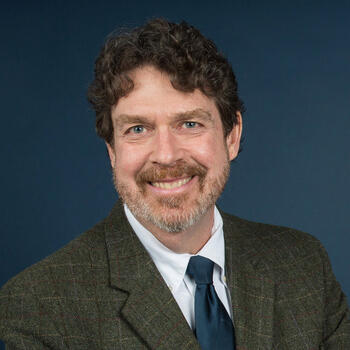
Authors
Gi-Wook Shin
News Type
Commentary
Date
Paragraphs

President Trump caught the world by surprise once again yesterday with a decision not to sign a deal with his North Korean counterpart, Chairman Kim Jong-un, in Hanoi, Vietnam. While walking away is a common tactic in working-level negotiation, what happened in Hanoi was a rare case and the least expected outcome.

Read the full article on Axios.

Hero Image
President Trump waves to camera at Hanoi Summit
President Trump at a news conference following his second summit with North Korean leader Kim Jong-un.
Tuan Mark via Getty Images
All News button
1
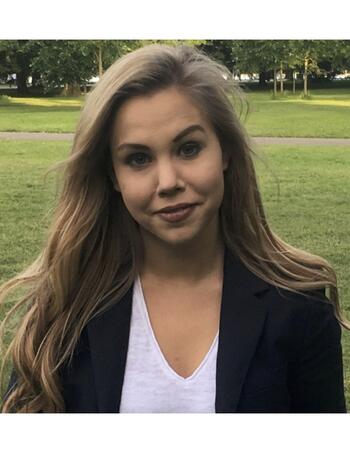
Authors
Yong Suk Lee
News Type
Commentary
Date
Paragraphs

Trump and Kim share a common desire for development.

At first glance U.S. President Donald Trump and North Korean leader Kim Jong Un seem like an unlikely pair. A few years back they were calling each other “Rocket Man” and a “dotard,” and tension between the United States and North Korea was escalating rapidly in 2017. But in a few days they are slated to meet for the second time, and according to Trump they had “fallen in love” not long after their first encounter. What could have created such intimate bond between the two? The common interest that brings the two together is the desire for development — economic development in the case of Kim and property development in the case of Trump.

Read the full article on The Diplomat.

Hero Image
President Trump and Chairman Ki talking during Sinapore Summit Official White House Photo
All News button
1
-

Misconduct by those in high places is always dangerous to reveal. Whistleblowers thus face a paradox: by challenging and exposing transgressions by the powerful, they perform a vital public service; yet they always suffer for it. Comparing whistleblower protection in Europe and the United States brings into fuller relief the vital role truth-telling can play in sustaining civil discourse and democracy.


Image
Prof. Allison Stanger

Allison Stanger
is the Russell Leng ’60 Professor of International Politics and Economics and founding director of the Rohatyn Center for International Affairs at Middlebury College. She is the author of One Nation Under Contract: The Outsourcing of American Power and the Future of Foreign Policy and Whistleblowers: Honesty in America from Washington to Trump, both with Yale University Press. She is working on a new book tentatively titled Consumers vs. Citizens: Justice and Democracy’s Public Square in a Big Data World. Stanger’s writing has appeared in Foreign Affairs, Foreign Policy, Financial Times, International Herald Tribune, New York Times, USA Today, U.S. News and World Report, and the Washington Post, and she has testified before the Commission on Wartime Contracting, the Senate Budget Committee, the Congressional Oversight Panel, the Senate HELP Committee, and the House Committee on Government Oversight and Reform. She is a member of the Council on Foreign Relations and received her Ph.D. in Political Science from Harvard University. Stanger is currently a Scholar in Residence in the Cybersecurity Initiative at New America and an External Professor at the Santa Fe Institute.


Co-sponsored by the McCoy Family Center for Ethics in Society


Allison Stanger Professor of International Politics and Economics, Middlebury College Speaker Middlebury College
Lectures
-

Abstract: Multilateral conferences are the bread-and-butter of international politics. In such settings, countries may pursue their interests individually, but most of the time they prefer to act through coalitions. Such coalitions are overlapping, creating a network structure. States build and utilize networks to get agenda items pushed through or to block unfavorable ones. While sometimes they are formed on the basis of formal institutions (such as the NAM or the EU), frequently their membership is based on either ad hoc cooperation, or existing informal bodies (such as the NSG, New Agenda Coalition, or Zangger Committee). The attention to such networks is, however, still in its infancy. This paper looks at how state networks within one of the most important recurring diplomatic conferences – the quinquennial NPT Review Conference – develop and transform over time. By doing so, the paper maps the existing networks, and explains their transformation as an instrument of global governance.


Speaker Bio: Michal Onderco is a Junior Faculty Fellow at CISAC (2018-2019), and his research focuses on politics of multilateral nuclear diplomacy. His current project tries to understand how states build coalitions in multilateral diplomacy, and why are some coalitions more successful than others.

Michal is currently on leave from Erasmus University Rotterdam, where he is Assistant Professor of International Relations. Previously, he was a Max Weber Fellow at the European University Institute, Fulbright Visiting Researcher at Columbia University in New York, and a short-term Stanton Fellow at Fundação Getúlio Vargas in São Paulo. He received his LLM in Law and Politics of International Security and PhD in Political Science from Vrije Universiteit Amsterdam. His earlier work was published in International Studies Quarterly, European Journal of Political Research, Cooperation & Conflict, The Nonproliferation Review, and European Political Science Review.

Michal Onderco MacArthur Junior Faculty Fellow CISAC, Stanford University
-

*This event is co-sponsored with the Hamid and Christina Moghadam Program in Iranian Studies.


Jason Rezaian discusses his new book, Prisoner: My 544 Days in an Iranian Prison, with Brett McGurk, the former Special Envoy to Defeat ISIS. Rezaian was the Washington Post’s Tehran bureau chief when he was imprisoned and McGurk led 14 months of secret negotiations with Iran that helped free him in 2016.


Jason Rezaian is one of the few Western journalists to have been based in Tehran in recent years. From 2009 until his arrest in 2014 he covered stories that tried to explain Iran to a general American audience, first as a freelancer for a variety of outlets and later as The Washington Post’s Tehran bureau chief.

He reported on two presidential elections, Iran’s nuclear negotiations with global powers, the effects of one of the most punitive sanctions regimes in modern times and environmental issues. In between those momentous topics he told the stories of everyday Iranians which sought to make them more accessible to readers, reporting on Iran’s small community of baseball players, the quest for the best high end hamburger in Tehran, and a clinic for female drug addicts.

In July of 2014 Rezaian and his wife were detained in their home and he went on to spend 545 in Tehran’s Evin prison, released on the same day that the historic nuclear deal between Iran and world powers was implemented. 


Brett McGurk is joining Stanford University’s Freeman Spogli Institute for International Studies as the Frank E. and Arthur W. Payne Distinguished Lecturer.

McGurk recently served as special presidential envoy for the Global Coalition to Defeat ISIS at the U.S. Department of State. He helped build and then led the coalition of seventy-five countries and four international organizations and was responsible for coordinating all aspects of U.S. policy in the campaign against the Islamic State in Iraq, Syria, and globally.

McGurk previously served in senior positions in the George W. Bush and Barack Obama administrations, including as Special Assistant to President Bush and Senior Director for Iraq and Afghanistan, and then as Deputy Assistant Secretary of State for Iraq and Iran and Special Presidential Envoy for the U.S. campaign against the Islamic State under Obama.

McGurk has led some of the most sensitive diplomatic missions in the Middle East over the last decade, including negotiations with partners and adversaries to advance U.S. interests. In 2015 and 2016, McGurk led 14 months of secret negotiations with Iran to secure the release of Washington Post reporter Jason Rezain, U.S. Marine Amir Hekmati, and Pastor Saad Abadini, as well as three other American citizens.


Hauck Auditorium, David & Joan Traitel Building, Hoover Institution

435 Lasuen Mall, Stanford University

Jason Rezaian Iranian-American journalist
Seminars
News Type
News
Date
Paragraphs

Stanford e-Japan is an online course that teaches Japanese high school students about American society and culture and U.S.–Japan relations. The course introduces students to both American and Japanese perspectives on many historical and contemporary issues. It is offered biannually by the Stanford Program on International and Cross-Cultural Education (SPICE). The Fall 2018 cohort was the seventh group of students to complete Stanford e-Japan.


In August 2019, three of the top students of the Fall 2018 Stanford e-Japan distance-learning course will be honored at an event at Stanford University. The three Stanford e-Japan Day honorees—Sakura Hayakawa (Katoh Gakuen Gyoshu Senior High School), Ryotaro Homma (Kaisei Senior High School), and Taiki Yamamoto (Ritsumeikan Uji Senior High School)—will be recognized for their coursework and exceptional research essays that focused respectively on “Importance of Youth Political Participation and Citizenship Education,” “The Abolition of the Electoral College: A Synthesis of the Positive Aspects,” and “The U.S.-Japan Alliance: Is a New Framework Necessary?”

Mayu Fujinami (Keio Girls Senior High School) and Tatsuya Sugiyama (Saitama Prefectural Urawa High School) received Honorable Mentions for their research papers on “The Importance of Paternity Leave for Gender Equality” and “Design Thinking: Lessons from the U.S.,” respectively.

Applications for the next session of Stanford e-Japan (Spring 2019) are currently being accepted through February 24, 2019. More information is available at stanfordejapan.org.

To stay informed of SPICE news, join our email list or follow us on Facebook and Twitter.


SPICE offers separate courses for U.S. high school students. For more information, please see the Reischauer Scholars Program (online course about Japan), Sejong Scholars Program (online course about Korea), or China Scholars Program (online course about China).


Hero Image
Stanford e-Japan honoree Sakura Hayakawa presents her final research paper at her school
All News button
1
-

Open to Stanford faculty, students, staff and visting scholars.

This conference aims to examine the international aspects of the rise of populism across the globe: the role of international alliances, disinformation and propaganda campaigns, and the use of hacking, international institutions, and ideology as ways of building the new "illiberal international."

For more information, please visit the Conference Website.
RSVP required by email to sj1874@stanford.edu.  Please specify which date(s) you plan to attend.

Conference Poster
Download pdf
Conference Program
Download pdf

Seawell Family Boardroom
Bass Center
Knight Management Center (Graduate School of Business)

Encina Hall
616 Jane Stanford Way
Stanford, CA  94305


(650) 723-4270
0
Senior Fellow at the Freeman Spogli Institute for International Studies
Michelle and Kevin Douglas Professor of International Studies
Professor of Political Science
Senior Fellow, Hoover Institution
anna_gb_4_2022.jpg

Anna Grzymała-Busse is a professor in the Department of Political Science, the Michelle and Kevin Douglas Professor of International Studies, senior fellow at the Freeman Spogli Institute for International Studies and the director of The Europe Center. Her research interests include political parties, state development and transformation, informal political institutions, religion and politics, and post-communist politics.

In her first book, Redeeming the Communist Past, she examined the paradox of the communist successor parties in East Central Europe: incompetent as authoritarian rulers of the communist party-state, several then succeeded as democratic competitors after the collapse of these communist regimes in 1989.

Rebuilding Leviathan, her second book project, investigated the role of political parties and party competition in the reconstruction of the post-communist state. Unless checked by a robust competition, democratic governing parties simultaneously rebuilt the state and ensured their own survival by building in enormous discretion into new state institutions.

Anna's third book, Nations Under God, examines why some churches have been able to wield enormous policy influence. Others have failed to do so, even in very religious countries. Where religious and national identities have historically fused, churches gained great moral authority, and subsequently covert and direct access to state institutions. It was this institutional access, rather than either partisan coalitions or electoral mobilization, that allowed some churches to become so powerful.

Anna's most recent book, Sacred Foundations: The Religious and Medieval Roots of the European State argues that the medieval church was a fundamental force in European state formation.

Other areas of interest include informal institutions, the impact of European Union membership on politics in newer member countries, and the role of temporality and causal mechanisms in social science explanations.

Director of The Europe Center
Anna Grzymala-Busse

Encina Hall
616 Jane Stanford Way
Stanford, CA 94305-6055

0
Senior Fellow, Freeman Spogli Institute for International Studies
Ken Olivier and Angela Nomellini Professor of International Studies, Department of Political Science
Peter and Helen Bing Senior Fellow, Hoover Institution
mcfaul_headshot_2025.jpg PhD

Michael McFaul is the Ken Olivier and Angela Nomellini Professor of International Studies in Political Science, Senior Fellow at the Freeman Spogli Institute for International Studies, and the Peter and Helen Bing Senior Fellow at the Hoover Institution, all at Stanford University. He joined the Stanford faculty in 1995 and served as FSI Director from 2015 to 2025. He is also an international affairs analyst for MSNOW.

McFaul served for five years in the Obama administration, first as Special Assistant to the President and Senior Director for Russian and Eurasian Affairs at the National Security Council at the White House (2009-2012), and then as U.S. Ambassador to the Russian Federation (2012-2014).

McFaul has authored ten books and edited several others, including, most recently, Autocrats vs. Democrats: China, Russia, America, and the New Global Disorder, as well as From Cold War to Hot Peace: An American Ambassador in Putin’s Russia, (a New York Times bestseller) Advancing Democracy Abroad: Why We Should, How We Can; and Russia’s Unfinished Revolution: Political Change from Gorbachev to Putin.

He is a recipient of numerous awards, including an honorary PhD from Montana State University; the Order for Merits to Lithuania from President Gitanas Nausea of Lithuania; Order of Merit of Third Degree from President Volodymyr Zelenskyy of Ukraine, and the Dean’s Award for Distinguished Teaching at Stanford University. In 2015, he was the Distinguished Mingde Faculty Fellow at the Stanford Center at Peking University.

McFaul was born and raised in Montana. He received his B.A. in International Relations and Slavic Languages and his M.A. in Soviet and East European Studies from Stanford University in 1986. As a Rhodes Scholar, he completed his D. Phil. in International Relations at Oxford University in 1991. 

CV
Date Label

Encina Hall, C148
616 Jane Stanford Way
Stanford, CA 94305

0
Olivier Nomellini Senior Fellow at the Freeman Spogli Institute for International Studies
Director of the Ford Dorsey Master's in International Policy
Research Affiliate at The Europe Center
Professor by Courtesy, Department of Political Science
yff-2021-14290_6500x4500_square.jpg

Francis Fukuyama is the Olivier Nomellini Senior Fellow at Stanford University's Freeman Spogli Institute for International Studies (FSI), and a faculty member of FSI's Center on Democracy, Development and the Rule of Law (CDDRL). He is also Director of Stanford's Ford Dorsey Master's in International Policy, and a professor (by courtesy) of Political Science.

Dr. Fukuyama has written widely on issues in development and international politics. His 1992 book, The End of History and the Last Man, has appeared in over twenty foreign editions. His book In the Realm of the Last Man: A Memoir will be published in fall 2026.

Francis Fukuyama received his B.A. from Cornell University in classics, and his Ph.D. from Harvard in Political Science. He was a member of the Political Science Department of the RAND Corporation, and of the Policy Planning Staff of the US Department of State. From 1996-2000 he was Omer L. and Nancy Hirst Professor of Public Policy at the School of Public Policy at George Mason University, and from 2001-2010 he was Bernard L. Schwartz Professor of International Political Economy at the Paul H. Nitze School of Advanced International Studies, Johns Hopkins University. He served as a member of the President’s Council on Bioethics from 2001-2004. He is editor-in-chief of American Purpose, an online journal.

Dr. Fukuyama holds honorary doctorates from Connecticut College, Doane College, Doshisha University (Japan), Kansai University (Japan), Aarhus University (Denmark), the Pardee Rand Graduate School, and Adam Mickiewicz University (Poland). He is a non-resident fellow at the Carnegie Endowment for International Peace. He is a member of the Board of Trustees of the Rand Corporation, the Board of Trustees of Freedom House, and the Board of the Volcker Alliance. He is a fellow of the National Academy for Public Administration, a member of the American Political Science Association, and of the Council on Foreign Relations. He is married to Laura Holmgren and has three children.

(October 2025)

CV
Date Label
Conferences
-

Abstract: Many scholars and policymakers argue that drone proliferation will be destabilizing. By removing pilots from harm’s way, drones allow states to launch military operations without the political risks of sending troops into battle. Although these reduced risks may increase the likelihood of conflict onset, technology that removes warfighters from the battlefield may actually help states avoid escalatory spirals. To identify the effect of drones on escalation dynamics, I develop a theory of technology-enabled escalation control: when used as a substitute for manned assets, drones increase the frequency of conflict between actors, but limit the intensity of these disputes by decreasing pressures for retaliation. This restrained retaliation prevents crises from spiraling into more destabilizing conflicts. To test this argument, I develop a novel methodological approach – embedding experimental manipulations into wargames played by military personnel. The wargames demonstrate that drones can limit escalation and showcase wargaming as a tool for international relations research. 


Speaker Bio: Erik Lin-Greenberg is a Predoctoral Fellow at CISAC and a PhD candidate in political science at Columbia University. His dissertation assesses the effects of emerging technology on military escalation. In other work, Erik examines alliance dynamics, the interaction of technology and international law, and the determinants of military force structure. His research has appeared or is forthcoming in a variety of outlets including Security Studies, International Peacekeeping, War on the Rocks, and The Washington Post. Erik previously served as an active duty U.S. Air Force officer, and he continues to serve as a reservist assigned to the Joint Staff.


Erik Lin-Greenberg Predoctoral Fellow CISAC
Seminars
-

Abstract

In How We Win: How Cutting-Edge Entrepreneurs, Political Visionaries, Enlightened Business Leaders, and Social Media Mavens Can Defeat the Extremist Threat, Farah Pandith, the former first-ever Special Representative to Muslim Communities argues that the solutions to the crisis of recruitment and radicalization are available and affordable. A pioneer in the war of ideas, her unprecedented experiences for Bush and Obama reveal information about Washington’s soft power challenge. She calls out the false claim that “ISIS is defeated” and focuses on the importance of defeating the ideology. The need is urgent as terrorist organizations continue to beat the current approach to this global threat. To win, she argues, we must go “all in” in order to extinguish this threat once and for all. She lays out a comprehensive strategy that is a call to action for policymakers, tech entrepreneurs, the media, business professionals, and anyone interested in fighting hate, and presents concrete solutions and recommendations for how we can stem the extremists’ toxic message. Drawing upon her experiences at the National Security Council, U.S. Department of State, and USAID, she makes the case that we have the resources right now to defeat the extremist threat. http://farahpandith.com/book/


Bio

FARAH PANDITH is an author, foreign policy strategist, and former diplomat. A world-leading expert and pioneer in countering violent extremism, she is a frequent media commentator and public speaker. She served as a political appointee under Presidents George H.W. Bush, George W. Bush, and Barack Obama, and most recently she was the first-ever Special Representative to Muslim Communities.  She has served on the National Security Council, at the U.S. Department of State, and the U.S. Agency for International Development (USAID) in various senior roles. She is a senior fellow with the Future of Diplomacy Project at the Belfer Center for Science and International Affairs at the Harvard Kennedy School as well as an adjunct senior fellow at the Council on Foreign Relations. Her book is How We Win: How Cutting-Edge Entrepreneurs, Political Visionaries, Enlightened Business Leaders and Social Medial Mavens Can Defeat the Extremist Threat.


Farah Pandith
Seminars
-
Please join Stanford's Center on Democracy, Development, and the Rule of Law (CDDRL) on Tuesday, February 19, 2019 for a conversation with Larry Summers on US-China relations.  Summers will be joined in coversation with Francis Fukuyama, the Mosbacher Director of CDDRL. 
 

Speaker Bio

Image
summers 2 200x300
Former Treasury Secretary Lawrence H. Summers is one of America’s leading economists. In addition to serving as 71st Secretary of the Treasury in the Clinton Administration, Dr. Summers served as Director of the White House National Economic Council in the Obama Administration, as President of Harvard University, and as the Chief Economist of the World Bank.Currently, Dr. Summers is the President Emeritus and the Charles W. Eliot University Professor at Harvard University, where he became a full professor at age 28, one of the youngest in Harvard’s recent history. He directs the University’s Mossavar-Rahmani Center for Business and Government. Summers was the first social scientist to receive the National Science Foundation’s Alan Waterman Award for scientific achievement and, in 1993, he was awarded the John Bates Clark Medal, given to the most outstanding economist under 40 in the United States. He was elected to the National Academy of Sciences in 2002. He has published more than 150 papers in scholarly journals.


Stanford Institute for Economic Policy Research 366 Galvez Street Stanford, CA 94305
Lawrence H. Summers Charles W. Eliot University Professor and President Emeritus at Harvard University

Encina Hall, C148
616 Jane Stanford Way
Stanford, CA 94305

0
Olivier Nomellini Senior Fellow at the Freeman Spogli Institute for International Studies
Director of the Ford Dorsey Master's in International Policy
Research Affiliate at The Europe Center
Professor by Courtesy, Department of Political Science
yff-2021-14290_6500x4500_square.jpg

Francis Fukuyama is the Olivier Nomellini Senior Fellow at Stanford University's Freeman Spogli Institute for International Studies (FSI), and a faculty member of FSI's Center on Democracy, Development and the Rule of Law (CDDRL). He is also Director of Stanford's Ford Dorsey Master's in International Policy, and a professor (by courtesy) of Political Science.

Dr. Fukuyama has written widely on issues in development and international politics. His 1992 book, The End of History and the Last Man, has appeared in over twenty foreign editions. His book In the Realm of the Last Man: A Memoir will be published in fall 2026.

Francis Fukuyama received his B.A. from Cornell University in classics, and his Ph.D. from Harvard in Political Science. He was a member of the Political Science Department of the RAND Corporation, and of the Policy Planning Staff of the US Department of State. From 1996-2000 he was Omer L. and Nancy Hirst Professor of Public Policy at the School of Public Policy at George Mason University, and from 2001-2010 he was Bernard L. Schwartz Professor of International Political Economy at the Paul H. Nitze School of Advanced International Studies, Johns Hopkins University. He served as a member of the President’s Council on Bioethics from 2001-2004. He is editor-in-chief of American Purpose, an online journal.

Dr. Fukuyama holds honorary doctorates from Connecticut College, Doane College, Doshisha University (Japan), Kansai University (Japan), Aarhus University (Denmark), the Pardee Rand Graduate School, and Adam Mickiewicz University (Poland). He is a non-resident fellow at the Carnegie Endowment for International Peace. He is a member of the Board of Trustees of the Rand Corporation, the Board of Trustees of Freedom House, and the Board of the Volcker Alliance. He is a fellow of the National Academy for Public Administration, a member of the American Political Science Association, and of the Council on Foreign Relations. He is married to Laura Holmgren and has three children.

(October 2025)

CV
Date Label
Olivier Nomellini Senior Fellow at the Freeman Spogli Institute for International Studies (FSI), and Mosbacher Director of FSI's Center on Democracy, Development, and the Rule of Law.
Lectures
Subscribe to The Americas