Authors
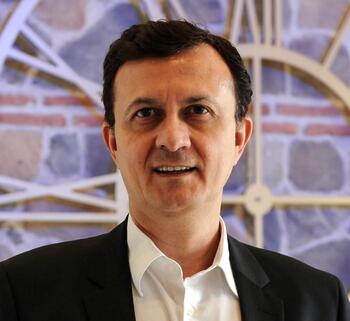
Siegfried S. Hecker
News Type
News
Date
Paragraphs

As we witness the increasingly detrimental effects of global climate change, the role that nuclear power could play globally to mitigate its effects continues to be debated. The series of articles featured in the Bulletin in December 2016 aired a broad spectrum of opinions, ranging in assessment of the role of nuclear power from insignificant to mandatory. In this series, we present the perspective of a new crop of nuclear professionals who collectively represent two of the world leaders in nuclear power—the United States and Russia.

These young professionals work together to exchange views and ideas as part of the U.S.-Russia Young Professionals Nuclear Forum that we created in May 2016 to encourage dialogue on critical nuclear issues of concern to both countries. As most official avenues of US-Russia cooperation on nuclear issues were being shut down in pace with the deteriorating political relations between Washington and Moscow, our objective was to turn to the younger generation, because those in it will have to live with the consequences of a world in which their countries no longer cooperate to mitigate global nuclear dangers.

In the United States, our efforts are organized within the Center for International Security and Cooperation at Stanford University, although we reach out to universities and other organizations across the country. In Russia, we were fortunate to find the Moscow Engineering Physics Institute (MEPhI), Russia’s flagship research university in nuclear engineering, to be an enthusiastic partner. Its rector, Professor Mikhail Strikhanov, has an unwavering international outlook that stresses the need for cooperation, especially in higher education and research. The young professionals are students, postdoctoral fellows, and early career professionals.

Hecker has previously written in the Bulletin about the remarkable period of post-Cold War nuclear cooperation between Russian and American nuclear weapon scientists and how the termination of that cooperation by our governments threatens our collective security. We viewed engaging young professionals from the two countries as one of the few avenues of continued cooperation. It has the potential of being particularly effective because at the forum meetings, the young Russians and Americans interact in an educational and non-adversarial environment.

The first three forum meetings focused primarily on issues of nuclear non-proliferation and countering nuclear terrorism. They featured exercises in which the young professionals worked in small groups side by side to explore solutions to vexing nuclear problems. One was a simulation conducted at Stanford in May 2018 just a few weeks before the historic Trump-Kim Singapore Summit. The other was an exercise in Moscow in October 2018 to advise their governments on a hypothetical crisis related to the US withdrawal from the Iran nuclear deal.

At the Moscow forum, we also asked the young professionals to explore what the two countries could do to promote the benefits of nuclear energy around the globe, while cooperating to mitigate the associated risks.

Preparation for the forum included online lectures by senior mentors as well as lectures and discussion sessions in Moscow by both Russian and American specialists. In the nuclear power exercise, we assigned eight key questions to 24 young professionals. We divided them into eight teams, each composed of Russian and American participants. The central question was whether or not an expansion of global nuclear power is necessary to help mitigate the danger of global climate change. Individual groups examined issues of supply and demand around the globe and some of the big challenges posed by an expansion of nuclear power—those of economics, safety and security, potential proliferation of nuclear weapons, and the disposition of nuclear waste.

The young professionals conducted research prior to the meeting, deliberated and debated within their teams during the meeting, and presented their findings to the larger group and the panel of senior mentors at the end of the exercise. During the past six months they have captured the essence of their findings in the eight articles featured in this special presentation in the Bulletin.

Their findings are generally pro-nuclear, which is not surprising considering that most of them have strong educational and research backgrounds in either nuclear technologies or nuclear security. But we found that their views were primarily driven by their serious concerns about the dangers of global climate change and the urgent need to confront these dangers.

Their articles are of interest not so much in that they break new ground in these areas, particularly since many other  established experts have tried to tackle these issues for decades. They are of interest because they represent the views of some of the younger generation of professionals working together across cultural and disciplinary divides. We were struck by the following comment in one of the papers  that reflects on the perceived urgency of the task at hand: “We are the first generation that is experiencing the dramatic effects of global climate change and likely the last that can do something about it to avoid catastrophic consequences for the Earth and its people.”

We also note that the articles uniformly reveal that the young professionals across the board firmly believe that the benefits and risks of expanding nuclear power globally must be pursued and tackled in a concerted effort of major nuclear powers (especially the United States and Russia), other developed nations, the International Atomic Energy Agency, and all stakeholders. These younger voices stated: “The most important shift necessary to facilitate [nuclear power] expansion is an increase in international cooperation and multilateralization in the form of, for example, international reactor supply contracts, multinational enrichment conglomerates, nondiscriminatory fuel banks, and international waste repositories.”

We believe the readers will find the sentiments and opinions of the young Russian and American professionals interesting and encouraging. We certainly have found them eager and able to work together effectively—a lesson that the more senior professionals and the governments need to relearn.

Editor’s note: The Young Professionals Nuclear Forum cooperation is supported by the John D. and Catherine T. MacArthur Foundation and the Carnegie Corporation of New York.


Read the articles here:


Hero Image
rsd19 023 0010a Rod Searcey
All News button
1
Authors
News Type
News
Date
Paragraphs

In early May, CISAC convened the fifth Young Professional Nuclear Forum (YPNF), a program sponsored by the Center for International Security and Cooperation at Stanford University and the Moscow Engineering and Physics Institute (MEPhI). The program brought together a lively group of young Russians and Americans working on nuclear issues over three days.

Since 2016, the forum has alternated between Moscow and Stanford.  

By 2016, US and Russian governments closed almost every door on opportunities that previously allowed experienced nuclear professionals on both sides to cooperate with each other.  Stanford Professor Siegfried Hecker saw that at least one door - that of cooperation on the university level - was still open. He started the YPNF to foster interaction between the younger generation of Russians and Americans who study, do research, or start a career in the nuclear power or nonproliferation fields.

This year’s agenda focused on two major areas: US-Russian arms control and the future of nuclear power.

The American group included a new cohort of six incoming young professionals from Los Alamos National Laboratory, UC Berkeley, Center for Arms Control and Non-Proliferation, and Vienna Center for Disarmament and Non‑Proliferation. They were joined by CISAC research staff members Gaby Levikow and Elliot Serbin and current and former fellows Chantell Murphy, Kristin Ven Bruusgaard, and Cameron Tracy. The Russian group from MEPhI brought a team of 12 young professionals most of whom are pursuing their graduate degrees in nuclear physics and engineering and software engineering, along with junior professionals in international relations and nuclear fields.  The team of experts included Professor Hecker, Dr. James Toevs, Dr. Ning Li, Ambassador Steven Pifer, Professor David Holloway, Dr. Larry Brandt, Dr. Chaim Braun, Dr. Pavel Podvig, and Dr. Mona Dreicer, —all of whom provided advice and feedback during the exercise.

Participants come from loosely defined “technical” and “policy” fields, and the forum agenda has traditionally included one nuclear-power related and one policy-focused subject. Forum activities vary between lectures, expert briefings, discussions, and table-top exercises, but the small-group work during the exercises is the core form of interaction.

By design, this agenda exposes each participant to new fields, new counterparts, some fun interactive time off - and encourages a lot of cultural learning. Forum after forum, we hear back that the group work and social time are the most exciting aspects of the forum experience. Participants noted they learned, among other things, “general ideas and thoughts of American participants and their attitudes to the present American policy, new words and abbreviations … [and] a great deal about new reactor designs and their implications for nuclear energy and security policy.”  Still more participants enjoyed “learning to collaborate in groups of Americans and Russians but also between policy and technical experts on topics of both camps,” and some “got new friends.”

Encouragingly, participants requested more interaction between the bi-annual meetings and a variety of topics in yet untapped – or suspended - areas of cooperation between Russia and the US.

New work continues to emerge from the forum. Eight short articles written by the young professionals to showcase the results of the projects from the Moscow meeting in November 2017 was published in the Bulletin of the Atomic Scientists in June 2019. The next meeting will be held in Moscow this November.


Hero Image
rsd19 023 0010a Rod Searcey
All News button
1
Paragraphs

This special issue of The Journal of the Economics of Ageing, edited by Anita Mukherjee and APARC's Asia Health Policy Program Director Karen Eggleston, focuses on a key challenge around the world: financing the many needs that come with longer lives, lower fertility, and older population age structures. The triumph of longevity can pose a challenge to the fiscal integrity of public and private pension systems and other social support programs disproportionately used by older adults. This challenge is a formidable but ultimately happy one, as people around the world today can expect to live longer and healthier lives.

The countries and regions studied in this special issue include many that are leading the world in this longevity transition with relatively old population age structures, especially in Europe and Japan. Other areas such as Latin American countries and especially China are rapidly catching up, or have large total populations of older adults at relatively low per capita income and little formal social security, such as India. 

The two special contributions and eight research papers with their accompanying perspective pieces collected in this issue cover comparative research on over 30 European countries and 17 Latin American countries, as well as studies on Australia, the Netherlands, the United States, India, China and Japan. The contributions analyze a variety of topics within the broad rubric of financing longevity, including the ways in which the elderly cope with caregiving and cognitive decline; how pension structures may exacerbate existing inequalities; and innovative ways to extend old-age financial security to those working outside the formal sector in developing countries. The variety of topics covered in these papers reflects the many angles from which research is needed to inform policies intended to improve the financial well-being for the world’s ageing population.
All Publications button
1
Publication Type
Journal Articles
Publication Date
Journal Publisher
The Journal of the Economics of Ageing
Authors
Karen Eggleston
Paragraphs

This document is a memo from the "Global Populisms and their International Diffusion Conference" held at Stanford University on March 1-2, 2019.

This is a work in progress. DO NOT cite without checking with the authors first.


All Publications button
1
Publication Type
Conference Memos
Publication Date
Authors
Paragraphs

What makes an asset a “safe” asset? We study a model where two countries each issue sovereign bonds to satisfy investors’ safe asset demands. The countries differ in the float of their bonds and the fun-damental resources available to rollover debts. A sovereign’s debt is safer if its fundamentals are strong relative to other possible safe assets, not merely strong on an absolute basis. If demand for safe assets is high, a large float enhances safety through a market depth benefit. If demand for safe assets is low, then large debt size is a negative as rollover risk looms large.

All Publications button
1
Publication Type
Journal Articles
Publication Date
Journal Publisher
American Economic Review
Authors
Arvind Krishnamurthy
Number
109(4)
Authors
News Type
News
Date
Paragraphs

Did the Russian-affiliated groups that interfered with the 2016 U.S. presidential election want to be caught?

“There’s a reason why they paid for Facebook ads in rubles,” Nathaniel Persily, who is a senior fellow at FSI and co-director of the Cyber Policy Center, told FSI Director Michael McFaul on the World Class podcast. “They wanted to be open and notorious.”

Since the election, Americans have become more suspicious of fake news, but they have also become suspicious of real news and journalists in general. Another problem with the Russians’ success in influencing the 2016 election, said Persily, is that Americans will automatically assume that the Russians will do the same thing during the 2020 race.

“Everyone is going to be looking for nefarious influences and shouting them from the rooftops, and that actually serves the [bad actors’] purposes just as much,” Persily said. “Many of the attempts in 2016 were about fostering division and doubt, and I think there’s a lot of appetite for doubt right now in America.”

Sign up for the FSI Newsletter to get stories like this delivered straight to your inbox.

Since 2016, Facebook, Twitter and Google have made some important changes to the way they handle advertising, including adding a requirement that all candidate ads and other ads of “national legislative importance” be identified as advertisements on users’ feeds.

But there are no standardized rules or regulations that dictate how tech companies should handle advertisements or posts that contain disinformation, Persily said, and because of this, it is up to those respective companies to make those decisions themselves  — and they aren’t always in agreement. For example, when a video of Nancy Pelosi that was slowed down to make her seem drunk was posted in late May on YouTube and Facebook, YouTube took the video down, but Facebook decided to leave it up.

“The standards that are going to be developed in test cases like these — under conditions which are not as politically incendiary as an election — are going to be the ones that will be rolled out and applied in elections in the U.S. and around the world,” Persily said.

When it comes to election security, the 2020 presidential race will be the next big test for the U.S. government and private-sector companies. But other countries should also be on the lookout for activity from foreign agents and actors in their elections.

“The 2016 election was not just an event, it was a playbook that was written by the Russians,” warned Persily. “That playbook is usable for future elections in the United States as well as around the world, whether it’s between India and Pakistan or China and Taiwan.”


Hero Image
world class logo soundcloud notag 1
All News button
1
Paragraphs

Click here to view article


Abstract: Ultrafast optical pump-probe studies of uranium dioxide (UO2) under pressure were performed in order to better understand the material's response to ionizing radiation. Photoexcitation generates oscillations in the time-resolved reflectivity at two distinct GHz-scale frequencies. The higher-frequency mode is attributed to a coherent longitudinal acoustic mode. The lower-frequency mode does not correspond to any known excitation under equilibrium conditions. The frequency and lifetime of the low-frequency mode are studied as a function of pressure. Abrupt changes in the pressure-dependent slopes of these attributes are observed at ∼10 GPa, which correlates with an electronic transition in UO2. Variation of probe wavelength reveals that the low-k dispersion of the low-frequency mode does not fit into either an optical or acoustic framework. Rather, we propose that this mode is related to the dynamical magnetic structure of UO2. The implications of these results help account for the anomalously small volume of damage known to be caused by ionizing radiation in UO2; we propose that the existence of the low-frequency mode enhances the material's transient thermal conductivity, while its long lifetime lengthens the timescale over which energy is dissipated. Both mechanisms enhance damage recovery.

All Publications button
1
Publication Type
Journal Articles
Publication Date
Journal Publisher
APS Physics
Authors
Rodney C. Ewing
Number
13
News Type
Commentary
Date
Paragraphs

In the honor of publication of Larry Diamond's "Ill Winds: Saving Democracy from Russian Rage, Chinese Ambition, and American Complacency" Foreign Affairs are providing past the paywall article "Democracy Demotion: How the Freedom Agenda Fell Apart" by Larry Diamond. Read here


Hero Image
iraqi voters inked fingers
All News button
1
Authors
Naomi Funahashi
News Type
Blogs
Date
Paragraphs

Since joining SPICE in 2005, my annual calendar has revolved around not spring flowers, caterpillars dangling from trees, and falling leaves around the beautiful Stanford campus, but the schedule of the Reischauer Scholars Program (RSP), Stanford’s online course on Japan and U.S.–Japan relations for U.S. high school students. As the manager and instructor of the RSP, I have had the pleasure (and truly, the honor) of teaching this online course for 14 years. We accept applications beginning in August, outreach efforts ramp up in September and October, and new cohorts of talented U.S. high school students are selected every November. With January comes the updating of the syllabus with new readings, topics, and video lectures, and identifying and inviting guest speakers for the virtual classes. And the highlight of my year—every year—is on February 1, when the new cohort signs into our online learning platform ready to engage in this new community, connect over shared interests, learn from their differences, and to embark upon the RSP journey together.

It is now early June, and the 2019 Reischauer Scholars Program is, unbelievably, soon coming to an end. This year’s RSP journey has led us through explorations of tales of samurai, the modernization of Meiji Japan through the lens of filmmaker Ozu Yasujiro, comparative perspectives on colonial and wartime legacies through textbooks, and lessons on civil liberties as told by someone who was sent to a Japanese American internment camp with his family as a 9-year-old boy.

While this online course has always approached the study of Japan and U.S.–Japan relations with an intense academic rigor befitting Stanford University, I also wanted to offer students access to the personal stories of practitioners who play an active role in Japanese society and the U.S.–Japan relationship that we study. One of the wonderful aspects of teaching online is that for our weekly virtual classroom sessions—where all students meet synchronously using Zoom video conferencing software—we are able to welcome guest speakers to join us from anywhere in the world.

As we explored the U.S.–Japan security relationship this year and the controversies surrounding the presence of U.S. military bases in Okinawa, for example, students met with an Okinawan native who works on the U.S. Air Force Base in Kadena. Learning about how her experiences and perspectives inform her own efforts to enhance U.S.–Japan relations gave the students new insight into the impact of international policy upon individuals and the communities in which they live.

For our module on U.S.–Japan diplomacy we were joined by the Principal Officer of the U.S. Consulate in Sapporo, Rachel Brunette-Chen, who talked about how her interests in connecting the U.S. and Japan have informed her career in the U.S. State Department. RSP students often cite international relations and diplomacy as two high-interest fields for their future undergraduate studies and career aspirations, so they made the most of this opportunity to ask thoughtful questions about careers in Foreign Service. Given the diverse career tracks available in the State Department, students were inspired to learn that they could take their multidisciplinary interests and apply them in an international context for years to come.

As we grappled with the various challenges facing modern Japanese society during the last few weeks of class—including students mired in a test-centric system, the demographic realities of an aging population and declining birth rates, pervasive issues of gender inequality, and minority rights, among others—it was important to gain an understanding of how these issues are being addressed and experienced by real people. Our final guest speaker for the 2019 RSP, a Japanese American entrepreneur and educator living and working in Tokyo, shared his first-hand perspectives on the state of entrepreneurship and innovation in contemporary Japan.

Perhaps the most memorable of the online video conferencing sessions this year were the two joint virtual classes with the students of the Stanford e-Japan Program. Stanford e-Japan is an online course that engages Japanese high school students in the study of U.S. society and U.S.–Japan relations, and is comprised of students from across Japan. The rich, open discussions and friendly international camaraderie fostered during these joint sessions are always a delight to observe. I know that many of my RSP students—and many of the Stanford e-Japan students, as well—will treasure these experiences and relationships for years to come.

In our virtual class on diplomacy, one student asked, “How can we, as high school students, make a real impact on the U.S.–Japan relationship?” “By taking the initiative to be active participants in courses like the Reischauer Scholars Program,” replied Ms. Brunette-Chen, “you are already on your way. In sharing what you learn about Japan, you are also raising awareness about the importance of the U.S.–Japan relationship among your peers and school communities.” Indeed, these 2019 Reischauer Scholars are already on their way. As the spring flowers, dangling caterpillars, and fall leaves continue to come and go in the years ahead, I am eager to see the different ways in which their impact upon U.S.–Japan relations will continue to take shape. Who knows? Perhaps a few will return to the RSP years from now—this time not as students, but as guest speakers who coach and inspire the Reischauer Scholars of the future.


To be notified when the next Reischauer Scholars Program application period opens, join our email list or follow us on Facebook and Twitter.

The Reischauer Scholars Program is one of several online courses for high school students offered by SPICE, Stanford University, including the China Scholars Program, the Sejong Scholars Program (on Korea), and the Stanford e-Japan Program.


Related articles:


Hero Image
High school student honorees of SPICE's online course on Japan
Student honorees of the 2018 Reischauer Scholars Program with Consul General Tomochika Uyama and RSP Instructor Naomi Funahashi.
Rylan Sekiguchi
All News button
1
Subscribe to The Americas