News Type
News
Date
Paragraphs

Stanford e-Japan is an online course that teaches Japanese high school students about U.S. society and culture and U.S.–Japan relations. The course introduces students to both U.S. and Japanese perspectives on many historical and contemporary issues. It is offered biannually by the Stanford Program on International and Cross-Cultural Education (SPICE). Stanford e-Japan is currently supported by the Yanai Tadashi Foundation. The Spring 2019 cohort was the eighth group of students to complete Stanford e-Japan.


In Summer 2020, three of the top students of the Spring 2019 Stanford e-Japan online course will be honored at an event at Stanford University. The three Stanford e-Japan Day honorees—Rinko Kawamoto (UWC ISAK Japan, Nagano), Renee Ohnuki (Senior High School at Sakado, University of Tsukuba, Saitama), and Kota Watanabe (Waseda University Senior High School, Tokyo)—will be recognized for their coursework and exceptional research essays that focused respectively on “Hollywood and U.S. Society: A Study Through the Ages,” “U.S.–Japan Drone Technology Collaboration and Its Application to Photocatalytic Technology to Resolve Air and Water Pollution,” and “A More Sufficient Language Learning Environment for Foreign Students in Japan: A Comparison with the American ESL Education System.”

Isshin Yunoki (Kaisei Academy, Tokyo) received an Honorable Mention for his research paper on “The Characteristics and Social Influence of Traditional Music in Japan and America.”

In the Spring 2019 session of Stanford e-Japan, students from the following schools successfully completed the course: Canadian Academy (Hyogo); Clark Memorial International High School (Osaka); Fudooka High School (Saitama); Hiroo Gakuen High School (Tokyo); Hiroshima Jogakuin Senior High School (Hiroshima); Hiroshima University High School (Hiroshima); Hokkaido Sapporo Minami High School (Hokkaido); Ichikawa Gakuen Senior High School (Chiba); Inagakuen Comprehensive High School (Saitama); Kaisei Academy (Tokyo); Kaishi Kokusai High School (Niigata); Kaiyo Academy (Aichi); Katayama Gakuen Senior High School (Toyama); Katoh Gakuen Gyoshu Senior High School (Shizuoka); Keio Shonan Fujisawa High School (Kanagawa); Komaba Toho Senior High School (Tokyo); Kwansei Gakuin Senior High School (Hyogo); Kyuyou High School (Okinawa); Senior High School at Otsuka, University of Tsukuba (Tokyo); Senior High School at Sakado, University of Tsukuba (Saitama); Shiba Junior and Senior High School (Tokyo); Tokyo Metropolitan Mita High School (Tokyo); Tokyo Minamitama Secondary Education School (Tokyo); UWC ISAK Japan (Nagano); and Waseda University High School (Tokyo).

For more information about the Stanford e-Japan Program, please visit stanfordejapan.org.

To stay informed of news about Stanford e-Japan and SPICE’s other programs, join our email list and follow us on Facebook, Twitter, and Instagram.


SPICE offers separate courses for U.S. high school students. For more information, please see the Reischauer Scholars Program (online course about Japan), Sejong Scholars Program (online course about Korea), and China Scholars Program (online course about China).


Related articles:


Hero Image
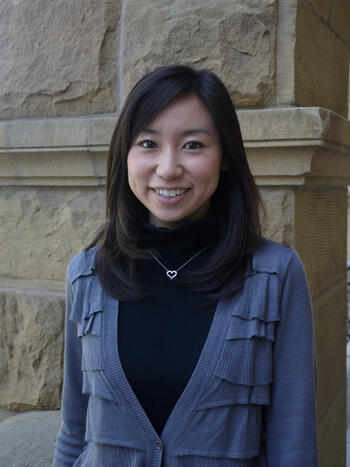
Renee Ohnuki giving her final presentation for Stanford e-Japan
Renee Ohnuki giving her final presentation for Stanford e-Japan. Ohnuki is one of the three student honorees for Spring 2019.
All News button
1
-

Abstract: A Supply and Demand Framework for YouTube Politics (with Joseph Phillips)

Youtube is the most used social network in the United States. However, for a combination of sociological and technical reasons, there exist little quantitative social science research on the political content on Youtube, in spite of widespread concern about the growth of extremist YouTube content. An emerging journalistic consensus theorizes the central role played by the video "recommendation engine," but we believe that this is premature. Instead, we propose the "Supply and Demand" framework for analyzing politics on YouTube. We discuss a number of novel technological affordances of YouTube as a platform and as a collection of videos, and how each might drive supply of or demand for extreme content. We then provide large-scale longitudinal descriptive information about the supply of and demand for alternative political content on YouTube. We demonstrate that viewership of far-right videos peaked in 2017.

Image
Kevin Munger
Kevin Munger is Assistant Professor of Political Science and Social Data Analytics, Penn State University. Ph.D., New York University, 2018. His research looks at social media and other contemporary internet technology has changed political communication. He has published research on the subject using a variety of methodologies, including textual analysis, field experiments, longitudinal surveys and qualitative theory. His research has appeared in leading journals like the American Journal of Political Science, Political Behavior, Political Communication, and Political Science Research & Methods. His present interests include cohort conflict in American politics and developing new methods for social science in a rapidly changing world.

Encina Hall
616 Jane Stanford Way
Stanford, CA  94305

0
Visiting Postdoctoral Scholar at The Europe Center, 2019-2020
franz_creditddutkowski.jpg

Yvonne Franz studied geography at the University in Cologne and the University of Vienna where she also received her doctorate in urban geography in 2013. As a university assistant (prae-doc) at University of Vienna she coordinated the Erasmus Mundus Masters in Urban Studies 4CITIES and conducted extensive fieldwork on gentrification and urban rejuvenation policies in New York City, Vienna and Berlin. After the completion of her doctorate, the successful approval of research proposals within the Joint Programming Initiative Urban Europe allowed her to join the Institute of Urban and Regional Research (ISR) at the Austrian Academy of Sciences as a post-doc researcher. Currently, she is affiliated to the University of Vienna, Department of Geography and Regional Research as a postdoc university assistant. Her research projects include the INTERREG Central Europe (funded by the European Regional Development Fund) on “Integrating Refugees in Society and the Labour Market Through Social Innovation - SIforREF” as well as research projects on arrival spaces and housing transition in Vienna. She teaches courses within the fields of urban geography and urban studies both at the University of Vienna and other universities. In addition, she is the local coordinator of the Erasmus Mundus Joint Master in Urban Studies (4CITIES). Her research interests lie in the fields of urban geography with a special focus on neighbourhood development, urban revitalisation and gentrification as well as urban planning and governance. Comparative analyses with Berlin, Bologna and Ljubljana are part of her ongoing research collaborations.

During her visit as Visiting Postdoctoral Scholar at The Europe Center, Yvonne will continue analysis and writing on spaces of encounter and social innovation in neighbourhood development.

-

Panel discussion with Stanford international affairs experts on escalating U.S.-Iran tensions.


Register: Click here to RSVP


Livestream: Please click here to join the livestream.


About this Event: U.S.-Iran tensions are at a new high following the U.S. drone strike that killed Iranian Major General Qassem Soleimani. Both sides continue to exchange threats of violence, and the implications for Iran’s nuclear ambitions, the fight against ISIS, and the U.S. presence in Iraq are expected to be profound. Join us for a panel discussion with Lisa Blaydes, Colin Kahl, Brett McGurk and Abbas Milani, moderated by Michael McFaul, on how recent developments may reshape the geopolitical landscape in one of the most volatile regions of the world.


This event is co-sponsored with Hamid and Christina Moghadam Program in Iranian Studies, Freeman Spogli Institute for International Studies, and the Middle East Initiative at the Center for International Security and Cooperation.


Speaker's Biographies:

Lisa Blaydes is a Professor of Political Science at Stanford University and a Senior Fellow at the Freeman Spogli Institute for International Studies. She is the author of Elections and Distributive Politics in Mubarak’s Egypt (Cambridge University Press, 2011). Her articles have appeared in the American Political Science ReviewInternational Studies QuarterlyInternational OrganizationJournal of Theoretical PoliticsMiddle East Journal, and World Politics. She holds degrees in Political Science (PhD) from the University of California, Los Angeles and International Relations (BA, MA) from Johns Hopkins University.


Colin Kahl is co-director of the Center for International Security and Cooperation, the inaugural Steven C. Házy Senior Fellow at the Freeman Spogli Institute for International Studies, and a Professor, by courtesy, in the Department of Political Science at Stanford University. He is also a Strategic Consultant to the Penn Biden Center for Diplomacy and Global Engagement.

From October 2014 to January 2017, he was Deputy Assistant to the President and National Security Advisor to the Vice President. In that position, he served as a senior advisor to President Obama and Vice President Biden on all matters related to U.S. foreign policy and national security affairs, and represented the Office of the Vice President as a standing member of the National Security Council Deputies’ Committee. From February 2009 to December 2011, Dr. Kahl was the Deputy Assistant Secretary of Defense for the Middle East at the Pentagon. In this capacity, he served as the senior policy advisor to the Secretary of Defense for Egypt, Iran, Iraq, Israel and the Palestinian territories, Saudi Arabia, Syria, Yemen, and six other countries in the Levant and Persian Gulf region. In June 2011, he was awarded the Secretary of Defense Medal for Outstanding Public Service by Secretary Robert Gates. 

From 2007 to 2017 (when not serving in the U.S. government), Dr. Kahl was an assistant and associate professor in the Security Studies Program at Georgetown University's Edmund A. Walsh School of Foreign Service. From 2007 to 2009 and 2012 to 2014, he was also a Senior Fellow at the Center for a New American Security (CNAS), a nonpartisan Washington, DC-based think tank. From 2000 to 2007, he was an assistant professor of political science at the University of Minnesota. In 2005-2006, Dr. Kahl took leave from the University of Minnesota to serve as a Council on Foreign Relations International Affairs Fellow in the Office of the Secretary of Defense, where he worked on issues related to counterinsurgency, counterterrorism, and responses to failed states. In 1997-1998, he was a National Security Fellow at the John M. Olin Institute for Strategic Studies at Harvard University.

Current research projects include a book analyzing American grand strategy in the Middle East in the post-9/11 era. A second research project focuses on the implications of emerging technologies on strategic stability.

He has published numerous articles on international security and U.S. foreign and defense policy in Foreign Affairs, Foreign Policy, International Security, the Los Angeles Times, Middle East Policy, the National Interest, the New Republic, the New York Times, Politico, the Washington Post, and the Washington Quarterly, as well as several reports for CNAS.

His previous research analyzed the causes and consequences of violent civil and ethnic conflict in developing countries, focusing particular attention on the demographic and natural resource dimensions of these conflicts. His book on the subject, States, Scarcity, and Civil Strife in the Developing World, was published by Princeton University Press in 2006, and related articles and chapters have appeared in International Security, the Journal of International Affairs, and various edited volumes.

Dr. Kahl received his B.A. in political science from the University of Michigan (1993) and his Ph.D. in political science from Columbia University (2000).


Brett McGurk is the Frank E. and Arthur W. Payne Distinguished Lecturer at the Freeman Spogli Institute and Center for Security and Cooperation at Stanford University.

McGurk’s research interests center on national security strategy, diplomacy, and decision-making in wartime.  He is particularly interested in the lessons learned over the presidencies of George W. Bush, Barack Obama, and Donald Trump regarding the importance of process in informing presidential decisions and the alignment of ends and means in national security doctrine and strategy.  At Stanford, he will be working on a book project incorporating these themes and teaching a graduate level seminar on presidential decision-making beginning in the fall of 2019.  He is also a frequent commentator on national security events in leading publications and as an NBC News Senior Foreign Affairs Analyst. 

Before coming to Stanford, McGurk served as Special Presidential Envoy for the Global Coalition to Defeat ISIS at the U.S. Department of State, helping to build and then lead the coalition of seventy-five countries and four international organizations in the global campaign against the ISIS terrorist network.  McGurk was also responsible for coordinating all aspects of U.S. policy in the campaign against ISIS in Iraq, Syria, and globally.

McGurk previously served in senior positions in the George W. Bush and Barack Obama administrations, including as Special Assistant to President Bush and Senior Director for Iraq and Afghanistan, and then as Deputy Assistant Secretary of State for Iraq and Iran and Special Presidential Envoy for the U.S. campaign against the Islamic State under Obama.

McGurk has led some of the most sensitive diplomatic missions in the Middle East over the last decade. His most recent assignment established one of the largest coalitions in history to prosecute the counter-ISIS campaign. He was a frequent visitor to the battlefields in both Iraq and Syria to help integrate military and civilian components of the war plan. He also led talks with Russia over the Syria conflict under both the Trump and Obama administrations, initiated back-channel diplomacy to reopen ties between Iraq and Saudi Arabia, and facilitated the formation of the last two Iraqi governments following contested elections in 2014 and 2018.

In 2015 and 2016, McGurk led fourteen months of secret negotiations with Iran to secure the release of Washington Post reporter Jason Rezain, U.S. Marine Amir Hekmati, and Pastor Saad Abadini, as well as three other American citizens.

During his time at the State Department, McGurk received multiple awards, including the Distinguished Honor Award and the Distinguished Service Award, the highest department awards for exceptional service in Washington and overseas assignments.

McGurk is also a nonresident senior fellow in the Middle East Program at the Carnegie Endowment for International Peace.

McGurk received his JD from Columbia University and his BA from the University of Connecticut Honors Program.  He served as a law clerk to Chief Justice William H. Rehnquist on the U.S. Supreme Court, Judge Denis Jacobs on the U.S. Court of Appeals for the 2d Circuit, and Judge Gerard E. Lynch on the U.S. District Court for the Southern District of New York.


Abbas Milani is the Hamid & Christina Moghadam Director of Iranian Studies at Stanford University and a Professor (by courtesy) in the Stanford Global Studies Division. He is also one of the founding co-directors of the Iran Democracy Project and a research fellow at the Hoover Institution. His expertise include U.S.-Iran relations as well as Iranian cultural, political, and security issues. Until 1986, he taught at Tehran University’s Faculty of Law and Political Science, where he was also a member of the Board of Directors of the university’s Center for International Relations. After moving to the United States, he was for fourteen years the Chair of the Political Science Department at the Notre Dame de Namur University. For eight years, he was a visiting Research Fellow in University of California, Berkeley’s Middle East Center.

Professor Milani came to Stanford ten years ago, when he became the founding director of the Iranian Studies Program. He also worked with two colleagues to launch the Iran Democracy Project at the Hoover Institution. He has published more than twenty books and two hundred articles and book reviews in scholarly magazines, journals, and newspapers. His latest book is a collection he co-edited with Larry Diamond, Politics & Culture in Contemporary Iran: Challenging the Status Quo  (Lynne Rienner Publishers, 2015).


Michael McFaul is the Ken Olivier and Angela Nomellini Professor of International Studies in Political Science, Director and Senior Fellow at the Freeman Spogli Institute for International Studies, and the Peter and Helen Bing Senior Fellow at the Hoover Institution, all at Stanford University. He was also the Distinguished Mingde Faculty Fellow at the Stanford Center at Peking University from June to August of 2015. He joined the Stanford faculty in 1995. He is also an analyst for NBC News and a contributing columnist to The Washington Post. McFaul served for five years in the Obama administration, first as Special Assistant to the President and Senior Director for Russian and Eurasian Affairs at the National Security Council at the White House (2009-2012), and then as U.S. Ambassador to the Russian Federation (2012-2014).

He has authored several books, most recently the New York Times bestseller,  “From Cold War to Hot Peace: An American Ambassador in Putin’s Russia.”  Earlier books include Advancing Democracy Abroad: Why We Should, How We Can; Transitions To Democracy: A Comparative Perspective  (eds. with Kathryn Stoner); Power and Purpose: American Policy toward Russia after the Cold War (with James Goldgeier); and Russia’s Unfinished Revolution: Political Change from Gorbachev to Putin. His current research interests include American foreign policy, great power relations between China, Russia, and the United States, and the relationship between democracy and development. 

Prof. McFaul was born and raised in Montana. He received his B.A. in International Relations and Slavic Languages and his M.A. in Soviet and East European Studies from Stanford University in 1986. As a Rhodes Scholar, he completed his D. Phil. in International Relations at Oxford University in 1991.

Encina Hall West, Room 408
Stanford, CA 94305-6044

(650) 723-0649
0
Senior Fellow at the Freeman Spogli Institute for International Studies
Professor of Political Science
lisa_blaydes_108_vert_final.jpg

Lisa Blaydes is a Professor of Political Science at Stanford University. She is the author of State of Repression: Iraq under Saddam Hussein (Princeton University Press, 2018) and Elections and Distributive Politics in Mubarak’s Egypt (Cambridge University Press, 2011). Professor Blaydes received the 2009 Gabriel Almond Award for best dissertation in the field of comparative politics from the American Political Science Association for this project.  Her articles have appeared in the American Political Science Review, International Studies Quarterly, International Organization, Journal of Theoretical Politics, Middle East Journal, and World Politics. During the 2008-2009 and 2009-2010 academic years, Professor Blaydes was an Academy Scholar at the Harvard Academy for International and Area Studies. She holds degrees in Political Science (PhD) from the University of California, Los Angeles, and International Relations (BA, MA) from Johns Hopkins University.


Affiliated faculty at the Center on Democracy, Development and the Rule of Law
Affiliated faculty at the Center for International Security and Cooperation
Date Label

Encina Hall 
616 Jane Stanford Way
Stanford, CA 94305-6055

0
Director, Freeman Spogli Institute for International Studies
Steven C. Házy Senior Fellow, Freeman Spogli Institute for International Studies
Professor, by courtesy, of Political Science
colin_kahl_2025_sq.jpg

Colin Kahl is director of the Freeman Spogli Institute for International Studies and the Steven C. Házy Senior Fellow. He is also the faculty director of CISAC’s Program on Geopolitics, Technology, and Governance, and a professor of political science (by courtesy).

From April 2021-July 2023, Dr. Kahl served as the under secretary of defense for policy at the U.S. Department of Defense. In that role, he was the principal adviser to the secretary of defense for all matters related to national security and defense policy and represented the department as a standing member of the National Security Council Deputies’ Committee. He oversaw the writing of the 2022 National Defense Strategy, which focused the Pentagon’s efforts on the “pacing challenge” posed by the PRC, and he led the department’s response to Russia’s invasion of Ukraine and numerous other international crises. He also led several other major defense diplomacy initiatives, including an unprecedented strengthening of the NATO alliance; the negotiation of the AUKUS agreement with Australia and the United Kingdom; historic defense force posture enhancements in Australia, Japan, and the Philippines; and deepening defense and strategic ties with India. In June 2023, Secretary of Defense Lloyd Austin III awarded Dr. Kahl the Department of Defense Distinguished Public Service Medal, the highest civilian award presented by the secretary of defense.

During the Obama Administration, Dr. Kahl served as deputy assistant to President Obama and national security advisor to Vice President Biden from October 2014 to January 2017. He also served as deputy assistant secretary of defense for the Middle East from February 2009 to December 2011, for which he received the Outstanding Public Service Medal in July 2011.

Dr. Kahl is the co-author (along with Thomas Wright) of Aftershocks: Pandemic Politics and the End of the Old International Order (New York: St. Martin’s Press, 2021) and the author of States, Scarcity, and Civil Strife in the Developing World (Princeton, NJ: Princeton University Press, 2006). He has also published numerous article on U.S. national security and defense policy in Foreign Affairs, Foreign Policy, International Security, the Los Angeles Times, Middle East Policy, the National Interest, the New Republic, the New York Times, Politico, the Washington Post, and the Washington Quarterly, as well as several reports for the Center for a New American Security (CNAS), a non-partisan think tank in Washington, DC.

Dr. Kahl previously taught at Georgetown University and the University of Minnesota, and he has held fellowship positions at Harvard University, the Council on Foreign Relations, CNAS, and the Penn Biden Center for Diplomacy and International Engagement.

He received his B.A. in political science from the University of Michigan (1993) and his Ph.D. in political science from Columbia University (2000).

Date Label
Abbas Milani

Encina Hall
616 Jane Stanford Way
Stanford, CA 94305-6055

0
Senior Fellow, Freeman Spogli Institute for International Studies
Ken Olivier and Angela Nomellini Professor of International Studies, Department of Political Science
Peter and Helen Bing Senior Fellow, Hoover Institution
mcfaul_headshot_2025.jpg PhD

Michael McFaul is the Ken Olivier and Angela Nomellini Professor of International Studies in Political Science, Senior Fellow at the Freeman Spogli Institute for International Studies, and the Peter and Helen Bing Senior Fellow at the Hoover Institution, all at Stanford University. He joined the Stanford faculty in 1995 and served as FSI Director from 2015 to 2025. He is also an international affairs analyst for MSNOW.

McFaul served for five years in the Obama administration, first as Special Assistant to the President and Senior Director for Russian and Eurasian Affairs at the National Security Council at the White House (2009-2012), and then as U.S. Ambassador to the Russian Federation (2012-2014).

McFaul has authored ten books and edited several others, including, most recently, Autocrats vs. Democrats: China, Russia, America, and the New Global Disorder, as well as From Cold War to Hot Peace: An American Ambassador in Putin’s Russia, (a New York Times bestseller) Advancing Democracy Abroad: Why We Should, How We Can; and Russia’s Unfinished Revolution: Political Change from Gorbachev to Putin.

He is a recipient of numerous awards, including an honorary PhD from Montana State University; the Order for Merits to Lithuania from President Gitanas Nausea of Lithuania; Order of Merit of Third Degree from President Volodymyr Zelenskyy of Ukraine, and the Dean’s Award for Distinguished Teaching at Stanford University. In 2015, he was the Distinguished Mingde Faculty Fellow at the Stanford Center at Peking University.

McFaul was born and raised in Montana. He received his B.A. in International Relations and Slavic Languages and his M.A. in Soviet and East European Studies from Stanford University in 1986. As a Rhodes Scholar, he completed his D. Phil. in International Relations at Oxford University in 1991. 

CV
Date Label
Seminars
-

Abstract: The problem of online disinformation is only getting worse. Social media may well play a role in the US 2020 presidential election and other major political events. But that doesn’t even begin to describe what future propaganda will look like. As Samuel Woolley shows, we will soon be navigating new technologies such as human-like automated voice systems, machine learning, ‘deep-fake’ AI-edited videos and images, interactive memes, virtual reality and augmented reality. In stories both deeply researched and compellingly written, Woolley describes this future, and explains how the technology can be manipulated, who might control it and its impact on political strategy. Finally, Woolley proposes strategic responses to this threat with the ultimate goal of empowering activists and pushing technology builders to design for democracy.

Image
Samuel Woolley
Samuel Woolley is a researcher with a focus on emerging media technologies, propaganda and politics. His work looks at how automation, algorithms and AI are leveraged for both democracy and control. His forthcoming book, The Reality Game: How the Next Wave of Technology Will Break the Truth, will be released in January of 2020 by PublicAffairs/Hachette. It explores the future of digital disinformation and provides a pragmatic roadmap for how society can respond.

Woolley is an assistant professor in the School of Journalism at the Moody College of Communication at the University of Texas-Austin. He is the Program Director of disinformation research at the Center for Media Engagement (CME) at UT. He holds a PhD from the University of Washington-Seattle. His academic work has appeared in the Journal of Information Technology and Politics, the International Journal of Communication, the Routledge Handbook of Media, Conflict and Security, A Networked Self: Platforms, Stories, Connections and The Political Economy of Robots.  He is one of the founders of the Computational Propaganda Research Project, now based at the Oxford Internet Institute, University of Oxford. Woolley is also the founder of the Digital Intelligence Lab at the Institute for the Future (IFTF)–a 50-year-old think-tank based in Palo Alto, CA.

Lectures
-

Image
Robert Bauer
Abstract: Please join the Cyber Policy Center for a conversation on online political advertising, election law, and the 2020 election, with Robert Bauer, Professor of Practice and Distinguished Scholar in Residence at NYU Law, and Co-Director of NYU’s Legislative and Regulatory Process Clinic, with Professor Nathaniel Persily, Co-Director of the Cyber Policy Center. Bauer served as White House Counsel to President Obama, and returned to private practice in June 2011. In 2013, the President named Bauer to be Co-Chair of the Presidential Commission on Election Administration. Bauer was General Counsel to Obama for America, the President’s campaign organization, in 2008 and 2012. Bauer has also served as co-counsel to the New Hampshire State Senate in the trial of Chief Justice David A. Brock (2000) and counsel to the Democratic Leader in the trial of President William Jefferson Clinton (1999). He is the authors on books on campaign finance law and articles on various topics for law review and periodicals.

Robert Bauer bio >

Robert Bauer
Lectures
0
Kip Wainscott portrait

Kip Wainscott is a senior advisor at the Cyber Policy Center, where he directs programs and initiatives for the Global Digital Policy Incubator to promote policymaking that reinforces democratic values, universal human rights, and the rule of law in the digital realm.

Kip served in the White House under President Obama as Senior Director of Cabinet Affairs and Senior Advisor to the Domestic Policy Council, where his portfolio focused on issues related to justice, opportunity, and technology. He also was Senior Counsel in the Office of Legal Policy at the Department of Justice, where he worked on the development and coordination of technology policy and other initiatives of high priority to the Attorney General. After leaving the administration, Kip helped launch CrowdJustice, a digital platform for engaging online communities in support of public interest litigation. Since 2017, he has led democracy programming and policy engagement in Silicon Valley for the National Democratic Institute for International Affairs.

Before entering government, Kip was an attorney in a leading political and election law practice, where he advised on presidential nomination procedures, voting laws, and represented clients in litigation and ethics matters. For the 2012 election cycle, Kip was counsel and national delegate director for the Obama-Biden reelection campaign.

Kip was a 2019 Policy Fellow at Stanford’s Digital Civil Society Lab, where he supported research and co-authored a paper examining how civil society organizations can better protect their digital rights through policy advocacy. He has also authored chapters for two books on the subject of government and political ethics. He is a member of the Pacific Council on International Policy, and serves on the Advisory Council for the Institute for Data, Democracy, and Politics at the George Washington University.

Senior Advisor, GDPi
Paragraphs

In Live Long and Prosper?, a new eBook edited by David Bloom, AHPP director Karen Eggleston contributes the chapter "Understanding 'Value for Money' in Healthy Ageing," in which she advocates for and explains the concept of "net value of medical care," a metric that helps quantify the social value of spending on healthcare. Understanding value for money, Eggleston writes, is a way of "determining which services and technologies are unnecessary and which are of high value," a determination that is of increasing importance for aging societies, in which "spending for chronic diseases represents a large and increasing part of public and private budgets." 

All Publications button
1
Publication Type
Books
Publication Date
Authors
News Type
Commentary
Date
Paragraphs

In Aug. 2019, Bobby Chesney (from Strauss Center at the University of Texas at Austin) and Max Smeets (from ETH Zurich and also Stanford University’s Center for International Security and Cooperation (CISAC)) convened a workshop in Amsterdam focusing on military operations in the cyber domain, from a transatlantic perspective. The “Transatlantic Dialogue on Military Cyber Operations—Amsterdam” gathered experts from military, civilian, and academic institutions hailing from a range of countries, including the United States, United Kingdom, Germany, the Netherlands, Denmark, Estonia, and France.


Read the Rest at Lawfare Blog

Hero Image
screen shot 2019 12 18 at 8 32 53 am
All News button
1
Authors
David Relman
News Type
News
Date
Paragraphs

On 9 December, 1979, health officials declared smallpox as the first and only human disease to be eradicated in what is considered the greatest achievement of modern medicine. Four decades on, the U.S. and Russia still maintain samples of the potentially deadly virus, and the debate on whether they should be kept or destroyed rages on....To this day, only two remaining stocks of the variola virus are known to exist. They are kept under high-security conditions at a U.S. Centers for Disease Control and Prevention laboratory in Atlanta, and at Russia's State Research Centre of Virology and Biotechnology (Vector) in the Siberian city of Novosibirsk. Everything known about their location is in the public domain— except for the exact rooms and freezers where the samples are kept, David Relman, professor of microbiology and immunology at Stanford University, told Newsweek.


Read the Rest at Newsweek

Hero Image
screen shot 2019 12 18 at 8 23 05 am
All News button
1
Subscribe to The Americas