0
PhD Student Alumni, Health Policy
jonathan_lee_cropped.jpg

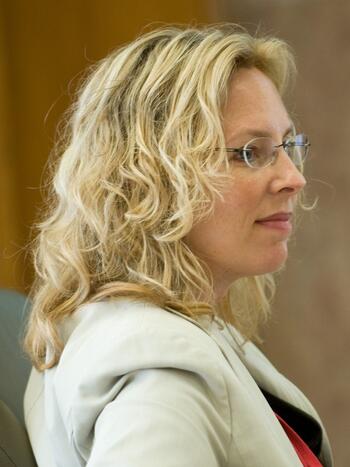
Dr. Jonathan Lee, MD, MBA is a Health Policy (Health Economics) PhD candidate and Political Science MA student. In addition, he is a Clinical Assistant Professor of Psychiatry and Behavioral Sciences. Dr. Lee's research focuses on the causes and consequences of, as well as solutions to, rising distrust in sources of expert information (e.g., science, health). This includes studying phenomena such as the politicization of science and health, political polarization, filter bubbles/echo chambers, the emerging post-truth world, and information warfare. It also includes seeking heteorgeneity in the findings across particular demographics at high socioeconomic and health risk. He draws on theories and methods from his uniquely interdisciplinary set of educational, research, and professional experiences, including those from experimental and behavioral economics, political science, psychology, and machine learning. He is currently using machine learning-based text analytics to explore how trust/distrust in sources of expert information is discussed on traditional and social media -- followed by the use of online randomized controlled survey experiments to test the causal effects of particular persuasion strategies on perceptions of trust/distrust, as well as other important behavioral outcomes of interest. In addition, Dr. Lee works on designing and evaluating novel survey experimental research methods aiming to address common, problematic survey biases (e.g., hypothetical bias, social desirability bias, confirmation bias) which may lead to less accurate and precise self-reports from survey participants.

0
PhD Student Alumni, Health Policy
suhani.jpg

Suhani Jalota is a PhD Candidate in Health Economics at Stanford University and holds an MBA from the Stanford Graduate School of Business (GSB.) Her areas of interest are development and labor economics, with a particular focus on gender in poor households. She uses field experiments to study the interplay between women's economic power, dignity, and health — as well as the role of technology in amplifying their agency. 

0
harris.jpg

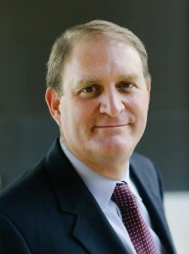
Harris Carmichael attended Medical College of Georgia for his MD, graduating Alpha Omega Alpha.  Harris and his wife Chelsea moved to Salt Lake City for his residency in Internal Medicine at the University of Utah.  After completing residency, he stayed in Salt Lake City to serve as a Chief Medical Resident.  It was at the University of Utah where he first gained interest in best practice utilization and methods for education in Evidenced Based Clinical Practice.  He plans to continue research in Implementation and Care Delivery Science while stdying the individual and institutional barriers to best practice utilization.

-

* Please note all CISAC events are scheduled using the Pacific Time Zone


Livestream: Please click here to join the livestream webinar via Zoom or log-in with webinar ID 913 4480 9317.


About the Event: How do states build lasting international order? Existing explanations of order formation argue that leading states are incentivized to create binding institutions with robust rules and strong enforcement mechanisms. The stability resulting from such institutionalized orders, scholars argue, allows leading states to geopolitically punch above their weight after they have declined in power. I argue, however, that such explanations overlook the trade-off between stability and flexibility, that leading states are faced with. Flexibility calls for short-term agreements that can be renegotiated when the strategic situation changes. And it allows the leading state to take advantage of relative power increases.Whereas states face significant incentives to err on the side of stability if they predict irreversible decline in power, states face incentives to err on the side of flexibility if they predict relative rise in power.  


About the Speaker: Mariya Grinberg is a postdoctoral fellow at the Center for International Security and Cooperation. She received her Ph.D. in political science from the University of Chicago in 2019. Her primary research examines why states trade with their enemies, investigating the product level and temporal variation in wartime commercial policies of states vis-a-vis enemy belligerents. Her broader research interests include international relations theory focusing on order formation and questions of state sovereignty. Prior to coming to CISAC, she was a predoctoral fellow at the Belfer Center’s International Security Program. She holds an M.A. from the University of Chicago's Committee on International Relations and a B.A. from the University of Southern California.

Virtual Seminar

Postdoctoral Fellow Stanford University
Seminars
Authors
News Type
Commentary
Date
Paragraphs

President Trump’s newly named envoy for arms control, Marshall Billingslea, gave a lengthy interview last week on the administration’s approach to nuclear arms negotiations. He stressed bringing in China, struck a pessimistic note about the sole treaty constraining Russian and U.S. nuclear forces, and offered no ideas for getting Moscow to discuss non-strategic nuclear arms.

Unfortunately, the interview reinforces the view that the Trump administration is unlikely to achieve a nuclear deal…or even develop a serious proposal.

Read full article at Defense One

Hero Image
hussein mallaap Hussein Malla/AP
All News button
1
Subtitle

Officials in Moscow and Beijing will read Mr. Billingslea’s interview and see nothing to give them reason to negotiate.

-

Join Cyber Policy Center, June 3rd at 10am PST for The Accelerated Shift to Online Retail Under Covid-19, and Risks Associated with Underlying Dynamic Pricing Technologies with Christo Wilson at Northeastern University and Ramsi Woodcock at University of Kentucky.

The hallmarks of the Covid-19 (a shortage of masks, hand sanitizer, food, along with an acceleration of the shift to online retail) are affording retailers the opportunity to use the dynamic pricing technologies already ubiquitous in online retail in order to ration access to goods that are in temporarily short supply. In a time of crisis, dynamic pricing may run afoul of state laws prohibiting price gouging. But the practice also raises important questions about both the equity of rationing with price and the safety of doing so. Dynamic pricing online may be pricing less wealthy Americans out of online goods and services, forcing them into riskier in-person transactions at brick and mortar store locations. Fortunately, the same technologies that make dynamic pricing possible also make more equitable alternatives to rationing with price cheap and effective for online retailers. 

Seminars
Authors
Kasumi Yamashita
News Type
Blogs
Date
Paragraphs

The following is Part 2 of a two-article series on Stanford e-Oita. For Part 1, please go here


Stanford e-Oita is an online course for high school students in Oita Prefecture in the southwestern island of Kyushu, Japan, that is sponsored by the Oita Prefectural Government. Launched in fall 2019, it is offered by the Stanford Program on International and Cross-Cultural Education (SPICE) in collaboration with the Oita Prefectural Board of Education. SPICE is grateful to Oita Prefectural Governor Katsusada Hirose whose vision made this course possible.

Note: The content of this publication has not been approved by the United Nations and does not reflect the views of the United Nations or its officials or Member States. 


Stanford e-Oita was launched in October 2019, soon after the Climate Action Summit at the United Nations. Over six million people marched in protest all over the world. It was another wake-up call to global warming. Swedish activist, Greta Thunberg’s UN speech on the environmental crisis addressed the world, but resonated with the youth in particular, who made up many of the 5000 protesters at rallies throughout Japan. A high school student herself, “Greta-san’s” UN address also spoke to high school students throughout Japan including those in the smallest of towns in Oita Prefecture.

With a population of a little over a million, Oita Prefecture is located in the lush and mountainous island of Kyushu. It’s known for its onsen (hot springs) which bubble with organic minerals from the rich, volcanic deposits below. Steam rises from onsen towns like Beppu City as well as neighboring Yufuin in Yufu City at the foothill of Mt. Yufu. Stanford e-Oita students are from 15 high schools in Oita Prefecture. They are from the southern towns of Tsukumi and Usuki, known for their stone Buddhas. They are from Nakatsu and Usa, home to the head Hachiman Shrine, along the northern coast. They also come from the historic cities of Hita and Taketa further inland.

My reflections on the course follow, interspersed with comments made by students in their online discussions, in their final presentations, or in evaluations that were used for assessment, collected by Mr. Keisuke Toyoda and Mr. Hironori Sano of the Oita Prefectural Board of Education. Both teachers attended my class as well as the four days of final student presentations.

This year’s inaugural cohort focused on U.S.–Japan relations, the United Nations Sustainable Development Goals (UNSDGs), and entrepreneurship. The six-month course ended in April 2020, just as the world began to lock down due to the COVID-19 pandemic.

To first- and second-year high school students, the 17 UNSDGs can seem broad and a bit intimidating, but my 30 Stanford e-Oita students reframed unfamiliar concepts like “Sustainable Cities” and “Responsible Consumption and Production” to more familiar terms such as “tourism” and “recycling,” and even “up-cycling.” They soon realized that not only do these issues reflect so much of the immediate world around them, these agendas are also interconnected with one another. It grew increasingly clear that each student has an impact on our environment. They also have the responsibility to sustain it whether they’re from Stockholm or Oita.

Oita’s selection to host the Rugby World Cup in October 2019, and its invitation of athletes from New Zealand, presented an opportunity to learn about UNSDGs in an unexpected way. While the international teams were warmly welcomed by Oita’s residents, their arrival may have stirred controversy had the local tourist association not loosened its age-old refusal of bathers with tattoos. While body-art is part of Maori cultural heritage and a source of pride and identity, in Japan, it is often affiliated with the underworld. Stanford e-Oita students used these current events to shift lines of sight and inquiry to have discussions on equity, inclusivity, and human rights.

Students identified one or more UNSDGs that resonated with their concerns and personal experiences whether it was the flooding of their neighborhood due to climate change, the rising aging population of their hometown, or the arrival of foreign residents in their communities. For their final presentations, students pitched their ideas on how they would tackle particular social or environmental challenges. They had five minutes to present 10 PowerPoint slides, in English.

Sustainable Cities and Communities
“Sustainable Cities and Communities” must have been the most popular UNSDG among students. This was not surprising considering Oita’s recognition as a major travel destination for onsen. When exploring “Sustainable Cities,” students wondered how onsen culture and tourism could be re-imagined to appeal to, and be accessible to more diverse audiences including teens, young professionals, international visitors, and the LGBT (lesbian, gay, bisexual, and transgender) community.

Stanford e-Oita student Koyomi envisioned a multilingual travel app linking travel agencies, inns, transportation, and tourist destinations, allowing visitors to explore sites and accessibility in real time. Nao looked at ways to address issues common in many regional towns such as population stagnation, vacant housing, and school closings. She suggested launching an interactive website to revitalize interest in historical sites and make regional festivals appealing to youth. Moe thought that historical sites could even be refreshed using “retro” designs and images.

Affordable and Clean Energy
Yuri approached onsen from a different, environmental angle. In her final presentation, she showed us how the onsen steam can harness renewable geo-thermal energy. Unlike nuclear plants, geo-thermal power plants harness energy from turbines, powered by steam, produced by water, and heated by seismic activity.

Nao described the “Heat Island” phenomenon in Japan: cities in urban areas are warmer than nearby rural areas, having the potential to raise the temperature of urban areas by several degrees, enough to affect weather patterns. One way to counter this effect would be to develop innovative and environmental “green roof” buildings.

Airi commented, “Before, I thought that onsen were just a source of tourism but onsen can also be thought of as renewable energy. It’s amazing that onsen can have many uses. We need to preserve this wonderful culture in Oita!” Students recognized that their neighborhoods, whether they lived in the city or in remote towns, were rich in resources and stories. 

Quality Education
Next, Stanford e-Oita students approached the UNSDG, “Quality Education.” Rather than focusing on the social and educational services for students already enrolled in schools, students looked at the potential educational needs of working, foreign students and their families, as well as foreigners who want to permanently relocate to Oita to work. Ken hoped to see laws enacted to provide these permanent immigrants with voting rights so they can become more empowered and contribute to Japanese society.

Kohaku proposed a cultural school for foreigners that would allow them to attend night classes, online. This would offer those working during the day with a chance to build up their language skills while simultaneously learn about Japanese culture and history. Proposals like this touch on education, gender, and economic growth, showing the inter-connectedness of UNSDGs. 

Hozuki supported online classes for non-traditional students who need flexible learning options. She also welcomed this option for youth who resist attending school due to bullying, domestic abuse, or a family’s financial insecurity. Hozuki added, “It would create a ‘safe space’ for them.”

Gender Equality
“International Coming Out Day” on October 11th is another “safe space” for individuals wanting to reach out to their communities for support and self-empowerment. Manaka pointed to specific “gender free” and “barrier-free” spaces that provide daredemo toire (the “anyone toilet”). Acknowledgment of “safe spaces” like these reduces the harassment and violence that many LGBT communities face.

Zero Hunger/Clean Water and Sanitation
Ayami pointed to the importance of promoting local foods and labeling it for transparency and accountability. Amiko suggested the creation of “Oita Care Packages” that would simultaneously promote local food to other regions of Japan and minimize food waste.

Asako made sure to add that the production of food also involved aquaculture. Honoka and Yuri noted that the management of these marine resources should begin with measures countering pollution.

Amika, who gave a presentation on tackling food waste using an app, commented, “I realized that there was something that even young people can do.” When asked how she would finance the development of her app, she replied with confidence, “Oh, I’ll just crowdfund!” Technology and social media have made it easier for students to collaborate and share ideas. This is certainly the case for tech-savvy high school students.

Conclusion
Big social change can come from individuals in small and remote towns. Stanford e-Oita students have shown that their hometowns in Oita offer fascinating contexts to begin conversations on sustainability. Students have gained a deeper appreciation of local natural resources, cultural traditions, and historical sites. They also gained a sense that they, too, can contribute to social change right from their own backyards. Yuzu noted, “What I enjoyed most about the final presentations was that I was able to get to know ‘Oita’ from different perspectives.”

Now, better equipped with the confidence to discuss their ideas and speak up about their local and global concerns, e-Oita students may feel a step closer to even internationally recognized activists like fellow teen Greta Thunberg. If the UNSDGs represent our world’s commitment to building a better world for people by 2030, then Stanford e-Oita students would be the perfect Gen Zers to stand alongside Greta to do just that. 

Acknowledgements
SPICE provided me with an opportunity to invite artists, activists, researchers, and entrepreneurs (including several Stanford alumni) to share their personal and professional stories with students over Zoom. Their openness to address questions put Stanford e-Oita students at ease, allowing them to take a bold step out of their comfort zones and engage. I’d like to thank the following individuals for their collaborative spirit and generosity:

Gary Mukai
Director, Stanford Program on International and Cross-Cultural Education (SPICE)

Michelle Kumata
Artist and Former Exhibition Director, Wing Luke Museum of the Asian Pacific American Experience

Jan Johnson
Owner, Panama Hotel [National Historic Landmark] in Seattle's Nihonmachi (Japantown)

Glenda Pearson
President, Friends of Mukai Farm & Garden [National Register of Historic Places]

The Honorable Norman Mineta
Former U.S. Secretary of Commerce and Transportation

Xiao Wang
CEO, Co-Founder, Boundless Immigration

Sara Daniels
CEO, Co-Founder, Blue Canoe Learning

Jonathan Poli
Product Design Engineer, Seattle Children's Hospital


SPICE also offers online courses to U.S. high school students on Japan (Reischauer Scholars Program), China (China Scholars Program), and Korea (Sejong Korea Scholars Program), and online courses to Chinese high school students on the United States (Stanford e-China Program) and to Japanese high school students on the United States and U.S.–Japan relations (Stanford e-Japan Program). 

To stay informed of SPICE news, join our email list and follow us on Facebook, Twitter, and Instagram.


Related articles:


Hero Image
un sustainable development goals
United Nations Sustainable Development Goals; reprinted with approval of the United Nations.
All News button
1
Authors
Rose Gottemoeller
News Type
Commentary
Date
Paragraphs

Ten years ago, the United States and Russia signed the New START treaty—a nuclear arms control agreement that we, as the heads of our governments’ respective delegations, helped negotiate. Since then, New START has played a central role in keeping the peace and preventing a dangerous arms race between the two countries that together possess 90 percent of the world’s nuclear weapons.

Now, however, New START is in trouble: without action to extend it, the treaty will expire in February 2021. Its demise would have worrying implications for the security of the United States, of Russia, and of the world. It could bring a return to nuclear competition and spark mutual suspicion that would push the world to a level of nuclear risk unseen for decades.

Read full article at Foreign Affairs

Hero Image
box258 Doug Mills / The New York Times / Redux
All News button
1
Subtitle

Why Washington and Moscow Must Extend the New START Treaty

Authors
Rose Gottemoeller
News Type
Commentary
Date
Paragraphs

In my line of work, you have to have a long memory. Periods of success in negotiations are followed by droughts, because of politics, military upheaval, arms buildups—yes, sometimes the weapons have to be built before they can be reduced—or a sense of complacency: “We have arms control treaties in place; let’s just focus on implementing them.” In those cases, new thinking and new negotiations may slow or even stop. Yet, the national security interest of the United States continues to drive the necessity for nuclear arms control.

Read full article at The Foreign Service Journal 

Hero Image
shorthistory Brian Hubble
All News button
1
Subtitle

An accomplished negotiator puts nuclear arms control in perspective—what it has achieved, where it has failed and what it can do for our future security.

Paragraphs

Progressive Democrats assert that the Green New Deal is the best way to reduce global greenhouse gas emissions.

But this claim ignores the fact that subsidizing “green” energy technologies, such as wind and solar, is less effective than taxing the greenhouse gas emissions produced by brown energy sources, such as oil, natural gas and coal.

All Publications button
1
Publication Type
Commentary
Publication Date
Journal Publisher
The Hill
Authors
Frank Wolak
Subscribe to The Americas