0
hazelton.jpg PhD

Jacqueline L. Hazelton is the executive editor of the journal International Security. She was previously an associate professor at the U.S. Naval War College and an associate of the International Security Program at the Belfer Center, Harvard Kennedy School. Hazelton's research ranges from grand strategy, great power military intervention, and U.S. foreign and military policy to counterinsurgency, terrorism, and the uses of military power. She recently published Bullets Not Ballots: Success in Counterinsurgency Warfare and is working on a manuscript about great powers, liberal values, and military intervention.

Prior to her faculty appointment at the Naval War College, Hazelton was a visiting assistant professor in the Department of Political Science at the University of Rochester and a research fellow with the Belfer Center's International Security Program. Earlier experience included a stint as an international journalist with the Associated Press where she analyzed and reported on world events from Tokyo to Kabul and covered U.S. news as well. She received M.A.’s in English Literature and in International Relations from the University of Chicago and her Ph.D. from Brandeis University's Department of Politics.

Affiliate
0
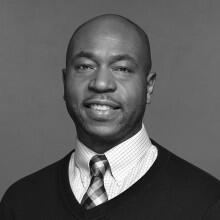
darnton.jpg PhD

Christopher Darnton has a PhD from the Department of Politics at Princeton University. At CISAC, Christopher is writing a book on the hundred-year history of U.S. security cooperation in Latin America, using declassified military documents to analyze the day-to-day work of alliance politics from the vantage point of officers in the field. How should we explain and understand military roles in inter-American relations beyond specific cases of intervention, and what lessons should inform US defense cooperation and military diplomacy today? Christopher’s broader work examines the domestic and bureaucratic politics of foreign policy in the Americas, particularly related to enduring rivalries and regional wars; conflict resolution and public diplomacy; developing-country diplomacy in the Cold War and in contemporary great power competition; and the refinement of archival and case-study research methods in security studies.

Christopher is an associate professor of national security affairs at the Naval Postgraduate School, where he has worked since 2016, teaching Latin American politics, international relations, and US foreign policy. Before NPS, Christopher taught for seven years at the Catholic University of America, and before that, for a year at Reed College. Christopher also served as president of the Foreign Policy section of the American Political Science Association; as a contributing editor to the Library of Congress' Handbook of Latin American Studies; and as a summer associate at the RAND Corporation.

Affiliate
Paragraphs

Over the past two decades, U.S. and Chinese technological trajectories have been closely linked. Internet protocols, hardware design and manufacturing, software development and deployment, and services and standards have to varying degrees been crossborder phenomena, with China and the United States two of the world’s most consequential and integrated countries. The last few years, however, have seen a rise in mutual suspicion and moves—both direct and indirect—to unwind this extraordinary level of technological interdependence. The overall effect is an increasing degree of separation between the two ecosystems, a process widely known as decoupling... 


All Publications button
1
Publication Type
White Papers
Publication Date
Authors
Graham Webster
Authors
News Type
Q&As
Date
Paragraphs

This interview was originally conducted and published by Melissa De Witte on behalf of the Stanford News Service.


September 2, 1945, is recognized in many American history books as the day World War II formally ended in Asia. But according to Stanford sociologist Gi-Wook Shin, the conflict was never fully resolved in the region, leading to strains in diplomatic relations today.

On the 75th anniversary of this historic milestone, Shin discusses the legacy of World War II in the Asia-Pacific, specifically the failure among nations to fully address past wrongdoings and reach a mutual understanding of the conflict.

As a result, there is a “mismatch” in how Koreans, Chinese, Japanese and also Americans memorialize the war: China celebrates its victory against Japan while Korea commemorates its liberation from Japanese oppression. Meanwhile, Japan honors the victims of the atomic bombings in Hiroshima and Nagasaki – an atrocity many Americans still feel uncomfortable talking about today, Shin points out.

Here, Shin discusses how these diverging perspectives of World War II have led to misgivings today and how, some 75 years later, relations can still be improved in the region.

Shin is a professor of sociology in the School of Humanities and Sciences, the director of the Walter H. Shorenstein Asia-Pacific Research Center, the William J. Perry Professor of Contemporary Korea, director of the Korea Program and a senior fellow at the Freeman Spogli Institute for International Studies. He has led a decade-long study on historical memory in wartime period in Asia called 'Divided Memories and Reconciliation.'

[Subscribe to our newsletters to get the latest updates from our scholars.]


As the world remembers 75 years of the war ending in Asia, what legacies from this period persist today?

War has not really ended in Asia. Even before war settlements were signed, another war broke out on the Korean peninsula and technically never ended. Furthermore, “history wars” that began in the 1980s have intensified in recent years, as Japan and its neighbors continue to fight over the unfortunate past and dispute over territories. Despite increased economic, cultural, and educational exchanges and interactions, war legacies persist to strain regional relations.

Is there anything in this history that you think has been largely forgotten, overlooked or misunderstood?

While U.S. Army Gen. Douglas MacArthur formally accepted Japan’s surrender to allied forces aboard the USS Missouri in Tokyo Bay some 75 years ago, legacies from the war have persisted, straining regional relations to this very day, according to Shin. (Image credit: United States Navy/Wikimedia Commons)

America celebrates World War II victory in Europe (Victory in Europe Day) but remains relatively quiet on its victory in the Asia-Pacific war. In contrast to the moral clarity and nobility of purpose associated with the war in Europe and the defeat of Nazi Germany, the path to war with Japan and its conclusion is far less clear and many Americans still feel uncomfortable talking about the use of atomic weapons – even if it was militarily necessary but morally questionable. Also, it was during the war that about 120,000 people in the U.S. of Japanese ancestry (62 percent being U.S. citizens) were incarcerated in concentration camps.

Compared to Europe, U.S.-led post-war settlements in Asia such as the Tokyo War Crimes Tribunal and San Francisco Peace Treaty were insufficient in addressing atrocities committed by Japan during wartime and the colonial period, sowing the seeds of current disputes and tensions between Japan and its neighbors. The Tokyo tribunal focused on Japanese actions that had most directly affected Western allies (the attack on Pearl Harbor and the mistreatment of Allied prisoners of war) and thus failed to address the massive suffering of the Chinese and the Koreans. The 1951 Peace Treaty expunged Japan’s obligations to pay reparations for its wartime acts but neither the Republic of Korea nor the People’s Republic of China was party to the treaty.

You have written extensively about the repeated failure among Koreans, Chinese and Japanese to produce a shared, historical view of World War II. Can you briefly describe what are these conflicting, historical memories? 

For Koreans and Chinese, Japanese atrocities such as the Nanjing massacre, sexual slavery and forced labor are key events that shape their historical memories. For Japanese, on the other hand, actions related to the U.S. such as the Japanese attack on the Pearl Harbor and American bombings (fire and atomic) on Japanese cities are most important to the formation of their memories of war, which led to a widely held view that they were also victims of American aggression and that post-war settlements were “victor’s justice.” These divergent memories are reflected in the ways that they commemorate the end of the war. China celebrates its victory against Japan in the war, while Korea commemorates its liberation from Japanese oppression. Japan holds its annual ceremony to honor victims of atomic bombings.

According to your scholarship, what explains these divergent perspectives?

The divergence comes from the different weight each country places on historical events in their respective memory formation. Japanese actions figure prominently for Chinese and Korean, but China and Korea are not as significant to Japanese war memories as much as the U.S. is. This mismatch creates perception gaps and misgivings, hindering historical reconciliation.

How has this tension affected relations in the region? Do you think, some 75 years later, these tensions persist today?

Yes, they are very much alive. Look at the current Japanese-South Korean relations. They are two leading economies with liberal democracies in Asia and also key U.S. allies. They are important trade partners and are facing the same demographic crisis. They share strategic interests in the face of a rising China and North Korean aggression. Nonetheless, the resurfacing of the unresolved historical issues has continued to strain the bilateral relationship. For example, the relationship deteriorated since late 2018 when the South Korea supreme court ruled that Japanese companies should compensate Koreans who were conscripted as forced laborers during the war. In response to the ruling, the Japanese government removed Korea from a list of favored trade partners and the Korean government followed suit. These governmental actions are now fueled by populist nationalism (the rightist in Japan and the leftist in Korea), which has proven to be very effective in the politics of both nations.

Can the U.S. play any role to help achieve historical reconciliation?

The U.S. can take a more proactive role in encouraging Japan to work toward achieving regional reconciliation. As noted above, Japan does not seem to be taking its Asian neighbors as seriously as it should be when it comes to historical matters, but is rather predominantly focused on reconciling with the U.S. For example, Japan had been calling for the U.S. president to visit the sites of atomic bombings as a way of “removing a historical thorn” in the relationship and President Obama did make a historic visit to Hiroshima in 2016. Japanese Prime Minister Shinzo Abe followed suit soon after by visiting Pearl Harbor to pay respects to the victims of the 1941 attack. But the reconciliation efforts stopped there and did not expand to other victim countries of the war.

When you teach this history of World War II, what do you remind students about this period? How might the past shape students’ understanding of Northeast Asia or the U.S. in the present day?

To avoid repeating the unfortunate past (colonialism and war), I ask, what and how we can learn from history? For example, was the war with Japan necessary, or was it the result of a series of accidents and miscalculations or lack of political leadership? How does the war help us to understand the current tensions between the U.S. and China? What can we learn from the experience of the Japanese internment during the war? Even though President Reagan made an official apology of the internment in 1988, why do we still see similar racialist politics in American society? Addressing these questions requires a critical reflection of the history.

<< The original interview is available via Stanford News >>

Read More

A young boy prays after releasing a floating lantern onto the Motoyasu River in front of the Atomic Bomb Dome in Hiroshima, Japan.
Commentary

Why the US-Japan Partnership Prospered Despite Hiroshima and Nagasaki

There has been little diplomatic conflict between the United States and Japan over the atomic bombings of Hiroshima and Nagasaki during WWII, but that stability could change in the future, writes Japan Program Director Kiyoteru Tsutsui in an op-ed for The Hill.
Why the US-Japan Partnership Prospered Despite Hiroshima and Nagasaki
Encina Courtyard
News

Call for Stanford Student Applications: APARC Hiring 2020-21 Research Assistants

To support Stanford students working in the area of contemporary Asia, the Shorenstein Asia-Pacific Center is offering research assistant positions for the fall, winter, and spring quarters of the 2020-21 academic year.
Call for Stanford Student Applications: APARC Hiring 2020-21 Research Assistants
Hero Image
The Japanese delegation onboard the USS Missouri during the surrender ceremony on September 2, 1945.
Wikimedia Commons
All News button
1
Subtitle

In an interview with Stanford News, Gi-Wook Shin, the director of APARC and the Korea Program, describes how divergent perspectives on the legacies of WWII continue to shape different understandings of history and impact inter-Asia and U.S.-Asia relations.

0
Postdoctoral Fellow, Stanford Internet Observatory (2021-2022)
Predoctoral Fellow, Stanford Internet Observatory (2020-2021)
Josh-Goldstein.jpeg

Josh A. Goldstein is a past postdoctoral scholar at the Stanford Internet Observatory. He received his PhD in International Relations from the University of Oxford, where he studied as a Clarendon Scholar. At the Stanford Internet Observatory, Dr. Goldstein investigated covert influence operations on social media platforms, studied the effects of foreign interference on democratic societies, and explored how emerging technologies will impact the future of propaganda campaigns. He has given briefings to the Department of Defense, the State Department, and senior technology journalists based on this work, and published in outlets including Brookings, Lawfare, and Foreign Policy.

Prior to joining SIO, Dr. Goldstein received an MPhil in International Relations at Oxford with distinction and a BA in Government from Harvard College, summa cum laude. He also assisted with research and writing related to international security at the Belfer Center, Brookings Institution, House Foreign Affairs Committee, and Department of Defense.

Authors
Rose Gottemoeller
News Type
News
Date
Paragraphs

Failing to renew the New START arms control treaty with Russia “is not a wise direction of travel,” said Rose Gottemoeller, a former Deputy Secretary General of NATO who ranked as one of President Barack Obama’s top nuclear security experts. 

She knows better than most. Gottemoeller was the chief US negotiator at the Moscow and Geneva talks where details of the treaty were hammered out between 2009 and 2010. Officially ratified a year later, New START limited both the United States and Russia to seven hundred delivery vehicles and just over double that count in total warheads, and was reinforced with a stringent verification process to closely monitor each country’s compliance. 

Read the rest at National Interest

Hero Image
Submarine with soldiers BBC HARDtalk, REUTERS
All News button
1
Subtitle

Failing to renew the New START arms control treaty with Russia “is not a wise direction of travel,” said Rose Gottemoeller, a former Deputy Secretary General of NATO who ranked as one of President Barack Obama’s top nuclear security experts.

Authors
News Type
News
Date
Paragraphs

Friction between machines and humans has existed since the beginning of the automated industry and machine-assisted work. It’s a trend that fuels the imaginations of pop culture and political debates alike as people voice worries about the roles increasingly sophisticated robots and technology are taking in society and workplaces.

But is this concern warranted? According to APARC’s Yong Suk Lee, the deputy director of the Korea Program and the SK Center Fellow at FSI, and Karen Eggleston, the deputy director of APARC and the director of the Asia Health Policy Program, perhaps not. A recent article published by the Stanford Institute for Human-Centered Artificial Intelligence (HAI) highlights Lee and Eggleston’s ongoing research into innovative uses of technology across industries, particularly in healthcare. Their findings indicate that the adoption of robotics ultimately does more to augment and adjust, rather than outrightly replace, the role of human labor in the workplace.

What will ultimately matter is whether there will be entirely new occupations, what economists call the ‘reinstatement effect.’ Simply saying that robots lead to permanent job reductions isn’t the end of the story.
Yong Suk Lee
Deputy Director of the Korea Program

[Subscribe to our newsletters to stay up-to-date with the latest from our researchers.]

Lee studies the impacts of AI and robotics across multiple industries, including manufacturing, retail banking, and nursing homes. A trend he sees across most sectors following the adoption of robotics or AI is a positive increase in productivity. This has impacts for both the short-term and long-term relationships between humans and their robot coworkers, or “co-bots.” While it is true that the introduction of automation and robots initially replaces a significant number of workers in sectors such as manufacturing, over time, that impact reverses and there are job gains in many cases.

“The impact of robots often evolves over time from replacing human workers to augmenting them,” Lee explains, “and productivity gains [can] create opportunities for existing and new occupations.” This happens in a variety of ways. In some cases, the use of robotics and automation in one area frees up time, labor, and resources to employ more people in other, higher-skilled areas. In another situation, increases in productivity brought on by automation allow for greater company growth than would not have been possible otherwise. This, in turn, spurs the need to expand the workforce.

Alternatively, supplementing the labor of a small workforce with robotics and AI can also spread limited resources much farther. Lee and Eggleston’s studies of the impacts of robots on nursing home care in Japan repeatedly show that the use of robots positively increases the quality of service that oftentimes-understaffed care facilities can provide to the elderly and infirm. This can range from monitoring the physical condition of patients and reliably delivering medications to providing mental and emotional support to elderly residents through the use of robotic humanoid companions. Such innovative use of tech fills critical gaps that a human-only workforce would struggle to meet in a staffing shortage like Japan faces.

Looking to the future, Lee shares this perspective: “When the automobile was invented, we suddenly had a new demand for drivers. Now we’ll have to see if [automation] creates demand for other new occupations.” It’s an area of innovation and research he, Dr. Eggleston, and other Stanford researchers will be closely watching with their human eyes in the years to come.

Read the original article by Stanford HAI here >>

Read More

A communications robot named Pepper by Softbank
Q&As

Robots May Be the Right Prescription for Struggling Nursing Homes

Karen Eggleston and Yong Suk Lee speak to the Oliver Wyman Forum on how robotics and advancing technologies are helping staff in Japanese nursing homes provide better and safer care to their patients.
Robots May Be the Right Prescription for Struggling Nursing Homes
Cover image of the book "Healthy Aging in Asia", showing a smiling elderly Chinese woman with a cane standing in a small village.
News

New Book Highlights Policy Initiatives and Economic Research on Healthy Longevity Across Asia

Asia health policy expert Karen Eggleston’s new volume, ‘Healthy Aging in Asia,’ examines how diverse Asian economies – from Singapore and Hong Kong to Japan, India, and China – are preparing for older population age structures and transforming health systems to support patients who will live with chronic disease for decades.
New Book Highlights Policy Initiatives and Economic Research on Healthy Longevity Across Asia
Encina Courtyard
News

Call for Stanford Student Applications: APARC Hiring 2020-21 Research Assistants

To support Stanford students working in the area of contemporary Asia, the Shorenstein Asia-Pacific Center is offering research assistant positions for the fall, winter, and spring quarters of the 2020-21 academic year.
Call for Stanford Student Applications: APARC Hiring 2020-21 Research Assistants
Hero Image
A man with interacts with 'Emiew,' a humanoid robot.
A man with interacts with 'Emiew,' a humanoid robot made by Hitachi.
Koichi Kamoshida, Getty Images
All News button
1
Subtitle

Yong Suk Lee and Karen Eggleston’s ongoing research into the impact of robotics and AI in different industries indicates that integrating tech into labor markets adjusts, but doesn’t replace, the long-term roles of humans and robots.

Date Label
Paragraphs

One of the most puzzling findings in asset pricing is that expected returns dominate variation in the dividend-to-price ratio, leaving little room for dividend growth rates. Even more puzzling is that this dominance only emerged after 1945. We develop a present value model to argue that a general increase in equity duration can explain these findings. As cash flows to investors accrue further into the future, shocks to highly persistent expected returns become relatively more important than shocks to growth rates. We provide supportive empirical evidence from dividend strips, the time-series, and the cross-section of stocks.

All Publications button
1
Publication Type
Working Papers
Publication Date
Journal Publisher
SSRN
Authors
Peter Koudijs
Paragraphs

We develop a model of financial crises with both a financial amplification mechanism, via frictional intermediation, and a role for sentiment, via time-varying beliefs about an illiquidity state. We confront the model with data on credit spreads, equity prices, credit, and output across the financial crisis cycle. In particular, we ask the model to match data on the frothy pre-crisis behavior of asset markets and credit, the sharp transition to a crisis where asset values fall, disintermediation occurs and output falls, and the post-crisis period characterized by a slow recovery in output. We find that a pure amplification mechanism quantitatively matches the crisis and aftermath period but fails to match the pre-crisis evidence. Mixing sentiment and amplification allows the model to additionally match the pre-crisis evidence. We consider two versions of sentiment, a Bayesian belief updating process and one that overweighs recent observations. We find that both models match the crisis patterns qualitatively, generating froth pre-crisis, non-linear behavior in the crisis, and slow recovery. The non-Bayesian model improves quantitatively on the Bayesian model in matching the extent of the pre-crisis froth.

All Publications button
1
Publication Type
Working Papers
Publication Date
Journal Publisher
SSRN
Authors
Arvind Krishnamurthy
Paragraphs

Conjoint experiments enjoy increasing popularity in political and social science, but there is a paucity of research on respondents' underlying decision-making processes. We leverage eye-tracking methodology and a conjoint experiment, administered to a subject pool consisting of university students and local community members, to examine how respondents process information when completing conjoint surveys. Our study has two main findings. First, we find a positive correlation between attribute importance measures inferred from the stated choice data and attribute importance measures based on eye movement. This validation test supports the interpretation of common conjoint metrics, such as Average Marginal Component Effects and marginal R^2 values, as valid measures of attribute importance. Second, when we experimentally increase the number of attributes and profiles in the conjoint table, respondents on average view a larger absolute number of cells but a smaller fraction of the total cells displayed, and the patterns in which they search between cells change conditionally. At the same time, however, their stated choices remain remarkably stable. This overall pattern speaks to the robustness of conjoint experiments and is consistent with a bounded rationality mechanism. Respondents can adapt to complexity by selectively incorporating relevant new information to focus on the important attributes, while ignoring less relevant information to reduce the cognitive processing costs. Together, our results have implications for both the design and interpretation of conjoint experiments.

All Publications button
1
Publication Type
Working Papers
Publication Date
Journal Publisher
SSRN
Authors
Subscribe to The Americas