Authors
News Type
Commentary
Date
Paragraphs

The New Europe Center, a Ukraine-based think tank, asked six American experts to comment on the implications of the U.S. presidential election for Ukraine.  The following is Steven Pifer's contribution.

For Americans, the November 3 presidential election will be the most significant vote in many decades.  The election also will have consequences for Ukraine:  Whether Donald Trump or Joe Biden sits in the White House at the end of the day on January 20, 2021 will matter greatly for U.S. policy toward Ukraine and Europe.

Since Ukraine regained its independence in 1991, the United States has proven a strong and supportive partner.  Presidents Clinton, Bush and Obama each saw a stable, independent, democratic Ukrainian state with a robust market economy as in the U.S. interest, including in contributing to a more stable and secure Europe.  Washington thus has provided substantial political, economic and—particularly since 2014—military support to Kyiv.  It has sanctioned Russia for its aggression in Crimea and Donbas and sought to bolster NATO in the face of a growing Kremlin challenge to Western security.

The Trump administration has largely continued these policies.  It has provided Kyiv reform and military aid, including lethal military assistance.  It has applied additional sanctions on Russia, albeit under pressure from Congress.  And it has taken steps to strengthen the U.S. military presence in NATO, at least until recently.

However, it has never been clear that Mr. Trump himself supports these policies.  His principal engagement on Ukraine was his attempted extortion of Kyiv to advance his personal political prospects, an effort that led to his impeachment.  While his administration has taken a tough line on Russia, Mr. Trump seems incapable of criticizing Vladimir Putin or Russian misdeeds.  He apparently thinks that Ukraine, not Russia, interfered in the 2016 U.S. presidential election, ignoring the conclusions of the U.S. intelligence community, the Mueller investigation and the Republican-led Senate Intelligence Committee.

Mr. Trump’s disdain for NATO has long been clear, going back to the 1980s.  In June, he decided to withdraw 10,000 U.S. troops from Germany, apparently out of pique at Chancellor Merkel’s refusal to attend a G7 summit at Camp David.  Senior Pentagon officials scrambled for weeks to offer military justifications for the drawdown, but those that they provided did not survive serious scrutiny.

If Mr. Trump is re-elected, he will not have to worry about facing the voters in another election campaign.  He will cement his control of the Republican Party, leaving Republicans in the Senate and House of Representatives less able to block his bad instincts.  What accommodations would he make with Mr. Putin?  Would he be inclined, as he suggested in 2016, to recognize Russia’s illegal annexation of Crimea and lift economic sanctions?   Would he withdraw the United States from NATO, as many former U.S. officials fear?  The Alliance’s collapse would be a huge gift to Mr. Putin and leave Ukraine in a precarious geopolitical position.

It will be different if Mr. Biden is elected (full transparency:  the author fervently hopes for this).  The United States would have a president who understands the U.S. interest in a successful Ukraine and who knows the country well from his time as vice president.  He would be the kind of friend that Ukraine needs, supportive but also ready to press the Ukrainian leadership to take necessary reform steps.  He recognizes the security challenge that Russia presents to Ukraine and the West, and he realizes the importance of a strong trans-Atlantic relationship with a robust NATO at its core.  And Mr. Biden might prove a president who could bind some of the differences that so badly divide Americans today.  An America more unified at home would be a stronger international actor.

Whether Mr. Trump or Mr. Biden wins the elections will mean very different things for U.S. policies affecting Ukraine.  That said, the American electorate will decide the next president largely on domestic issues, such as the Trump administration’s handling of COVID19 and the economy.  Ukraine has no role to play in this, and Ukrainian officials should continue to do all that they can to avoid their country becoming a political football in the U.S. campaign.

* * * * *

Steven Pifer is a William Perry Research Fellow at Stanford University’s Center for International Security and Cooperation and a former U.S. ambassador to Ukraine.

Hero Image
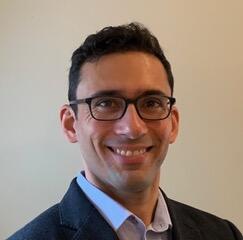
Man smiling
All News button
1
Subtitle

For Americans, the November 3 presidential election will be the most significant vote in many decades. The election also will have consequences for Ukraine: Whether Donald Trump or Joe Biden sits in the White House at the end of the day on January 20, 2021 will matter greatly for U.S. policy toward Ukraine and Europe.

-

The Racial Equity, Diversity, and Inclusion (REDI) Task Force invites you to the second event in the "Critical Conversations: Race and Global Affairs" series. This panel discussion and Q&A will explore the resonance of Black internationalist research, past and present, to offer new insights on the Black Lives Matter movement .

Please register in advance here: https://stanford.zoom.us/meeting/register/tJ0ld-upqD4pGNIpEJJMBq-D2JQO_7J1GC62 


Online, via Zoom: REGISTER

Sonita Moss Research Associate Panelist REDI
Gabrielle Hecht Moderator FSI Senior Fellow, REDI Chair
Clay Carson Panelist Director, Martin Luther King, Jr., Research and Education Institute
Matt Randolph Panelist Ph.D. Student, Department of History
Seminars
Paragraphs

THE EMERGENCE OF A DIGITAL SPHERE where public debate takes place raises profound questions about the connection between online information and polarization, echo chambers, and filter bubbles. Does the information ecosystem created by social media companies support the conditions necessary for a healthy democracy? Is it different from other media? These are particularly urgent questions as the United States approaches a contentious 2020 election during the COVID-19 pandemic.

The influence of technology and AI-curated information on America’s democratic process is being examined in the eight-week Stanford University course, “Technology and the 2020 Election: How Silicon Valley Technologies Affect Elections and Shape Democracy.” This issue brief focuses on the class session on “Echo Chambers, Filter Bubbles, and Polarization,” with guest experts Joan Donovan and Joshua Tucker.

All Publications button
1
Publication Type
Policy Briefs
Publication Date
Authors
Marietje Schaake
Rob Reich
-

About the Event: The Racial Equity, Diversity, and Inclusion (REDI) Task Force invites you to the first event in the "Critical Conversations: Race and Global Affairs" series focused on international research and racism. This conversation is an open dialogue featuring Dr. Christian Davenport, author of one of the pre-selected articles:


About the Speaker: Christian Davenport is a Professor of Political Science and Faculty Associate at the Institute for Social Research at the University of Michigan, Research Professor at the Peace Research Institute Oslo and Elected Fellow at the American Association for the Arts and Sciences. Primary research interests include political conflict, measurement, racism and popular culture. He is the author of seven books and author of numerous articles appearing in the American Political Science Review, the American Journal of Political Science and the Annual Review of Political Science (among others). He is the recipient of numerous grants (e.g., 12 from the National Science Foundation) and awards.

Please register in advance here:  https://stanford.zoom.us/meeting/register/tJUlcumpqDksHtTZFndLWMnSN5YUUKRcJxyv

Online, via Zoom: REGISTER

Gabrielle Hecht FSI Senior Fellow REDI
Christian Davenport Professor of Political Science University of Michigan
Seminars
-

Image
december 10th digital tech social media and 2020 election

Since the 2016 election, great attention has been paid to the impact of digital technologies on democracy in the United States and around the world.  Foreign intervention into the U.S. campaign through social media and online advertising, including the rise of "fake news" and computational propaganda, exacerbated concerns that new technologies posed a substantial threat to the normal workings of  the U.S. electoral process.  These concerns remain for 2020, alongside new threats related to the COVID-19 pandemic.  With in-person campaigning, voter mobilization, and even voting itself hindered by the pandemic, digital technologies promise to play an even more important role in 2020.  

On December 10, 2020, the Stanford Cyber Policy Center will bring together scholars, tech platforms, principals from the digital campaigns, journalists, and other key experts to explore the effect of digital technologies on the 2020 Election.  The conference will explore the role of digital technologies on election administration, campaign tactics, political advertising, the news media, foreign propaganda efforts, and the broader campaign information ecosystem.  It will also consider how changes in platform policies affected the campaign and information environment, and whether lessons learned in the 2020 elections suggest that further changes are warranted.  

9AM:   Introduction: Kelly Born, Stanford Cyber Policy Center

9:10:    Findings from the Stanford/MIT Healthy Elections Project:  Nate Persily, Stanford Law School

9:30:    Trends in 2020 Political Advertising:  Erika Franklin Fowler, Wesleyan Media Project

9:50:    Online Political Transparency:  Laura Edelson, New York University Political Ads Project

10:10:  BREAK

10:20: Center for Technology and Civic Life’s Elections Project:  Tiana Epps-Johnson, CTCL

10:40:  Platform Speech Policies and the Elections: Daniel Kreiss and Bridget Barrett, University of North             Carolina at Chapel Hill

11:00:  Findings from the Election Integrity Project:  Alex Stamos and Renee DiResta, Stanford Internet             Observatory

11:20: BREAK

11:30:  Experiences from the Platforms

  • Nathaniel Gleicher, Head of Cybersecurity Policy at Facebook
  • Clement Wolf, Global Public Policy Lead for Information Integrity at Google
  • Yoel Roth, Director of Site Integrity at Twitter
  • Eric Han, Head of Safety at TikTok

12:30:  Full Panel Q&A/Discussion

1PM     Close

Stanford Law School Neukom Building, Room N230 Stanford, CA 94305
650-725-9875
0
James B. McClatchy Professor of Law at Stanford Law School
Senior Fellow, Freeman Spogli Institute
Professor, by courtesy, Political Science
Professor, by courtesy, Communication
headshot_3.jpg

Nathaniel Persily is the James B. McClatchy Professor of Law at Stanford Law School, with appointments in the departments of Political Science, Communication, and FSI.  Prior to joining Stanford, Professor Persily taught at Columbia and the University of Pennsylvania Law School, and as a visiting professor at Harvard, NYU, Princeton, the University of Amsterdam, and the University of Melbourne. Professor Persily’s scholarship and legal practice focus on American election law or what is sometimes called the “law of democracy,” which addresses issues such as voting rights, political parties, campaign finance, redistricting, and election administration. He has served as a special master or court-appointed expert to craft congressional or legislative districting plans for Georgia, Maryland, Connecticut, New York, North Carolina, and Pennsylvania.  He also served as the Senior Research Director for the Presidential Commission on Election Administration. In addition to dozens of articles (many of which have been cited by the Supreme Court) on the legal regulation of political parties, issues surrounding the census and redistricting process, voting rights, and campaign finance reform, Professor Persily is coauthor of the leading election law casebook, The Law of Democracy (Foundation Press, 5th ed., 2016), with Samuel Issacharoff, Pamela Karlan, and Richard Pildes. His current work, for which he has been honored as a Guggenheim Fellow, Andrew Carnegie Fellow, and a Fellow at the Center for Advanced Study in the Behavioral Sciences, examines the impact of changing technology on political communication, campaigns, and election administration.  He is codirector of the Stanford Program on Democracy and the Internet, and Social Science One, a project to make available to the world’s research community privacy-protected Facebook data to study the impact of social media on democracy.  He is also a member of the American Academy of Arts and Sciences, and a commissioner on the Kofi Annan Commission on Elections and Democracy in the Digital Age.  Along with Professor Charles Stewart III, he recently founded HealthyElections.Org (the Stanford-MIT Healthy Elections Project) which aims to support local election officials in taking the necessary steps during the COVID-19 pandemic to provide safe voting options for the 2020 election. He received a B.A. and M.A. in political science from Yale (1992); a J.D. from Stanford (1998) where he was President of the Stanford Law Review, and a Ph.D. in political science from U.C. Berkeley in 2002.   

CV
Date Label
Nathaniel Persily
Erika Franklin Fowler
Daniel Kreiss
Clement Wolf
Nathaniel Gleicher
Yoel Roth
Eric Han
Bridget Barrett
Tiana Epps-Johnson
Laura Edelson
-

This event is open to Stanford undergraduate students only. 

Image
CDDRL Flyer 2021

The Center on Democracy, Development, and the Rule of Law (CDDRL) will be accepting applications from eligible juniors on who are interested in writing their senior thesis on a subject touching upon democracy, economic development, and rule of law (DDRL) from any university department.  The application period opens on January 11, 2021 and runs through February 12, 2021.   CDDRL faculty and current honors students will be present to discuss the program and answer any questions.

For more information on the Fisher Family CDDRL Honors Program, please click here.

**Please note all CDDRL events are scheduled using the Pacific Time Zone

 Online, via Zoom: REGISTER

CDDRL
Encina Hall, C152
616 Jane Stanford Way
Stanford, CA 94305-6055

(650) 725-2705 (650) 724-2996
0
Senior Fellow at the Freeman Spogli Institute for International Studies
Professor, by courtesy, of Political Science
Stedman_Steve.jpg PhD

Stephen Stedman is a Senior Fellow at the Freeman Spogli Institute for International Studies (FSI) and the Center on Democracy, Development and the Rule of Law (CDDRL), an affiliated faculty member at CISAC, and professor of political science (by courtesy) at Stanford University. He is director of CDDRL's Fisher Family Honors Program in Democracy, Development and Rule of Law, and will be faculty director of the Program on International Relations in the School of Humanities and Sciences effective Fall 2025.

In 2011-12 Professor Stedman served as the Director for the Global Commission on Elections, Democracy, and Security, a body of eminent persons tasked with developing recommendations on promoting and protecting the integrity of elections and international electoral assistance. The Commission is a joint project of the Kofi Annan Foundation and International IDEA, an intergovernmental organization that works on international democracy and electoral assistance.

In 2003-04 Professor Stedman was Research Director of the United Nations High-level Panel on Threats, Challenges and Change and was a principal drafter of the Panel’s report, A More Secure World: Our Shared Responsibility.

In 2005 he served as Assistant Secretary-General and Special Advisor to the Secretary- General of the United Nations, with responsibility for working with governments to adopt the Panel’s recommendations for strengthening collective security and for implementing changes within the United Nations Secretariat, including the creation of a Peacebuilding Support Office, a Counter Terrorism Task Force, and a Policy Committee to act as a cabinet to the Secretary-General.

His most recent book, with Bruce Jones and Carlos Pascual, is Power and Responsibility: Creating International Order in an Era of Transnational Threats (Washington DC: Brookings Institution, 2009).

Director, Fisher Family Honors Program in Democracy, Development and Rule of Law
Director, Program in International Relations
Affiliated faculty at the Center for International Security and Cooperation
Date Label
Deputy Director, CDDRL

Encina Hall, C150
616 Jane Stanford Way
Stanford, CA 94305

0
Center Fellow, Freeman Spogli Institute for International Studies
didi_kuo_2023.jpg

Didi Kuo is a Center Fellow at the Freeman Spogli Institute for International Studies (FSI) at Stanford University. She is a scholar of comparative politics with a focus on democratization, corruption and clientelism, political parties and institutions, and political reform. She is the author of The Great Retreat: How Political Parties Should Behave and Why They Don’t (Oxford University Press) and Clientelism, Capitalism, and Democracy: the rise of programmatic politics in the United States and Britain (Cambridge University Press, 2018).

She has been at Stanford since 2013 as the manager of the Program on American Democracy in Comparative Perspective and is co-director of the Fisher Family Honors Program at CDDRL. She was an Eric and Wendy Schmidt Fellow at New America and is a non-resident fellow with the Carnegie Endowment for International Peace. She received a PhD in political science from Harvard University, an MSc in Economic and Social History from Oxford University, where she studied as a Marshall Scholar, and a BA from Emory University.

Date Label
Associate Director for Research, CDDRL
-

* Please note all CISAC events are scheduled using the Pacific Time Zone.

Seminar Recording: https://youtu.be/Q6-ErAxGmQ0


About the Event: While research into why repression varies has thrived, essentially no effort has been made to examine stopping large-scale applications once underway. We put forward a new theoretical framework that conceptualizes repressive behavior as a rare/slow-changing process that is unlikely to terminate unless it is perturbed by a significant cost. As such, we maintain that repression is more likely ended by democratization than from diverse factors commonly espoused in the literature and policy community (e.g., military intervention, naming/shaming, international law and economic sanctions). Investigating a new database regarding 239 high-level repression spells for the period 1976-2007, we find that democratization is associated with spell-termination, while there is little systematic pacifying influence for other factors. Additionally, we find that non-violent movements for change largely drive democratization but that these movements have little direct impact on state repression themselves.

Draft Paper


About the Speaker: Christian Davenport is a Professor of Political Science and Faculty Associate at the Institute for Social Research at the University of Michigan, Research Professor at the Peace Research Institute Oslo and Elected Fellow at the American Association for the Arts and Sciences. Primary research interests include political conflict, measurement, racism and popular culture. He is the author of seven books and author of numerous articles appearing in the American Political Science Review, the American Journal of Political Science and the Annual Review of Political Science (among others). He is the recipient of numerous grants (e.g., 12 from the National Science Foundation) and awards.

Virtual Seminar

Christian Davenport Professor University of Michigan
Seminars
-

* Please note all CISAC events are scheduled using the Pacific Time Zone.


Seminar Recording: https://youtu.be/5-om1-NWqv0


About the Event: Traditional international law is not sufficient for the oversight of emerging uses of the space environment, such as in situ resource utilization and increased militarization and weaponization. The US is pushing the boundaries through innovative contracting, governance instruments such as the Artemis Accords and new institutions such as the Space Force to test the space governance system. This presentation outlines a framework for organizing the system as a whole, including international agreements, national space policy and stakeholder interactions and interrelations.


About the Speaker: Aganaba is an assistant professor for the School for the Future in Innovation in Society with a courtesy appointment at the Sandra Day O'Connor College of Law, Arizona State University.

She is most known in her industry for promoting the regulation of technologies to be utilized against climate change. This has expanded to the use of satellites to measure greenhouse gas emissions.

She has received the Young Space Leaders Award from the International Astronautical Federation. She has served as the executive director of the World Space Week Association and trainee legal officer for the Nigerian Space Research and Development Agency.

Virtual Seminar

Timiebi Aganaba Assistant Professor School for the Future of Innovation in Society, Arizona State University
Seminars
-

* Please note all CISAC events are scheduled using the Pacific Time Zone.


Seminar Recording: https://youtu.be/tcWqulaKXy0


About the Event: Since the end of World War II, the United States has set out to oust governments in the Middle East on an average of once per decade—in places such as Iran, Afghanistan (twice), Iraq, Egypt, Libya, and Syria. Though pursued for a wide range of reasons, these operations all failed to achieve their ultimate goals, produced a range of unintended and even catastrophic consequences, carried heavy financial and human costs, and often left the countries in question worse off than they were before. Losing the Long Game: The False Promise of Regime Change in the Middle East gives readers a look at the U.S. experience with regime change over the past seventy years, and an insider’s view on U.S. policymaking in the region at the highest levels.

Book Purchase:  https://www.amazon.com/Losing-Long-Game-Promise-Regime/dp/1250217032


About the Speaker: Dr. Philip Gordon is the Mary and David Boies Senior Fellow in U.S. Foreign Policy at the Council on Foreign Relations.  From 2013-15, he served as Special Assistant to the President and White House Coordinator for the Middle East, North Africa, and the Gulf Region.  As the most senior White House official focused on the greater Middle East, he worked closely with the President, Secretary of State, and National Security Adviser on the full range of geopolitical, economic, and security issues facing the region.  From 2009-13, Dr. Gordon served as Assistant Secretary of State for European and Eurasian Affairs under Secretary of State Hillary Clinton.  In that position he was responsible for 50 countries in Europe and Eurasia as well as for NATO and the European Union (EU).  He is the author of Losing the Long Game: The False Promise of Regime Change in the Middle East, published October 6, 2020.    

Virtual Seminar

Philip Gordon Mary and David Boies Senior Fellow in U.S. Foreign Policy Council on Foreign Relations
Seminars
Subscribe to The Americas