-

Image
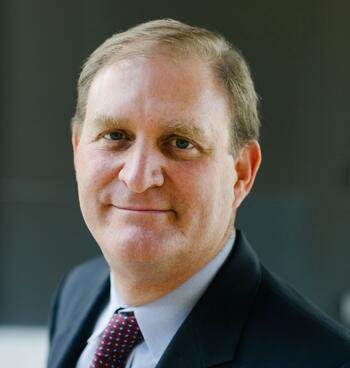
Stephen Kissler
Stephen Kissler is an infectious disease epidemiologist at the Harvard T.H. Chan School of Public Health. He earned his PhD in Applied Mathematics at the University of Cambridge as a Gates Scholar, where he studied the transmission of the 2009 H1N1 influenza pandemic. At Harvard, Stephen has focused on identifying drivers of antibiotic resistance and, more recently, on SARS-CoV-2 response. In addition to his research, he has consulted with Partners in Health and provided comments for numerous media outlets during the COVID-19 pandemic. 

You are invited to a Zoom meeting. 

When: Feb. 14, 2022, at 12:00 PM Pacific Time (US and Canada)

Zoom Link

Seminars
-

Image
Event flyer on blue background for the event Quantum Age with photos of speakers Chris Hoofnagle and Zahra Takhshid

Join us on Tuesday, February 8 from 12 PM - 1 PM PT for “The Quantum Age” featuring Chris Hoofnagle, Faculty Director, Center for Long–Term Cybersecurity at UC Berkeley, and Zahra Takhshid, University of Denver Sturm College of Law in conversation with Kelly Born of the Hewlett Foundation. This weekly seminar series is jointly organized by the Cyber Policy Center’s Program on Democracy and the Internet and the Hewlett Foundation’s Cyber Initiative. 

Quantum technologies have provided capabilities that seem strange, are powerful, and at times, frightening. These capabilities are so different from our conventional intuition that they seem to ride the fine border between science fiction and fantasy—yet some quantum technologies can be commercially purchased today, and more are just around the corner. This discussion will explore the different kinds of quantum technologies and their legal, political, and social implications and, more broadly, the ways we can think about regulating the fast growing ecosystem of emerging technologies.

About the Speakers:

chris hoofnagle Chris Hoofnagle
Chris Jay Hoofnagle is Professor of Law in Residence at the University of California, Berkeley, School of Law, where he teaches cybersecurity, programming for lawyers and torts. He is an affiliated faculty member with the Simons Institute for the Theory of Computing, a Professor of Practice in the School of Information, and a faculty director of the Berkeley Center for Law & Technology. Hoofnagle’s new book with Simson Garfinkel, Law and Policy for the Quantum Age is now available (open access) from Cambridge University Press, which also published his first book, Federal Trade Commission Privacy Law and Policy (2016). An elected member of the American Law Institute, Hoofnagle is of counsel to Gunderson Dettmer LLP, and serves on boards for Constella Intelligence and Palantir Technologies.

Zahra Takhshid Zahra Takhshid
Zahra Takhshid is an Assistant Professor of Law at the University of Denver Sturm College of Law. Before joining DU, she was the Lewis Fellow for Law Teaching and Lecturer on Law at Harvard Law School where she taught “Common Law and Privacy Torts.” Zahra is also a Faculty Associate at the Berkman Klein Center for Internet and Society at Harvard University and has been selected as the 2021 Quantum Fellow at the Center for Quantum Networks of the University of Arizona in partnership with Yale Law School’s Information Society Project (ISP). She teaches and writes about torts, privacy, technology and the law.  A second strand of her interest is comparative and Islamic law. Zahra’s research has been published or is forthcoming in Cardozo Law Review, Minnesota Law Review Online, UCLA Journal of Islamic and Near. Eastern Law, Vanderbilt Journal of Entertainment and Technology, among others.


Image
Kelly Born
Moderator: Kelly Born is the Director of the Cyber Initiative at the William and Flora Hewlett Foundation. She leads a ten-year, $130 million grantmaking effort that aims to build a more robust cybersecurity field and improve policymaking. Previously, Kelly was executive director of the Stanford Cyber Policy Center. Prior to that, she was a Program Officer for the Madison Initiative at the William and Flora Hewlett Foundation, an 8-year, $150 million portfolio focused on improving U.S. democracy. Kelly oversaw Madison’s grantmaking on campaigns and elections, and digital disinformation. Before that, Kelly worked as a strategy consultant with the Monitor Institute, a nonprofit consulting firm, where she supported strategic planning efforts at a number of foundations. Earlier in her career, she consulted with nonprofits, the private sector, and governments in the United States, Africa, Asia, Latin America, and Europe.

Kelly Born

Zoom

Chris Hoofnagle Berkeley Center for Law & Technology
Zahra Takhshid Denver Sturm College of Law
-

Image
alessandro vecchiato

Join us on Tuesday, February 1st from 12 PM - 1 PM PT for Algorithmic Newsfeeds and Elections featuring one of our postdoctoral scholars, Alessandro Vecchiato. This weekly seminar series is jointly organized by the Cyber Policy Center’s Program on Democracy and the Internet and the Hewlett Foundation’s Cyber Initiative.

While personalization algorithms are ubiquitous online, their impact on public opinion and voting behavior is still largely unknown. This talk looks at this question by presenting results from a globally replicable, lab-in-the-field experiment with a custom-developed news app. We evaluate the impact of personalized news feed on news consumption, public opinion, turnout, and voting behavior. The results show that personalization significantly skews the news consumption of politically extreme users while allowing most other users to maintain a moderate news diet. However, personalized news feeds are shown to reinforce pre-existing beliefs for all users, including a demobilizing effect for unlikely voters. While our effects are small due to design constraints, our findings call for more transparency and regulation on platforms.

The session is open to the public, but registration is required.


ABOUT THE SPEAKERS:

Image
Alessandro Vecchiato
Alessandro Vecchiato is a postdoctoral fellow at the Program on Democracy and the Internet at Stanford University. He received his Ph.D. in Politics from New York University in May 2019. His work looks at internet technologies' role in shaping political beliefs and electoral outcomes. In his dissertation, he uses primarily experimental methods to study how algorithmic personalization in social media news feeds affects the beliefs and preferences of voters. In other work, he investigated how internet-mediated communication through social media has affected politicians' relationships with voters.


Image
Nate Persily
Nathaniel Persily is the James B. McClatchy Professor of Law at Stanford Law School, with appointments in the departments of Political Science, Communication, and FSI.  Prior to joining Stanford, Professor Persily taught at Columbia and the University of Pennsylvania Law School, and as a visiting professor at Harvard, NYU, Princeton, the University of Amsterdam, and the University of Melbourne. Professor Persily’s scholarship and legal practice focus on American election law or what is sometimes called the “law of democracy,” which addresses issues such as voting rights, political parties, campaign finance, redistricting, and election administration. He has served as a special master or court-appointed expert to craft congressional or legislative districting plans for Georgia, Maryland, Connecticut, New York, North Carolina, and Pennsylvania.  He also served as the Senior Research Director for the Presidential Commission on Election Administration. His current work, for which he has been honored as a Guggenheim Fellow, Andrew Carnegie Fellow, and a Fellow at the Center for Advanced Study in the Behavioral Sciences, examines the impact of changing technology on political communication, campaigns, and election administration.  He is codirector of the Stanford Cyber Policy Center, Stanford Program on Democracy and the Internet, and the Stanford-MIT Healthy Elections Project, which supported local election officials in taking the necessary steps during the COVID-19 pandemic to provide safe voting options for the 2020 election. He is also a member of the American Academy of Arts and Sciences, and a commissioner on the Kofi Annan Commission on Elections and Democracy in the Digital Age.

Seminars
Authors
News Type
Commentary
Date
Paragraphs

During the last two months of 2021, Russia created a crisis by deploying large military forces near Ukraine and demanding security guarantees from the United States and NATO.  In mid-December, Moscow publicized draft U.S.-Russia and NATO-Russia agreements encapsulating its demands, many of which were clearly unacceptable.

Over the past four days, U.S. and Russian officials have held bilateral talks, the NATO-Russia Council met, and a meeting of the Organization for Security and Cooperation in Europe took place.  Russian officials now have an idea of what is and is not negotiable.

The question remains as it was in late December:  does the Kremlin seek a genuine give-and-take negotiation, or will the Kremlin use rejection of certain of its demands as a pretext for military action against Ukraine?  Unfortunately, it increasingly looks like the latter.

By the end of 2021, the Russian military had deployed some 100,000 troops on or near the Ukrainian border.  U.S. intelligence projected that the number could reach 175,000 soldiers early in 2022.

In December, Vladimir Putin called for security guarantees for Russia.  This seemed ironic.  The Kremlin controls the world’s largest nuclear arsenal and the most power conventional forces of any country in Europe, and Russian military forces are deployed—unwanted—on the territory of Ukraine, Georgia and Moldova.

In mid-December, Russian officials gave U.S. officials a draft U.S.-Russia treaty and a draft NATO-Russia agreement and promptly made them public.  The fact that the drafts contained provisions, such as NATO foreswearing further enlargement, that Russian officials had to know NATO would not accept, their immediate publication, the inflammatory rhetoric pouring out of Moscow, and the continuing troop build-up near Ukraine raised questions about whether the Kremlin truly sought a negotiation.

Presidents Biden and Putin held two video conferences in December.  The U.S. president outlined the costs that would ensue if Russia launched a new attack on Ukraine—new, more punitive sanctions, greater Western military assistance to Ukraine, and a bolstering of NATO’s military presence on its eastern flank near Russia (all in addition to the costs that Ukraine would impose in resisting the Russian assault)—but he also expressed a readiness for dialogue.  The two leaders agreed to discussions in January.

U.S. and Russian officials met for nearly eight hours in Geneva on January 10.  Deputy Secretary of State Sherman afterwards told the press that some Russian ideas, such as limits on missile placement in Europe and reciprocal constraints on military exercises, might provide a basis for discussion and negotiation.  However, the Americans were firm “in pushing back on security proposals that are simply non-starters for the United States.  We will not allow anyone to slam closed NATO’s “Open Door” policy [on enlargement].”   

Officials from NATO allies took similar positions when the NATO-Russia Council met in Brussels on January 12.  Following the four-hour session, NATO Secretary General Stoltenberg told the press that NATO allies “reaffirmed NATO’s Open Door policy and the right for each nation to choose its own security arrangements” and “made clear that they will not renounce their ability to protect and defend each other, including with presence of troops in the eastern part of the Alliance.”   However, NATO was prepared for a discussion of concrete proposals on military transparency, arms control and reciprocal limits on missiles.

Sherman separately said “Thirty sovereign nations spoke separately—NATO allies—and also spoke as one.”  They made clear “that all countries must be able to choose their own foreign policy orientation, that sovereignty and territorial integrity are sacrosanct and must be respected, and that all nations are and must be free to choose their own alliances.”

The Organization for Security Cooperation in Europe session in Vienna on January 13, in which Ukrainian officials took part, concluded with no movement reported on resolving the tensions between Russia and Ukraine.

The Kremlin spokesperson gave a downbeat assessment of the U.S.-Russia and NATO-Russia discussions.  He noted that, while there were “some positive nuances, positive elements,” the sides disagreed on what Russia considered the principal issues [Russia’s demands that NATO agree to no further enlargement and remove military forces deployed to countries that had joined the Alliance after 1997].  Other Russian officials likewise depicted the West has showing no movement on Moscow’s key demands.

While Russian officials suggested that there might yet be written responses to their proposals, U.S., European and Ukrainian officials consulted intensely in the run-up to this week’s meetings.  There is no reason to expect that any written response would differ from what Russian diplomats heard in Geneva, Brussels and Vienna.  Moscow now should have a good sense for what in their draft agreements would and would not provide a basis for negotiation.

The Kremlin has largely framed this as a crisis between NATO and Russia.  Putin is unhappy about how the post-Cold War situation in Europe has evolved, especially the enlargement of NATO.  He would like to wind back the clock, something NATO members will not agree to do.

For the Kremlin, however, this is first and foremost about Ukraine and Moscow’s desire for a sphere of influence in the post-Soviet space.  After meeting U.S. officials on January 10, Deputy Foreign Minister Ryabkov said “it’s absolutely mandatory to make sure that Ukraine, never, never ever becomes a member of NATO.”  (While there is little enthusiasm among NATO members now for putting Ukraine on a membership track, as the Russians almost certainly understand, NATO will not foreswear the future possibility.)

Moscow worries that it is losing Ukraine, which it is.  Over the past eight years, the Russian military seized Crimea, and Russia instigated and sustained a conflict in Donbas that has claimed more than 13,000 lives.  Such actions, not surprisingly, have driven Ukraine away from Russia and bolstered elite and public support there for joining NATO. 

The Kremlin’s policy toward Ukraine has produced a strategic failure.  Launching a new attack now would hardly improve Ukrainian attitudes toward Russia, but the Russian military is by all appearances preparing for a major operation.

It may be that Putin has not yet decided what to do.  However, he seems to be painting himself into a corner in which military action remains his only feasible choice.  While leaving the path for dialogue open, the West should redouble its effort to dissuade and deter him from taking that choice.  But it increasingly appears that the West will not succeed. 

Hero Image
Vladimir Putin Adam Berry / Stringer accessed through GettyImages
All News button
1
Subtitle

During the last two months of 2021, Russia created a crisis by deploying large military forces near Ukraine and demanding security guarantees from the United States and NATO.

650-736-7622
0
jb_headshot_copy.jpg MS

In addition to her role as Director of Strategic Partnerships for the Human Trafficking Data Lab, Jessie Brunner serves as Deputy Director of Strategy and Program Development at the Center for Human Rights and International Justice at Stanford University. In this capacity she manages the Center's main interdisciplinary collaborations and research activities, in addition to advising on overall Center strategy. Jessie currently researches issues relevant to data collection and ethical data use in the human trafficking field, with a focus on Brazil and Southeast Asia. Furthermore, in her role as co-Principal Investigator of the Re:Structure Lab, Jessie is investigating how supply chains and business models can be re-imagined to promote equitable labor standards, worker rights, and abolish forced labor. Brunner earned a MA in International Policy from Stanford University and a BA in Mass Communications and a Spanish minor from the University of California, Berkeley.

Director of Strategic Partnerships, Human Trafficking Data Lab
Deputy Director of Strategy and Program Development, Center for Human Rights and International Justice
0
Research Scholar, Global Digital Policy Incubator
charles_mok.jpg

Charles is a Research Scholar at the Global Digital Policy Incubator of the Center on Democracy, Development and the Rule of Law at Stanford University, a member of the Board of Trustees of the Internet Society, and a board member of the International Centre for Trade Transparency and Monitoring. Charles served as an elected member of the Legislative Council in the Hong Kong Special Administrative Region, representing the Information Technology functional constituency, for two terms from 2012 to 2020. In 2021, he founded Tech for Good Asia, an initiative to advocate positive use of technology for businesses and civil communities. As an entrepreneur, Charles co-founded HKNet in 1994, one of the earliest Internet service providers in Hong Kong, which was acquired by NTT Communications in 2000. He was the founding chair of the Internet Society Hong Kong, honorary president and former president of the Hong Kong Information Technology Federation, former chair of the Hong Kong Internet Service Providers Association, and former chair of the Asian, Australiasian and Pacific Islands Regional At-Large Organization (APRALO) of ICANN. Charles holds a BS in Computer and Electrical Engineering and an MS in Electrical Engineering from Purdue University.

Date Label

For winter quarter 2022, CISAC will be hosting hybrid events. Many events will offer limited-capacity in-person attendance for Stanford faculty, staff, fellows, visiting scholars, and students in accordance with Stanford’s health and safety guidelines, and be open to the public online via Zoom. All CISAC events are scheduled using the Pacific Time Zone. 

REGISTRATION

(Stanford faculty, visiting scholars, staff, fellows, and students only)


About the Event: In Nigeria today, frequent conflicts, disappearances and mass violence, especially in the Northern region of the country, have amounted to large-scale destruction of human life and the displacement of large populations as unarmed civilians are caught in the crossfire. The effects of climate change on the Lake Chad basin are key triggers of conflict as herders migrate to other parts of the region to find fodder and water for their cattle. Existing responses to conflict and mass violence in Nigeria have been beset by challenges. The migration patterns of nomadic communities have begun to signal security concerns beyond the immediately impacted regions. In late 2017, state governments within the western and southern parts of the country began to set up community policing strategies to address growing security challenges around their states, including those relating to the (perceived) threats associated with the movement of cattle herders. Complicating this situation, the presence of large groups of cattle has incentivized “conflict entrepreneurship” as armed groups of young men across north-central, north-west and southern parts of the country engage in cattle rustling. Government efforts at various levels, ranging from the creation of legal and policy frameworks to programs on-the-ground, have been inadequate to protect civilians and have led to the development new mechanisms for human protection.  For example, interventions by the Nigerian Federal Government have, at times, accelerated conflict, as with the passage of an anti-grazing law that has fueled controversy over implementation at state and local levels of government. Local civil society initiatives have continued to emerge to address the gap and attempt to mitigate ever growing security concerns in the region. One such strategy has involved the development of Early Warning and Early Response Systems (EWER) using geospatial technologies and other forms of crowd sourcing imagery to enhance local resilience in the face of security threats and strengthen the ability of communities to protect themselves in a sustainable way. However, the potential of such technologies depends on the ability to “see” particular phenomena and render other phenomena illegible. This paper will argue that such geospatial technology’s interpretive power is concerned with assigning to future violence an interpretive code based on its baseline values.  As an act of decoding that is anticipatory, the power of EWER processes lies in its decoding potential. These interpretive code processes provide participants with the potential to engage in analyses that involve mapping patterns and potential risk that have the ability to produce indicators that have material effects. It is these material effects, drawn from visual codes, that are used to justify action that is life preserving as well as render other relations illegible and therefore invisible to intervention.  This paper explores the emergence of EWER strategies used to address widespread violence and the challenge of illegibility that is central to it.


About the Speaker: M. Kamari Clarke is the Distinguished Professor of Transnational Justice and Sociolegal Studies at the University of Toronto where she teaches in the Centre for Criminology and Sociolegal Studies and the Centre for Diaspora and Transnational Studies. Over her career she has worked at The University of California Los Angeles (2018-2021), Carleton University (2015-2018), The University of Pennsylvania (2013-2015) Yale University (1999-2013), and at Yale she was the former chair of the Council on African Studies from 2007- 2010 and the co-founder of the Yale Center for Transnational Cultural Analysis.  For more than twenty years, Professor Clarke has conducted research on issues related to legal institutions, human rights and international law, religious nationalism and the politics of globalization. For more than 20 years, Professor Clarke has conducted research on issues related to legal institutions, international legal domains, religious nationalism, and the politics of globalization and race. She  is the author of nine books and over fifty peer reviewed articles and book chapters, including her 2009 publication of Fictions of Justice: The International Criminal Court and the Challenge of Legal Pluralism in Sub-Saharan Africa (Cambridge University Press, 2009) and Affective Justice (with Duke University Press, 2019), which won the finalist prize for the American Anthropological Association’s 2020 Elliot P. Skinner Book Award for the Association for Africanist Anthropology.  Clarke has also been the recipient of other research and teaching awards, including Carleton University’s 2018 Research Excellence Award.  During her academic career she has held numerous prestigious fellowships, grants and awards, including multiple grant awards from the National Science Foundation and from The Social Sciences and the Humanities Research Council of Canada (SSHRCC), the Rockefeller Foundation, the Wenner-Gren Foundation for Anthropological Research and, very recently, the 2021 Guggenhiem Award for Career Excellence.

Virtual to Public. Only those with an active Stanford ID with access to William J Perry Conference Room in Encina Hall may attend in person. 

Kamari Clarke University of Toronto / UCLA
Seminars
-

Image
image of Jamal Greene, columbia law professor on blue background advertising january 18th seminar

Join us on Tuesday, January 18 from 12 PM - 1 PM PST for Free Speech on Public Platforms featuring Professor Jamal Greene of Columbia Law School in conversation with Daphne Keller, Director of the Program on Platform Regulation at the CPC. This weekly seminar series is jointly organized by the Cyber Policy Center’s Program on Democracy and the Internet and the Hewlett Foundation’s Cyber Initiative. 

It is commonly assumed that social media companies owe their freedom to moderate solely to their status as private actors. This seminar explores the adequacy of that assumption by considering the hypothetical construct of a state-run social media platform. Jamal Greene argues that the categorical nature of First Amendment norms leave the doctrine ill-equipped to order regulation of such a platform, and that international human rights norms, while less categorical, remain immature in this space. Greene suggests that the most promising area of legal intervention would address the development of procedural rather than substantive norms.

Speaker:

Jamal Greene is the Dwight Professor of Law at Columbia Law School, where he teaches courses in constitutional law, comparative constitutional law, and the law of the political process. He is the author of How Rights Went Wrong: Why Our Obsession With Rights Is Tearing America Apart, as well as numerous articles and book chapters on constitutional law and theory. He is also a co-chair of the Oversight Board, an independent body that reviews content moderation decisions on Facebook and Instagram. He served as a law clerk to the Hon. Guido Calabresi on the U.S. Court of Appeals for the Second Circuit and for the Hon. John Paul Stevens on the U.S. Supreme Court. He earned his J.D. from Yale Law School and his A.B. from Harvard College.

-

Image
cloud governance event with speaker photos of kelly born, marietje schaake

Join us for our winter seminar series starting Tuesday, January 11 from 12 PM - 1 PM PST.  The first in the session is Cloud Governance Challenges and features leaders from the Carnegie Endowment’s Cloud Governance Project and Marietje Schaake of the Stanford Cyber Policy Center, in conversation with Kelly Born of the Hewlett Foundation. This weekly seminar series is jointly organized by the Cyber Policy Center’s Program on Democracy and the Internet and the Hewlett Foundation’s Cyber Initiative.

Central to the ongoing digital transformation is the growth of cloud computing, which is enabling remarkable gains in efficiency, innovation, and connectivity around the world. However, the cloud also accentuates many preexisting digital policy challenges and brings to the fore new ones. It increases the consequences of disruption resulting from cyberattacks and natural disasters, and raises the stakes associated with ensuring equitable access to the digital environment. It also creates some new challenges associated with the concentration of the cloud market in the hands of a few hyperscale providers. Left to their own devices, cloud providers lack the incentives to comprehensively address these issues, and governments’ ability to fill the gap is being challenged by the pace of the developments in the cloud technology landscape. To promote more coherent and effective governance of the cloud, concerned players must recognize the challenges, interconnections, and policy tradeoffs across issue areas. They will need to apply a combination of regulation, self-regulation, and industry standards, while balancing competing private, national, and international interests. 

Speakers:

Kelly Born, Director, Cyber Initiative, William and Flora Hewlett Foundation

Ariel Eli Levite, Nonresident Senior Fellow, Carnegie Endowment for International Peace

Vishnu Kannan, Special Assistant to the President, Carnegie Endowment for International Peace

Marietje Schaake, International Policy Director, Cyber Policy Center
 

-

For winter quarter 2021, CISAC will be hosting hybrid events. Many events will offer limited-capacity in-person attendance for Stanford faculty, staff, fellows, visiting scholars, and students in accordance with Stanford’s health and safety guidelines, and be open to the public online via Zoom. All CISAC events are scheduled using the Pacific Time Zone. 

SEMINAR RECORDING

Virtual Only.

Rolf Nikel
Seminars
Subscribe to The Americas