Authors
Beth Duff-Brown
News Type
Q&As
Date
Paragraphs

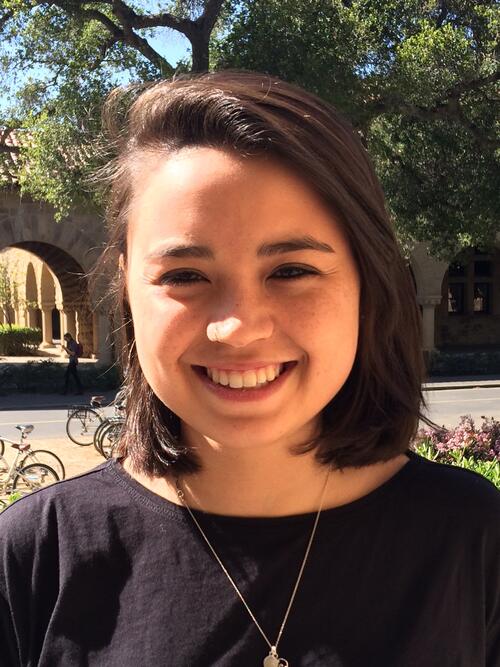
Suhani Jalota was only 20 years old when she established a foundation to help impoverished women in the slums of her native city, Mumbai. She was 23 when Forbes named her one of Asia’s 30-Under-30 Social Entrepreneurs as her foundation was taking off.

Now, at the ripe old age of 24, she is embarking on her pursuit of a PhD in health policy on the econ track at Stanford Medicine’s Department of Health Research and Policy.

As a social entrepreneur, she is hoping to create self-sustaining health organizations managed entirely by the people in the low-income communities they serve.

Last year, Jalota, who is also in the first cohort of Knight-Hennessy Scholars, received the Queen’s Young Leader award from Queen Elizabeth II and attended the royal wedding of Prince Harry and American actress Meghan Markle, who is now Duchess of Sussex.

The Myna Mahila Foundation— which provides affordable sanitary products and promotes employment and empowerment among women in Mumbai’s slums — was the only non-UK charity chosen to receive donations in lieu of gifts for the royal couple.

Stanford Health Policy caught up with Jalota to ask her a few questions about what inspires her and how she became so passionate about sanitary health and empowering women in India.

Who inspired you to become social-entrepreneur at such a young age?

I come from a government family and, growing up, our conversations at home were always about the development of India and the status of women. My father is an Indian civil servant who has worked on water sanitation for the city; my mom works with underprivileged girl children, and my brother creates water filters for the same slum community. My grandparents were in the police. It’s just what we do. It’s our family calling. 

As for entrepreneurship, it was Duke University, the Baldwin Scholars Program and the Melissa and Doug Entrepreneurship Fellowship that actually made me believe that all the dreams I had to change the pitiful state of things on the ground in Mumbai could actually be achievable. There I learned to translate the problems I saw to actionable items that the institution was willing to back and support endlessly.

Then in 2011, I met Dr. Jockin Arputham, who spent 40 years working in the slums of Mumbai as the founder of Slum Dwellers International. He became my inspiration, my idol and my mentor. He singlehandedly improved the lives of millions of women.

Dr. Arputham passed away in October. I am here to complete this mission.

Image
myna phoooo

What inspired you to establish the Myna Mahila Foundation? 

When I started spending more time with women in the slum communities they told me horrific stories about living on the railway tracks, children dying in front of them, and not being able to walk the public toilets without being sexually harassed. Some were taking pills to constipate themselves just so they did not have to go to the public toilet. Others would tell me how they had been married off at 12 and were still living with drunk husbands who beat them every day. 

Women were ignoring their own health and it really struck me as how this would lead to such wasted potential for the women, and for India.

The slum community leaders and I began brainstorming — we became very chatty. That’s where the name comes from. Myna from the chatty South Asian bird and Mahila, which means women in Hindi. And we found that their menstrual cycles were physically and mentally exhausting. We found that sanitation and hygiene were clear signals of dignity for women, so we jumped on that.

You see, 320 million women in India do not have access to sanitary pads. And menstruation in India is a taboo health topic; there is a stigma to shopping for sanitary pads. Most women use rags on their periods and these often become dirty, leading to urinary and vaginal infections.

When you are trapped under an aluminum roof where your horizon is the lining of the slum settlement, and you only see limitations ahead of you, it is difficult to see another way of life. After more than six years of working on sanitation and health research with these women, I realized the problems lay deeply entrenched in a woman’s lack of agency, or ability to make decisions. You are brought up to think that what the generations ahead of you have been doing is the only way of life. Hiding your periods, not cooking food or sleeping with the family during your periods, not going to the temple or playing sports — you believe this is the only way to live.

So we came up with a scheme to sell sanitary pads door-to-door to women who would normally not leave their homes or go to a pharmacy to buy them from male clerks. And we get to know these women; they are opening up and exploring things outside the confines of their husbands’ world. I learned that if women were confident to talk about their periods and menstrual hygiene, it could break the silence surrounding domestic violence or sanitation.

Tell us about the women who work for you and the women you serve. 

We employ women from the slum communities we serve, including the accountants, production and sales managers, and the education trainers. We work mostly with Muslim women as that is a representation of the demographics of the communities we are in.

We currently meet about 10,000 women at their doorsteps every month in the 12 slums across Mumbai. It’s not about giving out free pads — a woman gets her period 450 times in her lifetime, so what we’re trying to do is make sure that she understands that it’s a normal health cycle that should not stop her from getting her education and jobs. We have more than 500 girls in our sponsor a girl program, with 100 more girls joining every month. We hold individual counseling and mentorship for these girls along with menstrual hygiene workshops at health camps. We employ 20 women and have partnerships with self-help groups across the city who work with us part-time.

Image
You strongly believe that self-sustaining health organizations should be managed by women in those communities. Why is this so important?

In the words of my mentor Dr. Arputham, it’s not our purpose to tell the women in the slums what to do; you must think about it from their perspective of what they need and help them create their own change. This has been my mission ever since.

We have millions of NGOs in India so you realize that if things are not really improving at a national level, then there’s something that we’re not doing right. We need the civic mindset to marry the efficiency of the business world. This makes people less dependent and more autonomous to be in control of their own situations. And that comes with a sense of pride.

Why focus on health and sanitation?

We are still struggling with the basics in India: basic health, which includes food, housing, potable water and improved sanitation. Numerous research studies have demonstrated that improvements in sanitation have led to dramatic improvements in health, such as life expectancy outcome measures. Unless we have basic health standards achieved, we will remain behind. To add to the problem, health-care is often deprioritized in India. While it accounts for nearly 18 percent of the GDP here in the United States, for example, it only accounts for 1 percent in India. Can you imagine that? With more than 1 billion people. The role of the public sector in India is to get people on the same level playing field with the basics: education, health care so you’re well enough to go to school or work, find food, shelter and water.

India is a true democracy — so if people start to recognize the importance of health and demand better health care, they can get it. 

What are your goals for the PhD?

To learn more research techniques to use for conducting experiments on the ground for a variety of topics, including women’s demand for health care, effects of positions of power in seeking health care, and the connection between environment and health. On the supply side, I am becoming increasingly interested in understanding pay-for-performance incentive structures in health institutions and for front-line health workers.

I will also be spending my December breaks and summers in India working at the foundation. After my second year, I hope to continue data collection for my dissertation topic: the effect of environmental changes on health outcomes, such as child stunting levels in the slums. As part of my undergrad thesis, I collected anthropometric data on 880 children to look at the effect of slum redevelopment (when the government forcibly relocates people from slums to government subsidized housing) on child stunting. I learned that when a child has one additional year in the buildings — instead of out in the slums with no toilets and clean water and proper ventilation — they were less likely to be stunted. The effect was even more pronounced (and significant) for children moving from slums without toilets than for children moving from slums with toilets.

Another area of research for me moving forward is how this plays out if a pregnant mother gives birth in the slums or the building. Is that affecting the child’s birth weight? Is water quality, sanitation, population density — have other health outcomes actually improved?

You could have gone anywhere for your PhD. Why Stanford?

The Knight Hennessy Scholars Program — that was a very compelling pull. Further, I think that being at Stanford gives you this additional advantage of having access to really positive technology like Virtual Reality — giving people exposure to a different world. We want people to demand better health care, so if they can experience what it feels like to walk into a hospital and a clean waiting room with a bench and a trash can, it can change their concept of what they deserve. I’m really excited to learn more about how new technologies can be applied in the slums to prompt people to stand up and demand better for themselves.

I took two women who work at Myna Mahila with me to the royal wedding. These are women who come from the slums — and what impressed them most was the cleanliness. They couldn’t believe how people could keep everything so clean. If more women see this through VR, they will start to think that this world should become theirs too. We have access to thousands of women and if we can teach menstrual hygiene education through this technology — well, as an entrepreneur, I get very excited about this. This is just one of the many technologies I want to learn more about and see if they can be applied in the slums.

Image
myna mahila markle

What did you make of Meghan Markle’s visit to the foundation in January 2017?

When she came to visit she told us she would support us in any way that she could. She kept her word. For us being chosen as one of seven charities for the royal wedding, I thought to myself, oh my God, she really thinks that we’re on to something that could actually change the world for many women. I feel like I have a huge responsibility to live up to their expectations. Now we have to keep our word to them and help women meet their true potential.


Hero Image
suhani jalota profile Studio 31
All News button
1
Authors
News Type
Commentary
Date
Paragraphs

Donald Trump has stated his intention to ditch the Intermediate-range Nuclear Forces (INF) Treaty. He and National Security Advisor John Bolton also appear unhappy with the New Strategic Arms Reductions Treaty (New START).

Withdrawal from New START would leave Russian strategic forces wholly unconstrained and end the flow of valuable information from the treaty’s verification and on-site inspection provisions.

Having won a majority in the House, the Democrats can protect New START and, with it, nuclear stability with Russia. To do so, they should steal a page from the playbook of Sen. Jon Kyl (R-Ariz.).

Read the rest at The Hill


Hero Image
steven pifer
All News button
1
0
Eloise Duvillier

Eloise Duvillier is the Program Manager of the Program on Democracy and the Internet at the Cyber Policy Center. She previously was a HR Program Manager and acting HR Business Partner at Bytedance Inc, a rapidly-growing Chinese technology startup. At Bytedance, she supported the globalization of the company by driving US acquisition integrations in Los Angeles and building new R&D teams in Seattle and Silicon Valley. Prior to Bytedance, she led talent acquisition for Baidu USA LLC’s artificial intelligence division. She began her career in the nonprofit industry where she worked in foster care, HIV education and emergency response during humanitarian crises, as well as helping war-torn communities rebuild. She graduated from University of California, Berkeley with a bachelor’s degree in Development Studies, focusing on political economics in unindustrialized societies.

Program Manager, Program on Democracy and the Internet
Authors
News Type
News
Date
Paragraphs

Stanford-led group of young American and Russian scholars meet in Moscow on nuclear policy

Persistent nuclear threats and the recent erosion of relations between the United States and Russia paint a gloomy picture for the future of cooperation between nuclear powers. Despite these enormous challenges, Stanford is leading an effort to bring young nuclear scholars from the United States and Russia together to tackle urgent problems together and share ideas.

At the end of October, a group of six scholars from Stanford’s Center for International Security and Cooperation—Senior Fellow Siegfried Hecker, Visiting Scholar Chaim Braun, Postdoctoral Fellows Chantell Murphy and Kristen Ven Bruusgaard, Research Assistant Elliot Serbin and Senior Research Associate Alla Kassianova—and other American graduate students and postdoctoral fellows from Washington State University, University of Tennessee, Harvard, University of Michigan and Los Alamos National Laboratory traveled to Moscow for the Fourth Young Professionals Nuclear Forum.  The Americans joined a group of undergraduate, graduate, and postdoctoral students at the Moscow Engineering Physics University (MEPhI), Russia’s principal school training nuclear professionals.

The Forum, first launched between CISAC and MEPhI in 2016, provides a venue for young generation of American and Russian nuclear professionals to learn about current issues of nuclear safety, nuclear proliferation, and the role of nuclear power in the world’s evolving energy balance from a perspective of more than one country and more than one discipline.

In the weeks leading up to this Forum, participants on both sides of the ocean attended a series of online presentations by U.S. and Russian experts covering the complexity of the Iran nuclear program and the challenges facing further development of nuclear power.

When they met in person, the young scholars heard lectures from and participated in discussions with experts from Los Alamos National Laboratory, the Russian Center for Energy and Security, and others.

The participants then broke into small groups to work on tabletop problem solving activities. The first exercise, a crisis simulation concerning Iran’s nuclear program, brought together separate Russian and American teams to represent their government’s positions on Iran’s nuclear program and the Joint Comprehensive Plan of Action (JCPOA). Presented with a hypothetical problem—a scenario in which Iran decides to enhance its nuclear capabilities in violation of the JCPOA and President Trump threatens retaliation via Twitter—the participants gathered in small groups to see what type of cooperative Russian-American policies could be brokered in response.

The second exercise brought the group together to imagine the future of nuclear power and how to manage it. Working in small teams of 2-4 people, the participants formulated responses to eight pressing questions regarding the global future of nuclear power, including whether nuclear power is necessary to mitigate the consequences of climate change and whether nuclear proliferation challenges will limit the expansion of nuclear power. The teams presented their answers in Moscow and will continue to develop their assessments, to be published in a report next month.

Both Americans and Russians commonly remarked that the most valuable lesson they took from the exercises was the fact that both sides held remarkably different, but valuable, perspectives on issues of common concern. On the topic of nuclear energy, for example, Russians appreciated American perspectives on the value of startups in the nuclear power industry and new modes of thinking that encapsulated non-monetary aspects of nuclear power in broader economic analyses. Americans came to understand the deep Russian fascination with nuclear energy and optimistic views about the future role of nuclear energy in society, and how deeply that passion is engraved in the university system in a way wholly different from the United States.

Forum participants also had an opportunity to meet with the leadership of two committees of the Russian State Duma, the lower Chamber of the Russian legislature, the Committee on International Affairs and the Committee on Education and Science. The meeting was hosted by Ms. Inga Yumasheva,  an MP from the United Russia party. The Forum also included a visit to research labs and MEPhI facilities, which was hosted by their scientists.

View photos from the forum

About CISAC
The Center for International Security and Cooperation tackles the most critical security issues in the world today. Founded in 1983, CISAC has built on its research strengths to better understand an increasingly complex international environment. It is part of Stanford's Freeman Spogli Institute for International Studies (FSI). Though scholarly research, fellowships, and teaching, CISAC is educating the next generation of leaders in international security and creating policy impact on a wide variety of issues to help build a safer world.


Hero Image
CISAC young nuclear professionals visit Red Square, Moscow.
Elliot Serbin
All News button
1
Authors
Noa Ronkin
News Type
News
Date
Paragraphs

hallenges and Possibilities of Korean Studies in North America — Social Science panel
Future Visions: Challenges and Possibilities of Korean Studies in North America — Social Science panel. From left to right: UC Berkeley's Laura Nelson, University of Michigan's Jordan Siegel, Stanford's Yong Suk Lee, USC's David Kang, Harvard's Paul Chang.


How can Korean studies faculty cultivate supportive and critical scholarly communities with graduate students? What can be done to overcome the severe constraints on Korean language training in North America? Why is there a dearth of Korea scholarship in academic literature? And how should Korean studies librarians prepare for the future in the light of new technologies and young researchers’ increasing interest in digital scholarship?

These were some of the questions examined at a two-day conference, “Future Visions: Challenges and Possibilities of Korean Studies in North America,” convened by the Korea Program of Stanford’s Shorenstein Asia-Pacific Research Center (APARC) on November 1-2. Co-sponsored by the Seoul-based Foundation Academia Platonica, the conference, the first of its kind, gathered distinguished Korean studies scholars from twelve North American institutions to consider the state of the field, assess its challenges, and carry forward a vision for its future direction and potential. Its six unique panels focused not only on the major disciplines of Korean studies—history, literature, and the social sciences—but also on language education, library collections and services, and Korean Wave.

“The presentations and discussions by our fellow experts reflected the breadth and depth of Korean studies in North America,” says APARC Director and the Korea Program Director Gi-Wook Shin. “Our program was established at Stanford in 2001 and has since become a leader in Korean studies in North America, so it is a special privilege for us to bring together colleagues from eminent institutions around the continent to further advance Korean studies education and research in the academic and policy worlds, and to build upon our track record of action and achievements.”

“The field of Korean studies, however,” notes Shin, “has significantly changed over the past seventeen years and it isn’t without its challenges. This is our opportunity to consider frankly where we go next and how we could explore the path ahead together.”

Conference participants indeed engaged in deep conversations and shared ideas and dilemmas regarding teaching in the different disciplines of Korean studies in North America. Harvard sociologist Paul Chang listed three types of challenges facing the field: publication, academic, and professional challenges. David C. Kang, professor of international relations and director of the Korean Studies Institute at the University of Southern California, emphasized the publication challenge: why is it, asked Kang, that top academic journals in the discipline of political science and international relations publish so much more scholarship about Europe than they do about Korea and Asia at large, even while the rise of Asian nations is surely one of the most consequential issues of the twenty-first century? The onus, Kang argued, comes back to East Asia scholars “to produce better and more compelling scholarship, and to better train graduate students.”

University of British Columbia's Ross King and conference participants.

Yet complex issues surround the question of how to broaden graduate coursework—and whether to do so. Korean language and linguistics expert Ross King, head of the department of Asian Studies at the University of British Columbia in Vancouver, Canada, was one of several panelists who considered the obstacles to graduate training, among different aspects of academic challenges facing the field of Korean studies. King probed into how Sinocentrism and what he called the “Mandarin conceit”—that is, the notion that training in Literary Sinitic should be predicated on a near-native proficiency in modern Mandarin Chinese—are emerging as a major stumbling block to the study of premodern Korean literary culture. He also pointed to the constraints on language training in both Korean and hanmun in North America, which, he claimed, is why we can probably anticipate continued decrease in the number of ethnically non-Korean (non-Korea-educated) graduate students undertaking graduate study in Korean literature.

University of Washington's Hyokyoung Yi (left) and Stanford's Joshua Capitanio at a panel on library collections and service.

Sung-Ock Sohn, who coordinates the Korean language program in the department of Asian languages and cultures at the University of California – Los Angeles, further shed light on King’s prediction. She explained that while enrollments in Korean language classes have shown a sharp increase in American higher education institutions in the past decade, particularly at the introductory level and among ethnically non-Korean students, there is a high attrition rate of students from an introductory to advanced Korean classes nationwide.

How should the field move forward?

Participants proposed a host of ideas to that end. These included helping graduate students collaborate with colleagues in Korea; dedicating funding for junior faculty to spend periods of time before tenure conducting research and honing language skills in Korea at appropriate institutions, and for mid-career scholars to spend a year in Korea; emphasizing the application of social science theories and methods to premodern and modern East Asia; motivating scholars to apply a comparative lens to the study of the historical and contemporary experience of East Asia; and integrating linguistic and cultural diversity in Korean language classes by, for example, incorporating service learning in authentic contexts and extending the content spectrum to include topics such as Korean popular culture.


Image
K-pop star Siwon Choi (left) highlights closing panel on Korean Wave.

K-pop star Siwon Choi (left) highlights closing panel on Korean Wave.

Korean Wave was the focus of the conference’s widely attended closing panel that featured K-pop star Siwon Choi, a member of Korean boy band Super Junior, and multi-platinum music producer Dominique Rodriguez, managing director of SM Entertainment USA. They spoke about the global reach of Korean pop music and some of the ways in which Korean popular culture could stimulate interest in Korean studies. Dafna Zur, assistant professor in Stanford’s department of East Asian languages and cultures, who chaired the panel, challenged her students to consider “what it means not just to monetize culture but to design culture with specific markets and audience in mind.” The Stanford Daily published a detailed article on the panel.

“We are grateful to Foundation Academia Platonica for its generous support of Stanford’s Korea Program at Shorenstein APARC and for making this conference possible through our shared vision for the future of Korean studies in North America,” said Gi-Wook Shin. “Our thanks also go to our many other friends and partners, including the Korea Foundation that has helped achieve great results through its commitment to promoting understanding of Korea in academia and beyond and its support of the overseas Korean Studies Program since its establishment in 1991.”

South Korean TV company SBS NBC filmed the conference that will be featured in an upcoming documentary about Korean studies in the United States.

Read the conference report or listen to the audio recordings of the sessions, below.

Hero Image
Audience listens to panel during the conference "Future Visions: Challenges and Possibilities of Korean Studies in North America" Thom Holme, APARC
All News button
1
-

At 11am on November 11, 1918, the armistice that effectively ended the First World War was signed. What came to be known as “The Great War” had a profound and lasting impact on the cultural fabric of the nations involved: as Paul Fussell wrote, “its dynamics and iconography proved crucial to the political, rhetorical, and artistic life of the years that followed; while relying on inherited myth, war was generating new myth.” Over the course of the 20th century, the concept of war evolved beyond historically traceable moments and events to include the consideration of war as site and influence shaping every aspect of lived experience. This conference seeks to examine ways in which literature and the arts have taken up and taken apart war and the myths surrounding it -- grappling with it both as subject and context while also considering the ways in which the experience of war molded, mutilated, and morphed artistic forms. Though the word “centennial” often rings of monolithic celebration, it is equally an opportunity to highlight the attempts of writers and artists to contain, contend, or survive war and to question and problematize preconceptions and existing views of war by investigating their inherently bipolar nature.

November 10, 2018 (Day 2)
SCHEDULE:

  • 9 – 11am - 2nd PANEL
    Chair: Jennifer Scappettone (University of Chicago, Associate Professor)
     
  • Aubrey Knox (CUNY, PhD Student)
    "The Regulated Body: The Grand Palais as Military Hospital in World War I"
  • Joanna Fiduccia (Reed College, Assistant Professor)
    "A Destructive Character: Alberto Giacometti’s Crisis of the Monument"
  • Hadrien Laroche (INHA, France, Philosopher and Researcher)
    "Duchamp's waste: Trauma, Violence and Aesthetics"
     
  • 11 - 11.30am – COFFEE BREAK
     
  • 11.30am - 12.45pm – KEYNOTE ADDRESS

Jay Winter (Yale University, Emeritus Professor)
"All the Things We Cannot Hear: Silences of the Great War"

  • 12.45am – 2pm – LUNCH BREAK
     
  • 2 - 4.30pm - 3rd PANEL
    Chair: Peter Stansky (Stanford University, Emeritus Professor)
     
  • Martin Löschnigg (University of Graz, Austria, Professor)
    "‘The extreme fury of war self-multiplies’: First World War Literature and the Aesthetics of Loss"
  • Ron Ben-Tovim (Ben Gurion University, Israel, Post-Doc), Boris Shoshitaishvili (Stanford University, PhD Student)
    "Re-Enchanting the World after War: J. R. R. Tolkien, David Jones, and the Revision of Epic"
  • Anna Abramson (MIT, Post-Doc)
    "Atmospheric Myths of The Great War"
  • Isaac Blacksin (UC Santa Cruz, PhD Student)
    Senseless Encounter, Immutable Sense: The Contradictions of Reporting War


  • 4.30 – 4.45pm – COFFEE BREAK
     
  • 4.45 – 6pm – KEYNOTE ADDRESS

Alexander Nemerov (Stanford University, Professor)
"A Soldier Killed in the First World War"

For more info,  please email: massucco@stanford.edu

Sponsored by:  the Division of Literatures, Languages, and Cultures;  Stanford Department of Art and Art History; Theater and Performance Studies; Stanford Humanities Center; The Europe Center; Dept. of French and Italian; Dept. of History; Dept. of German Studies; and the Dean's Office of Humanities and Sciences.


Stanford Humanities Center
424 Santa Teresa Street
Stanford, CA 94305

Conferences
-


At 11am on November 11, 1918, the armistice that effectively ended the First World War was signed. What came to be known as “The Great War” had a profound and lasting impact on the cultural fabric of the nations involved: as Paul Fussell wrote, “its dynamics and iconography proved crucial to the political, rhetorical, and artistic life of the years that followed; while relying on inherited myth, war was generating new myth.” Over the course of the 20th century, the concept of war evolved beyond historically traceable moments and events to include the consideration of war as site and influence shaping every aspect of lived experience. This conference seeks to examine ways in which literature and the arts have taken up and taken apart war and the myths surrounding it -- grappling with it both as subject and context while also considering the ways in which the experience of war molded, mutilated, and morphed artistic forms. Though the word “centennial” often rings of monolithic celebration, it is equally an opportunity to highlight the attempts of writers and artists to contain, contend, or survive war and to question and problematize preconceptions and existing views of war by investigating their inherently bipolar nature.

November 9, 2018 (Day 1)
SCHEDULE:

  • 4 – 4.30pm – OPENING REMARKS
  • 4.30 - 7pm - 1st PANEL

Chair: Russell Berman (Stanford University, Professor)

  • Greg Chase (College of the Holy Cross, Lecturer)
  • ‘Death is not an event of life’: How Wittgenstein’s War Experience Re-Shaped His Philosophy
  • Victoria Zurita (Stanford University, PhD Student)
  • Ironic prospects: hope in Jean Giono’s To the Slaughterhouse
  • André Fischer (Auburn University, Assistant Professor)
  • Politics by other means: War photography in the work of Ernst Jünger
  • Nicholas Jenkins (Stanford University, Associate Professor)


For more info,  please email: massucco@stanford.edu

Sponsored by:  the Division of Literatures, Languages, and Cultures;  Stanford Department of Art and Art History; Theater and Performance Studies; Stanford Humanities Center; The Europe Center; Dept. of French and Italian; Dept. of History; Dept. of German Studies; and the Dean's Office of Humanities and Sciences.
 

Stanford Humanities Center
424 Santa Teresa Street
Stanford, CA 94305

Conferences
Authors
Beth Duff-Brown
News Type
News
Date
Paragraphs


Preeclampsia is a serious complication of pregnancy that affects 5 to 10 percent of all pregnancies — over 8 million a year worldwide — and claims the lives of 76,000 mothers and half a million babies each year.

The condition causes hypertension and abnormal protein in the urine, and has few effective preventive or therapeutic strategies. The clinical abnormalities usually resolve completely after delivery, but recent research shows that women who have had preeclampsia have higher rates of heart disease later in life, for reasons that are poorly understood.

That’s where Mark HlatkyVirginia Winn, and their Stanford Medicine research team come in. They were recently awarded a 4-year, $6 million NIH grant from the National Heart, Lung and Blood Institute to study the links between preeclampsia and the subsequent risk of atherosclerotic cardiovascular disease (ASCVD) as women grow older.

“The goal of this study is to improve cardiovascular health in women, by learning how pregnancy affects heart disease later in life,” said Hlatky, a Stanford Health Policy fellow. “We hope that shedding new light on these links can lead to better prevention and treatment.”

The interdisciplinary study called EPOCH — Effect of Preeclampsia On Cardiovascular Health — could eventually help millions of women and their clinicians worldwide.

“Since about 85 percent of women become pregnant at some point during their lives, and heart disease is the leading cause of death in women, determining how pregnancy complications might increase the risk of heart disease later in life could be very important,” said Hlatky, a professor of health research and policy and of cardiovascular medicine. “If there is a specific biomarker ‘signature’ of heart disease risk in women who have had preeclampsia, it would open up new possibilities for risk assessment and better treatment to prevent heart attacks and strokes.”

Image
screen shot 2018 11 07 at 3 08 27 pm

Hlatky and his co-principal investigator, Stanford high-risk obstetrician Winn, note that a history of preeclampsia doubles the woman’s risk of future heart disease and stroke, and triples her risk of hypertension. And these adverse consequences occur at younger ages than in women who never developed the condition during pregnancy.

"The dramatic physiologic changes that happen during pregnancy are indeed remarkable," said Winn, the Arline and Pete Harman faculty scholar in the Department of Obstetrics and Gynecology. "This study highlights how complications that occur in pregnancy impact women's health beyond pregnancy." 

The pathogenic links between preeclampsia early in life and ASCVD late in life have been difficult to investigate because the process develops over decades, the authors said. And few clinicians are aware of the link between the condition and late ASCVD risk and there are no validated biomarkers for this process.

Preliminary data that contributed to the application of the project was a direct result of Winn’s endowed Arline and Pete Harman Faculty Scholar award and funding from the Stanford Maternal and Child Health Research Institute and the Stanford Cardiovascular Institute.

The 4-year grant will support a multi-disciplinary research team in taking a life-course approach. The EPOCH study will enroll three cohorts of women at distinct points in the natural history of the disorder: during pregnancy in their reproductive years; during the long, asymptomatic period in mid-life; and the ultimate development of ASCVD in later life.

“It’s very difficult to study the effects of early life events on the development of diseases late in life, since they are separated by 40 years or more,” Hlatky said. “We don’t have reliable health records in the United States from 40 or more years ago, so it’s a challenge for American researchers.” This is why, he said, the EPOCH study includes researchers from Denmark, which has a national health system, complete medical data of their citizens since the 1970’s, and a national biobank that will allow study of later life events.

The first cohort of women will include some of those who are already part of the Stanford March of Dimes Prematurity Research Center. The center, led by David Stevenson began recruiting women in 2011 to study pregnancy from the first trimester through delivery. The study has collected a wide array of “omics” measures at multiple time points: metabolomics, proteomics, cell-free RNA, the microbiome and immune cells for analysis, as well as collection of amniotic fluid, cord blood, and the placenta. The pregnancy cohort will enroll additional women who are cared for at Lucile Packard Children’s Hospital for treatment of preeclampsia, about 100 in all, plus a matched group with uncomplicated pregnancies.

This is where it gets pretty technical — but also pretty cool

The researchers will collect high-dimensional “omic” biomarker data to assess the pathophysiology of preeclampsia and its relationship to cardiovascular function and disease. They’ll assess cell signaling pathways using single-cell immune profiling (CyTOF) methods in the lab of Brice Gaudilliere, an assistant professor of anesthesia.

Image

They will then analyze the cell-free RNA profiles using methods developed by co-investigator Stephen Quake, a professor of bioengineering and applied physics, and co-president of the Chan Zuckerberg Biohub. They will assess metabolomics using novel methods also developed at Stanford by co-investigator Michael Snyder,  professor and chair of genetics.

Stanford data scientists, including co-investigators, Robert Tibshirani and Nima Aghaeepour, have been at the forefront of developing and applying novel statistical and bioinformatic approaches, which the team will use to analyze the torrents of data that can now be collected by modern “omics” technologies from individual clinical research subjects.

“The EPOCH study is truly interdisciplinary — we are bringing together faculty from eight different departments to study a major problem in women’s health.”

The second, mid-life cohort will be recruited from women who had a pregnancy complicated by preeclampsia. Marcia Stefanick, professor of medicine in the Stanford Prevention Research Center, will use the Stanford Medicine Research Data Repository (STARR), which contains electronic records from more than 1.6 million patients since 1995, to identify eligible women. Stefanick and the EPOCH team will recruit 200 pre-menopausal women who had either a pregnancy complicated by preeclampsia or an uncomplicated pregnancy.

The third, late-life cohort of women will be identified in the Danish National Biobank by Stanford visiting professor Mads Melbye. Samples will be retrieved from women who had preeclampsia early in life and ASCD later in life, as well as a set of matched control subjects, and analyzed in Stanford laboratories.

“We’re not quite sure whether the physiologic challenges of pregnancy that result in preeclampsia simply reveal underlying cardiovascular risk, or causes change that leads to the increased risk in later life,” Winn said. “The EPOCH study will identify unique aspects of preeclampsia that links it to later ASCVD, opening potential novel approaches to improve women’s health.”

The EPOCH study brings together investigators from eight departments. Additional faculty include Gary Shaw and Seda Tierney (Pediatrics), Martin Angst (Anesthesia), Nicholas Leeper (Surgery) and Heather Boyd (Danish Biobank).

Hero Image
gettyimages early pregnancy Getty Images
All News button
1
-

Author Yochai Benkler sits down with Kelly Born to discuss Network Propaganda: Manipulation, Disinformation, and Radicalization in American Politics. According to the New Yorker, the Washington conventional wisdom presupposes a kind of symmetry between our polarized political parties. Liberals and conservatives, it is said, live in separate bubbles, where they watch different television networks, frequent different Web sites, and absorb different realities. The implication of this view is that both sides resemble each other in their twisted views of reality. Network Propaganda challenges that received wisdom through the most comprehensive study yet published on media coverage of American presidential politics from the start of the election cycle in April 2015 to the one year anniversary of the Trump presidency. Analyzing millions of news stories together with Twitter and Facebook shares, broadcast television and YouTube, the book provides a comprehensive overview of the architecture of contemporary American political communications. Through data analysis and detailed qualitative case studies of coverage of immigration, Clinton scandals, and the Trump Russia investigation, the book finds that “the right-wing media ecosystem differs categorically from the rest of the media environment,” and has been much more susceptible to “disinformation, lies and half-truths.”


Register for this free event online at:  pacscenter.stanford.edu/event


6:00—6:30 PM  Doors Open and Pre-Reception

6:30—7:30 PM  Program 7:30—8:00 PM

Q&A 8:00—8:30 PM  Book Signing and Post-Reception
 

PAUL BREST HALL 555 SALVATIERRA WALK STANFORD, CA 94305

Yochai Benkler Berkman Professor of Entrepreneurial Legal Studies at Harvard Law School
Kelly Born Program Officer, Madison Initiative, William and Flora Hewlett Foundation
Seminars
News Type
News
Date
Paragraphs

On November 2, the Korea Program’s Future Visions conference closed with a panel featuring Siwon Choi — a member of Korean boy band Super Junior — and SM Entertainment USA director and music producer Dominique Rodriguez. Panelists spoke about the global reach of Korean pop music (K-pop) and how it could be a key stimulator of Korean studies in America and the rest of the West.

A recap of the panel by The Stanford Daily is now available online.

Hero Image
Siwon Choi speaks at panel as part of Future Visions conference.
Nicole Feldman
All News button
1
Subscribe to The Americas