This event is closed.
Speaker Bio:
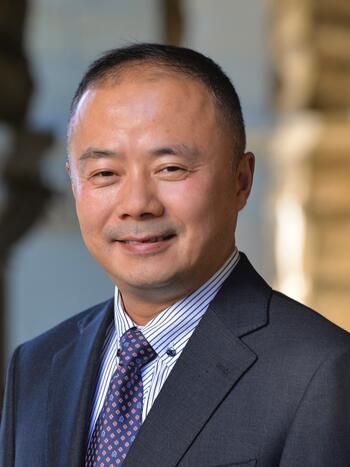
[[{"fid":"230390","view_mode":"crop_870xauto","fields":{"style":"margin: 3px; float: left;","class":"media-element file-crop-epsa-crop-portret","data-delta":"4","format":"crop_870xauto","field_file_image_description[und][0][value]":"","field_file_image_alt_text[und][0][value]":false,"field_file_image_title_text[und][0][value]":false,"field_credit[und][0][value]":"","field_caption[und][0][value]":"","thumbnails":"crop_870xauto","alt":"","title":""},"type":"media","field_deltas":{"4":{"style":"margin: 3px; float: left;","class":"media-element file-crop-epsa-crop-portret","data-delta":"4","format":"crop_870xauto","field_file_image_description[und][0][value]":"","field_file_image_alt_text[und][0][value]":false,"field_file_image_title_text[und][0][value]":false,"field_credit[und][0][value]":"","field_caption[und][0][value]":"","thumbnails":"crop_870xauto","alt":"","title":""}},"link_text":null,"attributes":{"style":"margin-right: 6px; margin-left: 6px; float: left; height: 176px; width: 150px;","class":"media-element file-crop-870xauto","data-delta":"4"}}]]
The 12th and 13th President (2008-2016) of the Republic of China (Taiwan)
Ma Ying-jeou was born in 1950 in Hong Kong, and emigrated in 1951 with his family to Taiwan, where he grew up. He graduated from National Taiwan University’s Department of Law in 1972, then served in the Marines and Navy for two years before earning an LL.M from New York University (1976) and an S.J.D. from Harvard University (1981). Dr. Ma began his political career as the deputy director of the Presidential Office’s First Bureau, and doubled as President Chiang Ching-kuo’s personal English interpreter. After President Chiang passed away in 1988, he held a series of other positions in government, including the Chairman of the Research, Evaluation, and Development Commission, Senior Vice Chairman of the Mainland Affairs Council, and Minister of Justice. In 1998, he was elected mayor of Taipei, an office he held until 2006. In 2008, he was elected President of the Republic of China (Taiwan) with 58% of the vote, the highest in history, and he was re-elected in 2012.
During President Ma’s two terms in office, Taiwan’s per-capita GDP (on a PPP basis) rose from US$34,936 to $48,095, passing the U.K., France, Denmark, Italy, Canada, Japan, and South Korea and advancing 10 places in eight years. Taiwan was able to maintain peaceful relations with the Chinese mainland, friendly relations with Japan, and close relations with the United States; relations with all three countries were the best they had been in many decades. In November 2015, President Ma met with the mainland Chinese leader Xi Jinping in Singapore, the first face-to-face meeting between leaders of the two sides in 70 years. President Ma left office on May 20, 2016.


 New disruptors that change the way of traveling may be arising from airspace, in addition to existing ride- and car-sharing, that have changed people's minds and will have an effect on car sales. Many start-ups and aircraft manufacturers are tackling the challenge to realize the urban air transportation business and have begun to improve the level of technology. In his research, Ito focused on the technologies used in the urban air transportation ecosystem and concluded that Mitsubishi Electric could provide some of these technologies. He suggests that Mitsubishi Electric should find the partners by leveraging its U.S. offices and other group companies, which could become a lesson for other Japanese companies.
  Deep learning has received a great deal of attention since it broke a conventional method at an image recognition competition in 2012. Since then, almost every industry is exploring the use of Artificial Intelligence (AI) to improve productivity and make innovation. Tech giants such as Google, Microsoft, Amazon, Baidu and others that have invested large amounts of resources to AI have become far more advanced than other companies. How can ordinary companies adopt AI in their business? In his presentation, Kato shares insights into the essential factors for companies to implement AI in business.
 In the United States, the standard of patent eligibility of software-related inventions has been significantly raised and complicated since a Supreme Court decision (Alice Corp. v. CLS Bank) in 2014 that has sparked considerable discussion in the patent community. According to the report published by the United States Patent and Trademark Office (USPTO) in 2017, companies in the computer-related industry are divided in their view on the Supreme Court decision. Some companies that had suffered from a large number of patent lawsuits, mainly from Patent Assertion Entities (PAEs), welcome the decision because it protects against abusive patent litigation. Other companies, however, oppose the decision, insisting that it hurts the value of patents and innovation. One leading Artificial Intelligence (AI) company has argued that the decision is curtailing innovation in cutting edge areas of information technology such as artificial intelligence. Why does this company insist that the Supreme Court decision stifles research on AI technology? In his research, Nomura tries to reveal the background by analyzing patent data.
 Biosimilars are blockbuster drugs in the sense that they are affordable copies of the expensive original biologic drug, providing much needed affordable quality healthcare. A number of top selling biologic brands in key therapeutic areas are due to lose product patent protection over the next few years, opening a wealth of opportunities for biosimilar players. Biosimilar product development for launch in multiple geographic locations with various regulatory expectations would require a clear and concise understanding of the regulatory framework of each region. In her research, Raveendran's primary goal is to understand the regulatory requirements for registration of biosimilar products in various global markets and to also compare and contrast the regulatory requirements of these regions.
 Stanford University continues its role as a farm of Silicon Valley as many successful start-ups have their beginnings here. How does Stanford teach entrepreneurship? Through auditing classes and utilizing other resources, Watanabe has observed and experienced some of the education system of entrepreneurship at Stanford. In his presentation, he shares his insights on key factors of the "idea fo start-up" process. He also proposes how his own company, The Asahi Shimbun, should implement these key factors in their innovation process.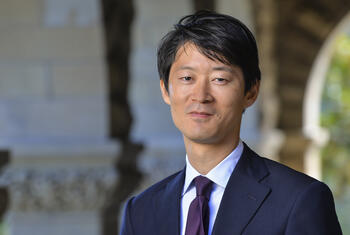
 Obtaining intelligence from large amount of data is getting more and more common in a variety of domains as information technology evolves and everyone has access. Particularly in commercial sectors, many companies try to capture their customers' thoughts. In public sectors, it is also important to know what their citizens think, prefer, want and need in order to improve their communities. In his research, Inoshita examines how to make sure of information technology in the public policy domain, with a focus on extracting intelligence from natural language data generated by humans.
 Due to the shift in Chinese economic structure from an investment-driven model towards a consumption-driven model, an increase in outstanding balance of China personal consumption loan, more digital adoption, and innovation through technology development, the Chinese Fintech market is booming in recent years. It presents immense opportunities for financial players. New business models are observed across the key areas in the financial services industry in China, such as online asset trading, online consumer finance, P2P, online investment, etc. In her own experience, Chen has the opportunity to observe various Chinese Fintech start-up companies and do some research and investment. One of her own investments, Samoyed Financial, provides online credit card repayment service in China. In this research presentation, Chen shares her knowledge gained regarding the Chinese online credit card repayment market based on due diligence and first-hand observation.
 Population decline has been a major issue for Japan. In the near future, this problem will cause a labor shortage and weaken local economies. In order to overcome these, economic growth is an important key, and improvement of labor productivity is an essential element. Labor productivity = GDP / Working hours, so we need to improve GDP by innovation and reduce working hours by work-style reform. Morishige intends to propose approaches to realize regional revitalization in his hometown of Shizuoka by linking a bridge of innovation between Silicon Valley and Shizuoka.
 Silicon Valley continues to attract attention as the center of tech start-ups and innovation. A growing proportion of the most valuable companies in the U.S. are tech companies such as Silicon Valley based tech giants -- Apple, Alphabet, and Facebook. Therefore, many large Japanese enterprises have recently been sending people to accelerate internal innovation, utilizing the Silicon Valley ecosystem. However, many of these Japanese enterprises face common difficulties due to the cultural gap and complicated decision-making processes. In his research, Nishinaka will share some insights into how large Japanese enterprises collaborate with start-ups to accelerate innovation effectively.
  Korea is considered a country with an advanced venture capital industry. In 2017, the amount of newly arranged venture funds was over $4.4 billion USD and the total investment amount is $2.4 billion USD, each setting the highest record respectively. Although, the total size of venture capital investment is rapidly increasing each year along with the support of policy-based funds, it should be noted that the supply of venture capital to start-ups is still not sufficient compared to Korea's market size. In her research Ryou investigates the virtuous cycle of the venture capital ecosystem in the U.S., which has mainly been driven by the private sector. Ryou will present some of her observations of key findings and current issues about the U.S. venture capital ecosystem.