-

This presentation distinguishes left-wing authoritarianism from right-wing authoritarianism, and further disaggregates left-wing authoritarian regimes into Marxist and Machiavellian subtypes. The central argument is that left-wing regimes exhibit a core psychological orientation toward securing collective gains, while right-wing regimes predominantly draw support from a shared desire to crush collective threats. Although left-wing regimes always evolve and typically decay over time, their origins in desperate popular struggles to overturn entrenched hierarchies make them lastingly different from regimes with right-wing or non-ideological origins. Examples are offered from across the globe and from before the Cold War to the present, but primarily from Asia, Latin America, and sub-Saharan Africa.

Image
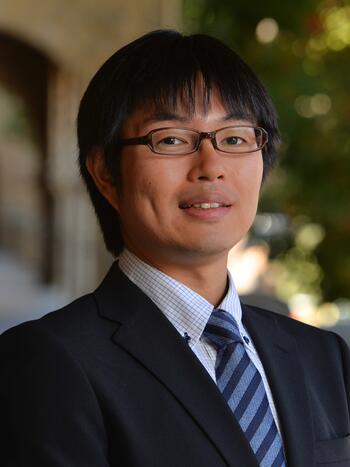
slater umich headshot 4x5
Dan Slater
is Professor of Political Science, Ronald and Eileen Weiser Professor of Emerging Democracies, and Director of the Weiser Center for Emerging Democracies (WCED) at the University of Michigan. He
specializes in the politics and history of democracy and dictatorship, with a regional focus on Southeast Asia. He is the author of Ordering Power: Contentious Politics and Authoritarian Leviathans in Southeast Asia (Cambridge Studies in Comparative Politics, 2010) and coauthor of Coercive Distribution (Cambridge Elements Series on the Politics of Development, 2018). His published articles can be found in disciplinary journals such as the American Journal of Political Science, American Journal of Sociology, Comparative Politics, Comparative Political Studies, International Organization, Journal of Democracy, Perspectives on Politics, Studies in Comparative International Development, and World Politics.
Dan Slater Professor of Political Science, Ronald and Eileen Weiser Professor of Emerging Democracies, and Director of the Weiser Center for Emerging Democracies (WCED), the University of Michigan
Seminars
Paragraphs

Western observers have raised concerns over the rise and now predominance of Chinese state-backed bilateral lending in international infrastructure development. These range from China's growing geopolitical influence to the increasingly unsustainable debt levels of some of the nations receiving investments as part of the Belt and Road Initiative (BRI). In fact the BRI today is simply the next phase of a decades-long shift in the infrastructure sector towards China and away from traditional western development lending institutions. In this study we observe the scale of this trend and its root causes in China's domestic and international development policies for infrastructure and the safeguards policies of western development programs. We use aggregate reporting on infrastructure lending and project-level case studies in nations that have transitioned from western institutions to the BRI. We highlight the need for reforms for China's lending programs, to increase transparency and the financial sustainability of projects, and for western development institutions to maintain environmental and social safeguards while still achieving their stated missions.

Read

.

All Publications button
1
Publication Type
Working Papers
Publication Date
Authors
Francis Fukuyama
Michael Bennon
News Type
Blogs
Date
Paragraphs

Our MIP student, Keunwang Nah, chose Stanford “because it is the birthplace of innovations that change the world, but it can also be the birthplace of sound policy that can manage the potentially negative impacts technology can have on society.” Find out more on our FSI blog. #MIPFeatureFriday 


Hero Image
picture1
All News button
1
-
斯坦福大学创新设计研究中心将于 2019 6 6 日至 8 日在北京大学斯坦福中心 (Stanford Center at Peking University)举办“监管科学与生物医学创新论坛”。 该论坛是一个 高端的国际讨论会议,今年的主题是 如何更好的使用真实世界证据对监管决策形成帮助,找 出医学创新产品的安全性和有效性评价中的挑战以及达成需要优先研究的一些共识,同时探索 政府监管部门、大学研究机构、工业界共同合作以应对这些挑战的机制。

Over the last decade, significant strides have been made in medical research, which leads to great improvement in human health. During this period, Chinese government has made important progress in promoting and managing medical innovations. Chinese FDA is now a formal agency member of the international council for harmonisation of technical requirements for pharmaceuticals for human use (ICH). With further integration of China into the global pharmaceutical research and development, how government regulatory agencies, the related law and regulations can promote industry innovation, while enhance their accountability and responsibility remains an important question. This forum is organized to address this need.

This forum provides a platform for high-level discussions on this topic by Chinese and US scholars from academia, experts from the Chinese Food and Drug Administrations, and R&D experts from biomedical industries. On June 7-8, 2019, the forum will host keynote speech sessions, invited talks, and panel discussion sessions. With collaborations from Chinese evidence based medicine association, we will discuss methods and policy related to monitoring drug safety, novel clinical trial design, and applications of modern statistical, AI and machine learning methods in drug development. On June 6, 2019, a one-day short course will be offered on "Statistical Methods for Medical Product Safety Evaluation."

Through this brainstorming and exchange, we want to identify research priorities and collaborative mechanisms for international scholars from academia, regulatory agencies and industry working together to promote biomedical innovations in an efficient and orderly manner.


SCPKU 

Yiheyuan Road No. 5, Beijing, China


Conferences
Authors
Ketian Zhang
News Type
Commentary
Date
Paragraphs

Although there is progress regarding the code of conduct (COC) for the South China Sea between ASEAN and China, the South China Sea is not without tensions. China’s first aircraft carrier took part in a naval review, along with latest-generation nuclear submarines, destroyers, and fighter jets in late April, marking the People’s Republic navy’s 70th anniversary. Despite warming up with China, Philippine president Rodrigo Duterte recently threatened a "suicide mission" if Beijing does not back off from a Manila-occupied island in the South China Sea. The United States and Japan held a 2+2 meeting reaffirming the “Free and Open Indo-Pacific” approach with primary emphasis on the South and East China Seas. In March, the US Navy sent the assault ship USS Wasp — a small aircraft carrier operating 20 F-35B Joint Strike Fighters and a Marine Expeditionary Force — to exercise with the Filipino Navy. In addition to the freedom of navigation operations (FONOPs) conducted by the US Navy, the US Coast Guard also turned increasingly towards the Asia-Pacific, dispatching its service members to countries such as Vietnam. In this commentary, I focus on US policies toward Southeast Asia, above all the South China Sea: What is unchanged? How is policy oscillating? And what has been gradually shifting?...

Read the full article on The Asan Forum.

Hero Image
Ketian Zhang standin under Encina Hall arcade Rod Searcey
All News button
1
-

CLOSED WORKSHOP

Since 2012, the Governance Project at CDDRL has sought to develop better comparative measures of state quality. Existing measures like the World Bank’s Worldwide Governance Indicators, TI’s Transparency Perceptions Index, or the state-quality measures in the Varieties of Democracy series are based on perception or expert surveys.  They often produce aggregate measures for an entire country, without distinguishing between ministries, levels of government, or regions within countries.  And almost none of them measure aspects of governance like bureaucratic autonomy that many observers feel are critical to state performance.

The Governance Project has developed a survey instrument that seeks to correct some of these deficiencies by surveying bureaucrats in different countries directly.  While such a survey is obviously subject to its own problems like social acceptability bias, they at least try to reach into the insides of executive branches in ways that existing perception surveys do not.  To date, the project has completed surveys in China, Brazil, Ukraine, and is undertaking one in India.  The survey instrument is based on the Federal Viewpoint Survey (FedView), which has surveyed US bureaucrats over an extended length of time and can serve as a comparative baseline.  These surveys are conducted in conjunction with local partners that perform the actual surveys and provide input and analysis into the survey instrument.

It is our hope to generate cross-national comparative data that will encompass an increasing number of countries, and in the long-run produce time-series data.  Our model is the World Values Survey, which from the 1980s going forward has expanded the number of countries covered.  We hope to make this data publicly available to academic researchers around the world.

The Governance Project has entered into a cooperative agreement with the World Bank and University College, London, to devise a common survey instrument, to standardize surveying practices, and to coordinate the choice of survey targets for future surveys.  

This workshop is co-sponsored with Stanford University's Center on Global Poverty and Development.

[[{"fid":"237366","view_mode":"crop_870xauto","fields":{"format":"crop_870xauto","field_file_image_description[und][0][value]":"","field_file_image_alt_text[und][0][value]":false,"field_file_image_title_text[und][0][value]":false,"field_credit[und][0][value]":"","field_caption[und][0][value]":"","thumbnails":"crop_870xauto"},"link_text":null,"type":"media","field_deltas":{"3":{"format":"crop_870xauto","field_file_image_description[und][0][value]":"","field_file_image_alt_text[und][0][value]":false,"field_file_image_title_text[und][0][value]":false,"field_credit[und][0][value]":"","field_caption[und][0][value]":"","thumbnails":"crop_870xauto"}},"attributes":{"style":"height: 165px; width: 500px;","class":"media-element file-crop-870xauto","data-delta":"3"}}]]

Image
kingcenter

[[{"fid":"237529","view_mode":"crop_870xauto","fields":{"format":"crop_870xauto","field_file_image_description[und][0][value]":"","field_file_image_alt_text[und][0][value]":false,"field_file_image_title_text[und][0][value]":false,"field_credit[und][0][value]":"","field_caption[und][0][value]":"","thumbnails":"crop_870xauto"},"link_text":null,"type":"media","field_deltas":{"8":{"format":"crop_870xauto","field_file_image_description[und][0][value]":"","field_file_image_alt_text[und][0][value]":false,"field_file_image_title_text[und][0][value]":false,"field_credit[und][0][value]":"","field_caption[und][0][value]":"","thumbnails":"crop_870xauto"}},"attributes":{"class":"media-element file-crop-870xauto","data-delta":"8"}}]]

Image
kingcenter1

Koret-Taube Conference Center
366 Galvez St.
Stanford, CA 94305

Workshops
0
patricia_robinson.jpg Ph.D.

Patricia (Tish) Robinson joined the Walter H. Shorenstein Asia-Pacific Research Center as a visiting scholar from Hitotsubashi University in Tokyo, Japan from May 2019 - April 2020.

Robinson’s research and teaching focus on managerial mediation and managerial coaching. She has published in Administrative Science Quarterly, Academy of Management Perspectives, and Human Resource Management Review, among others, and her research has received the Academy of International Business Farmer Award and the Academy of Management Richman Award. Other awards include a Fulbright Fellowship, a Fulbright Hayes Fellowship, a Fulbright Faculty Fellowship, a Carnegie Bosch grant, a Japan Foundation Faculty Fellowship, and a Shintaro Abe Fellowship, among others.

Robinson has served on the faculty at UC Berkeley, the NYU Stern School of Business and Harvard University, as well as at the Japan Institute of Labor Policy and Training.  She was appointed a Commissioner on the Fulbright Japan-US Educational Commission by Ambassador Caroline Kennedy, was an outside board director to Eisai Pharmaceuticals, elected an elected Governor to the American Chamber of Commerce Board of Governors, and served as a Founding Director of the Society of Organizational Learning Japan under the auspices of Peter Senge.

Robinson received her MBA and Ph.D. from the MIT Sloan School of Management at the Massachusetts Institute of Technology and her BA from Pomona College.

Visiting Scholar, May 2019-April 2020
News Type
Blogs
Date
Paragraphs

"Being at Stanford is a unique experience... Over time I just became interested in how cyberspace is very realistically connected to our everyday life, and on a larger scale, national security." Read more on our FSI blog on how our MIP student, Maho Sugihara, is focusing on cyber policy and its security implications. #MIPFeatureFriday

Hero Image
q79duzj
All News button
1
-

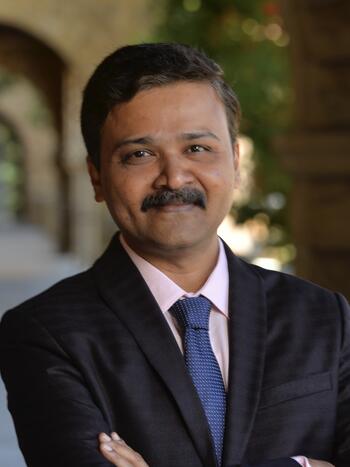
Bureaucrats become powerful when they stage emotionally calibrated performances as “servants” before state principals, earn their trust, and carve out space for action through “whispering,” “propagating,” cultivating patrons, and building coalitions behind the scenes and on the sidelines of official interaction. These servant performances involve what sociologist Arlie Hochschild calls “emotional labor,” that is, the management of feelings when fulfilling the requirements of a job. Prof. Nair will develop a theory of emotional labor in international bureaucracies that explains why bureaucrats perform such work and how, if skilfully done, it can empower them. He will test the theory with an ethnography of the Secretariat of the Association of Southeast Asian Nations (ASEAN) in Jakarta—a “hard” case that does not fit prevailing theorizations of bureaucratic power. Prof. Nair will also show how his theory can be applied to other, Euro-American bureaucracies.

Image
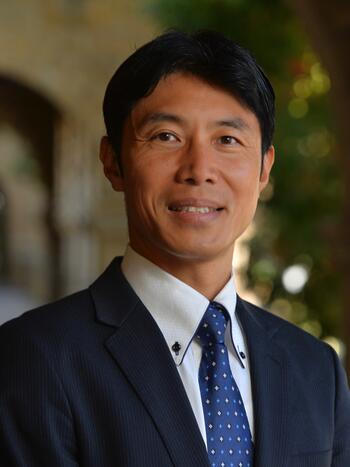
deepak 4x5
Deepak Nair researches the everyday practices and performances that produce international relations. His writings include ASEAN-related articles in journals such as International Political Sociology on topics that include golf, sociability, and diplomacy; on the practices of face-saving in diplomacy in the European Journal of International Relations; and on institutions, norms, and crisis in Asian Survey and Contemporary Southeast Asia. He earned his PhD and BA at the London School of Economics and Political Science and Delhi University, respectively.

Deepak Nair Assistant Professor of Political Science, National University of Singapore
Seminars
Authors
News Type
Commentary
Date
Paragraphs

China is making a risky bet in the Middle East. By focusing on economic development and adhering to the principle of noninterference in internal affairs, Beijing believes it can deepen relations with countries that are otherwise nearly at war with one another—all the while avoiding any significant role in the political affairs of the region. This is likely to prove naive, particularly if U.S. allies begin to stand up for their interests.

In meetings I attended earlier this month in Beijing on China’s position in the Middle East, sponsored by the Carnegie-Tsinghua Center, Chinese officials, academics, and business leaders expressed a common view that China can avoid political entanglement by promoting development from Tehran to Tel Aviv. China may soon find, however, that its purely transactional approach is unsustainable in this intractable region—placing its own investments at risk and opening new opportunities for the United States.

Over the past three years, China has charted an ambitious future in the Middle East by forging “comprehensive strategic partnerships” with Iran, the United Arab Emirates, Saudi Arabia, and Egypt. This is the highest level of diplomatic relations China can provide, and Beijing believes these four countries anchor a neutral position that will prove more stable over the long term than that of the United States. China has also made massive investments in infrastructure throughout the region, including in Israel, where China is now the second-largest trading partner behind the United States.

China’s interests in the Middle East are both structural and strategic. Structurally, China needs the natural resources of the region, whereas the United States—now the world’s largest oil producer—does not. China is also seeking new markets to absorb its excess industrial capacity, and sees the Middle East poised for growth after decades of wars, woeful infrastructure, and popular discontent. Strategically, together with Russia, China is taking advantage of the uncertainty produced by ever-shifting U.S. policies, including zero-sum prescriptions for Iran and Syria that are unlikely to produce desired outcomes anytime soon. Regional governments in turn have welcomed China’s embrace, and its offer of investment without pressure to politically reform or respect human rights.

China’s President Xi Jinping previewed this more assertive Middle East strategy in a landmark address in Cairo three years ago. There, he declared that China does not seek a “sphere of influence” in the region—even while sinking nearly $100 billion in investments there through ports, roads, and rail projects. He alleged China rejects “proxy” contests—even while concluding a strategic partnership with Iran, the main sponsor of proxies in the region. And he warned against “all forms of discrimination and prejudice against any specific ethnic group and religion”—even while reportedly forcing 1 million Muslims into reeducation camps in China’s Xinjiang province.

Such contradictions can be maintained only so long as traditional U.S. allies in the region now welcoming Chinese investment allow them to be maintained. These U.S. allies do not shy from asserting their broader interests with Washington or expressing disagreement where policies diverge, and it is time they do the same with Beijing.

As the United States questions Chinese investment and intentions, particularly in the areas of technology and ports such as Israel’s Haifa, it can also challenge traditional allies as to whether they are granting China a free ride on what remains a largely U.S.-led security architecture. Such an arrangement should be as unacceptable to American partners in the region as it is to Washington. At the very least, these partners, together with Washington, can demand that Beijing utilize its emerging influence—particularly with Tehran and Damascus—to pursue measures that promote longer-term stability.

Read the rest at The Atlantic.

Hero Image
mcgurk brett holden   official dos photo copy
All News button
1
Subscribe to Asia-Pacific