-

This event is part of Shorenstein APARC’s fall webinar series "Shifting Geopolitics and U.S.-Asia Relations"

Co-sponsored with the Center for South Asia (CSA)

Since May 2020, Chinese troops have crossed the disputed Line of Actual Control (LAC) and occupied positions in the Indian union territory of Ladakh. The Chinese troops crossed in multiple places and in large numbers, and have skirmished with Indian forces. Diplomatic channels are still open, but despite numerous pledges to disengage, this Chinese action appears to be an attempt to revise the LAC. This webinar will examine the crisis’ longer-term implications for China-India-U.S. relations. Can India and China reconcile their relationship or are they destined for a more antagonistic strategic rivalry? What tools and leverage does each side have in strategic competition? How does this affect U.S. policy in the Indo-Pacific region, and what action can Washington take to advance its interests?

Image
Joe Felter 100620
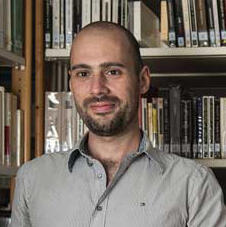
Joseph Felter is a William J. Perry Fellow at the Center for International Security and Cooperation and research fellow at the Hoover Institution.  From 2017 to 2019, Felter served as US deputy assistant secretary of defense for South Asia, Southeast Asia, and Oceania, where he was responsible for defense strategies and plans in the region. He previously taught at West Point and Columbia University. A former US Army Special Forces and Foreign Area officer, Joe served in a variety of special operations and diplomatic assignments, and holds a PhD in political science from Stanford University. 

Image
Madan Tanvi 100620
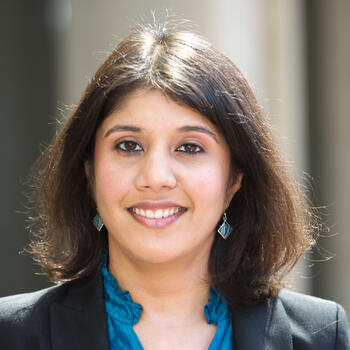
Tanvi Madan is a senior fellow in the Project on International Order and Strategy in the Foreign Policy program, and director of The India Project at the Brookings Institution in Washington, DC. Madan’s work explores India’s role in the world and its foreign policy, focusing in particular on India's relations with China and the United States. Madan is the author of the book "Fateful Triangle: How China Shaped US-India Relations during the Cold War," and researching her next book on the China-India-US triangle. She holds a PhD in public policy from the University of Texas at Austin.

Image
Yun Sun 100620
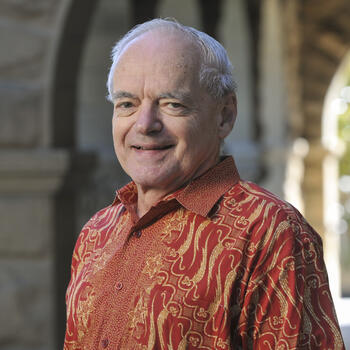
Yun Sun is a Senior Fellow and Co-Director of the East Asia Program and Director of the China Program at the Stimson Center. Her expertise is in Chinese foreign policy, U.S.-China relations and China’s relations with neighboring countries and authoritarian regimes. She has previously held positions at the Brookings Institution, where she focused on Chinese national security decision-making processes and China-Africa relations, and at the International Crisis Group, specializing in China’s foreign policy towards conflict countries and the developing world. She earned her master’s degree in international policy and practice from George Washington University.

Moderator:

Image
Arzan Terapore 100620
Arzan Tarapore is the South Asia research scholar at the Shorenstein Asia-Pacific Research Center at Stanford University, where he leads the newly-restarted South Asia research initiative. He is also a senior nonresident fellow at the National Bureau of Asian Research. Tarapore’s research focuses on Indian military strategy and contemporary Indo-Pacific security issues. He previously held research positions at the RAND Corporation, the Observer Research Foundation, and the East-West Center in Washington, and served in the Australian Defence Department. Tarapore holds a PhD in war studies from King’s College London.


Via Zoom Webinar

Register at https://bit.ly/2Hkx3ye

Joseph Felter William J. Perry Fellow, the Center for International Security and Cooperation and research fellow, the Hoover Institution
Tanvi Madan Senior Fellow in the Project on International Order and Strategy in the Foreign Policy program, and director of The India Project, the Brookings Institution, Washington, DC
Yun Sun Senior Fellow and Co-Director of the East Asia Program and Director of the China Program, the Stimson Center
Arzan Tarapore Moderator the South Asia research scholar, the Shorenstein Asia-Pacific Research Center, Stanford University
Seminars
-

This event has been rescheduled to October 14, 2020

It is a good time to be interested in Southeast Asia-China relations. In addition to the three new books referenced in this webinar, additional books on the subject are forthcoming from other authors.  The timing is all the more propitious in view of the current animosity between Beijing and Washington as it may implicate Southeast Asia and American policy toward the region, depending in part on who wins the 3 November US election.  These books are both sweeping and granular.  Hiebert’s and Strangio’s country-focused chapters cover all ten members of the Association of Southeast Asian Nations (ASEAN), while Emmerson and his co-authors mix country studies with thematic arguments about China’s relations with its neighbors.

Given China’s clearly superior size and power, is Beijing’s incremental domination of its neighbors foreordained? Strangio says no: “Southeast Asia’s future will not be one of linear and inexorable Chinese advance, but rather one in which past dynamics and contradictions reproduce themselves over time at varying pitches of tension.” Is he right? Hiebert calls for the US “to support the region as it faces a rising and more assertive China”—to “remain an actively engaged partner that shows up, brings some resources, and rewrites the perception that it is often unreliable and missing in action.” Is that good advice?  For Emmerson, “strategic autonomy necessarily begins at home. Outsiders can help or hurt. But nothing can substitute for the creativity of Southeast Asian states in individual and joint pursuit of their own and their region’s security.” Is that true, and even if it is, so what?

The webinar will explore these and other aspects of Sino-Southeast Asian relations.

Image
Murray Hiebert 100520
Murray Hiebert, in addition to his position at CSIS, is research director for BowerGroup Asia. Before joining CSIS, he was senior director for Southeast Asia at the U.S. Chamber of Commerce. Earlier, he was a journalist in the China bureau of the Wall Street Journal. Prior to his posting to Beijing, he reported from Washingon on US-Asia relations for the Wall Street Journal Asia and the Far Eastern Economic Review. In the 1990s he worked for the Review while based in Kuala Lumpur and, earlier, in Hanoi, having joined the Review's Bangkok bureau in 1986 to cover developments in Vietnam, Cambodia, and Laos. He is also the author of two books on Vietnam, Chasing the Tigers (1996) and Vietnam Notebook (1993). He has a master’s degree in news media studies from American University.


Image
Sebastian Strangio 100520
Sebastian Strangio has written from and on Southeast Asia for many publications including Al Jazeera, The Atlantic, The Economist, Forbes, Foreign Policy, and The New York Times. In addition to living and working in Cambodia, where he spent three years with The Phnom Penh Post, he has reported from Indonesia, Laos, Myanmar, Thailand, Vietnam, and China, among other countries. Other previous affiliations include New America’s International Reporting Project; the Future Forum, a policy institute in Phnom Penh; and Chiang Mai University’s Regional Center for Social Science and Sustainable Development. Foreign Affairs named his first book, Hun Sen’s Cambodia, a 2015 Book of the Year. He has a master’s degree in international politics from the University of Melbourne.


Image
don emmerson 2
Donald K. Emmerson, in addition to his position in APARC, is a faculty affiliate of Stanford’s Center on Democracy, Development, and the Rule of Law. So far in 2019-2020 he has spoken on Southeast Asian topics to audiences in Bangkok, Hanoi, Kuala Lumpur, New York, Singapore, and Washington, DC.  Recent publications include “‘No Sole Control’ in the South China Sea,” Asia Policy (2019) and ASEAN @ 50, Southeast Asia @ Risk: What Should Be Done? (edited, 2018). Before moving to Stanford in 1999, he taught political science at the University of Wisconsin-Madison.  He has held visiting positions at the Institute for Advanced Studies and the Australian National University, among other institutions.  His doctorate in political science is from Yale University.

Via Zoom Webinar

Register at https://bit.ly/35WOb7o

Murray Hiebert senior associate, Southeast Asia Program, Center for Strategic and International Studies (CSIS), Washington, DC, and author of <i>Under Beijing’s Shadow: Southeast Asia’s China Challenge</i> (2020)
Sebastian Strangio journalist, analyst, Southeast Asia editor of The Diplomat, and author of <i>In the Dragon’s Shadow: Southeast Asia in the Chinese Century</i> (2020)
0
Senior Fellow Emeritus at the Freeman Spogli Institute for International Studies
Affiliated Faculty, CDDRL
Affiliated Scholar, Abbasi Program in Islamic Studies
aparc_dke.jpg PhD

At Stanford, in addition to his work for the Southeast Asia Program and his affiliations with CDDRL and the Abbasi Program in Islamic Studies, Donald Emmerson has taught courses on Southeast Asia in East Asian Studies, International Policy Studies, and Political Science. He is active as an analyst of current policy issues involving Asia. In 2010 the National Bureau of Asian Research and the Woodrow Wilson International Center for Scholars awarded him a two-year Research Associateship given to “top scholars from across the United States” who “have successfully bridged the gap between the academy and policy.”

Emmerson’s research interests include Southeast Asia-China-US relations, the South China Sea, and the future of ASEAN. His publications, authored or edited, span more than a dozen books and monographs and some 200 articles, chapters, and shorter pieces.  Recent writings include The Deer and the Dragon: Southeast Asia and China in the 21st Century (ed., 2020); “‘No Sole Control’ in the South China Sea,” in Asia Policy  (2019); ASEAN @ 50, Southeast Asia @ Risk: What Should Be Done? (ed., 2018); “Singapore and Goliath?,” in Journal of Democracy (2018); “Mapping ASEAN’s Futures,” in Contemporary Southeast Asia (2017); and “ASEAN Between China and America: Is It Time to Try Horsing the Cow?,” in Trans-Regional and –National Studies of Southeast Asia (2017).

Earlier work includes “Sunnylands or Rancho Mirage? ASEAN and the South China Sea,” in YaleGlobal (2016); “The Spectrum of Comparisons: A Discussion,” in Pacific Affairs (2014); “Facts, Minds, and Formats: Scholarship and Political Change in Indonesia” in Indonesian Studies: The State of the Field (2013); “Is Indonesia Rising? It Depends” in Indonesia Rising (2012); “Southeast Asia: Minding the Gap between Democracy and Governance,” in Journal of Democracy (April 2012); “The Problem and Promise of Focality in World Affairs,” in Strategic Review (August 2011); An American Place at an Asian Table? Regionalism and Its Reasons (2011); Asian Regionalism and US Policy: The Case for Creative Adaptation (2010); “The Useful Diversity of ‘Islamism’” and “Islamism: Pros, Cons, and Contexts” in Islamism: Conflicting Perspectives on Political Islam (2009); “Crisis and Consensus: America and ASEAN in a New Global Context” in Refreshing U.S.-Thai Relations (2009); and Hard Choices: Security, Democracy, and Regionalism in Southeast Asia (edited, 2008).

Prior to moving to Stanford in 1999, Emmerson was a professor of political science at the University of Wisconsin-Madison, where he won a campus-wide teaching award. That same year he helped monitor voting in Indonesia and East Timor for the National Democratic Institute and the Carter Center. In the course of his career, he has taken part in numerous policy-related working groups focused on topics related to Southeast Asia; has testified before House and Senate committees on Asian affairs; and been a regular at gatherings such as the Asia Pacific Roundtable (Kuala Lumpur), the Bali Democracy Forum (Nusa Dua), and the Shangri-La Dialogue (Singapore). Places where he has held various visiting fellowships, including the Institute for Advanced Study and the Woodrow Wilson International Center for Scholars. 


Emmerson has a Ph.D. in political science from Yale and a BA in international affairs from Princeton. He is fluent in Indonesian, was fluent in French, and has lectured and written in both languages. He has lesser competence in Dutch, Javanese, and Russian. A former slam poet in English, he enjoys the spoken word and reads occasionally under a nom de plume with the Not Yet Dead Poets Society in Redwood City, CA. He and his wife Carolyn met in high school in Lebanon. They have two children. He was born in Tokyo, the son of U.S. Foreign Service Officer John K. Emmerson, who wrote the Japanese Thread among other books.

Selected Multimedia

Date Label
Moderator/Discussant director, Southeast Asia Program, Shorenstein Asia Pacific Research Center (APARC), Stanford University, and editor/co-author of <em>The Deer and the Dragon: Southeast Asia and China in the 21st Century</em> (2020)
Seminars
Authors
Noa Ronkin
News Type
News
Date
Paragraphs

The Walter H. Shorenstein Asia-Pacific Research Center (APARC) invites applications for three types of postdoctoral fellowship in contemporary Asia studies for the 2021-22 academic year. Appointments for all three fellowship offerings are for one year beginning in fall quarter 2021.

APARC is committed to supporting junior scholars in the field of Asia studies to the greatest extent possible and that has become even more important during COVID-19, as graduate students are especially vulnerable to the adverse impacts of the pandemic, facing the loss of funding opportunities and access to field research.

The Center offers postdoctoral fellowships that promote multidisciplinary research on contemporary Japan, contemporary Korea, and contemporary Asia broadly defined. Learn more about each fellowship and its eligibility and specific application requirements:

Postdoctoral Fellowship on Contemporary Japan

The fellowship supports multidisciplinary research on contemporary Japan in a broad range of disciplines including political science, economics, sociology, law, policy studies, and international relations. The application deadline is January 4, 2021.

Korea Foundation-APARC Korea Program Postdoctoral Fellowship

The fellowship supports rising Korea scholars in the humanities and social sciences. The application deadline is January 20, 2021.

Shorenstein Postdoctoral Fellowship on Contemporary Asia

APARC offers two postdoctoral fellowship positions to junior scholars for research and writing on contemporary Asia. The primary research areas focus on political, economic, or social change in the Asia-Pacific region (including Northeast, Southeast, and South Asia), or international relations and international political economy in the region. The application deadline is January 4, 2021.

Read More

A young men sitting at a desk in front of computer monitors
News

Student Documentary Celebrates Transnational Brain Linkages

‘Brain Bridges,’ a documentary produced by senior Dexter Sterling Simpson, illustrates the positive gains of global talent flows.
Student Documentary Celebrates Transnational Brain Linkages
(Left) Yuen Yuen Ang; (Right) Congratulations Yuen Yuen Ang, Winner of the Theda Skocpol Prize from the American Political Science Association
News

Dr. Yuen Yuen Ang Awarded Theda Skocpol Prize for Emerging Scholars

Former China Program postdoc and Stanford Ph.D alumna Yuen Yuen Ang has received the Theda Skocpol Prize for Emerging Scholars from the American Political Science Association for her scholarship on China’s transformation into a global superpower.
Dr. Yuen Yuen Ang Awarded Theda Skocpol Prize for Emerging Scholars
Portrait of Oriana Skylar Mastro and a 3D cover of her book, 'The Costs of Conversation: Obstacles to Peace Talks in Wartime'
News

FSI Center Fellow Wins Best Book in Security Studies Award

The American Political Science Association recognizes Oriana Skylar Mastro for her work on military strategy and mediation.
FSI Center Fellow Wins Best Book in Security Studies Award
Hero Image
Encina Hall
All News button
1
Subtitle

The Center’s commitment to supporting young Asia scholars remains strong during the COVID-19 crisis.

Authors
Noa Ronkin
News Type
News
Date
Paragraphs

Film Studies major Dexter Sterling Simpson, ’21, dreams of entering the documentary industry after graduation. To test the waters, he moved to New York City for two quarters last year to pursue an internship with a professional documentary house. One recent highlight of his documentary experience, though, occurred while working as a research assistant with Stanford sociologist and the William J. Perry Professor of Contemporary Korea Gi-Wook Shin.

The research assistant job, available through the Shorenstein Asia-Pacific Research Center (APARC), which Shin directs, provided Simpson with the opportunity to produce a film that documents how high-skilled migrants to the United States, including several Stanford scholars, continue to make significant contributions to their home countries and create mutually beneficial ties — or “brain linkages” — between the United States and their home countries. The documentary, called Brain Bridges and now available on APARC’s YouTube channel, showcases research that is part of Shin’s multiyear project studying global talent flows, brain hubs, and socioeconomic development in Asia.

A Positive-Sum Approach

“I started working on the project last summer and then continued remotely from New York before remote work became the new norm in the time of COVID-19,” says Simpson. “Surprisingly enough, the pandemic seemed to speed things up for us rather than slow them down. I would meet regularly with Professor Shin and the research team via Zoom to exchange updates and notes on my work. Several weeks ago, we held an outdoor, socially distanced interview shoot to close the film. It has been a unique challenge to work around the abrupt life changes caused by the pandemic, but it is deeply rewarding to emerge with a finished product that, I hope, is inspiring and informative.”

What we find is that brain drain offers opportunities for brain circulation and brain linkage, that is, home-host interactions that create a win-win, positive-sum situation for both sides.
Gi-Wook Shin
Director, APARC

The film traces the stories of several Stanford scholars and Silicon Valley entrepreneurs who demonstrate that the migration of high-skilled professionals is not a zero-sum game in which the host country (in this case, the United States) receives a net inflow of human capital from the home country. “Rather than simply enhancing the competitiveness of the host country at the home country’s expense — a phenomenon commonly referred to as ‘brain drain’ for the home country and ‘brain gain’ for the host country — what we find is that brain drain offers opportunities for brain circulation and brain linkage, that is, home-host interactions that create a win-win, positive-sum situation for both sides,” explains Shin.

From Human Capital to Social Capital

The story of Indo-American entrepreneur and venture investor Kanwal Rekhi is a case in point. When Rekhi came to the United States from India for graduate studies, he encountered prejudice in American society and criticism of his “unpatriotic” move in his home country. Undaunted, he advanced through the engineering ranks in several technology companies and in 1982, cofounded the computer networking company Excelan in Silicon Valley. Five years later, he became the first Indo-American entrepreneur to list a venture-backed company on the NASDAQ.

When high-skilled migrants stay engaged with the home countries, both home and host countries gain from the productive capacity embodied in the ties and networks linking many individuals and organizations.
Gi-Wook Shin
Director, APARC

From a human capital perspective, Rekhi’s journey is a case of brain drain for India. Following his success, however, he became an advocate for border-bridging entrepreneurs, pushed Indian legislators to reform venture regulations, and cofounded The Indus Entrepreneur (TiE), a nonprofit with a mission to foster entrepreneurship globally. His efforts in Silicon Valley and India helped create a whole new generation of entrepreneurs and a tangible impact on the economies in both countries.

“In considering brain linkage, we must shift from a view that regards labor primarily as human capital to a new model of labor as social capital,” notes Shin. “When educated professionals permanently leave their home countries, it is true that those countries lose the totality of education, skills, and experience embodied by these individuals. But when they stay engaged with the home countries, both home and host countries gain from the productive capacity embodied in the ties and networks linking many individuals and organizations.”

Featuring Stanford Scholars and Silicon Valley Entrepreneurs

Simpson’s documentary film follows the transnational brain bridging stories of several other accomplished academics and industry leaders in Silicon Valley, including Hongbin Li, the James Liang Director of the China Program at the Stanford King Center on Global Development and a Senior Fellow of Stanford Institute for Economic Policy Research; Kyle Loh, assistant professor of developmental biology who heads the Loh laboratory at the Stanford Institute for Stem Cell Biology and Regenerative Medicine; Arogyaswami Paulraj, professor emeritus at Stanford’s Department of Electrical Engineering; Sievlan Len, Stanford graduate student in international policy studies; Gen Isayama, general partner and CEO at venture capital fund World Innovation Lab; Asha Jadeja, an entrepreneur, investor, and philanthropist; Young Song, CEO of desktop virtualization company NComputing; Mariko Yang, cofounder of STEAM education organization SKY Labo; and Eugene Zhang, a founding partner of early-stage venture capital fund TSVC.

The documentary film brings to life the powerful lesson from the research by Shin and his colleagues: that transnational social capital and ties spanning geographic and cultural distance remain vital to today’s global market economy, even more so in a time of political tensions at home and abroad.

Read More

(Left) Yuen Yuen Ang; (Right) Congratulations Yuen Yuen Ang, Winner of the Theda Skocpol Prize from the American Political Science Association
News

Dr. Yuen Yuen Ang Awarded Theda Skocpol Prize for Emerging Scholars

Former China Program postdoc and Stanford Ph.D alumna Yuen Yuen Ang has received the Theda Skocpol Prize for Emerging Scholars from the American Political Science Association for her scholarship on China’s transformation into a global superpower.
Dr. Yuen Yuen Ang Awarded Theda Skocpol Prize for Emerging Scholars
Portrait of Oriana Skylar Mastro and a 3D cover of her book, 'The Costs of Conversation: Obstacles to Peace Talks in Wartime'
News

FSI Center Fellow Wins Best Book in Security Studies Award

The American Political Science Association recognizes Oriana Skylar Mastro for her work on military strategy and mediation.
FSI Center Fellow Wins Best Book in Security Studies Award
Encina Courtyard
News

Call for Stanford Student Applications: APARC Hiring 2020-21 Research Assistants

To support Stanford students working in the area of contemporary Asia, the Shorenstein Asia-Pacific Center is offering research assistant positions for the fall, winter, and spring quarters of the 2020-21 academic year.
Call for Stanford Student Applications: APARC Hiring 2020-21 Research Assistants
Hero Image
A young men sitting at a desk in front of computer monitors
Dexter Simpson at his editing station.
Courtesy of Dexter Sterling Simpson
All News button
1
Subtitle

‘Brain Bridges,’ a documentary produced by senior Dexter Sterling Simpson, illustrates the positive gains of global talent flows.

0
Soojong Kim

Soojong Kim is a postdoctoral fellow, jointly affiliated with the Program on Democracy and the Internet (PDI) and the Digital Civil Society Lab (DCSL). He received his PhD at the Annenberg School for Communication, University of Pennsylvania. His research centers around social media, misinformation, and computational social science. As a former computer scientist and engineer, he is also interested in applying and developing innovative research methods, including web-based experiments, computational modeling, network analysis, and natural language processing.

He is recently focusing on three research projects. (1) Real-time Misinformation Monitoring: Evaluating the impacts of real-world misinformation messages in real-time and reducing their adverse socio-psychological consequences. (2) Virtual Social Media: Discovering and examining factors that influence behavior and perception of social media users based on interactive multi-agent network experiments. (3) Map of Misinformation: Investigating the structure of disinformation messages and the landscape of the fake news ecosystem and designing effective misinformation suppression/prevention strategies.

Dr. Kim worked at Samsung Electronics as a computer scientist for several years after earning his B.S. and M.S. degrees in Electrical Engineering and Computer Science from Seoul National University, South Korea. He also holds his Master's degree in sociology. He is a recipient of the ICA Best Paper Award, Wharton Russell Ackoff Fellowship, Waterhouse Family Institute Research Grant Award, Annenberg Doctoral Research Fellowship, and MisinfoCon Research Grant.

Find more information on Dr. Kim’s research and news at his personal site http://www.soojong.kim/

Postdoctoral Fellow
Program on Democracy and the Internet (PDI) and the Digital Civil Society Lab (DCSL)
Shorenstein APARC Encina Hall E301 Stanford University
0
Shorenstein Postdoctoral Fellow in Contemporary Asia, 2020-2021
nhu_truong_resize.png Ph.D.

Nhu Truong joined the Walter H. Shorenstein Asia-Pacific Research Center (APARC) as Shorenstein Postdoctoral Fellow for the 2020-2021 academic year. Her research focuses on authoritarian politics and the nature of communist and post-communist regimes, particularly pertaining to regime repressive-responsiveness, dynamics of social resistance, repertoires of social contention, and political legitimation. As a Shorenstein Fellow, Nhu Truong worked to develop her dissertation into a book manuscript. More specifically, she worked on buttressing the theory by contrasting Cambodia with China and Vietnam, as well as exploring the variable outcomes and knock-on effects of authoritarian responsiveness as groundwork for her next comparative project.

Nhu Truong’s dissertation explains how and why the two most similar communist, authoritarian regimes of China and Vietnam differ in their responsiveness to mounting unrest caused by government land seizures. Authoritarian regimes manage social unrest not merely by relying on raw coercive power, but also by demonstrating responsiveness to social demands. Yet, not all authoritarian regimes are equally responsive to social pressures. Despite their many similarities, Vietnam has exhibited greater institutionalized responsiveness, whereas China has been relatively more reactive. Theory and empirical findings based on 16 months of fieldwork and in-depth comparative historical analysis of China and Vietnam illuminate the divergent institutional pathways and the nature of responsiveness to social pressures under communist and authoritarian rule.

Nhu Truong obtained her Ph.D. in comparative politics in the Department of Political Science at McGill University, with an area focus on China, Vietnam, and Southeast Asia. She received an MPA in International Policy and Management from New York University, Wagner Graduate School of Public Service, an MA in Asian Studies from the University of Texas at Austin, and a BA in International Studies from Kenyon College. Prior to embarking on her doctoral study, she had work experience in international development in Vietnam, Cambodia, and policy research on China.

-

This event is part of the Asia Health Policy Program (AHPP) 2020-21 Colloquium series "Health, medicine, and longevity: Exploring public and private roles"

Hong Kong time: Friday, October 16, 2020, 8:00am - 9:15am

Gabriel Leung, one of Asia’s leading epidemiologists and Dean of Medicine at the University of Hong Kong, provides an update on the global pandemic and policy responses in Asia. Leung’s presentation draws on his deep experience in research and policy, including research that defined the epidemiology of three novel viral epidemics, namely SARS in 2003, influenza A(H7N9) in 2013 and most recently COVID-19. Leung also served as Hong Kong's first Under Secretary for Food and Health (2008-11) and fifth Director of the Chief Executive's Office (2011-2).

Image
Gabriel Leung 101520
Gabriel Leung is the fortieth Dean of Medicine (2013-), inaugural Helen and Francis Zimmern Professor in Population Health and holds the Chair of Public Health Medicine at the University of Hong Kong (HKU). He was the last Head of Community Medicine (2012-3) at the University as well as Hong Kong's first Under Secretary for Food and Health (2008-11) and fifth Director of the Chief Executive's Office (2011-2) in government.

Leung is one of Asia's leading epidemiologists and global health exponents, having authored more than 500 scholarly papers with an h-index of 66 (Scopus). His research defined the epidemiology of three novel viral epidemics, namely SARS in 2003, influenza A(H7N9) in 2013 and most recently COVID-19. He led Hong Kong government's efforts against pandemic A(H1N1) in 2009. He was founding co-director of HKU's World Health Organisation (WHO) Collaborating Centre for Infectious Disease Epidemiology and Control (2014-8) and currently directs the Laboratory of Data Discovery for Health at the Hong Kong Science and Technology Park (2020-).

Leung regularly advises national and international agencies including the World Health Organisation, World Bank, Asian Development Bank, Boao Forum for Asia, Institut Pasteur, Japan Center for International Exchange and China Centers for Disease Control and Prevention. He is an Adjunct Professor of Peking Union Medical College Hospital and Adjunct Professorial Researcher of the China National Health Development Research Center.

He edited the Journal of Public Health (2007-14), was inaugural co-editor of Epidemics, associate editor of Health Policy and is founding deputy editor-in-chief of China CDC Weekly. He currently serves on the editorial boards of seven journals, including the British Medical Journal.    

He is an elected member of the US National Academy of Medicine.

Via Zoom Webinar

Register at https://bit.ly/33jLhGO

Gabriel Leung Dean of Medicine, University of Hong Kong
Seminars
Authors
Noa Ronkin
News Type
News
Date
Paragraphs

We are pleased to share that Oriana Skylar Mastro, FSI Center Fellow at APARC, has won the 2020 International Security Section of the American Political Science Association Best Book by an Untenured Faculty Member Award for her book The Costs of Conversation: Obstacles to Peace Talks in Wartime (Cornell University Press, 2019).

Each year, APSA recognizes excellence in the political science profession and its various subfields. Mastro has won the Association’s award for an untenured scholar who has published the highest quality book in Security Studies in the previous calendar year.

[To receive the latest updates on our scholars' research sign up for APARC’s newsletters]

Mastro is an international security expert with a focus on Chinese military and security policy issues, Asia-Pacific security, war termination, and coercive diplomacy. Her research addresses critical questions at the intersection of interstate conflict, great power relations, and the challenge of rising powers. In The Costs of Conversation, she argues that states are primarily concerned with the strategic costs of conversation, and these costs need to be low before combatants are willing to engage in direct talks with their enemy. She examines two factors leaders look to when determining the strategic costs of demonstrating a willingness to talk: the likelihood the enemy will interpret openness to diplomacy as a sign of weakness, and how the enemy may change its strategy in response to such an interpretation. A state will be open to talking with the enemy only if it thinks it has demonstrated adequate strength and resiliency to avoid the inference of weakness and if it believes that its enemy has limited capacity to escalate or intensify the war.

Mastro uses four primary case studies — North Vietnamese diplomatic decisions during the Vietnam War, those of China in the Korean War and Sino-Indian War, and Indian diplomatic decision making in the latter conflict — to demonstrate that the costly conversations thesis best explains the timing and nature of countries' approach to wartime talks, and therefore when peace talks begin. Her findings have significant theoretical and practical implications for war duration and termination, as well as for military strategy, diplomacy, and mediation.

Read More

[left: image] Oriana Skylar Mastro, [right: text] Congratulations, Oriana Skylar Mastro, Recipient of the 2020 America in the World Consortium Prize for 'Best Policy Article' from Duke University, Johns Hopkins SAIS, and Texas University at Austin
News

Oriana Skylar Mastro Awarded America in the World Consortium Prize for Best Policy Article

Mastro, who begins her role as FSI Center Fellow on August 1, has won the AWC Best Policy Article on U.S. Foreign Policy and Grand Strategy award for her insights on how China leverages ambiguity to gain global influence and what the United States can do to counter the PRC’s ambitions.
Oriana Skylar Mastro Awarded America in the World Consortium Prize for Best Policy Article
Portrait of Oriana Mastro with text: "Q&A with Oriana Skylar Mastro"
Q&As

FSI’s Incoming Center Fellow Oriana Skylar Mastro Discusses Chinese Ambitions, Deteriorating U.S.-China Relations

Mastro, whose appointment as a Center Fellow at Shorenstein APARC begins on August 1, considers the worsening relations between the world’s two largest economies, analyzes Chinese maritime ambitions, and talks about her military career and new research projects.
FSI’s Incoming Center Fellow Oriana Skylar Mastro Discusses Chinese Ambitions, Deteriorating U.S.-China Relations
Portrait of Arzan Tarapore and text: "Q&A with Arzan Tarapore"
Q&As

Internal Balancing Will Determine India’s Relationships with the US and China, Argues APARC’s Newest Research Scholar

Indo-Pacific security expert Arzan Tarapore, whose appointment as a research scholar at APARC begins on September 1, discusses India’s military strategy, its balancing act between China and the United States, and his vision for revitalizing the Center’s research effort on South Asia.
Internal Balancing Will Determine India’s Relationships with the US and China, Argues APARC’s Newest Research Scholar
Hero Image
Portrait of Oriana Skylar Mastro and a 3D cover of her book, 'The Costs of Conversation: Obstacles to Peace Talks in Wartime'
All News button
1
Subtitle

The American Political Science Association recognizes Oriana Skylar Mastro for her work on military strategy and mediation.

Authors
News Type
Blogs
Date
Paragraphs

As schools across the U.S. began to close due to COVID-19 in mid-March, I was in the unique position of transitioning into online classes while already having had some experience taking fully online classes. The year before, I had completed SPICE’s Reischauer Scholars Program (RSP), an intensive online course focusing on Japanese culture, history, and U.S.–Japan relations; participating in the Sejong Korea Scholars Program (SKSP), an equivalent program, I thought, would be a similar experience.

Yet, being part of the SKSP in the midst of a pandemic framed the way I participated in and learned from the class. As the course went on, we began each Virtual Classroom with a brief discussion on COVID-19, talking amongst ourselves how we were personally doing, and how Korea was handling it as compared to the U.S. We were encouraged to read local news in Korea to learn about COVID-19, and we brought our learnings to each discussion with renewed vigor. There’s a strange and harrowing feeling you get when analyzing the course of a virus in your home country and across the Pacific—an implicit understanding that this isn’t just a research text to pore over, but an unprecedented moment in history we’re living through. 

But back to the beginning. After participating in the RSP, I realized how essential it is to analyze stories from all facets.

In my school, I’d only learned from Western perspectives; RSP and SKSP were golden opportunities to more comprehensively learn the nuances of global culture and history.
Sandi Khine

RSP first introduced me to the concept that “history is told from the winner’s perspective,” and SKSP gave me the opportunity to delve deeply into that. I became intrigued with how history is taught and wanted to understand the “other” sides of stories I learned about in my textbooks. Weeks later, when we learned about the Japanese exploitation of Korean comfort women during World War II, I knew that learning about these issues from one side would simply not be enough to fully comprehend parts of history such as these. The way I learn history directly impacts how I view society and the relationships between groups of people.

Hence, each of the modules helped me craft a multifaceted perspective of Korea and U.S.–Korea relations. The lessons and lectures allowed me to understand and re-interpret modern and historical issues in a global context. From Shamanism’s evolving role in Korean society, to Japanese colonial rule in Korea, to the social impacts of the Miracle on the Han River, to class and socioeconomic strata in Korean education systems, I dove into a plethora of topics through readings, lectures, and class discussions. As a high school student, I never believed I would have the honor of learning from distinguished scholars and experts, but SKSP introduced me to a variety of academics with clear passions for Korean history and culture. My learning extended beyond lectures: in discussion boards, I learned from my classmates, who shared their diverse perspectives and experiences and fostered an inclusive and challenging learning environment. We were given the chance to analyze material on our own through readings and assignments, but it was in these virtual interactions with my peers that I discovered the most. The open and constructive group that Dr. Jang and Mr. Edman facilitated was one where we could respectfully engage with one another on any topic while acknowledging at the end of the day the friendships and bonds we’d made. Thus, I paired my self-led education from SPICE with that of my public schooling and constructed a greater comprehensive understanding of the world.  

However, it was the Korean War and North Korea units that I believe played the greatest role in not only my intellectual development, but also my personal and political growth. These two units coalesced in my final research paper project, in which I wrote about the critical role of student activism in South Korean democratization. During my research and readings, I analyzed how the March First Movement set the stage for South Korean protest culture and democratization. I recognized that of the two factions of activists post March First, I might have been in the more radical faction, the one that ended up becoming North Korea. This realization, combined with the readings and lectures from the North Korea unit, completely changed my view of geopolitics in Korea. I learned about the U.S.’s role in the Korean War, and subsequently the Western portrayal of North Korea as a rogue, renegade state. I wondered, how much are we to speak about propaganda when students like me are taught lessons that shield Western imperialism with saviorism and American exceptionalism?

SKSP is not simply a fleeting online course with a broad overview of Korea, but an unparalleled opportunity to uncover Korea on an academic level few other high school students have. I hadn’t expected to undergo a personal and political reckoning within myself, but it is because of this growth that I am beyond grateful for SKSP, Dr. Jang and Mr. Edman’s instruction and advising, and all of my peers’ questions and discussions. Since then, I haven’t ceased to continue kindling my interest in Korean history and politics, questioning previously held beliefs, and broadening my worldview. And it is especially during a time like this—a global movement of Black Lives Matter, a local movement to change my high school’s Indigenous emblem, and everything in between, all within the context of a pandemic—that it is so crucial for me to critically analyze what I’ve been taught, and to keep learning as much as I can. In SKSP, I’ve developed the skills necessary to do so. It’s the “other sides” of stories, namely non-Western and non-white, that I am committed to studying, since understanding the nuances of the past can help guide us into a more equitable future.

Next fall, I begin at Stanford, hopefully on campus—it feels like coming full circle, having the privilege to attend college in an institution that first allowed me to foster a genuine love for learning. Now, while many of my friends begin their college careers, I have chosen to take a gap year with the U.S. Department of State’s National Security Language Initiative for Youth (NSLI-Y), a rigorous and competitive academic scholarship to study a critical language abroad. As of August, the in-country program has been pushed back to 2021 due to COVID-19, but I hope to find myself in Seoul in a few months. With everything ahead of me, I know SKSP is only the beginning, as I hope to continue bridging my education to the world.

Read More

Alumni of the Reischauer Scholars Program and Sejong Korean Scholars Program gather with SPICE staff
Blogs

Shinnenkai: A New Year Gathering

Shinnenkai: A New Year Gathering
Students in Stanford’s SKSP online course learn about Korea from many angles, including both traditional and contemporary Korean culture.
News

The Largest Cohort of High School Students Successfully Completes the SKSP Online Course on Korea at Stanford

The Largest Cohort of High School Students Successfully Completes the SKSP Online Course on Korea at Stanford
Hero Image
Student in a red dress presenting at a podium with Stanford signage
Sandi Khine speaking as an honoree of the Reischauer Scholars Program, August 9, 2019; photo courtesy Rylan Sekiguchi
All News button
1
Subtitle

The following reflection is a guest post written by Sandi Khine, an alumna of the Reischauer Scholars Program and the Sejong Korea Scholars Program, which are currently accepting applications for the 2021 courses.

-

This event is part of Shorenstein APARC’s fall webinar series "Shifting Geopolitics and U.S.-Asia Relations"

REGISTRATION LINK: https://bit.ly/3gPVXlt

Chair/discussant:  Donald K. Emmerson, director, Southeast Asia Program, Shorenstein Asia-Pacific Research Center, Stanford University

Topic:  Analysts of Southeast Asia, struggling to find commonalities that its eleven diverse countries share, have long distinguished the region’s mainland from its maritime portions. Aspects of the contrast include the mainland’s greater proximity to China. A controversial hypothesis follows: that subcontinental Myanmar, Laos, Cambodia, and possibly Thailand (but arguably not Vietnam) are more likely to become peninsular parts of a sphere of influence overseen by China than are the region’s more insular or archipelagic countries—Malaysia, Singapore, Brunei, Indonesia, the Philippines, and Timor-Leste. In support of the mainland versus maritime distinction, historical, cultural, and socioeconomic differences can also be cited. But how much do they really matter? Does the mainland-maritime contrast, for example, enhance or impede the ability of Southeast Asian countries to retain national independence and fashion a common front in defense of the autonomy of their region?  Or is location irrelevant?  And if other factors matter more, which ones, how, and why? The webinar will offer and explore answers to these and related questions.

Image
richard_heydararian_090220
Richard Heydarian is an Asia-based academic and columnist, who most recently was a Visiting Fellow at National Chengchi University, and formerly an Assistant Professor in political science at De La Salle University. As a columnist, he has written for the world’s leading publications, including The New York Times, The Guardian, Foreign Affairs, and is a regular contributor to Aljazeera English, Nikkei Asian Review, South China Morning Post, and the Straits Times. He is the author of, among other books, The Rise of Duterte: A Populist Revolt against Elite Democracy (Palgrave Macmillan, 2017) and The Indo-Pacific: Trump, China, and the New Struggle for Global Mastery (Palgrave Macmillan, 2019). As a policy adviser, he has advised Philippine presidential candidates, presidential cabinet members, senators, and the Armed Forces of the Philippines, and is also a television host in GMA Network in the Philippines.

Image
Ann Marie Murphy 090120
Ann Marie Murphy is Professor at the School of Diplomacy and International Relations, Seton Hall University, Senior Research Scholar at the Weatherhead East Asian Institute, Columbia University, and 2019-2010 ASEAN Research Program Fulbright Scholar.

Dr. Murphy's research interests include international relations and comparative politics in Southeast Asia, U.S. foreign policy toward Asia, and governance of non-traditional security issues.  She is co-author (with Amy Freedman) of Non-Traditional Security Issues in Southeast Asia: the Transnational Dimension, (2018) and co-editor (with Bridget Welsh) of Legacies of Engagement in Southeast Asia (2008). Dr. Murphy’s articles have appeared in journals such as Asian Security, Contemporary Southeast Asia, Orbis, Asia Policy, World Politics Review and PS: Political Science & Politics.  Dr. Murphy is a founding partner of the New York Southeast Asia Network and is currently completing a book on the impact of democracy on Indonesian foreign policy with the generous support of the Smith Richardson Foundation.

Image
Thitinan Pongsudhirak 090120
Thitinan Pongsudhirak is the Director of the Institute of Security and International Studies and Professor at Bangkok’s Chulalongkorn University. He has authored articles, books, book chapters and over 1,000 op-eds in media outlets. His sought-after views have appeared on CNN, BBC, Bloomberg, among others. Thitinan has provided briefings to diplomatic missions, investors, and business conferences on Thai domestic politics and regional geopolitics. In 2015, he was awarded an op-ed prize from the Society of Publishers in Asia. Subsequently, he was appointed ASEAN@50 Fellow by New Zealand’s Minister of Foreign Affairs & Trade; and Australia-ASEAN Fellow by Sydney’s Lowy Institute.  He completed his M.A. at Johns Hopkins School of Advanced International Studies and Ph.D. at the London School of Economics, having lectured internationally and held visiting positions at renowned universities, including Stanford University, while serving on several editorial boards of academic journals. 

Via Zoom Webinar

Register at https://bit.ly/3gPVXlt


Richard Javad Heydarian Independent Scholar, Author, and Columnist for the Philippine Daily Inquirer, Manila
Ann Marie Murphy Professor and Director, Center for Emerging Powers and Transnational Trends, Seton Hall University, New Jersey
Thitinan Pongsudhirak Professor and Director, Institute of Security and International Studies, Chulalongkorn University, Bangkok
Seminars
Subscribe to Asia-Pacific