Who’s to Blame for Democratic Backsliding: Populists, Presidents or Dominant Executives?
When backsliding occurs at the hands of populist presidents who were elected in landslide elections, producing dominant executives with few institutional checks and weak opposition parties, should we blame the decline in democracy on their populist ideology, their presidential powers, or their parties’ dominance in the legislature? The literature on democratic backsliding has mostly arrived at a consensus on what backsliding entails and collectively has revealed its growing prevalence around the globe. Yet, scholars have not settled on causal explanations for this phenomenon. We assess the evidence for recent ideology-centered arguments for democratic backsliding relative to previous institutional arguments among all democratically elected executives serving in all regions of the world since 1970. We use newly available datasets on populist leaders and parties to evaluate the danger of populists in government, and we employ matching methods to distinguish the effects of populist executives, popularly-elected presidents, and dominant executives on the extent of decline in liberal democracy.
ABOUT THE SPEAKER
At this time, in-person attendance is limited to Stanford affiliates only. We continue to welcome our greater community to join virtually via Zoom.
Online, via Zoom
Marisa Kellam
Encina Hall
616 Jane Stanford Way
Stanford, CA 94305-6055
Marisa Kellam researches the quality of democracy with a focus on Latin America and a growing interest in East Asia. Her research links institutional analysis to various governance outcomes in democracies along three lines of inquiry: political parties and coalitional politics; mass electoral behavior and party system change; and democratic accountability and media freedom. She has published her research in various peer-reviewed journals, including The British Journal of Political Science, Comparative Political Studies, Party Politics, Electoral Studies, and Political Communication. Originally from Santa Rosa, California, Marisa Kellam earned her Ph.D. in political science from UCLA and spent several years as an assistant professor at Texas A&M University. Since 2013, she has been Associate Professor at Waseda University in Tokyo, Japan, where she also served as Director of the English-based degree programs for the School of Political Science & Economics. Currently she is a steering committee member for the V-Dem Regional Center for East Asia.
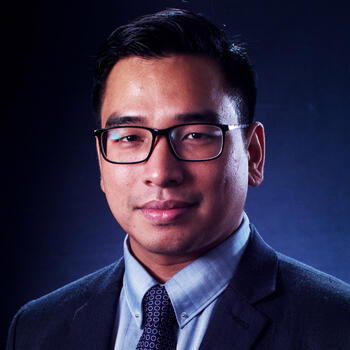
Arun Mohan Sukumar is a PhD candidate at The Fletcher School, Tufts University, and a pre-doctoral research fellow at Fletcher’s Centre for International Law and Governance. He previously headed the Cyber Initiative at the Observer Research Foundation, one of India’s biggest think-tanks. His first book, Midnight’s Machines: A Political History of Technology in India, won the Ramnath Goenka Award for Non-Fiction (2019) and was shortlisted for several other awards. Arun was previously a member of World Economic Forum’s Global Future Council on the Digital Economy and Society, and appointed by India’s National Security Advisor to a 'Study Group on Cyber Norms' that advised the Indian government on a national strategy towards the development and negotiation of global cybersecurity norms.
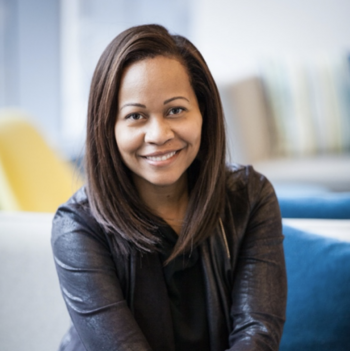
Julie Owono is the Executive Director of the Content Policy & Society Lab (CPSL) and a fellow of the Program on Democracy and the Internet (PDI) at Stanford University. She is also the Executive Director of digital rights organization Internet Sans Frontières, one of the inaugural members of the Facebook Oversight Board, and an affiliate at the Berkman Klein Center at Harvard University. She holds a Master’s degree in International Law from la Sorbonne University in Paris, and practiced as a lawyer at the Paris Bar. Julie is a member of the Global Partnership on AI (GPAI) created by France and Canada, as well as a member of the World Economic Forum’s Global Future Council on AI for Humanity, and of the WEF Council on the Connected World.