-

This past May, India, a country of over 1.2 billion people, elected Narendra Modi, the leader of the Bharatiya Janata Party (BJP) as the new prime minister, shifting leadership away from an incumbent party that held power for the past few decades. This new government, set in the context of shifting political and security dynamics, brings new challenges for dialogue in a region that sees unresolved border disputes and historical tensions, particularly between China and India.

What impact will India’s new leadership have in Northeast Asia? How do historical relationships continue to shape the present? What is the outlook for policy priorities between India and countries in Northeast Asia? 

Scholars from the Walter H. Shorenstein Asia-Pacific Research Center at Stanford University and the Brookings Institution’s India Center will offer perspectives in a panel discussion. This event is Shorenstein APARC’s inaugural event in New Delhi.

Participant Bios

Image
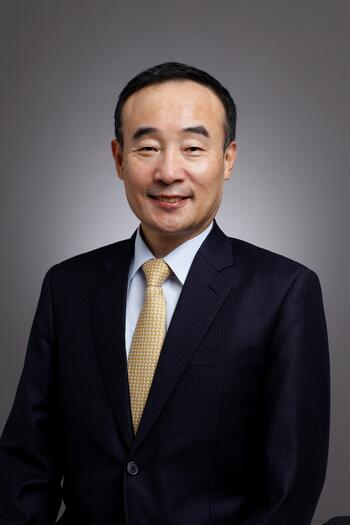
gi wook shin   2014
Gi-Wook Shin is the director of the Walter H. Shorenstein Asia-Pacific Research Center; the Tong Yang, Korea Foundation, and Korea Stanford Alumni Chair of Korean Studies; the founding director of the Korea Program; a senior fellow of the Freeman Spogli Institute for International Studies; and a professor of sociology, all at Stanford University. As a historical-comparative and political sociologist, his research has concentrated on social movements, nationalism, development, and international relations. Shin is the author/editor of sixteen books and numerous articles, the most recent including Criminality, Collaboration, and Reconciliation: Europe and Asia Confronts the Memory of World War II (2014) and New Challenges for Maturing Democracies in Korea and Taiwan (2014). Before coming to Stanford, Shin taught at the University of Iowa and the University of California, Los Angeles. After receiving his bachelor's degree from Yonsei University in Korea, he was awarded his master's degree and doctorate from the University of Washington.

Image
vikram s mehta
Vikram S. Mehta currently serves as the executive chairman of Brookings India in New Delhi and a senior fellow at the Brookings Institution. Mehta started his career with the Indian Administrative Service in 1978. He resigned in 1980 to join Phillips Petroleum in London as their senior economist. In 1984, he returned to India to join the government company Oil India Ltd. as an advisor for strategic planning. He joined Shell International in London in 1988. He was appointed managing director of Shell Markets and Shell Chemical Companies in Egypt in 1991, and chairman of the Shell Group of Companies in India in 1994.

Image
Portrait of Michael Armacost
Michael Armacost is the Shorenstein Distinguished Fellow at the Shorenstein Asia-Pacific Research Center at Stanford University. He graduated with a bachelor’s degree from Carleton College as well as a master’s and doctorate in public law and government from Columbia University. He began his professional life as an instructor of government at Pomona College in 1962. Armacost entered the State Department in 1969 as a White House Fellow, and remained in public service for twenty-four years. During that time he held sensitive international security positions in the State Department, Defense Department, and the National Security Council. These included Ambassador to the Philippines from 1982-84, Undersecretary of State for Political Affairs from 1984-89, and Ambassador to Japan from 1989-1993. Armacost subsequently served as president of the Brookings Institution from 1995-2002. 

Image
Karl Eikenberry
Karl Eikenberry is the William J. Perry Fellow in International Security at the Center for International Security and Cooperation and is a Distinguished Fellow with the Shorenstein Asia-Pacific Research Center at Stanford University. He served as the U.S. Ambassador to Afghanistan from May 2009 until July 2011 and had a 35-year career in the United States Army, retiring with the rank of lieutenant general. His military assignments included postings with mechanized, light, airborne, and ranger infantry units in the continental United States, Hawaii, Korea, Italy, and Afghanistan as the Commander of the American-led Coalition forces from 2005–07. He is a graduate of the U.S. Military Academy, has earned master’s degrees from Harvard University in East Asian studies and Stanford University in political science, was awarded an Interpreter’s Certificate in Mandarin Chinese from the British Foreign Commonwealth Office, and earned an advanced degree in Chinese History from Nanjing University. 

Image
wps sidhu
W.P.S. Sidhu is a senior fellow with Brookings India in New Delhi and Foreign Policy at Brookings. He is also a nonresident senior fellow at New York University’s Center on International Cooperation. His research focuses on India’s evolving grand strategy; the role of India and other emerging powers in the global order; addressing nuclear weapon challenges and security; and development challenges in fragile states. He is co-editor of the book Shaping the Emerging World: India and the Multilateral Order, published in August 2013 by Brookings Institution Press.

Agenda and Participant Bios
Download pdf

Taj Palace
Sardar Patel Marg
Diplomatic Enclave
New Delhi - 110 021, India


Vikram S. Mehta <i>Moderator</i>; Chairman, Brookings India Center
W.P.S Sidhu Senior Fellow Brookings India Center
Shorenstein APARC
Encina Hall E301
616 Jane Stanford Way
Stanford, CA 94305-6055
(650) 724-8480 (650) 723-6530
0
Senior Fellow at the Freeman Spogli Institute for International Studies
Professor of Sociology
William J. Perry Professor of Contemporary Korea
Professor, by Courtesy, of East Asian Languages & Cultures
Gi-Wook Shin_0.jpg PhD

Gi-Wook Shin is the William J. Perry Professor of Contemporary Korea in the Department of Sociology, senior fellow at the Freeman Spogli Institute for International Studies, and the founding director of the Korea Program at the Walter H. Shorenstein Asia-Pacific Research Center (APARC) since 2001, all at Stanford University. In May 2024, Shin also launched the Taiwan Program at APARC. He served as director of APARC for two decades (2005-2025). As a historical-comparative and political sociologist, his research has concentrated on social movements, nationalism, development, democracy, migration, and international relations.

In Summer 2023, Shin launched the Stanford Next Asia Policy Lab (SNAPL), which is a new research initiative committed to addressing emergent social, cultural, economic, and political challenges in Asia. Across four research themes– “Talent Flows and Development,” “Nationalism and Racism,” “U.S.-Asia Relations,” and “Democratic Crisis and Reform”–the lab brings scholars and students to produce interdisciplinary, problem-oriented, policy-relevant, and comparative studies and publications. Shin’s latest book, The Four Talent Giants, a comparative study of talent strategies of Japan, Australia, China, and India to be published by Stanford University Press in the summer of 2025, is an outcome of SNAPL.

Shin is also the author/editor of twenty-seven books and numerous articles. His books include The Four Talent Giants: National Strategies for Human Resource Development Across Japan, Australia, China, and India (2025)Korean Democracy in Crisis: The Threat of Illiberalism, Populism, and Polarization (2022); The North Korean Conundrum: Balancing Human Rights and Nuclear Security (2021); Superficial Korea (2017); Divergent Memories: Opinion Leaders and the Asia-Pacific War (2016); Global Talent: Skilled Labor as Social Capital in Korea (2015); Criminality, Collaboration, and Reconciliation: Europe and Asia Confronts the Memory of World War II (2014); New Challenges for Maturing Democracies in Korea and Taiwan (2014); History Textbooks and the Wars in Asia: Divided Memories (2011); South Korean Social Movements: From Democracy to Civil Society (2011); One Alliance, Two Lenses: U.S.-Korea Relations in a New Era (2010); Cross Currents: Regionalism and Nationalism in Northeast Asia (2007);  and Ethnic Nationalism in Korea: Genealogy, Politics, and Legacy (2006). Due to the wide popularity of his publications, many have been translated and distributed to Korean audiences. His articles have appeared in academic and policy journals, including American Journal of SociologyWorld DevelopmentComparative Studies in Society and HistoryPolitical Science QuarterlyJournal of Asian StudiesComparative EducationInternational SociologyNations and NationalismPacific AffairsAsian SurveyJournal of Democracy, and Foreign Affairs.

Shin is not only the recipient of numerous grants and fellowships, but also continues to actively raise funds for Korean/Asian studies at Stanford. He gives frequent lectures and seminars on topics ranging from Korean nationalism and politics to Korea's foreign relations, historical reconciliation in Northeast Asia, and talent strategies. He serves on councils and advisory boards in the United States and South Korea and promotes policy dialogue between the two allies. He regularly writes op-eds and gives interviews to the media in both Korean and English.

Before joining Stanford in 2001, Shin taught at the University of Iowa (1991-94) and the University of California, Los Angeles (1994-2001). After receiving his BA from Yonsei University in Korea, he was awarded his MA and PhD from the University of Washington in 1991.

Selected Multimedia

Director of the Korea Program and the Taiwan Program, Shorenstein Asia-Pacific Research Center
Director of Stanford Next Asia Policy Lab, APARC
Date Label
Panel Discussions
-

SPEAKER BIO

Image
chaw chaw
Ms. Ohnmar Ei Ei Chaw is the Country Program Coordinator of the Australian-Asia Program to Combat Trafficking in Persons (AAPTIP) for Myanmar (Burma). Prior to this, she was the United Nations Inter-Agency Project on Human Trafficking’s Myanmar National Coordinator. She is responsible for the overall coordination and management of AAPTIP Myanmar Country Program, which is currently the largest of six country programs in the Australian $50 million five-year AAPTIP program. She liaises closely with whole-of-government partners on issues relevant to criminal justice sector capacity building, coordination, and law and policy harmonization, and other initiatives focusing on anti-trafficking in persons at the national level and regional level especially, ASEAN Trafficking in Persons Working Group’s initiatives. She has been engaged in the fight against human trafficking for more than a decade. She started her career working on the Street and Working Children Project of World Vision Myanmar in 1997. After attaining her post-graduate study on Gender and Development in 2001, she rejoined World Vision Myanmar to lead the first Anti-Trafficking Program which involved designing and implementation of prevention activities, facilitation of the return of trafficking survivors coming back from Thailand, and advocating government for the development of anti-trafficking legislation and national policy.

Reuben Hills Conference Room 2nd Floor, East Wing, Encina Hall

Ohnmar Ei Ei Chaw Country Program Coordinator, Australia -Asia Program to Combat Trafficking in Persons (AAPTIP)
Seminars
-

SPEAKERS BIOS

Image
chaw chaw
Ms. Ohnmar Ei Ei Chaw is the Country Program Coordinator of the Australian-Asia Program to Combat Trafficking in Persons (AAPTIP) for Myanmar (Burma). Prior to this, she was the United Nations Inter-Agency Project on Human Trafficking’s Myanmar National Coordinator. She is responsible for the overall coordination and management of AAPTIP Myanmar Country Program, which is currently the largest of six country programs in the Australian $50 million five-year AAPTIP program. She liaises closely with whole-of-government partners on issues relevant to criminal justice sector capacity building, coordination, and law and policy harmonization, and other initiatives focusing on anti-trafficking in persons at the national level and regional level especially, ASEAN Trafficking in Persons Working Group’s initiatives.


Image
mark taylor
Mr. Mark Taylor is the Team Leader for the Australia–Asia Program to Combat Trafficking in Persons (AAPTIP). The AAPTIP project was started in June 2013, and is a continuation of the Australian AID-funded Asia Regional Trafficking in Persons (ARTIP) Project. AAPTIP operates at both regional and national level and provides support to the Association of South East Asian Nations (ASEAN) and individual partner countries: Cambodia, Indonesia, Lao PDR, Myanmar, the Philippines, Thailand and Vietnam. Prior to this, Mr. Taylor spent 10 years working for the US State Department in Washington DC as a Senior Coordinator for Reports and Political Affairs. He spent two years based at the US Embassy in Nigeria where he opened the US State Department’s Narcotics and Law Enforcement Affairs Program in Lagos and Abuja, after years of aid embargo on Abacha ruled Nigeria. Mr. Taylor was in charge of developing and implementing over $12 million in projects over a range of eight issues including drug control, people smuggling, human trafficking, financial fraud, corruption, police reform and money laundering. Mr. Taylor also spent time in Yangon, Myanmar where he was responsible for reporting on the dynamic narco-insurgency landscape in the Shan State, and following the July 1995 release from house arrest of Daw Aung San Suu Kyi -- the political and human rights situation in the country, including coverage of NLD speeches, policy statements, and the party's leadership. He has a degree in Political Science and Government from Gordon College.


This seminar will also feature special discussant, Donald Emmerson, director of the Southeast Asia Program at Shorenstein APARC

The panel will be moderated by Helen Stacy, director of the Program on Human Rights at CDDRL.


[[{"fid":"216677","view_mode":"crop_870xauto","fields":{"format":"crop_870xauto","field_file_image_description[und][0][value]":"","field_file_image_alt_text[und][0][value]":"","field_file_image_title_text[und][0][value]":"","field_credit[und][0][value]":"","field_caption[und][0][value]":"","field_related_image_aspect[und][0][value]":"","thumbnails":"crop_870xauto","pp_lightbox":true,"pp_description":true},"type":"media","attributes":{"height":960,"width":870,"class":"media-element file-crop-870xauto"}}]]


CISAC Central Conference Room
2nd Floor, Encina Hall
616 Serra St.
Stanford, CA

Mark Taylor Australia-Asia Program to Combat Trafficking in Persons
Ohnmar Ei Ei Chaw Australia-Asia Program to Combat Trafficking in Persons
0
Senior Fellow Emeritus at the Freeman Spogli Institute for International Studies
Affiliated Faculty, CDDRL
Affiliated Scholar, Abbasi Program in Islamic Studies
aparc_dke.jpg PhD

At Stanford, in addition to his work for the Southeast Asia Program and his affiliations with CDDRL and the Abbasi Program in Islamic Studies, Donald Emmerson has taught courses on Southeast Asia in East Asian Studies, International Policy Studies, and Political Science. He is active as an analyst of current policy issues involving Asia. In 2010 the National Bureau of Asian Research and the Woodrow Wilson International Center for Scholars awarded him a two-year Research Associateship given to “top scholars from across the United States” who “have successfully bridged the gap between the academy and policy.”

Emmerson’s research interests include Southeast Asia-China-US relations, the South China Sea, and the future of ASEAN. His publications, authored or edited, span more than a dozen books and monographs and some 200 articles, chapters, and shorter pieces.  Recent writings include The Deer and the Dragon: Southeast Asia and China in the 21st Century (ed., 2020); “‘No Sole Control’ in the South China Sea,” in Asia Policy  (2019); ASEAN @ 50, Southeast Asia @ Risk: What Should Be Done? (ed., 2018); “Singapore and Goliath?,” in Journal of Democracy (2018); “Mapping ASEAN’s Futures,” in Contemporary Southeast Asia (2017); and “ASEAN Between China and America: Is It Time to Try Horsing the Cow?,” in Trans-Regional and –National Studies of Southeast Asia (2017).

Earlier work includes “Sunnylands or Rancho Mirage? ASEAN and the South China Sea,” in YaleGlobal (2016); “The Spectrum of Comparisons: A Discussion,” in Pacific Affairs (2014); “Facts, Minds, and Formats: Scholarship and Political Change in Indonesia” in Indonesian Studies: The State of the Field (2013); “Is Indonesia Rising? It Depends” in Indonesia Rising (2012); “Southeast Asia: Minding the Gap between Democracy and Governance,” in Journal of Democracy (April 2012); “The Problem and Promise of Focality in World Affairs,” in Strategic Review (August 2011); An American Place at an Asian Table? Regionalism and Its Reasons (2011); Asian Regionalism and US Policy: The Case for Creative Adaptation (2010); “The Useful Diversity of ‘Islamism’” and “Islamism: Pros, Cons, and Contexts” in Islamism: Conflicting Perspectives on Political Islam (2009); “Crisis and Consensus: America and ASEAN in a New Global Context” in Refreshing U.S.-Thai Relations (2009); and Hard Choices: Security, Democracy, and Regionalism in Southeast Asia (edited, 2008).

Prior to moving to Stanford in 1999, Emmerson was a professor of political science at the University of Wisconsin-Madison, where he won a campus-wide teaching award. That same year he helped monitor voting in Indonesia and East Timor for the National Democratic Institute and the Carter Center. In the course of his career, he has taken part in numerous policy-related working groups focused on topics related to Southeast Asia; has testified before House and Senate committees on Asian affairs; and been a regular at gatherings such as the Asia Pacific Roundtable (Kuala Lumpur), the Bali Democracy Forum (Nusa Dua), and the Shangri-La Dialogue (Singapore). Places where he has held various visiting fellowships, including the Institute for Advanced Study and the Woodrow Wilson International Center for Scholars. 


Emmerson has a Ph.D. in political science from Yale and a BA in international affairs from Princeton. He is fluent in Indonesian, was fluent in French, and has lectured and written in both languages. He has lesser competence in Dutch, Javanese, and Russian. A former slam poet in English, he enjoys the spoken word and reads occasionally under a nom de plume with the Not Yet Dead Poets Society in Redwood City, CA. He and his wife Carolyn met in high school in Lebanon. They have two children. He was born in Tokyo, the son of U.S. Foreign Service Officer John K. Emmerson, who wrote the Japanese Thread among other books.

Selected Multimedia

Date Label
Special Discussant
Moderator
Seminars

Professor Sharon Zukin's talk will describe how, in cities across the world, the everyday spaces of local shopping streets are undergoing dramatic transformations.  Globalization brings new products and people, while different types of gentrification reshape the street's aesthetics and atmosphere.  How do we "read" these changes?  Do they destroy the sense of the "local" to make every street, in every city, more alike?

Professor Zukin is the author of a number of books on cities, culture and consumer culture, and urban, cultural and economic change.  She received the Lynd Award for Career Achievement in urban sociology from the American Sociological Association, and the C. Wright Mills Book Award for Landscapes of Power.  You can learn more about her work here: http://www.brooklyn.cuny.edu/web/academics/faculty/faculty_profile.jsp?faculty=420

Presented by the Program on Urban Studies and co-sponsored by the Anthropology Department, Center for East Asian Studies, Center on Poverty and Inequality, The Europe Center, Walter H. Shorenstein Asia-Pacific Research Center, Sociology Department, Stanford in Government and Urban Beyond Measure.

Building 200
Room 002

Sharon Zukin Professor of Sociology Speaker Brooklyn College, CUNY
Lectures
-

In this session of the Shorenstein APARC Corporate Affiliate Visiting Fellows Research Presentations, the following will be presented:


Yun Bae Lim, Samsung Life Insurance, “Demographic Changes in Korea:  How to Cut Through the High Seas”

Particularly in industrialized countries, people are living longer, while birth rates are declining.  Today, the average Korean lives longer than the average citizen in developed nations (as represented by the members of the OECD).  This is a significant milestone for a country that back in the 1960’s had a life expectancy of 52 years, which was amongst the lowest in the world. 

In his research presentation, Lim will focus on these demographic changes and the effects such as the decrease in the producing population, the increase in the total dependency rate and the shrinking potential growth rate.  Lim will offer some policy-related solutions to address this critical issue.


Jong Soo Paek, Samsung Electronics, “Open Innovation in the Electronics Industry”

Many companies in the electronics industry are struggling to survive because of lack of demand, low profit, etc.  Companies are also failing to make new innovative business while existing businesses are showing their limitation in terms of growth potential.  As a result, customers are seeing the electronics industry is not innovative. 

To overcome this hurdle, the open innovation model has become more popular replacing the closed innovation model in the past.  The open innovation model is a kind of process or strategy, in which companies can increase new ideas and technologies flowing into their innovation funnel by searching external sources and integrating them with internal ideas and resources.

Even though the open innovation model is really powerful, in reality, for large companies with Asian legacy and culture, it is not an easy task to manage.  There are many issues that undermine the success rate and effectiveness of open innovation such as closed-minds, the NIH syndrome, internal resistance, lack of capabilities necessary and so on.  Through his research presentation, Paek will discuss some solutions that are suitable for large, Asian companies like Samsung Electronics.


Philippines conference room

Encina Hall, Third Floor, Central

Shorenstein APARC
Stanford University
Encina Hall, Room E301
Stanford, CA 94305-6055

(650) 725-8659 (650) 723-6530
0
Corporate Affiliate Visiting Fellow
jong_soo_paek.jpg MBA

Jong Soo Paek is a corporate affiliate visiting fellow at the Walter H. Shorenstein Asia-Pacific Research Center (Shorenstein APARC) for 2014.  Paek has been working at Samsung Motors, Samsung Corporations, and Samsung Electronics since 1997 in various teams such as Marketing Strategy and Strategy Planning.  Most recently, he was Senior Manager in Corporate Strategy Offices and was responsible for public relations and communications.  Prior to joining the Corporate Strategy Office, he was the manager responsible for strategy planning.  Paek majored in Business Administration and received his bachelor's and master's degree from Seoul National University.

Seminars
Authors
News Type
News
Date
Paragraphs

The North Korean regime has adjusted to international sanctions by shifting that economic pain away from cities to the countryside, new Stanford research using satellite night lights data shows.

U.S. policy toward North Korea has been based on the expectation that economic sanctions could deter North Korea from developing nuclear weapons or change the behavior of the regime, according to Yong Suk Lee, a Stanford economist at the Freeman Spogli Institute for International Studies.

Since 1950, both the United States and the global community have adopted a series of economic sanctions against North Korea. The latest came in 2013 when the United Nations approved restrictions on banking, travel and trade in response to North Korea's underground nuclear test and threat to launch nuclear strikes against the United States and South Korea.

In a working paper, Lee examined how North Korea's Communist rulers have adapted to the increasingly tougher sanctions through the years.

"North Korea is one of many autocratic regimes that refuse to yield to sanctions, and its isolation and hereditary dictatorship make it a particularly good example to study the impact of economic sanctions in autocratic regimes," said Lee, the SK Center Fellow and a faculty member of the Korea Program at Stanford's Walter H. Shorenstein Asia-Pacific Research Center.

North Korea is one of the poorest countries in the world, Lee noted. Its leaders follow an economic model based on a centrally planned economy and self-imposed isolation from the rest of the world.

Satellite data

Lee's research was based on nighttime views of lights from data collected by the U.S. Defense Meteorological Satellite Program. The researcher created "average luminosity" measures of lights across North Korea based on a 1-mile-by-1-mile grid for the years 1992 through 2010. Light usage was examined for brightness on one-minute intervals.

To predict the impact of sanctions on economic activity in North Korea, Lee used a formula that transformed the luminosity measures into GDP measures. For example, a 10 percent change in the satellite lights is associated with about a 3 percent change in GDP.

According to Lee, satellite data is of greatest utility in assessing the economies of cities and regions in the developing world. In a country like North Korea, a large part of economic activity happens during the evening and night and involves light. For example, lights at night are generated by peoples' consumption of goods and services as well as transportation. And some production activities happen during the evening hours.

"Economists have found that how bright night lights are can predict national and sub-national GDP quite well, especially in countries where GDP data is not reliable," he said.

Lee found that economic sanctions decreased luminosity in the hinterlands, but increased luminosity in urban areas, especially toward the centers. As for whether additional sanctions affected luminosity, he found they increased the urban-rural luminosity gap by about 1 percent. When he examined the more central urban areas, the gap increased by about 2.6 percent.

"The results suggest that the dictatorship countered the effects of sanctions by reallocating resources to the urban areas," Lee said. One could surmise that the economic sanctions do not affect the country's leadership much, he said.

The hinterlands responded to declining economic fortunes by relying more on trade with China near those border areas, Lee added. In fact, the sanctions generated more North Korean migration to China and reliance on Chinese merchants and goods. North Korea's border with China is relatively porous as opposed to its heavily militarized border with South Korea.

'Increasing inequality'

The upshot, Lee said, is that sanctions that fail to change the behavior of an autocratic regime may eventually increase urban-rural inequality.

"Sanctions will likely be inefficient as long as North Korea can maintain powerful centralized control and oppress any discontent that arises due to increasing inequality," he said.

Lee added that sanctions will most likely not deter North Korea's nuclear weapons activities. They have not done so yet, and at this point, North Korea's leaders view sanctions as inconveniences, but not regime-threatening. Plus, even the harshest sanctions would be unlikely to stem the flow of all goods, energy and money into North Korea. Not all countries would go along with draconian trade restrictions that hurt the poorest people the hardest, he said.

"Even if sanctions were imposed to full capacity, the marginalized population would suffer the most," said Lee, adding that he was actually surprised about his project's findings.

"One can always hypothesize a story but to actually find such effect in the data was quite exciting. Frankly, I pursued this project expecting that I wouldn't find any impact of sanctions on lights," he said.

Clifton Parker is a writer for the Stanford News Service.

Hero Image
12753489823 51e06b2593 o
The Korean Peninsula is pictured at night from the International Space Station in Jan. 2014. The dark area is North Korea in between well-lit China and South Korea. North Korea's capital city of Pyongyang appears like a small island, showing some light emission, otherwise surrounded by darkness.
Flickr/NASA's Marshall Space Flight Center
All News button
1
Authors
Larry Diamond
News Type
News
Date
Paragraphs

Is democracy heading toward a depression? CDDRL Director Larry Diamond answers in a recent Foreign Policy piece, assessing the challenges of overcoming a global, decade-long democratic recession. With much of the world losing faith in the model of liberal democracy, Diamond believes the key to setting democracy back on track involves heavy reform in America, serious crackdowns on corruption, and a reassessment of how the West approaches its support for democratic development abroad. 

Hero Image
protect your republic protest   1 2007 04 14 2
'Protect your Republic Protest' in Anıtkabir, Ankara, Turkey. 14 April 2007.
Selahattin Sönmez, Wikimedia Commons
All News button
1
-

ABSTRACT

Punjab, the most populous province in Pakistan, is leading the use of technology to address every day governance problems in multiple sectors, especially education. Relying on the ubiquitous ICT infrastructure in the province, citizen participation in public services has been increased drastically. This talk will highlight some of the leading technology innovations led by Punjab government - a view on governance in Pakistan not covered by the media. 

SPEAKER BIO

ali inam director tpi picture Ali Inam
Inam is the director of the Technology for the People Initiative (TPI), which is a university-wide center at LUMS enabling multi-disciplinary faculty-led teams, students and individuals to explore technology interventions in partnerhsip with the public sector.  In the past, Inam has worked closely with the Punjab and Sindh government as an ICT consultant to promote governance reform using technology, such as using feedback to reduce corruption. He has led multiple initiatives that focus on leveraging technology to increase citizen engagement and government transparency. Inam is from Lahore and holds a bachelor's degree of science from LUMS.

This event is sponsored by the Center on Democracy, Development, and the Rule of Law and the Center for South Asia.


[[{"fid":"216272","view_mode":"crop_870xauto","fields":{"format":"crop_870xauto","field_file_image_description[und][0][value]":"ICT's in Pakistan","field_file_image_alt_text[und][0][value]":"","field_file_image_title_text[und][0][value]":"","field_credit[und][0][value]":"Christian Ollano","field_caption[und][0][value]":"","field_related_image_aspect[und][0][value]":"","thumbnails":"crop_870xauto","pp_lightbox":true,"pp_description":true},"type":"media","attributes":{"height":1344,"width":870,"class":"media-element file-crop-870xauto"}}]]

Director of the Technology for the People Initiative (TPI)

Goldman Conference Room 

Fourth Floor,

Encina Hall East

Ali Inam Director of the Technology for the People Initiative (TPI) Lahore University of Management Sciences (LUMS), Pakistan
Subscribe to Asia-Pacific