Paragraphs

The article introduces the All Minorities at Risk (AMAR) data, a sample of socially recognized and salient ethnic groups. Fully coded for the forty core Minorities at Risk variables, this AMAR sample provides researchers with data for empirical analysis free from the selection issues known in the study of ethnic politics to date. We describe the distinct selection issues motivating the coding of the data with an emphasis on underexplored selection issues arising with truncation of ethnic group data, especially when moving between levels of data. We then describe our sampling technique and the resulting coded data. Next, we suggest some directions for the future study of ethnicity and conflict using our bias-corrected data. Our preliminary correlations suggest selection bias may have distorted our understanding about both group and country correlates of ethnic violence.

All Publications button
1
Publication Type
Journal Articles
Publication Date
Journal Publisher
Journal of Conflict Resolution
Authors
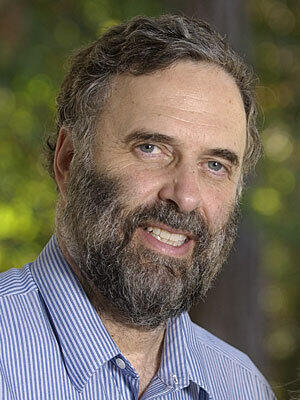
David Laitin
-

Image


Authors
News Type
News
Date
Paragraphs

A new biosecurity initiative at the Freeman Spogli Institute for International Studies (FSI) aims to identify and mitigate biological risks, both natural and man-made, and safeguard the future of the life sciences and associated technologies.

The initiative will be led by David A. Relman, a senior fellow at the Center for International Security and Cooperation and FSI. Relman, the Thomas C. and Joan M. Merigan Professor in the Departments of Medicine, and Microbiology & Immunology, has served as the science co-director at CISAC for the past four years. He will leave this position on Aug. 31 to lead the new initiative.

Michael McFaul, director and senior fellow at FSI, said, “With exceptional leadership skills, valuable experience and abundant energy, David Relman is ideally positioned to work with scholars from across campus who offer critical expertise in biosecurity. This is an exciting, challenging and important new initiative for FSI that is designed to protect public health from the many new risks now accelerating.”

Relman said the biosecurity initiative will seek to advance the beneficial applications of the life sciences while reducing the risks of misuse by promoting research, education and policy outreach in biological security. His CISAC leadership gives him the know-how to lead such a wide-ranging effort across diverse disciplines and communities.

Relman said, “The opportunity to serve as co-director at CISAC has been a wonderful experience, one that has afforded me the chance to get to know outstanding faculty and staff, their scholarship, and critical policy-relevant work, all of which I had not fully appreciated sitting across campus. This experience has made clear the unusual qualities of Stanford University, and the great people that work here. I am now greatly looking forward to this new opportunity at FSI.”

Biosecurity collaborations

During Relman’s term as CISAC’s science co-director from 2013-2017, he led an expansion of the transdisciplinary work in science and security to include biology, biological and other areas of engineering, medicine, and earth and environmental sciences.

The foundations for work in biological science, technology and security were established at CISAC, especially in the hiring of Megan Palmer, a senior research scholar at CISAC and FSI. Both Relman and Palmer worked together on engagements and discussions with a growing network of more than 20 faculty involved in biosecurity across Stanford.

Palmer said, “Stanford has an opportunity and imperative to advance security strategies for biological science and technology in a global age. Our faculty bring together expertise in areas including technology, policy, and ethics, and are deeply engaged in shaping future of biotechnology policy and practices.”

New insights, new risks

In his new post, Relman said he intends to build on this foundation by creating an initiative that consolidates and focuses activity in biosecurity, develops research and educational programs, attracts new resources, and looks outward at opportunities for policy impact and changing practices across the globe.

Relman said that “new capabilities and insights are reshaping important aspects of the life sciences and associated technologies, and are accompanied by a host of new risks.” If misused, whether by malice or accident, “they pose the potential for large-scale harm,” he noted.

Relman added that the initiative will bring together interest and expertise across the centers and programs of FSI in partnership with Schools and Departments across the university.

At FSI, CISAC will co-sponsor the biological security initiative, which will leverage Stanford expertise in the life sciences, engineering, law and policy.  Key partners will include Tim Stearns (biology), Drew Endy (bioengineering), Mildred Cho (bioethics), and Hank Greely (law), according to Relman. The biosecurity group will also partner with another new program at FSI in global health and conflict, which is led by Paul Wise, Frank Fukuyama, Steve Stedman, Steve Krasner, and others, he added.

Stanford’s School of Medicine and Department of Medicine will also co-sponsor the initiative, thanks to leadership from Lloyd Minor, Michele Barry and Robert Harrington. Relman looks forward to establishing similar relationships with other schools and departments, he said.

 “These partnerships are critical. I’m excited to work with a growing community both within and beyond Stanford towards the goal of a peaceful and prosperous world in the century of biology,” he said.

MEDIA CONTACTS:

David Relman, Center for International Security and Cooperation: relman@stanford.edu

Megan Palmer, Center for International Security and Cooperation:  mjpalmer@stanford.edu

Clifton B. Parker, Center for International Security and Cooperation: (650) 725-6488, cbparker@stanford.edu


Hero Image
13977381286 015f52bc0e z
The Stanford Biosecurity Initiative will be led by David A. Relman, senior fellow at CISAC and FSI.
Courtesy of CISAC
All News button
1
News Type
News
Date
Paragraphs

Siegfried S. Hecker wrote the following essay for Politico Magazine on the subject of the Trump administration's approach to North Korea:

Now that the nuclear crisis on the Korean Peninsula has been at least temporarily defused thanks to Kim Jong Un’s announcement that he would wait and see before launching missiles toward Guam—despite ominous North Korean propaganda as the U.S. and South Korea launch their latest joint military exercises—it’s time to step back and ask ourselves the big questions about just how useful our approach to North Korea’s nuclear program has been so far. 

My answer: Not very useful at all. During the past 15 years, North Korea first built the bomb and then expanded it to a nuclear arsenal that threatens the region, while Washington has continued to deny reality with its call for complete denuclearization. Which is why it’s time to take a long and serious look at the next option: talking with North Korea.

Although a Wall Street Journal op-ed by Secretaries Jim Mattis and Rex Tillerson earlier this month served to lower tensions by stating that the United States was still pursuing peaceful denuclearization, it does not introduce any new elements that could bring the two sides closer to ending the nuclear crisis. The op-ed, which reassured Kim that “the U.S. has no interest in regime change or accelerated reunification of Korea,” is a welcome relief from Mr. Trump’s “fire and fury” warning to Kim. But this approach is likely to fare no better in compelling Pyongyang give up its nuclear weapons than the Obama administration’s “strategic patience.”

So—how can we make real progress?

Washington should drop its preoccupation with North Korea’s intercontinental ballistic missile (ICBM) threat. It is misplaced and dangerous. Instead, Trump administration officials should talk with Pyongyang, face to face, without any preconditions, to avert what I consider the greatest North Korean nuclear threat—that of stumbling into an inadvertent nuclear war on the Korean Peninsula, which may lead to hundreds of thousands deaths including thousands of American citizens.

It’s important to understand why Kim is so obsessed with these weapons: to deter the United States from attacking North Korea and what Pyongyang calls “hostile policies.” Striking the U.S. with a nuclear-tipped missile would be suicide, and there’s no evidence that Kim is suicidal.

What’s more, there’s a lot to indicate that North Korea isn’t close enough to developing ICBM-capable missiles to strike the United States even if it wanted to. The panic over North Korea’s missiles was elevated recently when leaked classified U.S. intelligence estimates were reported to indicate that Pyongyang has already achieved such capabilities, in addition to possessing as many as 60 nuclear weapons in its arsenal. But I don’t concur with those estimates.

Based on my 50 years of experience with nuclear technologies and nuclear weapons, combined with what I saw and learned during my seven visits to North Korea beginning in 2004, I don’t believe Pyongyang has yet mastered the key elements of delivering a nuclear-tipped ICBM to the continental United States. Although North Korea demonstrated significant progress in the missile field with two launches in July, experts have raised serious questions about whether it has demonstrated all the missile and re-entry vehicle technologies that will protect the nuclear warheads during the fiery plunge into the Earth’s atmosphere.

Moreover, the nuclear warhead that must be mounted on the missile is the least developed and least tested part of North Korea’s nuclear ICBM ambitions. It must survive the extreme temperatures and mechanical stresses involved during launch, flight and re-entry into the atmosphere. It must detonate above the target by design, not accidentally explode on launch or burn up during reentry. More missile tests are needed that mirror real ICBM conditions to permit measurements that more accurately define the extreme conditions that the delicate materials such as plutonium, highly enriched uranium and chemical high explosives experience inside the warheads. It is much simpler to detonate a nuclear device in an underground tunnel under controlled conditions than to simulate all of the conditions a warhead experiences on the way to its target. 

What makes matters even more challenging for Pyongyang is that it has very little plutonium and highly enriched uranium. I have estimated that North Korea has 20 to 40 kilograms plutonium and 200 to 450 kilograms highly enriched uranium. My analysis is based on what I saw during my visits to the Yongbyon nuclear complex and on extensive discussions with their nuclear experts. These stocks have to serve multiple uses: They must be shared between experiments required to understand the world’s most complex elements, nuclear tests to certify the design of the weapons and stock for the arsenal. My best estimate, albeit with considerable uncertainty, is that the North’s combined inventories of plutonium and highly enriched uranium suffice for perhaps 20 to 25 nuclear weapons, not the 60 reported in the leaked intelligence estimate.

North Korea will need a few more nuclear tests because its experience with either material, plutonium or highly enriched uranium, for warheads is too limited for ICBM use. Nuclear test site preparations appear complete, but Pyongyang is most likely weighing the technical benefits against the political risks of conducting such tests. Whereas I believe North Korea has insufficient test data for ICBM warheads, we must assume it has already learned enough to mount a warhead on its shorter-range missiles that can reach all of South Korea and Japan because these missiles are able to accommodate bigger nuclear warheads and these would experience less stringent operational conditions.

In other words, the North still has a ways to go to pose a serious ICBM threat, but it is clearly working in that direction. The danger is that in his drive to achieve a greater balance with the United States by perfecting a missile capable of delivering a nuclear weapon to the continental U.S., Kim could miscalculate where Trump’s red line actually is, triggering a retaliatory action by Trump that could escalate to a nuclear war on the Korean Peninsula. Our problem is that we know nothing about Kim and the military leaders who control his nuclear arsenal and drive the missile and nuclear development programs. It’s time to talk and find out.

And we have to talk now, without demanding that North Korea agree to any preconditions, such as those suggested by Mattis and Tillerson – namely, an immediate cessation of its provocative threats, nuclear tests, missile launches and other weapons tests. Pyongyang is not about to make unilateral concessions before talks. One should read Kim’s announcement that he will wait with the missile launches as a positive signal, although he added that the U.S. must stop its “arrogant provocations.”

The diplomatic opening created last week on both sides makes such talks possible. President Trump should send a small team of senior military and diplomatic leaders to talk to Pyongyang. These talks would not be negotiations—not yet. Importantly, these talks would not be a reward or a concession to Pyongyang and should not be construed as signaling acceptance of a nuclear-armed North Korea. Talking would, however, be a necessary step toward re-establishing critical links of communication to avoid a nuclear catastrophe. The dialogue should stress the need for mechanisms to avoid misunderstanding, miscalculation or misinterpretation of actions that could quickly bring us over the cliff into a nuclear war.

The talks would provide an opportunity to convey Secretary Tillerson’s message that Washington does not seek regime change face to face in Pyongyang. In simplest terms, the team could underline the message that Washington is deterred from attacking the North, but not from defending the United States and its allies. It should reiterate that any attack on South Korea or Japan, be it with conventional, chemical or nuclear weapons, would bring a devastating retaliatory response upon North Korea.

The team can also impress upon Pyongyang that ensuring the safety and security of nuclear weapons is an awesome responsibility. These two issues are becoming more challenging as North Korea strives to make its nuclear arsenal more combat-ready. A nuclear-weapon accident in the North would be disastrous, as would a struggle to control the North’s nuclear weapons in the case of attempted regime change from within or without. All indications are that such talks would be strongly supported by the North’s two most important neighbors, South Korea and China, particularly if Washington consults them before.

For too long, America’s policy toward North Korea has been based on impractical goals. Complete, verifiable and irreversible denuclearization was a hallmark of the George W. Bush administration’s approach to North Korea and was also pursued by the Obama administration. Whereas complete and verifiable denuclearization might be realistic long-term goals, irreversible is impossible short of the total loss of human memory. The U.S. Manhattan Project produced the bomb in 27 months more than 70 years ago, and that was without knowing with certainty at the outset that it was even possible.

It was under Bush that North Korea first built the bomb and under Obama that it expanded to a threatening nuclear arsenal. Both presidents failed to address the root cause of Pyongyang’s determined effort to build a nuclear weapons arsenal—assuring the Kim regime’s security. Now, Trump faces a North Korea with the ability to inflict unacceptable damage to U.S. allies and U.S. assets in the region, while it also continues its drive to threaten the continental U.S. Perhaps, much as Dwight Eisenhower talked to Nikita Khrushchev, Richard Nixon to China’s Mao Zedong, and Ronald Reagan to Mikhail Gorbachev, Trump can take the next step with North Korea, and talk now to avert a nuclear catastrophe.

Hero Image
gettyimages 660132300 2
Siegfried Hecker writes in a new Politico Magazine essay that if Nixon went to China, then the Trump administration can talk to North Korea.
Getty Images/donfiore
All News button
1
Paragraphs

In the next decade and a half, China and India will become two of the world’s indispensable powers—whether they rise peacefully or not. During that time, Asia will surpass the combined strength of North America and Europe in economic might, population size, and military spending.

All Publications button
1
Publication Type
Books
Publication Date
Authors
Authors
News Type
News
Date
Paragraphs

Rod Ewing will serve as co-director of the sciences for Stanford’s Center for International Security and Cooperation.

Ewing, a mineralogist and materials scientist, is the Frank Stanton Professor in Nuclear Security at CISAC and senior fellow at the Freeman Spogli Institute for International Studies. He begins his new position on Sept. 1, following David Relman, the previous co-director for the sciences. Amy Zegart is the CISAC co-director for the social sciences.

Ewing, whose research is focused on the properties of nuclear materials, leads the Reset Nuclear Waste Policy program at CISAC. He describes the center as a unique organization that “explicitly acknowledges” the role of science and the social sciences in formulating policy. 

“CISAC is a rare opportunity for political and social scientists, historians and scientists and engineers to work together on solving pressing problems. The fact that we have two co-directors reflects a serious intent to integrate knowledge from the widest range of perspectives in order to find policy solutions to important problems,” he said.

Scholarship, research

Ewing is the author or co-author of more than 750 research publications and the editor or co-editor of 18 monographs, proceedings volumes or special issues of journals. He has published widely in mineralogy, geochemistry, materials science, nuclear materials, physics and chemistry in more than 100 different journals. Ewing was granted a patent for the development of a highly durable material for the immobilization of excess weapons plutonium. He is also a founding editor of the magazine, Elements. In 2015, he won the Roebling Medal, the highest award of the Mineralogical Society of America for scientific eminence.

“My work on nuclear waste started out with a focus on technical issues, but over several decades, I realized that technical solutions were not enough.  I now focus on trying to understand why institutions – universities, national laboratories and federal agencies – fail to arrive at the technical solutions. I have been surprised to learn how little science has been applied to the nuclear waste problem – and how social issues have dominated the outcome,” Ewing said.

Expertise, policy

In particular, Ewing seeks to understand why so little information from experts rise through an organization and change accepted ‘truths.’

“I first saw this when I was a soldier in Vietnam and continue to see the same problem in many other areas, that a disconnect exists between the on-the-ground reality and policy,” said Ewing who served in the U.S. Army as an interpreter of Vietnamese attached to the 25th Infantry Division from 1969 to 1970.

“At the very highest levels, policies seem to be based on a hunch or a bias rather than an analysis of the problem. I have always wondered why this is so common – as it often leads a country or organization down a wrong and often dangerous path,” he added.

Born in Abilene, Texas, Ewing attended Texas Christian University (B.S., 1968, summa cum laude) and graduate school at Stanford University (M.S., 1972; Ph.D., 1974). He began his academic career as an assistant professor at the University of New Mexico (1974) rising to the rank of Regents’ Professor of Earth & Planetary Sciences in 1993.

From 1997 to 2013, Ewing was a professor at the University of Michigan, and in 2014, he joined Stanford.

MEDIA CONTACTS:

Rod Ewing, Center for International Security and Cooperation: (650) 725-8641, rewing1@stanford.edu

Clifton B. Parker, Center for International Security and Cooperation: (650) 725-6488, cbparker@stanford.edu


Hero Image
22150905629 d93af89e3e z
Rod Ewing will serve as co-director of the sciences for Stanford’s Center for International Security and Cooperation.
Courtesy of CISAC
All News button
1
Authors
News Type
News
Date
Paragraphs

When it comes to cybersecurity, Stanford is the hot spot, especially if you work in national security.

On Aug. 18, officials from the U.S. military, National Security Agency, U.S. Cyber Command, Joint Chiefs of Staff, and from countries known as the “Five Eyes,” attended cybersecurity discussions on campus. Most attendees were chief information officers. John Zangardi, the principal deputy chief information officer for the U.S. Department of Defense, led the group.

The "Five Eyes" refers to an alliance comprising the U.S., Australia, Canada, New Zealand, and the United Kingdom. These countries abide by an agreement for joint cooperation in signals intelligence, military intelligence, and human intelligence.

The event was held at the Hoover Institution, a co-sponsor along with Stanford’s Center for International Security and Cooperation, a center in the Freeman Spogli Institute for International Relations. Participants took part in two roundtables – the first one, “Geopolitical Perspectives,” provided a strategic overview of international security with Stanford’s William J. Perry (CISAC and the Hoover Institution), Michael McFaul (FSI and the Hoover Institution), Toomas Henrik Ilves (Hoover Institution), and Francis Fukuyama (the Hoover Institution and FSI's Center on Democracy, Development, and the Rule of Law).

The second discussion, the “Cyber Information Warfare Panel,” focused on cyber challenges with Amy Zegart (CISAC and the Hoover Institution), Herb Lin (CISAC and the Hoover Institution), John Villasenor (CISAC and the Hoover Institution), and Jay Healey (CISAC).


Hero Image
img 9044
William J. Perry talks during the “Geopolitical Perspectives” roundtable on Aug. 18. The discussion offered a strategic overview of international security regarding cybersecurity.
Courtesy of the Hoover Institution
All News button
1
-

In the face of population aging, policymakers throughout the Asia-Pacific are seeking ways to improve health service provision for older individuals. The InterRAI (International Resident Assessment Instrument) is a comprehensive assessment tool for older people, and is used as a de facto assessment tool for the care needs of older people in many countries, including New Zealand (see http://www.interrai.org). Part of the full InterRAI assessment is a home care assessment, which provides the data we use in this study, including three main outcome measures: (1) CHESS (Changes in Health, End-stage Disease, Signs, and Symptoms); (2) MAPLe (Method of Assigning Priority Levels); and (3) the ADL (Activities of Daily Living) hierarchy. Specifically, we use data on over 8000 assessments in the Waikato region of New Zealand over the period 2013-2016.

In this seminar, Professor Cameron discusses the relationship between the three outcome measures and a range of clinical and operational outcomes within 90 days of the assessment, including hospital admissions; dementia admissions; number of bed days; and mortality. The CHESS outcome measure offers the greatest predictive validity of the three measures, with a one unit increase in CHESS score (interpreted as a higher risk of serious decline in health status) associated with 26 percent higher odds of hospital admission within 90 days of assessment, 18 percent more bed days, and 30 percent higher odds of mortality. Finally, Cameron discusses how these results are being used by the Waikato District Health Board to improve the services provided to older people in the region.

Image
cameron michael crop
Dr. Michael Cameron is an associate professor in economics at the University of Waikato (New Zealand). He is also a research fellow in the National Institute of Demographic and Economic Analysis (NIDEA). He was a PGDA Visiting Fellow at the Harvard T.H. Chan School of Public Health at Harvard University from 2015-16.

Dr. Cameron gained his PhD from University of Waikato in 2007, with a thesis titled "The Relationship between Poverty and HIV/AIDS in Rural Thailand". His current research interests include population, health and development issues (including the social impacts of liquor outlet density, the economics of communicable diseases especially HIV/AIDS, health applications of non-market valuation, and health and development project monitoring and evaluation), population modelling and stochastic modelling, financial literacy and economics education.

He also blogs regularly at Sex, Drugs and Economics (http://sex-drugs-economics.blogspot.com/).


Michael P. Cameron National Institute of Demographic and Economic Analysis (NIDEA), University of Waikato, New Zealand
Seminars
News Type
News
Date
Paragraphs

As cyber attacks escalate in magnitude – reflected in the 2016 Russian meddling in the U.S. election and the 2014 Sony Pictures hacking – the red alert has gone out to Washington D.C. to confront the issue.

At Stanford, Capitol Hill staffers are doing just that, thanks to the Congressional Cyber Boot Camp that takes place Aug. 14-16. The third installment of its kind since 2014, the workshop offered panel discussions, role-playing exercises, informational sessions, and networking opportunities -- all aimed at getting Congress on top of a fast-accelerating issue that has ramifications throughout the American domain.

This year’s event involved almost three dozen staffers hailing from U.S. Senate and House member offices and committees such as the U.S. Senate Select Committee on Intelligence, Homeland Security, Appropriations, Judiciary, Energy and Commerce. Top cyber and policy experts addressed them about some of the thorniest issues emerging in cyber realms -- and what it means for this country's political leadership and citizenry.

The boot camp was held at the Hoover Institution, a co-sponsor along with Stanford’s Center for International Security and Cooperation, the Freeman Spogli Institute for International Relations, the Stanford Cyber Initiative, and the Stuart Family Congressional Fellowship Program.

CISAC co-director Amy Zegart said, "The Congressional Cyber Boot Camp is our signature event because we’re connecting the worlds of public policy and cybersecurity in ways that help advance national security." Zegart, also the Davies Family Senior Fellow at Hoover, was a co-convener of the boot camp along with Herbert Lin, a CISAC  and Hoover senior fellow, and widely-known cybersecurity expert.

Zegart said the boot camp has grown so popular that a waiting list now exists. And, she points to policy impacts after just three years. For example, a legal counsel to U.S. Sen. John McCain, the chair of the Senate Armed Services Committee, attended a prior boot camp, which resulted in McCain visiting and reaching out to CISAC and the Hoover on cybersecurity issues over the past few years. A lot of those discussions are confidential, but that input had its roots in the boot camp and Stanford experts gather there.

“We created the cyber boot camp precisely because many Congressional staffers had told us this was the type of help they needed,” Zegart said.

In her introductory remarks to the group, Zegart said, “If we can help you, you can help our country.” The boot camp would be focused on, she said, encouraging “new knowledge” and building “new networks of people” in the field of cybersecurity.

Sean Kanuck, an affiliate with CISAC who served as the U.S.’ first national intelligence officer for cyber issues from 2011 to 2016, talked about reframing cybersecurity problems in his keynote address to the Stanford Congressional Cyber Boot Camp.

Exercises, networking

As Zegart said, cybersecurity is an urgent issue for policy makers like those at the boot camp, and last year’s presidential election and major hacking of corporations and security organizations attest to the increasing importance that Washington D.C. now places on it. Preparation is considered critical.

And so, this year’s camp included a simulation exercise with Congressional staffers assuming the roles of executives at a large, fictitious company (“Frizzle”) that is under a major cyberattack.

Each boot camp gets a new round of fresh Congressional faces. Last year, the Los Angeles Times published a story on the boot camp and all of the questions and issues that arose in such a scenario. For example, when should customers or authorities be informed, and what about retaliation? For most, cyber is a brave new world – and expert advice is appreciated – something that Stanford’s boot camp offers.

Evolving security threat

Cyber experts point out that nations are increasingly dependent on information and information technology for societal functions. This makes ensuring the security of information and information technology — against a broad spectrum of hackers, criminals, terrorists, and state actors – a top priority for any country. And it seems like every day, something new is introduced.

“Cybersecurity challenges are evolving at a rapid pace, and the cyber threat the nation faces today will be different from the one it faces tomorrow,” Zegart and Lin wrote in the workshop’s agenda.

Cybersecurity is not merely a technical matter, but a “multi-faceted enterprise” that requires drawing on computer science, economics, law, political science, psychology, and other disciplines, they noted.

The idea behind the boot camp is to help congressional staffers – those writing the nation’s policies on cybersecurity – use “multiple perspectives and disciplines” as they analyze and act on cybersecurity issues.

“The Stanford Cyber Boot Camp endeavors to give congressional staffers a conceptual framework to understand the threat environment of today and how it might evolve so that they are better able to anticipate and manage the problems of tomorrow,” Zegart and Lin said.

That seems to be happening on Capitol Hill, where staffers now know who to call for cyber advice.

Lin said he routinely receives calls from Congressional staffers who are alumni of the boot camp – they are seeking his feedback and guidance on cyber policy or legislation. Of course, those discussions are not for public disclosure, given the sensitivity. Lin was also asked to testify twice before Congress on cyber issues, and he was chosen by the Obama Administration to serve on the President’s Commission on Enhancing National Cybersecurity. He attests that the boot camp opened up the door for him being invited to that commission.

In December 2016, the White House cyber commission, with the help of experts like Lin, issued strong recommendations to upgrade the nation’s cybersecurity systems.

That’s the kind of policy impact the cyber boot camp seeks.

Topics and speakers

Themes covered at this week’s cyber camp:

• the role of offensive operations in cyberspace for improving the nation’s cybersecurity;

• why cyber defense is more difficult than offense;

• the role of market forces in enhancing or weakening cybersecurity;

• automotive cyber security; problems in applying existing law to accelerating technology;

• the economic, psychological, and organizational factors involved in cybersecurity;

• and the fundamental principles of cybersecurity.

Scheduled speakers included:

Condoleezza Rice, senior fellow at the Hoover Institution and former U.S. Secretary of State and National Security Advisor.

Michael McFaul, director and senior fellow at both FSI and the Hoover Institution.

• Marc Andreessen, co-founder and general partner of Andreessen Horowitz.

Toomas Hendrik Ilves, the former president of Estonia; and distinguished visiting fellow this past year at CISAC, Hoover, and FSI.

• Andy Grotto, CISAC fellow, Hoover research fellow, and former senior director for cybersecurity policy at the National Security Council.

• Joel Peterson, chairman of JetBlue Airways; professor at Stanford Graduate School of Business; and chairman at the Hoover Institution Board of Overseers.

The group also will take a walking tour of the Hoover Institution’s Library and Archives and a trip to the Tesla factory in Fremont.

Prior coverage of boot camps:

Stanford News story on 2014 event

CISAC story on 2014 event

CISAC video of 2014 event

Stanford News story on 2015 event

Hoover story on 2016 media boot camp

MEDIA CONTACT:

Clifton B. Parker, Center for International Security and Cooperation: (650) 725-6488, cbparker@stanford.edu


Hero Image
dsc 4824a
Sean Kanuck, center, an affiliate with CISAC who served as the U.S.’ first national intelligence officer for cyber issues from 2011 to 2016, talked about reframing cybersecurity problems in his keynote address to the Stanford Congressional Cyber Boot Camp.
Rod Searcey
All News button
1
News Type
News
Date
Paragraphs

In this CSPAN videoCISAC faculty member David Holloway and affiliates Karl Eikenberry, Thomas Fingar and Kathryn Stoner of the Freeman Spogli Institute for International Studies talk about the concept of "triangulation" between the U.S., China and Russia. Triangulation refers to whether the U.S., by improving relations with China, carves out a more favorable negotiating position with Russia (or, in the past, the Soviet Union), while improving relationships with both countries. The FSI scholars discussed whether this theme is still relevant in today’s world. They also talked about the Trump administration’s policies toward Russia, China and North Korea. The discussion, which took place July 27 at the Richard Nixon foundation and library, is 1 hour and 33 minutes in length. Click here for the Nixon foundation's video of this event.

Hero Image
img 4255
David Holloway, Thomas Fingar, Karl Eikenberry, and Kathryn Stoner talk at the Nixon library on CSPAN about the triangulation of the U.S., China, Russia relationships.
All News button
1
Subscribe to Asia-Pacific