0
Senior Research Scholar, Columbia University’s School for International and Public Affairs
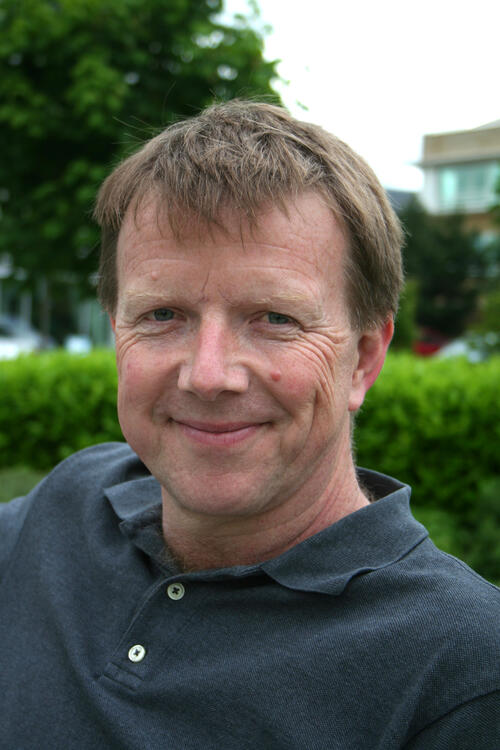
jasonhealey_ac_photo_large_best.jpg

Jason Healey is a Senior Research Scholar and adjunct faculty at Columbia University’s School for International and Public Affairs specializing in cyber conflict, competition and cooperation. Prior to this, he was the founding director of the Cyber Statecraft Initiative of the Atlantic Council where he remains a Senior Fellow.  He is the author of dozens of published articles and the editor of the first history of conflict in cyberspace, A Fierce Domain: Cyber Conflict, 1986 to 2012.  A frequent speaker on these issues, he is rated as a “top-rated” speaker for the RSA Conference and won the inaugural “Best of Briefing Award” at Black Hat.

During his time in the White House, he was a director for cyber policy and helped advise the President and coordinate US efforts to secure US cyberspace and critical infrastructure.  He created the first cyber incident response team for Goldman Sachs and later oversaw the bank’s crisis management and business continuity in Hong Kong.  He has been vice chairman of the FS-ISAC (the information sharing and security organization for the finance sector) and started his career as a US Air Force intelligence officer with jobs at the Pentagon and National Security Agency.  Jason was a founding member (plankowner) of the first cyber command in the world, the Joint Task Force for Computer Network Defense, in 1998, where he was one of the early pioneers of cyber threat intelligence.

He is on the Defense Science Board task force on cyber deterrence and is a frequent speaker at the main hacker and security conferences, including Black Hat, RSA, and DEF CON, for which he is also on the review board.  He is president of the Cyber Conflict Studies Association, and has been adjunct faculty at NSA’s National Cryptologic School, Georgetown University and Johns Hopkins School of Advanced International Studies. 

Authors
News Type
News
Date
Paragraphs

When a state is “shamed” by outsiders for perceived injustices, it often proves counterproductive, resulting in worse behavior and civil rights violations, a Stanford researcher has found.

Rochelle Terman, a political scientist and postdoctoral fellow at Stanford’s Center for International Security and Cooperation (CISAC), recently spoke about how countries criticized by outsiders on issues like human rights typically respond -- and it's contrary to conventional wisdom. Terman has published findings, “The Relational Politics of Shame: Evidence from the Universal Periodic Review,” on this topic in the Review of International Organizations. She discussed her research in the interview below:

What does your research show about state "shaming"?

Shaming is a ubiquitous strategy to promote international human rights. A key contention in the literature on international norms is that transnational advocacy networks can pressure states into adopting international norms by shaming them – condemning violations and urging reform. The idea is that shaming undermines a state’s legitimacy, which then incentivizes elites into complying with international norms.

In contrast, my work shows that shaming can be counterproductive, encouraging leaders in the target state to persist or “double down” on violations. That is because shaming is seen as illegitimate foreign intervention that threatens a state’s sovereignty and independence.  When viewed in this light, leaders are rewarded for standing up to such pressure and defending the nation against perceived domination. Meanwhile, leaders who “give in” have their political legitimacy undermined at home. The result is that violations tend to persist or even exacerbate.

When and where does it work better to directly confront a country’s leadership about such injustices?

At least two factors moderate the effects of international shaming. The first is the degree to which the norm being promoted is shared between the “shamer” and the target. For instance, the West may shame Uganda or Nigeria for violating LGBT rights. But if Uganda and Nigeria do not accept the “LGBT rights” norm, and refuse to accept that homophobia constitutes bad behavior, then shaming will fail. In this case, it is more likely that shaming will be viewed as illegitimate meddling by foreign powers, and will be met with indignation and defiance.

Second, shaming is quintessentially a relational process. Insofar as it is successful, shaming persuades actors to voluntary change their behavior in order to maintain valued social relationships. In the absence of such relationship, shaming will fail. This is especially so when pressure emanates from a current or historical geopolitical adversary. In this later scenario, not only will shaming fail to work, it will likely provoke defensive hostility and defiance, having a counterproductive effect.

Combing these insights, we can say that shaming is most likely to work under two conditions: when the target is a strong ally, and the norm is shared.

What are some well-known cases where "shaming" backfired?

The main example I use in my forthcoming paper is on the infamous “anti-homosexuality bill” in Uganda. When Uganda introduced the legislation in 2009 (which in some versions applied capital punishment to offenders) it provoked harsh condemnation among its foreign allies, especially in the West. Western donor countries even suspended aid in attempt to push Yoweri Musaveni’s government to abandon the bill. According to conventional accounts, the onslaught of foreign shaming, coupled with the threat of aid cuts and other material sanctions, should have worked best in the Uganda case.

And yet what we saw was the opposite. The wave of international attention provoked an outraged and defiant reaction among the Ugandan population, turning the bill into a symbol of national sovereignty and self-determination in the face of abusive Western bullying. This reaction energized Ugandan elites to champion the bill in order to reap the political rewards at home. Indeed, the bill was the first to pass unanimously in the Ugandan legislature since the end of military rule in 1999. Museveni – who by all accounts preferred a more moderate solution to the crisis – was backed into a corner.

A Foreign Policy story quoted Ugandan journalist Andrew Mwenda as saying, “the mere fact that Obama threatened Museveni publicly is the very reason he chose to go ahead and sign the bill.” And Museveni did so in a particularly defiant fashion, “with the full witness of the international media to demonstrate Uganda’s independence in the face of Western pressure and provocation.”

Uganda anti-homosexuality law was finally quashed by its constitutional court, which ruled the act invalid because it was not passed with the required quorum. By dismissing the law on procedural grounds, Museveni – widely thought to have control over the court – was able to kill the legislation “without appearing to cave in to foreign pressure.” But by that time, defiance had already transformed Uganda’s normative order, entrenching homophobia into its national identity.

Does this 'doubling down' effect vary in domestic or international contexts?

Probably. States with a significant populist contingent, for instance, are especially hostile to international pressure, especially when it emanates from a historical adversary, like a former colonial power. Ironically, democracies may also be more susceptible to defiance, because elites are more beholden to their constituents, and thus are less able to “give in” to foreign pressure without undermining their own political power. 

The international context matters a great deal as well. States are more likely to resist certain norms if they have allies who feel the same way. For instance, we see significant polarization around LGBT rights at the international level, with most states in Africa and the Muslim world voting against resolutions that push LGBT rights forward. South Africa – originally a pioneer for LGBT rights – has changed its position following criticism from its regional neighbors. 

Does elite reaction drive this response to state "shaming?"

To be quite honest, this is a question I’m still exploring and I don’t have a very clear answer. My hunch at the moment is no. The “defiant” reaction occurs mainly at the level of public audiences, which then incentives elites to violate norms for political gain.  These audiences can be at either the domestic or international level. For instance, if domestic constituents are indignant by foreign shaming, elites are incentivized to “double down,” or at least remain silent, lest they undermine their own political legitimacy.

That said, elites can also strategize and manipulate these expected public reactions for their own political purposes. For instance, if Vladimir Putin knows that the Russian public will grow indignant following Western shaming, he might strategically promote a law that he knows will provoke such a reaction in order to benefit from the ensuing conflict. This is what likely occurred with Russia’s “anti-gay propaganda” law, which (unsurprisingly) provoked harsh condemnation from the West and probably bolstered Putin’s domestic popularity.

Any other important points to highlight?

One important point I’d like to highlight is the long-term effects of defiance. In an effort to resist international pressure, states take action that, in the long term, work to internalize oppositional norms in their national identity. In this way, shaming actually produces deviance, not the other way around.

Follow CISAC at @StanfordCISAC and  www.facebook.com/StanfordCISAC

MEDIA CONTACTS:

Rochelle Terman, Center for International Security and Cooperation: (650) 721-1378, rterman@stanford.edu,

Clifton B. Parker, Center for International Security and Cooperation: (650) 725-6488, cbparker@stanford.edu

 
Hero Image
gettyimages 158093568
Protestors march to the United Nations building during International Human Rights Day in 2012 in New York City. Activists then called for immediate action by the UN and world governments to pressure China to loosen its control over Tibet -- a form of "state shaming," as examined by CISAC fellow Rochelle Terman in her research.
Steve Platt/Getty Images
All News button
1
-

Abstract:

Duncan Green, Oxfam Strategic Adviser and LSE Professor of Practice in International Development, introduces the arguments of his new book, How Change Happens (OUP, October 2016). How Change Happens explores how political and social change takes place, and the role of individuals and organizations in influencing that change. He discusses the challenges that 'systems thinking' creates for traditional aid practices, and how a 'power and systems approach' requires activists, whether in campaigns, companies or governments, to fundamentally rethink the way they understand the world and try to influence it.


Speaker Bio:

Image
duncan green
Dr. Duncan Green is Senior Strategic Adviser at Oxfam GB, Professor in Practice in International Development at the London School of Economics, honorary Professor of International Development at Cardiff University and a Visiting Fellow at the Institute for Development Studies. He is author of How Change Happens (OUP, October 2016) and From Poverty to Power: How Active Citizens and Effective States can Change the World (Oxfam International, 2008, second edition 2012). His daily development blog can be found on http://www.oxfamblogs.org/fp2p/.

He was previously Oxfam’s Head of Research, a Visiting Fellow at Notre Dame University, a Senior Policy Adviser on Trade and Development at the Department for International Development (DFID), a Policy Analyst on trade and globalization at CAFOD, the Catholic aid agency for England and Wales and Head of Research and Engagement at the Just Pensions project on socially responsible investment.


Dr. Duncan Green Senior Strategic Adviser at Oxfam GB
Seminars
-

Image
dsc 0004 bai jing sayuri
Dr. Sayuri SHIRAI is currently a professor of Keio University and is also a visiting scholar at the Asian Development Bank Institute. She was a Member of the Policy Board of the Bank of Japan (BOJ) from April 2011 to March 2016, who is responsible for making policy decisions. She also taught at Sciences Po in Paris in 2007–2008 and was an economist at the International Monetary Fund (IMF) from 1993 to 1998.

She is the author of numerous books on a variety of subjects including the People’s Republic of China’s exchange rate system, Japan’s macroeconomic policy, IMF policy, and the European debt crisis. Her most recent book (translated title: Unwinding Super-Easy Monetary Policy), published in August 2016, is about the monetary policies of the BOJ, the European Central Bank, and the Federal Reserve System. She regularly appears on CNBC, Bloomberg, Reuters, BBC, and features in many Japanese TV programs and newspapers, commenting on the Japanese economy and monetary policy. URL: http://www.sayurishirai.jp

Her most recent book in English is Mission Incomplete: Reflating Japan’s Economy published by the Asian Development Bank Institute in February 2017. It is a complete analysis of BOJ’s unconventional monetary easing from the late 1990s to the present. Free Download is available at https://www.adb.org/publications/mission-incomplete-reflating-japan-economy.

Sayuri Shirai Professor at Keio University and Visiting Scholar at Asian Development Bank Institute
Seminars
-
 
If you thought that world politics is boring, think again. 2016 was potentially as important as 1945 and 1989. The end of WWII marked the beginning of our current global institutions and a bipolar world. The end of the Cold War kicked off an unprecedented era of liberal democracy, social market economics, and globalization. Last year arguably marked an end of that era, as demonstrated by Brexit and the election of Donald Trump. Was Brexit and the election of Donald Trump the beginning of the end or the end of the beginning? Come and find out. As a former Prime, Finance, and Foreign Minister of Finland, Alex will give you a practical answer with a theoretical twist and a blend of humour.


Image
Alexander Stubb image


Alexander Stubb has served as Prime Minister, Finance Minister, Foreign Minister, Trade and Europe Minister of Finland. He was a Member of the European Parliament from 2004-2008 and in the national government from 2008-16. He was the Chairman of the National Coalition Party from 2014-16 and is currently a Member of the Finnish Parliament.

Stubb's background is in academia and civil service. He has published 16 books, tens of academic articles and hundreds of columns. He holds a Ph.D. From the London School of Economics and Political Science, a Master's degree from the College of Europe in Bruges, and a B.A. from Furman University in South Carolina. He also studied at the Sorbonne in Paris. He worked as an expert adviser at the Finnish Ministry for Foreign Affairs in Helsinki and in Brussels, and in President Romano Prodi's team at the European Commission. He has been a visiting Professor at the College of Europe in Bruges.

His expertise includes European and International Affairs, Foreign and Security Policy, the Euro and the Global Economy. His current interests are Brexit, global affairs, the Fourth Industrial Revolution (digitalisation, robotisation and artificial intelligence) and health and exercise science. Stubb is a sought after speaker and a frequent commentator on international affairs for many global news channels. He writes a regular column for the Financial Times and Dagens Industri, the Swedish business journal.

Stubb speaks Finnish, Swedish, English, French and German. He is an avid sportsman, having played ice-hockey, handball, and national team golf in his youth. His current passions are cycling and triathlon. He participated in the Ironman World Championships in Hawaii in October 2016.

Alexander Stubb Speaker former Prime Minister of Finland and current member of the Finnish Parliament
Lectures
Authors
News Type
News
Date
Paragraphs

Whether it’s WikiLeaks and CIA documents or nuclear thieves, the danger from insiders in high-security organizations is escalating in our Internet age.

But many threats from within go unrecognized or misunderstood, according to Stanford professor Scott Sagan, who co-edited a new book Insider Threats with Matthew Bunn, a professor of practice at Harvard University. Their work analyzes the challenges that high-security organizations face in protecting themselves from employees who might betray them. Sagan, a core faculty member in Stanford's Center for International Security and Cooperation, and Bunn recently participated in an online discussion of the book’s key arguments. They will hold a talk and book signing at 3:30 p.m. on May 16 in the CISAC Central Conference Room.

Sagan and Bunn wrote, “Perhaps the most striking lesson we learned in working with scholars and officials who have dealt with this problem was the sheer scale of the red flags – from explicit statements of support for Osama bin Laden to behavior leading other staff to fear for their lives – that organizations are able to ignore.”

They found that organizations tend to have biases that cause them to downplay insider threats. In particular, organizations with high-security needs face significant risks from trusted employees with access to sensitive information, facilities, and materials. 

The researchers highlight "worst practices" from these past mistakes, suggesting lessons and insights that could improve the security situations at many workplaces. Amy Zegart, co-director of CISAC, has a chapter in Insider Threats that provides a detailed account of the organizational dysfunction that allowed Nidal Hasan to carry out his massacre at Fort Hood.

Other chapters include the following topics and authors:

  • An analysis of the similar problems that led Bruce Ivins, who probably carried out the anthrax attacks in 2001, to continue to have access to deadly pathogens (by Jessica Stern, then of Harvard and now at Boston University, and Ron Schouten, of Massachusetts General Hospital and Harvard Medical School);
  • An analysis of the rapid rise and subsequent fall of “green-on-blue” attacks in Afghanistan – that is, Afghan soldiers and police officers attacking Americans there to help them (by Austin Long of Columbia University); and 
  • An assessment of how casinos and pharmaceutical plants, with a profit incentive to protect against insiders, cope with the problem (by Bunn and Kathryn Glynn, then of IBM Global Business Services and now at the National Nuclear Security Administration). 

Another chapter examines the potential terrorist use of nuclear insiders, offering new data that shows that jihadist writings and postings contain only a modest emphasis on possible nuclear plots, and essentially no mention of the possibility of using nuclear insiders. However, the authors warn this is no reason for complacency – insiders have been largely responsible for past nuclear theft incidents.

MEDIA CONTACTS

Scott Sagan, Center for International Security and Cooperation: (650) 725-2715, ssagan@stanford.edu

Clifton B. Parker, Center for International Security and Cooperation: (650) 725-6488, cbparker@stanford.edu



Hero Image
gettyimages 540849924
CISAC's Scott Sagan writes in a new book that organizations tend to ignore the many red flags typically associated with insider threats.
xijian/Getty Images
All News button
1
-

- This event is co-sponsored by Stanford Global Studies, The Europe Center, and the History Department - 

Abstract: By 1914, exploiting colonies was a well-established practice of even the most ‘liberal’ empires. Treating areas of Europe like colonies was not, except on the more remote peripheries. However, when the Central Powers occupied substantial parts of Europe during World War One, they applied harsh economic regimes while the British and French intensified the use of their empires. This paper will consider the comparisons – and the links - between these two forms of exploitation. It will suggest that both became ‘laboratories of autarky’ for kinds of economic regime (especially with regard to manpower) that were still not possible domestically for the nation-states fighting the war. The argument will be general but focus empirically on French North Africa and German-occupied France and Belgium. 

About the Speaker: John Horne is Leverhulme Visiting Professor at Oxford University (2016-17) and Emeritus Fellow and former Professor of Modern European History at Trinity College Dublin, where he founded the Centre for War Studies. He is a Fellow of the Royal Irish Academy and a board member of the Research Centre at the Historial de la Grande Guerre, Péronne (France). He is the author and editor of a number of books and over ninety chapters and articles, many relating to the history of the Great War. Among his latest publications are (ed.) A Companion to World War One (Oxford, Blackwell-Wiley, 2010); (ed.) Vers la guerre totale: le tournant de 1914-1915 (Paris, Tallandier, 2010); and with Robert Gerwarth (ed.) War in Peace: Paramilitary Violence in Europe after the Great War (Oxford University Press, 2012). He is currently working on a history of the French experiences of the First World War.

Encina Hall, 2nd floor

John Horne Leverhulme Visiting Professor Oxford University Oxford University and Trinity College Dublin
Seminars
-

Abstract:

Nika Gilauri, has recently published a book Practical Economics: Economic Transformation and Government Reform in Georgia 2004-2012. Former Prime Minister discusses why the Georgian case is exemplary and relevant for countries in transition. He describes how Georgia managed a breakthrough in the fight against corruption, rightsizing of government, creation of business-friendly environment, tax and customs reform, privatization of state-owned companies, etc. During the seminar, Mr. Gilauri will try to answer a question: how do you manage a transformation to bring about fast and sustainable growth? And he will approach this question from two angles: What is the right size for a government, both in terms of its regulatory footprint and in terms of its budget in relation to the size of the economy? How do you ensure a government’s efficiency in terms of its decision making, its interaction with the private sector, financial flows, and the services it provides?


Speaker Bio:

Image
nika gilauri
Mr. Gilauri has been a managing partner of Reformatics since 2012 and a senior advisor to McKinsey & Company since 2014. Earlier, he spent 8 years in the Georgian government, where he served as Minister of Energy (2004-2007), Minister of Finance (2007-2009) and Prime Minister (2009-2012). Mr. Gilauri’s term as Prime Minister was notably marked by rapid economic recovery and growth in the aftermath of the 2008-2009 global economic crisis: Georgia’s GDP rose from - 9.0% when Mr. Gilauri was appointed (Q2 2009) to +8.1% when his term came to an end (Q2 2012). Georgia’s budgetary deficit also decreased during his term as prime minister, dropping from 9% in 2009 to 3% in 2012.

During his time in government, Mr. Gilauri also guided reforms in the energy sector, fiscal policy, healthcare, customs, education and other spheres of economic development, and contributed to efforts to improve Georgia’s overall business environment. His greatest achievement as Minister of Energy was to transform Georgia from being a country of semi- permanent blackouts into a net exporter of electricity to all its neighbors.

In his more recent capacity as managing partner of Reformatics, Mr. Gilauri has been involved in over 20 advisory assignments on three continents for various high-ranking government officials and politicians including presidents and prime ministers. Mr Gilauri holds a BA in Economics and Finance from the University of Limerick (Ireland) and an MA in International Business Management from Temple University (USA).

Nika Gilauri Founder & Managing Partner of Reformatics, Senior Advisor to McKinsey and Company Former Prime-Minister of Georgia (’09-’12)
Seminars
Authors
Beth Duff-Brown
News Type
News
Date
Paragraphs

Non-communicable diseases such as heart and respiratory disease, cancer, obesity and diabetes are now responsible for some two-thirds of premature deaths around the world. And most of those are in low- and middle-income countries.

The United Nations has estimated that on top of the social and psychological burdens of chronic disease, the cumulative loss to the global economy could reach $47 trillion by 2030 if things remain status quo.

“That was a big whopper of a number and got a lot of attention, and that was good because it raised awareness,” said Rachel Nugent, vice president for global non-communicable diseases (NDCs) at the research institute RTI International.

“It’s an issue that is driven by a lot of different factors, “ she said. “And understanding how the larger social and economic factors affect NDCs, at a policy level, very little progress has been made — there’s been very little collaboration.”

Nugent was addressing the fourth annual Global Health Economics Colloquium at University of California San Francisco, with health experts, policymakers, students and researchers from Stanford, Berkeley and UCSF who gather every year to take a deep dive into the economics of a global health issue. More than 200 experts from 10 universities and public health departments attended the conference.

The daylong gathering focused on recent developments in the economics of NDCs, looking at case studies from around the world, and new guidelines for cost-effectiveness analysis and the role of economics in reducing health inequality.

“The donors are not convinced that there are cost-effective things that we can do in these countries; a lot of them are very skeptical that this is affecting the poor,” said Nugent, a member of the World Health Organization’s expert advisory panel on the management of NCDs.

In India, for example, much of the population still defecates outdoors, contaminating water sources and agricultural products, which can lead to malnutrition and physical and cognitive disorders. Many donors would rather see funds go to building latrines as they can see tangible results; NDC prevention is a long-term slog.

“But I don’t think we should necessarily think of NDCs as either-or,” said Nugent.  “I think that integration of services and programming is very much at the forefront of what is the right way to go.”

Image
rachel nugent

Cost-effectiveness Analyses

Nugent’s research has shown five cost-effective interventions would avert more than 5 million premature deaths from NCDs by 2030, or a reduction of 28.5 percent in projected mortality from chronic disease around the world. And the average benefit-cost ratio is 9:1, at a global cost of $8.5 billion a year.

The interventions are raising the price of tobacco products by 125 percent through taxation; providing aspirin to 75 percent of those suffering from acute myocardial infarction; reducing salt intake by 30 percent; reducing the prevalence of high blood pressure with low-cost hypertension medication; and providing preventive drug therapy to 70 percent of those at high risk of heart disease.

Gillian Sanders-Schmidler, a professor of medicine at Duke University Medical Center and former assistant professor of medicine at Stanford Health Policy’s Center for Primary Care and Outcomes Research, addressed the colloquium about recommendations of the Second Panel on Cost-Effectiveness in Health and Medicine.

“There is a continued emphasis on transparency and comparability across analyses,” said Sanders-Schmidler. “And of course the big changes are that we’re now asking for a second reference case and using an ‘impact inventory’ table to clarify the scope of the findings.”

The independent panel of non-government scientists and scholars, which also included Stanford Health Policy’s Douglas K. Owens, focused on new ways to deliver health care effectively, yet with a focus on efficiency, as health care spending in the United States has reached 18 percent of GDP, much greater than the global average of 10 percent.

The first panel that convened in 1996 recommended that all cost-effectiveness analyses of health interventions include a reference case that uses standard methodological practices to improve comparability and quality. The second panel, which published its findings in September, now recommends that in addition to the societal perspective recommended by the original panel, that CEAs include a second reference case that looks at the health-care sector impact of an intervention. Additional guidance was given on what to include in the societal perspective reference case.

The panel wrote in its JAMA “special communication” that these societal reference cases should include medical costs “borne by third-party payers and paid out-of-pocket by patients, time costs of patients in seeking and receiving care, time costs of informal (unpaid) caregivers, transportation costs, effects on future productivity and consumption, and other costs and effects outside the health-care sector.”

They found most countries, including the United States, give greater weight to clinical evidence in their cost-effectiveness analyses. The panel now recommends an “impact inventory” that helps analysts and end-users of cost effectiveness analyses look at the impact of interventions beyond the formal health-care sector.

“We’re trying to ask people to be explicit,” said Owens, director of the Center of Primary Care and Outcomes Research and Center for Health Policy at Stanford.

“We want them to look at how to value outcomes in a societal perspective, not just the health-care sector, to look at all these other sectors such as productivity consumption, criminal justice, education, housing and the environment,” he said.

Image
sodas

Case Studies

Several case studies presented at the colloquium indicated that policy changes, government intervention and social factors are key to preventing obesity and diabetes and other NCDs.

Kristine Madsen, an associate professor of public health at UC Berkeley who focuses on childhood obesity, spoke about the nation’s first “soda tax” on sugar-sweetened beverages, which was implemented in Berkeley in March 2015.

The city has seen a 21 percent decline in the drinking of soda and other sugary drinks in low-income neighborhoods after the city levied a penny-per-ounce tax on sodas and sugary drinks. At the same time, according to a study in the American Journal of Public Health, neighboring San Francisco — where a similar soda-tax measure was defeated — and Oakland saw a 4 percent increase in the purchase of sweetened beverages.

“This decline of 21 percent in Berkeley represents the largest public health impact in an intervention that I have ever seen,” said Madsen.

Sergio Bautista of the Mexico National Institute of Public Health and UC Berkeley, said that Mexico’s sugary drinks tax implemented in January 2014 is expected to lead to a 10 percent reduction in sugary drinks consumption and prevent an estimated 189,300 cases of diabetes in a country famed for its sugary bottled cola.

William Dow, a professor of health policy management at UC Berkeley, shared his research on Costa Rica, where on average people live longer than Americans, despite the several times higher income and 10 times higher health expenditures in the United States.

Costa Rican men have a life expectancy of 77 and the women typically live until age 82; in Americans the numbers are 76 and 81, respectively. Obesity is low among Costa Rican men and few of their women smoke. Lung cancer mortality in the United States is four times higher among men and six times higher among women.

“It’s remarkable in so many ways,” Dow said, noting that deaths in the Central American country are due predominantly to infectious disease. “Does Costa Rica have any unique effective programs to emulate, or is there something going on upstream driving those health outcomes?”

He believes Costa Rica’s national health insurance and excellent access to primary care for nearly all its people are key. Having this guaranteed lifetime access to health care also reduces the stress and depression that can so badly harm physical health.

“And I would argue that probably diet is one of the most important things going on here,” said Dow, noting their diets are healthy.

Costa Ricans eat mostly unprocessed foods such as rice and black beans, corn tortilla, yam and squash, with little meat and plenty of fresh fruit.

“They also have the highest remaining life expectancy at age 80 of any country in the world, he said. “What we have learned in Costa Rica would be helpful in many other countries.”

Hero Image
ariel people Getty Images
All News button
1
-

Abstract:

As the number of migrants in Europe has risen in recent years, far right parties have fuelled voters’ fears concerning what the influx will mean for their nations. This project utilizes paired pre-election polls and actual vote shares across state and regional elections pre- and postmigrant crisis to provide evidence that far right sympathists often practiced preference falsification prior to this legitimizing shock, but that the crisis reshaped the political conversation such that far right identification is no longer deemed politically shameful. Although the theoretical framework surrounding preference falsification is well developed in the social movement literature as well as in American politics, Laura Jakli argues that it has untapped parallels in the study of Europe's far right. She also embeds priming and list experiments in a Facebook survey to determine whether there is a significant difference between subjects' willingness to identify with the far right using explicit versus implicit measurement approaches.


Speaker Bio:

Image
headshot jakli
Laura Jakli is a PhD student and FLAS fellow at UC Berkeley. Her research focuses on the intersection of modern European politics and political behavior. She has designed and implemented field experiments, internet-based survey experiments, and interview-based research in the US, Greece, and Hungary. Her dissertation examines the relationship between digital media polarization and individual-level attitude strength as well as aggregate-level electoral mobilization. The overall goal of her dissertation is to explain why recent far right voter turnout has been remarkably high relative to the underlying distribution of ideological adherents across the West. She holds a BA from Cornell University and an MA from UC Berkeley.

Laura Jakli PhD student and FLAS fellow at UC Berkeley
Seminars
Subscribe to Europe