Nuclear Safety
Authors
News Type
News
Date
Paragraphs

Plans to dispose of radioactive waste in a deep geologic repository have been stalled for the last five years, so the U.S. Department of Energy is now trying to develop a strategy for the siting of nuclear facilities, such as for interim storage and final geologic disposal.

Key to DOE’s strategy is “consent-based siting,” an approach which aims to minimize the political controversy from local communities and the state.

But how would such a process work in practice? And can the diverse range of stakeholders involved realistically be expected to reach a consensus on such a controversial issue?

Critical questions like these were the main focus of the third Reset of U.S. Nuclear Waste Management Strategy and Policy Series meeting held at Stanford last week.

Scientific experts, government officials and stakeholders at the state, tribal, national and international levels were all invited to discuss strategies to move forward a program that is now in stalemate as the growing inventories of spent nuclear fuel from commercial power plants and high-level defense waste continues to accumulate at sites across the country. Moving forward with the concept that communities and states have a say in the process requires considerable input from the concerned and affected parties, many of whom were represented at this meeting.

The Gordian Knot: Nuclear Waste Management in the United States

In 2008, the Department of Energy submitted a license application for a proposed repository at Yucca Mountain in Nevada. Politics, changes in legislation, lawsuits and ultimately a lack of public trust were among many reasons that plans for the Yucca Mountain repository were not realized. In the absence of a way forward, spent nuclear fuel from nuclear power reactors remains stranded at over 70 sites around the country.

And in another recent blow to America’s nuclear waste storage program, the government’s only deep geological repository for high-level transuranic nuclear (TRU) military waste stopped receiving waste two years ago. A release of radioactivity due to unanticipated chemical reactions in a drum of waste lead to the temporary closure of the Waste Isolation Pilot Plant (WIPP) in Carlsbad, New Mexico after 15 years of operation.

A Question of Consent

Last March, President Obama directed the DOE to start planning for the development of a defense-only repository for high-level nuclear waste. At the same time, the DOE announced that it would proceed in parallel to address storage and disposal of spent nuclear fuel from commercial nuclear power plants around the country.
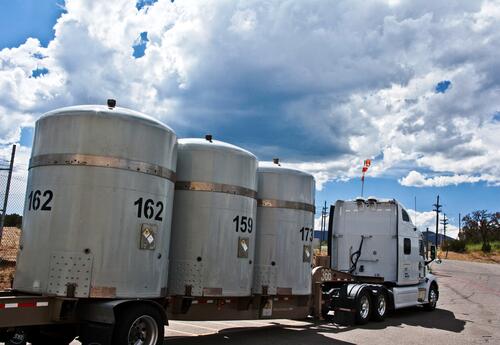
A shipment of transuranic waste from the defense industry heads for long-term storage at the Waste Isolation Pilot Plant in this photo from 2012. A shipment of transuranic waste from the defense industry heads for long-term storage at the Waste Isolation Pilot Plant in this photo from 2012.
“We envision an integrated waste management system that may contain one or more facilities,” said John Kotek, Acting Assistant Secretary for the DOE’s Office of Nuclear Energy, who was in attendance at the meeting.

Kotek served as staff director to the Blue Ribbon Commission on America’s Nuclear Future from 2010–2012, which recommended the consent-based strategy for locating nuclear waste facilities, such as a geologic repository. He acknowledged that previous top-down approaches haven’t worked and said the DOE is now seeking public input on how to design a consent-based siting approach by which communities are recognized as partners in the management and disposal of the waste.

“We aim to implement such a system incrementally, to ensure safe and secure operations, to build and maintain public trust and confidence, and to adapt our approach based on lessons learned,” Kotek said.

“As a first step, we will work collaboratively with the public, with interested communities, and with Congress to begin identifying potential partners in this effort.”

The Allocation of Power

States, tribes and local communities all want to have a major say over federal decisions concerning waste repositories, and they want the clear-cut ability to say “no” or “yes” to repositories or nuclear facilities in their jurisdiction.

John Heaton with the Carlsbad Department of Development in New Mexico said he believed the scientific work at Sandia National Laboratories was key to the community’s initial consent to build the Waste Isolation Pilot Plant (WIPP) in their region, and their willingness to reopen the plant in the near future.

“We already had independent monitoring in place at WIPP, and we are expecting to reopen by the end of the year with better safety measures,” said Heaton.

In contrast, for decades, the Shoshone Bannock Tribe in Idaho never made any agreements with the DOE on radioactive waste shipments traveling through their land. Instead, the DOE worked directly with the state, without dealing with the tribe.

“The state does not speak for the tribes, any more than we speak for the state,” said Talia Martin, DOE program director for the Shoshone Bannock Tribe.

“We’re waiting to hear how the DOE is going to interact with the tribes. Will it be a partnership or will they repeat the past where they negotiated with the state and not with us?”

In Nevada, the state consistently opposed the proposed geological repository at Yucca Mountain, but local communities were generally supportive. Nye County officials in Nevada are concerned that the consent-based siting effort by the DOE will only delay waste disposal progress. Nye County is committed to the resumption of Yucca Mountain licensing hearings.

“I believe an individual, well-informed on the ins and outs of waste repositories are generally of the opinion that Yucca Mountain would be the least expensive and fastest resolution to move the ultimate disposal of nuclear waste and high level defense waste,” said Cash Jaszczak, staff consultant for the Nye County Nuclear Waste Repository Project Office.

Finding a resolution for the different positions of state, tribal and local communities is at the heart of the design of a consent-based process.

An International Perspective

A panel of international speakers from Canada, Finland, France, Sweden and the United Kingdom shared the stories of their own national programs and their successes and failures.
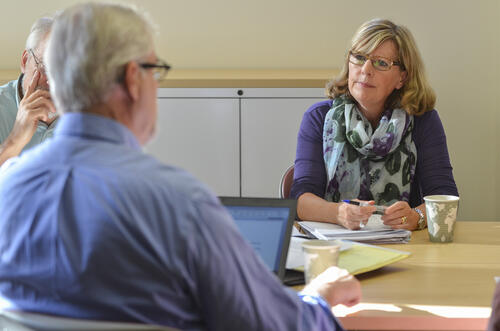
Kathryn Shaver from Canada's Nuclear Waste Management Organization listens to a speaker during a steering committee meeting for the Reset of U.S. Nuclear Waste Management Strategy and Policy Series. Kathryn Shaver from Canada's Nuclear Waste Management Organization listens to a speaker during a steering committee meeting for the Reset of U.S. Nuclear Waste Management Strategy and Policy Series.
Experience internationally has shown that a consent-based approach to dealing with the waste has been effective in Canada, Finland and Sweden. Finland is on pace to become the first country in the world to begin construction of a final repository for spent nuclear fuel, after switching from a “decide-announce” process to a consent-based process with public engagement, according to a paper from Timo Äikäs, former vice president of the nuclear waste management company Posiva.

In Sweden, the industry producing the waste takes full responsibility for its disposal.

“I find it almost exotic that the utilities in the United States, the producers, can pay their way out of responsibility to the state,” said Saida Engstrom, vice president of SKB, the organization that manages Sweden’s nuclear waste.

“One has to find the incentives to have utilities committed to working towards a solution. I think if you produce waste, you should not be given a free pass.”

France and the U.K. are also pursuing public engagement as an integral part of the strategy for their national programs. But it hasn’t always been a smooth process. U.K. Head of Geologic Disposal Bruce Cairns described a consent-based process that failed in obtaining the consent of all involved parties, but he also described a new process that will give it another try.

Hope for a Solution

Rod Ewing, a senior fellow at Stanford’s Center for International Security and Cooperation, said that it is essential to have these extended discussions so that a new strategy has a greater chance of success.

“In another 30 years, the U.S. cannot afford to find itself in the same place that it is now,” said Ewing, who also serves as Frank Stanton professor in nuclear security at Stanford University.

Ewing said it was also important to include students in the conversation, so they understand that they will inherit the problem, and they are part of the future hope to find a safe, trustworthy, consent-based siting solution.

Stanford PhD candidate Katlyn Turner, who’s studying Geological and Environmental Sciences at Stanford, said the nuclear waste issue was just as critical as global warming.

“Regardless of how you feel about it, we have to deal with it,” said Katlyn Turner, a PhD student in Geological and Environmental Sciences at Stanford.

“My generation should frame it as this is waste that needs to be taken care of the same way we need to take care of C02, global warming, coal and other pollutants.”

The Steering Committee will use the input from this meeting, as well as its own extensive experience in waste management issues, to provide advice and recommendations on how the consent-based process might be applied to the U.S. program. It will also make recommendations on other issues such as the question of creating a new, independent waste management organization to oversee the consent-based process.

The Reset meeting was supported by the Precourt Institute for Energy and hosted by Stanford’s Center for International Security and Cooperation.

The next meeting of the Reset series will be In Washington, D.C. in May at George Washington University and will focus on the integration of the waste management system from the production of the waste to its final disposal in a geologic repository.


Hero Image
Inside the Waste Isolation Pilot Plant (WIPP) in Carlsbad, New Mexico.
Inside the Waste Isolation Pilot Plant (WIPP) in Carlsbad, New Mexico. | U.S. Department of Energy
All News button
1
News Type
News
Date
Paragraphs

It has been five years since the emergency sirens sounded at Japan's Fukushima Daiichi power plant following the massive 2011 earthquake and subsequent devastating tsunami. The partial meltdown of three reactors caused approximately 170,000 refugees to be displaced from their homes, and radiation releases and public outcry forced the Japanese government to temporarily shut down all of their nuclear power plants. The events at Fukushima Daiichi sent waves not only through Japan but also throughout the international nuclear industry. Rodney Ewing, Frank Stanton professor of nuclear security at Stanford's Center for International Security and Cooperation, outlines three key lessons to be taken from the tragedy at Fukushima.

Lesson One: Avoid characterizing the Fukushima tragedy as an 'accident'

One of the biggest lessons to be learned from Fukushima Daiichi revolves around the language used to describe nuclear disasters. In the media and in scientific papers, the event was frequently described as an accident, but this does not properly capture the cause of the event, which was a failure of the safety analysis.

As an example, Ewing points specifically to the domino chain of events that led to the partial meltdown at reactors 1 and 3. Following the powerful magnitude 9.0 earthquake, the power plant automatically shut down its reactors, as designed. Emergency generators immediately started in order to maintain circulation of coolant over the nuclear fuel, a critical process to avoid heating and eventual meltdown. But the tsunami that followed flooded the diesel engines that were supplying power, and so cooling could no longer be maintained.

"The Japanese people and government were certainly well acquainted with the possibility of tsunamis," said Ewing, the Frank Stanton Professor in Nuclear Security and senior fellow at the Center for International Security and Cooperation in the Freeman Spogli Institute. "Communities had alert systems. But somehow, this risk didn't manifest itself in the preparation and protection of the backup power for the Fukushima reactors. The backup power systems, the diesel generators for reactors 1 through 5, were low along the coast where they were flooded and failed. They could have been located farther back and higher, like they were at reactor 6. These were clearly failures in design, not an accident.

"This is why when I refer to the tragedy at Fukushima, it was not an accident," said Ewing, who is also a professor of geological sciences in Stanford's School of Earth, Energy & Environmental Sciences. "When some speak of such an event as an 'act of God,' this has the effect of avoiding the responsibility for the failed safety analysis. We need to use language that doesn't seek to place blame, but does establish cause and responsibility."

Lesson Two: Rethink the meaning of 'risk'

Shortly following the disaster at Fukushima, Tokyo Electric Power Company (TEPCO) received heavy criticism for its lack of planning and response. For Ewing, this criticism speaks to a larger issue: "We need to rethink what we mean by 'risk' when we perform risk assessments. Risk is more than the loss of life and property."

Reassessing risk also begins with changing our language, Ewing said. When we say a risk like an earthquake or tsunami is rare or unexpected, even when the geological record shows it has happened and will happen again, it greatly lessens the urgency with which we ought to act and prepare.

"It can be that the risk analysis works against safety, in the sense that if the risk analysis tells us that something's safe, then you don't take the necessary precautions," he said. "The Titanic had too few lifeboats because it was said to be 'unsinkable.' Fukushima is similar in that the assumption that the reactors were 'safe' during an earthquake led to the failure to consider the impact of a tsunami."

When evaluating risk, Ewing recommends that we carefully consider the way in which we frame the question of risk. For example, a typical risk assessment usually only considers the fate of a single reactor at a specific location. But perhaps that question should be asked in a different way. "You could ask, 'What if I have a string of reactors along the eastern coast of Japan? What is the risk of a tsunami hitting one of those reactors over their lifetime, say, 100 years?'" he said. "In this case, the probability of a reactor experiencing a tsunami is increased, particularly if one considers the geologic record for evidence of tsunamis."

Ewing acknowledges that incorporating geological hazards into a standard risk assessment has proved to be difficult because of the long recurrence intervals of damaging events. But ongoing research at Stanford Earth continues to analyze the seismic and tsunami risks around Japan and over the entire world. Professor Paul Segall and graduate student Andreas Mavrommatis analyze dense GPS networks and small repeating earthquakes to better understand unprecedented accelerating fault slip that took place in advance of the surprisingly large 2011 earthquake. Associate Professor Eric Dunham, graduate student Gabe Lotto and alum Jeremy Kozdon create mathematical models to better understand the relationships between fault motions, ocean floor properties and tsunami generation. And Assistant Professor Jenny Suckale is working to improve tsunami early warning messages that will allow populations in Indonesia to receive the specific information they need to prepare. This research, and more, helps quantify some of the geological risks that should have been considered.

Lesson Three: Nuclear energy is strongly linked to the future of renewables

In the five years since the tragedy at Fukushima, Ewing has seen a number of ripple effects throughout the nuclear industry that will have a great impact on the future of renewable energy resources.

In the United States, the Nuclear Regulatory Commission has required that all reactor sites reassess risks from natural disasters. This includes not only earthquakes and tsunamis, but also flooding risks, particularly in the central United States. But this reaction wasn't shared globally.

"In countries like Germany and Switzerland, the Fukushima tragedy was the last straw," Ewing said. "This was particularly true in Germany, where there has always been a strong public position against nuclear power and against geologic waste disposal. Politically, Germany announced that it will shut down its nuclear power plants."

In a region like Germany, which is far more seismically stable than Japan, this move away from nuclear power marks an important – and expensive – transition for global energy systems. During the recent 21st Conference of the Parties meeting in Paris, Germany and a large number of other countries pledged to reduce carbon emissions.

"To me, Germany is a wonderful experiment," Ewing said. "Germany is a very technologically advanced country that is going to try to do without nuclear energy while simultaneously reducing its carbon emissions. This will require a significant investment in renewable energy sources, and that will be costly. But it's a cost that many Germans seem willing to pay."

As recently as 10 years ago, nuclear energy was quickly gaining support as a carbon-free power source. While the costs of renewables such as solar and wind remain more expensive than some fossil fuels, the steady decline in their costs and the boom of natural gas combined with the tragedy at Fukushima has once again muddied the waters of many countries' energy future.

"The biggest need for the U.S. right now is to have a well-defined energy policy," Ewing said. "With an energy policy, we would have a clear picture of how our country will address its energy needs."


Hero Image
An International Atomic Energy Agency inspector examines Reactor Unit 3 at the Fukushima Daiichi Nuclear Power Plant on May 27, 2011.
An International Atomic Energy Agency inspector examines Reactor Unit 3 at the Fukushima Daiichi Nuclear Power Plant on May 27, 2011, to assess tsunami damage and study nuclear safety lessons that could be learned from the tragedy. | IAEA
All News button
1
The Critical Infrastructure Initiative builds the cyber-resilience of critical infrastructure through methodologically diverse outputs-oriented research and engagement with end users and homeland security practitioners. The initiative was launched in 2016 in the recognition of the need to address growing threat that cyber-incidents pose to the functioning of the basic infrastructure that societies depend upon. For this initiative, Stanford has partnered with 11 other institutes to found the Critical Infrastructure Resilience Institute (CIRI), an institute focused on research and education to designed enhance the resiliency of the nation’s critical infrastructures. CIRI is led by the University of Illinois at Urbana-Champaign and funded by the Department of Homeland Security.
-

- This event is jointly sponsored by the Center for International Security and Cooperation (CISAC) and the Walter H. Shorenstein Asia-Pacific Research Center (APARC) - 

Five years to the day after a massive earthquake and ensuing tsunami caused an accident at three of the reactors of the Fukushima Daiichi nuclear power plant in Fukushima, Japan, a panel of Stanford experts will convene in Encina Hall to reflect on the lessons learned from the disaster that unfolded starting on March 11, 2011. Panelists will include:

  • Steven Chu, 12th U.S. Secretary of Energy (2009-2013), Laureate of the 1997 Nobel Prize in Physics,  William R. Kenan, Jr., Professor of Physics and Professor of Molecular & Cellular Physiology in the Medical School at Stanford University - Focus: Perspective from the Department of Energy on the role of the department in helping mitigate the consequences and the lessons learned
  • Phillip Lipscy, Thomas Rohlen Center Fellow at the Freeman Spogli Institute for International Studies and Assistant Professor of Political Science at Stanford University - Focus: Fukushima in comparative perspective and how the Japanese nuclear power industry has reacted since the accident.
  • Scott Sagan, Caroline S.G. Munro Professor of Political Science, Mimi and Peter Haas University Fellow in Undergraduate Education, and Senior Fellow at the Center for International Security and Cooperation and the Freeman Spogli Institute at Stanford University. Focus: the effects of the accident on efforts to improve nuclear safety and security, based on the upcoming book Learning from a Disaster.
  • Takeo Hoshi, Senior Fellow at the Freeman Spogli Institute for International Studies (FSI) and director of APARC's Japan Program, will chair the session and act as moderator.

This event will also serve as a book launch for the book Learning from A Disaster: Improving Nuclear Safety and Security After Fukushima, co-edited by Edward Blandford, a former Stanton Nuclear Security Fellow at CISAC and Scott Sagan. the book is being published by Stanford University Press and will be available for purchase at the event. Pre-orders can be taken here.

Panel Discussions
Authors
News Type
News
Date
Paragraphs

Stanford researchers working with the U.S. Navy’s Marine Mammal Program in San Diego have discovered a startling variety of newly-recognized bacteria living inside the highly trained dolphins that the Navy uses to protect its ships and submarines, find submerged sea mines and detect underwater intruders. They found similar types of bacteria in wild dolphins as well.

“About three quarters of the bacterial species we found in the dolphins’ mouths are completely new to us,” said David Relman, Stanford professor of microbiology and medicine, and co-author of a paper published in the journal Nature Communications on Wednesday.

A U.S. Navy dolphin opens its mouth for a swab to collect bacterial samples. A U.S. Navy dolphin opens its mouth for a swab to collect bacterial samples.
These previously unknown bacteria represent “whole new realms of life,” according to Relman.

“Bacteria are among the most well-studied microbes, so it was surprising to discover the degree to which the kinds of bacteria we found were types that have never been described,” he said. “What novelty means is not just new names of species, families, classes or phyla…there’s reason to believe that along with this taxonomic novelty, there’s functional novelty.”

The U.S. Navy has been training dolphins and sea lions to carry out defensive military missions from their bases in San Diego and elsewhere since the early 1960s.

Over the years, it has also funded scientific research and become the single largest contributor to the scientific literature on marine mammals, producing more than 800 publications, according to the Navy.

Relman started working with the Navy more than 15 years ago to identify bacteria suspected of causing stomach ulcers in their dolphins.

His latest project to catalog the bacterial communities (or microbiota) living inside the dolphins began when the Navy asked him to help develop a probiotic bacterial strain that could keep their dolphins healthy, or help sick dolphins get better.

Navy trainers took regular swabs from the dolphins’ mouths and rectal areas, using what looked like a Q-tip, and shipped the samples to Stanford on dry ice for analysis.

Stanford researchers analyzed oral, rectal and gastric samples from the U.S. Navy's dolphins and sea lions, as well as samples from the dolphins' blowholes and the surrounding water. Stanford researchers analyzed oral, rectal and gastric samples from the U.S. Navy's dolphins and sea lions, as well as samples from the dolphins' blowholes and the surrounding water.
They also collected samples of the air the dolphins exhaled from their blowholes (known as “chuff”) onto sterile filter paper, as well as samples of their gastric juices using a tube that the dolphins would swallow on command, and for comparison, bacteria from the surrounding water.

The study found a similar amount of diversity and novelty in bacterial samples taken from wild dolphins living in Sarasota Bay off the west coast of Florida, although there were slight differences in the bacteria from the dolphins’ mouths.

Relman said he hoped to develop a profile of the normal microbial communities in healthy dolphins and other marine mammals, so that scientists could detect any early change that might signify an imminent disease, or health problems caused by climate change and ocean warming.

“There’s a lot of concern about the changing conditions of the oceans and what the impact could be on the health of wild marine mammals,” Relman said. “We would love to be able to develop a diagnostic test that would tell us when marine mammals are beginning to suffer from the ill effects of a change in their environment.”

The research could help solve other mysteries, such as how dolphins digest their food, even though they swallow fish whole without chewing them.

The key could be a unique bacterial group that’s also been identified in an endangered species of freshwater dolphins living in China’s Yangtze River, said Elisabeth Bik, a research associate at the Stanford Department of Medicine and lead author on the paper.

“It’s a very intriguing bacterial group that nobody has seen before in any other terrestrial animal group,” said Bik. “I would really love to know more about those bacteria and sequence their genomes to understand more about their functional capacity.”

 Zak, a 375-pound California sea lion, shows his teeth during a training swim. Zak has been trained to locate swimmers near piers, ships, and other objects in the water considered suspicious and a possible threat to military forces in the area. Zak, a 375-pound California sea lion, shows his teeth during a training swim. Zak has been trained to locate swimmers near piers, ships, and other objects in the water considered suspicious and a possible threat to military forces in the area.
The study also examined oral, gastric and rectal samples from the Navy’s trained sea lions.

“The sea lions and dolphins are kept at the same facility, they’re fed exactly the same fish, and they’re swimming in the same water…but they’re very, very different in terms of microbiota,” Bik said.

Unlike dolphins, sea lions share many common types of bacteria with their terrestrial cousins.

“Sea lions weren’t that different from other carnivores like dogs and cats,” Bik said. “They’re evolutionarily related to them, and their microbiota looks very similar to those animals. But dolphins don’t really have a terrestrial mammal that’s closely related, and their microbiota looks very different from anything else that people have seen.”

Relman said his team was planning on expanding their study to include other marine mammals such as sea otters, killer whales, baleen whales, grey whales, harbor seals, elephant seals and manatees. Their purpose, in part, is to understand how life in the sea, over the millions of years since the return of mammals, may have shaped the structure of their microbial communities and the roles they play in marine mammal health.

They’re already working to analyze more than 80 samples of killer whale stool that the U.S. National Oceanic and Atmospheric Administration has gathered with the help of specially trained sniffer dogs, which stand on the bow of their boats and point to fresh killer whale feces before it sinks.

The California Department of Fish and Wildlife is contributing samples from the sea otters and seals it studies as part of its conservation, ecological, and monitoring programs.

And the Marine Mammal Center in Sausalito, which is the West Coast’s largest rescue and rehabilitation facility for marine mammals, is sending samples from the seals in its care.

Relman said the research could help scientists begin to answer fundamental questions about life in the ocean.

“Marine mammals remain one of the more poorly understood habitats for studying microbial life, and there would be lots of reasons for thinking that these are important environments to study, in part because of the relevance for the health of these marine mammals, but also because they represent a view into what it means to live in the sea and the nature of our relationship with this vast aspect of our environment,” Relman said.

Collaborators and co-authors on this study included Stephanie Venn-Watson and Kevin Carlin from the National Marine Mammal Foundation, and Eric Jensen from the Space and Naval Warfare Systems Center Pacific, in San Diego.


Hero Image
A U.S. Navy dolphin opens its mouth for a swab to collect bacterial samples.
A U.S. Navy dolphin opens its mouth for a swab to collect bacterial samples. | National Marine Mammal Foundation
All News button
1
Authors
News Type
News
Date
Paragraphs

The world remains perilously close to a nuclear disaster or catastrophic climate change that could devastate humanity, according to Stanford experts and California Governor Jerry Brown, who were on hand to unveil the latest update to the Bulletin of Atomic Scientists’ “doomsday clock” on Tuesday.

The symbolic clock was created in 1947 when Albert Einstein and Robert Oppenheimer (the father of the U.S. nuclear program) founded the publication.

The closer the minute hand gets to midnight, the closer their Board of Science and Security predicts humankind is to destroying itself.

“I must say with utter dismay that it stays at three minutes to midnight,” said Rachel Bronson, the publication’s executive director and publisher, in a bi-coastal teleconference carried live from The National Press Club in Washington D.C. and the Stanford campus.

Despite some positive development over the past year, such as the Iran nuclear deal and the Paris climate accords, the doomsday clock is now the closest it’s been to midnight since the peak of Cold War hostilities in the mid 1980s.

Stanford experts, including former U.S. Secretary of Defense William J. Perry and former Secretary of State George P. Shultz, said they agreed with the dire assessment.

“The danger of a nuclear catastrophe today, in my judgment, is greater than it was during the Cold War…and yet our policies simply do not reflect those dangers,” said Perry, who is a faculty member at Stanford’s Center for International Security and Cooperation.

Perry said he was especially concerned that the U.S. and Russia were engaged in new arms race, with both countries working to rapidly modernize their nuclear arsenals.

“Whatever we need to do for deterrence, it does not require rebuilding what we did during the Cold War era,” he said.

Perry urged President Barack Obama not to give up on the goal of nuclear disarmament during his last year in office, and to push for a breakthrough deal to control fissile material at the upcoming Nuclear Summit in Washington D.C.

“These summit meetings have been quite significant, and if he can use this last summit meeting to establish international standards for fissile control, which fifty heads of state sign up to, that would be a real achievement,” Perry said.

Shultz said the U.S. needed to offer a new version of the bold plans and decisive actions that legendary American statesmen George Marshall and Dean Acheson pursued after World War II.

“We have to be engaged, because when we don’t give leadership, nobody does,” said Shultz, a distinguished fellow at the Hoover Institution.

The doomsday clock was initially designed to communicate the threat from nuclear weapons, but has since been expanded to include cyber and biosecurity and the dangers of unsustainable climate change.

California Governor Jerry Brown described climate change as a “daunting threat,” with many similarities to nuclear dangers.

“Climate change and nuclear accident or nuclear war or nuclear sabotage or nuclear terrorism, they’re tied together,” Brown said.

“Climate change is moving slowly, but tipping points are around the corner and you don’t know when you’ve reached one, and beyond a tipping point, we may not be able to come back.”

Brown said he was dismayed at the lack of political action to address climate change and nuclear threats.

“I’ve been around politics all my life, and I can see an obviously broken process, a democratic system that has turned more into spectacle than getting the job done,” Brown said.

“In order to have the political leaders deal with this, they have to first acknowledge it.”

When a high school student in the audience asked what he could personally do to tackle the threat of nuclear weapons, Perry said the most important step was to educate himself about the issues, so he could educate others.

“If you can get ten people interested in talking about this problem, and each of those ten can get ten people interested in talking about this problem, it builds up in a geometric progression,” Perry said.

“I think once the public understands the dangers, they will galvanize our Congress and our leaders into action.”


Hero Image
Former U.S. Secretary of Defense William J. Perry (center) speaks at a press conference announcing the Bulletin of Atomic Scientists' latest "doomsday clock" estimates, as former U.S. Secretary of State George P. Shultz (left) and California Governor Jerr
Former U.S. Secretary of Defense William J. Perry (center) speaks at a press conference announcing the Bulletin of Atomic Scientists' latest "doomsday clock" estimates, as former U.S. Secretary of State George P. Shultz (left) and California Governor Jerry Brown (right) look on. | Christian Pease
All News button
1
Authors
News Type
News
Date
Paragraphs

[[{"fid":"221894","view_mode":"crop_870xauto","fields":{"format":"crop_870xauto","field_file_image_description[und][0][value]":"Herbert Abrams","field_file_image_alt_text[und][0][value]":"Herbert Abrams","field_file_image_title_text[und][0][value]":"Herbert Abrams","field_credit[und][0][value]":"","field_caption[und][0][value]":"Herbert Abrams","field_related_image_aspect[und][0][value]":"","thumbnails":"crop_870xauto"},"type":"media","attributes":{"alt":"Herbert Abrams","title":"Herbert Abrams","width":"870","style":"width: 400px; height: 500px; float: right; margin-left: 15px","class":"media-element file-crop-870xauto"}}]]Renowned radiologist Herbert Leroy Abrams, who co-founded the Nobel Prize-winning organization International Physicians for the Prevention of Nuclear War, died Jan. 20 at his Palo Alto home. He was 95.

Abrams was a professor emeritus of radiology at Stanford University, a senior fellow at Stanford's Freeman Spogli Institute for International Studies, and an affiliated faculty member at the Center for International Security and Cooperation (CISAC).

Abrams' illustrious, multi-faceted career embraced what he called the "four dimensions of bio-medicine" – patient care, research, teaching and advocacy.

"For as long as I have known him, I could only describe Herb Abrams as a class act," said Sanjiv "Sam" Gambhir, professor and chair of radiology at Stanford. "It is upon the shoulders of giants such as Herb that we ourselves stand today at the cutting edge of radiology."

Former U.S. Secretary of Defense and CISAC colleague William J. Perry praised Abrams for his "wisdom and carefully chosen words" in his advocacy for better control of nuclear weapons.

"The forces maintaining nuclear weapons and creating the danger that we might use them are very powerful and very hard to stop, and Herb and the International Physicians for the Prevention of Nuclear War were an early voice of sanity in this field, " Perry said.

Visionary pioneer in radiology

Born in 1920 in New York to immigrant parents, Abrams declined to go into the family hardware business. He graduated from Cornell University in 1941 and earned his medical degree from Long Island College of Medicine in 1946.

According to his family, Abrams had planned to become a psychiatrist until he was captivated by radiological imaging, which provided the road map for virtually all surgical and many medical therapies.

Abrams, his wife, Marilyn, and daughter, Nancy, moved to the West Coast in 1948.  Their son, John, was born a year later. Abrams completed his residency in radiology at Stanford in 1952 and joined the faculty as an assistant professor in the department in 1954.

While Abrams rose to become director of diagnostic radiology at Stanford, he and Marilyn raised their children in the Bay Area during what his children say he often called "The Golden Years" – rich with deep friendships, youthful exuberance, guitar-playing, family adventures, and professional success.

Abrams was an internationally known authority on cardiovascular radiology and wrote more than 190 articles and seven books on cardiovascular disease and health policy.

For many years he served as editor-in-chief of Postgraduate Radiology, and he was founding editor-in-chief of the journal Cardiovascular and Interventional Radiology.

In 1961 he published Angiography, the first comprehensive volume on the subject, which now is in its fourth edition (edited by Stanley Baum) under the title Abrams' Angiography: Vascular and Interventional Radiology.

"Under his guidance, Stanford pioneered in the fields of coronary artery imaging and the diagnosis of adult and congenital heart diseases, as well as vascular diseases, such as renal artery narrowing as a cause of hypertension," said Lewis Wexler, professor emeritus of radiology at Stanford, who was a resident under Abrams.   

"For many years, I referred to him as 'Dr. Abrams,' even though he requested a less formal address," Wexler added.  "I think I waited until I was a full professor before I called him 'Herb.' His wife and a number of his old friends from San Francisco called him 'Hoppy,' an endearment that aptly describes his energy, excitement and ability to jump effortlessly from discussing radiology [to discussing] health policy, politics, religion, art and music."

The Boston years

In 1967, with their children pursuing their own paths, Abrams and his wife moved to Boston, where he became the Philip H. Cook Professor of Radiology at Harvard Medical School and radiologist-in-chief at Brigham and Women's Hospital and at the Dana Farber Cancer Center.  The intellectual environment of Boston invigorated him and he devoted himself to building a great radiology department, a new research institute, and an outstanding teaching center.  During their time in Boston he and Marilyn also began a long love affair with Martha's Vineyard, where they built a house in 1975.

Steven Seltzer, chair of the Department of Radiology at Brigham and Women's Hospital, who holds the Philip Cook professorship at Harvard Medical School, which Abrams previously held, remembers his longtime mentor as a visionary who helped broaden the scope of radiology as a discipline.

When Seltzer arrived at Brigham and Women's in 1976 to do his radiology residency in what was then a very small department, he recalled being "incredibly impressed with the professional growth opportunities and the values and quality of the program that Abrams was building." He added that radiology was "still growing up" at that time and that Abrams had a vision that began during his years at Stanford and developed during his years in Boston.

"He was a very determined man. I fully bought into that vision. I thought this is a good person to have as a mentor and a role model, because I also aspired to live in a world that had similar characteristics that Herb had dreamed of," Seltzer said.

As a mentor and teacher, Seltzer remembered, Abrams pursued and demanded excellence and sometimes exhibited impatience.  During the time that Seltzer held the post of chief resident in radiology at Brigham and Women's, the hospital scored one of the first CT scanners in the city. The device operated 18 hours a day, seven days a week, and was staffed by residents after hours and on weekends. This was in addition to the residents' regular on-call duties. When the residents balked, Seltzer approached his boss and questioned the fairness of the arrangement and suggested that the residents be compensated with a stipend. "He just looked at me and said, 'Steve, you're doing this. This is your responsibility, and you need to get the residents comfortable with it.'"

During their 40-year relationship, Seltzer got to know another side of Abrams, whose approach to being a grandfather and great-grandfather was far different from the "tough love" he doled out to his students.

Anti-nuclear advocacy

Toward the end of the Boston years, in the early eighties, Abrams developed a keen interest in the effects of ionizing radiation and nuclear weapons and the problems of accidental or inadvertent nuclear war, which led to the next phase of his career as an anti-nuclear activist.

"He leveraged his training in radiology to become one of the leading experts on the health effects of low-dose radiation," said David Relman, professor of medicine at Stanford and current co-director of CISAC.

"It's a problem that doesn't get as much attention as the catastrophic effects of a nuclear blast, but the long-term consequences of low-dose radiation was something that Herb … helped promote as a serious issue, worthy of attention and study," Relman added.

Abrams discussed the threats posed by radiation in a story published in the Spring 1986 issue of Stanford Medicine magazine. He said that, for physicians, nuclear weapons and nuclear war were "the central health issue of the 20th century."

"We need to educate not only our colleagues and our students, but our constituents – the patients  – and ultimately policymakers about the consequences of nuclear war," Abrams said in the article. "Medical students are seldom taught about the effects of radiation. It's important because there have been radiation disasters unrelated to nuclear weapons, and there will be more in the future."

He was founding vice president of International Physicians for the Prevention of Nuclear War (IPPNW), which won the Nobel Peace Prize in 1985, just five years after the organization was established. He also served for many years on the national board of directors and as national co-chair of Physicians for Social Responsibility (PSR), a U.S. affiliate of IPPNW.

"His contributions were huge," said Scott Sagan, Caroline S.G. Munro professor of political science at Stanford. Sagan added that under Abrams' leadership the IPPNW "did yeoman's work to try to educate the public and world leaders about the consequences of nuclear war at a time when many, including some in the Reagan administration, were minimizing the consequences of nuclear weapons use."

Abrams returned to Stanford in 1985 as a professor of radiology, but spent most of his time in research at CISAC, working to link various disciplines and philosophies in the political, international and academic arenas to create a better understanding of international security during the nuclear age.

Presidential disability

In the 1990s Abrams began to focus on presidential disability and its potential impact on decision-making.

In 1992 he published The President Has Been Shot: Disability, Confusion and the 25th Amendment, which brought together important issues at the intersection of medicine, politics and humanism.

"[H]is contributions to our intellectual life and to our knowledge of the presidency and so much more were significant and lasting," said CISAC co-founder John Lewis, who invited Abrams to join CISAC after he returned to Stanford.

Near the end of his long life, Abrams wrote about the effects of aging, not only on leaders but also on himself.

Sagan said Abrams "continued to make both scholarly and policy contributions" even toward the end of his long career.

"Herb lectured every year at Stanford on how the physical and psychological health of leaders influenced their decision-making about war and peace," Sagan said.

CISAC co-director Amy Zegart said Abrams "was vibrant to the end," attending seminars and "asking hard-hitting questions."

"He had an incredible mind and an incredible heart, and I think everybody saw both of those things in him, which is why he was such a bedrock of our community for such a long time," Zegart said.

A vibrant family life

Always at the core of Abrams' life was bringing together his family to travel, to ski, to play tennis, and to celebrate birthdays and holidays. 

On his 95th birthday Abrams played four-generation tennis with his son, grandson, and great-grandson on Martha's Vineyard, where his family spent summers for 45 years. Until the last month of his life, he played doubles three times a week.

In addition to Marilyn, to whom he was married for 73 years, daughter Nancy (Richard Eilbert), of Lincoln, Mass. and son John (Christine) of West Tisbury, Mass. ,Abrams is survived by three grandchildren (Pinto and Sophie Abrams, and Natasha Eilbert) and three great-grandchildren (Kalib, Silas, and Axel Abrams).

Memorial donations in memory of Abrams may be made to Physicians for Social Responsibility 1111 14th St. NW, Suite 700, Washington, DC, 20005, or by visiting that organization's website at www.PSR.org.

A service to celebrate his life will be held on the Stanford campus on March 19; details will be announced.


Hero Image
Herbert Abrams
Herbert Abrams
All News button
1
-

It has been five years since the 2011 Great Tohoku Earthquake and Tsunami and associated nuclear meltdown at the Fukushima Daiichi nuclear power plant. Three experts will re-examine the impact of these events on Japan and the world. What was the ultimate legacy of the disaster? What was the impact on political discourse, nuclear policy, disaster response, society, and culture? What lessons have we learned?


Panelists


Image
Daniel Aldrich is Professor of Political Science, Public Policy and Urban Affairs and is the Co-Director of the Masters Program in Security and Resilience at Northeastern University. He has published four books, single-authoring Site Fights (Cornell University Press, 2008) and Building Resilience (University of Chicago Press, 2012) which won the Japan NPO Research Association Award for Outstanding Book; both were translated into Japanese and the latter into Chinese as well.  He co-authored and co-edited the books Resilience and Recovery in Asian Disasters (Springer Publishers, 2014) and Healthy, Resilient and Sustainable Communities after Disasters (Institute of Medicine / National Academy of Sciences, 2015).  He has also published more than thirty peer reviewed articles in journals such as Social Science and Medicine, Public Administration Review, British Journal of Political Science, Natural Hazards and the Journal of Asian Studies along with 20 book chapters and OpEds in the New York Times, CNN, the Washington Post, and the Asahi Shinbun. Aldrich is Chair of the American Political Science Association’s Working Group on Disasters and Crises and sits on the editorial board of several journals.  He has won, among other awards, two Fulbright fellowships, an Abe Fellowship, an American Association for the Advancement of Science (AAAS) Science and Technology fellowship, the Kinley Trust Fellowship, and the Pi Sigma Alpha Best Professor Award (2011).
 

Takahashi Research Associate in Japanese Studies,
Shorenstein APARC
Kenji E. Kushida is the Japan Program Research Associate at the Walter H. Shorenstein Asia-Pacific Research Center and an affiliated researcher at the Berkeley Roundtable on the International Economy. Kushida’s research interests are in the fields of comparative politics, political economy, and information technology. He has four streams of academic research and publication: political economy issues surrounding information technology such as Cloud Computing; institutional and governance structures of Japan’s Fukushima nuclear disaster; political strategies of foreign multinational corporations in Japan; and Japan’s political economic transformation since the 1990s. Kushida has written two general audience books in Japanese, entitled Biculturalism and the Japanese: Beyond English Linguistic Capabilities (Chuko Shinsho, 2006) and International Schools, an Introduction (Fusosha, 2008). Kushida holds a PhD in political science from the University of California, Berkeley. His received his MA in East Asian studies and BAs in economics and East Asian studies, all from Stanford University.


Image
Kyoko Sato is the STS Associate Director and lecturer. Her research explores how cultural meanings, politics, and institutional frameworks intersect in the development of technology. She is currently completing a book manuscript, The Making of Genetically Modified Food: Culture, Politics and Policy in France, Japan and the United States, and conducting a comparative study that examines cultural politics of nuclear energy after World War II and the effect of the 2011 Fukushima disaster in Japan and the United States. Her fields of teaching include the politics and culture of food, environmental politics, globalization, social theory, and methods of social sciences. Dr. Sato received her PhD in sociology from Princeton University, MA in journalism from New York University, and BA in English from the University of Tokyo. She was a postdoctoral associate at the Institute for the Social Sciences at Cornell University and taught as a lecturer in the Committee on Degrees in Social Studies and in the Department of Sociology at Harvard University. Before entering the academia, Dr. Sato worked as a reporter for The Japan Times, an English-language daily in Tokyo.

Daniel Aldrich, Professor of Political Science, Public Policy and Urban Affairs and Co-Director of the Masters Program in Security and Resilience- Northeastern University
Kenji Kushida, Shorenstein Asia-Pacific Research Center Japan Program Research Associate- Stanford University
Kyoko Sato, The Program in Science, Technology, and Society Associate Director- Stanford University
Panel Discussions
Paragraphs

My Journey at the Nuclear Brink is a continuation of William J. Perry's efforts to keep the world safe from a nuclear catastrophe. It tells the story of his coming of age in the nuclear era, his role in trying to shape and contain it, and how his thinking has changed about the threat these weapons pose.
  
In a remarkable career, Perry has dealt firsthand with the changing nuclear threat. Decades of experience and special access to top-secret knowledge of strategic nuclear options have given Perry a unique, and chilling, vantage point from which to conclude that nuclear weapons endanger our security rather than securing it.

All Publications button
1
Publication Type
Books
Publication Date
Journal Publisher
Stanford University Press
Authors
News Type
Commentary
Date
Paragraphs

Why did Iran agree to send the bulk of its low-enriched uranium out of the country and remove the core of its Arak reactor? Those actions significantly lengthen the time it would take to build up a nuclear weapon program.

Siegfried Hecker, CISAC senior fellow and former Los Alamost National Laboratory director, shares his personal view in the Bulletin of Atomic Scientists: http://thebulletin.org/iran-nuclear-option-more-trouble-it-was-worth9064


Hero Image
23796778453 951e492b9d k
Iranian nuclear negotiators meet with international representatives at the International Atomic Energy Agency headquarters in Vienna, Austria on January 16, 2016. | IAEA
All News button
1
Subscribe to Nuclear Safety