Health and the Environment
Paragraphs

Nonprofits supply many tax-financed services like healthcare and education. Yet nonprofits are absent from the canonical property rights theory of ownership. Extending the government “make or buy” decision to nonprofits and ex post frictions based on contracts as reference points suggests that contracting out to a nonprofit can be optimal when “mission” alignment credibly signals adherence to the spirit and not just the letter of the contract in unforeseen contingencies. The model sheds light on differential nonprofit presence across the spectrum of basic services, as illustrated by an application to the health sector.

All Publications button
1
Publication Type
Working Papers
Publication Date
Subtitle

Asia Health Policy Program working paper # 67

Journal Publisher
Asia Health Policy Program working paper # 67
Authors
Karen Eggleston
-

The Human and Planetary Health initiative at the Stanford Woods Institute for the Environment is hosting a dialogue with Chris Field, Director of the Stanford Woods Institute for the Environment and Reginaldo Haslett-Marroquin, an expert in regenerative poultry production and practicing regenerative farmer. Learn more and register on the event page.

Y2E2 Rm 300

Jerry Yang & Akiko Yamazaki Environment & Energy Bldg.
473 Via Ortega, Room 221
Stanford, CA 94305
Phone: 650.736.4352

0
Perry L. McCarty Director of the Stanford Woods Institute for the Environment.; Professor for Interdisciplinary Environmental Studies, School of Earth, Energy & Environmental Sciences; FSI Senior Fellow, by courtesy
chris_field.png PhD

Chris Field is the Perry L. McCarty Director of the Stanford Woods Institute for the Environment.

His research focuses on climate change, ranging from work on improving climate models, to prospects for renewable energy systems, to community organizations that can minimize the risk of a tragedy of the commons.

Field has been deeply involved with national and international scale efforts to advance science and assessment related to global ecology and climate change. He served as co-chair of Working Group II of the Intergovernmental Panel on Climate Change from 2008-2015, where he led the effort on the IPCC Special Report on “Managing the Risks of Extreme Events and Disasters to Advance Climate Change Adaptation” (2012) and the Working Group II contribution to the IPCC Fifth Assessment Report (2014) on Impacts, Adaptation, and Vulnerability.

Field assumed leadership of the Stanford Woods Institute for the Environment in September 2016. His other appointments at Stanford University include serving as the Melvin and Joan Lane Professor for Interdisciplinary Environmental Studies in the School of Humanities and Sciences; Professor of Earth System Science in the School of Earth, Energy & Environmental Sciences; and Senior Fellow with the Precourt Institute for Energy. Prior to his appointment as Woods' Perry L. McCarty Director, Field served as director of the Carnegie Institution for Science's Department of Global Ecology, which he founded in 2002. Field's tenure at the Carnegie Institution dates back to 1984.

His widely cited work has earned many recognitions, including election to the U.S. National Academy of Sciences, the Max Planck Research Award, the American Geophysical Union’s Roger Revelle Medal and the Stephen H. Schneider Award for Outstanding Science Communication. He is a fellow of the American Academy of Arts and Sciences, the American Association for the Advancement of Science, and the Ecological Society of America.

Field holds a bachelor’s degree in biology from Harvard College and earned his Ph.D. in biology from Stanford in 1981.

Panel Discussions
-
The Power of Nudges in Environmental and Health Behaviors: The Case of Disposable Cutlery Consumption and Antibiotics Utilization

Co-sponsored by Peking University Institute for Global Health and Development, and the Asia Health Policy Program

Plastic pollution and antibiotic resistance are significant threats to human health. The overuse of plastic products and antibiotics, often driven by individual behaviors, plays a major role in these challenges. The presence of externalities leads to further overuse, intensifying the problem. In this webinar, we will present two research studies that employ the nudge strategy to explore its effectiveness as a low-cost method in promoting socially desirable behaviors. We will focus on the contexts of disposable cutlery consumption and antibiotic utilization, providing insights into how subtle behavioral interventions can have a meaningful impact.

Title 1: Reducing single-use cutlery with green nudges: Evidence from China’s food-delivery industry

Rising consumer demand for online food delivery has increased the consumption of disposable cutlery, leading to plastic pollution worldwide. In this work, we investigate the impact of green nudges on single-use cutlery consumption in China. In collaboration with Alibaba’s food-delivery platform, Eleme (which is similar to Uber Eats and DoorDash), we analyzed detailed customer-level data and found that the green nudges—changing the default to “no cutlery” and rewarding consumers with “green points”— increased the share of no-cutlery orders by 648%. The environmental benefits are sizable: If green nudges were applied to all of China, more than 21.75 billion sets of single-use cutlery could be saved annually, equivalent to preventing the generation of 3.26 million metric tons of plastic waste and saving 5.44 million trees. 

Title 2: The Impact of Self- or Social-regarding Messages: Experimental Evidence on Antibiotics Purchases in China

We study two interventions in Beijing, China, that provide patients with information on antibiotic resistance via text message to discourage the overuse of antibiotics. The messages were sent once a month for five months. One intervention emphasizes the threat to the recipient's own health and is found to have negligible effects. The other intervention, which highlights the overall threat to society, reduces antibiotics purchases by 17% in dosage without discouraging healthcare visits and other medicine purchases. The results demonstrate that prosocial messaging can have the potential to address public health issues that require collective action.

Image
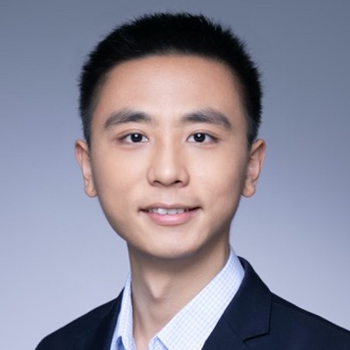
Yuhang Pan 120623

Yuhang Pan's research fields include environmental economics, health economics, and development economics, with a particular focus on using causal inference approach to study the impact of environmental pollution, public policy, and climate change on health and social welfare. His works have been published in both economics and scientific journals, such as Science, Nature Sustainability, and the Journal of Environmental Economics and Management. Dr. Pan obtained his undergraduate degree from Beijing Normal University in 2015 and his doctoral degree from the Hong Kong University of Science and Technology in 2021. Prior to joining Peking University, he worked as a postdoctoral researcher at the Faculty of Business and Economics at the University of Hong Kong.

Image
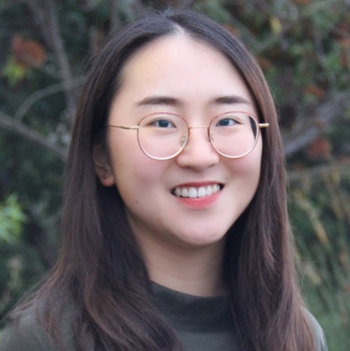
Jianan Yang 120623

Jianan Yang's primary research fields are health economics and development economics, with specific interests in health policy reform, medical behavior, and pharmaceutical innovation. She employs both experimental and quasi-experimental methods to explore policy-related questions, particularly examining their impact on patient welfare. She has published in top journals like the Journal of Development Economics. She earned her bachelor’s degrees in Economics and Mathematics from Renmin University of China in 2016, and her Ph.D. in Economics from the University of California, San Diego in 2022. Before joining Peking University, she was the 2022-2023 Developing Asia Health Policy Postdoctoral Fellow at Stanford University. 

Karen Eggleston

Online via Zoom Webinar

Yuhang Pan, Assistant Professor of Economics, Institute for Global Health and Development, Peking University
Jianan Yang, Assistant Professor of Economics, Institute for Global Health and Development, Peking University
Seminars
-
Brain Health and Dementia in Asia and Beyond

In this hybrid seminar, Professor Lee will reflect on her pioneering and collaborative research on late-life cognition and dementia across multiple settings. Drawing on empirical evidence and carefully harmonized surveys of health and aging (e.g., for Korea, Japan, China, India, the US and Europe), Professor Lee will assess the state of knowledge and evidence regarding risk and resilience factors and the potential for preventing cognitive decline. Her talk will conclude with discussion of current initiatives and global dialogues (political, academic, and industry) about healthy brain aging.

Image
Lee Jinkook 112823

Dr. Jinkook Lee is a Research Professor of Economics and the Program Director of Global Aging, Health, and Policy at the University of Southern California. Her research focuses on the economics of aging, with interdisciplinary training and expertise in large-scale population surveys. As the Principal Investigator on several NIH-funded grants, she laid the groundwork for studying Alzheimer’s Disease and Related Dementia and their risk factors and impacts in low and middle-income countries. She has developed the country’s first and only population representative dementia study in India and helped developing sister studies in China, Kenya, Nepal, Pakistan, and Malawi. She provides scientific advice for WHO, OECD, World Bank, and Asia Development Bank and serves on the editorial boards for several scientific journals. She previously held a professorship at Ohio State University and the Pardee RAND Graduate School. She received her Ph.D. from Ohio State University and B.S. from Seoul National University.

Karen Eggleston

The Philippines Conference Room, Encina Hall, 3rd Floor Central & Online via Zoom Webinar

Jinkook Lee, Research Professor of Economics, Dornsife College of Letters, Arts, and Science; Director of Global Aging, Health & Policy, Center for Economic and Social Research, University of Southern California.
Seminars
Authors
Noa Ronkin
News Type
News
Date
Paragraphs

The Walter H. Shorenstein Asia-Pacific Research Center (APARC) at Stanford University and the Ban Ki-moon Foundation For a Better Future are pleased to announce the second annual Trans-Pacific Sustainability Dialogue (TPSD) in Seoul, Republic of Korea, set to take place on September 12-14, 2023. This convening, designed to accelerate progress on achieving the United Nations-adopted 2030 Agenda for Sustainable Development, will focus on energy security, the seventh of the Agenda’s underlying 17 Sustainable Development Goals (SDGs).

APARC and the Ban Ki-moon Foundation launched the dialogue initiative to spur new research and policy collaborations between experts from the United States and Asia to expedite the implementation of the SDGs by governments and non-state actors. This year’s event builds upon the success of the inaugural Tran-Pacific Sustainability Dialogue, held in Seoul in October 2022, and the continued momentum generated through its resultant regional convening, the Trans-Altai Sustainability Dialogue, which took place earlier this summer in Mongolia.  

The Korea Environment Institute, Korea Energy Economics Institute, Korea Environmental Industry & Technology Institute, K-water, and Ewha Womans University will co-host the second annual Trans-Pacific Sustainability Dialogue. The event’s supporters include the Ministry of Foreign Affairs of the Republic of Korea, the Graduate School of International Studies at Yonsei University, and the Asian Development Bank. Award-winning Korean actor and director Cha In-pyo has been named honorary ambassador of the TPSD. Mr. Cha will deliver remarks at the opening session of the dialogue. 

At the core of the 2023 TPSD is the pivotal theme of energy security, SDG7, which proposes to ensure access to affordable, reliable, and sustainable energy for all. The challenge of energy production, transportation, and security poses a critical barrier to a shared sustainable future. Despite ongoing progress toward sustainable energy targets on a global scale, recent data indicates that the pace of advancements is insufficient to meet the SDG7 targets by 2030 and varies significantly across different regions. The latest report from the SDG7 Indicator Custodian Agencies also finds that the policy measures required to tackle the global energy crisis, exacerbated by the war in Ukraine, continue to lag and that international public financial support for clean energy in low and middle-income countries has been declining since before the onset of the COVID-19 pandemic.

By extending a platform for leading experts to combine rigorous scientific research, policy analysis, and industry insights, I am confident in our ability to advance tangible solutions and real-world action to propel us forward in pursuit of a decarbonized world.
Gi-Wook Shin
Director, Shorenstein APARC

“Energy security is pivotal to the SDGs. Without securing clean energy, the climate crisis remains insurmountable. However, the clean energy future is under serious threat from the war in Ukraine sparked by Russia,” says Mr. Ban Ki-moon, the 8th Secretary-General of the United Nations. “In this regard, I expect the second annual Trans-Pacific Sustainability Dialogue to play an important role in convening world-renowned researchers, policymakers, and students to address energy security and advance clean energy technologies,” he adds.

In pursuit of genuine progress, the second annual TPSD will convene esteemed academics, government officials, industry experts, and leading professionals from Stanford University and across Asia. Together, they will interact in dynamic discussions that bridge multiple disciplines and climate science, exploring technological and policy solutions to expedite the transition toward a future free from fossil fuels and other unsustainable energy practices.

“As we approach the 2023 TPSD, we find ourselves at a crucial juncture, crossing the mid-point of the implementation of the UN 2030 Agenda for Sustainable Development with mixed results,” notes Gi-Wook Shin, the William J. Perry Professor of Contemporary Korea at Stanford and director of APARC. “By extending a platform for leading experts to combine rigorous scientific research, policy analysis, and industry insights, I am confident in our ability to advance tangible solutions and real-world action to propel us forward in pursuit of a decarbonized world.”

The first day of the dialogue, co-hosted by the Korea Environment Institute and the Korea Energy and Economics Institute, will convene at The Plaza Seoul. A World Leaders Session will kick off the event, headlined by Mr. Ban Ki-moon; Chairman of the State Great Hural (Parliament) of Mongolia Zandanshatar Gombojav; former U.S. Secretary of Energy and Nobel Prize Laureate in Physics, Stanford Professor Steven Chu; and Managing Director General of the Asian Development Bank Woochong Um. The following plenary sessions will examine the intersections of energy security, sustainability, and issues such as geopolitics, green technologies, and clean energy co-benefits.

The second day will be held at Ewha Womans University and hosted by Ewha’s Center for Climate/Environmental Change Prediction Research. The day’s discussion topics will include, among others, energy-efficient technologies and principles for energy security education. With the mission of empowering young leaders to drive the climate change and sustainable development agenda, the second day will offer opportunities for emerging scholars and young professionals to present their research and applied work in championing progress toward energy security.

The 2023 TPSD underscores APARC’s and the Ban Ki-moon Foundation's shared commitment to fostering ambitious action toward delivering the 2030 Agenda and its Sustainable Development Goals. APARC and our partners, co-hosts, and supporters warmly invite scholars, students, policy experts, and professionals to join us at the TPSD and get involved with our efforts to shape a sustainable and resilient future for the Asia-Pacific region and beyond.

Visit the 2023 TPSD page to register to attend the event in person and access the complete program agenda and list of speakers.


About the Walter H. Shorenstein Asia-Pacific Research Center
The Walter H. Shorenstein Asia-Pacific Research Center (Shorenstein APARC) is Stanford University's esteemed institute dedicated to addressing critical issues impacting Asia and its relations with the United States. Through interdisciplinary research, education, and dialogue, APARC seeks to shape innovative policy solutions and enhance collaboration among countries in the Asia-Pacific region. For more information, visit aparc.stanford.edu.

About the Ban Ki-moon Foundation For a Better Future
The Ban Ki-moon Foundation For a Better Future upholds the legacy and vision of Ban Ki-moon, the 8th Secretary-General of the United Nations. Guided by the principles of unification, communication, co-existence, and dedication, the Foundation works tirelessly towards achieving peace, security, development, and human rights. Collaborating with international organizations and stakeholders, the Foundation actively supports the UN's Sustainable Development Goals and the 2050 carbon net-zero target set by the Paris Climate Accord. For more information, visit eng.bf4bf.or.kr.

Contact

For further information on the Trans-Pacific Sustainability Dialogue, contact Cheryll Alipio, Shorenstein APARC’s Associate Director for Program and Policy at calipio@stanford.edu.

Read More

Participants from the Inaugural Trans-Pacific Sustainability Dialogue
News

Inaugural Trans-Pacific Sustainability Dialogue Spotlights Climate Finance Mobilization and Green Innovation Strategies

Co-organized by Stanford’s Walter H. Shorenstein Asia-Pacific Research Center and the Ban Ki-moon Foundation for a Better Future, the inaugural Trans-Pacific Sustainability Dialogue brought together a new network of social science researchers, scientists, policymakers, and practitioners from Stanford University and across the Asia-Pacific region to accelerate action on the United Nations-adopted Sustainable Development Goals (SDGs).
Inaugural Trans-Pacific Sustainability Dialogue Spotlights Climate Finance Mobilization and Green Innovation Strategies
Hero Image
Flyer for the 2023 Trans-Pacific Sustainability Dialogue
All News button
1
Subtitle

The second annual convening of the Trans-Pacific Sustainability Dialogue will gather social science researchers and scientists from Stanford University and across the Asia-Pacific region alongside young leaders, policymakers, and practitioners, to expedite energy security solutions, investment, and policy support. Held in Seoul, Republic of Korea, on September 12-14, 2023, the dialogue features award-winning actor and director Cha In-pyo as honorary ambassador.

-
The Market for Healthcare in Low Income Countries

AHPP 2023-24 Colloquium series, “Technology, Trust, and Healthy Aging

Patient trust is an important driver of the demand for healthcare. But it may also impact supply: doctors who realize that patients may not trust them may adjust their behavior in response. We assemble a large dataset that assesses clinical performance using standardized-patients (akin to audit studies in economics) in low-income countries to investigate this possibility; most of these data are on healthcare providers who practice in the private sector on a fee-for-service basis. 

We establish that patients receive low quality of care, with a generous definition suggesting that fewer than 50% of cases are correctly managed, and between 70% and 90% of expenditures are medically unnecessary. Strikingly, and in contrast to the literature suggesting that the main problem with fee-for-service provision is over-treatment, the majority of these unnecessary expenditures are incurred because patients are incorrectly rather than over-treated. 

We then rule out two plausible explanations for low quality of care: low levels of medical knowledge and low market incentives to invest effort. In our data, there are many healthcare providers who know how to correctly treat the patient and could substantially increase their revenue by doing so given the price-quality gradients we estimate, but still treat the patient incorrectly. 

A model of the patient-provider relationship in which patients have incomplete information about the quality of providers generates predictions consistent with our findings. The theory additionally suggests that issuing a credible signal of quality should raise the average quality of care among providers, even if their underlying ability remains unchanged. 

We assess this prediction through an evaluation of a highly publicized training program with informal healthcare providers in West Bengal, India. The program has no impact on knowledge, yet substantially raises the quality of care, leading to an increase in the likelihood of correct treatment, a 19% decline in unnecessary expenditures for patients and a 9% increase in revenues for providers. We conclude that low trust undermines clinical performance in an economically and medically significant manner.

Image
Reshmaan Hussam 102623

Reshmaan Hussam is an assistant professor of business administration in the Business, Government and International Economy Unit at Harvard University's Business School, a Faculty Research Fellow at the National Bureau of Economic Research (NBER), and a faculty affiliate at the Abdul Latif Jameel Poverty Action Lab (J-PAL) and the Bureau for Research and Economic Analysis of Development (BREAD).

Her research explores questions at the intersection of development and behavioral economics, with research in three areas: migration, health, and finance.  Her most recent work engages refugee populations including the Rohingya in Bangladesh, examining the psychosocial value of employment in contexts of mass unemployment, the role of home in migration decision-making, and refugee preferences for repatriation, integration, and resettlement. In her work in health, which involves field experiments across South Asia, she considers the puzzle of the ubiquitously low adoption of low-cost, high-return goods, behaviors, and technologies in the developing world, exploring the role of learning and habit formation in behavior change. Her work in finance explores how to identify high-return microentrepreneurs using local community knowledge in India and how to increase credit access and returns to capital among refugee communities in Uganda.

Prior to joining HBS, Professor Hussam was a postdoctoral fellow at the Economic Growth Center at Yale University. She received her SB and PhD in economics from MIT.

Karen Eggleston

Online via Zoom Webinar

Reshmaan N. Hussam, Assistant Professor of Business Administration, Harvard University
Seminars
-
Poster for event, "The Social Costs of Keystone Species Collapse: Evidence From The Decline of Vultures in India"

Co-sponsored by Peking University Institute for Global Health and Development, and the Asia Health Policy Program

July 11th, 5-6 pm PST; July 12th, 2023, 8-9 am Beijing Time

Scientific evidence documents an ongoing mass extinction of species, caused by human activity. Allocating conservation resources is difficult due to scarce evidence on the damages from losing specific species. This paper studies the collapse of vultures in India, triggered by the expiry of a patent on a painkiller. Our results suggest the functional extinction of vultures --- efficient scavengers who removed carcasses from the environment --- increased human mortality by over 4% because of a large negative shock to sanitation. These effects are comparable to estimates of heat deaths from climate change. We quantify damages at $69.4 billion per-year.

Image
Eyal Frank 071123

Eyal Frank is an Assistant Professor at the Harris School of Public Policy and the Energy Policy Institute (EPIC) at the University of Chicago. He works at the intersection of economics and conservation, addressing three broad questions: (i) how do natural inputs, namely animals, contribute to different production functions of interest, (ii) how do market dynamics reduce natural habitats and lead to declining wildlife population levels, and (iii) what are the costs, indirect ones in particular, of conservation policies. To overcome causal inference challenges—as manipulating ecosystems and species at large scales is often infeasible—his work draws on natural experiments from ecology and policy, and uses econometric techniques to advance our understanding regarding the social cost of biodiversity losses.

Zoom Meeting:
Meeting ID: 849 6673 1656
Passcode: 110194

Eyal Frank, Assistant Professor of Economics, University of Chicago
Seminars
-
A Signal to End Child Marriage: Theory and Experimental Evidence from Bangladesh withErica Field

Co-sponsored by Peking University Institute for Global Health and Development, and the Asia Health Policy Program

Child marriage remains common even where female schooling and employment opportunities have grown. We experimentally evaluate a financial incentive to delay marriage alongside a girls’ empowerment program in Bangladesh. While girls eligible for two years of incentive are 19% less likely to marry underage, the empowerment program failed to decrease adolescent marriage. We show that these results are consistent with a signaling model in which bride type is imperfectly observed but preferred bride types (socially conservative girls) have lower returns to delaying marriage. Consistent with our theoretical prediction, we observe substantial spillovers of the incentive on untreated non-preferred types.

Image
Erica Field

Erica Field is a Professor of Economics and Global Health at Duke University specializing in the fields of Development Economics, Health Economics and Economic Demography. Professor Field’s work examines the microeconomics of household poverty and health in developing countries, with an emphasis on the study of gender and development. She has written papers on several topics in development in many different parts of the world, including microfinance contract design and social networks in India, marriage markets in Bangladesh, micronutrient deficiencies in Tanzania, health insurance for the poor in Nicaragua, household bargaining over fertility in Zambia.  Her work has been published in several leading peer-reviewed journals, including the Quarterly Journal of Economics, Journal of Political Economy and the American Economic Journal. Professor Field received her Ph.D. from Princeton University in 2003. Prior to joining the Economics Department at Duke, she was a John L. Loeb Associate Professor of Economics at Harvard University. 

Join Zoom Meeting
https://us06web.zoom.us/j/85156177922?pwd=RzFaKzlMVUdleVF2N0M3YUFBd3ZlZz09
Meeting ID: 851 5617 7922
Passcode: 410360

Erica Field, Professor of Economics, Duke University
Seminars
-
A stethoscope lying over bills of foreign money with text "the future of health policy"

The third installment in a special event series on the occasion of Shorenstein APARC's 40th Anniversary, "Asia in 2030, APARC@40"

Hosted by APARC's Asia Health Policy Program

The Asia Health Policy Program (AHPP) aims to help empower health systems and policymakers in the Asia-Pacific region to improve their proactive, evidence-based responses to population health problems. This webinar brings together former postdoctoral fellows and visiting scholars from the program to explore their contributions to guiding healthcare providers and policy audiences toward a better understanding of health and demographic issues and the delivery of disease management and other health services. In celebrating the 40th anniversary of the Shorenstein Asia-Pacific Research Center, these scholars and practitioners will also share their reflections on how the center and the program have shaped their research and professional careers.

Speakers

Image
Brian Chen

Brian Chen, JD, PhD. Dr. Chen is an associate professor at the Arnold School of Public Health, University of South Carolina. He brings with him a global perspective on health and well-being, having lived and worked in health-related industries in Taiwan, Japan, and France. Using the tools of economic analysis, his research focuses on the organization and delivery of health care as well as the social determinants of health in Asia and the United States. A particular focus of his work is on the impact of laws and economic incentives on healthcare treatment decisions. His doctoral dissertation, published in the Journal of Public Economics, explored how Taiwan’s separating policy that mandated the separation of diagnosing from drug dispending affected physician prescribing behavior, and whether such changes had an impact on observable health outcomes.

Dr. Chen continues to work on economics- and health law-related research, investigating the impact of opioid regulations on prescribing behavior and subsequent health consequences. His new project aims to understand how the introduction of a novel class of therapeutics may have affected the undertreatment of osteoporosis, an important question in aging societies in Asia, the United States, and around the world.

Dr. Chen received his BA summa cum laude in Linguistics with Computer Science from Harvard College (1992), JD from Stanford Law School (1997), and his PhD in Business Administration from the University of California at Berkeley (2009). He was a postdoctoral fellow at the Walter H. Shorenstein Asia-Pacific Research Center at Stanford from 2009 to 2011.

Image
Wasin Laohavinij

Wasin Laohavinij, MD. Wasin Laohavinij is a medical doctor with an interest in quality improvement and program evaluation. He was a visiting scholar at the Asia Health Policy Program, Walter H. Shorenstein Asia Pacific Research Center, Stanford University in the United States in the Autumn of 2019.

Currently, He is a preventive medicine physician concentrating on non-communicable diseases and serves as a Chief of Data Management and Cost Evaluating Center, at King Chulalongkorn Memorial Hospital, Thailand. His work focuses on reducing healthcare costs while maintaining the quality-of-care patients receive. Furthermore, he is also interested in evaluating the efficacy and cost-effectiveness of health interventions.

Image
Phyu Phyu Thin Zaw

Phyu Phyu Thin Zaw, MBBS, MPP, PhD. Phyu Phyu Thin Zaw, who is a Burmese national, is a medical doctor, epidemiologist, and health systems researcher currently working as a Lecturer in the School of Public Health at the Li Ka Shing Faculty of Medicine, University of Hong Kong. She is also a member of the Steering Committee of the Science in Exile initiative, which brings together at-risk, displaced, and refugee scientists along with like-minded organizations who work together to strengthen systems that support, protect and integrate such affected scientists.

Phyu Phyu’s research interests are equity, health and education policies, Southeast Asia health systems and policies, sexual and reproductive health, gender equality, poverty eradication, and human rights issues. Thin Zaw is also a public health and policy consultant giving technical advice to think tanks and non-governmental organizations.

Image
Margaret Triyana

Margaret Triyana, PhD. Dr Triyana is a Senior Economist at the World Bank's Office of the Chief Economist, South Asia Region. Her main research area examines human capital formation over the life cycle, with an emphasis on how policies and environmental factors affect different dimensions of human capital in low and middle-income countries. She also examines the distributional impacts of both environmental risks and policies.

Image
Siyan Li

Siyan Yi, MD, MHSc, PhD. Dr. Yi is a medical doctor and an infectious disease epidemiologist by training. He received his PhD from the School of International Health of the University of Tokyo in Japan in 2010. He was a postdoctoral fellow at the Asia Health Policy Program, Walter H. Shorenstein Asia Pacific Research Center, Stanford University from 2011-2012. He is an Assistant Professor and Director of the Integrated Research Program at Saw Swee Hock School of Public Health, National University of Singapore. He also serves as Director of KHANA Center for Population Health Research in Cambodia and Adjunct Associate Professor at Touro University California, the United States. His implementation research program focuses on developing and evaluating community-based innovative interventions for improving access to prevention, treatment, and care services for HIV/AIDS, tuberculosis, sexual and reproductive health, and maternal and child health among vulnerable and marginalized populations in Southeast Asia.

Karen Eggleston
Karen Eggleston

Online via Zoom Webinar

Brian Chen Associate Professor, Health Services Policy and Management, Arnold School of Public Health, University of South Carolina
Wasin Laohavinij Chief of Data Management and Cost Evaluating Center and Physician, King Chulalongkorn Memorial Hospital, Thailand
Phyu Phyu Thin Zaw Lecturer, School of Public Health, Li Ka Shing Faculty of Medicine, University of Hong Kong
Margaret Triyana Senior Economist, World Bank, South Asia Region
Siyan Yi Assistant Professor and Director of the USH-SSHSPH Integrated Research Program at Saw Swee Hock School of Public Health, National University of Singapore
Seminars
-
AHPP flyer for Feb 2, 2023 webinar with portrait of speaker Daniel Bennett

Co-sponsored by Peking University Institute for Global Health and Development, and the Asia Health Policy Program

Depression is the most common mental disorder and is more prevalent among people who live in poverty. Emerging economic literature studies the ways that depression may affect economic decision-making and contribute to intergenerational poverty. Dr. Bennett will describe recent developments in the literature and discuss his recent study of the socioeconomic impacts of depression treatment among underpriviledged adults in Karnataka, India.

Image
Bennet 020223

Daniel Bennett is an economist at the Center for Economic and Social Research and the Department of Economics at the University of Southern California. He studies economic development and global health in Africa and South Asia. Recent work examines the relationship between poverty and poor mental health, as well as the indirect consequences of the HIV/AIDS epidemic in Sub-Saharan Africa. Other work considers sanitation and hygiene behavior and the organization of pharmaceutical markets. Dr. Bennett collects primary data and uses both experimental and quasi-experimental methods. He received his Ph.D. in 2008 from Brown University.

Jianan Yang

Via Zoom Webinar

Daniel Bennett Associate Professor (Research) of Economics, University of Southern California.
Seminars
Subscribe to Health and the Environment