Military
Authors
Donald K. Emmerson
News Type
Commentary
Date
Paragraphs

This op-ed by Donald K. Emmerson first appeared in The Jakarta Post.

Above all, Trump wanted to be a winner. History granted his wish. He is the first president in the 245-year life of his country to have been impeached twice. By that standard, he won the title of America’s Worst President (AWP)—worse than any of the 44 presidents who preceded him.

AWP rhymes with 'gawp,' and that’s what he also wanted: to be stared at, talked about, catered to, the center of fawning attention, unforgettably present, dominating the news, astride the world in which the news is made. He wanted applause. His ravenous insecurity—narcissism—inflated his ego to continental size. In effect, in his authoritarian imagination, the “extremely stable genius” that he called himself deserved to be the indispensable “me” in “America,” without which the country’s name and the country itself would crumble.

The roars and chants of Trump’s crowds slaked his thirst for veneration. But they imprisoned him in his “base.” By satisfying his craving to be idolized, they gave him no reason to convince the unimpressed. How much more gratifying it must have been for him to bask in mass flattery at rallies than to engage in the difficult business of persuading the uncommitted. That would have taken assets he lacked: empathy, knowledge, intelligence, and a willingness not to lie.

[Subscribe to APARC's newsletters to get regular updates on our scholars.]

So how could Americans have elected such a demagogue? Trump was corrupt but charismatic. He broke the rules. He said whatever was on his mind. He appealed to the streak of individualism in American culture. He ran his campaign and his presidency as a mass entertainment featuring a lone patriot fighting a “deep state” controlled by globalist elites. Especially in rural areas between Silicon Valley and the Boston-to-Washington corridor, millions of white Americans felt threatened by the transfer of jobs from physical toward mental labor in a computerized society whose racial make-up was increasingly non-white. Globalization fed those anxieties. Trump stoked them. He promised to end them and “make America great again.”

Joe Biden defeated Trump in both the popular vote and the Electoral College—respectively by 4.4 and 13.7 percent. Biden’s margins were narrower than one might have wished, given the blatant flaws in Trump’s character, including the 30,573 false or misleading claims that he made during his presidency as tracked and noted by The Washington Post . The egregiousness of his behavior is, however, a double testament to America’s democratic system: to its failure to select a less despicable leader, yes, but also to its success in providing the lawful framework within which his desperate effort to stage what in Latin America would be called an autogolpe or “self-coup” could be and was overcome.

On 1 February 2021, watching television at his 126-room estate in Palm Beach, Florida, ex-president Trump would have learned of the coup in Myanmar and might have envied Senior General Min Aung Hlaing. Both men had been banned by Facebook for inciting violence in their respective countries—Trump in 2021, the general in 2018. Both had suffered defeats in elections held just five days apart in 2020—3 November in the US, 8 November in Myanmar. Both had rejected the voters’ verdict, claiming fraud. But whereas Trump’s frantic and deadly effort to subvert the US election and retain power failed, Min Aung Hlaing’s self-coup has succeeded, at least for now. The general quickly seized full power despite his party’s massive embarrassment at the polls in November, Aung San Suu Kyi’s party having won 83 percent of the available seats. In contrast, Trump could not reverse his exit from power despite a far slimmer margin of electoral defeat. To the extent that the ex-president was even aware of the difference, it could have fanned what angry envy of the general he may have felt.

Trump failed mainly due to the checks and balances that generally call government to account in America. Min Aung Hlaing succeeded in no small part thanks to the checks and balances in the bank accounts of the generals who have compromised Myanmar’s transition to democracy and helped make it the second most corrupted country in Southeast Asia (after Cambodia) as measured by the Corruption Perceptions Index.

Among the many reactions to the Burmese coup, several stand out for their courage and creativity. UN Secretary General António Guterres was unequivocal. "It's absolutely unacceptable,” he said, “to reverse the result of the elections and the will of the people.” Presumably speaking on behalf of the UN, its secretariat, or himself, or all three, he went further: "We'll do everything we can to mobilize all the key actors of the international community to put enough pressure on Myanmar to make sure that this coup fails." 

This notable response came from Indonesia’s former foreign minister Marty Natalegawa: “Deafening silence in the face of assaults against democratic principles [has] increasingly become the norm,” he said. He urged ASEAN to “demonstrate its relevance: It must speak urgently for the respect of constitutional process and rule of law in Myanmar, and call for the immediate release of those unlawfully detained.”

In the days immediately following the coup, ASEAN’s Bruneian secretary general said nothing about it, preferring to remain, in the Indonesian expression, “silent in a thousand tongues.” Speaking for ASEAN as its current chair, however, Brunei’s government did at least encourage a “return to normalcy in accordance with the will and interests of the people of Myanmar,” noting that the group charter’s called for adherence to “democracy, the rule of law” and “human rights and fundamental freedoms.”

As for ASEAN’s next chair, Cambodia, its strongman Hun Sen did speak, but only to say that "Cambodia does not comment on the internal affairs of any country at all.” Hun Sen’s restraint made historical sense. Had Cambodia’s old despot chosen to criticize Myanmar’s new despot, observers could have noted that Min Aung Hlaing had only done what Hun Sen himself had bloodily accomplished in 1997 by seizing full control over Cambodia in a self-coup of his own that had enabled him to become the longest-serving prime minister in the world.

Critical Southeast Asian voices, unconstrained by look-the-other-way diplomacy, have been heard. The chairman of the ASEAN Parliamentarians for Human Rights, Charles Santiago, has urged ASEAN to send a high-level delegation to Myanmar to tell Min Aung Hlaing that his coup “violates ASEAN principles and the ASEAN charter” and is “not acceptable.” “If Myanmar does not turn around,” he added, “there should be proceedings to expel Myanmar out of ASEAN.”

Who is better positioned to deal with this crisis than ASEAN’s largest and debatably least authoritarian member country? It was Indonesia’s Natalegawa who patched up ASEAN’s consensus after Hun Sen damaged it on China’s behalf in 2012. And it is Natalagewa who believes, with the Myanmar coup in mind, that “at this critical juncture for the region, Indonesia must demonstrate its leadership within ASEAN.”

Indonesia’s president Jokowi, rather than trying to rally the region against the coup, will likely continue to focus on domestic economic growth. Not to mention the existential priority that COVID-19 also warrants on his agenda.

So why not task Natalegawa with a damage-control trip around the region comparable the one he took with some success in 2012? He could start with fact-finding in Myanmar. He could then explore an intra-ASEAN understanding that would reassert the core democratic values in the ASEAN Charter while lessening, if possible, the chance that Myanmar will revert to entrenched and fully authoritarian rule. That may be a lost cause. But nothing ventured, nothing gained.

Although Donald Trump is no longer in office, America is still not safe from Trumpism. But America’s system—democracy—is working as it should. Is ASEAN really a dictators’ club? Or does it, too, when threatened from within, have a system that can at least manage and minimize the damage that is, in Myanmar as I write this, being done?

Read More

Protesters opposing the February 1 coup in Myanmar
Q&As

The Myanmar Coup Is a Major Setback, but the Story of Myanmar's Struggle for Democracy Is Not Over

According to Scot Marciel, former U.S. ambassador to Myanmar and Stanford visiting scholar at APARC, building a democracy is a difficult process that can be upended, particularly when the military is politicized and has its own agenda.
The Myanmar Coup Is a Major Setback, but the Story of Myanmar's Struggle for Democracy Is Not Over
President Biden walks past a row of Chinese and American flags.
News

APARC Experts on the Outlook for U.S.-Asia Policy Under the Biden Administration

Ahead of President-elect Biden’s inauguration and on the heels of the attack on the U.S. Capitol by a pro-Trump mob that has left America shaken, an APARC-wide expert panel provides a region-by-region analysis of what’s next for U.S. policy towards Asia and recommendations for the new administration.
APARC Experts on the Outlook for U.S.-Asia Policy Under the Biden Administration
Barack Obama addresses a crowd of young leaders from ASEAN nations.
Commentary

A Global Town Hall Welcomes America Back

Despite the reversals of the Trump era, a flurry of online diplomacy served as a reminder that the U.S. is welcome in Southeast Asia writes Donald K. Emmerson in The Diplomat.
A Global Town Hall Welcomes America Back
Hero Image
Protesters in Myanmar stand on a picture of General Min Aung Hlaing
Chung Sung-Jun, Getty Images
All News button
1
Subtitle

Southeast Asia Program Director Donald K. Emmerson compares responses across Southeast Asia to the February coup in Myanmar and reflects on the parallels and differences between the state of democracy there and in the United States.

Authors
News Type
Q&As
Date
Paragraphs

This article was originally written by Melissa De Witte on behalf of Stanford News.

As Monday’s coup in Myanmar demonstrates, democracy is often fragile and subject to setbacks, says former U.S. ambassador to Myanmar and Stanford visiting scholar, Scot Marciel.

Here, Marciel discusses how in a country like Myanmar (formerly Burma), which was under military rule from 1962 to 2011, establishing a democracy takes time. Despite democratic reforms over the past decade, the military in Myanmar has held onto a considerable amount of power, said Marciel, noting that it is difficult to build not only a representative parliament but other democratic institutions including an independent judicial system, a fair police force and a free press.

While Monday’s coup is a major setback in Myanmar’s fight for democracy, Marciel said that there are many people in the country who will do what they can to restore their elected government and build the foundations of democracy.

Marciel is a visiting scholar at the Walter H. Shorenstein Asia-Pacific Research Center (APARC), Stanford’s hub for interdisciplinary research, education and engagement on contemporary Asia that is run under the auspices of the Freeman Spogli Institute for International Studies. Marciel served as U.S. Ambassador to Myanmar from March 2016 through May 2020. From 2010 to 2013, Scot Marciel served as U.S. Ambassador to Indonesia.

[Subscribe to APARC's newsletters to get the latest updates from our scholars.]


What do people who have not spent extensive time studying or living in Myanmar need to know about its history to better understand Monday’s coup?

A couple of things. First, as historian Thant Myint-U has written, Myanmar is an unfinished nation, in the sense that the diverse communities that make up the country have never truly solidified as a unified nation. The country has been in near-constant conflict, mostly between the majority Bamar ethnic group and the many ethnic minority communities that inhabit much of Myanmar’s border areas. Second, the military staged a coup in 1962 and ran the country for nearly 50 years before allowing some movement toward representative democracy beginning in 2011-2012. So the military has long been a dominant force in the country, and – even after the reforms of the past decade – retained substantial power.

Is there anything that is often misunderstood about its history and its people?

In the West, many people have tended to view Myanmar mostly through the prism of a struggle for democracy between the military and the civilian opposition, led by Aung San Suu Kyi. That is a critically important part of the story, for sure. Perhaps equally important, however, has been the struggle of the many ethnic minority communities for equality, a degree of autonomy, and respect for their own histories, cultures and languages. This struggle has produced widespread conflict, significant human rights abuses, and large numbers of refugees and displaced people for decades.

What are some of the difficulties in establishing, and maintaining, democratic rule in a country like Myanmar?

First, persuading the military to give up power, depart from politics, and play a more appropriate role in the country. Second, it is very difficult to build the institutions of democracy, including not only parliament, but also a strong, independent judicial system, an effective and fair police force, and respect for the critical role of civil society and the independent media. In Myanmar, another essential aspect is to shift from historically centralized rule to a federal structure that would allow the various communities across the country to have more of a say in how they are governed.

As ambassador to Myanmar, what was it like working with not only the country’s policymakers but also its people? What did you learn from them about how democracy is established? And how did those experiences shape your perspective?

In Myanmar, I met so many people, all over the country, from many different walks of life, who had sacrificed and continued to sacrifice to try to build democracy and respect for human rights. Some operated at the national level, others at the local level. It was a good reminder that democracy isn’t just imposed from the top; it requires careful building at the community and state level, with intensive involvement by the various communities. It also takes time and, as we have seen this week, is often fragile and subject to setbacks. In other words, it is a long-term effort that requires persistence, courage, and participation by large numbers of people. Establishing a democracy is a lengthy, painstaking effort that can be upended, particularly if the armed forces are politicized and pursue their own agenda.

Is there anything else you would like to add? 

This week’s military takeover constitutes a major setback, but the story of Myanmar’s struggle for democracy is not over. Many people there will continue to do what they can to restore elected government and build, brick by brick, the foundations of democracy.

Read More

Portrait of Paul Schuler and the cover of his book, 'United Front'
Q&As

A Balance of Power: The Role of Vietnam’s Electoral and Legislative Institutions

As the 13th National Congress of Vietnam's Communist Party is selecting a new leadership team that will set the country’s course for the next five years, Vietnamese politics expert Paul Schuler discusses his new book on the state’s single-party legislature.
A Balance of Power: The Role of Vietnam’s Electoral and Legislative Institutions
President Biden walks past a row of Chinese and American flags.
News

APARC Experts on the Outlook for U.S.-Asia Policy Under the Biden Administration

Ahead of President-elect Biden’s inauguration and on the heels of the attack on the U.S. Capitol by a pro-Trump mob that has left America shaken, an APARC-wide expert panel provides a region-by-region analysis of what’s next for U.S. policy towards Asia and recommendations for the new administration.
APARC Experts on the Outlook for U.S.-Asia Policy Under the Biden Administration
Stanford campus, main quad with cloudy sky
News

APARC Offers Fellowship and Funding Opportunities to Support, Diversify Stanford Student Participation in Contemporary Asia Research

The Center has launched a suite of offerings including a predoctoral fellowship, a diversity grant, and research assistant internships to support Stanford students interested in the area of contemporary Asia.
APARC Offers Fellowship and Funding Opportunities to Support, Diversify Stanford Student Participation in Contemporary Asia Research
Hero Image
Protesters opposing the February 1 coup in Myanmar
People protest the February 1 coup in Myanmar outside the Myanmar embassy in Bangkok, Thailand.
Lauren DeCicca, Getty
All News button
1
Subtitle

According to Scot Marciel, former U.S. ambassador to Myanmar and Stanford visiting scholar at APARC, building a democracy is a difficult process that can be upended, particularly when the military is politicized and has its own agenda.

-

This is a virtual event. Please click here to register and generate a link to the talk. 
The link will be unique to you; please save it and do not share with others.

As US-China competition intensifies, experts debate the degree to which the current strategic environment resembles that of the Cold War. Those that argue against the analogy often highlight how China is deeply integrated into the US-led world order. They also point out that, while tense, US-China relations have not turned overtly adversarial. But there is another, less optimistic reason the comparison is unhelpful: deterring and defeating Chinese aggression is harder now than it was against the Soviet Union. In this talk, Dr. Mastro analyzes how technology, geography, relative resources and the alliance system complicate U.S. efforts to enhance the credibility of its deterrence posture and, in a crisis, form any sort of coalition.


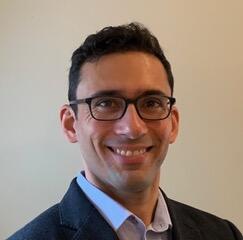
Photo of Oriana MastroOriana Skylar Mastro is a Center Fellow at Stanford University’s Freeman Spogli Institute for International Studies (FSI). Within FSI, she works primarily in the Shorenstein Asia-Pacific Research Center (APARC) and the Center for International Security and Cooperation (CISAC) as well. She is also a fellow in Foreign and Defense Policy Studies at the American Enterprise Institute and an inaugural Wilson Center China Fellow.
Mastro is an international security expert with a focus on Chinese military and security policy issues, Asia-Pacific security issues, war termination, and coercive diplomacy. Her research addresses critical questions at the intersection of interstate conflict, great power relations, and the challenge of rising powers. She has published widely, including in Foreign Affairs, International Security, International Studies Review, Journal of Strategic Studies, The Washington Quarterly, The National Interest, Survival, and Asian Security, and is the author of The Costs of Conversation: Obstacles to Peace Talks in Wartime (Cornell University Press, 2019).

She also continues to serve in the United States Air Force Reserve, for which she works as a Strategic Planner at INDOPACOM. Prior to her appointment at Stanford in August 2020, Mastro was an assistant professor of security studies at the Edmund A. Walsh School of Foreign Service at Georgetown University. She holds a B.A. in East Asian Studies from Stanford University and an M.A. and Ph.D. in Politics from Princeton University.


Image
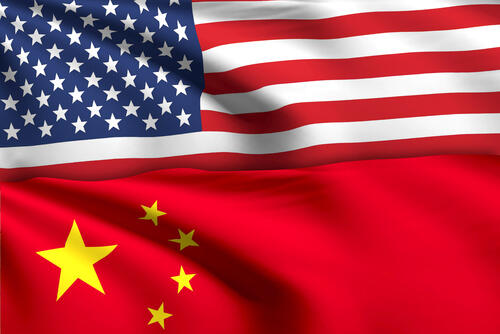
American and Chinese flags
This event is part of the 2021 Winter/Spring Colloquia series, Biden’s America, Xi’s China: What’s Now & What’s Next?, sponsored by APARC's China Program.


Via Zoom Webinar. Register at: bit.ly/2MYJAdw

Oriana Skylar Mastro Center Fellow at the Freeman Spogli Institute for International Studies
Seminars
Paragraphs

During the past eight months of the global COVID pandemic, the Chinese People’s Liberation Army (PLA) has been active in promoting China’s claims in the South China Sea.  This essay evaluates PLA statements, military exercises and operations, and deployment of relevant platforms and weapons in the South China Sea during this period. I leverage Chinese-language sources in addition to my own operational knowledge from over a decade of military experience to provide greater context for these activities. I argue that the greatest change in the PLA’s role in the South China Sea has not been operational. Instead, the most interesting development has been the fact that the PLA has taken on a more significant signaling role. Specifically, the Chinese military seems to be purposefully using, and perhaps even exaggerating, its capabilities and activities to enhance deterrence against the United States. This may be seen as necessary as the US increases its own efforts to push back on China’s militarization of the South China Sea. In other words, the PLA has taken a more active role in China’s South China Sea strategy, but not necessarily a more aggressive one.

All Publications button
1
Publication Type
Journal Articles
Publication Date
Journal Publisher
China Leadership Monitor
Authors
Oriana Skylar Mastro
Number
Issue 66
Authors
Oriana Skylar Mastro
News Type
Commentary
Date
Paragraphs

This analysis by Oriana Skylar Mastro originally appeared in The Interpreter, by the Lowy Institute.


China’s strategy in responding to concerns about its intentions in the South China Sea is to claim that none of the activities, statements or behaviours that concern other countries are actually happening.

China claims it has not militarised the South China Sea, but that the United States “is the real pusher of militarisation” in these waters. Its leaders often argue that China is a peace-loving country only interested in defending itself. As the China’s General Wei Fenghe stated at the Shangri-La Dialogue in 2018, “China has never provoked a war or conflict, nor has it ever invaded another country or taken an inch of land from others. In the future, no matter how strong it becomes, China shall never threaten anyone.”

China has similarly brushed off concerns of other claimants, such as Vietnam, about its intensifying military exercises in the South China Sea and largely ignored Australia’s assertion at the United Nations that China’s claims have no legal backing.

So apparently it is all one big misunderstanding.

On 24 November, former Chinese ambassador Fu Ying criticised the United States in a New York Times op-ed for raising multiple issues that in her mind do not exist. Thus, the way to resolve the growing bilateral tensions is for the two countries “to have candid talks to better understand each other’s intentions and cultivate trust”.

So, in the Chinese communist spirit of 实事求是, or “seeking truth from facts”, I have charted the military capabilities China has deployed to the South China Sea, which are displayed with references on the map below. The Paracel Islands and the Spratly Islands are under dispute; Hainan Island is a recognised part of China, but I include it because the military capabilities in situ have implications for Chinese military options in the South China Sea writ large.

Read More

NPR's audio streaming logo next to a portrait of Oriana Skylar Mastro.
Commentary

Update on Taiwan and China's Troubled Relationship: Oriana Skylar Mastro on NPR

"The current threat is that the CCP is running out of patience, and their military is becoming more and more capable. So for the first time in its history, there's the option of taking Taiwan by force," Mastro tells NPR's Weekend Edition host Scott Simon.
Update on Taiwan and China's Troubled Relationship: Oriana Skylar Mastro on NPR
Fiery Cross Reef, Spratly Islands
Commentary

Strategy in the South China Sea

Donald K. Emmerson analyzes China’s tactics in the South China Sea and how the countries of Southeast Asia are reacting to the tensions in the disputed waterway.
Strategy in the South China Sea
Oriana Skylar Mastro at a conference
Q&As

Center Fellow Oriana Skylar Mastro Discusses How Her Scholarship and Military Career Impact One Another

An expert on Chinese military and security issues, Mastro also talks about how her learning style informs her teaching style.
Center Fellow Oriana Skylar Mastro Discusses How Her Scholarship and Military Career Impact One Another
Hero Image
Battleships patrolling in the open ocean.
Battleships patrol in the open ocean.
Getty Images
All News button
1
Subtitle

China’s official denials of growing military capability in the region look a lot like gaslighting.

Authors
News Type
Q&As
Date
Paragraphs

Brett McGurk, former presidential envoy for the global coalition to defeat ISIS, joins Andrea Mitchell to discuss the last minute foreign policy moves, including the decision to draw down the number of troops in Afghanistan, that President Trump is saddling the incoming Biden administration with.

Watch interview at MSNBC

Hero Image
picture of man with American flag in the background
All News button
1
Subtitle

Brett McGurk, former presidential envoy for the global coalition to defeat ISIS, joins Andrea Mitchell to discuss the last minute foreign policy moves, including the decision to draw down the number of troops in Afghanistan, that President Trump is saddling the incoming Biden administration with.

Authors
News Type
News
Date
Paragraphs

Special forces veteran and Stanford scholar Joseph Felter will never forget when U.S. Army General Stanley McChrystal was briefed on a study Felter had co-authored concluding that civilian casualties inflicted by international forces in Afghanistan increased insurgent violence.

McChrystal was gripped by one finding in particular in the analysis by Felter and his colleague, Radha Iyengar: If the International Security Assistance Force (ISAF) could eliminate incidents that left at least two civilians dead, then there would be one less insurgent attack over the following six weeks.

Read the rest at  Stanford News

Hero Image
Two soldiers in front of car
Joseph Felter (left) in southern Afghanistan’s Kandahar Province, where he was the Counterinsurgency Advisory and Assistance Team commander.
Courtesy Joseph Felter
All News button
1
Subtitle

Joseph Felter underscores the importance of rigorous data and scholarship in understanding violent conflict and reducing casualties. He brought scholars into the field when he was deployed overseas and he draws on this experience to give his Stanford students a first-hand look into challenges facing the U.S. military.

-
This is a virtual event. Please click here to register and generate a link to the talk. 
The link will be unique to you; please save it and do not share with others
.
 
 APARC South Asia research Initiative presents: Fall 2020 Colloquium Series on
India-China Strategic Competition
 

Washington DC time:  7:00pm-8:30pm, 9-Nov. 2020
Sydney, Australia time: 11:00am-12:30pm, 10-Nov. 2020 

Expectations of India’s rise have been dented in 2020. Amid lackluster economic performance and creeping socio-political illiberalism, India also suffered a major strategic setback. Chinese forces that crossed the Line of Actual Control in Ladakh remain encamped at several tactically-valuable points, and although talks continue, India has few visible options to force a return to the status quo ante. India now sees China is more clearly adversarial terms – but does it have what it takes to compete effectively? This conversation will conclude the APARC South Asia’s fall 2020 colloquium series on the India-China strategic competition with a wider and deeper look at India’s political and military power. We will discuss India’s ability to deter and balance China, its strategies to build national power and align with new partners, and the prospects for the competition in 2021 and beyond.
 

Ashley Tellis29kb Ashley Tellis29Kb
Ashley J. Tellis holds the Tata Chair for Strategic Affairs and is a senior fellow at the Carnegie Endowment for International Peace. Previously he was commissioned into the Foreign Service and served as senior adviser to the ambassador at the U.S. Embassy in New Delhi. While serving as the senior adviser to the Undersecretary of State for Political Affairs, he was intimately involved in negotiating the civil nuclear agreement with India. He also served on the National Security Council staff as special assistant to President George W. Bush and senior director for strategic planning and Southwest Asia. Prior to his government service, Tellis was senior policy analyst at the RAND Corporation and professor of policy analysis at the RAND Graduate School. He is a counselor at the National Bureau of Asian Research and serves as an adviser to the Chief of Naval Operations. He is the author of India’s Emerging Nuclear Posture (2001), co-author of Interpreting China’s Grand Strategy: Past, Present, and Future (2000), and co-editor of the sixteen latest annual volumes of Strategic Asia. He earned his PhD in political science from the University of Chicago.


Image
Arzan Tarapore
Arzan Tarapore is the South Asia research scholar at the Shorenstein Asia-Pacific Research Center at Stanford University, where he leads the newly-restarted South Asia research initiative. He is also a senior nonresident fellow at the National Bureau of Asian Research. His research focuses on Indian military strategy and contemporary Indo-Pacific security issues. He previously held research positions at the RAND Corporation, the Observer Research Foundation, and the East-West Center in Washington. Prior to his scholarly career, he served as an analyst in the Australian Defence Department, which included operational deployments as well as a diplomatic posting to Washington, DC. Tarapore holds a PhD in war studies from King’s College London.


via ZOOM Webinar
Register:  https://bit.ly/2IPGZjS

Ashley J. Tellis <br><i>Tata Chair for Strategic Affairs and Senior Fellow, Carnegie Endowment for International Peace</i><br><br>
Arzan Tarapore <br><i>South Asia Research Scholar, Shorenstein Asia-Pacific Research Center, Stanford University</i><br><br>
Seminars
News Type
Commentary
Date
Paragraphs

India-China border tensions along the disputed Line of Actual Control show no signs of letting up and the prospects of peace in the conflict between the nuclear-armed rivals are daunting. How do the Indian and Chinese militaries compare against each other?

FSI Center Fellow at APARC Oriana Skylar Mastro and our South Asia Research Scholar Arzan Tarapore join the Observer Research Foundation’s ‘Armchair Strategist’ podcast to discuss the Indian and Chinese strategic power postures, military modernization and reform by the two Asian neighbors, the ways they can marshal both military and non-military forces, and the possible outcomes of a confrontation along their Himalayan border. Listen here:

Based in Delhi, the Observer Research Foundation (ORF) is a leading South Asian nonprofit policy research institution whose work spans a wide range of topics, including national security, economic development, cyber issues and media, and climate and energy.

Read More

Chinese President Xi Jinping (R) talks with India's Prime Minister Manmohan Singh (L) during a meeting at the Diaoyutai State Guesthouse in 2013.
Commentary

China-India: Talk is Cheap, But Never Free

Nations often hesitate to negotiate with opponents during conflict. But Oriana Skylar Mastro urges that this is precisely what India and China need to do in order to curb the potential for a protracted, costly war with devastating geopolitical implications.
China-India: Talk is Cheap, But Never Free
An Indian army soldier watches a fighter plane from a convoy of trucks in Gagangir, India.
Commentary

India and China are Taking New Risks Along Their Border

Will diplomacy help defuse the current tensions brewing along the India-China border? Arzan Tarapore analyzes why restoring peace between the two countries may prove difficult.
India and China are Taking New Risks Along Their Border
An Indian Army soldier looking through a military monocular over hills in the background
News

U.S. Policymakers Cannot Assume the Fixity of Indian Strategic Preferences, Argues South Asia Research Scholar Arzan Tarapore

In a special report published by the National Bureau of Asian Research, Tarapore analyzes possible scenarios for India’s strategic future that expose risks and tensions in current U.S. policy.
U.S. Policymakers Cannot Assume the Fixity of Indian Strategic Preferences, Argues South Asia Research Scholar Arzan Tarapore
Hero Image
Logo of the Observer Research Foundation's 'Armchair Strategist' podcast with portraits of Oriana Skylar Mastro and Arzan Tarapore
All News button
1
Subtitle

Oriana Skylar Mastro and Arzan Tarapore join the Observer Research Foundation’s ‘Armchair Strategist’ podcast to discuss how the Indian and Chinese militaries stack up as tensions between the two Asian neighbors continue to heat up.

Authors
Arzan Tarapore
News Type
Commentary
Date
Paragraphs

This analysis by Arzan Tarapore was originally published at The Monkey Cage by The Washington Post.


Last week, the India-China border standoff came the closest it has yet to war. As Taylor Fravel explained, the long-standing border dispute dates from the 1962 Sino-Indian War. The dispute came to a boil in May when a large force of Chinese soldiers crossed the Line of Actual Control (LAC), the disputed border between the two countries since 1962. A deadly skirmish in June temporarily raised tensions, but it was the result of tragic happenstance rather than large and risky military maneuvers.

Tensions have escalated more seriously since late August because both sides have jostled for tactical advantage, creating incentives for each side to outflank or even fight the other.

Here’s where things stand in this crisis.

Aggressive tactical maneuvers led to rising tensions

A new phase of the four-month-long border crisis opened when Indian special forces quietly occupied several peaks in the mountainous Chushul sector of Ladakh during the night of Aug. 29-30. These peaks sit on India’s side of the LAC, just south of a divided lake — Pangong Tso — but had been left unoccupied in accordance with confidence-building agreements. They were the site of tenacious fighting in the 1962 border war and hold particular tactical significance because they overlook an important pathway through the mountains between India and China.

Occupying the high ground in Chushul was designed to prevent Chinese forces from establishing an even stronger position. India also may have calculated that it could negotiate a withdrawal from those tactically valuable peaks in return for a Chinese withdrawal from areas seized after May.

Tensions rose. Indian and Chinese troops also scrambled to secure high ground overlooking new Chinese fortifications on the north bank of Pangong Tso. They reinforced their positions with additional aircraft and armor and accused each other of firing the first gunshots on the LAC since 1975. Some Indian analysts warned that China might risk war to reverse India’s occupation of the Chushul peaks.

Continue reading Arzan's full analysis on Monkey Cage at The Washington Post >>

[Subscribe to our newsletters to get the latest commentary from APARC scholars.]

Read More

A regiment of the Indian Army practices in dress uniform for Republic Day
Commentary

Rethinking the Defense Doctrine of India

The security threats India faces along its borders require new strategies, and in order to manage and prevent future risks, the military needs to overhaul its traditional playbook of deterring and defending against conventional attacks says Arzan Tarapore.
Rethinking the Defense Doctrine of India
An Indian Army soldier looking through a military monocular over hills in the background
News

U.S. Policymakers Cannot Assume the Fixity of Indian Strategic Preferences, Argues South Asia Research Scholar Arzan Tarapore

In a special report published by the National Bureau of Asian Research, Tarapore analyzes possible scenarios for India’s strategic future that expose risks and tensions in current U.S. policy.
U.S. Policymakers Cannot Assume the Fixity of Indian Strategic Preferences, Argues South Asia Research Scholar Arzan Tarapore
Hero Image
An Indian army soldier watches a fighter plane from a convoy of trucks in Gagangir, India.
An Indian army soldier watches fighter plane from a convoy of trucks in Gagangir, India.
Yawar Nazir / Stringer, Getty Images
All News button
1
Subtitle

Will diplomacy help defuse the current tensions brewing along the India-China border? Arzan Tarapore analyzes why restoring peace between the two countries may prove difficult.

Subscribe to Military