Culture
-

Image
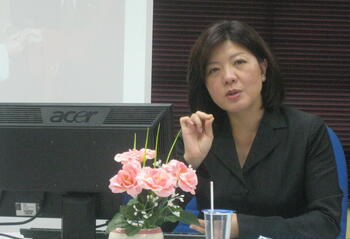
joon nak choi 7 cropped
Why has Korean pop music (K-Pop) become so popular overseas? A wide variety of explanations have been proposed by academics, journalists and the fans themselves, ranging from superior training and product quality to the strategic usage of social media. Although some of these explanations have become widely-cited especially in the Korean media, whether or not they are actually correct remains largely unknown. To demystify why K-Pop has gained a following overseas, this study examines data on K-Pop concert booking overseas, from 2011 through 2014. The findings highlight the importance of cultural proximity, while casting doubt upon several other widely-cited explanations.

Joon Nak Choi is the 2015-2016 Koret Fellow in the Korea Program at Stanford's Shorenstein Asia-Pacific Research Center (APARC). A Stanford graduate and sociologist by training, Choi is an assistant professor at Hong Kong University of Science and Technology. His research and teaching areas include economic development, social networks, organizational theory, and global and transnational sociology, within the Korean context. He recently coauthored Global Talent: Skilled Labor as Social Capital in Korea which he developed the manuscript from 2010-11 while he was a William Perry postdoctoral fellow at APARC.

This event is made possible through the generous support of the Koret Foundation.

Shorenstein APARC
Encina Hall
Stanford University
Stanford, CA 94305-6055

0
joon_nak_choi_7_cropped.jpg

Joon Nak Choi is the 2015-2016 Koret Fellow in the Korea Program at Stanford University's Walter H. Shorenstein Asia-Pacific Research Center (Shorenstein APARC). A sociologist by training, Choi is an assistant professor at Hong Kong University of Science and Technology. His research and teaching areas include economic development, social networks, organizational theory, and global and transnational sociology, within the Korean context.

Choi, a Stanford graduate, has worked jointly with professor Gi-Wook Shin to analyze the transnational bridges linking Asia and the United States. The research project explores how economic development links to foreign skilled workers and diaspora communities.

Most recently, Choi coauthored Global Talent: Skilled Labor as Social Capital in Korea with Shin, who is also the director of the Korea Program. From 2010-11, Choi developed the manuscript while he was a William Perry postdoctoral fellow at Shorenstein APARC.

During his fellowship, Choi will study the challenges of diversity in South Korea and teach a class for Stanford students. Choi’s research will buttress efforts to understand the shifting social and economic patterns in Korea, a now democratic nation seeking to join the ranks of the world’s most advanced countries.
 
Supported by the Koret Foundation, the Koret Fellowship brings leading professionals to Stanford to conduct research on contemporary Korean affairs with the broad aim of strengthening ties between the United States and Korea. The fellowship has expanded its focus to include social, cultural and educational issues in Korea, and aims to identify young promising scholars working on these areas.


2015-2016 Koret Fellow
Visiting Scholar
2015 Koret Fellow 2015 Koret Fellow, Korea Program, APARC, Stanford
Seminars
Paragraphs

The breakthrough agreement on the comfort women issue between Japan and South Korea on Dec. 28, 2015, was the culmination of at least four years of negotiations between the two governments. South Korean President Park Geun-hye and Japanese Prime Minister Shinzo Abe pushed for the agreement; the Obama administration provided persistent pressure while resisting a mediation role. The danger of the agreement falling apart is apparent to officials in Washington and Seoul, and hopefully Tokyo too, writes Sneider.

All Publications button
1
Publication Type
Commentary
Publication Date
Journal Publisher
Toyo Keizai Online
Authors
Daniel C. Sneider
-

From Voltaire’s correspondence with Catherine the Great, to Adam Smith’s travels on the European continent, mediated and unmediated communication was the lifeline of the Enlightenment. Where historians once spoke of the Enlightenment in national terms (e.g., the “Scottish Enlightenment” vs. “German Enlightenment”), they are increasingly recognizing the ways in which the communication networks that spread across countries provided the infrastructure for thinking in a new, “European” fashion. What’s more, the recent influx of metadata from the correspondences of major Enlightenment figures now allows scholars to study these networks at both the micro and macro levels. We are therefore well poised to produce far clearer maps of how the Enlightenment spread out across Europe and beyond, to European colonies. And we can trace the return of knowledge from the periphery back to the center’s capitals.


This 2-day conference, convened by Dan Edelstein, will assemble some of the leading scholars who are using data-driven scholarship to study the information networks that made the Enlightenment possible, and contributed to create a new sense of European identity.


April 29, 10:00am – 5:30pm

9:30am-10:00am       Breakfast & Coffee

10:00am - 12:00pm   Correspondence & Communication
Pierre-Yves Beaurepaire, “Experiencing the 'Communication Process' of the Enlightenment: Three Case Studies”
Charlotta Woolf, “Un ami des philosophes modernes": The Networks of Swedish Ambassador Gustav Philip Creutz in Paris, 1766-1783”
Andrew Kahn, “The Enlightenment Correspondence of Catherine the Great: the Digital Project”

12:00pm – 1:00pm     Lunch

1:00pm - 3:00pm       Science & Technology
Paola Bertucci, “Artisanal Networks: The République des lettres and The Société des arts”
Jessica Riskin, “Lamarckiana” 
Paula Findlen, “Imagining a Community:  The Scientific Networks of Laura Bassi, Emilie du Chatelet, and Maria Gaetana Agnesi” 

3:00pm-3:30pm         Coffee break

3:30pm - 5:30pm       Religious Networks
Thomas Wallnig, “Catholic Early Enlightenment in Central Europe? - Abbot Gottfried Bessel between Order, Church, Court and Booktrade”
Christopher Warren, “Quaker Networks and Quaker Enlightenment”
Claude Willan, “The English Enlightenment Network”


For further information, please visit the conference website.


Sponsored by The Europe Center, The Stanford Humanities Center, The French Culture Workshop, The France-Stanford Center, and The Division for Literature, Cultures, and Languages.

Stanford Humanities Center, Levinthal Hall

Conferences
-

From Voltaire’s correspondence with Catherine the Great, to Adam Smith’s travels on the European continent, mediated and unmediated communication was the lifeline of the Enlightenment. Where historians once spoke of the Enlightenment in national terms (e.g., the “Scottish Enlightenment” vs. “German Enlightenment”), they are increasingly recognizing the ways in which the communication networks that spread across countries provided the infrastructure for thinking in a new, “European” fashion. What’s more, the recent influx of metadata from the correspondences of major Enlightenment figures now allows scholars to study these networks at both the micro and macro levels. We are therefore well poised to produce far clearer maps of how the Enlightenment spread out across Europe and beyond, to European colonies. And we can trace the return of knowledge from the periphery back to the center’s capitals.


This 2-day conference, convened by Dan Edelstein, will assemble some of the leading scholars who are using data-driven scholarship to study the information networks that made the Enlightenment possible, and contributed to create a new sense of European identity.


April 28, 1:00pm – 5:30pm

1:00pm - 3:00pm       Historical Network Theory
Ruth Ahnert & Sebastian Ahnert, “Quantitative Network Analysis and Early Modern Correspondence”
Dan Edelstein, “How to Study Networks Without ‘Edgy’ Data”
Nicole Coleman, “Fibra: A Graph-Drawing Tool for Social Network Analysis”

3:00pm - 3:30pm       Coffee break

3:30pm - 5:30pm       Paris, Capital of Enlightenment
Nicholas Cronk, “The invention of Voltaire's correspondence”
Maria Comsa, “Theatrical Networks in 18th-Century France”
Melanie Conroy & Chloe Edmondson, “French Salons in the Age of Enlightenment”


For further information, please visit the conference website.


Sponsored by The Europe Center, The Stanford Humanities Center, The French Culture Workshop, The France-Stanford Center, and The Division for Literature, Cultures, and Languages.


Stanford Humanities Center, Levinthal Hall

Conferences
Paragraphs

As Christmas celebrations for 2015 wind down, Stanford historian and archaeologist Ian Morris discusses the global reach of different aspects of the Christmas holiday, and compares theories of the relative influence of "soft power" cultural exports and "hard power" military and economic intervention on world societies.

All Publications button
1
Publication Type
Commentary
Publication Date
Journal Publisher
Stratfor
Authors
Ian Morris
News Type
News
Date
Paragraphs

When I first started the Stanford e-Japan program, I never expected to be up on that podium making a speech [at Stanford University]… Yet there I stood, a little more grown up than before.
—Seiji Wakabayashi, Kumon Kokusai Junior-Senior High School

If I hadn’t participated in this program, I wouldn’t have been as interested in the U.S. as I am right now.
—Hikaru Suzuki, Senior High School at Otsuka, University of Tsukuba

I am very grateful to be given the chance to think about and to discuss with my fellow classmates what we should do in order to strengthen the U.S.–Japan relationship in the future.
—Haruki Kitagawa, Keio Senior High School


The Stanford Program on International and Cross-Cultural Education (SPICE) honored three of the top students of the inaugural 2015 Stanford e-Japan distance-learning course at an event at Stanford University on November 2, 2015. The three Stanford e-Japan Day honorees—Haruki Kitagawa (Keio Senior High School), Hikaru Suzuki (Senior High School at Otsuka, University of Tsukuba), and Seiji Wakabayashi (Kumon Kokusai Junior-Senior High School)—were recognized for their coursework and exceptional research essays that focused respectively on “A Comparison and Analysis of Educational Systems: What Is ‘Successful’ Education?,” “Why the Japanese Have a Good Image of America,” and “Schooling Japan.”

Stanford e-Japan Day featured welcoming comments by Dr. Gary Mukai, SPICE Director, and opening remarks on youth and the future of U.S.–Japan relations by Deputy Consul General Nobuhiro Watanabe, Consulate General of Japan in San Francisco. Deputy Consul General Watanabe reinforced that youth are the ones to shoulder the U.S.–Japan relationship in the coming years, and that he is very much looking forward to the day when these students will engage in furthering our two countries’ strong ties.

Waka Takahashi Brown, Stanford e-Japan Instructor, gave an overview of the course. Stanford e-Japan is a distance-learning course on U.S. society and culture and U.S.–Japan relations that is offered annually to 25–30 high school students across Japan. The course presents a creative and innovative approach to teaching high school students about U.S. society and culture and U.S–Japan relations, and provides Japanese students with unique opportunities to interact with diplomats and top scholars affiliated with Stanford University and other institutions through online lectures and discussions. Importantly, the course introduces both American and Japanese perspectives on many historical and contemporary issues.

Each student honoree gave a succinct and lucid summary of his/her research essay and skillfully answered questions from the audience. Following the question-and-answer period, each student was presented with a plaque by Brown. Following the presentations, the students and their families joined the audience in a luncheon.

Following the event, Stanford undergraduate Mathieu Rolfo took time from his studies to take the three honorees on a tour of the Stanford campus. Mathieu is a former student in SPICE’s Reischauer Scholars Program (RSP), a distance-learning course on Japan and U.S.–Japan relations that has been offered to high school students in the United States for 12 years. RSP Instructor Naomi Funahashi honored Rolfo as one of her top three RSP students in 2011. Funahashi and Brown are planning to continue to engage their students “virtually” across the Pacific.

Stanford e-Japan has been generously funded for the first three years (2015–17) by a grant from the United States-Japan Foundation. SPICE supporter Amanda Minami Chao was in attendance and had the chance to share her thoughts on Brown University with student honoree Seiji Wakabayashi who plans to apply to her alma mater.

During a recent trip to Japan, Mukai had the opportunity to meet with other excellent students who were enrolled in the inaugural course. Shoko Kitamura, Waseda Honjo Senior High School, noted that she especially enjoyed a lecture by Dr. Joseph Yasutake on Japanese-American internment during which Yasutake shared his first-hand accounts. Tairi Goto, International School of Asia in Karuizawa, stated that he especially appreciated a class activity during which he was introduced to textbook descriptions of the atomic bombing of Japan from Taiwan, Korea, Japan, China, and the United States. Misaki Katayama, Hiroshima Prefectural Hiroshima Junior/Senior High School, commented on her interest in learning about Japanese picture brides who left prefectures like Hiroshima to the United States in the early 20th century.

Reflecting back on the inaugural Stanford e-Japan course and e-Japan Day, Brown noted, “The inaugural group of e-Japan students was phenomenal. It was wonderful to be able to meet at least some of the students in person on e-Japan Day, although I felt like I had already met them through our interaction during the course. I have no doubt that future leaders, diplomats, and entrepreneurs will emerge from this cohort. ”

Hero Image
ejapanphoto
2015 Stanford e-Japan Honorees: Seiji Wakabayashi, Hikaru Suzuki, and Haruki Kitagawa
All News button
1
Paragraphs

In a ceremonial address at the Annual Meeting of the German Rectors' Conference in Kaiserlautern, Hans Ulrich Gumbrecht addressed "The eternal crisis of the humanities -- is there an end in sight?" on May 11, 2015.

All Publications button
1
Publication Type
Commentary
Publication Date
Journal Publisher
Hochschulrektorenkonferenz
Authors
Hans Ulrich Gumbrecht
Number
9783942600460
-

-This event is now full and we are no longer able to accept RSVPs-
 

Image
Image of the front cover of Why Muslim Integration Fails in Christian-Heritage Societies
Please join us as we celebrate the publication of David Laitin and co-authors Claire Adida (UC San Diego) and Marie-Anne Valfort's (Paris School of Economics and the Sorbonne) recent book Why Muslim Integration Fails in Christian-Heritage Societies which will be released in January 2016 by Harvard University Press.  

Amid mounting fears of violent Islamic extremism, many Europeans ask whether Muslim immigrants can integrate into historically Christian countries. In a groundbreaking ethnographic investigation of France’s Muslim migrant population, Why Muslim Integration Fails in Christian-Heritage Societies explores this complex question. The authors conclude that both Muslim and non-Muslim French must share responsibility for the slow progress of Muslim integration.

Book signing to immediately follow.  Copies of the book will also be available for sale.


David D. Laitin is the James T. Watkins IV and Elise V. Watkins Professor of Political Science at Stanford University. His specialty is comparative politics. In that field he conducts research on political culture, ethnic conflict, and civil war. His field expertise spans Somalia, Nigeria, Catalonia, Estonia and France.

Department of Political Science
Stanford University
Encina Hall, W423
Stanford, CA 94305-6044

(650) 725-9556 (650) 723-1808
0
James T. Watkins IV and Elise V. Watkins Professor of Political Science
laitin.jpg PhD

David Laitin is the James T. Watkins IV and Elise V. Watkins Professor of Political Science and a co-director of the Immigration Policy Lab at Stanford. He has conducted field research in Somalia, Nigeria, Spain, Estonia and France. His principal research interest is on how culture – specifically, language and religion – guides political behavior. He is the author of “Why Muslim Integration Fails in Christian-heritage Societies” and a series of articles on immigrant integration, civil war and terrorism. Laitin received his BA from Swarthmore College and his PhD from the University of California, Berkeley.

Affiliated faculty at the Center for International Security and Cooperation
Affiliated faculty at The Europe Center
James T. Watkins IV and Elise V. Watkins Professor of Political Science Speaker Department of Political Science
Associate Professor of French and Director, Department of French and Italian Discussant Division of Literatures, Cultures, and Languages
Amalia Kessler Lewis Talbot and Nadine Hearn Shelton Professor of International Legal Studies Discussant Stanford Law School
Seminars
News Type
News
Date
Paragraphs

by Kendra Davidson


In 1922, Xiao Youmei, a Chinese scholar and composer, created the original Chinese symphony orchestra to bring the sound of Beethoven to his people for the first time.

On November 12, 2015, Jingdong Cai, associate professor of performance in the Center for East Asian Studies, recreated this historical experience with 15 musicians from the Peking University Orchestra at the Stanford Center in Beijing. “It was something like time travel,” he recalled.  

Read more.


Hero Image
att00003 Courtesy of Peking University
All News button
1
Subscribe to Culture