Religion
-
Hicham Alaoui Pacted Democracy in the Middle East event

To mark the 20th anniversary of the establishment of CDDRL, Hicham Alaoui joins ARD to discuss his recently released book, Pacted Democracy in the Middle East: Tunisia and Egypt in Comparative Perspective (Palgrave Macmillan, 2022). Click here to order a copy of the book.

Pacted Democracy in the Middle East provides a new theory for how democracy can materialize in the Middle East, and the broader Muslim world. It shows that one pathway to democratization lays not in resolving important, but often irreconcilable, debates about the role of religion in politics. Rather, it requires that Islamists and their secular opponents focus on the concerns of pragmatic survival—that is, compromise through pacting, rather than battling through difficult philosophical issues about faith. This is the only book-length treatment of this topic, and one that aims to redefine the boundaries of an urgent problem that continues to haunt struggles for democracy in the aftermath of the Arab Spring.

ABOUT THE SPEAKER

Image
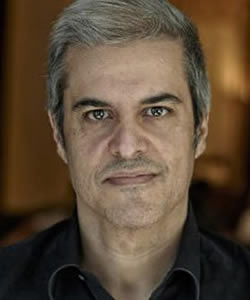
hicham alaoui
Hicham Alaoui is the founder and director of the Hicham Alaoui Foundation, which undertakes innovative social scientific research in the Middle East and North Africa. He is a scholar on the comparative politics of democratization and religion, with a focus on the MENA region.

In the past, he served as a visiting scholar and Consulting Professor at the Center for Democracy, Development and Rule of Law at Stanford University.  He more recently served as postdoctoral fellow and research associate at Harvard University. He was also Regents Lecturer at several campuses of the University of California system. Outside of academia, he has worked with the United Nations in various capacities, such as the peacekeeping mission in Kosovo. He has also worked with the Carter Center in its overseas missions on conflict resolution and democracy advancement. He has served on the MENA Advisory Committee for Human Rights Watch and the Advisory Board of the Carnegie Middle East Center. He served on the board of the Freeman Spogli Institute at Stanford University and has recently joined the Advisory Board of the Weatherhead Center for International Affairs at Harvard.

He holds an A.B. from Princeton University, M.A. from Stanford University, and D.Phil. from the University of Oxford. His latest book is Pacted Democracy in the Middle East: Tunisia and Egypt in Comparative Perspective (Palgrave, 2022). His memoirs, Journal d'un Prince Banni, were published in 2014 by Éditions Grasset, and have since been translated into several languages. He is also co-author with Robert Springborg of The Political Economy of Arab Education (Lynne Rienner, 2021), and co-author with the same colleague on the forthcoming volume Security Assistance in the Middle East: Challenges and the Need for Change (Lynne Rienner, 2023). His academic research has been widely published in various French and English journals, magazines, and newspapers of record.

This event is co-sponsored by ARD, the Abbasi Program in Islamic Studies, and the Center for African Studies at Stanford University.​

Image
ARD and Abbasi Program logos

Image
CAS

Larry Diamond

In-person
Encina Commons Room 123
615 Crothers Way, Stanford, CA

Hicham Alaoui
Lectures
0
CDDRL Postdoctoral Fellow, 2022-2023
ahmed_ezzeldin_mohamed_headshot.jpeg

Ahmed Ezzeldin Mohamed is a postdoctoral fellow at the Center for Democracy, Development, and Rule of Law (CDDRL). He holds a Ph.D. (with distinction) in Political Science from Columbia University. He was a research fellow at the Middle East Initiative at Harvard Kennedy School in the academic year (2021-2022). He is a junior fellow of the Association for Analytic Learning about Islam and Muslim Societies (AALIMS).

Mohamed’s research focuses on the role of religion in political and economic development, with a special focus on the Middle East and the Muslim World. He utilizes a diverse set of tools for data collection and rigorous analysis. His work received several awards, including APSA 2022 Weber Best Conference Paper Award and MPSA 2019 Kellogg/Notre Dame Award for Best Paper in Comparative Politics. 

Authors
Michael Breger
Callista Wells
News Type
News
Date
Paragraphs

As reports of leveled mosques, detention camps, and destroyed cultural and religious sites in China's Xinjiang province emerged in the mid-to-late 2010s, the world took notice of the Chinese Communist Party's (CCP) flagrant oppression of Uighur Muslims and other minorities. Under the Xi Jinping administration, the Xinjiang region in northwestern China has experienced what is perhaps the greatest period of cultural assimilation since the Cultural Revolution. This massive state repression represents a primary research focus for Dr. James Millward, Professor of Inter-societal History at the Walsh School of Foreign Service at Georgetown University, who joined both APARC's China Program and the Stanford History Department as a visiting scholar for winter quarter 2022.

Millward's specialties include the Qing empire, the silk road, and historical and contemporary Xinjiang. In addition to his numerous academic publications on these topics, he follows and comments on current issues regarding Xinjiang, the Uyghurs and other Xinjiang indigenous peoples, PRC ethnicity policy, and Chinese politics more generally. We caught up with Millward to discuss his work and experience at Stanford this past winter quarter. Listen to the conversation: 


Sign up for APARC's newsletters to receive analysis and commentary from our scholars and guest speakers.


Aggressive Assimilating Thrust

Millward emphasizes the importance of documenting the scope and scale of the crisis in Xinjiang. "What's happened in the last four or five years in Xinjiang is of great global importance and interest to people," he says, and although it is still early to write the history of this period of repression, "it's important at least to try and get an organized draft of it down and to try to begin to interpret rather than just narrate the litany of things going on: the camps, the digital surveillance, forced labor, birth depressions, and try and put it all into some kind of framework where we can understand it." 

China’s crackdown on Uyghur Muslims and other minorities in Xinjiang is part of aggressive intolerance of cultural and political diversity that is emerging as a central feature of Xi Jinping’s tenure, explains Millward. The shift in the CCP's assimilationist policies constitutes a complete "reversal of what had been an earlier approach to diversity in China," which allowed for 56 different nationalities to have regional autonomy. His aim is to "point out a really aggressive assimilating thrust under the Xi Jinping regime [...] and then also to look more clearly at settler colonialism in Xinjiang."

To learn more about the historical context of current events in Xinjiang and how to understand them against contemporary Chinese politics, tune in to Millward's public lecture of February 2, 2022, “The Crisis in Xinjiang: What’s Happening Now and What Does It Mean?

In this talk, Millward explains how PRC assimilationist policies, if most extreme in Xinjiang, are related to the broader Zhonghua-izing campaign against religion and non-Mandarin language and perhaps even to intensified control over Hong Kong and efforts to intimidate Taiwan.

U.S.-China Cooperation Amid Strained Ties

The Xinjiang crisis has affected how the United States views China, bringing an unexpected unity to the usually-polarized American foreign policy arena. "The Xinjiang issue has contributed to the broad-spectrum feeling in the American political sphere that engagement with China has failed," notes Millward. The parallels between China's repression of minorities and some of the worst events in the 20th century in Europe "have brought together the political sides in America and rallied them around a much stronger anti-China stance," he says.

From Millward's perspective, however, it is not only possible but also necessary for the United States to act on Xinjiang and press China on its human rights record while cooperating with China on other issues. "This is the art of diplomacy, you have to compartmentalize and deal with different issues, particularly with two countries as large as the United States and China." In Millward's view, areas pertinent to U.S.-China collaboration are varied and transcend global challenges such as climate change or pandemics. Those are simplistic dichotomies," he says. "We have 300,000 Chinese students in our universities and we welcome them and learn a lot from them [...] We benefit from Chinese expertise in all sorts of ways."

Millward spent a productive winter quarter at APARC. Returning to Stanford as a visiting scholar provided him a unique opportunity to reconnect with his past on The Farm and survey all that has changed in the years since he completed his doctorate under the tutelage of the late Professor Harold Kahn. "The trailer park where I lived as a first-year graduate student is no more, and I couldn't even find the footprint of where it was."

Portrait of James Millward

James Millward

Visiting Scholar at APARC
Full Biography

Read More

From top left, clockwise: Lauren Hansen Restrepo, James Millward, Darren Byler and Gardner Bovingdon speaking at a panel at APARC.
News

The Human Rights Crisis in Xinjiang Uyghur Autonomous Region

The Human Rights Crisis in Xinjiang Uyghur Autonomous Region
money
News

Bargaining Behind Closed Doors: Why China’s Local Government Debt Is Not a Local Problem

New research in 'The China Journal' by APARC’s Jean Oi and colleagues suggests that the roots of China’s massive local government debt problem lie in secretive financing institutions offered as quid pro quo to localities to sustain their incentive for local state-led growth after 1994
Bargaining Behind Closed Doors: Why China’s Local Government Debt Is Not a Local Problem
Hero Image
millward
All News button
1
Subtitle

APARC Visiting Scholar James Millward discusses PRC ethnicity policy, China's crackdown on Uyghur Muslims and other minorities in Xinjiang province, and the implications of the Xinjiang crisis for U.S. China strategy and China's international relations.

-
Rethinking Modern Sunni-Shii Relations: The State, Revolution, and Foreign Intervention

What explains the turn towards more politically relevant Sunni and Shii identities in the modern period? How do we account for a shift from Sunni-Shii cooperation against colonialism, for example, or in defense of the Ottoman Caliphate, towards polarisation? This lecture will look especially at the role of the modern state in regulating religion more broadly, coopting certain cultural groups and alienating others, and fostering sharpened sectarian identities. It will also look at the impact of the 1979 revolution in Iran, and reactions towards it, and of foreign intervention, especially the Iraq war of 2003 in sectarianizing the Middle Eastern regional system.

This event is sponsored by the Abbasi Program in Islamic Studies in partnership with the Center for International Security and Cooperation (CISAC) and the Program on Arab Reform and Democracy at CDDRL.

ABOUT THE SPEAKER

Image
Toby Matthieson
Toby Matthiesen is a scholar of Comparative Politics and International Relations with a focus on the Middle East. He is currently a Marie Curie Global Fellow at Stanford University and Ca’ Foscari University in Venice, leading a project on Sunni-Shii Relations in the Middle East.

Toby's aim in research and teaching is to study the Middle East in a global context. His research is characterized by the use of primary sources, archives, fieldwork, and engagement with social science and historiographical debates. He is the author of Sectarian Gulf: Bahrain, Saudi Arabia, and the Arab Spring That Wasn’t (Stanford University Press, 2013), a book on the impact of the Arab Spring on the Gulf States. His second book, The Other Saudis: Shiism, Dissent and Sectarianism (Cambridge University Press, 2015) dealt with the relationship between the Shii community in the Eastern Province and the Saudi state, and with transnational movements and Iran. It is based on fieldwork in Saudi Arabia and the wider region, and hitherto unused Arabic archives.

His forthcoming book, The Caliph and the Imam: The Making of Sunnism and Shiism, is a global history of Sunni-Shii relations and is published by Oxford University Press. Toby's work has also been translated into Arabic and Persian and apart from English, he publishes in German. His other research interests relate to the history of Leftist movements and the use of Islam as anti-Communism during the Cold War.

Encina Commons 123 or online via Zoom

Toby Matthiesen
Lectures
-
Black Markets and Militants: Informal Networks in the Middle East and Africa

Khalid Mustafa Medani joins ARD to discuss his recently released book, Black Markets and Militants Informal Networks in the Middle East and Africa (Cambridge University Press, 2021).

Understanding the political and socio-economic factors which give rise to youth recruitment into militant organizations is at the heart of grasping some of the most important issues that affect the contemporary Middle East and Africa. In this book, Medani explains why youth are attracted to militant organizations, examining the specific role economic globalization, in the form of outmigration and expatriate remittance inflows, plays in determining how and why militant activists emerge. The study challenges existing accounts that rely primarily on ideology to explain militant recruitment.

Based on extensive fieldwork, Medani offers an in-depth analysis of the impact of globalization, neoliberal reforms, and informal economic networks as a conduit for the rise and evolution of moderate and militant Islamist movements and as an avenue central to the often violent enterprise of state-building and state formation. In an original contribution to the study of Islamist and ethnic politics more broadly, he thereby shows the importance of understanding when and under what conditions religious rather than other forms of identity become politically salient in the context of changes in local conditions.

ABOUT THE SPEAKER 

Image
Khalid Medani
Dr. Khalid Mustafa Medani is currently associate professor of political science and Islamic Studies at McGill University, and he has also taught at Oberlin College and Stanford University. Dr. Medani received a B.A. in Development Studies from Brown University, an M.A. in Development Studies from the Center for Contemporary Arab Studies at Georgetown University, and a Ph.D. in Political Science from the University of California, Berkeley. His research focuses on the political economy of Islamic and Ethnic Politics in Africa and the Middle East.

Dr. Medani is the author of Black Markets and Militants: Informal Networks in the Middle East and Africa (Cambridge University Press, 2021) and he is presently completing another book manuscript on the causes and consequences of Sudan’s 2018 popular uprising and the prospects and obstacles for Democracy in that country. In addition, he has published extensively on civil conflict with a special focus on the armed conflicts in Sudan and Somalia. His work has appeared in Political Science and Politics (PS), the Journal of Democracy, the Journal of North African StudiesCurrent HistoryMiddle East ReportReview of African Political EconomyArab Studies Quarterly, and the UCLA Journal of Islamic Law.

Dr. Medani is a previous recipient of a Carnegie Scholar on Islam award from the Carnegie Corporation of New York (2007-2009) and in 2020-2021 he received a fellowship from the Woodrow Wilson International Center for Scholars to conduct research on his current book manuscript on the democratic transition in Sudan.

This event is co-sponsored by the Abbasi Program in Islamic Studies and the Center for African Studies at Stanford University.

Hesham Sallam

Online via Zoom

Khalid Mustafa Medani Associate Professor of Political Science and Islamic Studies McGill University
Lectures
-

This is a virtual event. Please click here to register and generate a link to the talk. 
The link will be unique to you; please save it and do not share with others.


Policies implemented by the CCP in Xinjiang since c. 2016 have become a central issue in PRC international relations, leading to international determinations that those policies constitute genocide; scrutiny of global supply chains for Xinjiang cotton, textiles and polysilicon; US sanctions on companies and individuals and Congressional inquiries directed at Airbnb and other multinationals operating in Xinjiang; and diplomatic boycotts of the Olympics. The assimilationist policies, if most extreme in Xinjiang, are related to the broader Zhonghua-izing campaign against religion and non-Mandarin language and perhaps even to intensified control over Hong Kong and efforts to intimidate Taiwan—an aggressive intolerance of cultural and political diversity that is emerging as a central feature of Xi Jinping’s tenure. This talk will review the Xinjiang crisis to date and suggest how we should understand these events and trends.


Image
Portrait of James Millward
James Millward is Professor of Inter-societal History at the Walsh School of Foreign Service, Georgetown University, teaching Chinese, Central Asian and world history. He joins the Walter H. Shorenstein Asia-Pacific Research Center (APARC) as visiting scholar with the China Program for the 2022 winter quarter. He is also an affiliated professor in the Máster Oficial en Estudios de Asia Oriental at the University of Granada, Spain. His specialties include Qing empire; the silk road; Eurasian lutes and music in history; and historical and contemporary Xinjiang. He follows and comments on current issues regarding the Uyghurs and PRC ethnicity policy. Millward has served on the boards of the Association for Asian Studies (China and Inner Asia Council) and the Central Eurasian Studies Society, and was president of the Central Eurasian Studies Society in 2010. He edits the ''Silk Roads'' series for University of Chicago Press. His publications include The Silk Road: A Very Short Introduction (2013), Eurasian Crossroads: A History of Xinjiang (2007), New Qing Imperial History: The Making of Inner Asian Empire at Qing Chengde (2004), and Beyond the Pass: Economy, Ethnicity and Empire in Qing Central Asia (1998). His articles and op-eds on contemporary China appear in The New York Times, The Los Angeles Review of Books, The New York Review of Books and other media.  

Via Zoom Webinar. Register at: https://bit.ly/3zX2GoF

James Millward Visiting Scholar, APARC, Stanford University; Professor of Inter-societal History, Walsh School of Foreign Service, Georgetown University
Seminars
0
Visiting Scholar at The Europe Center, 2021-2022
potz_-_photo_3.jpg

Maciej Potz is a professor of Political Science at the Department of Political Systems, Faculty of International and Political Studies, University of Łódź, Poland. He earned his Ph.D. in 2006 from the Silesian University in Katowice and his post-doctoral degree from the University of Łódź in 2017, both in Political Science. His primary area of interest is religion and politics, with special focus on theocracies (as a Foundation for Polish Science scholar, he studied Shaker and Mormon theocracies in the USA in 2009 and 2012) and political strategies of religious actors in contemporary democracies, especially in Poland and the USA. His other research interests include political theory (especially theory of power and democratic theory), comparative politics and, most recently, evolutionary political science.

Maciej Potz published three monographs: (i) Granice wolności religijnej [The Limits of Religous Liberty] 2008 (2nd ed. 2015), Wrocław: FNP, on religious freedom, church-state relations and confessional politics in the USA; (ii) Amerykańskie teokracje. Źródła i mechanizmy władzy usankcjonowanej religijnie [American Theocracies. The Sources and Mechanisms of Religion-Sanctioned Power] 2016, Łódź: UŁ, theorizing theocracy as a type of a political system and emprically exploring North American theocracies; (iii) Political Science of Religion: Theorizing the Political Role of Religion, 2020, London: Palgrave MacMillan – a theoretical framework for the analysis of religion’s impact on politics. He also authored several journal articles, including in Religion, State and Society, Journal of Political Power, Politics and Religion and Studia Religiologica.

Maciej Potz has taught political science-related courses in the University of Lodz and, as guest lecturer, at other European universities, including University of the West of Scotland in Glasgow, Buskerund College and NTNU (Norway), University of Joensuu (Finland), University of La Laguna (Spain). He participated in a number of international conferences, including “XXI World IAHR Congress in Erfurt (2015), IPSA World Congresses of Political Science in Santiago (2019), Madrid (2012) and Poznań (2016), APSA Annual Meeting (forthcoming in 2021).  

The research project he will be pursuing at Stanford, entitled Costly signaling Under His Eye: explaining the commune longevity puzzle, uses costly signaling theory of religion to explore the determinants of cohesion and longevity of (communitarian) religious groups. It also proposes a novel political interpretation of signaling behavior. Over the next three years, he will head a research team undertaking an empirical study (funded by National Science Centre of Poland) of power and status in Catholic religious orders.

 

1
CDDRL Postdoctoral Scholar, 2021-22
aytug.jpg

I am a political scientist (PhD degree expected in July 2021 from Harvard) working on political parties, social welfare policies and local governance, primarily in the Middle East and North Africa. My dissertation project focuses on secular parties in the region and explores why they could not form a robust electoral alternative to the Islamist parties in the post-uprisings period. In other projects, I explore voters' responses to executive aggrandizement (focusing on Turkey), and social welfare in the context of ethnic and organizational diversity (focusing on Lebanon). Prior to PhD, I worked as an education policy analyst in Turkey, managing several research projects in collaboration with the Ministry of Education, World Bank and UNICEF. I hold a BA degree in Political Science from Boğaziçi, and Master's degrees from the LSE and Brown. 

-

ABSTRACT 

This talk is based on the speakers’ recently published edited volume The Unfinished Arab Spring: Micro-Dynamics of Revolts between Change and Continuity. Adopting an original analytical approach in explaining various dynamics at work behind the Arab revolts and giving voice to local dynamics and legacies rather than concentrating on debates about paradigms, we highlight micro-perspectives of change and resistance as well as of contentious politics that are often marginalized and left unexplored in favor of macro-analyses. First, we re-examine the stories of the uprisings in Tunisia, Egypt, Syria, Morocco and Algeria through diverse and novel perspectives, looking at factors that have not yet been sufficiently underlined but carry explanatory power for what has occurred. Second, rather than focusing on macro-comparative regional trends – however useful they might be – we focus on the particularities of each country, highlighting distinctive micro-dynamics of change and continuity. ​

SPEAKERS BIO

Image
Fatima el Issawi
Fatima el Issawi is a Reader in Journalism and Media Studies at the University of Essex. Her research focuses on the intersection between media, politics and conflicts in transitional contexts to democracy in North Africa. She is the Principal Investigator for the research project “Media and Transitions to Democracy: Journalistic Practices in Communicating Conflicts- the Arab Spring” funded by the British Academy Sustainable Development Programme, looking at media’s impact on communicating political conflicts in post uprisings in North Africa. Since 2012, el Issawi has been leading empirical comparative research projects on the interplay between media and political change, funded by Open Society Foundation and the Middle East Centre/LSE, covering Egypt, Tunisia, Morocco, Libya and Algeria. El Issawi’s expertise crosses journalism, public communication, policy and academia. She has over fifteen years of experience as international correspondent in conflict zones in the MENA region. She is the author of “Arab National Media and Political Change” investigating the complex intersections between traditional journalists and politics in uncertain times of transitions to democracy.

Image
Francesco Cavatorta
Francesco Cavatorta is full professor of political science and director of the Centre Interdisciplinaire de Recherche sur l’Afrique et le Moyen Orient (CIRAM) at Laval University, Quebec, Canada. His research focuses on the dynamics of authoritarianism and democratization in the Middle East and North Africa. His current research projects deal with party politics and the role of political parties in the region. He has published numerous journal articles and books.

Online, via Zoom: REGISTER

Fatima el Issawi University of Essex
Francesco Cavatorta Laval University
Seminars
-

ABSTRACT

This talk is based on the speaker's recently released book Archive Wars The Politics of History in Saudi Arabia (Stanford University Press, 2020). The production of history is premised on the selective erasure of certain pasts and the artifacts that stand witness to them. From the elision of archival documents to the demolition of sacred and secular spaces, each act of destruction is also an act of state building. Following the 1991 Gulf War, political elites in Saudi Arabia pursued these dual projects of historical commemoration and state formation with greater fervor to enforce their postwar vision for state, nation, and economy. Seeing Islamist movements as the leading threat to state power, they sought to de-center religion from educational, cultural, and spatial policies. With this book, Rosie Bsheer explores the increasing secularization of the postwar Saudi state and how it manifested in assembling a national archive and reordering urban space in Riyadh and Mecca. The elites' project was rife with ironies: in Riyadh, they employed world-renowned experts to fashion an imagined history, while at the same time in Mecca they were overseeing the obliteration of a thousand-year-old topography and its replacement with commercial megaprojects. Archive Wars shows how the Saudi state's response to the challenges of the Gulf War served to historicize a national space, territorialize a national history, and ultimately refract both through new modes of capital accumulation.

SPEAKER BIO

Image
Rosie Bsheer
Rosie Bsheer is Assistant Professor of History at Harvard University, where she teaches graduate and undergraduate courses on oil and empire, social and intellectual movements, urban history, historiography, and the making of the modern Middle East. Rosie’s publications include Archive Wars: The Politics of History in Saudi Arabia (Stanford University Press, 2020) and “A Counterrevolutionary State: Popular Movements and the Making of Saudi Arabia,” Past and Present (2018). She is Associate Producer of the 2007 Oscar-nominated film My Country, My Country and a co-editor of Jadaliyya E-zine.

Online, via Zoom: REGISTER

Rosie Bsheer Assistant Professor of History Harvard University
Seminars
Subscribe to Religion