
Global Health
Authors
News Type
News
Date
Paragraphs

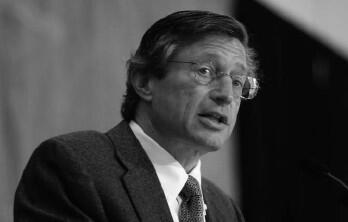
On November 16, 2006, FSI convened its annual international conference, A World at Risk, devoted to systemic and human risk confronting the global community. Remarks by Stanford Provost John Etchemendy, FSI Director Coit D. Blacker, former Secretary of State Warren Christopher, former Secretary of Defense William J. Perry, and former Secretary of State George Shultz set the stage for stimulating discussions. Interactive panel sessions encouraged in-depth exploration of major issues with Stanford faculty, outside experts, and policymakers.
Image
1592 small 1man
“When I was a child, the world was a simpler place,” stated Stanford Provost John Etchemendy. “What has changed is not the risk, but the number and complexity of problems that face the world today.” The complex challenges of the 21st century require that universities change, as well. The International Initiative, led by FSI, was launched “to identify key challenges of global importance and to contribute to their solutions by leveraging the university’s academic strength and international reach.”

Invoking Jane and Leland Stanford’s desire to educate students to become useful, contributing citizens, Etchemendy said, “We can best serve that mission today by producing graduates well-versed in the complex problems of a world at risk and willing to make the difficult choices that might lead to their solution.”

“It has been acutely apparent to us at FSI that we must actively engage a world at risk,” stated FSI director Coit D. “Chip” Blacker, “risk posed by the growing number of nuclear issues on the international agenda; the insurgency in Iraq; global poverty, hunger, and environmental degradation; the tensions of nationalism versus regionalism in Asia; infectious diseases; terrorism; and the geopolitical, financial, and ecological risks of the West’s current energy policies, especially its voracious appetite for oil.”

Introducing three Stanford luminaries, Blacker said, “One of the remarkable things about Stanford is the privilege of working with some of the outstanding intellects and statesmen of our time. Warren Christopher, William Perry, and George Shultz tower among them.”

“As Stanford University’s primary forum for the consideration of the major international issues of our time, we at FSI are dedicated to interdisciplinary research and teaching on some of the most pressing and complex problems facing the global community today.” – Coit D. “Chip” Blacker, Director, Freeman Spogli Institute“The Middle East has descended into hate, violence, and chaos,” said Warren Christopher, the nation’s 63rd secretary of state. “It really is a dangerous mess.” Discussing the Israeli incursion into Lebanon, the war in Iraq, and Iran’s regional and nuclear ambitions, he said the U.S. has aggravated these threats by “action and inaction.” Nonetheless, the U.S. remains the most influential foreign power in the region. “We must not give up on the Middle East,” he said. “We have to return to old-fashioned diplomacy with all its frustrations and delays.”

“We live in dangerous times,” stated William J. Perry, the nation’s 19th secretary of defense and an FSI senior fellow. “Last month about 1,000 of our service personnel in Iraq were killed, maimed, or wounded; the Taliban is resurging in Afghanistan; North Korea just tested a nuclear bomb; and Iran is not far behind. China’s power is rising and Russia’s democracy is falling.” As Elie Wiesel wrote, he said, “Peace is not God’s gift to its children. Peace is our gift to each other.” Comparing major security issues of 1994 to today, Perry assessed the nuclear arms race, North Korea, Iran, and Iraq. He noted that the Clinton administration had eliminated more than 10,000 nuclear weapons and urged that the work continue, because “the danger of terrorists getting a nuclear bomb is very real.”

Citing North Korea’s 2006 missile and nuclear tests, Perry said he was concerned that a robust North Korean nuclear program will stimulate a “dangerous arms race in the Pacific” and increase “the danger of a terrorist group getting a nuclear bomb.” “Iran is moving inexorably toward becoming a nuclear power,” Perry said. “We are facing new dangers,” he concluded, “and we must adjust our thinking accordingly.”

“The world has never been at a more promising moment than it is today,” said George Shultz, the nation’s 60th secretary of state. “All across the world, economic expansion is taking place. The U.S. is giving fantastic leadership to the global economy.” For Shultz, the imperative is to prevent the security challenges “from aborting all these fantastic opportunities.”

“The Middle East has descended into hate, violence, and chaos. The U.S. remains the most influential foreign power in the region. We have to return to old-fashioned diplomacy with all its frustrations and delays.” – Former Secretary of State Warren ChristopherU.S. leadership should inspire the world, Shultz said, advocating four initiatives. We should aspire to have a world with no nuclear weapons. We should take a different approach to global warning, based on the Montreal Protocols. “This is a gigantic problem we need to do something about and can do something about,” he said. We should build greater understanding of the world of Islam. We must combat rising protectionism. The postwar system reduced tariffs and quotas, promoting trade and growth. “The best defense is a good offense,” Shultz stated. “We need a lot of leadership in that arena.”

Plenary I, chaired by Chip Blacker, examined systemic risk. Elisabeth Paté-Cornell, Burton and Deedee McMurtry Professor and Chair of Management Science and Engineering, discussed how scientists measure risk, asking what can happen, what are the chances it will, and what are the consequences? “The good news is that the worst is not always the most certain,” she noted. Citing challenges of intelligence analysis, she said, “Certainty is rare; signals are imperfect; there is a tendency to focus on one possibility (groupthink) and underestimate others; and it is difficult to assess and communicate uncertainties.” “Success is not guessing in the face of uncertainties,” she said. “It is describing accurately what is known, what is unknown, and what has changed.”

Scott D. Sagan, professor of political science and director of CISAC, examined “Iran and the Collapse of the Global Non-proliferation Regime?” The crux of the issue, Sagan noted, is the emergence of two dangerous beliefs, “deterrence optimism” and “proliferation fatalism.” In Sagan’s view, too little attention has been given to why Iran seeks a nuclear weapon. Arguing that U.N. sanctions are unlikely to work and military options are problematic, Sagan said a negotiated settlement is still possible if the U.S. offers security guarantees to Iran, contingent on Tehran’s agreement to constraints on future nuclear development. As Sagan concluded, “Instead of accepting what appears inevitable, we should work to prevent the unacceptable.”

Siegfried S. Hecker, CISAC co-director, tackled the challenge of “Keeping Fissile Materials out of Terrorist Hands.” Although nuclear terrorism is an old problem, today there is easier access to nuclear materials, greater technological sophistication, and a greater proclivity toward violence. The greatest risk, he said, “is an improvised nuclear device built from stolen or diverted fissile materials.” “Given a few tens of kilograms of fissile material, essentially a grapefruit-sized chunk of plutonium,” he stated, “terrorists will be able to build and detonate an inefficient, but devastating Hiroshima- or Nagasaki-like bomb.” The most likely threat is a so-called “dirty bomb,” he said, which would be a “weapon of mass disruption, not destruction,” but still able to cause panic, contamination, and economic disruption, making risk analysis imperative to mitigate its consequences.

“We are facing new dangers and we must adjust our thinking accordingly. As President Lincoln said, ‘The occasion is piled high with difficulty, and we must rise with the occasion. As our case is new, so we must think anew, and act anew.’” – Former Secretary of Defense William J. PerryTurning to human risk, Michael Osterholm, director of the University of Minnesota’s Center for Infectious Disease Research and Policy, addressed “Pandemic Influenza: Harbinger of Things to Come?” “The risk is one that a pandemic is going to happen,” he told a riveted audience. Comparing the great influenza of 1918 with the pandemics of 1957 and 1968, he noted that pandemics have differed in season of onset, mortality rates, and number of cases. Avian influenza has a 65 percent mortality rate and could affect 30–60 percent of the world’s 6.5 billion people, producing 1.6 billion deaths worldwide and 1.9 million deaths in the U.S. Inevitably, mutation will reduce its lethality.

“It is not a matter of if, just when and where” the pandemic will strike, said Osterholm. Noting that vaccines will not be available in numbers needed, he argued for measures to safeguard families, communities, and essential infrastructure, such as police, firefighters, and health-care workers. Just-in-time inventory practices, he said, have increased vulnerability to disruptions in food supply, transportation, equipment, and communications, making it vital to plan in earnest, now.

Plenary II, chaired by FSI deputy director Michael A. McFaul, assessed risks to humans from “Natural, National, and International Disasters.” Stephen E. Flynn, Jeane J. Kirkpatrick Senior Fellow at the Council on Foreign Relations and a trade and transportation security expert, decried the “artificial firewalls between homeland and national security.” The Hart-Rudman Commission of 1998 warned of a catastrophic attack on U.S. soil, yet we did not rethink national security even after 9/11. We must approach security as a transnational issue, with no clear “domestic” and “international” lines, he urged. More than 65 percent of critical infrastructure is privately owned and has been given inadequate attention by federal authorities. Hurricane Katrina exposed the vulnerabilities. “We face more threats from acts of God than acts of man,” Flynn stated. We need to move from a concept of “security” to one of “resiliency,” he said, greatly improving our ability to withstand a man-made or natural disaster.

David G. Victor, FSI senior fellow and professor of law, addressed three faces of energy security: oil, natural gas, and climate change. Oil prices are volatile, future fields are in places difficult to do business, and the global supply infrastructure is vulnerable, posing the risk of a one- to six-month supply disruption. For Victor, who directs FSI’s Program on Energy and Sustainable Development, the big threat is less supply than a potential demand-side shock, driven by the U.S. and China. Europe relies on an unreliable Russia for 25–30 percent of its natural gas needs, making it imperative to switch to cheaper, more reliable LNG from North Africa and the Middle East. Oil and gas price volatility has driven further dependence on coal-fired plants, with dire consequences for carbon emissions. New coal plant lifetime emissions, Victor said, are equal to all historic coal emissions, making it critical to invest in advanced technology to protect the environment.

“The world has never been at a more promising moment than it is today. All across the world economic expansion is taking place. Poverty is being reduced dramatically as China and India expand, along with Brazil.” – Former Secretary of State George ShultzPeter Bergen, CNN terrorism analyst and producer of Osama bin Laden’s first television interview, offered the dinner keynote, “Successes and Failures of the War on Terrorism Since 9/11.” Assessing negatives, Bergen noted that al Qaeda continues to carry on attacks from its base in Pakistan; Afghanistan is beset by instability; more than 20 million Muslims in Europe remain dangerously un-integrated; bin Laden has not been apprehended and continues to inspire followers through terrorist attacks; Iraq is an unstable breeding ground for jihad; and anti-Americanism is on the rise. Enumerating positives, there has been no follow-on attack on the U.S.; the government has made the country safer; many Muslims have rejected jihad; plots have been foiled and suspects apprehended across the globe. Weighing whether fighting the terrorists abroad has made the U.S. safer here, Bergen was equivocal: The U.S. can identify and eliminate only so many people and cannot stay in Bagdad forever. A network of educated, dedicated terrorists remains, he warned, capable of bringing down commercial aircraft or deploying a radiological bomb.

All News button
1
Authors
Gary Mukai
News Type
News
Date
Paragraphs

“Preparing the next generation of leaders and creating more informed elementary and secondary students means changing and improving curricula, setting higher standards, and ensuring that content is based on current research relevant to the world’s critical problems and urgent issues.” Coit “Chip” Blacker, FSI Director and Co-Chair, International Initiative

SPICE was established more than 30 years ago and serves as a bridge between FSI and elementary and secondary schools in the United States and independent schools abroad. SPICE’s original mission in 1976 was to help students understand that we live in an increasingly interdependent world that faces problems on a global scale. For 30 years, SPICE has continued to address this original mission and currently focuses its efforts primarily in three areas:

  1. curriculum development for elementary and secondary schools;
  2. teacher professional development; and
  3. distance-learning education.

SPICE hopes to continue to educate new generations of leaders by addressing five key initiatives of The Stanford Challenge, announced by President Hennessy last fall.

Initiative on Human Health / 1

SPICE is working with the School of Medicine and the Center for Health Policy on a high school curriculum unit that focuses on HIV/AIDS. SPICE is collaborating with Drs. Seble Kassaye, David Katzenstein, and Lucy Thairu of the School of Medicine’s Division of Infectious Diseases & Geographic Medicine. Using an epidemiological framework, students will be encouraged to consider the many issues involved in the pandemic, including but not limited to poverty, gender inequality, and biomedical research and development. Two Stanford undergraduates, Jessica Zhang and Chenxing Han, are working with the physicians on this unit.

Initiative on the Environment and Sustainability / 2

SPICE recently completed a curriculum unit called 10,000 Shovels: China's Urbanization and Economic Development. 10,000 Shovels examines China’s breakneck growth through a short documentary that integrates statistics, video footage, and satellite images. The documentary, developed by Professor Karen Seto of the Center for Environmental Science and Policy, focuses on China’s Pearl River Delta region while the accompanying teacher’s guide takes a broader perspective, exploring many current environmental issues facing China. Stanford’s School of Earth Sciences is helping to promote this unit and documentary.

The International Initiative / 3

All of SPICE’s curriculum units focus on international topics. Two of SPICE’s most popular units are Inside the Kremlin: Soviet and Russian Leaders from Lenin to Putin and Democracy-Building in Afghanistan. Inside the Kremlin introduces students to key elements of Soviet and Russian history through the philosophies and legacies of six of its leaders—Lenin, Stalin, Khrushchev, Gorbachev, Yeltsin, and Putin. The unit includes (on DVD) six lectures by six FSI faculty members, including FSI director Coit D. Blacker; professors David Holloway and Gail W. Lapidus, CISAC; professor and deputy FSI director Michael A. McFaul; history professor Norman M. Naimark; and history professor Amir Eshel, Forum on Contemporary Europe.

Democracy-Building in Afghanistan is a teacher’s guide for a film called Hell of a Nation. The film’s lead advisor and SPICE’s key advisor was former CDDRL fellow J. Alexander Thier. Hell of a Nation documents the lives of two Afghans participating in the political process to develop a new constitution for Afghanistan—illustrating the “human face” of democracy-building and elucidating the complexities and difficulties of democratic construction in a divided and historically conflict-ridden nation.

Arts and Creativity Initiative / 4

Following 9/11, SPICE decided to develop a unit called Islamic Civilization and the Arts, which introduces students to various elements of Islamic civilization through a humanities approach. Lessons on art, the mosque, Arabic language and calligraphy, poetry, and music provide students with experience analyzing myriad primary source materials, such as images, audio clips, sayings of Muhammad, and excerpts from the Quran. In each lesson, students learn about the history, principles, and culture of Islam as they pertain to particular forms of art.

SPICE recently completed a new unit called Along the Silk Road, which explores the vast ancient network of cultural, economic, and technological exchange that connected East Asia to the Mediterranean. Students learn how goods, belief systems, art, music, and people traveled across such vast distances to create interdependence among disparate cultures. This was a collaboration with the Silk Road Project, the Art Institute of Chicago, Stanford’s Cantor Arts Center and Center for East Asian Studies, and the Shorenstein Asia-Pacific Research Center.

The K-12 Initiative / 5

SPICE develops curriculum based on FSI scholarship, conducts teacher professional development seminars locally, nationally, and internationally, and also offers a distance-learning course called the Reischauer Scholars Program to U.S. high school students. At seminars at Stanford, FSI faculty members offer lectures to the teachers and SPICE curriculum writers give curriculum demonstrations that draw upon the content presented in the lectures. Last summer, Stanford professor Al Dien (Asian Languages) and the SPICE staff gave a workshop for 80 teachers in the Chicago Public Schools. World-renowned cellist Yo-Yo Ma performed at the workshop.

The Reischauer Scholars Program is a distance-learning course sponsored by SPICE. Named in honor of former ambassador to Japan Edwin O. Reischauer, a leading educator and noted scholar on Japanese history and culture, the RSP annually selects 25 exceptional high school juniors and seniors from throughout the United States to engage in an intensive study of Japan. This course provides students with a broad overview of Japanese history, literature, religion, art, politics, and economics, with a special focus on the U.S.-Japan relationship. Top scholars affiliated with the Shorenstein Asia-Pacific Research Center (including Ambassador Michael H. Armacost, Professor Daniel I. Okimoto, and Professor Gi-Wook Shin), leading diplomats, and young professionals provide web-based lectures as well as engage students in online dialogue. These lectures and discussions are woven into an overall curriculum that provides students with reading materials and assignments.

SPICE has for many years focused on the initiatives that have been identified by President Hennessy to be at the core of The Stanford Challenge. By continuing to focus on these initiatives, the SPICE staff hopes to continue to make FSI scholarship accessible to a national and international audience of educators and students, with the ultimate goal of empowering a new generation of leaders with the tools needed to deal with complex problems on a global scale.

Hero Image
1588 small SPICElogo
All News button
1
Authors
News Type
News
Date
Paragraphs
At an April 11 symposium in Washington, D.C., Homeland Security Secretary Michael Chertoff said while the best-laid plans are likely to change if a pandemic or bioterrorism attack hits the United States, having no plans in place is a sure guarantee for disaster. CISAC members Lynn Eden, Martha Crenshaw, and Mariano-Florentino Cuéllar participated in "Germ Warfare, Contagious Disease and the Constitution," a daylong event co-hosted by Stanford Law School. CISAC affiliate Laura K. Donohue conceived and developed the project, which aimed to bring together senior policy-makers and legal experts to discuss how issues of constitutional law inform responses to natural pandemics or bioterrorism attacks.

Secretary Michael Chertoff of the Department of Homeland Security delivered the keynote address April 11 at the panel titled “Germ Warfare, Contagious Disease and the Constitution” in Washington, D.C.

Although the best-laid plans are likely to change if a pandemic or bioterrorism attack hits the United States, having no plans in place is a sure guarantee for disaster, Homeland Security Secretary Michael Chertoff told policy-makers, government officials, constitutional law experts and law students at a symposium April 11 in Washington, D.C.

"Preparation won't eliminate the problems and the stress, and it is often said that no battle plan has ever survived first contact with the enemy," Chertoff told the roughly 200 people attending the event, "Germ Warfare, Contagious Disease and the Constitution," hosted by Stanford Law School and the Constitution Project, a nonprofit organization.

"But I can tell you this," Chertoff continued. "If you don't have a plan, you are definitely going to have the worst-case outcome. A plan at least gives you a running start."

During the symposium, experts discussed the need to reform the complex web of federal and state laws to enable agencies to respond effectively to deadly natural or manmade epidemics—from pandemic flu to smallpox and aerosolized anthrax—while protecting individual rights.

Earlier that day, about 60 people from the current and two previous presidential administrations, public health officials, Stanford academics and law students participated in a closed-door, fictitious scenario that explored the federal government's response to an unfolding deadly epidemic as it crossed state lines. Lynn Eden, associate director for research at Stanford's Center for International Security and Cooperation (CISAC) at the Freeman Spogli Institute for International Studies, moderated the session, which was developed in cooperation with experts from the Department of Homeland Security.

"I think it's the first time detailed issues of constitutional law have been brought to bear in a natural pandemic or bioterrorism exercise," Eden said afterward. "It's very hard to plan for a catastrophe. This approach brought another facet to bear on disaster planning."

Margaret Hamburg, a former assistant secretary in the Department of Health and Human Services, opened the symposium, which was broadcast live on C-SPAN from the Dirksen Senate Office Building. Kathleen Sullivan, director of the Stanford Constitutional Law Center, moderated a panel featuring Stanford law Professors Pamela Karlan and Robert Weisberg; Christopher Chyba, director of the Program on Science and Global Security at Princeton and a former CISAC co-director; Jeff Runge, assistant secretary in the Department of Homeland Security; Michael Greenberger, director of the Center for Health and Human Security at the University of Maryland; and Martin Cetron, director of the Division of Global Migration and Quarantine at the U.S. Centers for Disease Control and Prevention.

Sullivan opened the panel by reflecting on how recent health crises have informed ongoing legal and policy debates: "West Nile virus. Anthrax mailings. Avian flu—responses to these infectious disease issues and concern about bioterrorism are running about our minds as we think about the response to 9/11 and Hurricane Katrina, and the complex web of local, state and federal authority to deal with such emergencies. What does the Constitution have to say about our ability to deal with infectious disease, whether it's naturally occurring or composed as a weapon of violence?"

In the 21st century, Cetron explained, health officials still rely on a "14th-century toolbox of isolation and quarantine" to control an outbreak. That is "part of our modern reality," he said. "The biggest area is not lack of specific authority, but the fact that jurisdictions are highly complex when it comes to international ports of entry [and] interstate movement. There are often overlapping jurisdictions and overlapping authorities. If there's a gap in some of this, the risk is that neither the state nor the feds would want to step up to that responsibility."

Greenberger said state officials are often ignorant about what they can do in an emergency. "The powers given to governors are extraordinary," he said. Three statutes exist in Maryland to authorize declarations of emergency and allow the governor to enforce isolation and quarantine of infected people, order citizens to take treatment against their will, force doctors to serve in dangerous situations and seize hospitals. "What's extraordinary is that most governors don't even know they have this power," Greenberger said. "The extent of legal illiteracy in this area is shocking."

Despite such challenges, Chertoff praised the participants for tackling the issue. "I think for the first time we've begun to think very seriously and in a disciplined fashion about how to plan for dealing with a major natural pandemic or a major biological attack," he said. "I wish I could tell you these things are unthinkable. But the one thing I've learned in the last seven years is there's pretty much nothing that's unthinkable."

Stanford in Washington

Laura K. Donohue, a CISAC affiliate and a 2007 Stanford Law School graduate who is the inaugural fellow at the Stanford Constitutional Law Center, conceived the daylong event to bring together policy-makers and constitutional experts to discuss response to natural pandemics and bioterrorism. "It was a chance to bring together the policy world, both operational and strategic, and give them the opportunity to talk to legal experts," she said. "This helped policy-makers think through the issues and think outside the box, and it did so in a non-threatening manner."

Donohue said she was prompted to create the symposium after directing a CISAC-supported terrorism-response exercise in 2003 that involved more than 25 agencies at the national, state and local levels. "In these exercises involving first responders, legal issues always got pushed off the table," Donohue said. "I was struck by this. In an emergency, the law goes out the window. Then, when I got to law school, I saw the broader legal and constitutional context for this discussion."

With support from the directors at CISAC and Stanford Law School, and funding from donor Peter Bing and the Stanford Constitutional Law Center, Donohue brought the two groups together in a high-profile setting.

"This was Stanford in Washington," she said. "It was an opportunity for Stanford to be visible at the U.S. Senate with participation from leading people on these issues. There is no doubt we got an audience we wouldn't otherwise have attracted."

This article first appeared in Stanford Report, 4/16/2008.

All News button
1
-

John Seffrin, Ph. D., will be speaking on the issues of tobacco, with his experience as CEO of America Cancer Society, and as the immediate past president of the International Union Against Cancer in Geneva, Switzerland.

Medical School Office Building (MSOB)
Room x303
251 Campus Drive
Stanford, CA 94305

John Seffrin CEO of America Cancer Society Speaker
Lectures
Paragraphs

Climate change is projected to have adverse impacts on public health. Cobenefits may be possible from more upstream mitigation of greenhouse gases causing climate change. To help measure such cobenefits alongside averted disease-specific risks, a health impact assessment (HIA) framework can more comprehensively serve as a decision support tool. HIA also considers health equity, clearly part of the climate change problem. New choices for energy must be made carefully considering such effects as additional pressure on the world's forests through large-scale expansion of soybean and oil palm plantations, leading to forest clearing, biodiversity loss and disease emergence, expulsion of subsistence farmers, and potential increases in food prices and emissions of carbon dioxide to the atmosphere. Investigators must consider the full range of policy options, supported by more comprehensive, flexible, and transparent assessment methods.

All Publications button
1
Publication Type
Journal Articles
Publication Date
Journal Publisher
Annual Reviews of Public Health
Authors
Holly Gibbs
Authors
News Type
News
Date
Paragraphs
Projects to enhance health security and child survival in Africa with improvements in water and sanitation, examine why poor business-management practices persist in India, study the relationship of legal courts to politics and human rights, and understand why the Middle East has lagged in economic progress were recent recipients of grants totaling just under $1 million from Stanford's Presidential Fund for Innovation in International Studies.

"These projects have great potential to advance academic knowledge, social capital and human development around the world, and to create a healthier, more promising future for hundreds of millions of people," President John Hennessy said. "When we launched The Stanford Challenge, we committed to marshal university resources to address the great challenges of the 21st century in human health, the environment and international affairs, and it is gratifying to see the response from our remarkable faculty."

The 2008 projects and their principal investigators follow:

Enhancing Health Security Through Infrastructure and Behavioral Intervention: Water, Sanitation and Child Survival in Africa. Alexandria Boehm and Jenna Davis, Civil and Environmental Engineering; Abby King, Health Research and Policy and Medicine; Gary Schoolnik, Medicine and Microbiology and Immunology. The project seeks to improve the health and well-being of the 1.2 billion people in low-income countries who lack access to clean water and the 2.6 billion who lack access to sanitation services, with a focus on mortality reduction in children. It will be carried out in sub-Saharan Africa, where the toll of water- and sanitation-related illness on health is severe, and will investigate the extent to which information and education about water and sanitation at the household level motivates behavior changes that result in reduced morbidity. Results will inform international efforts to design and implement effective water supply and sanitation interventions for more than 400 million Africans currently lacking access.

Why Are Indian Firms Poorly Managed? A Survey and Randomized Field Intervention. Nicholas Bloom and Aprajit Mahajan, Economics; Thomas C. Heller and Erik Jensen, Law School; John Roberts, Graduate School of Business. The biggest single reduction in poverty in the history of mankind was achieved by the industrialization of China since 1978, which lifted almost 500 million people out of poverty. India has not experienced this level of poverty reduction because its manufacturing firms have not achieved the productivity gains seen in China. Recent evidence suggests one key factor is the poor management practices adopted by Indian firms. This project examines why poor management practices persist in India and are much more common there. It focuses in particular on evaluating the relative importance of informational, legal and development barriers. The project will undertake a field survey of Indian firms to evaluate their knowledge of modern management techniques and a field intervention aimed at upgrading management practices in a randomized sample of Indian firms, comparing their progress to a control group of untouched firms.

Courts, Politics and Human Rights. Joshua Cohen, Philosophy, Political Science, and Law School; Terry L. Karl, Political Science; Jenny S. Martinez, Law School; Helen Stacy, Law School. This project examines the role of courts as the centerpiece of strategies for promoting human rights by asking if courts should be a preferred human rights venue or if there are other more accessible and effective ways to secure human rights. It addresses three broad themes: the interplay between national, regional and international courts in the protection of human rights; the role of governments and nongovernmental organizations in influencing legal proceedings; and how courts construct historical truth and shape public opinion, memory, attitudes and discourse about human-rights abuses. The multidisciplinary project will span countries, regions, issue areas and historical timeframes to ask what reasonably can be expected from international, regional and domestic courts in safeguarding human rights.

The Middle East and the World Economy. Matthew Harding, Economics; Lisa Blaydes, Political Science. This project examines why the Middle East has lagged in economic progress compared to much of the developing world and the implications of this underdevelopment for two overarching trends in Middle Eastern politics today: authoritarian government and Islamic fundamentalism. The researchers also will examine how political instability originating in the Middle East has affected world oil prices and world markets by constructing economic models of the world economy. The project seeks broadly to understand the macro- and microeconomic determinants of Islamic fundamentalism and authoritarian rule, and the extent to which these two outcomes have affected the stability and prosperity of the world economy. It measures global factors resulting from increased globalization and quantifies their impact on the development of economies in the Middle East.

The $3 million Presidential Fund for Innovation in International Studies was first established in 2005 by the Office of the President and the Stanford International Initiative to support new cross-campus, interdisciplinary research and teaching among Stanford's seven schools on three overarching global challenges: pursuing peace and security, reforming and improving governance at all levels of society, and advancing human well-being.

The first $1 million in interdisciplinary grants was awarded in February 2006; the second round of grants was awarded in February 2007.

"In all three rounds of funding, it has been heartening to see the imaginative and innovative ways that Stanford faculty are combining intellectual forces across disciplines to tackle some of the most pressing and persistent problems of our day," said Coit D. Blacker, chair of the International Initiative Executive Committee and director of Stanford's Freeman Spogli Institute for International Studies. "It is especially gratifying to see the younger faculty competing for these grants, eager to generate new knowledge and new solutions and help train a new generation of leaders."

Priority in funding has been given to teams of faculty who do not typically work together, who represent multiple disciplines and who address issues falling broadly within the three central research areas of the Stanford International Initiative. Projects are to be based on collaborative research and teaching involving faculty from two or more disciplines and, where possible, from two or more of the university's seven schools.

All News button
1
Submitted by fsid9admin on
This unit explores the long-term effects of radiation through the examination of issues surrounding the atomic bombs dropped on Japan in 1945; and the 1986 explosion at the Chernobyl power plant. We hope the unit provides teachers with the tools and background information necessary to more confidently discuss recent events in Japan with their students.
-

In early 2007, CSIS launched an expert task force to examine the growing involvement of the Department of Defense as a direct provider of “non-traditional” security assistance, concentrated in counterterrorism, capacity building, stabilization and reconstruction, and humanitarian relief. The task force set out to shed light on what drives this trend, including the new global threat environment; assess what was happening at the same time in the diplomatic and developmental realms; evaluate DOD performance in conducting its expanded missions; and consider the impact of the Pentagon’s enlarged role on broader U.S. national security, foreign policy and development interests. From the outset, the task force sought to generate concrete, practical recommendations to Congress and the White House on reforms and legislation that will create a better and more sustainable balance between military and civilian tools.

J. Stephen Morrison joined CSIS in early 2000. He directs the CSIS Africa Program, the CSIS Task Force on HIV/AIDS (begun in 2001) and most recently co-directed a CSIS Task Force on non-traditional U.S. security assistance. In his role as director of the Africa Program, he has conducted studies on the United States’ rising energy stakes in Africa, counter-terrorism, the stand-up of the U.S. Africa Command, and implications for U.S. foreign policy. In 2005–2006, he was co-director of the Council on Foreign Relations Independent Task Force on Africa, ‘Beyond Humanitarianism: A Strategic U.S. Approach Toward Africa.’ Immediately prior to that, he was executive secretary of the Africa Policy Advisory Panel, commissioned by the U.S. Congress and overseen by then–Secretary of State Colin Powell. From 2005 up to the present, he has directed multi-phase work on China’s expansive engagement in Africa. His work on HIV/AIDS and related global health issues has involved multiple missions to China, Russia, India, Vietnam and Africa, and most recently, a series of focused studies on the President’s Emergency Plan for AIDS Relief. He publishes widely, testifies often before Congress, and is a frequent commentator in major media on U.S. foreign policy, Africa, foreign assistance, and global public health. From 1996 through early 2000, Morrison served on the secretary of state’s policy planning staff, where he was responsible for African affairs and global foreign assistance issues. From 1993 to 1995, he conceptualized and launched USAID’s Office of Transition Initiatives, which operates in countries emerging from protracted internal conflict and misrule. From 1992 until mid-1993, he was the U.S. democracy and governance adviser in Ethiopia and Eritrea. In the period 1987 to 1991, he was senior staff member of the House Foreign Affairs Subcommittee on Africa. Morrison holds a Ph.D. in political science from the University of Wisconsin, has been an adjunct professor at the Johns Hopkins School of Advanced International Studies since 1994, and is a graduate magna cum laude of Yale College. He is a member of the Council on Foreign Relations and the International Institute for Strategic Studies.

CISAC Conference Room

J. Stephen Morrison Executive Director Speaker HIV/AIDS Task Force and Director, Africa Program, Center for Strategic & International Studies
Seminars
Paragraphs

Climate change, as an environmental hazard operating at the global scale, poses a unique and "involuntary exposure" to many societies, and therefore represents possibly the largest health inequity of our time. According to statistics from the World Health Organization (WHO), regions or populations already experiencing the most increase in diseases attributable to temperature rise in the past 30 years ironically contain those populations least responsible for causing greenhouse gas warming of the planet. Average global carbon emissions approximate one metric ton per year (tC/yr) per person. In 2004, United States per capita emissions neared 6 tC/yr (with Canada and Australia not far behind), and Japan and Western European countries range from 2 to 5 tC/yr per capita. Yet developing countries' per capita emissions approximate 0.6 tC/yr, and more than 50 countries are below 0.2 tC/yr (or 30-fold less than an average American). This imbalance between populations suffering from an increase in climate-sensitive diseases versus those nations producing greenhouse gases that cause global warming can be quantified using a "natural debt" index, which is the cumulative depleted CO2 emissions per capita. This is a better representation of the responsibility for current warming than a single year's emissions. By this measure, for example, the relative responsibilities of the U.S. in relation to those of India or China is nearly double that using an index of current emissions, although it does not greatly change the relationship between India and China. Rich countries like the U.S. have caused much more of today's warming than poor ones, which have not been emitting at significant levels for many years yet, no matter what current emissions indicate. Along with taking necessary measures to reduce the extent of global warming and the associated impacts, society also needs to pursue equitable solutions that first protect the most vulnerable population groups; be they defined by demographics, income, or location. For example, according to the WHO, 88% of the disease burden attributable to climate change afflicts children under age 5 (obviously an innocent and "nonconsenting" segment of the population), presenting another major axis of inequity. Not only is the health burden from climate change itself greatest among the world's poor, but some of the major mitigation approaches to reduce the degree of warming may produce negative side effects disproportionately among the poor, for example, competition for land from biofuels creating pressure on food prices. Of course, in today's globalized world, eventually all nations will share some risk, but underserved populations will suffer first and most strongly from climate change. Moreover, growing recognition that society faces a nonlinear and potentially irreversible threat has deep ethical implications about humanity's stewardship of the planet that affect both rich and poor.

All Publications button
1
Publication Type
Journal Articles
Publication Date
Journal Publisher
EcoHealth
Authors
Holly Gibbs
Subscribe to Global Health