Education
616 Serra StreetEncina Hall E301Stanford, CA94305-6055
(650) 723-9404 (650) 723-6530
0
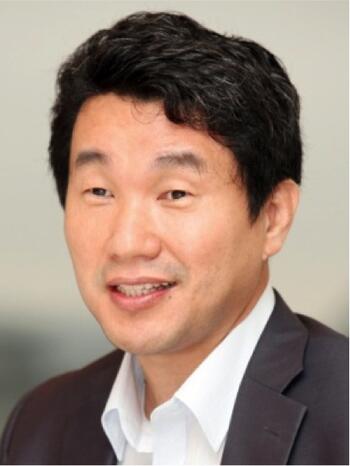
rennie_moon.jpg Ph.D.

Rennie J. Moon joins the Walter H. Shorenstein Asia-Pacific Research Center as the 2016-17 Koret Fellow in the Korea Program.  Moon is an associate professor at the Underwood International College at Yonsei University in Seoul, South Korea. Her research explores the interrelationships among globalization, migration and citizenship, and internationalization of higher education.

Moon, a graduate of Stanford’s Graduate School of Education, Ph.D. ‘09, has collaborated with Stanford professor Gi-Wook Shin on a multiyear research project that examines diversity in higher education in East Asia. She co-edited the book Internationalizing Higher Education in Korea: Challenges and Opportunities in Comparative Perspective published earlier this year. Her articles have appeared in academic journals including Comparative Education ReviewComparative EducationAustralian Journal of International Affairs, and Pacific Affairs.

As a Korean-American scholar, Moon has written editorials and columns in both English and Korean on higher education in Korea and Asia for the Nikkei Asian Review, The Conversation, East Asia Forum, Australian Outlook, Dong-A Daily, MK News, and other media outlets.

Supported by the Koret Foundation, the Koret Fellowship brings professionals to Stanford to conduct research on contemporary Korean affairs. In 2015, the fellowship expanded its focus to include social, cultural and educational issues in North and South Korea, and aims to identify emerging scholars working on those areas.

During her fellowship, Moon will also give public talks and be a lead organizer of the Koret Workshop, an international conference held annually at Stanford.

Moon holds a doctorate and master’s degree in international comparative education from Stanford and a bachelor’s degree in French from Wellesley College.

Visiting Associate Professor
2016-2017 Koret Fellow
News Type
News
Date
Paragraphs

Stanford students now can choose Korea track as a major. Dafna Zur, assistant professor of East Asian languages and cultures, says "the major we've created responds to the interest we've sensed on campus and gives students the opportunity to explore Korea in a truly interdisciplinary way."

The full article is available here.

Hero Image
Bukchon Hanok Village with modern buildings in the background in Seoul, South Korea GoranQ/ Getty Images
All News button
1
Paragraphs

In this paper, we explore a new framework for higher education official development assistance (ODA) with a focus on the transnational bridging benefits of social capital. We first explain why and how a transnational social capital approach can improve the current focus on human resources and local bridges in higher education development. We then illustrate its merits by examining, 1) the transnational bridging potential of social capital formed by foreign students currently studying in Korea; and 2) the actual transnational social capital contributions of foreign professionals who returned home after completing a Korean higher education ODA program. In doing so, we direct particular attention to the value of transnational social capital in promoting development cooperation and public diplomacy. We conclude by discussing how our approach has conceptual importance and practical implications for development cooperation in higher education.

All Publications button
1
Publication Type
Journal Articles
Publication Date
Journal Publisher
Pacific Affairs
Authors
Gi-Wook Shin
Authors
News Type
News
Date
Paragraphs

Alluding to the famous dictum by China’s late leader, Deng Xiaoping, Min Weifang, the executive president of Chinese Society for Education Development Strategies and professor at Peking University (PKU), China, noted that the “water has become very deep, it is difficult to touch the stones [to cross the river].” Min’s comments came at the end of a conference titled “Building World-Class Universities: An Institutional Perspective,” and they specifically referred to the challenges facing Chinese institutions of higher learning. Yet, the phrase nicely captured the challenges facing institutions of higher education worldwide in remolding institutions, social norms and structures to better adapt to the 21st century. Institutions of higher learning – whether “world-class” or not – need to grasp the demands of a rapidly changing future that is hard to discern. Speakers highlighted the complexities of globalization, market pressures, and a contracting public purse which encumber university governance and produce conflicting goals.

The conference, which was hosted at the Stanford Center at Peking University from Nov. 4-5, was part of the Beijing Forum 2016 and brought together over 30 scholars, university presidents and other thought leaders from 11 countries in Europe, Russia, North America and the Asia-Pacific region. The Forum aimed to focus on the institutional contexts that promote the construction and longevity of world-class universities. The second half of the Forum featured debates about the criteria for and, even, the very definition of “world-class.”

The Forum generated cross-cutting themes among a wide range of experts in attendance. The most prominent themes that emerged included the role of the government; government-university relations; and the tensions between education and knowledge production in universities. The Forum first highlighted the various “world-class university-projects” and elite national university-projects around the globe including in China, Russia, South Korea, Japan and Pakistan. Forum discussions then shifted to focus on questions such as “what is a university?” and “what is world-class”? Various university ranking systems drew skepticism, yet were also recognized as a resource used by donors, governments, alumni and prospective students.

As a policy prescription, a heavy role of the government in university education drew the most fire especially from Chinese colleagues who emphasized China’s need for greater university autonomy from government interference. All could agree, however, upon the important role of the government in tertiary education and, in particular, for building world-class universities, even if striking the proper balance between the role of the government and university administration necessarily differed depending on the national context.

Panelists agreed that contemporary challenges facing top-tier universities are many. They include social and economic pressures that favor “multiversities” over smaller, more cohesive universities; tensions among conflicting stakeholders in “multiversities”; intensification of science, technology, engineering and math (STEM) research; commercialization of knowledge; diminishing focus on undergraduate education; overproduction of doctoral degrees; inequality in access to and quality of higher education; and increasing administrative scale and complexity of university management. Many panelists throughout the conference appeared to concur that accelerated knowledge production, a more direct connection to national development goals, increased specialization and commercialization have produced significant benefits in recent years. But they also acknowledged that these benefits have come with a price – perhaps in the form of excellence in undergraduate teaching.

The gains that Peking University and Tsinghua University, in particular, and Chinese universities, in general, have made were widely acknowledged. Increasing numbers of Asian universities, too, have entered the top-tier in global rankings. Yet, solving 21st century demands – as opposed to just managing them – still appeared difficult as experts and thought leaders grappled with what, if any, institutional models can best meet those demands. Some experts suggested providing students access to different kinds of tertiary education (for example, in the form of community colleges, vocational colleges, liberal arts and research universities, as in the U.S. context). Most experts, if not all, agreed that universities need to shore up their educational missions and ensure balanced support for both the humanities and social sciences as well as the sciences and technical fields. In addition, many experts emphasized the need to address societal imbalances and provide better access to quality higher education to all socioeconomic classes.

Related links:

Forum agenda and list of panelists

Photo gallery

Hero Image
world class universities
At a forum hosted at Stanford Center at Peking University, experts gathered to discuss the institutional contexts of building world-class universities, Beijing, Nov. 2016.
All News button
1
News Type
News
Date
Paragraphs

Tottori Prefecture—the least populous prefecture in Japan known for its seafood and stunning natural beauty, including its iconic sand dunes—is now collaborating with Stanford University. The first kanji character of Tottori means “bird” and the recent launching of a new online course, Stanford e-Tottori, is helping high school students to gain a bird’s-eye view of U.S. society and culture with a focus on U.S.–Japan relations.

On July 18, 2016, SPICE Director Gary Mukai participated in an opening ceremony in Tottori for Stanford e-Tottori. The ceremony included opening remarks by Governor Shinji Hirai, greetings from Superintendent of Education Hitoshi Yamamoto, comments by Mukai, and reflections by Tottori native, Takeshi Homma, Founder and CEO at HOMMA, Inc., Silicon Valley. In his comments, Mukai thanked Governor Hirai for his unwavering support of this collaboration between the Tottori Prefectural Board of Education and Stanford University, and also made a historical note about Tottori Prefecture’s relations with the United States by noting, “Hajimu Fujii, who was born in 1886 in Takashiro, Tottori, left Tottori for the United States in 1906. Hajimu Fujii became a Japanese-American community leader in the state of Idaho. In the 1930s, Fujii was recognized as the first Japanese pioneer in large-scale onion farming.”

Mukai was followed by Tottori Nishi High School student Shue Shiinoki, who read a “Resolution Declaration,” representing the 36 students who were selected to participate in the inaugural Stanford e-Tottori course. Mukai and Homma had the pleasure of visiting Tottori Nishi High School as well as Seishokaichi Junior and Senior High School during their visit.

The Stanford e-Tottori course instructor is Jonas Edman, who is an Instructional Designer at SPICE. As of mid-December 2016, Edman has facilitated three “virtual classes” on the following

Image
stanford e tottori student
topics: “Studying in the United States,” “Japanese-American Baseball,” and “The Japanese-American Experience.” “Studying in the United States” was led by Eiko Nakano, an MBA and MA student at Stanford University from Tokyo. In addition to attending a total of ten “virtual classrooms,” students are given assignments and homework and also engage in online discussions with each other through discussion boards.

Edman, an alumnus of the American School in Japan, recently reflected that the rigor of taking a course solely taught in English has proven to be challenging to the Tottori students but that he is clearly noting progress in the students who are willing to take on the challenge. Koji Tsubaki, Teachers’ Consultant, Tottori Prefectural Board of Education, also recently commented, “Students in Tottori Prefecture are full of excitement to learn about the contents of the SPICE Stanford e-Tottori program, accelerating their development of self-expression skills. They are overflowing with questions for deeper understanding.”

Recently, Edman introduced Stanford e-Tottori to a delegation of business people from Tottori Prefecture who visited SPICE on November 16. The delegation was led by Tottori Bank, Ltd. Chairman Masahiko Miyazaki. Homma was not only instrumental in bringing the delegation to Stanford but also suggested the initial idea of developing Stanford e-Tottori. Chairman Miyazaki expressed his gratitude to Homma, Edman, and Mukai for making Stanford e-Tottori a reality.

During the delegation’s tour of Stanford University, many of the business people expressed hopes that their own children or grandchildren will someday be able to enroll in Stanford e-Tottori. Many also expressed agreement with one of the goals of Stanford e-Tottori, that is, to encourage students in Tottori to study in the United States either as exchange students or as undergraduate or graduate students.

Given Japan’s national focus on internationalizing the curriculum and preparing students to “think globally,” the timing of Stanford e-Tottori is ideal. SPICE’s hope is that someday the Tottori students’ birds-eye view of U.S. society and culture with a focus on U.S.–Japan relations—provided through Stanford e-Tottori—will become useful background information for them when they visit the United States as students, as business people, or in other capacities.

Hero Image
stanford e tottori student
All News button
1
Authors
News Type
News
Date
Paragraphs

Japanese and American scholars and practitioners gathered at Stanford recently for “Womenomics, the Workplace, and Women,” a full-day conference seeking to find pathways to advance opportunity for women in society and the workplace.

Nearly 75 people attended the public conference, which included 20 speakers and was co-sponsored by Stanford’s Shorenstein Asia-Pacific Research Center and the Clayman Institute for Gender Research, as well as the United States-Japan Foundation and the Japan Society for the Promotion of Science.

Takeo Hoshi, director of the Japan Program at Shorenstein APARC, noted that women in Japan and the United States have long encountered obstacles related to gender. Currently, the United States and Japan rank 45th and 111th, respectively, on the Global Gender Gap Index.

“The conference is a unique opportunity for experts from Japan and Silicon Valley to learn from each other and their countries’ recent attempts to tackle gender diversity, particularly in the areas of business and technology,” Hoshi said.

The Japanese government’s inclusion of women’s advancement in its economic growth strategy 'Abenomics,' named after Prime Minister Shinzo Abe, is “one of the few good policies,” Hoshi said, yet complex cultural constraints and workplace policies need to change in order for it to work. Similarly, in Silicon Valley, while strides have been made, gender diversity still lags in corporate leadership and boards of directors especially in the areas of STEM (science, technology, engineering and mathematics).

Panelists shared perspectives on women’s status, leadership and work-life balance in both countries throughout four panel discussions led by Hoshi, and Shelley Correll, director of the Clayman Institute and professor of sociology; Kenji Kushida, Japan Program research scholar; and Mariko Yoshihara Yang, a visiting scholar at Shorenstein APARC.

One broad theme that emerged in the discussions: gender equity progress takes time. Closing the gender gap will come incrementally and a multidisciplinary approach could help the process. 

Areas highlighted by the panelists included a need to address unconscious bias and to improve programs that support women in the workplace as well as those seeking to re-enter the labor force after taking time off, such as increased access to childcare and elimination of “evening work” for those who hold full-time jobs.

Panelists suggested expanding educational opportunities, mentorship and peer-to-peer networks among women, as well as training centered on gender equity for all employees. Quotas and government incentives for organizations that adopt equity practices were also proposed to achieve greater female representation.

Additional discussions took place between the panelists in a closed-door workshop the following day. A report that details outcomes and a set of policy recommendations is expected in 2017; the full list of panelists, topics addressed and conference agenda can be viewed here.

Hero Image
womenomics conference headline
Japan Program visiting scholar Mariko Yoshihara Yang chairs a panel discussion at the conference "Womenomics, the Workplace, and Women" on Nov. 4, 2016, at the Bechtel Conference Center.
Rod Searcey
All News button
1
News Type
Commentary
Date
Paragraphs

Researchers in the Korea Program regularly contribute to Korean media on the Korean affairs ranging from education and economics to politics and North Korea nuclear issues. The articles are in Korean language.

Nationalist Populism in South Korea (Gi-Wook Shin, August 18, 2019)

The Ambiguous Boundary Between Korean Wave and the Anti-Korean Sentiment (Joyce Lee, May 2, 2019)

Restoring the Dignity of South Korea (Gi-Wook Shin, April 18, 2019)

Happiness and Productivity (Yong Suk Lee, March 21, 2019)

Softness Overcomes Hardness  (Joyce Lee, March 6, 2019)

What should the Hanoi Declaration lay out? (Gi-Wook Shin, February 20, 2019)

What Would an Aged Society Look Like? (Yong Suk Lee, January 23, 2019)

Confront the lure of populism or risk economic failures and the coming of a far-right extremist regime (Gi-Wook Shin, January 17, 2019)

Only a drastic measure towards denuclearization can resolve the current stalemate with North Korea (Gi-Wook Shin, interview with Korea Times, January 10, 2019)

Looking After Myself (Joyce Lee, January 9, 2019)

2018, The Moon Jae-In Government's Progress Report (Gi-Wook Shin, December 27, 2018)

Rethinking North Korean Economy? (Yong Suk Lee, November 29, 2018)

The Dark Side of the Korean Culture of Hierarchy (Joyce Lee, November 14, 2018)

Trump's Second Half (Gi-Wook Shin, November 7, 2018)

How Parents Can Help their Children with Career Planning (Yong Suk Lee, October 17, 2018)

Anticipation and Concerns Mount Ahead of the 3rd Inter-Korean Summit (Joyce Lee, September 19, 2018)

Spring on the Korean Peninsula Needs to be hard fought (Gi-Wook Shin, September 5, 2018)

Should we encourage kids to learn coding? (Yong Suk Lee, August 6, 2018)

Some Thoughts on the Korean Value of Saving Face (Joyce Lee, July 16, 2018)

Koreans abroad can play important roles in achieving peace on the Korean Peninsula (Gi-Wook Shin, July 2, 2018)

Withdrawal of US troops from South Korea now becomes an option (Gi-Wook Shin, June 20, 2018)

Trump in Face-Saving Action for Kim (Joyce Lee, June 18, 2018)

South Korea and the U.S. Differ on Priorities for North Korea Policy (Gi-Wook Shin, May 14, 2018)

Is CVID Possible? (Gi-Wook Shin, May 7, 2018)

CVID Faces Challenges (Gi-Wook Shin, May 3, 2018)

The April 27 Korea Summit and the Lingering Question of CVID+α (Gi-Wook Shin, April 30, 2018)

Choices for Your Happiness (Joyce Lee, April 23, 2018)

The Ambiguity of the Moon Government's Goal for the Inter-Korean Summit (Gi-Wook Shin, April 2, 2018)

Korea as a Pacemaker (Gi-Wook Shin, March 13, 2018)

MeToo Movement Should Create Lasting Social Change (Gi-Wook Shin, March 12, 2018)

What's Wrong with Being a Nobody? (Joyce Lee, February 26, 2018)

It's Time to Move Beyond the Political Deadlock of Comfort Women Issue (Gi-Wook Shin, January 15, 2018)

Can the Government Rouse Young Koreans from Their Dreams of Childless Comfort? (Joyce Lee, January 3, 2018)

A Grand Bargain between the US and China Seems More Likely than Ever (Yong Suk Lee, December 25, 2017)

Korea No Longer a Country of Koreans (Rennie Moon, December 11, 2017)

Moon Administration's Diplomatic and Securtiy Strategies (Gi-Wook Shin, November 27, 2017)

Making Little Mr. and Ms. Perfects, But for Whose Sake and at What Cost? (Joyce Lee, November 6, 2017)

Identifying Korea as a Developed Country (Joon Nak Choi, October 30, 2017)

Superficial Korea (Gi-Wook Shin, September 26, 2017)

What Comes After the War of Words Between Trump and Kim Jong-un (Gi-Wook Shin, September 25, 2017)

In the Midst of Rising Fears of War (Joyce Lee, September 12, 2017)

Broken English as the global language (Rennie Moon, August 28, 2017)

'Polifessors' of Moon administration (Gi-Wook Shin, July 24, 2017)

In Anticipation of the Era of Korean Studies (Joyce Lee, July 17, 2017)

Technological Change: Why Korea needs a longer-term perspective on job creation (Yong Suk Lee, June 27, 2017)

Global network of Koreans abroad (Gi-Wook Shin, June 6, 2017)

First summit meeting, not to hurry (Gi-Wook Shin, May 22, 2017)

Korean Americans' love for Korea (Rennie Moon, April 24, 2017)

Trump's anti-immigration stance to be an opportunity for Kore(Gi-Wook Shin, February 27, 2017)

A Labor market by the young, and for the young (Yong Suk Lee, January 30, 2017)

If Korean universities are to succeed with internationalization (Rennie Moon, November 21, 2016)

US presidential election and Korea (Gi-Wook Shin, October 24, 2016)

Political expediency should not block technology innovation (Joon Nak Choi, September 12, 2016)

Strategic policy on inter-Korean relations is essential (Gi-Wook Shin, August 1, 2016)

Is Korea ready to embrace risk and failure? (Yong Suk Lee, June 20, 2016)

Can Pankyo become Silicon Valley in Korea? (Gi-Wook Shin, May 9, 2016)

All News button
1
News Type
News
Date
Paragraphs

The Program on Arab Reform and Democracy (ARD) at Stanford’s Center on Democracy, Development, and the Rule of Law (CDDRL) is pleased to welcome international media figure and Egyptian political satirist Bassem Youssef as a visiting scholar during the Fall of 2016. Dubbed the Jon Stewart of the Arab World, Youssef was the host of the popular TV political satire show Al-Bernameg, which was the first of its kind in the Middle East region. Al-Bernameg was the most watched show in the history of Egyptian TV with an average of 40 million viewers every week. Due to its sharp criticism of Egyptian leaders, Al-Bernameg faced political pressure from successive governments until it was finally taken off the air in the summer of 2014. Recently, Youssef launched “The Democracy Handbook,” a Fusion TV digital series that satirizes American politics through a Middle Eastern perspective. Named one of TIME’s “100 most influential people in the world” in 2013, Youssef served as a resident fellow at the Institute of Politics at Harvard University’s Kennedy School of Government in 2015.

Youssef’s fellowship is supported by a generous grant from the Carnegie Corporation, and by the Stanford Arts Office of the Associate Dean. In the following interview Youssef discusses his current projects and their relevance to the Stanford community.


[[{"fid":"224139","view_mode":"crop_870xauto","fields":{"format":"crop_870xauto","field_file_image_description[und][0][value]":"Bassem Youssef at CDDRL","field_file_image_alt_text[und][0][value]":"","field_file_image_title_text[und][0][value]":"","field_credit[und][0][value]":"Djurdja Jovanovic Padejski ","field_caption[und][0][value]":"Bassem Youssef speaking with members of the CDDRL community at Stanford University, September 29, 2016","field_related_image_aspect[und][0][value]":"","thumbnails":"crop_870xauto"},"type":"media","attributes":{"width":"870","class":"media-element file-crop-870xauto"}}]]

Bassem Youssef in conversation with ARD Associate-Director Hesham Sallam and CDDRL Visiting Scholar Alexandra Pichler Fong at the CDDRL fall 2016 reception, September 29, 2016 (Photo credit: Djurdja Jovanovic Padejski)


What are your research goals and priorities at CDDRL, Stanford?

I am not a stranger to CDDRL. About a year ago I spoke at the Center in conversation with Professor Larry Diamond in what might have been one of the best interviews I had on a college campus in the United States. During my visit, I was very impressed with CDDRL’s efforts to try to make sense of all what is happening in the Middle East and to nuance American perspectives on the situation the region. I was elated when I was informed that there was a chance for me to join forces with this prestigious center.

Through my fellowship at CDDRL, I would like to bring a different voice to the discussion over what is happening in the Middle East and the Muslim World, and how narratives in the United States can affect the realities in the region. Beyond my own research on satire and social change, my priority is to connect with the student community at Stanford and encourage them to find their own voices and their own opinions about that part of the world. I believe that satire can be a great tool to understand and even change how people view the world around them. As much I have a lot to share with students, I am sure I will have a great deal to learn from them too, and from the Stanford community more generally. I had the privilege to meet with some of the smartest young people here and I look forward to benefit from this intellectually promising experience.


How are the ongoing political developments in the United States informing your current projects?

After I moved to the United States, I started to follow the American elections very closely. With the rise of a populist Right not just in the States but also in Europe, I could see many similarities of how masses are being controlled through hate, xenophobia, and fear. These have been key elements in the narratives used by many Middle Eastern regimes for decades. As people were horrified with the likes of Donald Trump, Ted Cruz and Ben Carson, this came to me as a reminder that no nation, no matter how strong or advanced, is free of such forms of public manipulation and fear-mongering. This was a great starting point for me here in the States. I discovered many similarities that I can comment on and use to show people that we are not that different from each other and that intolerance and bigotry have no single home or language. I was fortunate to relay that message in my new show in America "Democracy Handbook" and also in my coverage of the National Conventions of the Republican and Democratic Parties.


What is your assessment of the prospects for meaningful political change at the current moment in Egypt?

The current realities in Egypt and the Middle East are a product of decades of authoritarian rule. What happened in the Arab Spring interrupted the rule of particular autocrats, but did not succeed in delivering the type of lasting social change we all had hoped for. The biggest obstacle to meaningful social change in Egypt remains the massive webs of special interests that have ruled the country for the last 60 years and shaped its political and social hierarchies. It was naive of us to think that 18 days of protests could make profound changes to the system. You can get rid of the autocrat at the helm, but the system can still endure, as evidenced by the current realities. Any changes will be worthless in the absence of complete transparency and accountability of the ruling class that controls the country’s economy, governance, and legislation.

Hero Image
bassem
Bassem Youssef at the CDDRL fall 2016 reception, September 29, 2016
Djurdja Jovanovic Padejski
All News button
1
Subscribe to Education