Economic Affairs
0
david_yang_headshot.jpeg

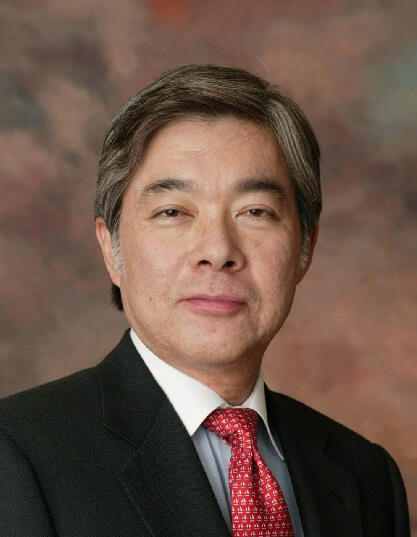
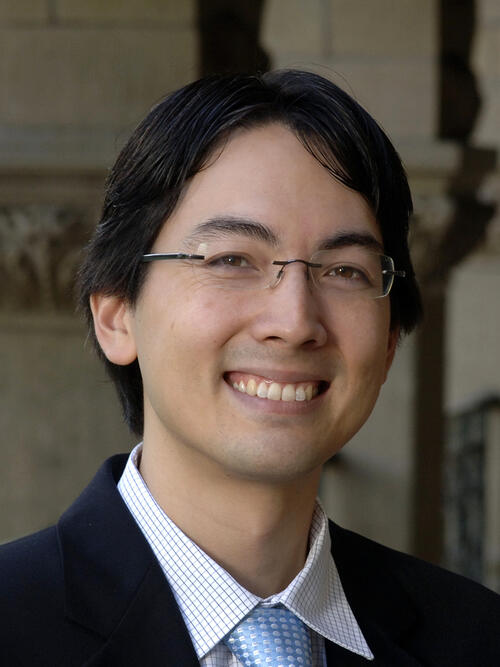
David Y. Yang is a Ph.D. student in Economics at Stanford University. He received his B.A. in Statistics and B.S. in Business Administration from the University of California, Berkeley. His research interests focus on political economy, behavioral economics, and economic history. In particular, he is interested how citizens form their preferences, beliefs and attitudes.

Graduate Student - Economics
SCPKU Pre-Doctoral Fellow, October-November 2015
Encina Hall E301616 Serra StreetStanford, CA94305-6055
(650) 723-6530
0
shuichiro_nishioka_headshot_crop.jpg Ph.D.

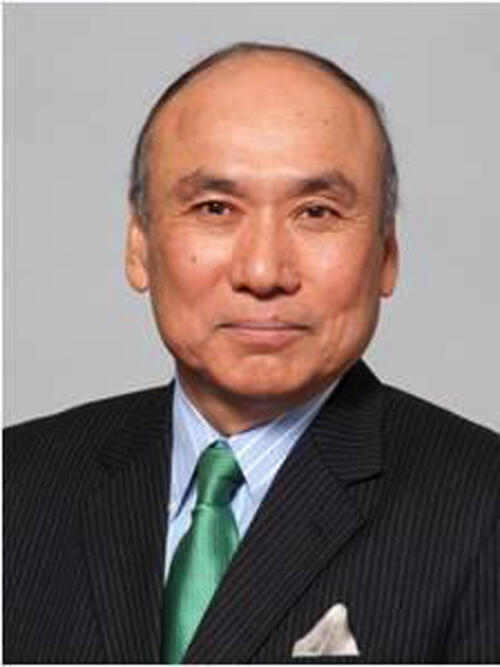
Shuichiro Nishioka joins the Walter H. Shorenstein Asia-Pacific Research Center (Shorenstein APARC) during the 2015-16 academic year from the West Virginia University’s Department of Economics where he serves as an Associate Professor.

His research covers the broad issues on International Trade, Economic Development, and East Asian Economies. During his time at Shorenstein APARC, Nishioka will conduct research projects on the expanding inequality in China and Japan.

Nishioka previously affiliated for research and teaching at the Research Institute of Economy, Trade and Industry, the University of Pittsburgh and Hitotsubashi University. He contributes to articles to publications including the Journal of International Economics, the Journal of Development Economics, and European Economic Review.

Nishioka holds a PhD and an MA in Economics from the University of Colorado at Boulder, and a BA in Economics from Yokohama National University. 

Visiting Scholar
Paragraphs

We estimate the impact of two early commitment of financial aid (ECFA) programs—one at the start and one near the end of junior high school (seventh and ninth grades, respectively)—on the outcomes of poor, rural junior high students in China. Our results demonstrate that neither of the ECFA programs has a substantive effect. We find that the ninth-grade program had at most only a small (and likely negligible) effect on matriculation to high school. The seventh-grade program had no effect on either dropout rates during junior high school or on educa- tional performance as measured by a standardized math test. The seventh-grade program did increase the plans of students to attend high school by 15%. In examining why ECFA was not able to motivate significant behavioral changes for ninth graders, we argue that the competitiveness of the education system successfully screened out poorer performing students and promoted better performing students. Thus by the ninth grade, the remaining students were already committed to going to high school regardless of ECFA support. In regards to the results of the seventh grade program, we show how seventh graders appear to be engaged in wishful thinking (they appear to change plans without reference to whether their plans are realistic).

All Publications button
1
Publication Type
Journal Articles
Publication Date
Journal Publisher
Journal of Development Economics
Authors
Prashant Loyalka
James Chu
Scott Rozelle
Authors
News Type
News
Date
Paragraphs

China's tight control over its economy is one reason why it is facing an economic slowdown of global implications, Stanford scholars say.

China's stock market fall is now in its third week, and share prices have lost a third of their value since mid-June, though the market is still higher than a year ago. China has the world's second-largest economy, with deep financial links to the United States.

Nicholas Hope, director of the China Program at the Stanford Center for International Development, which is part of the Stanford Institute for Economic Policy Research, said the simple answer behind the slowdown is that "nothing grows at 10 percent forever."

However, the dropoff is sharper than the government of China expected or desires, he noted.

Hope said the deceleration is due to the effects of slow growth globally on international trade, slower progress than hoped in rebalancing the Chinese economy toward spending more on consumption and less on investment, and the inefficiency of much of Chinese investment. Another big problem is the debt load of local and regional governments.

Hope does not think the steep fall of China's stock market is comparable to the American crash of 1929 – "so long as the Shanghai market index remains comfortably above where it was a year ago."

Yet the "frighteningly sharp correction" over the past few weeks highlights the fragility of the Chinese financial system, he said. It also serves as a cautionary tale for the many small investors who speculated on high returns with borrowed money.

"Borrowed funds have financed many risky economic investments in infrastructure by subnational [regional and local] governments as well as stock purchases by unwise investors," he said. "The result threatens to be an unwanted increase in non-performing loans in the banking system as borrowers are unable to repay."

Hope believes China can overcome its problems if it adopts economic reforms aimed at fostering more private enterprise and less state control over the market. Back in 1993, China's Communist Party announced those reforms and updated them in 2013, so they are technically on the books.

"Paradoxically, current weaknesses could be a longer-term source of strength, as the shares of income and consumption in Chinese GDP rise, investment is increasingly more efficiently allocated by a transformed financial system and all factors of production – land, capital and labor – are put to more productive uses," he said.

To counteract the market drop, the government ordered state-owned companies to buy shares, hiked the amount of equities insurance companies can hold and offered more credit to finance trading. Hope said this may cause a problem.

"It is introducing considerable moral hazard by attempting to bail out small investors because of the concern over the potential for social unrest if too many of those investors lose all of their savings," he said.

Charlotte Lee, associate director of the China Program at Stanford's Walter H. Shorenstein Asia-Pacific Research Center, says it is too early to tell if the market fall will diminish the credibility of the government and Communist Party in the eyes of the people. China's President, Xi Jinping, does want to maintain his popularity.

"The government's management of the economy is, however, one of the pillars of its credibility," Lee said.

She described this as a "small dent" in that credibility, as the government has many other ways it aids the Chinese people.

Opening up the economy

Stanford Professor Darrell Duffie says that it will be hard for China to maintain its past high growth rates.

"China's growth rate is still very high, but it is less high than it was because most of the giant pool of cheap and underutilized labor that China had 20 years ago has by now been put to work relatively productively," said Duffie, the Dean Witter Distinguished Professor of Finance at the Graduate School of Business.

"Additional sources of productivity gains are harder to find," he added.

Duffie is concerned about excessive leverage in China's equity markets.

"Chinese investors have borrowed a lot of money to invest in equities. This margin financing was used too aggressively. China's corporations and local governments are heavily indebted, and that will be a drag on future growth," he said.

He suggests that China would do well to continue on its current course of opening up its economy to cross-border capital flows and reducing its economy's reliance on state-owned enterprises.

If China's economy slows down, the country will decrease its demand for American goods and services, he added. American businesses that plan to operate in China should learn as much as possible about how China's economy and government works.

And Duffie advised, "Whenever possible work with trusted partners in China."

Asian power games?

With China ramping up its military in recent years, what are the risks to U.S. national security if China's economy plunges?

Amy Zegart, co-director of Stanford's Center for International Security and Cooperation, said it is possible that a slowing economy might make China behave differently in terms of its hard and soft power.

"For all the worry about a rising China, a fragile China is bad for the United States. The Chinese Communist Party's legitimacy rests on a promise of economic prosperity. The more China's growth falters, the more party leaders will be driven to stoke the fires of nationalism to secure domestic support," said Zegart, who is also a senior fellow at the Hoover Institution.

She added, "We've seen this movie before. It stars Vladimir Putin behaving recklessly abroad to win political support at home as his economy stalls."

Clifton Parker is a writer for the Stanford News Service.

Hero Image
stock market board
A stock market board illuminated with trading numbers.
Wikimedia Commons/Katrina.Tuliao
All News button
1
News Type
News
Date
Paragraphs

Joon Nak Choi will be the 2015-16 Koret Fellow in the Korea Program at Stanford University’s Walter H. Shorenstein Asia-Pacific Research Center (APARC), effective Jan. 1, 2016.

A sociologist by training, Choi is an assistant professor at Hong Kong University of Science and Technology. His research and teaching areas include economic development, social networks, organizational theory, and global and transnational sociology, within the Korean context.

Choi, a Stanford graduate, has worked jointly with Stanford professor Gi-Wook Shin to analyze the transnational bridges linking Asia and the United States. The research project explores how economic development links to foreign skilled workers and diaspora communities.

Most recently, Choi coauthored Global Talent: Skilled Labor as Social Capital in Korea with Shin, who is also the director of the Korea Program. From 2010-11, Choi developed the manuscript while he was a postdoctoral fellow at Shorenstein APARC.

Mark Granovetter, a professor and chair of Stanford’s sociology department, praised Choi for his work in academia.

“Joon Nak’s dissertation on social influences on hedge fund managers’ success broke important ground in our understanding of financial markets. His recent book Global Talent sheds critical new light on the challenges of Korea and other economies facing high-level labor shortages, and the potential of foreign workers to meet them. As the 2015-16 Koret Fellow, he will bring his considerable talents to bear on the study of Korean society,” Granovetter said.

During his fellowship, Choi will study the challenges of diversity in South Korea and teach a class for Stanford students. Choi’s research will buttress efforts to understand the shifting social and economic patterns in Korea, a now democratic nation seeking to join the ranks of the world’s most advanced countries.

Supported by the Koret Foundation, the fellowship brings leading professionals to Stanford to conduct research on contemporary Korean affairs with the broad aim of strengthening ties between the United States and Korea. The fellowship has expanded its focus to include social, cultural and educational issues in Korea, and aims to identify young promising scholars working on these areas.

“It will be my pleasure and honor to spend the next year at Shorenstein APARC, and have the opportunity to engage in the vibrant research community there," Choi said.

Choi holds a bachelor’s degree in economics, international relations and urban studies from Brown University, and a master’s degree and doctorate in sociology from Stanford University.

Hero Image
joon nak choi Rod Searcey
All News button
1
Authors
News Type
News
Date
Paragraphs

The United States and European countries can take steps to avoid making the same economic mistakes that Japan committed during the latter's "lost decade," a Stanford economist wrote in a new paper.

The study, published in the IMF Economic Review, describes the reasons Japan was not able to pull out of its long recession in the 1990s, offering some lessons for U.S. and European leaders in the wake of the 2007-09 meltdown.

In particular, the delay in bank recapitalization and the lack of structural reforms in the economic sphere kept Japan from realizing a full recovery, wrote Takeo Hoshi, the Henri and Tomoye Takahashi senior fellow at Stanford's Freeman Spogli Institute for International Studies.

"Bank recapitalization" refers to a governmental reorganization of failing banks, often involving the use of public money to keep them solvent. "Structural reforms" describes how a government might overhaul its economic structures to increase business competition – such as deregulation to cut costs for firms.

The shortcomings in these two policy areas "retarded Japan's recovery from the crisis and were responsible for its stagnant post-crisis growth," said Hoshi, whose co-author was Anil K. Kashyap, an economics professor at the University of Chicago Booth School of Business.

Risky bank lending

Japan's "lost decade" originally referred to the 1990s, though the country has still not regained the economic power it enjoyed in the 1970s and 1980s. Some say Japan has actually experienced two lost decades if the 2000s are counted as well.

Faced with a huge financial crisis at the dawn of its lost decade, Japan had to navigate challenges that other advanced economies had not confronted since the Great Depression, Hoshi and Kashyap wrote.

However, government leaders made mistakes, Hoshi said. One was failure to rehabilitate the banks and another was to misunderstand the nature of the problems afflicting the Japanese economy. For example, much like the United States in 2007-09, the Japanese banks had made many dubious loans to risky customers.

"Instead of recognizing that major structural adjustments were needed, much of the policy response was calibrated under the assumption that Japan faced a simple cyclical problem that could be addressed with indiscriminate fiscal stimulus," wrote Hoshi, the director of the Japan Program at the Walter H. Shorenstein Asia-Pacific Research Center.

For example, on the demand side, monetary policy was not as expansionary as it could have been, he said. Deflation persisted for a long time. And fiscal stimulus packages – such as tax cuts – were inconsistent. Meanwhile, much of Japan's fiscal spending took the form of public works projects that had low productivity.

As for structural reforms, the Japanese government lacked a sense of urgency. For example, even in the reform-minded administration of former Prime Minister Junichiro Koizumi, only eight of the proposed 35 reform initiatives would have directly boosted growth. Of the others, 16 might have indirectly supported growth and 11 would have had no effect on growth, Hoshi said.

Drastic change needed

Unfortunately, some European nations seem to be following Japan's lead, Hoshi said.

"In France, Italy and Spain, bank recapitalization has been delayed and the structural reforms have been slow. Without drastic changes, they are likely to follow Japan's path to long economic stagnation," Hoshi and Kashyap wrote.

The problems that held back Japan seem to be less serious in the U.S., Hoshi said: "Employment protection is low in the United States and the labor market shows high mobility. The regulatory advantage for incumbent firms is smaller than in Europe or Japan and starting new business is relatively easy."

As the researchers noted, the United States and Germany are in a bit better economic shape, partly due to the fact that they did undertake structural reforms sooner rather than later. The U.S. was able to recapitalize its banks more quickly, for example.

Still, five years after the failure of the Lehman Brothers investment bank left the world's financial markets in chaos, the U.S. and Europe are not yet back to what had looked normal before the crisis, according to the research. For instance, employment levels have not reached the levels seen before the 2007-09 crash.

"The U.S. recovery has been tepid despite a number of extraordinary macroeconomic policies (at least in the traditional sense). This suggests that the U.S. economy also has problems, but they are just different from those in Japan and in Europe," Hoshi said.

In the years leading up to the financial crisis, the researchers wrote, U.S. growth was fueled by a consumption boom from rapid housing price increases and rising debt levels.

"In a broad sense, the U.S. economy before the crisis was similar to the Japanese or Spanish economies," noted Hoshi, adding that in Japan, the speculative investment boom in the late 1980s masked structural problems.

Clifton Parker is a writer for the Stanford News Service.

Hero Image
flickr stock board tokyo
An onlooker examines a stock board, Tokyo, Japan.
Flickr/Kondo Atsushi
All News button
1
-

The University of Cape Town’s Graduate School of Development Policy and Practice (GSDPP), in collaboration with the Leadership Academy for Development (LAD), an affiliate of Stanford University, will be offering a course in April 2015 that addresses some of the challenges faced by public sector leaders as they foster economic growth in politically-charged environments. 

This course was run successfully in both 2011 and 2013. The 2015 version – updated with new case studies – will also be facilitated by international and national trainers and experts. 

The course is a 5-day, intensive programme for a small number of high level government officials and business leaders from South Africa and other African countries (25-30 in total). It will explore how government can encourage and enable the private sector to play a more effective, productive role in economic growth and development. The curriculum is designed to reinforce and illustrate three critically important hypotheses about the role of public policy in private sector development.


Case studies for this course are available here.  

University of Cape Town and the Cape Milner Hotel

Johannesburg, South Africa

Workshops
Paragraphs

As the Greek national referendum on the proposed austerity package draws near, Stanford political scientist Jens Hainmueller and co-author Yotam Margalit (Tel Aviv and Columbia Universities) share the surprising results of a survey conducted on a national sample of 2,000 Greek voters in the June 30, 2015 edition of The New York Times.  


All Publications button
1
Publication Type
Commentary
Publication Date
Journal Publisher
The New York Times
Authors
Subscribe to Economic Affairs