New research finds that without climate change mitigation, even wealthy countries will see an economic downturn by 2100.
When thousands of scientists, economists and policymakers meet in Paris this December to negotiate an international climate treaty, one question will dominate conversations: what is the climate worth?
A new study published in the journal Nature shows that the global economy will take a harder hit from rising temperatures than previously thought, with incomes falling in most countries by the year 2100 if climate change continues unchecked. Rich countries may experience a brief economic uptick, but growth will drop off sharply after temperatures pass a critical heat threshold.
The study, co-led by Marshall Burke, a professor of Earth system science at Stanford's School of Earth, Energy & Environmental Sciences, provides a clear picture of how climate change will shape the global economy, which has been a critical missing piece for the international climate community leading up to the Paris talks. Understanding how much future climate change will cost in terms of global economic losses will help policymakers at the meetings decide how much to invest in emissions reductions today.
The work was co-authored by two researchers from the University of California, Berkeley: co-lead author Solomon Hsiang, the Chancellor's Associate Professor of Public Policy, and Edward Miguel, Oxfam Professor in Environmental and Resource Economics.
Heat threshold
"The data tell us that there are particular temperatures where we humans are really good at producing stuff," said Burke, who is also Center Fellow at the Freeman Spogli Institute for International Studies and fellow, by courtesy, at the Stanford Woods Institute for the Environment. "In countries that are normally quite cold - mostly wealthy northern countries - higher temperatures are associated with faster economic growth, but only to a point. After that point, growth declines rapidly.
That point, it turns out, is an annual average temperature of about 55 degrees Fahrenheit.
As average temperatures move past that mark, wealthy countries will start to see a drop-off in economic output. Poorer countries, mostly in the tropics, will suffer even steeper losses because they are already past the temperature threshold. This has the potential to widen the global inequality gap, said Burke.
A new approach
Looking at existing research, the team found a puzzling mismatch between micro-level studies, which show negative impacts of hot temperatures on output in specific sectors such as agriculture, and macro-level studies, which at least in rich countries show limited impacts on economic output.
"Many very careful studies show clearly that high temperatures are bad for things like agriculture and labor productivity, even in rich countries," Burke said. "While these relationships showed up again and again in the micro data – for example when looking at agricultural fields or manufacturing plants – they were not showing up in the existing macro-level studies, and we wanted to understand why."
The researchers suspected the problem was with the analysis, not the data, so they took a new approach.
Analyzing records from 166 countries over a 50-year period from 1960 to 2010, they compared each country's economic output in years of normal temperatures to that of unusually warm or unusually cool years. The data revealed a hill-shaped relationship between economic output and temperature, with output rising until the 55 F threshold and then falling faster and faster at higher temperatures. “Our macro-level results lined up nicely with the micro-level studies,” Hsiang said.
Two possible future. Colors are 2100 temperatures under “business as usual” climate change (left) and aggressive climate policy (right). This image shows a simulation of future nightlights, as seen from space, since richer economies tend to glow brighter. A hotter world is a more unequal world, with the north benefitting and tropical economies declining. A cooler world leads to more equitable global growth, offering regions like Africa the chance to “catch up”. Courtesy of Marshall Burke.
Two possible future. Colors are 2100 temperatures under “business as usual” climate change (left) and aggressive climate policy (right). This image shows a simulation of future nightlights, as seen from space, since richer economies tend to glow brighter. A hotter world is a more unequal world, with the north benefitting and tropical economies declining. A cooler world leads to more equitable global growth, offering regions like Africa the chance to “catch up”. Source: Burke, Hsiang and Miguel.
Higher temperatures, lower growth
The team then sought to understand what this historical pattern might mean for the future global economy as temperatures continue to warm.
“Many other researchers have projected economic impacts under future climate change,” Hsiang said. “But we feel our results improve our ability to anticipate how societies in coming decades might respond to warming temperatures.”
Projecting future changes in economic output under climate change was challenging.
“Even without climate change, there are a lot of possible ways in which the future economy might evolve,” Burke said. “We start with a few different baseline scenarios and then we bring in our historical understanding of the relationship between temperature and economic output to better understand how these economic trajectories might change with warming temperatures."
The researchers’ findings were stark.
In a scenario of unmitigated climate change, the team’s model shows that by 2100 the per-capita incomes of 77 percent of countries in the world would fall relative to current levels. By the team’s main estimate, global incomes could decline 23 percent by 2100, relative to a world without climate change. Other estimates are twice as high. The likelihood of global economic losses larger than 20 percent of current income is at least 40 percent, and much higher in some scenarios.
These estimates are substantially larger than existing models indicate, a difference the research team attributes to their updated and data-driven understanding of how countries have historically responded to temperature increases.
Rich countries not immune
A common assumption among researchers has been that wealth and technology protect rich countries from the economic impacts of climate change, because they use these resources to adapt to higher temperatures.
"Under this hypothesis, the impacts of future warming should lessen over time as more countries become richer," Burke said. "But we find limited evidence that this is the case."
Burke's team found that, historically, rich countries did not appear to respond any differently to temperature change than poor countries.
“The data definitely don’t provide strong evidence that rich countries are immune from the effects of hot temperatures,” said Hsiang. “Many rich countries just happen to have cooler average temperatures to start with, meaning that future warming will overall be less harmful than in poorer, hotter countries.”
Paris climate talks
From Nov. 30 to Dec. 11, France will host the 21st Session of the Conference of the Parties to the United Nations Framework Convention on Climate Change (COP21/CMP11).
More than 40,000 delegates from national governments, private companies and civil society will meet in Paris to hash out an international agreement aimed at keeping global emissions low enough to prevent warming of more than two degrees Celsius.
On the table are three key issues: climate adaptation, mitigation and financing.
"We don't want to rule out that we could see unprecedented adaptation to hotter temperatures in the future, and we certainly hope we do see it," Burke said. "The historical evidence, though, suggests that this is not something we should count on."
The team says that mitigation, and how to pay for it, should be at the forefront of discussions in Paris.
"Our research is important for COP21 because it suggest that these economic damages could be much larger than current estimates indicate," said Burke. "What that means for policy is that we should be willing to spend a lot more on mitigation than we would otherwise. The benefits of action on mitigation are much greater than we thought, because the costs of inaction are much greater than we thought."
Note for reporters: The research team has created a website about their research results and methodology, including an interactive map showing country-by-country GDP projections through 2100 under a scenario of unmitigated climate change.
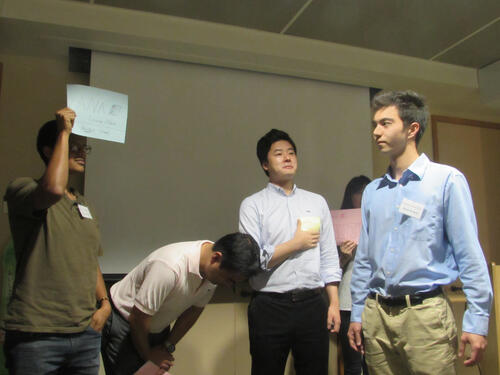
Stanford students worked together to pitch marketing ideas to a major Japanese airline at an event last Tuesday. The event, called an “ideathon,” is part of a series of events seeking to strengthen the U.S.-Japan relationship through exchange of ideas.
The ideathon was the first of its kind at the Shorenstein Asia-Pacific Research Center, led by the Japan Program under the rubric of the Stanford Silicon Valley-New Japan Project (SV-NJ). The project is supported in part by All Nippon Airways (ANA), the Japanese airline featured at the event.
Nineteen students participated, from both undergraduate and graduate levels and across disciplines – including students from the Graduate School of Business, and other majors including economics, mathematics, computer science, philosophy and East Asian studies.
Placed on a team with others they had just met, students were encouraged to assemble quickly and generate solutions to the challenge: how can ANA strengthen its brand awareness in the United States?
ANA is seeking to double in size in the next three years, yet it faces a few obstacles in this endeavor, including a customer base that is mostly in Japan and low brand visibility internationally, according to a senior employee that presented at the event.
“Who had heard of ANA before this event?” asked Hiroyuki Miyagawa, a marketing executive at ANA. Few hands raised in the audience.
Organized into four teams, each student team was joined by an ANA employee who listened in and offered guidance and a chance to learn from a longtime practitioner.
One and a half hours later, with Post-it notes and scribbled diagrams sprinkled across tables, each team emerged ready to present their 3-minute pitch to a panel of judges. The panel included executives from ANA, the World Innovation Lab (WiL), a venture capital firm in Palo Alto, and bTrax, a San Francisco based design firm.
Below are a few pictures from the event.
Image
Team Three acts out a skit. | They proposed that ANA establish lounges for the general public to gather in and purchase goods from Uniqlo and Muji, two Japanese lifestyle retailers. The lounges would offer a place to reinforce ANA's brand outside of the airport, they said.
Image
Team Four puts their heads together to generate ideas. | In their pitch, the team noted that baseball is a popular sport among Americans and Japanese. They recommended baseball be a focus of the marketing campaign, and said television and social media would best reach the target audience.
Image
Team Five explains their marketing approach. | Flying can lead to some unpleasant experiences, and a way ANA can set itself apart is to make those experiences manageable, and even enjoyable, they said. Their proposal was to bring new amenities to the in-flight experience such as a care package for people who sit in the middle seat.
Image
Team One poses for a picture after their presentation. | In their pitch, they recommended using ANA’s association with Japan to differentiate from other global airlines. Their approach included creating a film that features an American celebrity traveling on ANA.
The winning team was Team One whose concept was to use a celebrity figure – Ellen DeGeneres – in their advertising. They said that the target audience could relate to DeGeneres, and her already-established following would be an advantage.
The judges commended Team One for the creativity of their idea and its level of feasibility. Team One consisted of students Yaqian Fan, Michael Hong, Sam Ide, Lu Li and Adelbert Tan.
Kenji Kushida, a Stanford alumnus and project leader of SV-NJ, said:
“When I was a student, I craved for an opportunity to brainstorm solutions to real-world challenges and to do it in an environment that provided instant feedback,” he said, “We were able to make that happen here with the support of ANA and WiL, and are thrilled with the outcome."
South Korea stands as one of the largest economies in the world, producing some of the biggest ships and inventing some of the most advanced consumer electronics. With its roots in a traditional agrarian economy, South Korea grew rapidly during the 1960s and 1970s under an export- and heavy industry-focused strategy, led by the state and large conglomerates called jaebols. In less than 50 years, South Korea’s gross domestic product increased from $2.7 billion in 1962 to over a trillion dollars in 2007.
The Korea Program at Stanford’s Walter H. Shorenstein Asia-Pacific Research Center is soliciting papers for the Koret Workshop on Globalization, Innovation and Culture in Korea at Stanford University.
South Korea has become an economic powerhouse, but faces multiple challenges. To maintain its dynamism and growth in the increasingly innovation-driven global knowledge economy, Korea needs to turn its attention to the more social, cultural and educational aspects of development.
Of paramount importance is the ability to welcome and embrace difference and creativity, upgrade pertinent social values of cultural diversity and social tolerance, promote innovation and effectively reflect and transmit such values through institutions. The conference will be interdisciplinary, problem-oriented and policy-relevant. A broad range of questions and approaches are welcomed, particularly those that address main challenges Korea will face going forward.
Possible research topics include:
• Higher education, cultural diversity and development.
• Social cohesion beyond nationalism and multiculturalism.
• Entrepreneurial culture and innovation.
• Causes and consequences of rising inequality.
• Demographic changes, skilled foreign labor and education/work culture.
The conference will be held on April 22, 2016 at Stanford University. Beyond research presentations, the conference also aims to foster connections among scholars with common interests. Travel (domestic or international economy class) and hotel costs as well as a modest honorarium will be covered for the presenters.
Papers may be submitted for consideration in a PDF file (6,000-8,000 words) to Yong Suk Lee by email at yongslee@stanford.edu. The submission deadline is Jan. 31, 2016.
The Koret Workshop is organized by the Korea Program to bring together an international panel of experts in Korean affairs. The Korea Program established the Koret Fellowship in 2008 with generous funding from the Koret Foundation.
Today, Korea is renowned for its remarkable economic growth and its globally-recognized companies that include Samsung, Hyundai and POSCO. Given that Korea was one of the world’s poorest countries a mere 50 years ago, many people call Korea’s rapid economic development “a miracle.” However, when Korea’s road to economic prosperity is analyzed, several key factors that led to this growth can be identified. Professor Moon will explain these fundamental factors and provide perspective on how Korea can sustain this growth going forward.
Hwy-Chang Moon is a visiting professor in the Korea Program for the 2015 academic year and is currently teaching a course on Korean economy and business through the Center for East Asian Studies at Stanford University. Moon is a professor at Seoul National University, where he also served as the Dean of Graduate School of International Studies. He has delivered special lectures at various institutions, and has consulted several multinational companies and governments (e.g., Malaysia, Dubai, Azerbaijan and the Guangdong Province of China).
Moon is the editor-in-chief of the Journal of International Business and Economy, andhas published numerous articles and books on topics covering international business strategy, cross-cultural management and Economic Development in East Asia with a focus on South Korea.
Moon received a PhD from the University of Washington, and has previously taught at the University of Washington, University of the Pacific, State University of New York at Stony Brook, Helsinki School of Economics, Keio University, and Hitotsubashi University.
Encina Hall E301616 Serra StreetStanford, CA 94305-6055
(650) 723-6530
0
hwychang@stanford.edu
hwychangmoon_2.jpg
PhD
Hwy-Chang Moon has joined the Walter H. Shorenstein Asia-Pacific Research Center (Shorenstein APARC) for the 2015-2016 academic year. During his time at Shorenstein APARC, he will be working on a research project entitled, “The Global Strategy of Korean Firms in Silicon Valley," and will also teach a course on Korean economy and business in the fall quarter.
Moon is a professor of international business strategy at the Graduate School of International Studies (GSIS), Seoul National University, where he also served as the dean of GSIS.
Professor Moon is the editor-in-chief of the Journal of International Business and Economy, andhas published numerous articles and books on topics covering international business strategy, cross-cultural management and economic development in East Asia with a focus on South Korea. He frequently provides his perspectives on global economy and business through interviews and televised debates, and his writings appear regularly in South Korean newspapers. The New York Times and NHK World TV have also asked for his perspectives on these topics.
Professor Moon received a PhD from the University of Washington, and has previously taught at the University of Washington, University of the Pacific, State University of New York at Stony Brook, Helsinki School of Economics, Keio University, and Hitotsubashi University. He has also consulted several multinational companies, international organizations, and governments (e.g., Malaysia, Dubai, Azerbaijan, and the Guangdong Province of China).
Encina Hall E301616 Serra StreetStanford, CA94305-6055
(650) 723-6530
0
huijungu@stanford.edu
huijun_gu.jpg
Ph.D.
Huijun Gu joins the Walter H. Shorenstein Asia-Pacific Research Center (Shorenstein APARC) for the 2015-16 year as a visiting scholar from Jiangsu Administration Institute, where he serves as an associate professor.
His research interests include Planning (规划) and Governance, industrial upgrading and government behavior.
Huijun Gu obtained his Ph.D. at Nanjing University in 2013, focusing on organizational behavior.
This event is now full, and we are unable to accept any further RSVPs. Please email khaley@stanford.edu if you would like to be added to a wait list.
Russia's aggressive foreign policy is backed by Putin's domestic popularity ratings and his strong grip on Russia's political system. But in reality, how firmly does Putin control Russian politics? Can the ongoing economic crisis in Russia pose challenges to his system and the upcoming federal elections of 2016-2018? What impact will Russian domestic politics play in Russia's international behavior?
Vladimir Milov is a Russian opposition politician, publicist, economist & energy expert. He was the Deputy Minister of Energy of Russia (2002), adviser to the Minister of Energy (2001-2002), and head of strategy department at the Federal Energy Commission, the natural monopoly regulator (1999-2001). Milov is the author of major energy reform concepts, including the concept of market restructuring and unbundling of Gazprom, which was banned from implementation by President Vladimir Putin. He is the founder and president of the Institute of Energy Policy, a leading independent Russian energy policy think tank (since 2003). Milov is a columnist of major Russian political and business publications, including Forbes Russia, and a frequent commentator on Russian political and economic affairs in major Western media outlets (The New York Times, The Financial Times, The Washington Post, The Economist, etc.). Since leaving the Russian Government in 2002, Milov has became a vocal public critic of Vladimir Putin’s dirigiste and authoritarian course. Milov is also active in the Russian opposition politics, serving as Chairman of the “Democratic Choice” opposition party (www.en.demvybor.ru), and is also known as co-author of the critical public report on Vladimir Putin’s Presidential legacy called “Putin. The Results”, written together with Boris Nemtsov (several editions published since 2008).
Vladimir Milov
former Russian Deputy Minister of Energy
Speaker

 Two possible future. Colors are 2100 temperatures under “business as usual” climate change (left) and aggressive climate policy (right). This image shows a simulation of future nightlights, as seen from space, since richer economies tend to glow brighter. A hotter world is a more unequal world, with the north benefitting and tropical economies declining. A cooler world leads to more equitable global growth, offering regions like Africa the chance to “catch up”. Courtesy of Marshall Burke.