Economic Affairs
Paragraphs

Image
Statistics and Public Policy
Relative to its overall statewide support, the Republican Party has been over-represented in congressional delegations and state legislatures over the last decade in a number of US states. A challenge is to determine the extent to which this can be explained by intentional gerrymandering as opposed to an underlying inefficient distribution of Democrats in cities. We explain the “spatial inefficiency” of support for Democrats, and demonstrate that it varies substantially both across states and also across legislative chambers within states. We introduce a simple method for measuring this inefficiency by assessing the partisanship of the nearest neighbors of each voter in each US state. Our measure of spatial efficiency helps explain cross-state patterns in legislative representation, and allows us to verify that political geography contributes substantially to inequalities in political representation. At the same time, however, we also show that even after controlling for spatial efficiency, partisan control of the redistricting process has had a substantial impact on the parties’ seat shares. Supplementary materials for this article are available online.

All Publications button
1
Publication Type
Journal Articles
Publication Date
Journal Publisher
Statistics and Public Policy
Authors
Jonathan Rodden
Paragraphs

Image
European Journal of Economics and Economic Policies
This paper studies the effects of fiscal rules on public investment. Economists argue that fiscal rules decrease public investment, as it is easier for governments to lower public investment than current expenditures. This paper presents an empirical assessment of the relationship between fiscal rules and public investment using European panel data covering the 1997–2016 period. In contrast to previous work, we focus on national fiscal rules and use the European Commission's Fiscal Rules Strength Index to measure the constraints imposed on public finances. This index captures 230 national fiscal rules and reflects the annual strength of fiscal rules in each European Union member state. In line with our expectations, we find that fiscal rules decrease public investment. We run some additional models in which the results are mixed.

All Publications button
1
Publication Type
Journal Articles
Publication Date
Journal Publisher
European journal of economics and economic policies intervention
Authors
Christophe Crombez
Paragraphs
Cover of the book 'Shifting Gears in Innovation Policy' on the background of an embossed map of Asia.

In the six Asian countries focused on in this book—China, India, Japan, Singapore, South Korea, and Taiwan—high economic growth has been achieved in many industrial sectors, the catch-up phase of growth has ended or is about to end, and technological frontiers have been reached in many industries. These countries can no longer rely on importing or imitating new technology from abroad and expanding imports, and instead have to develop their own innovations to maintain growth. The policy tools they often used to advance "innovation," for the most traditional industrial policies of identifying promising industries and promoting them, will no longer be effective. And indeed, governments in Asia have recently put forward new policies, such as China's push for mass entrepreneurship and innovation.

Domestic conditions in Asian economies have also started to change. Many countries are facing rapidly aging populations and low birth rates: Japan’s population, declining for several years, is the first population decline not caused by war or disease in the modern world; South Korea’s labor force started to shrink in 2018 as well; China’s huge population will start to age, even as a large part of the population remains poor.

Facing these challenges, today Asia is at a turning point. East Asia as a whole has greater real economic output than North America, South and Southeast Asia possess enormous economic potential due to size and resources, and countries within Asia are becoming more connected in both trade and diplomacy. It is at this juncture that the authors of Shifting Gears examine and reassess Asia’s innovation and focus on national innovation strategies and regional cluster policies that can promote entrepreneurship and innovation in the larger Asia-Pacific. Chapters explore how institutions and policies affect incentives for innovation and entrepreneurship; whether Asia's innovation systems are substantially different from those of other countries, and in which ways, and whether there are any promising strategies for promoting innovation.

Desk, examination, or review copies can be requested through Stanford University Press.

Front Matter and Introduction
Download pdf
All Publications button
1
Publication Type
Books
Publication Date
Subtitle

Strategies from Asia

Authors
Yong Suk Lee
Gi-Wook Shin
Takeo Hoshi
Book Publisher
Shorenstein APARC
-

This is a virtual event. Please click here to register and generate a link to the talk. 
The link will be unique to you; please save it and do not share with others.

The disruption of the 2020 pandemic, coupled with significant economic tensions between China and the US, have resulted in global companies rethinking their supply chains.  Many have called for drastic changes - reshoring, near-shoring, regionalization of vertical supply chains, increasing redundancies, or diversification of Chinese manufacturing to Southeast Asia, South Asia, Africa or Latin America, etc.  Empirical data, however, reveal that many are taking a more cautious approach.  Leading companies are continuing to develop innovative ways to redesign their supply chains that still preserve China as their key supply source.  This talk will share some of these innovative ways that, in the end, may provide better long term values.


Portrait of Hau L. LeeHau L. Lee is the Thoma Professor of Operations, Information and Technology at the Graduate School of Business at Stanford University.  He was the founding faculty director of the Stanford Institute for Innovation in Developing Economies (SEED), and is the current Co-Director of the Stanford Value Chain Innovations Initiative.  Professor Lee’s expertise is on global supply chain management and value chain innovations.  He has published widely in top journals on supply chain management.  He was inducted to the US National Academy of Engineering, and elected a Fellow of MSOM, POMS; and INFORMS.   He was the previous Editor-in-Chief of Management Science.  In 2006-7, he was the President of the Production and Operations Management Society.  His article, “The Triple-A Supply Chain,” was the Second Place Winner of the McKinsey Award for the Best Paper in 2004 in the Harvard Business Review.  In 2004, his co-authored paper in 1997, “Information Distortion in a Supply Chain: The Bullwhip Effect,” was voted as one of the ten most influential papers in the history of Management Science.  His co-authored paper, “The Impact of Logistics Performance on Trade,” won the Wickham Skinner Best Paper Award by the Production and Operations Management Society in 2014. In 2003, he received the Harold Lardner Prize for International Distinction in Operations Research, Canadian Operations Research Society.  Professor Lee obtained his B.Soc.Sc. degree in Economics and Statistics from the University of Hong Kong, his M.Sc. degree in Operational Research from the London School of Economics, and his M.S. and Ph.D. degrees in Operations Research from the Wharton School of the University of Pennsylvania.  He was awarded an Honorary Doctor of Engineering degree by the Hong Kong University of Science and Technology, and an Honorary Doctorate from the Erasmus University of Rotterdam.


Image
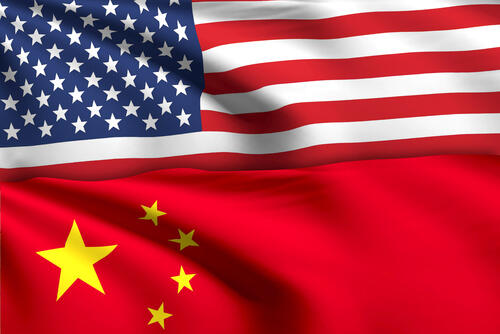
American and Chinese flags
This event is part of the 2021 Winter/Spring Colloquia series, Biden’s America, Xi’s China: What’s Now & What’s Next?, sponsored by APARC's China Program.


Via Zoom Webinar. Register at: https://bit.ly/35bMWQx

Hau L. Lee Thoma Professor of Operations, Information and Technology, Stanford Graduate School of Business
Seminars
Authors
Oriana Skylar Mastro
News Type
Commentary
Date
Paragraphs

This op-ed by Oriana Skylar Mastro and Zack Cooper originally appeared in Australian Financial Review.


Australia’s trials are not the first time Beijing has used economic coercion against another country.

It has become so common that we are becoming desensitised to it. Some notable examples include Beijing’s limitations on rare earth exports to Japan in 2010, Norwegian fish exports in 2010, Philippine tropic fruit exports in 2012, Vietnam’s tourist industry in 2014, Mongolian commodities trade in 2016, and South Korean businesses in 2017. In each case, Beijing sought to achieve a political objective by imposing economic penalties.

This case is different. Beijing has typically been ambiguous about the purpose or nature of its coercive economic statecraft. Despite evidence otherwise, it blamed the Japanese ban on meeting a yearly quota, the Philippine ban on pesticide exposure, the tourism drop to Vietnam on changing Chinese preferences, and the closure of South Korean stores on fire code violations. In Australia’s case, though, Beijing is doing away with these pretenses.

[Sign up for APARC's newsletters to get the latest commentary from our scholars.]

China has not been shy this time about connecting its punitive actions to its unhappiness with Australian policies. The Chinese foreign ministry has listed a “series of wrong moves” by Australia for the disruption in relations. Beijing’s embassy in Canberra then gave a list of 14 “mistakes” to the Australian press.

These grievances include Australia’s foreign interference legislation, foreign investment reviews, funding for Australian think tanks, and unfriendly media reporting. Some of these criticisms are particularly ironic coming from Beijing, which often objects to foreign interference in other countries’ domestic affairs.

A core component of China’s strategy is a disinformation and propaganda effort designed to paint its moves as merely defensive, a proportionate and legitimate response to actions taken by the other side.

Australia has done nothing ‘wrong’


Let’s be clear: Australia has done nothing “wrong” in promoting and protecting its democratic institutions at home. It should not censor its media, obstruct analysis by outside experts, or shy away from safeguarding its democratic processes.

This time, the current trade restrictions are about more than making an example of Australia or showing smaller powers that they’ll pay if they have something to say about how the Chinese Communist Party governs at home. Beijing’s aims have taken on new proportions. Party leaders are now willing to punish democracies simply for upholding basic democratic principles within their own countries.

The message is clear: curtail some of your democratic principles or pay the price.

The US needs to work with like-minded states around the world to address this new threat. Free countries need to speak out together in Australia’s defence. If democracies do not hang together, they will hang separately. We should articulate that China’s actions are more than a violation of international law; they threaten the health of our democracies at home. Such a reframing would show Beijing that economic coercion will no longer be treated as a low-stakes tactic.

But words are not enough. We need coordinated action. US alliances are designed primarily to deter and defend against military attacks. Chinese actions make clear, however, that there are alternative methods for undermining peace, prosperity and freedom that our alliances do not adequately address. New alliance consultations to protect against economic attack would enhance our deterrence against China.

Washington should also launch a series of discussions with its allies to determine what new institutional mechanisms, commitments, and structures are needed to defend against economic attacks, not just military ones.

We should ensure the ability to take joint reciprocal action against Beijing in the economic realm, particularly to defend smaller countries. China engages in economic coercion because it is effective and relatively risk-free. But if instead like-minded countries responded together when one was attacked economically, this would go a long way in discouraging Beijing from employing such tactics.

Using all the tools of power


A critical first step is mapping dependencies on China and investigating how to limit over-dependence that open democracies to unacceptable economic vulnerability. As in the military realm, we need to enhance our resiliency against attack by avoiding over-dependence on any single import, export, or supply chain decency. This is a task that the so-called D10 (G7 plus Australia, India, and South Korea) should take up early next year.

The good news is a collective response to Chinese economic coercion will be more feasible under a Biden administration. President-elect Joe Biden and his senior advisers have articulated a preference for multilateral responses to Chinese aggression.

And while President Donald Trump relied mainly on military moves to warn and punish Beijing, Biden’s team prefers to make use of all tools of power. For these reasons, there has even been talk of rejuvenating past efforts like TPP. US allies and partners are also likely to see Biden as more reliable, making them more willing to undertake the risky venture of joining forces against Beijing.

The United States, Australia, and other allies and partners tried to welcome China into the international community. This was the right move. It has been good economically for many advanced economies, including Australia and the United States. But there is a flip side to every coin.

Australia has become too vulnerable to the whims of Beijing. And the US has few options to protect against such economic pressure. The incoming Biden administration needs to fundamentally rethink the nature of alliances so that countries like Australia have a third option the next time Beijing forces a choice between freedom and prosperity.

Read More

A warship sailing in the South China Sea and a photo of three soldiers standing guard in front of a Chinese traditional building
News

China’s South China Sea Strategy Prioritizes Deterrence Against the US, Says Stanford Expert

Analysis by FSI Center Fellow Oriana Skylar Mastro reveals that the Chinese military has taken a more active role in China’s South China Sea strategy, but not necessarily a more aggressive one.
China’s South China Sea Strategy Prioritizes Deterrence Against the US, Says Stanford Expert
Battleships patrolling in the open ocean.
Commentary

Beijing’s Line on the South China Sea: “Nothing to See Here”

China’s official denials of growing military capability in the region look a lot like gaslighting.
Beijing’s Line on the South China Sea: “Nothing to See Here”
Oriana Skylar Mastro at a conference
Q&As

Center Fellow Oriana Skylar Mastro Discusses How Her Scholarship and Military Career Impact One Another

An expert on Chinese military and security issues, Mastro also talks about how her learning style informs her teaching style.
Center Fellow Oriana Skylar Mastro Discusses How Her Scholarship and Military Career Impact One Another
Hero Image
The Australian flag flies outside the Great Hall of the People in Beijing
The Australian flag flies outside the Great Hall of the People in Beijing.
Feng Li, Getty Images
All News button
1
Subtitle

The Biden administration needs to rethink the entire nature of alliances for an era of heavy-handed economic diplomacy from Beijing says Oriana Skylar Mastro and Zack Cooper in an op-ed for the Australian Financial Review.

Authors
Callista Wells
News Type
News
Date
Paragraphs

The China Program at Shorenstein APARC had the pleasure of hosting Professor Min Ye of Boston University’s Pardee School of Global Studies on October 14, 2020. Her program, moderated by China Program Director Jean Oi, focused on the much-discussed but poorly-understood Belt and Road Initiative (BRI), announced in 2013 by President Xi Jinping. While it is not widely known exactly what the BRI is or what Beijing hopes it will accomplish, it has been described as something of a modern silk road, connecting China to dozens of other countries through trade and extensive infrastructure projects. Based on research conducted for her recently published book, The Belt Road and Beyond: State-Mobilized Globalization in China: 1998-2018, Professor Ye enlightened the audience on a surprisingly critical element of this global program: the domestic component.

While Ye began her research with the assumption that many hold about the BRI—that it is primarily a global, internationally-focused initiative—as she continued her research, she found that many, if not most, BRI projects are either entirely domestic or have strong ties to domestic programs. To this end, she posed three questions during her program: Why did Chinese leadership launch the BRI in 2013? How did the Chinese state and businesses implement the BRI? and, What are the internal and external outcomes of the BRI?

To answer these questions, Ye explained the theoretical frameworks she used to understand both the BRI and China's "state-mobilized globalization." Firstly, Ye's "Chinese-State Framework" breaks the Chinese governmental system into three parts: Party Leadership, State Bureaucracy, and Subnational Actors. Each of these elements affect the others, as well as policy surrounding the BRI. However, this division also creates fragmentation in authority and ideology. Secondly, her “State-Mobilized Globalization” framework explains the process surrounding Chinese national strategy. Ye posits that national strategies are generally prompted by crises faced at lower levels of government, particularly when a lack of efficiency or communication is causing “state paralysis.” Once the strategy is announced in order to coordinate efforts and solve the crisis, it enters a feedback loop in which plans are adjusted and changed according to ground-level conditions. These frameworks informed the empirical studies used to answer Ye’s research questions.

The drivers of the BRI, argues Ye, were threefold: strategic, diplomatic, and economic. It was believed by interested parties within China that such an international initiative could ease tensions related to the United States and maritime Asia, as well as generally improve diplomatic relations for the country. China’s industries were also facing problems related to overcapacity, and economic and financial groups wished to use their excess capital to invest abroad. Actors from several different levels in China, including national agencies, local governments, and private entrepreneurs, were involved in executing BRI projects intended to alleviate these tensions. Different cities saw different sides of this implementation: Chongqing, one of China’s largest cities, is heavily dominated by state capital, with its main BRI actors being State-Owned Enterprises (SOEs). Wenzhou, a port city in Zhejiang province, is by contrast dominated by private entrepreneurs.

With diverse implementation comes diverse outcomes. Ye argues that some BRI projects have been helpful in reforming cities’ structural economy, while others have helped upgrade industry. The BRI has managed to alleviate some of the tensions listed above, but at the same time, it has created its own problems. While there has been a massive internal mobilization effort for BRI projects, there exists a disconnect between the domestic situation and demands for transparency from outside actors.

Ye concluded her talk by tying her research to current developments related to COVID-19. While one might imagine that a global pandemic would be a significant inhibitor to an international trade and infrastructure project, Ye finds just the opposite. Because the BRI is, in fact, quite domestically focused, many BRI projects are continuing at a rapid pace, albeit with digital adjustments. Some projects, such as the New Infrastructure Plan, were actually fast-tracked in the wake of the pandemic outbreak. Ye predicts that as COVID-19 restrictions ease and the world returns to “normal,” these domestic and digital elements will be combined with the BRI’s original projects.

An audio recording of this program is available at the link below, and a video recording is available upon request. Please contact Callista Wells, China Program Coordinator at cvwells@stanford.edu with any inquiries.

Read More

Photograph of the UN building in Geneva, Switzerland
News

Rebuilding International Institutions Will be Tough but Necessary, Say Stanford Experts Thomas Fingar and Stephen Stedman

Fingar and Stedman spoke as part of the APARC program “Rebuilding International Institutions,” which examined the future of international institutions such as the United Nations (UN), World Trade Organization (WTO), and World Health Organization (WHO) in our evolving global political landscape.
Rebuilding International Institutions Will be Tough but Necessary, Say Stanford Experts Thomas Fingar and Stephen Stedman
Cover of the book Fateful Decisions: Choices That Will Shape China's Future
News

Thomas Fingar and Jean Oi Analyze the Choices and Challenges Facing China’s Leaders

Fingar and Oi joined the National Committee on U.S.-China Relations to discuss their edited volume, ‘Fateful Decisions: Choices that Will Shape China’s Future.’
Thomas Fingar and Jean Oi Analyze the Choices and Challenges Facing China’s Leaders
Hero Image
Min Ye speaking
All News button
1
Paragraphs

One of the defining features of China’s economy over the two decades between 1995 and 2015 was the persistent rise of wages for workers and professionals in nearly every segment of the economy—with wage rates for labor-intensive jobs in manufacturing, construction, and the informal service sector rising the fastest. Recently, however, the economic environment in China has begun to change, including changes in both employment and wages. We identify recent employment/wage trends throughout China’s economy and postulate the sources of these trends as well as possible future consequences if they continue. We use official, nationally aggregated data to examine employment and wages in multiple sectors and industries. Our findings indicate that China may have entered a new phase of economic development in the mid-2010s. According to the data, in recent years, wage growth has begun to polarize: Rising for professionals employed in formal skill-intensive industries; and falling for workers in the informal labor-intensive service sector. We attribute this increase in skill-intensive wages to an increase in demand for skill-intensive employment, due to the emergence of a large middle class in China, for whom the demand for high technology, finance, banking, health, and higher education industries is increasing while, at least in the recent short term, the supply of experienced, high-skilled professionals has not kept up. The employment/wage trend in the informal (low-wage) service sector, however, is following a different pattern. While there is a rising demand for services in China’s economy, the growth, due to a number of factors (e.g., large shares of GDP targeted by policymakers to investment; high rates of savings by consumers), is relatively slow. In contrast, due to a number of economic forces, including globalization and automation, the supply of labor into the service sector of the informal economy is being fueled by the flow of labor out of manufacturing and construction (two industries that that have experienced employment declines since 2013). These supply and demand trends, in turn, are leading to the fall in the growth rate of wages in the informal service sector. We conclude by discussing the possible longer-term consequences of these emerging polarization trends based on an examination of recent experience with wage polarization occurring in both middle- and high-income countries, as well as its consequences. We also present policy recommendations for greater investment in education and human capital, as well as for the development of a more comprehensive set of social safety nets for different segments of China’s population.

All Publications button
1
Publication Type
Journal Articles
Publication Date
Journal Publisher
Comparative Economic Studies
Authors
Scott Rozelle
-

Download Transcript

Image
Angrynomics book cover
Economics increasingly fails to explain why the pressures of life appear to be intensifying at the same time as income per capita is rising, or why we work more hours for less money in real terms. And why we see the rise of nationalism everywhere when globalization, on average, has made us all richer. The disconnect between our experience of the world and the economic model used to explain it has given rise to "angrynomics": an economy of heightened uncertainty and anger, where faith in the workings of markets and politics has been undermined and rapid and seemingly ever-accelerating economic change has become something to be feared. Eric Lonergan and Mark Blyth have written a book for anyone anxious, worried - or angry - about the mismatch between how they experience the world with the increasing day to day pressures they face and the model used by economic elites and politicians to explain and justify it. In a powerful and passionately argued analysis, they bring their critical insight and expertise to bear on the nature of angrynomics and offer a set of radical and innovative policies that cut across tired party political lines - and that if implemented might just help the world to be a less angry place.

Mark Blyth


Mark Blyth is the William R. Rhodes ’57 Professor of International Economics at the Watson Institute for International and Public Affairs at Brown University. Blyth graduated Strathclyde University in 1990 and then finished his PhD. in political science at Columbia University in 1999. He then joined the Johns Hopkins University before moving to Brown University in 2009.

Blyth’s research spans several areas. The first focuses on the power of economic ideas as seen in his recent award winning book, Austerity: The History of a Dangerous Idea (New York: Oxford University Press 2015), which has been translated into 16 languages. He has written extensively on the political economy of Europe, as seen in his recent book, The Future of the Euro (New York: Oxford University Press 2015). His most recent book is Angrynomics (Columbia University Press 2020 - with Eric Lonergan), which deals with the economics underlying the current populist moment. He is currently working on a new joint project on the New Politics of Growth and Stagnation.

Blyth is a regular contributor to the journal of the Council for Foreign Relations, Foreign Affairs and he contributes to several Podcasts, including the Financial Times Alphaville podcast.


Co-sponsored by the Global Populisms Project.

Online via Zoom: Register

Mark Blyth Brown University
-
This is a virtual event. Please click here to register and generate a link to the talk. 
The link will be unique to you; please save it and do not share with others
.
 
 APARC South Asia research Initiative presents: Fall 2020 Colloquium Series on
India-China Strategic Competition
 

Washington DC time:  7:00pm-8:30pm, 9-Nov. 2020
Sydney, Australia time: 11:00am-12:30pm, 10-Nov. 2020 

Expectations of India’s rise have been dented in 2020. Amid lackluster economic performance and creeping socio-political illiberalism, India also suffered a major strategic setback. Chinese forces that crossed the Line of Actual Control in Ladakh remain encamped at several tactically-valuable points, and although talks continue, India has few visible options to force a return to the status quo ante. India now sees China is more clearly adversarial terms – but does it have what it takes to compete effectively? This conversation will conclude the APARC South Asia’s fall 2020 colloquium series on the India-China strategic competition with a wider and deeper look at India’s political and military power. We will discuss India’s ability to deter and balance China, its strategies to build national power and align with new partners, and the prospects for the competition in 2021 and beyond.
 

Ashley Tellis29kb Ashley Tellis29Kb
Ashley J. Tellis holds the Tata Chair for Strategic Affairs and is a senior fellow at the Carnegie Endowment for International Peace. Previously he was commissioned into the Foreign Service and served as senior adviser to the ambassador at the U.S. Embassy in New Delhi. While serving as the senior adviser to the Undersecretary of State for Political Affairs, he was intimately involved in negotiating the civil nuclear agreement with India. He also served on the National Security Council staff as special assistant to President George W. Bush and senior director for strategic planning and Southwest Asia. Prior to his government service, Tellis was senior policy analyst at the RAND Corporation and professor of policy analysis at the RAND Graduate School. He is a counselor at the National Bureau of Asian Research and serves as an adviser to the Chief of Naval Operations. He is the author of India’s Emerging Nuclear Posture (2001), co-author of Interpreting China’s Grand Strategy: Past, Present, and Future (2000), and co-editor of the sixteen latest annual volumes of Strategic Asia. He earned his PhD in political science from the University of Chicago.


Image
Arzan Tarapore
Arzan Tarapore is the South Asia research scholar at the Shorenstein Asia-Pacific Research Center at Stanford University, where he leads the newly-restarted South Asia research initiative. He is also a senior nonresident fellow at the National Bureau of Asian Research. His research focuses on Indian military strategy and contemporary Indo-Pacific security issues. He previously held research positions at the RAND Corporation, the Observer Research Foundation, and the East-West Center in Washington. Prior to his scholarly career, he served as an analyst in the Australian Defence Department, which included operational deployments as well as a diplomatic posting to Washington, DC. Tarapore holds a PhD in war studies from King’s College London.


via ZOOM Webinar
Register:  https://bit.ly/2IPGZjS

Ashley J. Tellis <br><i>Tata Chair for Strategic Affairs and Senior Fellow, Carnegie Endowment for International Peace</i><br><br>
Arzan Tarapore <br><i>South Asia Research Scholar, Shorenstein Asia-Pacific Research Center, Stanford University</i><br><br>
Seminars
Subscribe to Economic Affairs